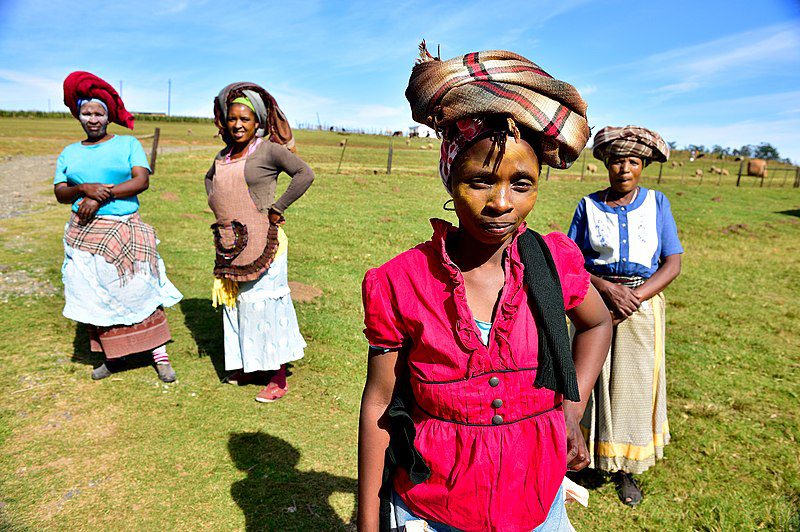
White South Africans accounted for less than 10% of the population after the apartheid in South Africa ended in 1994. However, 90% of white South Africans owned the land. In addition, about 72% of white South Africans owned farmland in 2017. Meanwhile, black South Africans owned only 4% of land and Indian South Africans owned about 5%. As such, poverty and land reform in South Africa remain large issues.
The African National Congress (ANC) assisted the South African government in initiating land reform efforts to further digress from historical injustices, achieve equitable land distribution and stimulate economic development. However, land reform in South Africa has yet to significantly benefit the victims of land dispossession and marginalization.
Assistant Professor of African Studies in the Josef Korbel School of International Studies at the University of Denver Dr. Singumbe Muyeba told The Borgen Project that South Africa is the most unequal society in the world in terms of economic racial disparity. Muyeba’s passion to eradicate urban poverty in Africa has guided his research in poverty and land reform in South Africa.
The Land Reform Process
The Natives Land Act inaugurated the apartheid in South Africa in 1913. This left nearly 70% of black South Africans unable to purchase or occupy the land. Furthermore, this legislative order dispossessed and forcibly removed thousands of black families from their land. Black people had to go to impoverished areas throughout the country. Furthermore, they were unable to financially support their families. Moreover, the Act initiated the ongoing social and economic inequalities that prevail today.
The South African government initiated The Land Reform Process to deviate from the oppressive regime of the apartheid. In addition, it aimed to reinstate fundamental civil rights for all. This process involved:
- Restoring land to, or financially rectifying, titled landowners who were forcibly removed during the apartheid.
- Enabling Africans to collectively buy farms with government aid.
- Protecting the rights to own and control land.
South Africa recognized that land justice is crucial when addressing poverty, livelihood security and racial discrimination. Thus, it implemented land reform. However, the new land titling procedures and the authority of local land-owning elites in the system were obscure. It blurred the lines of the true beneficiaries. About 148 land reform programs in South Africa carried out fraudulent ventures between 2011 and 2017. Moreover, this highlighted political corruption as a contributor to the lack of land reform benefits.
Property Rights and Poverty
Land reform in South Africa initially relied on the disposition of white land-owners selling their land. The land redistributed to black farmers has been meager parcels with insignificant economic benefits. Additionally, black farmers in the repossession of land often lack farming knowledge, practical skills, government-supported financial aid and suitable equipment that would enable profit. The Economist proposed that up to 90% of redistributed farms were not profitable in 2015. One can attribute this to deficient funding, development training and resource allocation. In addition, South Africans who choose restitution in cash compensation instead of land often receive insufficient amounts. This conduces poverty and constrains black farmers’ economic development.
Problems with the Movement
Muyeba explains how South Africans’ perception and lack of trust in their institutions, harbored from the apartheid’s colonialist regime, contribute to the barriers of achieving economic security and escaping poverty. He said, “If the poor who possess urban land rights perceive that they cannot rely on the effectiveness of institutions such as the rule of law, political leadership, public services and economic institutions, their property will sit idle as an economic resource. The poor will not use their land and housing in their efforts to build wealth and get out of poverty.” Although urban property rights strengthen employment opportunities, the potential monetary burdens can lead to property loss.
Despite the general consensus that property rights economically advantage low-income individuals, the structural barriers of the reform system leave impoverished South Africans challenged. Thus, they are unable to achieve economic security and elude poverty. Muyeba’s research findings indicate that “property rights for the urban poor empower the poor with ownership, the security of tenure, instill a sense of freedom and of belonging to a community and increase self-esteem among owners.” This empowerment can improve health and play an instrumental part in decreasing the effects of poverty.
Expropriation Bill
South Africa became a constitutionally democratic country in February 1997. During this transformation, the Expropriation Act, which determined how the government handled previously privately owned land for public uses, mandated the government pay compensation that best served the public. It declared three attempts unconstitutional in October 2020. As a result, the Expropriation Bill proposed that “just and equitable” compensation will go to the expropriation of property for public use or interest. Furthermore, expropriation without compensation can receive justification in court depending on the acquisition, quality, use and value of the owner’s land.
South Africa’s Deputy President David Mabuza states that the Bill aims to correct the historic injustices, reinstate land rights, strengthen long-term food security and achieve equitable land rights. Many are concerned that the negative effects of expropriation could perpetuate injustices for communities. Additionally, land expropriation without compensation threatens the agricultural sector’s productivity and employment opportunities. Moreover, this will increase poverty rates. Muyeba says that the expropriation of farmland in South Africa will inevitably cause regional and international economic impairments. This is due to South Africa’s significant role in agricultural exports throughout the continent.
Hope for the Future
Land reform in South Africa plays a crucial role in achieving equitable land distribution and reducing poverty. Pre-existing victims must be the beneficiaries of the land reform movement. Muyeba believes that policy-makers should modify land reform programs according to previous national attempt outcomes while being mindful of South Africa’s vulnerable political and economic state.
Furthermore, his research indicates that securing property rights in South Africa does not inherently produce conventional economic benefits for impoverished populations. Instead, impoverished South Africans’ sense of empowerment from land ownership yielding greater economic benefits should be taken into account when confronting structural barriers. Equitable land distribution in South Africa is complex. However, accountable and honest corruption-free government legislative frameworks can help achieve it.
– Violet Chazkel
Photo: Flickr

The Asylum System in Greece
When an asylum seeker reaches Greece after spending an onerous period braving some of the harshest conditions the human experience has to offer, they frequently meet consternation. The country they arrive in submits people looking for a better life to an elaborate system that starves them of their rights as asylum seekers under the Geneva Convention. This inevitably devolves into situations that mirror gross human rights violations. These situations exacerbate what many of the people face in their home country: poverty. The Borgen Project spoke to migration specialist Margaux Cachera to better understand the asylum system in Greece and its effect on poverty.
How the Policy Changed
Cachera worked on Leros, a Greek Island in the southern Aegean sea. She worked in conjunction with a hotspot that serves as the first glimpse of Europe for some migrants. She insists the asylum system in Greece has intrinsic ties to Europe’s policy on migration, which is admittedly poor. “There’s the basic issue of European countries not following the rule of law regarding refugees. One of the main principles of international law is nonrefoulement, which they are violating. So they are infringing on a key principle of refugee law. They simply go around it.”
The process of refugee migration in Europe is as follows; every asylum seeker may submit an application for international protection once inside the boundaries of the asylum country. However, on the fringes of Europe, in places like Spain, Italy and Greece, they face more difficult migration problems than northern countries. They have also increasingly looked to tighten immigration laws and border controls. After years of loosely following international law, a 2016 agreement with Turkey changed everything about the asylum system in Greece.
The controversial legislation and agreement with Turkey ensured that refugees and asylum seekers could no longer travel to other European countries. They thus end up in a clogged system that does not want them. Programs to house, feed and integrate asylum seekers have since fallen into disrepair. Cachera contends that in the years since the agreement came into being, the asylum system in Greece has become a divisive political football. “Since then, there has been a shift to a more intense, right-wing government and this agreement has started to be more harshly applied – not that it wasn’t ever applied before – and they [refugees and asylum seekers] are now being put into detention camps at scarier rates.” The asylum system in Greece is now morphing from a process by which people integrate into society to a process by which they experience exclusion or imprisonment.
The Poverty Asylum Seekers Face
If one reaches a Greek island with the hopes of attaining asylum, they immediately face stark reality. Before the 2008 economic crisis in the country, migrants experienced greater employment than natives. The following years proved the opposite, with unemployment rates among refugees dropping at greater rates than natives.
This phenomenon does not apply to asylum seekers, who often cannot obtain employment due to a lack of legal standing in Greece. As a result, they must live in a kind of limbo – unable to be employed and unable to have their case heard. This has created an environment with “no stable electricity or running water, limited food and insufficient space for social distancing.”
Cachera highlights the paradox about the asylum system in Greece – often asylum seekers (those who have not yet received their refugee status) benefit from greater aid than those who have received official status but are soon to lose it if they receive the good news of refugee status. “Asylum seekers don’t face the kind of poverty that refugees do. They have a shelter – which is deplorable but a shelter nonetheless. They have food – daily meals. And a stipend.” It then becomes curious to figure out why the system does not aid in the integration of its new migrants.
Greek’s hostile position to NGOs that help asylum seekers and provide programs that grant emergency housing and cash assistance programs like ESTIA and HELIOS, which “subsidizes rent and independent housing for up to twelve months” for vulnerable refugees, essentially subjugates asylum seekers to unwanted and uncared for wards of the state. It perpetuates a kind of incomplete existence in which not even prisoners remain.
What this Means for the Future
The solution appears to be one of increased funding to systems that aid asylum seekers and refugees. This functions in addition to the restoration of eligibility periods for programs like ESTIA. Such programs provide housing and cash to newly arrived refugees. Greece must realign itself with the principle of nonrefoulement. It must also reconsider its agreement with Turkey, which amounts to a naked attempt to circumvent established rules of the Geneva Convention, the doctrine that employs itself to protect vulnerable asylum seekers.
Of course, poverty has intrinsic ties to the process. Amnesty International recognizes 1.4 million refugees who currently need resettlement out of the more than 70 million people who have experienced forcible displacement due to “conflict, persecution or natural disasters.” Developing countries host about 84% of these people, which does not include Greece. Without a 180 degree turn to restore dignity and material resources to those waiting for refugee status the system is bound for further disrepair.
Human rights advocates and migration specialists like Margaux Cachera often publicize shameful issues to garner attention for gross injustice. Questions about actionable solutions, though, often engender a bevy of good ideas. “How do you make camps better? Should camps exist at all? I guess we’re not trying to discuss revolution here but enabling people to have agency is key. That’s the whole thing…. Camps in the global north are so regimented to a certain extent that they don’t allow for a microeconomy… Personally, I think it’s crucial that people are allowed to cook by and for themselves if they want. Which can spawn local vendors. People then have money to buy food and cook for their families. Some form of normality in that form would create a more positive social impact inside the camps.”
Depending on our aims for humanity, the global community must understand and address the asylum system in Greece. This would not only benefit those inside the walls of refugee camps and hotspots but also impact global poverty.
– Spencer Daniels
Photo: Flickr
5 Ways to Help Liberian Youth
The Liberian Civil War lasted from 1989 to 2003, leaving the education system completely broken. Before the war, there were around 2,400 schools. However, after the war, only 480 schools remained. Edman Zayzay, founder of the 501(c)(3) nonprofit organization, Organize For Liberia (OFL), had a dream as a young boy of one day becoming an astronaut. He blames the war for stripping him of that dream. Organize For Liberia gave Liberian youth the opportunity to animate their dreams. Edman Zayzay wanted to improve society’s conditions for all Liberians and help Liberian youth gain access to resources.
Increased Education
OFL focuses on educating Liberian girls specifically. More than half of Liberian women and girls are illiterate. In Liberian culture, girls are the caretakers of the family. Duties include cooking, cleaning, tending the family farm and bearing children of their own. The more responsibilities girls have at home, the less time they have to go to school.
Organize For Liberia encourages its educators to develop relationships with parents. Most parents never had the means for school themselves and do not understand the importance of education. It is rare that parents make the sacrifice and allow education and opportunities for their daughters. If girls attend school, it allows them to pass what they learn to their families and ultimately spread knowledge to their community. If girls have careers or life goals, they should receive support to achieve them. Education helps develop sound decision-making skills to build a healthy future for themselves.
Youth Engagement Mentorship Program
Organize For Liberia pairs adult leaders with young people, giving mentees the opportunity to showcase what a post-war childhood looks like. It is common for minors living in poverty to resort to prostitution to earn food or shelter. Many young women are victims of abuse and rape. The OFL mentorship program encourages young women to value themselves and build connections with friends, family and the community to increase support and self-love. Young people learn the value of life experience and living responsibly, and the mentors learn the value of the influence young people have on Liberia’s future. Together, the pairing has the potential to bring social change to society.
Adolescent Pregnancy Awareness
The birth rate in Liberian adolescents is one of the highest in the world where about one in three adolescent girls are pregnant. About 19% of Liberian girls marry by age 15, while almost half of them marry before age 18. Younger women experience a higher-risk pregnancy. Many young mothers become pregnant against their will. Sadly, Liberia has one of the highest maternal mortality rates in the world. Organize For Liberia raises funds to support pregnancy awareness. This can help Liberian youths in more ways than one. Pregnancy leaves many girls unprepared. OFL encourages pregnant students to remain in school and to not give up on their education because of their pregnancy.
The STEM Initiative
Organize For Liberia’s Science, Technology, Engineering and Mathematics (STEM) Initiative offers education opportunities outside of the typical classroom. OFL offers after-school and summer programs that encourage computer and technology education. Those interested in science and engineering fields can further their computer skills with robotics programming courses. Funding keeps science books and technology journals in school libraries. The future of Liberia is dependent on the education of the young men and women who could grow to become the future innovators that rebuild Liberia’s society.
Civic Education
Scarred by war and adversities, Liberians often become violent after an election. Organize for Liberia encourages peaceful and informed protests. The more Liberians understand their political system, the less detached and forgotten they feel in a post-election environment. Citizens lost faith in the political system after the Liberian Civil War. Civic education informs young people of their rights. It benefits the youth in relation to defending themselves against systemic oppression. For instance, the right to vote helps Liberian youth to have a voice and active role in social justice and development.
Organize For Liberia formed to give hope to Liberian youths who can feel hopeless to the circumstances they were born into. Education is the building block for young people dreaming of a life different than the one their parents led. Increased funding allows the opportunity for education. The main reason parents cannot keep their children in school is that they lack funding for supplies and they rely on their children for help at home. If the Liberian youth have funding to provide school supplies, it would allow the window of opportunity to open up. As a result, the Liberian youth can grow to help their own children have improved lives. Gradually, education and resources will help Liberian youth accomplish those goals. Ultimately gender balance and opportunities begin in the classroom and OFL believes that every life, regardless of class or gender, has equal value.
– Sarah Ottosen
Photo: Flickr
3 Companies Improving Brazil’s Emerging Market
Brazil currently has the ninth-largest economy in the world. It has a gross domestic product (GDP) of $2.05 trillion which accounts for slightly more than 2.5% of the global GDP in 2020. Brazil would account for 2.5% of the world’s wealth if one measured it by all of the goods and services it exchanged in 2020. Thus, Brazil’s emerging market has become a reputable force on the world economic stage. It has now surpassed some developed economies in GDP. For example, Brazil’s economy is now larger than Italy’s, which accounted for 2.4% of global GDP in 2020. Several factors contribute to the success of Brazil’s emerging market: better international relations, the adaptation of technology and improved education. However, the most important element of an emerging market is a solid mix of domestic companies. Here are three Brazilian companies that have been driving the economy forward.
Eletrobras
Eletrobras is the number one supplier of electricity in Latin America. Additionally, it projects that it can be one of the top three clean energy suppliers for the entire world by 2030. Furthermore, Eletrobras differentiates itself from other energy companies by focusing on generating electricity through renewable methods. In fact, the company strives to ensure that less than 10% of electricity produced comes from sources that have high greenhouse gas emissions. Eletrobras utilizes hydropower and wind farms to create the vast majority of its electricity.
The company supplied about one-third of Brazil’s total energy in 2020. As a result, there was a reduction in reliance on foreign energy companies. In addition, it provided vast employment opportunities to Brazilians and residents of other Latin American countries.
Vale
Vale is a Brazilian mining company responsible for churning out more iron ore and nickel than any other mining company. Iron ore has multiple applications and is the raw ingredient for steel. One can find it in cars, trains, sinks, dishwashers and much more. Additionally, a battery’s fundamental material is nickel. It has a shiny appearance and is inexpensive. Therefore, many countries use it to make their currencies.
Vale now employs more than 100,000 workers ranging in countries from Canada to Indonesia. The company has been able to successfully push into other sectors including artificial intelligence and energy production.
Itau Unibanco
Itau Unibanco is Brazil’s largest bank in the private sector. The company’s headquarters are in Sao Paulo and it employs more than 90,000 people across nine countries. The government now owns the majority of the company’s equity because it is in the private sector. The primary shareholders are private institutions, corporations and individuals. As such, Itau Unibanco is a bank for everyday workers.
Furthermore, Itau Unibanco has a commitment to giving back to the community. The company invested more than $0.5 billion into education projects and improving transportation infrastructure in Brazil. It shows that people should not consider domestic companies that give back as charities, but rather as an investment in the people.
The Reason these Companies Matter
These companies are critical to Brazil’s emerging market for two major reasons. First, Brazil needs businesses that spark interest in countries abroad to make the leap from emerging markets to the developed economy. All three of these companies successfully accomplished this goal. As such, these companies are appealing to many nations. As a result, there is an inflow of non-domestic goods and services. This allows the economy to expand and raise the overall quality of life for everyone.
The second reason is that these companies provide employment opportunities to Brazilian citizens in diverse sectors. Brazil needs companies such as Eletrobras to provide electricity in an economic boom and a severe recession. In addition, Brazil needs Vale to produce steel. In the end, these companies create many opportunities for Brazilian citizens in many sectors.
If Brazil can navigate through the pandemic while keeping companies like Eletrobras, Vale and Itau Unibanco afloat, it has a fair shot at becoming a developed economy in the future.
– Jake Hill
Photo: Wikimedia Commons
Poverty and Land Reform in South Africa
White South Africans accounted for less than 10% of the population after the apartheid in South Africa ended in 1994. However, 90% of white South Africans owned the land. In addition, about 72% of white South Africans owned farmland in 2017. Meanwhile, black South Africans owned only 4% of land and Indian South Africans owned about 5%. As such, poverty and land reform in South Africa remain large issues.
The African National Congress (ANC) assisted the South African government in initiating land reform efforts to further digress from historical injustices, achieve equitable land distribution and stimulate economic development. However, land reform in South Africa has yet to significantly benefit the victims of land dispossession and marginalization.
Assistant Professor of African Studies in the Josef Korbel School of International Studies at the University of Denver Dr. Singumbe Muyeba told The Borgen Project that South Africa is the most unequal society in the world in terms of economic racial disparity. Muyeba’s passion to eradicate urban poverty in Africa has guided his research in poverty and land reform in South Africa.
The Land Reform Process
The Natives Land Act inaugurated the apartheid in South Africa in 1913. This left nearly 70% of black South Africans unable to purchase or occupy the land. Furthermore, this legislative order dispossessed and forcibly removed thousands of black families from their land. Black people had to go to impoverished areas throughout the country. Furthermore, they were unable to financially support their families. Moreover, the Act initiated the ongoing social and economic inequalities that prevail today.
The South African government initiated The Land Reform Process to deviate from the oppressive regime of the apartheid. In addition, it aimed to reinstate fundamental civil rights for all. This process involved:
South Africa recognized that land justice is crucial when addressing poverty, livelihood security and racial discrimination. Thus, it implemented land reform. However, the new land titling procedures and the authority of local land-owning elites in the system were obscure. It blurred the lines of the true beneficiaries. About 148 land reform programs in South Africa carried out fraudulent ventures between 2011 and 2017. Moreover, this highlighted political corruption as a contributor to the lack of land reform benefits.
Property Rights and Poverty
Land reform in South Africa initially relied on the disposition of white land-owners selling their land. The land redistributed to black farmers has been meager parcels with insignificant economic benefits. Additionally, black farmers in the repossession of land often lack farming knowledge, practical skills, government-supported financial aid and suitable equipment that would enable profit. The Economist proposed that up to 90% of redistributed farms were not profitable in 2015. One can attribute this to deficient funding, development training and resource allocation. In addition, South Africans who choose restitution in cash compensation instead of land often receive insufficient amounts. This conduces poverty and constrains black farmers’ economic development.
Problems with the Movement
Muyeba explains how South Africans’ perception and lack of trust in their institutions, harbored from the apartheid’s colonialist regime, contribute to the barriers of achieving economic security and escaping poverty. He said, “If the poor who possess urban land rights perceive that they cannot rely on the effectiveness of institutions such as the rule of law, political leadership, public services and economic institutions, their property will sit idle as an economic resource. The poor will not use their land and housing in their efforts to build wealth and get out of poverty.” Although urban property rights strengthen employment opportunities, the potential monetary burdens can lead to property loss.
Despite the general consensus that property rights economically advantage low-income individuals, the structural barriers of the reform system leave impoverished South Africans challenged. Thus, they are unable to achieve economic security and elude poverty. Muyeba’s research findings indicate that “property rights for the urban poor empower the poor with ownership, the security of tenure, instill a sense of freedom and of belonging to a community and increase self-esteem among owners.” This empowerment can improve health and play an instrumental part in decreasing the effects of poverty.
Expropriation Bill
South Africa became a constitutionally democratic country in February 1997. During this transformation, the Expropriation Act, which determined how the government handled previously privately owned land for public uses, mandated the government pay compensation that best served the public. It declared three attempts unconstitutional in October 2020. As a result, the Expropriation Bill proposed that “just and equitable” compensation will go to the expropriation of property for public use or interest. Furthermore, expropriation without compensation can receive justification in court depending on the acquisition, quality, use and value of the owner’s land.
South Africa’s Deputy President David Mabuza states that the Bill aims to correct the historic injustices, reinstate land rights, strengthen long-term food security and achieve equitable land rights. Many are concerned that the negative effects of expropriation could perpetuate injustices for communities. Additionally, land expropriation without compensation threatens the agricultural sector’s productivity and employment opportunities. Moreover, this will increase poverty rates. Muyeba says that the expropriation of farmland in South Africa will inevitably cause regional and international economic impairments. This is due to South Africa’s significant role in agricultural exports throughout the continent.
Hope for the Future
Land reform in South Africa plays a crucial role in achieving equitable land distribution and reducing poverty. Pre-existing victims must be the beneficiaries of the land reform movement. Muyeba believes that policy-makers should modify land reform programs according to previous national attempt outcomes while being mindful of South Africa’s vulnerable political and economic state.
Furthermore, his research indicates that securing property rights in South Africa does not inherently produce conventional economic benefits for impoverished populations. Instead, impoverished South Africans’ sense of empowerment from land ownership yielding greater economic benefits should be taken into account when confronting structural barriers. Equitable land distribution in South Africa is complex. However, accountable and honest corruption-free government legislative frameworks can help achieve it.
– Violet Chazkel
Photo: Flickr
10 Years of Helping Babies Breathe
The first few minutes of a baby’s life have a significant impact on their chances of survival and their life quality. Statistically speaking, risks for newborn deaths are at their highest at that time. A main reason for the increased risk is asphyxia, a dangerous lack of oxygen right after birth. Every year, approximately 10 million newborns are unable to breathe on their own and require immediate help. In 2010, as a response to the medical issue, Helping Babies Breathe (HBB) was born. Recently, Helping Babies Breathe celebrated its anniversary for 10 years of work. Here is some information about the successes during the 10 years of Helping Babies Breathe.
USAID: An Important Partner
A partnership of many different agencies and organizations like Save the Children, Laerdal Global Health and the World Health Organization (WHO) launched the program Helping Babies Breathe. Another very important partner in the creation of HBB was the United States government’s agency USAID. After receiving Congress-approved funds from the federal government, USAID was able to be a key figure in establishing the program. The agency contributed significantly to HBB’s success by mobilizing more than $120 million to save newborns over the last decade.
Educating People
When HBB launched, its approach to fighting newborn mortality was based on creating a global movement. The goal was to raise awareness for the complications of asphyxia and to educate and train medics around the world. Thus, HBB focused on making educational materials and necessary equipment accessible for everyone. Furthermore, it supported training people in the resuscitation of newborns. When the program began, all the partners involved agreed on one ultimate goal. The plan was to assure that every infant started life with access to at least one person with the training to resuscitate babies after birth.
When HBB taught medics all around the globe how to reduce the risks of newborn mortality, it addressed several different approaches. One of HBB’s top priorities was to increase general hygiene and, thus, prevent potential infections. Helping Babies Breathe further gave clear instructions for the evaluation of a newborn. These included understanding crying as an indicator for whether or not a baby was receiving enough oxygen and examining the baby’s breathing more thoroughly. The program also taught providers how to react in the case of a newborn not being able to breathe. In order to do so, HBB focused specifically on the method of drying the baby to facilitate breathing. It also encouraged using ventilation and chest compression if drying was not enough.
Decreasing the Number of Newborn Deaths
In the last 10 years of Helping Babies Breathe, the program has successfully increased the chances for newborn survival. HBB has trained approximately 1 million people in more than 80 countries in resuscitating babies right after birth. A study in several different countries like Tanzania and Nepal has shown the huge impact of the program on the lives of infants. The number of stillborn babies has gone down by 34% and the number of newborns that die on their first day has reduced by 30% in places that have been working with HBB.
Governmental Independence
After initially investing in equipment and training birth attendants to help babies breathe, many places no longer need HBB. Seeing how successfully the program increased newborn survival, many of the countries that HBB was working with started to include the resuscitation techniques and new standards for medical providers into their governmental budgets. Since many countries now have the knowledge and determination to fight newborn deaths on their own, HBB partner and important sponsor USAID is able to slowly stop the financial support that the agency has been giving to the program for the last 10 years.
– Bianca Adelman
Photo: Wikimedia Commons
5 Facts About Women’s Rights in Panama
Panama has a world-class financial and banking sector. However, its steady economic growth has not been proportionate with the reduction of economic, social and political inequalities. Panama’s parliament does not represent the country’s women. As a result, they are subject to high levels of violence and injustice. Here are five facts about women’s rights in Panama.
Gender Party Initiative
Panama launched the Gender Parity Initiative (GPI) to form alliances between the public sector, private sector and multilateral agencies to close economic gender gaps in 2018. The GPI allowed Panama to add resources, energy and proposals towards three core objectives. These objectives are to increase the number of women in leadership positions, increase women’s participation in the labor workforce and close gender wage gaps. These three objectives increase women’s rights in Panama through 15 different measures. The measures include building the personal and professional development of vulnerable women, assessing women’s decision-making in companies, supporting women in education and promoting women as property owners.
Voices of Indigenous Women
The Comprehensive Development Plan for Indigenous Peoples of Panama project published the Diagnosis of the Situation of Indigenous Women in Panama in 2017. This elevated indigenous women’s voices in development projects and policies. The contribution included seven indigenous ethnic groups in Panama to provide greater visibility to the concerns, challenges and proposals of indigenous women. Additionally, the diagnosis addressed political participation, female indigenous migration, sexual and reproductive health, violence, education and economic conditions. Therefore, this created an institutional framework for Panama to support women’s rights, women’s wellbeing and the local community.
International Women’s Strike
An International Women’s Strike occurred in Panama’s capital in March 2019. Women marched with posters that stated, “We are all workers.” They symbolically stopped at the Attorney General’s Office to demand respect and equality. The Mayor of Panama’s office and the National Institute of Women elevated the strike by organizing Divas del Mundo concerts, featuring entertainers Emeline Michel, Patricia Vlieg and Lila Downs. Furthermore, the National Institute of Culture held the Women’s Space Exhibition fair through the Office of Equal Opportunities. This opportunity uplifted women entrepreneurs by providing them a space to display and sell their goods.
In addition, the presidential candidate of the Panama Podemos Alliance José Blandón signed the V Pact Women on the same day as the march. This pact proposed to have a cabinet with half women and half men. Moreover, this would be a first in Panamanian history. Organizations including the Forum of Women in Political Parties, Panama Women’s Alliance and the National Coordinator of Indigenous Women in Panama convened V Pact Women. Blandón also added that he would enforce that women receive the same pay as men. He also wants to combat domestic violence.
The “Quarantine Without Violence” Campaign
Panama’s Ombudsman Maribel Coco alerted the authorities about the prevention, care and punishment of violence against women during COVID-19. Additionally, he launched the information campaign “Quarantine without violence.” The violent death and the femicide of women have steadily increased in Panama’s overcrowded communities due to difficulty in social distancing.
Panama’s Public Ministry registered 20 femicides in 2019. However, numbers have increased and the violent death of women has risen by 57.8%. The “Quarantine without violence” information campaign aims to protect women’s rights in Panama by raising awareness of their vulnerability to domestic violence, informing women about their rights, providing advice on how women should handle domestic violence and encourage reporting domestic violence cases. Furthermore, it aims to elevate women to work with the justice system, the media and members of the public force. This allows the authorities to remove the aggressor or the woman from the house.
Panama Government’s Steps to End Gender Discrimination
Panama implemented gender-based quarantine schedules in June 2020. These schedules allowed anyone to leave their homes with protective masks during permitted hours. In addition, they declared that people must remain two meters away from others. This gender-based quarantine schedule was an important step in addressing discrimination against transgender people. Others often profile or target people who identify as transgender because the system does not account for their gender identity and expression. As a result, many victims experienced arrest, received fines or could not buy essential goods. However, Panama announced a total lockdown in early 2021. As such, it re-implemented national gender-based measures stating people can only leave their homes based on their registered gender.
Panama’s national government is currently working with the United Nations through a five-year agreement called the Development Cooperation Framework. It aims to address and respond to Panama’s sustainable development. Contributions include access to quality services, governance, institutions, justice, environment, climate change and human rights. It is critical that women’s rights in Panama become a part of the development and growth of the nation moving forward.
– Giselle Magana
Photo: Flickr
Teaching Women Biointensive Agriculture
Kilili Self Help Project (KSHP) helps spread sustainable agriculture education to Kenyan farmers, most of whom are women. KSHP is a grassroots 501(c)(3) organization that is teaching Kenyan women biointensive agriculture. Millions of Kenyans struggle with hunger and food security. Many poor communities rely on small-scale farms for income and food for their families. Only about 20% of Kenya’s dry land is suitable for farming and the population continues to grow by 1 million every year. As a result, Kenyan farmers are unable to keep up with demand.
Female Kenyan Farmers
Since 2008, all of the Kilili Self Help Project’s funding has gone towards the GROW BIOINTENSIVE Agriculture Center of Kenya (G-BIACK). Biointensive agriculture is a simple and sustainable farming technique that allows farmers to produce a maximum harvest on a minimum amount of land. The World Bank estimates that up to 80% of Kenyan farmers are women. Men leave their wives in full control of the family farm. This is a result of them finding jobs elsewhere. KSHP and G-BIACK focus on empowering women who are struggling to feed their families.
Table Banking
Teaching women biointensive agriculture in Kenya is very important. Once a week, the group of women meets for “table banking.” This is apart from learning the GROW BIOINTENSIVE method. Each group member contributes 20 cents. The group then gives the sum of the contributions to one woman. The recipient spends the money on anything they want to help their family. The next week the recipient contributes their 20 cents to a different woman to do the same. G-BIACK shares and spreads all of its teachings. This benefits more farmers and ultimately helps reduce poverty in rural Kenyan communities.
Farming’s Manual Labor
One of the challenges of traditional farming is how physically demanding manual labor can be. The GROW BIOINTENSIVE Agriculture Center typically teaches women well into their 60s and even in their 90s. Many of them sing happily together as they learn. The GROW BIOINTENSIVE method is gentle on aging bodies. This adds to the sustainability of the technique. Proper digging uses body weight, gravity and a back and forth rocking motion to push the shovel into the ground. The process requires little to no force. John Jeavons trademarked the GROW BIOINTENSIVE farming method. He refined the “double-digging” step in soil preparation. This loosens and inflates the soil 24 inches down from the surface.
The deeper digging technique allows plants to extend their roots twice as far into the earth. Roots that extend deeper can reach more nutrients and water. This, in turn, produces a two to six-time higher yield. This technique uses a fraction of the space that farmers typically use in traditional agriculture.
Less is More
Jeavons believes, “In these days of difficult financial challenges globally, being able to do a lot with a little is the name of the game.” The Kilili Self Help Project and the GROW BIOINTENSIVE Agriculture Center of Kenya have empowered women and helped over 200,000 families become self-reliant. Families practicing biointensive agriculture no longer have to go to bed hungry. Farmers are able to sell extra crops for income. They also spread their knowledge throughout rural Kenyan communities. Increased biointensive agriculture directly decreases poverty. Teaching women biointensive agriculture and promoting it to other farmers also increases community health and food security.
– Sarah Ottosen
Photo: Flickr
How the Haller Farmers App Helps Farmers in Africa
Agriculture in Africa
The independence of any given African nation is dependent on the agriculture sector. Productive agricultural methods allow nations to have food security. When nations face food insecurity and widespread hunger, it is easier for other powerful countries to undermine the sovereignty of that nation. Further, agriculture is also important for the prosperity of the African continent because it has the highest potential for mitigating inequality and creating opportunities for the most disadvantaged workers in society.
In order for agriculture in a nation to thrive and allow that nation to continue to grow, innovative techniques must be implemented. Farming innovations must not only meet the needs of producers but also consider the health of people and the environment.
The Problems Farmers in Africa Face
Most farmers in Africa are small farmers or subsistence farmers who farm merely to survive and not for profit. The majority of farmers also reside in rural settings and often lack access to quality and equitable education. The number one problem African farmers face is a lack of information regarding new and modernized ways to farm.
Other farmers in Africa have had the challenge of producing agricultural goods to feed an ever-growing population with the same unsustainable techniques. Training farmers on more productive and sustainable farming techniques would hold huge potential for a flourishing African agricultural sector. This would thus allow these farmers to successfully feed the growing continent.
The Haller Farmers App
In 2014, the Haller Foundation created the Haller Farmers app to give farmers in Africa widespread access to farming techniques and agricultural information. The app is free to download and has consolidated 60 years of readily available agricultural knowledge, with the mission of creating sustainable food security and prosperity in Africa. The Haller Farmers app covers information on soil health, urban farming, water conservation and plants and animals. The app also does not need data or WiFi for information to be accessed.
Africa has experienced a mobile phone revolution, with access to smartphones and the internet growing massively in the last decade. In Kenya, for example, 74.2% of internet penetration exists and more than two-thirds of all new phones that people purchase are smartphones. The Haller Farmers app has capitalized on this data to create an equitable and widespread way for farmers to gain knowledge.
Going Beyond Food Security
Beyond ensuring food security, the Haller Farmers app also strives to minimize the gender divide and empower women since 80% of smallholder farmers in Kenya are women. The U.N. Food and Agriculture Organization (FAO) predicts that farm productivity can grow by 20% through women’s empowerment. Educating these women farmers gives them more opportunities for success, which helps economic growth as a whole. The Haller Foundation also recognizes the communal nature of many farming regions in Africa, so when a community has access to even one phone with the app, this small change could impact hundreds of others.
The Haller Farmers app also hopes to add more features in the future. This includes an e-commerce function, information on weather and the market, microloans, crop insurance as well as progress monitoring services. The e-commerce function would allow farmers to buy and sell tools and other farming supplies. The Haller Foundation is hopeful that these features will help to create sustainable agriculture in Africa. A second version of the app launched in 2020.
One particular success story is that of Patricia. The Haller Farmers app helped her to make her land farmable again. The financial gain from the success of her farming, therefore, enabled her to build a house with electricity and water access for her whole family. In the year 2011, the Ministry of Agriculture made Patricia Farmer of the Year.
The Future of Agriculture in Africa
A hopeful future for agricultural production in Africa rests on the ability of farmers to utilize sustainable technologies that help them to maximize production. The Haller Farmers app is, therefore, one step in the right direction of creating a self-sustaining and thriving agricultural sector in every nation of Africa.
– Tatiana Nelson
Photo: Flickr
3 Inventions Saving Babies in Developing Countries
A baby’s first, sole focus should be on growing. Babies with low birth weight and pre-term babies in developing countries face a higher risk of developmental disorders and neonatal death due to lack of access to healthcare. Devices such as the Pumani bCPAP, the NIFTY cup and the Embrace Warmer are inventions saving babies throughout developing countries.
The Pumani bCPAP
The primary cause of death in preterm babies is Respiratory Distress Syndrome (RDS). As such, the lungs are one of the last organs to develop in utero. Jocelyn Brown, a bioengineering student studying in Malawi created an affordable solution: the Pumani Bubble Continuous Positive Airway Pressure Device (Pumani bCPAP). The English word “breath” translates to “pumani” in the language of Chichewa.
A traditional bCPAP device is among these inventions saving babies because it is readily available in developed countries. However, it costs $6,000 and is not affordable to people in Malawi. Brown collaborated with physicians at Queen Elizabeth Central Hospital (QECH) in Blantyre, Malawi. The hospital had access to bottled oxygen, which administers low-flow oxygen through a tube connected to nasal prongs. Unfortunately, when treating neonatal RDS, it only had a success rate of 25%. On the other hand, the Pumani bCPAP almost triples the survival rate for preterm babies and costs less than $400 to manufacture.
The device uses a type of air pump that makes this innovation affordable. The Pumani bCPAP replaces the traditional high-tech commercial flow generator with a simple aquarium pump. Aquarium pumps are easy to repair and low-cost. Furthermore, it provides the exact airflow pressure necessary for the bCPAP device.
The Saving Lives at Birth Transition grant aided in distributing the Pumani bCPAP to hospitals throughout Malawi in 2012. Additionally, funding from the global healthcare company GSK and Save the Children helped roll out the device in Tanzania, Zambia and South Africa.
The NIFTY Cup
The World Health Organization (WHO) recommends using a small cup to feed newborns who are unable to breastfeed. However, no such cup existed until Seattle Children’s hospital, PATH and Laerdal Global Health and the University of Washington worked together to develop The NIFTY Cup.
The NIFTY cup is a handheld, flexible cup made from silicone rubber. It has a design specifically for babies lacking the ability to breastfeed due to prematurity or craniofacial birth defects like a cleft palate or lip.
Mothers who do not have a NIFTY cup make do with whatever they have. Instead, mothers commonly use spoons, gravy boats, shot glasses or coffee cups. However, they can waste a lot of milk due to spillage and it is often challenging to monitor the amount the baby is drinking. Moreover, too much or too little milk can be dangerous for a newborn.
A mother is able to easily fill the NIFTY cup directly from the breast. There are volume markings on the side to monitor the amount the baby consumes. Furthermore, the cup’s design allows babies to suckle from the spout at a controlled pace. In addition, the cup is easy to clean, reusable and only costs $1.
The developers share a mission to save the lives of newborns in developing countries all around the world. PATH’s Trish Coffey said, “We know there are potentially millions of babies who need it. So we just kept at it.”
The Embrace Warmer
The Embrace Warmer is one of many inventions saving babies in developing nations as well. Four Stanford graduate students had the task of inventing a cost-effective device to treat premature and underweight babies who are unable to regulate their body temperature. The invention looks like a baby-sized sleeping bag but functions similarly to a traditional medical incubator. Additionally, it costs less than 1% of what an incubator costs. This is extremely important for developing communities in rural villages.
The inventors gathered research in a rural, poverty-stricken area of Nepal. They saw firsthand the importance of adapting the invention to make it accessible to communities that needed it the most. The team relocated and launched the first model in rural India. It is common practice in these rural areas for parents to not name their baby until it is a month. This is so parents do not get too attached to newborns in case they do not survive.
Additionally, the team developed a washable, affordable model that is seamless on the inside to avoid bacteria. Placing the wax insert into boiling water for a few minutes heats it up. The wax’s melting point is the human body temperature. Furthermore, it maintains its temperature of 98 degrees Fahrenheit for four to six hours. Fortunately, it does not require electricity. It is reusable and mothers can hold their babies while they are inside an Embrace Warmer.
The founders of Embrace debuted the invention in rural India in 2011. Then, Embrace joined forces with Thrive Health in 2015. Thrive Health is an international nonprofit with an accomplished newborn health program. Embrace Warm has aided more than 200,000 babies.
These inventions save babies’ lives in vulnerable, developing nations and aid in the reduction of population growth. Parents are more likely to have fewer children if they are confident in their survival. According to Bill Gates, “As children survive, parents feel like they’ll have enough kids to support them in their old age. And so they choose to have less children.”
– Sarah Ottosen
Photo: Flickr
A New Proposed Bill to End the Gender Pay Gap in the EU
Gender Pay Gap in the EU
The gender pay gap is the average difference in salaries between men and women. It is a central social and economic issue affecting all EU countries.
The EU consists of 27 member countries. In 2019, all 27 countries showed differences between men’s and women’s hourly incomes with an average of a 14.1% pay gap.
These statistics also highlight gender pay gap differences between EU countries. For instance, Estonia presented a 21.7% gender pay gap — the highest gender pay gap rate in Europe. On the other hand, the top three countries each showed less than 5% pay gap: Italy showed 4.7%, Romania 3.3% and Luxembourg 1.3%.
Making Equality a Priority
These significant differences within the European members underscore the need for the EU to achieve unified and equal salaries between men and women. Although EU countries acknowledge inequalities in salaries, the gender pay gap rate has only minimally improved. The difference between men’s and women’s salaries has decreased by only a point between 2016 and 2019.
Not only will achieving gender wage equality make European societies fairer, but it can also improve their economies. In 2018, French President Emmanuel Macron stated that gender equality makes companies more competitive and productive.
In March 2021, the European Commission proposed a law addressing the gender pay gap issue in Europe. The bill relied on the “equal pay for equal job” principle and would be based on a system of fines for companies that do not respect gender pay equality.
Toward Transparency and Equality
In addition to penalties, the law would require companies to be more transparent about gender pay gaps. Increasing transparency would enable women to acknowledge discrimination and provide them with the information and tools to defend themselves against these inequalities and consequently empower women.
Transparency is a key point of the European bill to end the gender pay gap. It also requires the implementation of strict legal frames. Additionally, the proposed law considers the use of reports and audits, which are both parts of the right to information and can underline potential gender-based discriminations.
Gender Pay Inequality: A Multi-faceted Issue
It remains crucial to tackle invisible facts undermining women’s chances on the job market. For instance, the bill must consider the inequalities in unpaid activities mostly handled by women, like domestic chores or care work. Before COVID-19, women performed on average three times more unpaid work than men. During the pandemic, these numbers increased, especially because more women lost their jobs than men.
The inconsistency of women’s jobs is also crucial. For instance, in 2019, 29% of the gender pay gap in France’s culture-related jobs was due to the gap between full-time and part-time jobs for men and women.
The current pandemic has also underlined significant inequalities in women’s employment situations. During the coronavirus pandemic, a majority of front-line workers were women.
Equal pay between men and women represents a fundamental value of the EU. The “Equal Pay for Equal Work” principle was part of the foundation of the European Economic Community (EEC) in 1957. However, the gender pay gap remains a complex and systemic problem embedded in European institutions. The law proposed by the European Commission in March 2021 is an essential step toward ending gender-based discrimination on an international level. Closing the gender pay gap in the EU will, in turn, reduce inequalities and increase overall economic productivity.
– Soizic Lecocq
Photo: Flickr