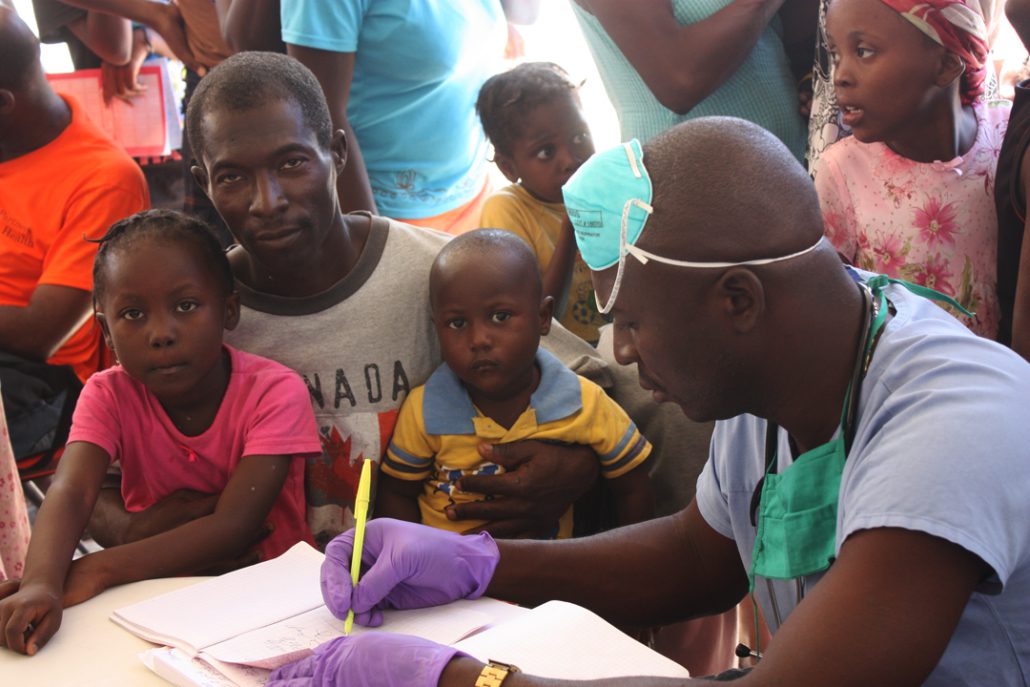
Under the visionary leadership of Dr. Paul Farmer, Partners in Health is setting an example for an effective and compassionate response to the COVID-19 pandemic. It is a global nonprofit organization that has been fighting for access to quality healthcare. The organization has catered to low- and middle-income countries (LMIC) since 1987. It does a good job of supplying strong on-the-ground global COVID-19 relief.
The Way Partners in Health Works
Partners in Health has developed on-the-ground networks of local healthcare professionals, community workers, facilities and government partners. These networks are poising Partners in Health to support strong on-the-ground global COVID-19 relief. They are also challenging the traditional “control over care” that LMICs traditionally use to combat pandemics.
Dr. Paul Farmer is chief strategist and chair of the Partners in Health board of trustees and recently won the $1 million Berggruen Prize for Philosophy & Culture for his impact at the intersection of global health and human rights and his leadership in advocacy for a global COVID-19 response that is humane as well as effective. Farmer is chair of the Department of Global Health and Social Medicine at Harvard Medical School. He is also the Brigham and Women’s Hospital’s chief of Division of Global Health Equity, a physician and anthropologist.
Replacing “Control Over Care” with “Global Equity”
Farmer feels that the global health arena needs to overhaul the dominant “control over care” approach, which focuses on containment and isolation during epidemic outbreaks. The COVID-19 response has heavily emphasized isolation and social distancing more than rapid testing and treatment. In a recent Forbes interview, Farmer noted that LMICs lacked ventilators and oxygen masks for treatment during the onset of the pandemic. Instead, Farmer advocates “global health equity” so everyone has access to trained staff, medicines, supplies, appropriate facilities and best practices.
In Rwanda, Partners in Health supports community health workers who do contact tracing and accompany sick people. Farmer feels that the Partners in Health COVID-19 response in Rwanda has been stronger than the United States’ response as the U.S. does not utilize community health workers in the same way.
Investment in Local Health Systems
The Partners in Health COVID-19 response is succeeding. This is because Partners in Health has already deeply invested in the local health systems of the 11 countries it supports. In each country, Partners in Health focuses on systems building through training strong medical staff. It also focuses on securing facilities with electricity, running water and ample space. From there, Partners in Health works very closely with local governments to implement universally shared best practices to ascertain quality care. Partners in Health employs community health workers to help community members access to care. It employs 18,000 staff with 99% from countries served by Partners in Health. It also supports at least 12,000 community workers who make more than 800,000 annual home visits to patients and families.
The Partners in Health COVID-19 response includes testing and contact tracing. It also includes free care and treatment for all COVID-19 patients at all Partners in Health-supported health facilities. The Partners in Health COVID-19 response includes assisting local governments by providing personal protective equipment (PPE). It also includes training in infection protection and control measures. Mobilizing community health workers is a third facet of the Partners in Health response to the pandemic. Partners in Health’s extensive experience with infectious disease outbreaks in several countries has informed it significantly. The organization supports the “People’s Vaccine” and COVAX global movements for free and readily accessible COVID-19 vaccines. Two examples of Partners in Health’s COVID-19 response include the building of a quarantine center in Liberia and an initiative to aid disadvantaged girls in both Rwanda and Haiti.
Partners in Health Liberia’s Quarantine Center
Partners in Health Liberia opened a 26-bed quarantine center in the coastal city of Harper in April 2020. It accomplished this by working with Liberia’s health ministry and other local health partners. The center provides medical and psychosocial services 24/7. It includes dignified care amenities such as hand-washing stations and gender-friendly washrooms. It also includes appropriate medical equipment such as blood pressure and oxygen saturation monitors. This is a great example of providing more on-the-ground global COVID-19 relief.
Partners in Health Haiti Supports Teens Coping with Emotional Stress
The Partners in Health Women and Girls Initiative (WGI) offers a spectrum of activities. This includes drawing, yoga and guided meditation in Haitian Creole for teens overwhelmed with COVID-induced stress. The organization is also raising funds to provide each of the 80 Port-Au-Prince WGI participants with internet access and solar lamps. The resources will help them continue their studies during COVID-19 lockdowns. Partners in Health established WGI in 2008 to empower disadvantaged girls in both Haiti and Rwanda.
The world is beginning to grapple with the global COVID-19 vaccine rollout. Farmer and Partners in Health will play an important role in ascertaining that LMICs receive them too. “[COVID-19] is a sharp reminder that everyone should be concerned with making vaccines available, regardless of ability to pay, the country in which you happen to be born or live, or any of the other criteria that have long been abused to deny equitable access to the fruits of modern science,” he said.
– Shelly Saltzman
Photo: Wikipedia Commons

How the World Bank is Helping Grow Laos’ Economy
The Southeast Asian nation of Laos has a heavily agricultural economy with substantial income from tourism, logging and other natural resources. Although poverty has been reducing across Laos, the distribution of incoming wealth has been unequal. Laos’ beautiful and resource-rich forests are key to building economic strength and sustainable development.
In January 2021, the World Bank approved $57.37 million for the Lao Landscapes and Livelihoods project. This project will involve forest management guidance, small business training, Laotian forest management agencies, villages and small business owners to create plans for forest conservation and economic growth.
Tourism
Laos’ economy relies on its beautiful forest landscapes to draw in tourists. The majority of tourists who come to Laos are from neighboring countries in Southeast Asia, but half of the income from tourism comes from distant international travelers.
Though tourism in Laos is on an upward trend, it could improve with better infrastructure, staffing and management of tourism-based businesses. The Lao Landscapes and Livelihoods project includes training for small business owners and those in the tourism industry to improve their business strategies and bring in more income.
Forestry
Laotians use natural resources both for industry and for sustenance, with forestry as their second-largest economic sector, primarily exporting lumber to Vietnam. Unfortunately, loopholes and poor landscape management allow the government to approve many unsustainable logging projects.
Laos’ landscape offers opportunities for growing more high-quality timber to increase logging income without the destruction of forests. The World Bank plans to collaborate with forest management agencies and businesses to incentivize and incorporate more sustainable business practices that will boost Laos’ economy.
Sustainability
In addition to food, tourism and logging, the forests of Laos also protect villages from floods and soil erosion. The Lao Landscapes and Livelihoods project includes funding for experts to work with forest management agencies to develop more effective wildlife protection policy, as well as funding for forest-friendly infrastructure and livelihood training within targeted villages. World Bank officials will encourage village members to engage in sustainable projects such as weaving, fishponds, home gardens, bamboo production and black chicken raising.
Impact
The World Bank will directly support 600 Laotian villages with 400,000 residents living in targeted protected areas. The programs will go toward addressing gender inequality including the pay gap, focusing livelihood training towards women and with earmarked funding for the most vulnerable community members including the poor and ethnic minorities.
The goal of the Lao Landscapes and Livelihoods project is to protect the natural landscape that benefits all Laotians and reduce income inequality by providing improved economic opportunities for small business owners and impoverished residents. Focusing on the most vulnerable villagers will improve livelihood opportunities for low-income areas. With better tourism management, high-quality timber growing, sustainable forest policy and improved village infrastructure, Laos’ economy can grow and better serve the entire population.
– Elise Brehob
Photo: Flickr
How COVID-19 has Affected Poverty in the Philippines
The COVID-19 pandemic could push an additional 207 million people into extreme poverty based on predictions, bringing the total to over 1 billion by the year 2030, according to research from the United Nations Development Program (UNDP). COVID-19 has affected poverty in the Philippines, an archipelagic country in Southeast Asia, with no exception. The COVID-19 pandemic is significantly impacting the Philippines when it comes to the economy, jobs and poverty incidence. Here is some information about the effects of COVID-19 on poverty and how the government of the Philippines plans to address them.
Poverty Reduction
Prior to COVID-19, the economy of the Philippines made progress in delivering national, inclusive growth, as indicated by an impressive decline in poverty rates. Poverty rates declined from 23.3% in 2015 to 16.6% in 2018. The Philippines expected this trend to continue and impact household incomes throughout the country in a positive way, particularly wages from those of lower-income groups.
The COVID-19 pandemic had negative consequences for poverty reduction in the Philippines. The World Bank projected that the Philippines’ GDP would shrink by 8.1 % in 2020, from the previous forecast of 6.9%. Rong Qian, a senior economist with the World Bank, attributed the downgraded 2020 forecast to the GDP contraction of 11.5% during the third quarter of 2020. The third-quarter contraction came as a string of typhoons hit the country from October to November 2020.
Economic Effects of COVID-19
The COVID-19 pandemic has resulted in a contraction of economic growth driven by significant declines in consumption and investment growth. The pandemic has also led to profound disruptions in areas like manufacturing, agriculture, tourism, construction and trade throughout the country. This feeds into how COVID-19 affected poverty in the Philippines on different levels. The impact on the country’s economy has been severe, leading to the lowest consumption growth in over three decades. The effects on the economy began to take place in February 2020 with a considerable decline in the arrival of tourists, falling by 41.4%. Coupled with this, private consumption growth declined to 0.2% in the first quarter of 2020 from 6.2% in the previous year. Both the hotel and restaurant industries suffered considerably, shrinking by 15.4%.
The economic collapse in 2020 has also led to high unemployment throughout the country. The economy will lay off people with service jobs in several different fields. Many others will be on unpaid leave from their companies. Employment recovery can lag the country’s economic growth by six to 18 months. Estimates have determined that unemployment will remain at elevated levels, moving from 12.4% at the end of 2020 to 9% by June 2021.
Possible Financial Support
Prior to COVID-19, the government of the Philippines reduced poverty from 23.3% in 2015 to 16.6% in 2018. This was a result of steady economic growth, the creation of new jobs and social assistance programs. The COVID-19 pandemic will likely reverse the recent gains in addressing extreme poverty. COVID-19 related restrictions have cut off income for seasonal workers, entrepreneurs and low-end service jobs. They were the country’s drivers of poverty reduction in recent years. Achim Fock, the World Bank Acting Country Director for Brunei, Malaysia, the Philippines and Thailand hopes that offering “financial support to affected firms, especially small and medium enterprises, to prevent job losses and bankruptcy, can help ensure that the recent shocks do not cause permanent damage to the country’s productive capacity and human capital.”
Social Amelioration Program
The government of the Philippines introduced a social protection program during the country’s quarantine to address how COVID-19 affected poverty in the Philippines. The government provided emergency subsidies through its Social Amelioration Program (SAP). SAP covered 18 million poor households, making up 70% of the entire population that it granted coverage to. SAP beneficiaries include 4.4 million households enrolled in the safety net program Pantawis Pamilyang Pilipino Program along with other vulnerable Filipinos such as informal workers.
Projected Improvement
Economic managers assert the Philippines will remain under a less restrictive quarantine throughout the beginning of 2021. They are hoping the economy will open 100% once vaccination levels reach at least 60% of the population. The growth of the economy could still improve and poverty could reduce in the coming years as long as there is a rebound in consumption, a significant push in public investment and great strides in the recovery of global growth. Predictions have stated that economic growth will return to at least 6% in 2021 and 7% in 2022.
– Elisabeth Petry
Photo: Flickr
On-the-Ground Global COVID-19 Relief
Under the visionary leadership of Dr. Paul Farmer, Partners in Health is setting an example for an effective and compassionate response to the COVID-19 pandemic. It is a global nonprofit organization that has been fighting for access to quality healthcare. The organization has catered to low- and middle-income countries (LMIC) since 1987. It does a good job of supplying strong on-the-ground global COVID-19 relief.
The Way Partners in Health Works
Partners in Health has developed on-the-ground networks of local healthcare professionals, community workers, facilities and government partners. These networks are poising Partners in Health to support strong on-the-ground global COVID-19 relief. They are also challenging the traditional “control over care” that LMICs traditionally use to combat pandemics.
Dr. Paul Farmer is chief strategist and chair of the Partners in Health board of trustees and recently won the $1 million Berggruen Prize for Philosophy & Culture for his impact at the intersection of global health and human rights and his leadership in advocacy for a global COVID-19 response that is humane as well as effective. Farmer is chair of the Department of Global Health and Social Medicine at Harvard Medical School. He is also the Brigham and Women’s Hospital’s chief of Division of Global Health Equity, a physician and anthropologist.
Replacing “Control Over Care” with “Global Equity”
Farmer feels that the global health arena needs to overhaul the dominant “control over care” approach, which focuses on containment and isolation during epidemic outbreaks. The COVID-19 response has heavily emphasized isolation and social distancing more than rapid testing and treatment. In a recent Forbes interview, Farmer noted that LMICs lacked ventilators and oxygen masks for treatment during the onset of the pandemic. Instead, Farmer advocates “global health equity” so everyone has access to trained staff, medicines, supplies, appropriate facilities and best practices.
In Rwanda, Partners in Health supports community health workers who do contact tracing and accompany sick people. Farmer feels that the Partners in Health COVID-19 response in Rwanda has been stronger than the United States’ response as the U.S. does not utilize community health workers in the same way.
Investment in Local Health Systems
The Partners in Health COVID-19 response is succeeding. This is because Partners in Health has already deeply invested in the local health systems of the 11 countries it supports. In each country, Partners in Health focuses on systems building through training strong medical staff. It also focuses on securing facilities with electricity, running water and ample space. From there, Partners in Health works very closely with local governments to implement universally shared best practices to ascertain quality care. Partners in Health employs community health workers to help community members access to care. It employs 18,000 staff with 99% from countries served by Partners in Health. It also supports at least 12,000 community workers who make more than 800,000 annual home visits to patients and families.
The Partners in Health COVID-19 response includes testing and contact tracing. It also includes free care and treatment for all COVID-19 patients at all Partners in Health-supported health facilities. The Partners in Health COVID-19 response includes assisting local governments by providing personal protective equipment (PPE). It also includes training in infection protection and control measures. Mobilizing community health workers is a third facet of the Partners in Health response to the pandemic. Partners in Health’s extensive experience with infectious disease outbreaks in several countries has informed it significantly. The organization supports the “People’s Vaccine” and COVAX global movements for free and readily accessible COVID-19 vaccines. Two examples of Partners in Health’s COVID-19 response include the building of a quarantine center in Liberia and an initiative to aid disadvantaged girls in both Rwanda and Haiti.
Partners in Health Liberia’s Quarantine Center
Partners in Health Liberia opened a 26-bed quarantine center in the coastal city of Harper in April 2020. It accomplished this by working with Liberia’s health ministry and other local health partners. The center provides medical and psychosocial services 24/7. It includes dignified care amenities such as hand-washing stations and gender-friendly washrooms. It also includes appropriate medical equipment such as blood pressure and oxygen saturation monitors. This is a great example of providing more on-the-ground global COVID-19 relief.
Partners in Health Haiti Supports Teens Coping with Emotional Stress
The Partners in Health Women and Girls Initiative (WGI) offers a spectrum of activities. This includes drawing, yoga and guided meditation in Haitian Creole for teens overwhelmed with COVID-induced stress. The organization is also raising funds to provide each of the 80 Port-Au-Prince WGI participants with internet access and solar lamps. The resources will help them continue their studies during COVID-19 lockdowns. Partners in Health established WGI in 2008 to empower disadvantaged girls in both Haiti and Rwanda.
The world is beginning to grapple with the global COVID-19 vaccine rollout. Farmer and Partners in Health will play an important role in ascertaining that LMICs receive them too. “[COVID-19] is a sharp reminder that everyone should be concerned with making vaccines available, regardless of ability to pay, the country in which you happen to be born or live, or any of the other criteria that have long been abused to deny equitable access to the fruits of modern science,” he said.
– Shelly Saltzman
Photo: Wikipedia Commons
The Need for Telemedicine in Brazilian Communities
Brazil is using telemedicine to change the way the country’s most vulnerable interact with the healthcare system. Brazil is a South American democratic power that has over 211 million people living within its borders. A 2010 census indicated that over 11 million Brazilians lived in favelas. Those living in favelas have an economic disadvantage and limited access to quality healthcare. In the favelas, many Brazilians lack a healthy water supply to maintain hygiene. Additionally, the clustered homes in favelas are increasing the chances that infectious diseases will spread through them. As a result, these communities need better access to public health resources and telemedicine in Brazilian communities must improve.
Brazil’s Unified Health System suffers from geographic disparities in access and a lack of funding. The Brazilian health system already had issues meeting the needs of the people in poor urban and rural areas. However, once the COVID-19 pandemic hit, the health system became strained even more. Luckily, for the most vulnerable people of Brazil, there are organizations trying to bridge the gaps in Brazilian healthcare.
SAS Brazil’s Mission to Bring Telemedicine to Brazilian Communities
SAS Brazil describes itself as “a [nonprofit] and itinerant Brazilian social organization, which believes in technology and invests in health innovation.” Eight friends formed the nonprofit in 2013 when they attended an international rally. In 2019, it received over $120,000 and had an operating budget of around $200,000 in the same year. However, its expenses for the same year were $200,000. It runs on a budget that relies on multiple sources of revenue including donations to continue its mission of providing the healthcare needed in Brazilian communities.
In the organization’s founding year, it helped 1,500 people. Meanwhile, in 2019, it helped 13,000 people. SAS Brazil’s work consists mostly of expeditions to communities in 14 Brazilian states. Cocos is a municipal region in the northeast of Brazil. The nonprofit has served over 840 individuals in that area alone as of 2019. A major change in Brazilian healthcare regulations has expanded its mission.
Brazil’s Remote Healthcare Regulation Changes
Brazil has 79 telemedicine-related laws and regulations. However, these many attempts to create a whole and codified framework for healthcare services in Brazil have fallen short. Up until the year 2020, SAS Brazil faced this problem as Brazil only allowed remote healthcare services between medical professionals. However, the Ministry of Health with the Federal Council on Medicine revised the rules to allow contact between healthcare professionals and patients. SAS Brazil can now bring medical expertise to more remote and poor areas throughout Brazil.
Looking Ahead
Numerous factors in Brazil’s favelas and impoverished communities play a role in making healthcare technology expansion vital to these regions. The lack of medical professionals, transportation and high need has created a disparity in access to telemedicine in Brazilian communities like favelas. Moreover, the COVID-19 pandemic has exasperated the disparity tremendously. However, new developments are decreasing the access gap for many Brazilians. Nonprofit organizations, like SAS Brazil, are providing “free medical free basic medical consultations and guidance for residents of favelas in different cities in Brazil.”
– Jacob Richard Bergeron
Photo: Flickr
The Philippines’ Improved Economy
The Philippines is a developing nation located in the East Asian Pacific region. Although the nation is still developing, the Philippines economy is improving exponentially. According to the World Bank Group, the country is experiencing increased urbanization and the middle class of the country is growing. Businesses have experienced notably positive performance in the past few years. Real estate, finance and the insurance industry are all areas where the economy is having exceptional growth. However, the COVID-19 pandemic has slowed the economic growth of the Philippines. If the Philippines contains the virus on both a domestic and global level then the economy of the Philippines will rebound in late 2021 or 2022. The Philippines’ improved economy occurred in several ways.
Investing in Agriculture
Agriculture accounted for about 25% of the Philippines’ GDP in the 1980s. However, only 9.3% of the agriculture industry contributed to the economy in 2018. Yet, the agriculture sector employs about 25% of the Philippines’s workforce. Some important agricultural goods from the Philippines include coconuts, rice, corn and pineapples. In recent years, the agricultural sector’s low rate of growth has contributed to poverty and unemployment.
As a result, the government has begun supporting the Philippine Department of Agriculture’s programs. Some of its programs include improving food security within the nation. The World Bank’s Philippine Rural Development Project is providing external support to the agricultural sector. This project aims to improve infrastructure that is vital to agricultural production. Furthermore, improving agriculture is vital to the economy.
Improving Industry
The industry sector has been another contributing piece to the Philippines’s improved economy. Currently, this sector has currently been able to employ 18.4% of Philippine workers. Additionally, the Filipino government is attempting to increase the amount of foreign direct investment. It also plans on achieving this goal by working to improve the infrastructure of the nation. This will then attract the attention of possible investors. Manufacturing is another important industry in the Philippines. The Philippines is home to a variety of metallic resources. The mining industry itself has already brought different mining companies to the Philippines to conduct business. Mining businesses working in the Philippines include BHP and Sutimo Metal Mining Co LTD.
The Growing Service Sector
The growth of the service sector is another contributor to the Philippines’ improved economy. Around 60% of the Philippines’ GDP comes from this sector. In addition, the service sector also employs about 56.7% of people in the Philippines’ workforce. One vital part of the service sector includes business process outsourcing (BPO). The Philippines has an extremely large BPO market due to the United States aid.
The Philippines’ improved economy is noticeable in several ways. First, the income-per-capita saw an increase of 17% from 2016-2018. Additionally, the unemployment rate has decreased as a result of foreign direct investment into the country. The Philippines has become the 13th largest economy in Asia. Despite the challenges, organizations like EY and the World Bank note that the Philippines has the potential to have a flourishing economy.
– Jacob E. Lee
Photo: Wikipedia Commons
Agricultural Improvements in Tanzania
Tanzania is a country located along the coast of the Indian ocean in Eastern Africa. It has a population of more than 60 million people and continues to grow. Tanzania’s economy has been on the rise over the last decade. However, its agricultural sector employs a large number of people and is still struggling to make ends meet. The country partners with many agencies and organizations. Moreover, the U.S. government-funded USAID is Tanzania’s most important donor. It has been working to contribute to agricultural improvements in Tanzania by increasing the efficiency of weather information. Here are some facts about Tanzania’s economic condition, the importance of access to climate information and the U.S. aid that the country’s farming sector has received recently.
The Total Number of Low-Income Tanzanians Has Increased Despite Economic Growth
Tanzania has a wide variety of resources and economic reforms. As a result, the nation has witnessed astonishing growth in its economy within the last 10 years. Thus, the poverty rate fell from 34.4% in 2007 to 26.4% in 2018. Additionally, approximately 14 million people were living in poverty. However, due to the country’s rapid population growth, the absolute number of people living in poverty increased while the relative number decreased. The areas of economic growth were related to industry and service. This only gives work to 6% of the total population. The agriculture industry requires the most support and foreign aid because it grows slower. In addition, many Tanzanians work in this industry.
Easy Access to Weather Information is a Necessity
Access to weather information is the main tool in the process of agricultural improvements in Tanzania. This has become increasingly important as the climate is constantly changing. Since food production heavily relies on precipitation, farmers need to be able to predict and prepare for any amount of rainfall. The Tanzania Meteorological Authority (TMA) has been sending out SMS to more than 3,000 farmers all around the country several times a month to provide them with the much-needed information. However, due to high cost and inefficiency, the methods of spreading information have been the main focus of improvement.
Database for Farmers has Supported Agricultural Improvement in Tanzania
USAID funds the Building Capacity for Resilient Food Security Project and serves as an important partner in improving the spread of information. This project’s goal is to support the Tanzanian government in stabilizing its agricultural sector through different climate challenges. Additionally, the Food and Agricultural Organization of the United Nations (FAO) is one of the project’s three national partners. It has also supported TMA in creating a database for farmers to access and analyze weather information. The new technology has made it easier for farmers to receive the necessary information and has also resulted in higher usage of social media platforms by people in rural areas. It has become much easier for those in the agricultural sector to schedule the planting and harvesting of crops with this improvement.
USAID Sponsored Training to Increase Food Production Efficiency
The Building Capacity for Resilient Food Security project has contributed to many agricultural improvements in Tanzania. For example, the project sponsored training sessions for decision-makers and stakeholders throughout Tanzania in 2019. These training sessions teach farmers how to survive different climate crises and how to plant and harvest efficiently. Experts from American universities and various international partners are leading the training program. Furthermore, the goal is to teach the participants how to practice climate-smart agriculture. The hope was that the training session would increase Tanzania’s food production and decrease the number of farmers living in poverty.
Making Tanzanian Agriculture Self-Reliant
The partners of the Building Capacity for Resilient Food Security Project, FAO, USAID and the U.S. Department of Agriculture (USDA) improved Tanzanian farmers’ capability to plan their food production efficiently in January 2021. Furthermore, the partners provided important supplies such as ph meters, measuring cylinders, bottles and new technologies for a weather database to the TMA.
It will be easier for the agency to collect weather data and quickly spread the information to Tanzanian farmers with the new equipment. This will support the farmers’ goal in expanding their food production and security to the point of self-reliance. The organizations hope that making Tanzania’s agriculture more sustainable will contribute to the country’s economic growth and help many people who have employment in the sector out of poverty.
– Bianca Adelman
Photo: Flickr
The SOPPEXCCA Coffee Cooperative in Nicaragua
Coffee in Nicaragua
The rise of specialty coffee is promising for Nicaragua. Nicaraguan beans are distinctly known for their mild and citrus-like taste and are consequently gaining traction in the global market. Roughly 60% of the nation’s coffee output comes from northern regions like Jinotega where SOPPEXCCA was founded.
Most coffee growers face economic challenges beyond living a humble farming life. The crops require a decent amount of maintenance and are prone to environmental risks. A leaf disease called “la roya” puts 30-40% of coffee plants at risk of destruction and hurricanes destroyed 10-15% of the coffee harvest in 2020. Additionally, many children often have to dedicate school time to the farms due to the sheer amount of work involved in producing coffee.
The SOPPEXCCA Coffee Cooperative
SOPPEXCCA empowers farming communities with long-term solutions that stimulate financial literacy, strategy and growth. By building educational institutions, promoting gender equality, utilizing sustainable solutions and communicating with farmers, the cooperative helps give farmers life skills to improve their economic standing. The cooperative works in accordance with the U.N. Millennium Development Goals, which include eradicating extreme poverty and hunger. Farmers and communities who join SOPPEXCCA are also protected by a number of international securities. This includes Fair Trade certification and Food4Farmers benefits. These efforts are part of SOPPEXCCA’s anti-poverty agenda.
Muchachitos del Cafe
SOPPEXCCA’s youth movement, Children of Coffee, reaches out to younger generations through education. By providing classes, scholarships and building schools, SOPPEXCCA looks to fund programs that help kids who come from farming backgrounds.
Women’s Empowerment
The SOPPEXCCA coffee cooperative is led by Fatima Ismael and boasts a female membership rate of 40%. Ismael took over leadership in 1997 and pointed the cooperative toward a robust plan on a women-centric approach. Participating coffee businesses and entrepreneurs have supported initiatives for improving public health by investing in cervical cancer prevention programs.
The cooperative has also launched a number of movements to support women in the field of coffee agronomics. The coffee-growing industry is generally typified as masculine. But, cooperatives such as La Fondacion entre Mujeres and Las Diosas, within SOPPEXCCA, seek to empower women in roles typically reserved for males. SOPPEXCCA also supports female coffee producers by giving them the tools and knowledge needed to succeed in the industry, such as marketing and management skills.
Empowering Farmers
SOPPEXCCA also equips farmers with the entrepreneurial skills required to participate in the fast-paced global coffee market. In response to la roya, it partnered with a number of crop diversification outlets to help farmers grow safer and more resilient plants such as cacao. The cooperative has started a chocolate factory to help create jobs and support farmers. SOPPEXCCA also connects small-scale coffee producers with large corporations such as Starbucks, allowing them to apply for loans that can jumpstart their business careers.
The Rise of Craft Coffee
Caffeinated beverages are on the rise within the global market and Nicaraguan coffee will likely be one contender among many pioneering trends. Since its establishment, SOPPEXCCA has significantly grown. It started with fewer than 70 men and women coffee producers and since expanded to 650 men and women producers, organized in 15 cooperatives in SOPPEXCCA. By supporting Nicaraguan coffee farmers, SOPPEXCCA supports poverty reduction in the country.
– Danielle Han
Photo: Flickr
Blue Economy in Costa Rica to Fight Poverty and Inequality
What is a Blue Economy?
According to the World Bank, a blue economy can be defined as the use of oceanic resources through sustainable methods in order to improve lives and job opportunities, while maintaining a clean marine ecosystem, which essentially stimulates economic growth. The main goal of a blue economy is to protect the health of the ocean and stimulate economic growth with increased opportunities in the areas of employment and innovation. A blue economy consists of several sectors that specialize in marine production like fisheries, aquaculture, renewable marine energy, marine biotechnology and maritime transport.
Establishing a Blue Economy in Costa Rica
Since Costa Rica is a coastal country that is rich in natural marine resources, the development of a blue economy will open new markets and result in economic growth. Costa Rica is abundant in offshore resources like tuna. Systems created by a blue economy can use these resources in sustainable ways. Another potential boost to the economy is the growth of sport fishing and ecotourism, which also results in increased job opportunities. The Instituto Costarricense de Pesca y Acuicultura (INCOPESCA) developed the $90 million Sustainable Fisheries Development Project to support the growth of a blue economy in Costa Rica through the development of sustainable fisheries and the support of fishing families.
Another project, the Oceans Economy and Trade Strategies (OETS) project, was implemented in Costa Rica in 2018 by the United Nations Conference on Trade and Development (UNCTAD) and the United States Division for Ocean Affairs and the Law of the Sea (DOALOS). The OETS project supports Costa Rica in the development of sustainable use of marine resources and maximizing potential economic benefits. Under the project, Costa Rica can develop sustainable fishing strategies to improve food security and health among citizens, which is characteristic of a blue economy.
Opportunities for Women
A blue economy in Costa Rica opens up more opportunities for women in the workforce. Gender inequality is a global issue that affects women in many areas, including jobs. If the gender gap is narrowed, the global GDP is estimated to grow by $13 trillion in 2030. Since women make up most of the workforce in fisheries and maritime tourism, blue economies benefit women the most in terms of poverty and health. Blue economies advance gender equality through an increase in technology and resources, which women oftentimes lack in the marine workforce. Increasing job opportunities for women in fisheries and marine tourism will diversify innovative aquaculture, which aids in further boosting the economy.
Additional Support
The Global Environment Facility (GEF) shows support for the strides made toward blue economies in Central America. The Central American project implemented by the U.N. Development Program (UNDP) in 2019 aims to help regulate challenges in the blue economy. The GEF contributed $6.8 million from the GEF Trust Fund toward the development of blue economies in Central America. The contribution goes toward assessing challenges and opportunities in the blue economies of Costa Rica, Ecuador, El Salvador, Guatemala, Honduras, Mexico and Panama. The financing will go toward collaboration within Central America to create the best methods to flourish in a blue economy.
Conclusively, these efforts will not only eradicate poverty in Costa Rica but also lead to more food security. Furthermore, they boost and empower the economic opportunities of women.
– Simone Riggins
Photo: Flickr
App Helps Improve Agriculture in Africa
Agriculture in Africa is a major contributor to the continent’s economy. Africa has ideal farming conditions with large amounts of freshwater. Furthermore, it has about 65% of the world’s uncultivated arable land and an estimated 300 days of sunshine. Agriculture is able to boost trade, feed the hungry and help end poverty. Many countries in Africa began to invest in agriculture through the Comprehensive African Agricultural Development Programme (CAADP). Some of these countries are Zambia, Niger, Togo, Mali and Ghana. Additionally, communities have recognized that agriculture has the potential to create jobs, improve food security, sustainable resources and so much more. Farming in Africa has become a major focal point due to these benefits. As a result, an app is attempting to improve agriculture in Africa.
Smallholder Farms
A smallholder farmer is a person who works on a small piece of land growing crops. Many of these farmers grow crops and farm livestock. Families typically run the farms and those farms are often their main source of income. There are more than 500 million smallholder farms around the world. Furthermore, the farms contribute to about 75% of the continent’s agriculture production and 50% of livestock products.
Despite having suitable land for farming, a lot of the older generations in Africa discourage their children from farming. The land has the ability to grow an abundance of crops, yet African countries spend close to $65 billion importing food. The African Development Bank stated that the key to improving the economy is to focus more on farmers and providing better equipment, knowledge, training and technology.
The App for Farmers
About 33 million smallholder farmers exist in sub-Saharan Africa. Thus, as mobile phone usage has been increasing, The Haller Foundation created an app, Haller Farmers, to reach these farmers and improve agriculture in Africa. The app underwent testing at the Foundation’s demonstration plot in Mombasa, Kenya and researchers found that it would be able to help farms.
The majority of smallholder farmers in Africa have limited access to agricultural skills, technology and knowledge. Haller Farmers includes more than 60 years of farming experience that are low-cost and organic. In addition, the app is easy for people to use. The app is free to download from the Google Play store and farmers can download the practices so users do not have to connect to WiFi or use data.
Haller Farmers provides smallholder farmers with information in English and Swahili. Here are examples of some of the resources the app offers:
The purpose of the app is to aid smallholder farmers and improve agriculture in Africa, provide choices that can improve ecosystems and re-empower the farmers. Furthermore, farmers will be able to receive high-quality farming techniques and information as phone accessibility increases. About 48% of the population relies on agriculture in Africa. Thus, it is necessary to continue helping the continent’s farmers in innovative ways to bring reliable information and tools to the agricultural population.
– Sarah Kirchner
Photo: Wikimedia Commons
How Students are Fighting Food Insecurity in Mexico
When the COVID-19 pandemic first struck in March 2020, a group of college students came together to start The Farmlink Project, a nonprofit organization that works to alleviate food insecurity among poor people. Now, nearly a year later, Farmlink is making its mission an international one with The Farmlink Project: Mexico, which will fight food insecurity in Mexico. At the same time that Farmlink was forming, Mexicans living in poverty were experiencing the same disproportionate effects that the pandemic has had on the world’s poor communities.
Food Insecurity in Mexico
The pandemic hit Mexico early. The country had the fourth-highest death toll in the world by June 2020. As a result, impoverished communities suffered the brunt of the consequences. A government agency estimated that about 10 million people in Mexico fell into extreme poverty due to the economic effects of the pandemic. Food insecurity in Mexico became an immediate problem in many communities. Moreover, the government did little to support its citizens. Mexico did not provide stimulus checks or similar measures. Essentially, citizens ended up fending for themselves.
The Farmlink Project has been incredibly successful in its mission to deliver unused food to communities in need. This organization’s strategy is simple, straightforward and effective. It finds inefficiencies in the food distribution system that leads to food waste. Thus, the nonprofit implements measures to prevent that waste. Additionally, it receives donations for supporters. The nonprofit facilitates the transfer of that food directly to impoverished communities through food banks.
Food insecurity in Mexico is a prominent problem. However, the nation produces enough food to feed its citizens. Yet, the infrastructure necessary to feed everyone does not yet exist. Thus, The Farmlink Project is leaving a big impact on citizens by addressing food waste. This is more important now as Mexicans continue to sink into extreme poverty.
The Farmlink Project
The Farmlink Project’s Data Analytics lead Jake Landry talked to The Borgen Project about how it is approaching the unique challenges and opportunities of fighting hunger in Mexico. He stated that the nonprofit’s transfer into Mexico has started positively. It has delivered 112,160 kilograms of produce to Mexico since the beginning of the mission. Additionally, it has prevented 113,464 kilograms of carbon emissions in Mexico. Furthermore, it has begun working with GrupoPaisano, a fair trade organization that supports Mexican farmers. Together the organizations are creating media collaborations and promotional videos to raise awareness of The Farmlink Project’s mission.
This organization has been successful in the United States and is now providing hope to Mexicans during the pandemic. The Farmlink Project’s goal is to lay the groundwork for new infrastructure in the food distribution network in Mexico. It hopes to eliminate the large amount of food waste that Mexico generates every year.
– Leo Ratté
Photo: Flickr