Teaching Women Biointensive Agriculture
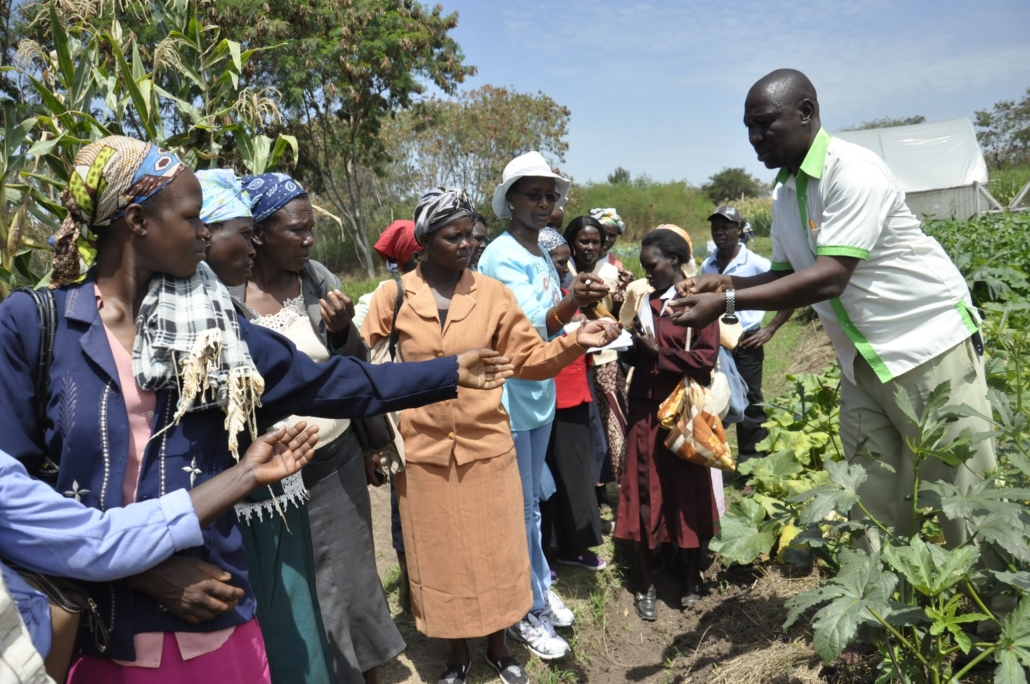
Kilili Self Help Project (KSHP) helps spread sustainable agriculture education to Kenyan farmers, most of whom are women. KSHP is a grassroots 501(c)(3) organization that is teaching Kenyan women biointensive agriculture. Millions of Kenyans struggle with hunger and food security. Many poor communities rely on small-scale farms for income and food for their families. Only about 20% of Kenya’s dry land is suitable for farming and the population continues to grow by 1 million every year. As a result, Kenyan farmers are unable to keep up with demand.
Female Kenyan Farmers
Since 2008, all of the Kilili Self Help Project’s funding has gone towards the GROW BIOINTENSIVE Agriculture Center of Kenya (G-BIACK). Biointensive agriculture is a simple and sustainable farming technique that allows farmers to produce a maximum harvest on a minimum amount of land. The World Bank estimates that up to 80% of Kenyan farmers are women. Men leave their wives in full control of the family farm. This is a result of them finding jobs elsewhere. KSHP and G-BIACK focus on empowering women who are struggling to feed their families.
Table Banking
Teaching women biointensive agriculture in Kenya is very important. Once a week, the group of women meets for “table banking.” This is apart from learning the GROW BIOINTENSIVE method. Each group member contributes 20 cents. The group then gives the sum of the contributions to one woman. The recipient spends the money on anything they want to help their family. The next week the recipient contributes their 20 cents to a different woman to do the same. G-BIACK shares and spreads all of its teachings. This benefits more farmers and ultimately helps reduce poverty in rural Kenyan communities.
Farming’s Manual Labor
One of the challenges of traditional farming is how physically demanding manual labor can be. The GROW BIOINTENSIVE Agriculture Center typically teaches women well into their 60s and even in their 90s. Many of them sing happily together as they learn. The GROW BIOINTENSIVE method is gentle on aging bodies. This adds to the sustainability of the technique. Proper digging uses body weight, gravity and a back and forth rocking motion to push the shovel into the ground. The process requires little to no force. John Jeavons trademarked the GROW BIOINTENSIVE farming method. He refined the “double-digging” step in soil preparation. This loosens and inflates the soil 24 inches down from the surface.
The deeper digging technique allows plants to extend their roots twice as far into the earth. Roots that extend deeper can reach more nutrients and water. This, in turn, produces a two to six-time higher yield. This technique uses a fraction of the space that farmers typically use in traditional agriculture.
Less is More
Jeavons believes, “In these days of difficult financial challenges globally, being able to do a lot with a little is the name of the game.” The Kilili Self Help Project and the GROW BIOINTENSIVE Agriculture Center of Kenya have empowered women and helped over 200,000 families become self-reliant. Families practicing biointensive agriculture no longer have to go to bed hungry. Farmers are able to sell extra crops for income. They also spread their knowledge throughout rural Kenyan communities. Increased biointensive agriculture directly decreases poverty. Teaching women biointensive agriculture and promoting it to other farmers also increases community health and food security.
– Sarah Ottosen
Photo: Flickr
