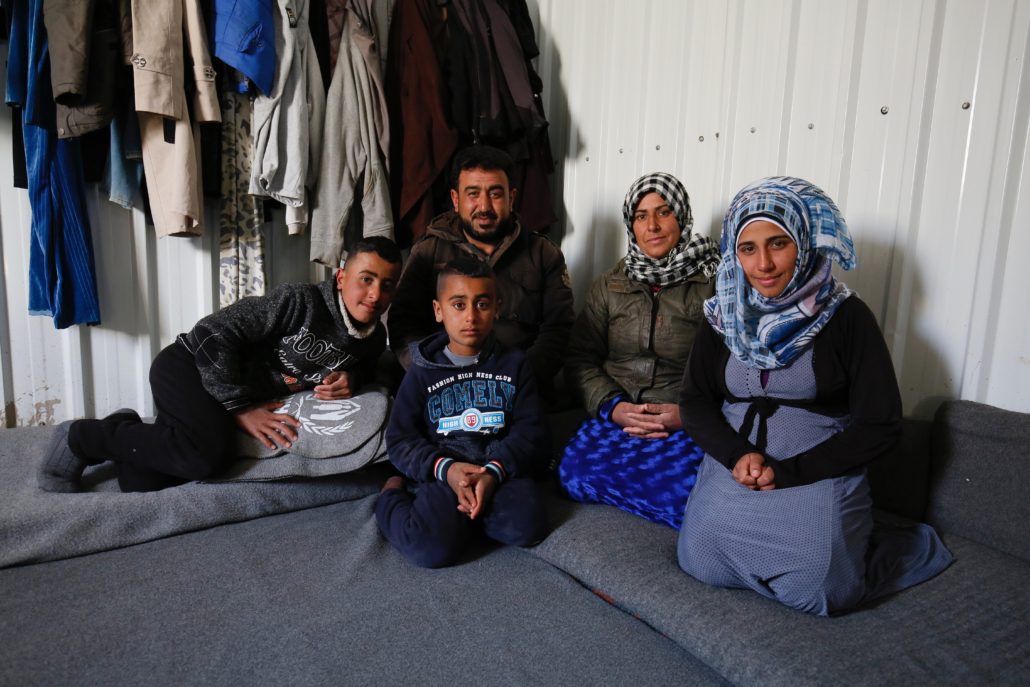
In a message to his donors, Helping Hand for Relief and Development (HHRD) CEO Javaid Siddiqui stated, “We are committed to extending a helping hand to our brothers and sisters in need around the world and hope you will continue to be our partner in this journey of service to humanity.” Though the organization has worked in more than 85 countries, Helping Hand has consistently engaged in refugee work in Jordan. Its work in the country is not only admirable but also a reflection of its impactful, long-term service to all of humanity.
In 2013, HHRD established an office in Amman, Jordan as the headquarters for HHRD-MENA. HHRD-MENA is a branch of Helping Hand that focuses on providing relief to the Middle East and North Africa. Since then, Helping Hand has provided clean water, proper food, education, development programs and stable homes for different Syrian and Palestinian refugees throughout Jordan.
Refugees in Jordan
Surrounded by countries suffering from conflict and disaster, Jordan hosts the second-highest number of refugees when comparing population sizes. Since the Syrian war in 2011, it has almost 1.4 million Syrian refugees. As of 2019, around 650,000 of them still have refugee status. Though most of the 2 million Palestinian refugees in Jordan have received citizenship, 370,000 are currently living in refugee camps in different parts of Jordan. The remaining 84,000 refugees currently living in Jordan are from Iraq, Yemen, Somalia and Sudan.
Most of the Syrian refugees live in urban areas and 85% of them are living below the poverty line. Many of the Syrian and Palestinian refugees in the city are not only suffering from poverty but also psychological trauma and lack of educational opportunities. Around 10,000 Syrian refugees are between the border of Syria and Jordan. They live in informal settlements, where access to basic needs and services is minimal and relies on humanitarian aid.
In an interview with The Borgen Project, Abdullah Sheikh, a participant in Helping Hand’s annual Youth for Jordan trip, described the different refugee situations he witnessed during his 2018 visit. “There are various camps, like the organized ones run by the government, which are usually huge. The camps we went to were people who would cross the border and then prop up a makeshift tent. And when I say tent I mean like a towel or a big blanket and a pair of sticks or something.”
Building Temporary Homes
According to Abdullah Sheikh, part of Helping Hand’s refugee work in Jordan involves providing decent shelter to refugees living outside the organized, official camps. During his visit, he assisted in the establishment of what Helping Hand calls a “micro-home.” These caravans replace the handmade shelter of the refugees, providing them with a temporary home until they are safe to return to their homeland. Within the micro-homes are two rooms, a small kitchen, running water and a toilet. Each home costs $5,000.
To install the homes, the team uses a crane to lift the micro-home out of the back of a truck. Then, all the members work together to place the home on rocks to keep it stable. Since the start of the project in 2016, Helping Hand has established 1,000 micro-homes. These homes have benefitted more than 5,000 Syrian refugees in Jordan as well as Lebanon.
Supplying Food and Water
When describing the food situation for the refugees, Abdullah Sheikh noted that it was “different depending on the camp.” He explained, “The [unofficial camps] in the desert, they really just rely on whatever people give them. [The refugees] just have a big tank of water in the middle of the camp and Helping Hand comes and refills it. And the food, Helping Hand would just bring them bread, oil and other things they can use to make food.”
Helping Hand’s food refugee work in Jordan also includes a Ramadan Iftar Tent. There, it provides Iftar meals for families every year. In 2020, it provided 160 families with proper meals. Besides the Iftar Tent, Helping Hand also distributes food packages and donated meat to refugees throughout Jordan all year round. In just May 2020, the team distributed a total of 3,000 food packages. Helping Hand also provides drinking water within the food packages.
Developing Programs and Schools
A big part of Helping Hand’s refugee work in Jordan involves educating children. Another major component is providing resources for adults to develop life skills. Just in 2019, Helping Hand provided 800 men and women in Jordan with life skill training through its development program.
Many of the women participated in the development programs near the HHRD-MENA office in Amman. The purpose of this specific program is to teach women different careers to earn a living. These careers include sewing, other crafts and computer training. With knowledge of finance and different skills, the women from this program can secure an income by opening up their own businesses and/or obtaining a job. Abdullah Sheikh says that his team had the opportunity to buy some of the products of the current trainees.
Through the Education Support Program, Helping Hand also provided 1,590 Syrian refugee children with basic education scholarships and tutoring in 2020. The organization gave seven students four-year scholarships to the University of Jordan.
Spending Time with Children
“My favorite part was when we played soccer in the camps in Mafraq near the Syrian border, with some of the kids there. It was just fun,” said Abdullah Sheikh. Throughout his visit with Helping Hand, he spent a lot of time playing with the refugee children his team came in contact with. “Some of the camps we went to twice. So, we bought [the kids] a soccer ball and then played with them again, because the ball they had was super messed up.”
During their visit to the refugee orphanages located in Amman, Jordan, the 2018 Youth for Jordan team went to a strip mall with some of the orphans. There, they played games and enjoyed rides. Another one of the days, the team spent the day with young Palestinian boys in a skills development program. Later during the week, they drove out to the Dead Sea where they hung out at the beach.
From building homes to providing support to helping children, all of Helping Hand’s refugee work in Jordan is a reflection of the organization’s hard work and dedication. In Jordan and around the world, humanitarian organizations have the ability to make a significant impact on the lives of refugees.
– Maryam Tori
Photo: Flickr

Helping Hand’s Refugee Work in Jordan
In a message to his donors, Helping Hand for Relief and Development (HHRD) CEO Javaid Siddiqui stated, “We are committed to extending a helping hand to our brothers and sisters in need around the world and hope you will continue to be our partner in this journey of service to humanity.” Though the organization has worked in more than 85 countries, Helping Hand has consistently engaged in refugee work in Jordan. Its work in the country is not only admirable but also a reflection of its impactful, long-term service to all of humanity.
In 2013, HHRD established an office in Amman, Jordan as the headquarters for HHRD-MENA. HHRD-MENA is a branch of Helping Hand that focuses on providing relief to the Middle East and North Africa. Since then, Helping Hand has provided clean water, proper food, education, development programs and stable homes for different Syrian and Palestinian refugees throughout Jordan.
Refugees in Jordan
Surrounded by countries suffering from conflict and disaster, Jordan hosts the second-highest number of refugees when comparing population sizes. Since the Syrian war in 2011, it has almost 1.4 million Syrian refugees. As of 2019, around 650,000 of them still have refugee status. Though most of the 2 million Palestinian refugees in Jordan have received citizenship, 370,000 are currently living in refugee camps in different parts of Jordan. The remaining 84,000 refugees currently living in Jordan are from Iraq, Yemen, Somalia and Sudan.
Most of the Syrian refugees live in urban areas and 85% of them are living below the poverty line. Many of the Syrian and Palestinian refugees in the city are not only suffering from poverty but also psychological trauma and lack of educational opportunities. Around 10,000 Syrian refugees are between the border of Syria and Jordan. They live in informal settlements, where access to basic needs and services is minimal and relies on humanitarian aid.
In an interview with The Borgen Project, Abdullah Sheikh, a participant in Helping Hand’s annual Youth for Jordan trip, described the different refugee situations he witnessed during his 2018 visit. “There are various camps, like the organized ones run by the government, which are usually huge. The camps we went to were people who would cross the border and then prop up a makeshift tent. And when I say tent I mean like a towel or a big blanket and a pair of sticks or something.”
Building Temporary Homes
According to Abdullah Sheikh, part of Helping Hand’s refugee work in Jordan involves providing decent shelter to refugees living outside the organized, official camps. During his visit, he assisted in the establishment of what Helping Hand calls a “micro-home.” These caravans replace the handmade shelter of the refugees, providing them with a temporary home until they are safe to return to their homeland. Within the micro-homes are two rooms, a small kitchen, running water and a toilet. Each home costs $5,000.
To install the homes, the team uses a crane to lift the micro-home out of the back of a truck. Then, all the members work together to place the home on rocks to keep it stable. Since the start of the project in 2016, Helping Hand has established 1,000 micro-homes. These homes have benefitted more than 5,000 Syrian refugees in Jordan as well as Lebanon.
Supplying Food and Water
When describing the food situation for the refugees, Abdullah Sheikh noted that it was “different depending on the camp.” He explained, “The [unofficial camps] in the desert, they really just rely on whatever people give them. [The refugees] just have a big tank of water in the middle of the camp and Helping Hand comes and refills it. And the food, Helping Hand would just bring them bread, oil and other things they can use to make food.”
Helping Hand’s food refugee work in Jordan also includes a Ramadan Iftar Tent. There, it provides Iftar meals for families every year. In 2020, it provided 160 families with proper meals. Besides the Iftar Tent, Helping Hand also distributes food packages and donated meat to refugees throughout Jordan all year round. In just May 2020, the team distributed a total of 3,000 food packages. Helping Hand also provides drinking water within the food packages.
Developing Programs and Schools
A big part of Helping Hand’s refugee work in Jordan involves educating children. Another major component is providing resources for adults to develop life skills. Just in 2019, Helping Hand provided 800 men and women in Jordan with life skill training through its development program.
Many of the women participated in the development programs near the HHRD-MENA office in Amman. The purpose of this specific program is to teach women different careers to earn a living. These careers include sewing, other crafts and computer training. With knowledge of finance and different skills, the women from this program can secure an income by opening up their own businesses and/or obtaining a job. Abdullah Sheikh says that his team had the opportunity to buy some of the products of the current trainees.
Through the Education Support Program, Helping Hand also provided 1,590 Syrian refugee children with basic education scholarships and tutoring in 2020. The organization gave seven students four-year scholarships to the University of Jordan.
Spending Time with Children
“My favorite part was when we played soccer in the camps in Mafraq near the Syrian border, with some of the kids there. It was just fun,” said Abdullah Sheikh. Throughout his visit with Helping Hand, he spent a lot of time playing with the refugee children his team came in contact with. “Some of the camps we went to twice. So, we bought [the kids] a soccer ball and then played with them again, because the ball they had was super messed up.”
During their visit to the refugee orphanages located in Amman, Jordan, the 2018 Youth for Jordan team went to a strip mall with some of the orphans. There, they played games and enjoyed rides. Another one of the days, the team spent the day with young Palestinian boys in a skills development program. Later during the week, they drove out to the Dead Sea where they hung out at the beach.
From building homes to providing support to helping children, all of Helping Hand’s refugee work in Jordan is a reflection of the organization’s hard work and dedication. In Jordan and around the world, humanitarian organizations have the ability to make a significant impact on the lives of refugees.
– Maryam Tori
Photo: Flickr
5 Common Misconceptions of Human Trafficking
An estimated 25 million individuals are trafficked globally on any given day. About 5.4 people per every 1,000 people in the world were victims in 2016. Additionally, one in four of these victims were children and three in four were women or girls. Approximately 89 million people have experienced some form of human trafficking within the last five years. Some victims suffer for a few days while others suffer for several years. Human trafficking is widespread and pervasive, and it is imperative that people understand the problem before addressing it. There are several common misconceptions of human trafficking that can make it difficult to identify and provide relief to victims. Here are five of these misconceptions.
5 Common Misconceptions of Human Trafficking
Parker stated the one thing she wishes she could tell everyone about human trafficking is that “it is a crime of egregious exploitation, and if unaddressed in partnership throughout the world, it will continue to grow.” Furthermore, she emphasized that people should not fight by themselves, but that “the community and world need to take responsibility.” For example, governments can work with local providers to disseminate information, attend to gang violence and develop service infrastructure for survivors.
Human trafficking is a global problem that requires global solutions. First, however, education and awareness must eradicate misconceptions of human trafficking. Only then, can this widespread issue be adequately addressed.
– Margot Seidel
Photo: Flickr
4 Organizations Empowering the Poor in Kolkata
The city of Kolkata, also known as Calcutta, is one of the metropolitan areas of India and the fourth most populated in India. Kolkata is the capital of the state of West Bengal where close to 20% of the population lives below the poverty line. In March 2020, like most of the world, the first few COVID-19 cases hit Kolkata. However, unlike other cities, Kolkata also weathered the cyclone Amphan a few months later. The cyclone in combination with COVID-19 has put the poor in Kolkata at risk. The following organizations are empowering the poor in Kolkata.
Kolkata Gives Foundation
Kolkata Gives is a nonprofit organization that began in 2014. It aims to connect reliable NGOs with potential donors. Additionally, the organization currently works on “project 10K” which aims to feed 10,000 affected families in Bengal along with the ‘Mask for all’ campaign that will distribute 10 lac reusable masks to those who need them. Outside of its innovative approach toward connecting the right organizations, Kolkata Gives has found the best way for people to celebrate birthdays and anniversaries during the pandemic. Since individuals cannot get together to celebrate, they can instead donate $40 to the organization to feed the poor in Kolkata.
Indian Humanitarian Foundation
The Indian Humanitarian Foundation (IHA) is an NGO that serves the poor in Kolkata through Durga Puja, an auspicious religious festival celebrated over five days in the city. The organization has been targeting areas like shelters, railway stations and people on the street who require food and rations the most during the COVID-19 pandemic and in the aftermath of cyclone Amphan.
Calcutta Rescue
Calcutta Rescue is a charitable organization that is working with communities in need of assistance. It provides free health care, vocational training and sanitation in a sustainable way for families to alleviate themselves from poverty by working toward a better future. Calcutta Rescue recognizes that a third of Kolkata lives in slums. In the wake of the current crisis, this organization has educated slum dwellers about COVID-19 health and safety protocols. Additionally, it has moved its education centers for children online on Whatsapp through videos that teachers recorded. Whatsapp is a more widely accessible free messaging application.
Child in Need Institute (CINI)
CINI is an NGO that works for the well-being of poor children in India. Based in Kolkata, CINI is currently assisting over 7 million people in Jharkhand, West Bengal and Orissa. It has reached over 30,000 wage workers, poor children and women with essential items like food and hygiene products. As its name suggests, CINI is focussing on making this pandemic easier for children in need by setting up a child helpline for distressed children.
These four organizations are a few of many that are doing incredible work for and from the city of Kolkata. Cyclone Amphan and COVID-19 have and are dismantling previous systems of upliftment. Therefore, NGOs and trusts have become key in quickly reassessing and organizing the community, to establish sustained empowerment.
– Anuja Mukherjee
Photo: Flickr
The Dayton Accords: Bosnia and Herzegovina
On Nov. 21, 1995, the Dayton Accords were completed in Dayton, Ohio. The peace agreement ended a four-year war in the Balkans that claimed the lives of an estimated 100,000 people. The deal has been declared brilliant, insufficient, crucial and shortsighted. A former Bosnian energy minister described it as, “diplomatic and political butchery,” while simultaneously stating, “it was by far the best option available at that particular moment in history.”
These juxtaposed opinions are commonplace for the Dayton Accords, as it managed to end a horrific, genocidal war while enshrining a political system in Bosnia and Herzegovina that some believed was nothing more than, “a house of cards about to come tumbling down.” As similar wars driven by territorial conflict and ethnic tension continue to haunt people around the world, it bears consideration what lessons in conflict resolution can be taken from this peace agreement.
Bringing Enemies to the Table
The agreement itself was negotiated in just 21 days from within the Wright-Patterson Air Force Base. U.S. Diplomat Richard Holbrooke served as the chief negotiator between the Presidents of the Republic of Bosnia and Herzegovina, the Republic of Croatia and the Federal Republic of Yugoslavia. Additionally, a contingency of Russian, French, British and German negotiators was present at Wright Patterson, though the U.S. took the lead in the proceedings.
One of the more notable aspects of the negotiation process was Holbrooke’s care. He sought to create an environment that forced an agreement among representatives who appeared reluctant to come to one. Representatives were not allowed to discuss the negotiations with the press. They were each given their own floor of the building so that Holbrooke could work separately with each party. He went from floor to floor, slowly hammering out an agreement to end the conflict for good. The result created one country composed of two parts. It was complex, but the preceding nightmare that brought them all there was worse.
Ending a War
The war in Bosnia and Herzegovina had raged for four years, with “Serb and Croat forces aiming to carve the country up into a Greater Serbia and a Greater Croatia, respectively.” Bosnia’s four million citizens belonged primarily to three main ethnic groups: Bosniak or Bosnian Muslims, Serbs and Croats which made up roughly 44%, 31% and 17% of the population, respectively. The remaining 8% was Yugoslav.
The war began in 1992 when Bosnia declared its independence from Yugoslavia and was met with a swift military assault from Bosnian Serbs seeking to gain territory and commit ethnic cleansing of the Muslim population. During the genocidal conflict, 80% of the fatalities were Bosniaks. Additionally, numerous atrocities and war crimes were committed across the conflict. One U.N. report discussing artillery attacks on Sarajevo in 1994 stated that 200 to 300 impacts were a “quiet day” in contrast to an “active day” which could see 800 to 1,000 impacts from shelling by Serb forces.
In February 1994, the North Atlantic Treaty Organization (NATO) began its first combat operation in history, shooting down Bosnian Serb aircraft to enforce a U.N.-declared no-fly zone. This would be followed up with later bombing raids that would eventually force Presidents Milošević, Tudjman and Izetbegović to the negotiating table.
A New Nation
The Dayton Accords cut Bosnia almost exactly in half. The predominantly Bosniak-Croat Federation took 51%, and 49% went to the Bosnian Serbs as the Republika Srpska. There the simplicity stopped. According to The Guardian, “Dayton spawned a political system that is a cash cow for politicians. It is among the most complex in the world.” Rather than solving ethnic tensions, it froze them in time with a constitution that allocated key government posts to Bosniaks, Croats and Serbs. All other ethnic groups would remain barred from political positions throughout the government.
Beyond the issues of complexity, many view the Accords as having rewarded genocide and numerous other war crimes, as the original aggressors walked away with major territorial gains. President Milosevic of Yugoslavia, President Karadzic of Bosnian Serbia and General Mladić (known as “The Butcher of Bosnia”), all went on to be tried for international war crimes. Dayton’s harshest critics see the peace agreement as having been a strategic win for those men. It is believed that NATO forces would eventually have been able to roll back the incursions they made.
25 Years of Hindsight
The flaws that the Dayton Accords both perpetuated and created are numerous and frequently pointed to amid calls for its reform or complete scrapping. However, its legacy lives far more as a mixed bag than as an outright cautionary tale. The peace created, while fragile, has lasted longer than many experts dared hope. The Accords brought an end to a genocide, the likes of which had not been seen in Europe since the Holocaust. Yet conversely, it trapped the split nation of Bosnia and Herzegovina in unending ethnic discontent and a political system predisposed to corruption. Looking at Dayton as a future peace negotiation model will require reconciliation with each of these conflicting narratives.
– Scott Mistler-Ferguson
Photo: U.S. National Archives
International Cooperation in Distributing Foreign Aid
No unitary world body is responsible for coordinating and distributing foreign aid. Foreign aid efforts generally consist of bilateral or multilateral aid. One country directly grants bilateral aid to another, while several countries pool resources together before joint-delivering multilateral aid. The U.S. Agency for International Development (USAID) is an example of a bilateral aid organization because only the United States is part of its decision-making process. A strong example of a multilateral aid donor would be the United Nations or the World Bank, where the organizations themselves exercise a strong degree of autonomy over distributing foreign aid.
International Cooperation in Foreign Aid
The World Bank, United Nations and the Organisation for Economic Co-operation and Development (OECD) are some of the biggest agenda-setters in foreign aid. While they all operate independently, each contributes to a shared effort and common understanding in achieving their goals.
In 2012, the United Nations convened a large conference to set targets and an agenda for goals in sustainable development by 2030. Of its 17 development goals and 169 targets, poverty topped the list and contained seven targets. The conference determined the most significant and salient issues relating to sustainable development until 2030. In support of this common objective, OECD also incorporated a platform regarding the 2030 Agenda for Sustainable Development. This exemplifies how one organization’s agenda can cross over and influence agendas that others set.
The Coordination Efforts of the OECD
The OECD advises the distribution and implementation of effective foreign aid flow among the aid members of its Development Assistant Committee (DAC). Within many different frameworks and groups, OECD utilizes a “gold standard” for foreign aid called Official Development Assistance (ODA). Since 1969, the largest countries convened within the DAC have adopted ODA as their primary source of distributing foreign aid. The definition of ODA is a complicated matter, because, for instance, the countries that are eligible for ODA change over time. Regardless, distributing foreign aid undergoes careful optimization to promote and target economic development and welfare in developing countries. These repercussions are wide-ranging. International bodies from the World Bank to the U.N. respect the standards that the OECD sets.
The OECD utilizes a top-down approach to achieving broader development and aid objectives. The organization regularly measures and assesses its progress in implementing its objectives. This includes providing advice to member countries. In its report on “Measuring Distance to the SDG Targets,” it provided member countries with an assistive overview of strengths and weaknesses when it comes to achieving the Sustainable Development Goals (SDGs) that the U.N. set. Such feedback helps countries stay on track to best reach the goals. Overall, the study revealed uneven progress on the Sustainable Development Goals. Some targets, such as infrastructure experienced near achievement, but other targets rated medium to low progress.
The World Bank
The World Bank is something of a twin to the International Monetary Fund (IMF). However, instead of preventing and dealing with financial catastrophes like the IMF, “the [World] Bank is primarily a development institution.” One can see the international links when the World Bank discusses ODA while considering foreign aid flows.
In 2021, one of the World Bank’s primary objectives is to soften the economic blow of COVID-19. It plans to deploy up to $160 billion by June 2021 in support of countries’ responses to the virus. For example, the World Bank provided nearly 7,000 infection, prevention and control supplies and more than 31,000 personal protective equipment to Papua New Guinea. In Ghana, it supported the training of thousands of health professionals and technicians. Today, the World Bank is the largest external financier of education in developing countries. In its 2020 annual report, the World Bank estimated that the International Finance Corporation, a member of the World Bank Group, would contribute to the creation of at least 1.9 million jobs through the projects it financed in the fiscal year 2020.
Looking Forward
Thanks to organizations such as the World Bank, the U.N. and OECD, foreign aid benefits from higher levels of cooperation than ever. While no unitary body exists to overlook aid distribution, these organizations are filling the gap. Their efforts foster hope for even greater effectiveness in distributing foreign aid.
– Marshall Wu
Photo: Wikipedia Commons
The Future of Eco-Building Materials
Green building is the practice of creating structures and using processes that are environmentally responsible. Additionally, it is resource-efficient throughout a building’s life-cycle from siting to design, construction, operation, maintenance, renovation and deconstruction. Green building is the future for more developed countries and for impoverished nations. Re-using already existing materials for structural foundations greatly benefits impoverished regions. Several of these eco-building materials consist of discarded plastics, trash and compost.
The need for more environmental-friendly building materials arose from atmospheric pollution and the lack of energy conservation. Furthermore, the U.S. Environmental Protection Agency is what jumpstarted this movement to create eco-building materials. Moreover, this resulted in the creation of several organizations.
Organizations Fighting for Greener Building Materials
The U.S. Green Building Council (USGBC) strives to transform the way people design, build and operate buildings and communities. In addition, it enables an environmentally and socially responsible, healthy and prosperous environment that improves the quality of life. This is one of the primary organizations that began to actually shed light on the urgency of the issue. Since then, numerous companies have emerged to offer newer and greener alternatives to current building materials.
Additionally, Rammed Earth Works is another company devoted to providing eco-building materials. The housing concept incorporates exposed earth walls. Housing infrastructures recognize rammed earth as a low carbon releasing process that offers an environmentally safer and more sustainable option. Furthermore, this particular process involves the layering of sediment and waste runoff to structure an exposed wall of rock that creates somewhat of a retro aesthetic. This method is more environmentally friendly and is accessible to people in areas of extreme poverty.
Recent Developments
Many people imagine fluffy pink fiberglass when considering insulation. However, a much safer and less carbon-emitting alternative is sheep wool. Yet, the actual aggregational makeup of fiberglass is harmful to the touch. Other greener insulating alternatives offer an easier installation process. In addition, it generally consists of 70% recycled materials. Sheep wool is a much more accessible product to countries currently fighting immense poverty.
One of the more recent developments in the invention of a building brick comprised entirely of recycled plastics. This new brick is not only a greener alternative to concrete blocks but is also reportedly seven times stronger and more durable. Nzambi Matee creates the bricks by breaking down plastics that can no longer be recycled or repurposed. Matee’s factory is in Kenya and has already recycled 20 tons of plastics since 2017.
Developing countries are on the path to environmental and economic success with the discovery and creation of new, greener building technologies. Having access to these materials allows these countries to evolve structurally and economically while preventing pollution.
– Caroline Kratz
Photo: Flickr
3 Important Books About Poverty in North Korea
Storytelling relays information and allows people to collect official data. It allows readers to grasp the reality and emotions of others. According to the BBC, personal experiences are paramount in effectively bringing attention to the significant problems around them. The emotional response readers have serves as a catalyst for aid.
North Korea and Poverty
North Korea is a mysterious and unknown country to many people. Since 1948, its population has reached 25 million. As a result of its economic structure and lack of participation within the world economy, poverty in North Korea is prevalent. Approximately 60% of North Korea’s population lives in poverty.
North Korea has a command economy, which is commonplace among communist countries. The government has control over all monetary exchanges, causing the economy to remain relatively stagnant due to a lack of competition between businesses. Additionally, North Korea’s trade restrictions and sanctions have deeply hurt the country’s economy. As a result, the lack of participation has effectively barred the country from growing within the international market. Its economy is vulnerable to collapse and rates of poverty in North Korea continue to soar. Fortunately, these books below strengthen the fight against global poverty by illustrating the suffering that occurs there and showing why action is needed.
The Girl with Seven Names by Hyeonseo Lee
This novel was published in 2015 and has been universally praised for its ability to convey such deep human emotion in harrowing situations. The Girl With the Seven Names is a biography of the author’s experiences in North Korea. It reflects Lee’s struggle to escape poverty with her family. In this book, Lee describes the horrid treatments and deplorable conditions that she faced living under the current North Korean regime.
Furthermore, she explains how such experiences have emotionally affected her and those around her. This work provides an inside look into the realities of poverty in North Korea. Additionally, readers are able to better understand the living conditions faced by this country’s populace.
The Accusation by Bandi
The Accusation is a series of short stories published between 1989 and 1995. This work is unique being it is not a traditional memoir, rather, it contains small chapters reflecting the everyday lives of those living in poverty in North Korea. The country’s secretive nature has made it difficult to acquire information. As such, Bandi’s work has become one of the very few sources within the country. Bandi has chosen to live within North Korea in order to continue reporting. The Accusation has been given tremendous praise for its honest writing and its importance as a primary source.
Dear Leader: My Escape from North Korea by Jang Jin-Sung
Dear Leader: My Escape from North Korea is critically acclaimed as an exposé on the way high-ranking officers of North Korea live. Author Jang Jin-Sung was previously the poet laureate to Kim Jong-il. Thus, he obtained access to extremely censored information. In this work, the author and protagonist lend a forbidden magazine to a friend and are forced to flee the country as fugitives. His writing gives an insightful account of how the upper-class lives and how the hierarchical power structure operates.
Additionally, Jin-Sung’s novel discloses the political pressure of working close with Kim Jong-il and the harsh consequences of spreading information. Jin-Sung is able to provide an astonishing amount of valuable information for readers to understand the social injustice in North Korea.
How These Books Help
These are only several books that shed light on people’s experiences and poverty in North Korea. Fortunately, many NGOs and countries continue to sent food and monetary aid to help those living in poverty. The most prevalent of North Korea’s donors are China and South Korea, with China having specifically sent an astonishing 240,074 tons of food to North Korea in 2012. Additionally, the United Nations has received pledges from Switzerland, Sweden, Canada, Norway, France, Germany, Denmark, Finland and Ireland to aid in alleviating poverty in North Korea.
Although North Korea appears to be mysterious and secretive, researching the living conditions within this nation is not impossible. Through the primary sources and biographies reflecting life in North Korea, readers are able to understand human struggles which have occurred in this area for over half a century. Acknowledging poverty and understanding the means to provide aid has motivated many to take action today.
-Stella Vallon
Photo: Flickr
Neglected Tropical Diseases: What We Can Do
Neglected Tropical Diseases
Diseases such as malaria, HIV and tuberculosis that do not receive adequate attention or funding are known as neglected tropical diseases. According to the World Health Organization, more than two billion people are at risk of such diseases. Lack of treatment for these diseases can result in blindness, developmental disabilities and malnutrition.
Common Neglected Tropical Diseases
Neglected tropical diseases flourish in areas with high levels of poverty due to the lack of access to clean water and sanitation. Additionally, the detrimental effects of these diseases create a decline in school enrollment and limit work productivity.
Prevention Methods
The best way to fight neglected tropical diseases is through prevention. Here are some ways to prevent such diseases in developing countries.
Bringing Awareness
Providing a platform to bring more awareness to neglected tropical diseases is vital in fighting them. The Neglected Tropical Diseases NGO Network, founded in 2009, provides opportunities for different NGOs to work together to find solutions to these diseases. The SCI Foundation, The Partnership for Child Development and Water Aid are just a few NGOs that are a part of the network.
Programs and Forums like The Neglected Tropical Diseases NGO Network play an essential role in gaining the attention and funding required to aid impoverished areas. Working to prevent these diseases also helps to reduce poverty. Millions of people suffer from these debilitating diseases, and spreading awareness is a small thing that can lead to big change.
– Celia Brocker
Photo: Flickr
Investing in Renewable Energy in Mongolia
Mongolia and Energy
Mongolia relies on imported coal for most of its energy. In 2018, 93% of all power generated from the country’s Central Energy System came from coal plants. However, the coal sector cannot maintain the country’s energy demand for the growing population. Fortunately, the potential for wind and solar energy in Mongolia is believed to be 2,600 gigawatts. This would provide enough energy for all of Mongolia and even Northeast Asia.
The Renewable Energy and Rural Electricity Access Project (REAP)
One of the first projects to capitalize on renewable energy in Mongolia was the Renewable Energy and Rural Electricity Access Project (REAP) which was completed from 2007 to 2012. The goal of the project was to provide herders access to electricity by selling and installing solar home systems (SHSs). At the time, herders were among the most impoverished people in the country. Fortunately, the SHS units provided under the REAP project greatly improved more than 70% of herders’ electricity access in Mongolia.
Photovoltaic Solar Energy (PV)
In 2017, the Second Energy Sector Project (SESP), presented by Mongolio’s Ministry of Energy, was approved by the World Bank. The project’s objective is to renovate and expand Mongolia’s energy infrastructure. The $54.4 million in funding would help supply nine of the country’s provinces and install Mongolio’s first large-scale build photovoltaic solar energy (PV) plant.
Mongolia’s investment follows the successful implementation of PV systems in China. According to Nature, “Of China’s 10 poverty-alleviation projects, its development of photovoltaic-based solar power has been one of the most successful.” In just three years, the solar installations helped 800,000 impoverished households in China. In Lixin, a county in China, the PV systems provided about $440 in extra yearly income to families.
Looking Forward
The government continues to invest in renewable energy in Mongolia. In April 2020, funding was approved to install the world’s largest Battery Energy Storage System (BESS). The project is set to be completed in 2024 and will “supply 44 gigawatt-hours of clean peaking power annually, and support the integration of an additional 859 gigawatt-hours of renewable electricity into the CES grid annually.” The PV systems and BESS are just two new installations of many that are set to tap into the potential of renewable energy in Mongolia and help improve the quality of life for many.
– Sophie Shippe
Photo: Flickr
Combating the Bug Infestation in Georgia
The year 2021 marks the culmination of a five-year-long partnership between USAID and Ferrero to end a harmful bug infestation in Georgia that damaged over $60 million worth of hazelnuts and other crops. The culprit is the brown stink bug, which gets its name from the repugnant odors it emits. Additionally, Ferrero invested in helping improve the health of hazelnut farms. Local Georgian farmers, the government of Georgia, the U.S. State Department, the U.S. Department of Agriculture, USAID and Ferrero started the Georgia Hazelnut Improvement Project (G-HIP) to address crop devastation and create future sustainable prevention measures.
The Infestation’s Effects on Farmers
Many of the affected hazelnut farms are in Abkhazia, a contested border region between Georgia and Russia. The remote western region has a long history of hardship, and the bug infestation further decimated an already vulnerable economy. Stink bugs destroyed more than 80% of the region’s crops in 2018. One farmer National Geographic interviewed said “this is the third year I’ve had no crops. I have no money left to pay my workers.” Thus, many farmers tried homemade methods of pest control, such as concocting their own pesticides, building traps and even collecting the individual bugs by hand and burning them. People are worried that they will have to leave their homes if they cannot get the infestation under control.
The Georgia Hazelnut Improvement Project (G-HIP)
The hazelnut industry is the sole livelihood of close to 50,000 people throughout Georgia. G-HIP’s mission was to give growers and processors the resources necessary to end the bug infestation in Georgia. The project addressed weaknesses in quality control, outdated infrastructure, technology and marketing. Also, it led to better soil testing, incentives to increase the quality of hazelnuts and technology to improve the post-harvest drying and storage capacity. Cultivating New Frontiers in Agriculture (CNFA), the Georgian Hazelnut Growers Association (GHGA) and the Hazelnut Exporters and Processors Association (HEPA) all worked together to see the project through.
Success Stories From G-HIP
A new drying, husking and storage facility opened in 2019 and was a big success for the project. The facility is located in Koki, a village in the Samegrelo region of western Georgia. It is 800 square meters large, dries around 1,000 tons of hazelnuts a year and employs 17 people. The high yield this facility will produce has the potential to bring in as much as $1.8 million in revenue. Furthermore, it will support all of the 300 farmers and their families in the village.
G-HIP also acquired a lure and kill trap that is less toxic than other pesticides. The U.S.-based company Trécé produced the trap as an environmentally friendly option. Around 500 villages were able to use the trap to cover 60,000 hectares. Fortunately, USAID and everyone involved in the project celebrated their success with the first annual Hazelnut Festival in the fall of 2020. These successes in combating the bug infestation in Georgia have resulted in high hopes for the coming years. The organization expects to have a yield of 50,000 tons. This is 30% more than the previous season for the 2020-2021 growing season.
Next Steps
Additionally, the United States Department of Agriculture (USDA) has worked with the Georgian National Food Agency and the Ministry of Environmental Protection and Agriculture to implement international standards for pest management. This helps track important data on pests and also makes adhering to international trade standards possible. The Georgian government set up a task force called the National Phytosanitary Steering Committee to see to the success of implementing international pest management standards and develop better policies regarding plant health.
This is the final year of G-HIP, but it is not the end of USAID’s work in Georgia’s agricultural sector. In early February 2021, Georgia’s National Food Agency started a brand new initiative called the Plant Safety System Initiative. This initiative will further improve prior pest management work through country-wide measures and give Georgian farmers the opportunity to earn internationally recognized certificates. These certificates can make farmers more marketable internationally, which leads to more exports. Another bug infestation in Georgia will have to contend with the many new initiatives and policies that have come about from the collaboration between all these organizations.
– Caitlin Harjes
Photo: Flickr