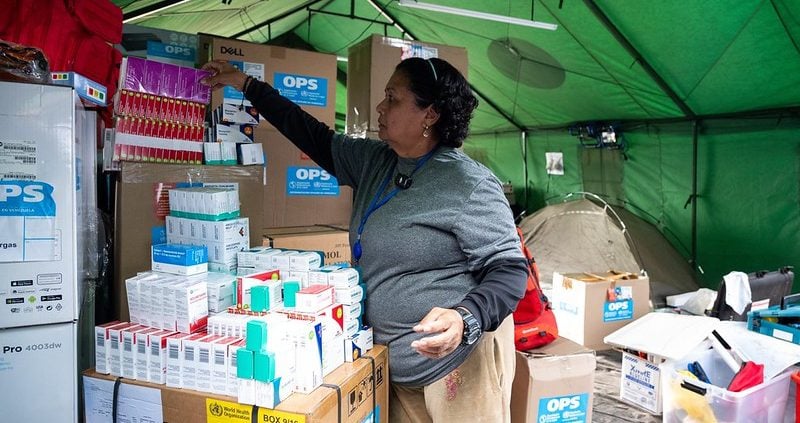
 South America has a high risk of earthquakes with an average of 32,000 per year, according to Volcano Discovery. This year, three major earthquakes were reported, hitting Venezuela and Colombia with magnitudes above 7. Venezuela received the first two, while Colombia received the third. Before the earthquake, Venezuela already faced one of the highest poverty rates in Latin America, with independent estimates placing it above 80% of the population. The earthquakes are expected to push that figure even higher. In Colombia, 28% of marginalized communities were living in poverty. After the earthquake, the percentage rose to 30%. People suffered from food insecurity and basic infrastructure issues, leaving tens of thousands displaced within the country.
To provide earthquake relief in South America, countries outside of the continent have supported survivors living in poverty after destruction. Here are five countries that have given continuous support for earthquake victims.
United States
The United States (U.S.) mobilized efforts in response to the earthquake in Colombia on Aug. 10, 2026. The Department of State donated $15.5 million in funds for emergency shelter, food, protection, and structural assessment. They also deployed a Disaster Assistance Response Team (DART) to look for individuals impacted by the earthquake. DART comprises workers from various partner organizations like Catholic Relief Services and the United Nations (UN) World Food Program.
On July 8, the Department of State announced the establishment of a humanitarian air bridge for the June 24 Venezuelan earthquakes. The bridge would initiate Amazon and Airlink to fly weekly relief supplies from Miami, Florida, to Maiquetía, Venezuela, at no cost.
The Venezuelan earthquakes left more than 17,000 people homeless, according to NBC. Venezuela was already home to nearly 8 million people in need of humanitarian assistance before the quakes struck. The humanitarian air bridge provided crucial relief as reconstruction began.
Canada
On June 25, the day after the Venezuelan earthquakes hit, Canada donated an initial $5 million in humanitarian aid, later expanding to $12 million total, according to the Government of Canada. Anita Anand, the Minister of Foreign Affairs, wrote on X that the suffering in Venezuela is “heartbreaking,” adding that many people were “facing unbearable days ahead without shelter, food or certainty.”
For the earthquake in Colombia, more than 30,300 families were affected with 9,550 homes destroyed, according to CBC. To combat the damage, Colombian residents in Toronto are raising funds for survivors in poverty. Two GoFundMe pages were set up to collect money for earthquake recovery and rebuilding.
The first GoFundMe page, set up by Natalia Campo, owner of Delicious Empanadas in Toronto, raised $3,000. The money will go to lost loved ones, homes, and aid for search and rescue teams. The second, set up by Toronto-based Colombian journalist Camilla Gonzales, raised $22,000. The money will go to Corporación Presentes, a Colombian organization that works in disaster recovery.
While there is no specific number of survivors in poverty who are benefiting from the aid, Campo and Gonzales hope that the funds lead to a successful recovery of those impacted by the earthquake.
France
After the earthquake in Venezuela, France deployed a rescue team of 85 French rescue workers to search for victims, according to France in the United Kingdom. Along with search and rescue, the Ministry for Europe and Foreign Affairs sent 38 tonnes of humanitarian aid from Guadeloupe, plus an additional six tonnes from Martinique, France. In Colombia, France worked with the European Union (EU) to launch Copernicus, its satellite service to help with rescue operations. Copernicus provides rapid mapping and assesses earthquake damage. Based on the analysis, Copernicus estimated that 622 buildings were impacted by the earthquake.
Japan
The Government of Japan issued an emergency grant of $3.5 million in response to the earthquake in Venezuela, according to Relief Web. They also provided goods, such as tarpaulin, portable jerry cans and water purifiers through the Japan International Cooperation Agency. Based on the ongoing needs assessment, Japan partnered with nongovernmental organizations (NGOs) to provide support to disaster victims living in poverty. In response to the Colombian earthquake, Foreign Minister Motegi Toshimitsu expressed condolences and readiness to assist following the Colombian earthquake. “In the wake of the earthquake that struck the Republic of Colombia on Aug. 10, I express my deepest condolences to those who lost their lives and extend my heartfelt sympathies to all those affected,” Toshimitsu said. “Japan stands in strong solidarity with the people of Colombia.”
Outside of the government, the Nippon Foundation is requesting donations for disaster relief for Colombia. The money will fund efforts for survivors in poverty from the aftermath.
Israel
In response to the earthquake in Colombia, Israel sent a rescue team of 80 people to search for victims, according to the Jerusalem Post. The main goal of the expedition was to provide immediate life-saving assistance to survivors through mapping destruction sites. The rescue team comprised regular duty soldiers and reservists. The delegation also spent three weeks providing earthquake relief to Venezuela before returning home, according to the Times of Israel. During the three weeks, Israel was tasked with assessing and classifying damaged buildings and assisting with reconstruction efforts. After the return, Israel continued to provide aid to survivors remotely.
By proceeding efforts remotely, Israel provides the framework for rebuilding Venezuela after the destruction from the earthquake. The two countries also restored consular ties with each other after severing diplomatic relations in 2009. The impact shows another face of Israel and the Jewish community, according to eJewish Philanthropy.
Moving Forward
Secretary of State Marco Rubio said in a statement that the U.S. is closely monitoring the situation and stands ready to support the people of Colombia. Other countries continue to provide earthquake relief in South America as more victims find themselves in poverty. Through international support, survivors receive basic needs from across the globe.
With the five countries providing international support for earthquake relief in South America, past hostilities are forgotten as they come together to provide humanitarian aid to poverty-stricken communities.
– Casey Chan-Smutko
Casey is based in Natick, MA, USA and focuses on Good News for The Borgen Project.
Photo: Flickr

The Erudites Movement Using Weeds in the Fight Against Poverty
In Uganda, where 18% of the land surface is covered by water bodies, the hyacinth has also spread across Lake Kyoga, Lake Albert and stretches of the River Nile. Its presence reportedly cut fish stocks in Lake Victoria by up to 46%, a serious blow in a country where fishing communities are already among the poorest. As the weed decomposes, it also drives up methane emissions by as much as 20% to 22% in infested zones compared to hyacinth-free waters, adding a climate cost on top of an economic one.
For a group of young innovators in Kampala’s Bwaise, this crisis appeared less like a dead end and more like raw material.
The Erudites Movement
The Erudites Movement is a team of four young Ugandans, ages 15 to 24, who came together in 2023 through a climate change competition for youth run by the innovation hub Outbox alongside United Nations Children’s Fund (UNICEF) Uganda. The program paired them with mentors and provided seed funding for more than four months to turn their idea into something that actually worked, not just a concept on paper.
The team includes a university graduate in agriculture, a law student and a resident of Bwaise who had watched the neighborhood struggle with energy costs firsthand. Together, they devised a plan that solves two problems at once: they pay local fishermen a small fee for every kilogram of water hyacinth they remove from the lake, then feed the collected plant matter into a simple digester, a sealed tank where the hyacinth breaks down without oxygen and releases gas that can be burned for cooking, the same basic process used to produce biogas from cow manure or food waste.
The numbers work out. One kilogram of hyacinth can produce around 376 liters of gas, and just 10 liters of the crushed plant is enough to power up eight hours of cooking. What remains after the gas is extracted does not go to waste either: the leftover makes an effective organic fertilizer, and the team also tested it on livestock feed. So a single boatload of weeds from the lake can end up as cooking fuel, fertilizer for a farm, or feed for animals, turning a plant that used to just cost the community money into something that earns it.
Why This Matters
The stakes go beyond a clever recycling idea. Globally, it is estimated that somewhere between 700 million and 800 million people live in extreme poverty. About two-thirds of them live in sub-Saharan Africa. Uganda is a clear example of such imbalance. More than half of Ugandans live on less than $3 a day.
One of the biggest factors in this imbalance is energy; only 42% of Uganda’s population has access to the electricity grid. Even in the capital, Kampala, 77% of households still cook over charcoal or firewood, fuels that are costly, cause smoke-related health problems and are often linked to deforestation.
This is the gap the Erudites Movement is trying to close. The team estimates their biogas system could cut a household’s dependence on firewood and charcoal by as much as 80%. In an early test, working with a local partner and a Bwaise homeowner named Kimbugwe Hussein, the team built a digester that started producing usable gas after two weeks. Piped into Hussein’s kitchen, it cooked meals for his family of 12 for up to eight hours a day without backup fuel, and saved him roughly 7,000 Ugandan shillings (UGX) daily, money he used to spend on charcoal and firewood.
The project also creates paid work for fishermen already squeezed by declining catches, and clearing the weed helps restore fish stocks and reduce mosquito breeding grounds tied to malaria.
Erudites Movement’s approach will not, on its own, lift Uganda’s millions of poor households out of poverty. But it shows how youth-led innovation can turn an environmental liability into an economic and energy asset at the community level, one boatload of weeds at a time.
– Alana Breslin
Photo: Unsplash
An 18 Cent Packet of Water Purifier is Fighting Illness in Uganda
According to the World Health Organization, only about 18.7% of households in Uganda currently have access to safely managed drinking water. This means 81.3% of Ugandans rely on risky sources. This lack of access contributes to the spread of waterborne illnesses, high costs for medical treatment, lower crop yield and high costs to pay for access. Ugandans spend upward of 22% of their income to buy water from private vendors. Dedicating about a fourth of income toward water means less financial stability to break the cycle of poverty. Thus, the P&G water purifier becomes a valuable resource that not only reduces waterborne illness in Uganda, but also fights poverty by increasing access to safe drinking water.
Reducing Waterborne Illness
While sustained illness reduction relies heavily on continuous infrastructure development that supports multiple health care technologies, the introduction of P&G packets has nonetheless impacted waterborne illness rates. These packets remove 99.999% of bacteria, viruses and protozoa and take only 30 minutes to clean 10 liters of water.
Studies in several countries have found that the water purification packets can reduce diarrheal disease by 16% to 90%, although the impact varies by setting. In Uganda, national cholera surveillance data show that the reported case-fatality rate declined from 4% to 7% in the late 1990s to about 2% to 3% between 2004 and 2010. Multiple factors, including improved cholera response and access to safe water and sanitation, have helped reduce the impact of waterborne disease. However, significant challenges remain, particularly in communities with limited access to safe water and sanitation.
The Impact of WaterQuip Uganda Limited
WaterQuip Uganda Limited is a program that aims to create reliable water treatment setups for rural villages, schools and institutions by delivering affordable water purification systems to homes and businesses. The company also serves as an authorized supplier and distributor of P&G water packets in Uganda.
Headquartered in Kampala, the company provides these packets for $43.80 per box of 240 sachets — about 18 cents per packet. This provides rural communities with access to Centers for Disease Control and Prevention-formulated technology and helps ensure access to safe drinking water and sanitation.
It Is Accessible
P&G water packets are widely available through many major retailers, and P&G distributes millions of packets through its nonprofit Children’s Safe Drinking Water Program. They are easy to use and require no training. Users simply empty the sachet into 10 liters of water, stir for five minutes, let it settle for five minutes, strain it and then wait for the chlorine to disinfect the water for 20 minutes. This makes the technology easy to use and widely distributed around Uganda, building awareness of water-purifying solutions and tackling waterborne illnesses.
Final Thoughts
P&G’s water purifier is fighting illness, and thus poverty, in Uganda through easy-to-use technology that gives communities a simple way to make unsafe water safer. While water purification packets cannot replace long-term investments in sanitation and infrastructure, they provide an immediate tool for communities facing waterborne disease. By making clean drinking water more accessible, affordable and easy to treat, P&G’s water purifier can help reduce illness and give Ugandans a stronger foundation for healthier communities, which are key contributors to poverty reduction
– Julia Kozin
Photo: Wikimedia Commons
How AI and Digital Skills in Kenya can Reduce Poverty
AI, Digital Skills and Economic Opportunities
Digital skills can help workers adapt to changing labor markets and participate in an increasingly digital economy. The World Bank identifies digital skills as important for building a workforce that can take advantage of emerging opportunities. It also notes that digital technologies can support economic growth, job creation and access to services.
For people living in poverty, these opportunities can be particularly important. Digital platforms can help people access employment, reach wider markets and develop businesses. However, skills alone do not guarantee higher incomes. People also need affordable connectivity, devices and opportunities to apply their skills.
A 2024 United Nations Development Program (UNDP) report highlights Zainab, a youth innovator from Garissa County, who developed a community-driven approach to youth unemployment. By integrating vocational skills training with digital platforms, her initiative empowered hundreds of young people, particularly women, to secure meaningful employment and improve their livelihoods.
Kenya Is Investing in AI and Digital Skills
Kenya is strengthening digital capacity within its public service through the Africa Centre of Competence for Digital and Artificial Intelligence Skilling. The Government of Kenya, through the Ministry of Information, Communications and Digital Economy, launched the Centre in partnership with UNDP, the Kenya School of Government and other partners in December 2024. The Centre aims to equip 100,000 civil servants in Kenya during its first phase with digital and AI skills.
The program is designed to strengthen digital literacy, emerging-technology skills, data governance and the ethical use of AI. In July 2025, Kenya held a validation workshop for the program’s curriculum. The curriculum is structured across four progressive levels: Foundations, Application, Management and Leadership.
The initiative can contribute to poverty reduction indirectly by strengthening institutions that provide public services. UNDP has documented public servants applying the skills gained through the Centre to understand how AI can improve service delivery, data analysis and government decision-making.
The Digital Divide Can Limit Poverty Reduction
The benefits of AI and digital skills in Kenya will not reach all communities equally without affordable access to technology. The World Bank has identified poor people, rural populations, women and other marginalized groups as communities that need better access to participate in Kenya’s digital economy.
Current data from the International Telecommunication Union (ITU) shows that this gap remains significant. In 2024, 25% of people in rural Kenya used the internet compared with 56.6% in urban areas. Household internet access was also much lower in rural areas, at 26%, compared with 81.6% in urban areas.
These differences matter for poverty reduction because people without reliable internet access may have fewer opportunities to use digital platforms for employment, entrepreneurship, education and public services. Without affordable connectivity, the poorest communities may remain excluded from opportunities created by Kenya’s growing digital economy.
Expanding Access Can Make Digital Growth More Inclusive
Kenya is addressing some of these barriers through the Kenya Digital Economy Acceleration Project (KDEAP). Supported by $390 million in World Bank financing, the project aims to expand access to high-speed internet, improve the quality and delivery of education and selected government services, and build skills for the regional digital economy. The project also aims to increase last-mile connectivity for more than 70% of Kenya’s population living in rural and underserved areas.
Combining connectivity with skills development is important. Internet access without the ability to use digital tools effectively can limit economic participation, while training without affordable connectivity can prevent people from applying what they have learned. For AI and digital skills in Kenya to contribute to poverty reduction, both barriers need to be addressed.
Continued Investment Can Support Poverty Reduction
Kenya’s investment in AI and digital skills provides an opportunity to make technological development part of a broader poverty-reduction strategy. Digital skills can help workers and entrepreneurs pursue new economic opportunities, while stronger digital capacity can help public institutions improve services.
However, continued progress will depend on whether people living in poverty and underserved communities can participate. By expanding affordable connectivity, accessible training and pathways to employment, Kenya can help ensure that digital transformation supports stronger livelihoods and more inclusive economic growth.
– Adebisi Aliyah Adeola
Photo: Wikimedia Commons
Reducing Poverty in Vietnam Through Economic Reform
A Sharp Decline in Extreme Poverty
Extreme poverty in Vietnam, measured against the World Bank’s international line of $2.15 a day, fell from 45% of the population in 1992 to less than 1% in 2022, according to the Organisation for Economic Co-operation and Development. Using the World Bank’s benchmark for lower-middle-income countries of $3.65 a day, the poverty rate declined further, from 14% in 2010 to about 4% in 2023.
Health and education outcomes improved alongside income. Infant mortality dropped from 32.6 deaths per 1,000 live births in 1993 to 12.1 in 2023, and life expectancy rose from 70.5 years in 1990 to 74.5 years in 2023, World Bank data show. National health insurance now covers 93% of the population.
Land Reform and Export Manufacturing Drove Growth
Two mechanisms account for much of the drop in poverty in Vietnam. First, Doi Moi returned control of farmland to individual households instead of state collectives, allowing farmers to sell surplus rice and other crops on the open market. Second, the government opened special economic zones and courted foreign manufacturers, turning the country into a hub for electronics, textiles and footwear production. The World Bank describes Vietnam as a middle-income economy that transformed from one of the world’s poorest countries within a single generation.
Millions Remain Vulnerable
Despite the sharp decline in extreme poverty in Vietnam, close to one in five people remain in a low-income bracket and could fall back into hardship after an economic shock or natural disaster, the Organisation for Economic Co-operation and Development (OECD) reported. Ethnic minority households in the country’s northern mountainous provinces and rice-farming communities in the Mekong Delta face particular exposure, as remote terrain and increasing flooding limit access to jobs, credit and health services.
A Road Program Reaching Remote Communities
One initiative addressing this vulnerability is the World Bank-supported Local Road Asset Management Program, which ran from 2016 to 2024 across dozens of Vietnam’s provinces. Rather than funding new construction, the program focused on routine maintenance of existing rural roads and bridges, ultimately improving the lives of more than 11 million people. Close to 51,000 kilometers of rural roads received regular upkeep under the program, connecting thousands of communes, home to some of the country’s most vulnerable populations, to schools, hospitals and markets, the World Bank reported. Lower transport costs allow farmers in remote provinces to reach buyers, addressing one of the structural barriers that keeps pockets of poverty in Vietnam persistent even amid national growth.
A Model for Continued Progress
Vietnam’s experience shows that sustained, reform-driven growth combined with targeted infrastructure investment can transform a country’s fortunes within a single generation. As the World Bank continues to describe Vietnam as a remarkable development success story, the country’s next task is ensuring that the millions still living near the poverty line are not left behind by the same shocks that once defined its past.
– Rachel Ma
Photo: Pixabay
Giant HeroRATs and Landmine Clearance in Cambodia
Despite decades of clearance efforts, Cambodia still had an estimated 1,700 square kilometers of confirmed or suspected hazardous land remaining at the beginning of 2025, according to the Khmer Times. Much of this land is located in rural provinces where agriculture is an important source of income.
One of the most unusual tools supporting landmine clearance in Cambodia is the African giant pouched rat. APOPO, a nonprofit organization that uses detection animals to locate explosives, trains these rats, known as HeroRATs. Their work has become especially relevant as Cambodia moves toward a newly updated mine-free deadline of Dec. 31, 2030.
Cambodia’s Updated Mine-Free Timeline
Cambodia had previously worked toward a Dec. 31, 2025, mine-clearance deadline under Article 5 of the Anti-Personnel Mine Ban Convention. However, the country submitted a new extension request in April 2025 and a revised request in October 2025. The Twenty-Second Meeting of the States Parties granted the request, setting Cambodia’s new deadline at Dec. 31, 2030.
The updated timeline gives Cambodia five more years to complete its mine-clearance obligations. It also shows why efficient and innovative tools remain important. According to Mine Action Review, Cambodia released 130 square kilometers of mined area through survey and clearance in 2024, though this was less than its target. Escalating tensions with Thailand halted a border survey that began in November 2024, ending the effort in June 2025.
How HeroRATs Detect Landmines
APOPO trains HeroRATs to identify the scent of trinitrotoluene (TNT), a chemical used in many landmines and explosive remnants of war. Because they are light enough to avoid setting off most mines, the rats can move across suspected hazardous areas and signal handlers when they detect explosives, making them more efficient and safer than other methods. Human deminers then mark, excavate and safely destroy the mines or unexploded ordnance.
APOPO’s Cambodia program has expanded beyond its early years. The organization says its current team includes more than 100 people; it recruited and trained most of them from mine-affected areas. APOPO also reports that more than 60 animals are working across four Cambodian provinces: Siem Reap, Preah Vihear, Battambang and Ratanakiri.
APOPO’s Recent Milestones in Cambodia
The organization began demining operations in Cambodia in January 2014 and introduced Mine Detection Rats in 2015. Since then, the program has grown into a long-term part of Cambodia’s mine action work. In 2024, APOPO marked 10 years of mine action in Cambodia. The organization reported that its teams had helped locate and destroy 2,669 anti-personnel mines, 18 anti-tank mines, 2,441 unexploded ordnance items and 946 cluster munitions. APOPO also reported that its work had directly affected more than 50,000 Cambodians by returning land for farming, housing and infrastructure.
Recent deployments show that the HeroRAT program is still active. In July 2024, APOPO sent 20 newly trained HeroRATs to Cambodia. It expected 14 to join mine detection work and assigned six to its Visitor Center in Siem Reap for demonstrations.
APOPO also reported another new deployment in 2025, when 24 new Mine Detection Rats arrived in Cambodia. It assigned 20 of the rats to live mine clearance operations and sent four to the Visitor Center in Siem Reap. These new arrivals show that APOPO continues to invest in landmine clearance in Cambodia as the country works toward its updated 2030 deadline.
Land Clearance and Poverty Reduction
Mine clearance closely connects to poverty reduction because land is one of the most important resources for rural communities. When mines contaminate land, families may be unable to farm safely, expand housing or build infrastructure. Removing landmines can allow people to return to fields, grow crops, travel more safely and develop community spaces.
Cambodia has already made major progress. According to Agence Kampuchea Presse, citing the Cambodian Mine Action and Victim Assistance Authority, Cambodia cleared 3,439 square kilometers of land between 1992 and July 2025 for agricultural, infrastructure and community use. This included land for homes, villages, schools and health centers, benefiting more than 10 million people. From January to July 2025 alone, Cambodia cleared 141 square kilometers of mine-contaminated land and destroyed 6,405 anti-personnel mines, 125 anti-tank mines and 25,845 explosive remnants of war.
For rural families, this progress can mean more than safety. For example, Cambodia has returned land cleared of mines for farming, allowing families to grow crops again instead of leaving fields unused because of safety concerns. The government has also returned cleared land for housing, schools, health centers and agriculture, allowing communities to rebuild while expanding opportunities for food production and local economic development. According to the Cambodian Mine Action and Victim Assistance Authority, Cambodia returned 81% of land cleared between 1992 and 2024 to agriculture, while authorities used additional land for infrastructure, housing, schools and health centers, benefiting more than 10 million people.
Looking Toward 2030
Cambodia’s new 2030 deadline shows that the country’s landmine challenge is not over. Remaining contaminated areas may be difficult to reach, costly to clear or complicated by border tensions. However, APOPO’s recent milestones show that HeroRATs continue to support landmine clearance in Cambodia. By helping identify explosives, these animals help return dangerous land to productive use, turning contaminated areas into farmland, roads, schools, homes and opportunities for safer livelihoods.
– Ben Jordan
Photo: Wikimedia Commons
Two Early Signs of Andy Burnham’s Foreign Aid Policy
As a result of continuous cuts to Official Development Aid (ODA) since 2019, along with the broader global picture with the shutdown of the United States Agency for International Development USAID, global poverty is worsening. From 2019 to 2023, UK aid for education fell by 58% and nutrition by 73%, and if the trend of cuts continues, by 2028, child-focused aid could decrease by more than £600 million. However, Burnham has shown early signs of refocusing on aid as a government priority in his initial days of appointing ministers.
Ed Miliband
Burnham appointed Ed Miliband as foreign secretary, making him head of the Foreign, Commonwealth and Development Office (FCDO) and a central figure in Burnham’s foreign aid policy. While his role as foreign secretary is significant regarding global poverty, leading the UK’s response to the 826 million living below $3 a day, Burnham has also given him a greater global role as UK governor to the World Bank. This significant diplomatic role in a leading global partnership fighting poverty signals a prioritization of international development within Miliband’s FCDO. This is a positive sign following the recent cut of almost 40% to the ODA budget in February 2025 under Starmer’s leadership.
On his appointment as UK governor to the World Bank, Miliband affirmed the FCDO’s refocus, stating, “International development is not an add-on to British foreign policy – it is central to it.” He added, “I want to send an unambiguous signal that this government is serious about its global leadership on development and climate.” With a plummet in international aid that could cause a child under five to die every 40 seconds by 2030, Miliband’s new role and his claimed commitment to the cause seem to be an important milestone in the recovery of the UK’s ODA to begin damage limitation to the world’s most vulnerable.
Kirsty McNeill
Within the FCDO, Burnham appointed Scottish Labour member of parliament (MP) for Midlothian, Kirsty McNeill, as minister of development. This role affords her responsibility for Africa, development and humanitarian aid, international finance, climate and energy security. Therefore, her role and appointment are key to Burnham’s foreign aid policy overall. What is particularly significant about McNeill’s appointment is her wealth of experience, implying that she will bring her expert focus on UK development to the job. Most significantly, she was an executive director at Save the Children, a global charity working in 92 countries that has helped 37.8 million children around the world. Her expertise and personal career in the field of overseas aid and poverty reduction imply again that Burnham’s government intends to reprioritize development and does not just view it as a secondary concern within UK foreign policy, suggesting further cuts to the department are unlikely.
Looking Forward
Overall, some of Burnham’s first decisions as prime minister imply that his foreign aid policy will be an important part of his government. While cabinet appointments alone are not enough to guarantee a full commitment from Burnham to recover the ODA budget and fight global poverty, it can still be a sign of new priorities. In a time of growing global need for governments to focus on the lives of those most vulnerable around the world, these appointments of aid-focused politicians are promising of what is to come under the new prime minister.
– Amy Carpenter
Photo: Flickr
5 Countries Providing Earthquake Relief in South America
To provide earthquake relief in South America, countries outside of the continent have supported survivors living in poverty after destruction. Here are five countries that have given continuous support for earthquake victims.
United States
The United States (U.S.) mobilized efforts in response to the earthquake in Colombia on Aug. 10, 2026. The Department of State donated $15.5 million in funds for emergency shelter, food, protection, and structural assessment. They also deployed a Disaster Assistance Response Team (DART) to look for individuals impacted by the earthquake. DART comprises workers from various partner organizations like Catholic Relief Services and the United Nations (UN) World Food Program.
On July 8, the Department of State announced the establishment of a humanitarian air bridge for the June 24 Venezuelan earthquakes. The bridge would initiate Amazon and Airlink to fly weekly relief supplies from Miami, Florida, to Maiquetía, Venezuela, at no cost.
The Venezuelan earthquakes left more than 17,000 people homeless, according to NBC. Venezuela was already home to nearly 8 million people in need of humanitarian assistance before the quakes struck. The humanitarian air bridge provided crucial relief as reconstruction began.
Canada
On June 25, the day after the Venezuelan earthquakes hit, Canada donated an initial $5 million in humanitarian aid, later expanding to $12 million total, according to the Government of Canada. Anita Anand, the Minister of Foreign Affairs, wrote on X that the suffering in Venezuela is “heartbreaking,” adding that many people were “facing unbearable days ahead without shelter, food or certainty.”
For the earthquake in Colombia, more than 30,300 families were affected with 9,550 homes destroyed, according to CBC. To combat the damage, Colombian residents in Toronto are raising funds for survivors in poverty. Two GoFundMe pages were set up to collect money for earthquake recovery and rebuilding.
The first GoFundMe page, set up by Natalia Campo, owner of Delicious Empanadas in Toronto, raised $3,000. The money will go to lost loved ones, homes, and aid for search and rescue teams. The second, set up by Toronto-based Colombian journalist Camilla Gonzales, raised $22,000. The money will go to Corporación Presentes, a Colombian organization that works in disaster recovery.
While there is no specific number of survivors in poverty who are benefiting from the aid, Campo and Gonzales hope that the funds lead to a successful recovery of those impacted by the earthquake.
France
After the earthquake in Venezuela, France deployed a rescue team of 85 French rescue workers to search for victims, according to France in the United Kingdom. Along with search and rescue, the Ministry for Europe and Foreign Affairs sent 38 tonnes of humanitarian aid from Guadeloupe, plus an additional six tonnes from Martinique, France. In Colombia, France worked with the European Union (EU) to launch Copernicus, its satellite service to help with rescue operations. Copernicus provides rapid mapping and assesses earthquake damage. Based on the analysis, Copernicus estimated that 622 buildings were impacted by the earthquake.
Japan
The Government of Japan issued an emergency grant of $3.5 million in response to the earthquake in Venezuela, according to Relief Web. They also provided goods, such as tarpaulin, portable jerry cans and water purifiers through the Japan International Cooperation Agency. Based on the ongoing needs assessment, Japan partnered with nongovernmental organizations (NGOs) to provide support to disaster victims living in poverty. In response to the Colombian earthquake, Foreign Minister Motegi Toshimitsu expressed condolences and readiness to assist following the Colombian earthquake. “In the wake of the earthquake that struck the Republic of Colombia on Aug. 10, I express my deepest condolences to those who lost their lives and extend my heartfelt sympathies to all those affected,” Toshimitsu said. “Japan stands in strong solidarity with the people of Colombia.”
Outside of the government, the Nippon Foundation is requesting donations for disaster relief for Colombia. The money will fund efforts for survivors in poverty from the aftermath.
Israel
In response to the earthquake in Colombia, Israel sent a rescue team of 80 people to search for victims, according to the Jerusalem Post. The main goal of the expedition was to provide immediate life-saving assistance to survivors through mapping destruction sites. The rescue team comprised regular duty soldiers and reservists. The delegation also spent three weeks providing earthquake relief to Venezuela before returning home, according to the Times of Israel. During the three weeks, Israel was tasked with assessing and classifying damaged buildings and assisting with reconstruction efforts. After the return, Israel continued to provide aid to survivors remotely.
By proceeding efforts remotely, Israel provides the framework for rebuilding Venezuela after the destruction from the earthquake. The two countries also restored consular ties with each other after severing diplomatic relations in 2009. The impact shows another face of Israel and the Jewish community, according to eJewish Philanthropy.
Moving Forward
Secretary of State Marco Rubio said in a statement that the U.S. is closely monitoring the situation and stands ready to support the people of Colombia. Other countries continue to provide earthquake relief in South America as more victims find themselves in poverty. Through international support, survivors receive basic needs from across the globe.
With the five countries providing international support for earthquake relief in South America, past hostilities are forgotten as they come together to provide humanitarian aid to poverty-stricken communities.
– Casey Chan-Smutko
Photo: Flickr
The Loss of Language in Pakistan
Underrepresentation of the Endangered Languages
This lack of representation separates the province from the rest of the country and leads to increased poverty for locals excluded from lawmaking — a process that remains mostly in English and Urdu at higher levels. Some Baloch commentators describe this as a deliberate erasure of Balochi identity that makes it difficult for people to embrace their Pakistani identity.
Global growth drives language loss in Pakistan for the same reasons languages go extinct worldwide, though the effect is more damaging in a developing country than in most wealthier ones. Roughly 51% of the population cannot speak English, and those who do often do not excel in Urdu, which the education system teaches “like a foreign language.” Balochistan has a multidimensional poverty rate of about 71%, higher than any other province, and has the fewest English speakers, alongside a literacy rate of only 49%. Infrastructure development lags as locals remain largely absent from the governmental system.
Missed Opportunities for the Underprivileged
According to a case study of English and career opportunities at Jazz Digital House Multan, employers consider English an important asset during hiring. However, English is primarily a language of high society, leaving 51% of the underprivileged population at a disadvantage. Khyber Pakhtunkhwa (KP) has around 24 minority languages, and when they are ignored, students cannot receive proper education. Call centers have increased their exports by 19% year over year, according to State Bank of Pakistan data, and have become an important job source. Most call centers communicate in English, creating a barrier for those seeking jobs that do not require advanced degrees. Other workplaces also use English as the recognized professional language, limiting native speakers to minimal job options. The Diplomat argues that in a poorly governed country with high illiteracy, expecting people to communicate in “a dissimilar language” is an extreme burden.
Loss of Culture and Identity
Much as Persian gave way to English during the British colonial era, there has been a similar loss of culture and identity among young Pakistanis today. Dawn emphasizes the importance of diversity, arguing that even amid global efforts to build a unified culture and language, preserving local vernaculars remains essential. Such preservation could help counter the country’s stunted growth and the loss of community identity and richness.
Future Prospects
Some efforts have been made to conserve local languages. The previous prime minister directed officials to deliver their speeches in Urdu at national and international forums. Institutes such as Idara-e-Taaleem-o-Aagahi (ITA) have collaborated with the People’s Action for Learning (PAL) Network to preserve local languages and document cultural artifacts, balancing preservation with global growth. Together, they have established 60 libraries with 200 publications, often in seven different languages, and research on Wakhi, Khowar, Saraiki and Dhatki found that each has its own script. Although Pakistan is undergoing a language tragedy, the government and native people may be able to minimize this loss through collaboration. Many artisans and local businesses rely on their mother tongue; if policymakers safeguard the rights of these languages and integrate them into modern society, many people may move from marginal jobs into a more secure market, eventually helping reduce global poverty.
– Eshal Fatima
Photo: Unsplash
World Bank Steps in to Help Fight Poverty in Nigeria
Nigeria’s poverty affects every sector, from health care to education. This has seriously inflated the nation’s youth unemployment rate, which reached as high as 21.5% in 2016. Women represent up to 79% of the rural workforce but are five times less likely to own their own land than men, contributing to wage and wealth inequality in the nation.
Statistics from The Conversation, citing Nigeria’s Multidimensional Poverty Index, indicate that more than 133 million Nigerians live in poverty, with the poverty rate in rural areas as high as 72%, compared with 42% in urban areas. Poverty in Nigeria rises due to several reasons, one being the post-colonial effects that many nations have faced since independence.
The country also struggles with domestic issues of ethnic tension, terrorism and bureaucratic corruption, according to The Conversation. This has led to a serious issue for the government to provide a steady line of policies that will positively reduce poverty in the short and long run.
Nigeria implemented its National Anti-Corruption Strategy 2022 to 2026, aimed at targeting corruption activities in the workplace, especially the public sector, judiciary and most importantly political financing. However, public perception of corruption and government efforts to address it did not significantly change, according to the United Nations Convention against Corruption (UNCAC) Coalition.
The Role of the World Bank
In July 2026, President Bola Tinubu unveiled a $3.05 billion package of World Bank-backed anti-poverty programs, according to Punch. The package includes $1.25 billion for the Nigeria Community Action for Resilience and Economic Stimulus program, $300 million for the Solutions for Internally Displaced and Host Communities program, and $1.5 billion for the Human Capital Opportunities for Prosperity and Equity program, which focuses on governance, primary health care and education.
Separately, the World Bank has laid out a Country Partnership Framework for 2026 to 2032, focusing on making young Nigerians more employable by supporting private sector-led job creation. As part of this framework, the World Bank approved a $1.25 billion Development Policy Financing operation to support economic reforms.
The Bank aims to increase private sector investment in development areas and help reduce poverty statistics in Nigeria, with targets including expanding energy access to 32 million people, delivering broadband to 58 million people, improving health and nutrition services for 40 million people and supporting 9.5 million farmers.
Both efforts are intended to advance the government’s “Renewed Hope Development Plan 2026 to 2030.” Tinubu said the programs represent “promises kept” under his administration’s economic reform agenda, adding that “real prosperity means no Nigerian is left behind” as the country works toward a $1 trillion economy by 2030, according to Punch.
Looking Ahead
The government aims not only to improve poverty statistics in Nigeria but also to directly impact people and their households. As Tinubu put it, positive results are emerging from Nigeria’s economic reforms, but that progress must be felt in every household, not just in national statistics.
– Tanay Ashok Sonthalia
Photo: Pexels
Reading Glasses in Uganda as Global Poverty Intervention
Impact on Work
Presbyopia makes working very difficult for those who suffer from it. The loss of vision leaves individuals unable to see close objects, which is devastating to many professions.
These individuals often must reduce their hours or leave their occupations entirely, resulting in a severe loss of income. Evidence Action reports a loss of $25 billion in jobs that require strong vision.
This issue disproportionately affects people in low-income countries. In these areas, people lack basic eye care, including exams and glasses. While this lack of resources affects medical care, it also impacts families financially. Donating reading glasses to those suffering from presbyopia in areas stricken with extreme poverty can greatly increase earnings and stimulate the economy. Studies in places like Bangladesh show that workers in jobs requiring good vision increased their income by up to 33%.
Simple Solutions
The process of screening for presbyopia and obtaining reading glasses is simpler than expected. Reading glasses can cost less than $1, and local workers can conduct exams using an eye chart test.
Several groups are partnering with the Ministry of Health to provide reading glasses in Uganda. EYElliance and the Clinton Health Access Initiative are providing 16,000 pairs to the Kaliro district. At the same time, the Ministry of Health is distributing glasses in Eastern Uganda, planning to provide 41,200 reading glasses.
Evidence Action is also participating by distributing 25,000 pairs across two Ugandan districts.
Implementing eye exams and distributing reading glasses adds no extra burden to the country. Instead, these programs integrate into existing structures. Village Health Teams already provide household health visits, so they can easily add these services to those visits. Additionally, program organizers have incorporated screening for reading glasses into community events run by Safe Water Now. This approach addresses multiple problems without extra costs.
If successful, these programs could expand in Eastern Uganda, and other countries facing extreme poverty could potentially adopt them nationwide.
Final Thoughts
In a world where humanitarian budgets are often lower than necessary, reading glasses improve medical care and finances in developing communities in a cost-effective way. The programs in development in Uganda can provide an excellent basis for other countries in similar economic situations to adopt in the future.
– Julia Cholerton
Photo: Pexels