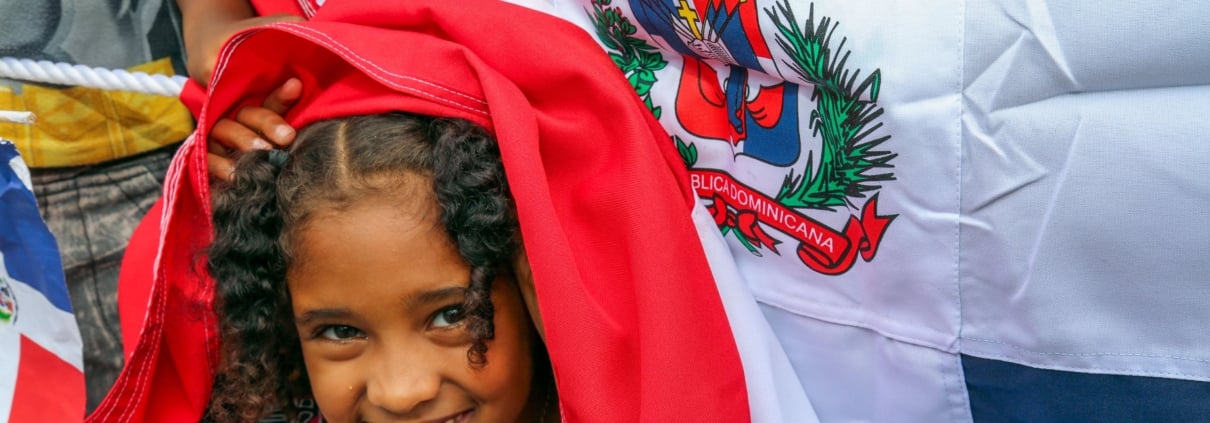
 Henrik Lundqvist, a former New York Rangers goalie, founded the Henrik Lundqvist Foundation with his wife, Therese, in 2014. The foundation combats poverty internationally by funding education, safe play spaces and health resources for marginalized children.
Partnerships
The Henrik Lundqvist Foundation ambassadors have partnered with Ebba Lovenskiold, the founder of Together For Better. The foundation helps children in Haiti and the Dominican Republic access proper education. The foundation works with Together For Better to construct a large playground at a school in La Ramona, Dominican Republic, where 250 children currently lack a safe place to play. The partnership has resulted in the construction of three schools and two playgrounds. It also provides supplies and hires teachers. In Haiti, an IPC analysis found nearly 277,000 children face acute malnutrition between December 2023 and November 2024, including 125,000 who are severely malnourished, driven by factors including recurrent cholera epidemics, child morbidity and poor food intake.
Child poverty in the Dominican Republic stands at 21.5%, rising to 27% in rural regions, with nearly 5% of children living in extreme poverty. The Borgen Project spoke with Ambassador Michael Polt, a professor at Arizona State University and board member for the nongovernmental organization (NGO) Baltic-American Freedom Foundation. Polt said sport is a key part of the social fabric of communities, both nationally and internationally, and that for young people in disadvantaged circumstances, participation in sports activities is often the only way out of poverty. “Lundqvist knows that and therefore supports critical improvements of the living environment of young people so they can best avail themselves of the opportunities sports bring to improve their lot in life,” Polt said. “Hats off to Henrik Lundqvist and his family.”
Construction of Sanitation Facilities
In 2024, the Henrik Lundqvist Foundation initiated a $17,600 grant to create new sanitary facilities at the Foundation for the Unity and Growth of the People’s school in the Dominican Republic. This school serves 240 students in La Ramona, Dominican Republic, most of whom are of Haitian descent. Approximately 3 million children in Haiti needed humanitarian support as of 2023, according to UNICEF, the highest number on record. Twenty-eight percent of the population in the Dominican Republic face challenges including lack of access to health and primary education, and approximately 40% of children in the country do not finish primary school. The foundation aims to provide the school community with a safe, consistent restroom to support student health, decency and learning. It built girls’ facilities with three restrooms and three sinks, boys’ facilities with two restrooms and two sinks, and staff facilities with one restroom and a sink. The foundation impacts children aged 3 to 13 and roughly 10 teachers and staff annually, promoting handwashing, clean water and facility care to reduce illness and improve attendance.
Ronald McDonald House
The Henrik Lundqvist Foundation has been working with the Ronald McDonald House in Huddinge, Sweden, since 2023. Between 2023 and 2024, Henrik Lundqvist Foundation donated $50,000 to support the improvement of the Ronald McDonald House’s playground and outdoor areas. As of the end of 2025, the project remained in progress after facing delays, with the foundation expecting to share results once construction is complete in 2026. In April 2025, Henrik Lundqvist, together with New York Rangers alumni, participated in the 31st annual “Skate with the Greats” event and rang the opening bell at the New York Stock Exchange, raising money to support Ronald McDonald houses in New York.
Support to Children’s Hospitals
In 2024, the Henrik Lundqvist Foundation supported New York Presbyterian Children’s hospitals, including Morgan Stanley Children’s Hospital and the Komansky Center for Children’s Health. In New York, roughly 1,000 children under age 20 have cancer, and more than 315,000 children have asthma. The foundation provided a $25,000 grant to enlarge child life assistance services. In February 2024, Lundqvist visited the hospital to deliver gifts and memorabilia collected by the foundation’s young ambassadors. The foundation renewed its support in 2025 for the hospital’s child life services with another $25,000.
Garden of Dreams Foundation
The Henrik Lundqvist Foundation has partnered with the Garden of Dreams Foundation since 2014 to help kids facing illness or hardship. In 2020, during the COVID-19 pandemic, the foundation and Garden of Dreams launched a hunger initiative in New York City, donating $100,000 to four organizations to support food-insecure children and their families, and sending 1,530 children and their families to New York Rangers games, New York Knicks games and MSG concerts. Roughly one in four children in New York City, or 24%, face food insecurity and lack stable access to food. More recently, in 2024, Henrik Lundqvist Foundation granted $26,000 through Garden of Dreams to send 68 children and their families to a Rangers game at Madison Square Garden, and renewed its support in 2025 with an additional $25,000 grant for the 2025 to 2026 National Hockey League (NHL) season.
Food Bank of New York City
The Henrik Lundqvist Foundation’s partnership with the Food Bank of New York City in 2024 granted $50,000 to support the Food Bank’s campus pantry and mobile pantry programs for the 2024 to 2025 school year. This support has enabled the Food Bank to provide more than 32,280 meals to 425 children and their families. In September 2025, the foundation renewed its $50,000 grant to support the Food Bank’s mobile and campus food pantry programs.
– Ruba Alghurab
Ruba is based in Debary, FL, USA and focuses on Good News and Politics for The Borgen Project.
Photo: Pexels

Sulabh International and India’s Untouchables
Improved Sanitation
Bindeshwar Pathak, a sociologist and founder of the nongovernmental organization (NGO) Sulabh International, has researched the plight of the untouchables. The organization was founded in 1970 to promote sanitation reform, human rights, and the liberation of manual scavengers. Pathak invented the two-pit pour-flush toilet, which replaced bucket toilets that had to be cleaned manually. This meant untouchables no longer had to do the lowly job of cleaning toilets. There are now more than 1.5 million of the new toilets.
Rehabilitation Training
Rehabilitation for 200,000 women in the workforce has allowed them to advance their social status, restore dignity, and receive training. These women have been encouraged to work as beauticians or in food processing, sewing, or embroidery. They have been given the chance to work jobs with substantial pay and solid training, without doing the dirty work. They have earned enough to cover basic needs.
New Civil Rights Law
The new civil rights law provides minimum prison sentences for discriminating against the untouchables and outlaws direct or indirect preaching of the practice. Violators face three to six months in prison. Discrimination can include ridiculing these people, marginalizing untouchables and looking down on them. The New Rights Act penalizes the enforcement of any disability arising from untouchability.
The issues with untouchables are sociocultural. Addressing them requires a joint effort from all facets of society. The illiterate and those from oppressed classes need skill development. Only then can society accept them.
In addition to the economic factors that create issues for untouchables, sociocultural factors also play a role. People from the multitude of India’s caste system have rallied to provide the oppressed untouchables with skill development, which gives them the tools to hold jobs. In fact, the children of the next generation in the upper castes are treating the untouchables differently than before.
Final Thoughts
Sulabh International allows individuals and organizations to gather and initiate change in health, care and social systems that promote valuing, respect and support for the happiness and well-being of people around the world. Happiness is infectious, and the more happiness there is for one person, the more happiness there is for those around us. Sulabh International has built more than 1.5 million toilets in India, used by 20 million people a day, and 32,000 toilets in more than 6,000 schools.
– Stephanie Ou
Photo: Flickr
Food Systems in Uganda in the Face of El Niño
Uganda sits firmly in the list of most vulnerable populations in the world with 20.3% of people living below the poverty line. Alongside this, the country is home to the largest number of refugees in Africa. While food is scarce, external aid is shrinking, and the hot shadow of El Niño looms, Uganda has been working on its own solutions. Utilizing this large population of refugees, and with advanced planning, the country strives to combat poverty and create sustainable communities amidst rising temperatures.
El Niño
El Niño is the warm phase of a natural climate pattern (El Niño-Southern Oscillation), the period of warming of the Pacific Ocean that affects weather around the globe. This isn’t a new occurrence, but it is one that affects vulnerable countries’ infrastructures, like food systems in Uganda, bringing drought in some locations and flooding in others. This year, however, the phenomenon may be much more dramatic than normal, with Ugandans feeling the effects until 2028.
Projections of food scarcity and impact on poverty amidst this occurrence highlights the most vulnerable countries. Uganda sits firmly in this list with its high poverty figures and number of refugees. Yet, external aid seems to be going in the wrong direction.
The Statistics and Funding
In affected areas, the World Bank predicts production of crops such as rice to fall by 20% to 50% in the coming year. Alongside this, the World Bank saw an increase in food price in low-income countries, as well as stating in their report that “global food and nutritional security is becoming more fragile.”
The situation may be worse than previous years, with predictions indicating that the 2026 El Niño will be the worst on record. The lack of funding to humanitarian aid accompanies this (the main global contributors, the U.K., the U.S. and Germany, have announced budget cuts), which leaves countries like Uganda in need of serious internal effort. The good news is that the country is rising to the challenge.
External Aid
With the recurring threats upon food systems in Uganda, the situation is one that has been planned for. Humanitarian groups such as the UN and World Food Programme (WFP) have seen these issues coming and have been fighting them for years. Although, while the WFP initially provided direct aid in the form of hot meals for the numerous refugees and vulnerable in Uganda, this system has been gradually diminishing since 2025 due to lack of funding. Now, humanitarian groups like the WFP have focused on how to aid food systems in Uganda, supporting a structure that can sustain and utilize the growing refugee population.
Internal Aid
In Nakivale, a refugee settlement in Uganda’s southwest, the ‘self-reliance model’ has been put in place with the aid, and to the benefit of its many refugees. Under Uganda’s own model, which has received praise for its progressive treatment of refugees, locals and refugees both learn skills that will aid in creating a sustainable food and social system going forward. The community learns about fishing, farming and financial strategies which, alongside planned financial aid from the WFP, helps to secure a more stable system that will fluctuate less, both in terms of rations and food prices, or external conditions arise, like the coming El Niño.
Uganda’s refugee model is paying off for the country. The model allows refugees the right to work, freedom of movement, property lease, trade, access education, health care and other social service. Under this structure, the self-reliance model is allowed to thrive and build a sustainable future, capable of combating threats to food systems and communities like the coming El Niño internally.
One refugee told the WFP how the program “taught us how to prepare for the day that cash assistance might stop…how we could stand on our own.” Another refugee, Sanyu Sylva, comments on the list of skills she has learnt and the conditions that will allow her to pass this knowledge onto others, creating a sustainable community.
Looking Ahead
While many countries address refugees as a strain on their infrastructure, Uganda is managing to provide aid and community for these groups and its own people through planning and collaboration. Such internal rallying in the face of funding cuts, alongside aid from devoted humanitarian groups may be the key to enduring hardships like the coming El Niño.
– Calvin Politi
Photo: Unsplash
BelieveNBooks: Improving Girls’ Access to Education
Educational Inequality
A 2023 study examining 18 sub-Saharan African countries found that birth characteristics, including parent education level and whether a child grows up in a remote community, account for over half of measured consumption inequality. For children raised in areas with fewer books, schooling opportunities and developmental resources, the playing field is unequal long before they enter the workforce.
BelieveNBooks Initiative
One organization, BelieveNBooks, works to combat this problem on the ground. BelieveNBooks is a youth-led nonprofit focused on closing early literacy gaps through book drives and culturally relevant reading materials. Founded on Earth Day 2021 by an eighth-grade student, the organization has distributed more than 250,000 books to 50,000 children in need. Among its initiatives is “Tales of African Women Trailblazers,” an original children’s book introducing readers to African-born women whose leadership, ingenuity, and perseverance have driven positive change. By highlighting artists, doctors, lawyers, athletes, entrepreneurs, scientists and public servants from across the continent, the book introduces young children to professional opportunities and role models.
Distribution and Impact
Since its publication, BelieveNBooks has distributed 10,000 copies of “Trailblazers” across Ghana, Rwanda, Kenya, Uganda, and Zambia. Their first partnership was a distribution alongside featured trailblazer and Ghana Environmental Protection Authority Chief Executive Officer Nana Ama Browne Klutse. Today, BelieveNBooks’s African partner network of book recipients spans dozens of nongovernmental organizations (NGOs) supporting literacy and girls’ empowerment for youth in low-income rural areas.
Each delivery requires extensive logistical planning, from gathering quotes from local printers to negotiating unit costs to completing deliveries. Depending on the destination, books may travel overnight across several countries or on nimble motorbikes to otherwise inaccessible villages in remote outskirts. Coordinating successful shipments and distributions depends on local experts who advise the BelieveNBooks team from start to finish.
For the organizations on the receiving end, the impact is invaluable and extends beyond English development. “Every girl deserves to see herself in a story worth becoming,” says Adama Borway, founder and CEO of She Empowerment League in Freetown, Sierra Leone. “A book is more than paper and ink; it is a possibility.”
Broader Barriers
While organizations like BelieveNBooks demonstrate the power of culturally relevant books, resource distribution alone cannot offset broader barriers hindering girls’ education and perpetuating inequality: poverty, early marriage, gender stigmas, poor sanitation and dangerous campus environments. Yet research indicates that book access itself can make a difference. A five-year randomized study across 60 elementary school students in poverty found that students with ongoing access to books learned as much as they would in six months of conventional classroom learning.
This perspective is echoed by Zamaradi S. Islahi, global director of Room to Read’s Gender Portfolio. Growing up in a low-income home where no girl was educated beyond age 13, Islahi witnessed firsthand how limited opportunity shapes a child’s future outcomes. “There are millions of girls with dreams just as bold, who only need the opportunity to learn and grow,” she shared.
While no single organization can eliminate the barriers facing African girls, expanding access to quality education, books and community support will help ensure that a child’s future is no longer dictated by their zip code, gender, or early circumstances.
– Natasha Agarwal
Photo: Flickr
Courts for Kids: Alleviate Poverty and Building Community
Impact in the Philippines
In 2006, 72.5% of people in the Philippines lived on less than $5.50 per day. As of 2023, that number has decreased to 58.7%.
Initially, 24 students and adults, mostly from Southwest Washington, went to the Philippines to build a multi-use sports court. Since then, Courts for Kids has built 286 courts in 35 countries, with the participation of more than 5,947 Americans.
The courts are often built for soccer, basketball, and volleyball, but sports are not their only purpose. They serve as community gathering spaces, which can help boost the local economy.
Additionally, crops can be dried on the courts during harvest season. This additional space makes local agriculture more efficient, boosting the local economy.
Community Enhancements
In some communities, locals have added kitchens next to the courts. This addition generates income for the community through food sales and makes food more widely available, leading to better nutrition. Courts for Kids uses sports to alleviate poverty in this way.
The courts also create numerous social benefits, helping bring children from different communities together. The consistent use of the courts also fosters bonds between local community members. Shared public spaces strengthen communities.
The courts are funded by community fundraisers, volunteer contributions and corporate sponsors providing materials and funds.
Long-term Developments
The courts are not just for play. They offer opportunities to help underprivileged communities thrive.
Courts for Kids demonstrates how community-based activities can assist communities suffering from extreme poverty. It is not just about athletics; it is about long-term development and community building.
All of the courts built by Courts for Kids are used daily or almost daily, continually improving their communities. Additionally, they have led to an 88% increase in young girls participating in sports.
A court is an investment. It is an investment in communities, health and the futures of children in low-income communities. Through both local partnerships and community participation, each court becomes a foundation for opportunity and creates a more resilient and sustainable community.
– Julia Cholerton
Photo: Pexels
Henrik Lundqvist Foundation: Triumph Against Poverty
Partnerships
The Henrik Lundqvist Foundation ambassadors have partnered with Ebba Lovenskiold, the founder of Together For Better. The foundation helps children in Haiti and the Dominican Republic access proper education. The foundation works with Together For Better to construct a large playground at a school in La Ramona, Dominican Republic, where 250 children currently lack a safe place to play. The partnership has resulted in the construction of three schools and two playgrounds. It also provides supplies and hires teachers. In Haiti, an IPC analysis found nearly 277,000 children face acute malnutrition between December 2023 and November 2024, including 125,000 who are severely malnourished, driven by factors including recurrent cholera epidemics, child morbidity and poor food intake.
Child poverty in the Dominican Republic stands at 21.5%, rising to 27% in rural regions, with nearly 5% of children living in extreme poverty. The Borgen Project spoke with Ambassador Michael Polt, a professor at Arizona State University and board member for the nongovernmental organization (NGO) Baltic-American Freedom Foundation. Polt said sport is a key part of the social fabric of communities, both nationally and internationally, and that for young people in disadvantaged circumstances, participation in sports activities is often the only way out of poverty. “Lundqvist knows that and therefore supports critical improvements of the living environment of young people so they can best avail themselves of the opportunities sports bring to improve their lot in life,” Polt said. “Hats off to Henrik Lundqvist and his family.”
Construction of Sanitation Facilities
In 2024, the Henrik Lundqvist Foundation initiated a $17,600 grant to create new sanitary facilities at the Foundation for the Unity and Growth of the People’s school in the Dominican Republic. This school serves 240 students in La Ramona, Dominican Republic, most of whom are of Haitian descent. Approximately 3 million children in Haiti needed humanitarian support as of 2023, according to UNICEF, the highest number on record. Twenty-eight percent of the population in the Dominican Republic face challenges including lack of access to health and primary education, and approximately 40% of children in the country do not finish primary school. The foundation aims to provide the school community with a safe, consistent restroom to support student health, decency and learning. It built girls’ facilities with three restrooms and three sinks, boys’ facilities with two restrooms and two sinks, and staff facilities with one restroom and a sink. The foundation impacts children aged 3 to 13 and roughly 10 teachers and staff annually, promoting handwashing, clean water and facility care to reduce illness and improve attendance.
Ronald McDonald House
The Henrik Lundqvist Foundation has been working with the Ronald McDonald House in Huddinge, Sweden, since 2023. Between 2023 and 2024, Henrik Lundqvist Foundation donated $50,000 to support the improvement of the Ronald McDonald House’s playground and outdoor areas. As of the end of 2025, the project remained in progress after facing delays, with the foundation expecting to share results once construction is complete in 2026. In April 2025, Henrik Lundqvist, together with New York Rangers alumni, participated in the 31st annual “Skate with the Greats” event and rang the opening bell at the New York Stock Exchange, raising money to support Ronald McDonald houses in New York.
Support to Children’s Hospitals
In 2024, the Henrik Lundqvist Foundation supported New York Presbyterian Children’s hospitals, including Morgan Stanley Children’s Hospital and the Komansky Center for Children’s Health. In New York, roughly 1,000 children under age 20 have cancer, and more than 315,000 children have asthma. The foundation provided a $25,000 grant to enlarge child life assistance services. In February 2024, Lundqvist visited the hospital to deliver gifts and memorabilia collected by the foundation’s young ambassadors. The foundation renewed its support in 2025 for the hospital’s child life services with another $25,000.
Garden of Dreams Foundation
The Henrik Lundqvist Foundation has partnered with the Garden of Dreams Foundation since 2014 to help kids facing illness or hardship. In 2020, during the COVID-19 pandemic, the foundation and Garden of Dreams launched a hunger initiative in New York City, donating $100,000 to four organizations to support food-insecure children and their families, and sending 1,530 children and their families to New York Rangers games, New York Knicks games and MSG concerts. Roughly one in four children in New York City, or 24%, face food insecurity and lack stable access to food. More recently, in 2024, Henrik Lundqvist Foundation granted $26,000 through Garden of Dreams to send 68 children and their families to a Rangers game at Madison Square Garden, and renewed its support in 2025 with an additional $25,000 grant for the 2025 to 2026 National Hockey League (NHL) season.
Food Bank of New York City
The Henrik Lundqvist Foundation’s partnership with the Food Bank of New York City in 2024 granted $50,000 to support the Food Bank’s campus pantry and mobile pantry programs for the 2024 to 2025 school year. This support has enabled the Food Bank to provide more than 32,280 meals to 425 children and their families. In September 2025, the foundation renewed its $50,000 grant to support the Food Bank’s mobile and campus food pantry programs.
– Ruba Alghurab
Photo: Pexels
8 Things to Know About Education in New Caledonia
New Caledonia, a French overseas collectivity in the South Pacific, has a large education system by Pacific island standards. However, it is one shaped by geography, inequality, demographic decline and the unrest of 2024. The 2025 census reported 264,596 residents, down 6,811 people from 2019 – the first population decline between censuses since 1946. Here are eight facts about education in New Caledonia.
8 Facts About Education in New Caledonia
Looking Ahead
New Caledonia’s education system has strong infrastructure, broad access and respectable exam results. Its next challenge is outcomes: reducing dropout, improving foundational learning and ensuring that vocational and higher education pathways lead to real opportunity.
– Jeff Zhou
Photo: Wikimedia Commons
The Maternal and Child Health Crisis in Nigeria
The West African country of Nigeria is classified as a ‘high burden’ country due to it disproportionately high rate of maternal and child mortality. According to UNICEF, Nigeria accounts for 10% of global maternal deaths, despite representing only 2.4% of the global population. UNICEF also reports that the mortality rate for children under 5 in Nigeria stands at 12.8%.
Despite these challenges, U.S. Maternal and Child Health (MCH) funding—defined as targeted government assistance to promote maternal and child health abroad—has decreased. Tracking data from the Kaiser Family Foundation (KFF) shows that U.S. MCH funding to Nigeria fell from $50 million in 2017 to $33.25 million in 2023, representing a 35% decline. A 2026 study in Health Policy and Planning estimates that the abrupt withdrawal of USAID health funding could increase maternal mortality by 45% on average among populations in need across six vulnerable West and Central African countries, with Nigeria experiencing the largest absolute increase — more than 300 additional maternal deaths under the study’s model. Here is more information about the maternal and child health crisis in Nigeria and what is being done to address it.
How US MCH Funding Saves Nigerian Lives
Reduced funding directly affects health care delivery in Nigeria’s rural communities. The African Health Report documented the case of Aisha Yusuf, a 28-year-old woman in labor who nearly lost her baby while traveling 18 miles to a hospital because a local clinic lacked delivery equipment. An anonymous health care worker at the receiving hospital reported that a single staff member often cares for dozens of patients per shift, frequently without electricity. Yusuf’s experience reflects broader systemic issues in Nigeria’s local health care facilities, namely lack of equipment, resources and staff.
These operational insufficiencies highlight the critical role of international assistance in reinforcing local health care systems. Yusuf’s experience illustrates the kinds of health-system gaps that maternal and child health investments can help address. Consistent U.S. MCH funding provides essential resources to equip local clinics, ensuring they can deliver safe and reliable care to expectant mothers.
Securing US Interests Through Health Investment
In addition to direct health outcomes, MCH funding supports U.S. security and economic interests. Regarding security, Nigeria is the most populous nation in Africa, with more than 240 million residents—a figure projected to reach 370 million by 2050. World Bank President Ajay Banga stated that a failure to invest in this demographic, particularly through health care initiatives like MCH, could weaken Nigeria’s state capacity. This capacity represents the government’s ability to distribute resources, implement policies and serve citizens. Weakened state capacity increases the risk of instability, conflict and migration crises, which can directly affect global security.
From an economic perspective, healthier populations are better positioned to participate in education, employment and economic activity. Over time, stronger human capital and economic growth can expand consumer demand and create opportunities for trade and investment with the United States. Economic models indicate that a larger middle class increases domestic purchasing power, creating a stronger market for U.S. goods and services. Consequently, current MCH investments help build a stable international consumer base that supports U.S. economic competitiveness and trade development.
Actionable Solutions to Maternal and Under-Five Mortality
A study in Health Policy and Planning suggests that a 1% increase in the Nigerian government’s health care expenditure can address the maternal and child health crisis in Nigeria and lead to a 37% reduction in the country’s maternal mortality. U.S. MCH funding to Nigeria can help achieve this 1% increase, especially if U.S. foreign policy hones the following critical strategies.
Targeted Strategies for Maternal Health
Targeted Strategies for Child Health
Looking Ahead
To change Nigeria’s trajectory as a ‘high burden’ country, consistent U.S. MCH assistance must be administered to bridge local health-system gaps and equip rural facilities. This requires prioritizing cost-effective interventions like MMS, expanding the distribution of basic treatments like intravenous fluids, and building routine antenatal clinics. Such investments in Nigerian MCH will yield substantial benefits beyond health clinics, namely regional stability, protected global security and improved conditions for human capital development and economic growth. Securing the health of mothers and their infants ultimately transforms Nigeria’s humanitarian vulnerability into the foundation of Nigeria’s future stability and prosperous international trade partnerships.
– Caid Campbell
Photo: Unsplash
8 Things to Know About Education in Saint Pierre and Miquelon
Saint Pierre and Miquelon, a French overseas collectivity off the coast of Newfoundland, Canada, has one of the smallest education systems under the French national framework. Its 2025 legal population was 5,819 municipal residents and 5,987 total residents. Thus, education is a small-system challenge: the territory must provide full schooling, exam preparation, vocational training and pathways abroad for fewer than 1,000 students.
8 Facts About Education in Saint Pierre and Miquelon
Looking Ahead
Education in Saint Pierre and Miquelon is not mainly an access crisis; it is a quality, continuity and opportunity challenge. The system has strong exam results and high public investment, but must keep improving foundational learning, vocational transitions and pathways to higher education or work beyond the archipelago.
– Jeff Zhou
Photo: Wikimedia Commons
8 Things to Know About Education in Wallis and Futuna
Wallis and Futuna, a French overseas collectivity in the South Pacific, has a small but unique education system shaped by geography, language and its relationship with France. The 2023 census counted 11,151 residents, including 8,088 in Wallis and 3,063 in Futuna, while the island of Alofi remains uninhabited.
8 Facts About Education in Wallis and Futuna
Looking Ahead
Education in Wallis and Futuna benefits from French public funding and a full pathway through secondary school. However, the territory’s next obstacle is outcomes: raising French and math proficiency, supporting bilingual learners, stabilizing teacher careers and ensuring that students in both Wallis and Futuna can move from school into higher education or employment.
– Jeff Zhou
Photo: Flickr
Domestic Violence and Poverty in Romania
Communist Rule in Romania
Nicolae Ceaușescu ruled Romania as a communist dictator from 1965 to 1989, first as head of the Communist Party and, from 1974, as the country’s president. Romania was one of the poorest countries in Europe during this period.
During this time, domestic violence, particularly against women, was not punished by law. This issue only gained attention in Romania after the fall of communism in 1989. Even after 1989, married women or women with partners were still not protected, as the Criminal Code and Law 1991 did not incriminate violence such as severe bodily harm if the wife was the victim. Other forms of violence against women, such as marital rape and sexual harassment, were also not punished. This highlights the government’s neglect in addressing domestic violence and poverty in Romania at the time.
Romania’s Economic Incline
Ceaușescu’s focus on quickly paying off Romania’s foreign debt led to a severe shortage of food items like bread, milk and meat. Other necessities, such as heating and electricity, were severely restricted, even in harsh winters, causing civilians to live in severe deprivation. This also affected Romania in the years following the end of communism, as their GDP per capita did not surpass $2,000 until 2002. However, since 2002, Romania’s GDP per capita has consistently increased and reached $25,693 in 2026. Additionally, while Romania has one of the lowest minimum wage salaries in the European Union in 2026, at around $972 per month, this represents a 6.8% increase from the previous year, indicating gradual economic improvement.
Domestic Violence Policy Changes
Laws regarding domestic violence in Romania have gradually improved over the years. In 2003, Law 217/2003 was established, allowing the National Agency for Family Protection to be implemented within the Ministry of Labor, Family and Equal Opportunities. The agency aimed to develop various aspects of the domestic violence justice system, such as punishment for perpetrators and shelters for victims. Law 211/2004 also granted victims of domestic violence free counseling sessions and financial compensation from the government. Furthermore, in 2012, the government established Law 25/2012, which made changes to Law 217/2003. Law 25/2012 stated that domestic violence includes physical, verbal, psychological, sexual, social and spiritual violence. Victims are allowed to ask the court for a restraining order, which can expel the aggressor from the home and require a 200-meter distance from the victim.
Poverty in Romania
Romania’s poverty rate has consistently decreased over the years. In 2017, 23.6% of the population, or about 4.6 million people, lived in poverty; by 2023, that figure had declined to around 19%, or roughly 3.6 million people, according to World Bank data. Separately, Romanian police recorded more than 40,000 domestic violence cases nationwide in just the first four months of 2025, according to Romania’s Ministry of Internal Affairs — nearly identical numbers between urban areas (19,984) and rural areas (20,046).
Conclusion
Both domestic violence and poverty in Romania have decreased since the country’s emancipation from communist leader Nicolae Ceaușescu in 1989. Although both issues remain prominent today, Romania continues to make improvements in its justice system and economy.
– Bianca Burdulea
Photo: Flickr