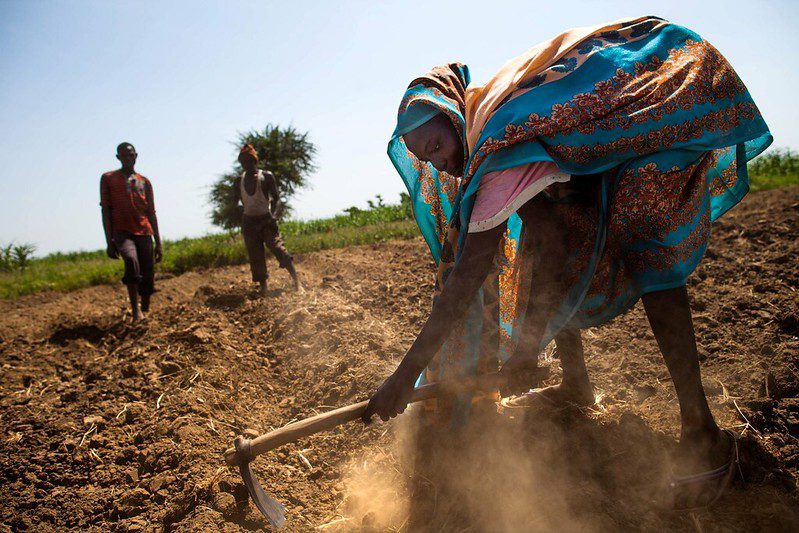
 In 2022, the youth unemployment rate in Sudan remained nearly unchanged at around 34.45%. However, according to the data provided by the International Labor Organization (ILO), the unemployment rate in Sudan has increased to 20.80% in 2023, up from 17.60% in 2022. This means that a larger percentage of the labor force in Sudan is currently unemployed or actively seeking employment.
The data also shows that the unemployment rate in Sudan has averaged 16.02% from 1991 until 2023, with the highest rate recorded in 2023 and the lowest recorded in 2009 at 13.00%. These fluctuations in the unemployment rate over the years indicate the varying economic conditions and job opportunities in Sudan.
The high rates of unemployment among youths in Sudan are a pressing economic and social issue. They are garnering attention from both local and international media outlets, particularly given the country’s current difficult financial situation resulting from the secession of South Sudan and ongoing armed conflicts. This means that not only are there limited job opportunities available, but the overall instability and insecurity in the country exacerbate the problem of unemployment.
Contributing Factors
Several contributing factors to this issue exist. However, one key issue is a lack of access to quality education and vocational programs. Many young people in Sudan do not have the skills or qualifications needed to secure employment in a competitive job market. More than 70% of the population in South Sudan is younger than 30, with half of them lacking basic literacy skills.
Further, South Sudan has one of the lowest literacy rates globally and a significant number of children, about 2.8 million, do not attend school. Various factors such as ongoing violence, poverty, lack of leadership and insufficient investment in education contribute to the limited access to quality education for many children in the country.
Girls, in particular, face significant challenges such as child marriage, which often results in them being unable to pursue their education. This has resulted in a high illiteracy rate among girls, with very few of them enrolled in secondary school.
Another factor is lack of experience. In South Sudan, the lack of experience is a major barrier to employment for many individuals. Due to the country’s limited job market and economic opportunities, employers often seek candidates with relevant industry experience to fill positions. This can pose a challenge for recent graduates or individuals entering the workforce for the first time, as they may not have the necessary experience to compete with more seasoned job applicants.
Additionally, the ongoing conflict and instability in South Sudan have contributed to the limited job opportunities available, making it even more difficult for inexperienced individuals to secure employment. This lack of experience can create a cycle of unemployment and poverty as individuals struggle to gain the necessary skills and expertise needed to access better job prospects.
To combat youth unemployment, the Sudanese government implemented initiatives to support young people in entering the workforce.
YEEP
Youth Employment and Empowerment Through Private Sector and Value Chain Development (YEEP) is a four-year initiative (December 2018-December 2022) that focuses on empowering youth in specific locations in South Sudan, including Bor, Jubek, Rumbek, Torit and Yambio. The project, a collaboration between the United Nations Development Programme (UNDP) and the Ministry of Labor, is financially supported by the Kingdom of the Netherlands and UNDP.
The main objective of YEEP is to empower youth by nurturing their entrepreneurial mindset and providing them with market-relevant skills that will enhance their employability and enable them to participate actively in economic activities. By doing so, the project aims to contribute to the socioeconomic transformation of South Sudan, promoting durable peace and sustainable development.
YEEP’s implementation is guided by various frameworks and strategic plans, including the United Nations Cooperation Framework (UNCF), the Partnership for Recovery and Resilience (PfRR), UNDP’s strategic plan of 2019-2021 and the UNDP Country Programme Document 2019-2021, (CPD), which focuses on inclusive and risk-informed economic development.
YEEP aims to support livelihood training, infrastructure renovations and the establishment of institutions that can effectively serve the youth population of South Sudan. Through these efforts, the project seeks to create a conducive environment for youth empowerment and sustainable development in the country. As a result, more than 1400 young people, including 553 females, signed up for vocational skills training in various trades.
The diverse range of trades offered in the program highlights the efforts to cater to the varied interests and career aspirations of the participants. The high enrollment numbers and the inclusion of female participants demonstrate the program’s success in promoting skills development and vocational training among youth.
ENABLE Youth Sudan
ENABLE Youth Sudan is part of the African Development Bank’s (AfDB) Enable Youth Initiatives, which are part of the Bank’s strategic focus on transforming Africa’s agriculture. The program’s main goal is to provide young women and men in Sudan with the chance to start businesses and access decent employment opportunities within key agricultural value chains in the country. The program specifically targets individuals younger than 35. It requires participants to be graduates with at least a postgraduate degree. By directly benefiting selected young people, the ENABLE Youth Sudan program aims to contribute to the overall transformation and growth of Sudan’s agricultural sector while providing a pathway to sustainable livelihoods for the country’s youth population.
The allocation of beneficiaries for the program will be determined by the proportion of the total youth population in each area, taking into consideration both urban and rural demographics as well as the level of education. The goal of the program is to train and empower 2,000 agripreneurs in five specific target states. Each agripreneur is expected to hire five support workers, resulting in a total of 12,000 new jobs being generated, with 6,000 of those jobs specifically earmarked for women for the first five years. This strategy aims to strategically distribute opportunities across various regions and demographics, ultimately contributing to job creation and empowerment within the agriculture sector.
Final Remark
The Sudanese government is taking necessary steps to address the issue of youth unemployment by implementing these initiatives. By promoting private sector engagement and value chain development, empowering young individuals and promoting sustainable agricultural practices, young people are empowered to achieve economic independence and contribute to the overall development of their communities.
– Oyinkansola Adewumi
Photo: Flickr

Innovations in Poverty Eradication in Mozambique
What Is GiveDirectly?
GiveDirectly is a non-profit organization that sends money to the world’s poorest households. By sending money by direct cash transfer, GiveDirectly immediately eliminates the need for intermediaries and significantly impacts global poverty.
While GiveDirectly currently operates to alleviate poverty around the world; its work in Mozambique has seen them delivering cash to families on the frontline of climate disasters since 2021 and has placed GiveDirectly at the forefront of innovative poverty eradication in Mozambique.
Innovations in Poverty Eradication in Mozambique
GiveDirectly is alleviating poverty in Mozambique by giving no-strings-attached cash to people living in extreme poverty across the country. In the last decade, GiveDirectly has delivered $900M+ to more than 1.48 million people across nine African countries. It is clear how cash transfers play a significant role in moving the needle of people living in poverty from one point to another.
In Mozambique, GiveDirectly has made a significant impact, raising over $7.4 million. This funding has been directed towards crucial programs like Cash+ Resilient Agriculture and Livelihoods. These initiatives aim to reduce poverty by empowering households to invest in their farms, thereby improving their economic stability. Moreover, the Climate Disaster Recovery and Food Security program further aids poverty alleviation by enabling families to invest in their homes, businesses, education, and health.
Benefits of Cash Transfer
Many individuals may be skeptical of a “no-strings-attached” cash, believing that unconditional cash is spent on “temptation goods” such as drugs and alcohol. In fact, there is little evidence to suggest better outcomes come with conditionality. Actually, there are many benefits to alleviating poverty through cash transfers. The main benefit is that a cash transfer enables people to achieve their own, personal goals.
For instance, GiveDirectly points out how cash transfers to individuals in Mozambique allowed kids to go back to school, individuals to reinforce their houses and people moving away from elephant crop raids. What is innovative about the way GiveDirectly alleviates poverty is that they empower recipients to make their own decisions.
GiveDirectly stands out in innovatively alleviating poverty in Mozambique through its evidence-based approach and its rigorous standards of evaluation when it comes to implementing its programs. GiveDirectly is a standout NGO that effectively combats poverty through its innovative and highly scalable approach. By utilizing mobile money, GiveDirectly can swiftly provide cash assistance to tens or even hundreds of thousands of people. This means the charity can deliver aid rapidly and efficiently, making a significant impact in eradicating poverty.
– Lara Inglis-Jones
Photo: Wikimedia Commons
How Food for the Poor Is Fighting Poverty in Honduras
Furthermore, the United States Agency for International Development (USAID) estimates that 23% of all children less than 5 years old in Honduras suffer from stunting as a result of chronic malnutrition and how vital it is that this issue be addressed.
Food for the Poor (FFTP)
Food For the Poor began operating in Honduras in 1999 in order to help mitigate the effects of Hurricane Mitch, which battered Central America in 1998. FFTP works alongside charities such as CEPUDO, which is a locally-based charity operating in San Pedro Sula. Currently, FFTP is involved in 99 projects and aims to:
Furthermore, in an effort to combat food insecurity in the region, FFTP partnered with Feeding My Starving Children and sent 62,208 MannaPack Rice meals to hundreds of Honduran families facing food insecurity in 2023. MannaPacks are a special meal for malnourished children that contains protein, vitamins and minerals. It is aimed at undernourished children in the Global South.
Partnerships
In 2009, FFTP partnered with CEPUDO to provide 5,000 Honduran schoolchildren with new desks and 48,000 residents with new shoes. This was in addition to the $204 million worth of educational supplies, food and health care items donated by FFTP in the previous years. The Executive Director of FFTP claimed that the most important way of breaking the cycle of poverty is through education and that was the spark behind the desk program.
CEPUDO and FFTP also provide workshops and training classes in education and community centers to aid poverty-stricken communities. Currently, the organizations are building a sustainable village in San Antonio. The village will “provide greater access to education, food, health, income generation and safe housing for families in need.”
This sustainable village will feature a vocational agricultural school. Additionally, there will be a health clinic designed to serve more than 1,000 residents and a women’s income-generation center. The organizations are also supporting local coffee farmers and implementing women’s empowerment training workshops that support careers in baking, sewing and more.
– Cordelia Moore
Photo: Flickr
International Innovation: The Eradication of Water Poverty
Access to Clean Water
Innovative technology has solved numerous challenges, including providing drinkable water for many in the developed world. However, these innovations have not been evenly distributed, leaving many in the developing world to contend with dirty water as a health concern.
The United Nations Trade and Development (UNCTAD) department reports that 5.4 billion people lack access to well-managed water sanitation services or infrastructure. The department highlights the potential of cutting-edge technology to aid in the fight against water poverty significantly.
Harnessing New Technologies
AI and the Internet of Things, a network of interconnected objects that communicate through sensors and signals, aid in enhancing water supply infrastructure. Along with these advances, other readily deployable technologies increase the amount of usable water available to people. For instance, the Ecoloo is a portable toilet that reduces the water required for flushing and treats the water to make it suitable for agricultural use.
The Moroccan Fog Catchers and other Innovations
A simple yet effective innovation, the Moroccan Fog Catchers, allows people to collect clean, usable water with minimal expertise. This invention consists of large sheets of netted material that capture fog and dew in mountainous areas. For years, rural communities have used these devices to collect fresh water for drinking, washing and agriculture.
Swiss Fresh Water, a new start-up company, is also making significant strides in addressing water scarcity with innovative, sustainable technology. Its systems convert brackish and sea water into drinkable water, powered by renewable energy sources like solar panels. This approach not only provides fresh water to communities in need but also reduces environmental impact. Early results are promising, with installations in several remote areas demonstrating both the effectiveness and reliability of the technology in diverse conditions. Currently, the initiative provides more than 35,000 people access to drinking water.
The Canadian charity Fog Quest is another initiative that is actively building and maintaining fog collectors to support local populations.
Global Partnerships
The UNCTAD emphasizes the importance of global partnerships, stating, “Global partnerships are crucial not only to support access to Science, Technology and Innovation (STI) but also to enhance knowledge-sharing that fosters the scaling up of good practices domestically and internationally.” This call to action was underscored at the 26th annual UNCTAD conference, where nations worldwide proposed innovative solutions to the pervasive water crisis. The proposed solutions at the 2023 UNCTAD conference exemplify how such teamwork can pave the way to eradicating water poverty in the future.
Looking Forward
The commitment to harnessing new technologies and strengthening global partnerships heralds a promising future in the battle against water poverty. Innovations like AI and the Internet of Things are poised to unlock new sources and improve water management. As more communities gain access to tools like the Moroccan Fog Catchers, the ability to secure clean water could become more attainable for all.
– Charles McFadden
Photo: Unsplash
Genetic Innovations Lifting African Farmers Out of Poverty
This is exemplified by sub-Saharan Africa’s fertilizer use being seven times lower than the global average. Another challenge farmers face is the increasing frequency of drought. Drought inhibits agricultural production and exacerbates food insecurity, displacement and poverty. However, genetic innovation provides a solution to these problems.
Providing African farmers with livestock and crops that are genetically optimized to thrive in these conditions has been incredibly effective. These are some of the genetic innovations lifting African farmers out of poverty.
Drought-Resistant Rice in Guinea
Although rice is farmed within Guinea, the country still imports around $230 million worth of the commodity each year. The low output of rice in Guinea can be partly attributed to harsh growing conditions in the region. The rice species that have adapted to these conditions are naturally low-yielding.
A genetically superior type of rice called New Rice for Africa (NERICA) has been created to help Africa overcome this problem. By breeding high-yielding Asian rice variants with the lower-yielding but adaptive African variant, NERICA was born as the first rice variant to produce a high yield in Africa’s climate. Even in the absence of fertilizer, these variants generate 50% more yield than other rice varieties.
Not only is NERICA higher-yielding, but it also contains more protein than other varieties in Guinea, which supports the nutritional needs of a country where malnutrition is rife. At least 20,000 farmers in Guinea have benefited from NERICA rice since its adoption in the country.
Resilient Sheep and Goats in Kenya
Livestock are a life-changing asset for farmers in Kenya. For small-scale farmers, the death of just one animal can put their livelihoods at risk. Heat stress, disease and parasites are some of the main threats to livestock. Through selective cross-breeding, sheep and goats that can withstand higher temperatures and are more resistant to disease and parasites have been produced.
In Kenya, genetically advantageous Galla goats and Red Maasai sheep have been added to existing herds. Not only are these breeds more resilient, but they also increase household income by supplying more milk and selling for a higher price than their equivalent local breeds. These genetically advantageous breeds have reduced food insecurity by around 90% in Kenya.
High-Yielding Beans in Ethiopia
Ethiopia is one of Africa’s lowest-income countries. Four million farmers in Ethiopia rely on beans as a source of both food and income. However, limited access to expensive farming resources combined with frequent droughts limits the yield of smaller-scale farmers. Beans are a staple in the region and enhancing their yield can increase food security and provide a route out of poverty for small-scale farmers.
Therefore, genetically superior beans that grow faster and withstand drought have been produced through selective breeding. These varieties have more than tripled the average bean yield per hectare in Ethiopia. Since their rollout, the adoption of these beans has increased the household income for 2.5 million families in Ethiopia.
A Sustainable Route Out of Poverty
Genetic innovations like these are life-changing for small-scale farmers in Africa. Since crops and livestock produce offspring with similarly advantageous genes, the initiatives have a sustained impact and provide a long-term solution to Africa’s poverty crisis. Greater investment into agricultural research and wider-scale implementation of these innovations will be crucial for ending poverty in Africa.
– Catrin Jones
Photo: Flickr
Amazon Rainforest Reforestation
What Is Deforestation?
Deforestation is “the decrease in forest areas across the world that are lost for other uses such as agricultural croplands, urbanization or mining activities.” Often, when land ownership systems are fragile in developing countries like Brazil, large corporations acquire the land and repurpose it for other activities – thus disrupting the lives of the local communities.
Forests sustain local communities and Indigenous people, providing them with food, medicine, shelter, building resources and even holding significant cultural importance. Due to deforestation, around 20% of the Amazon rainforest is razed, propelling many of these locals further into poverty, as they are losing their sustainable resources.
Causes and Effects of Deforestation
Agriculture is the main cause of deforestation, accounting for around 80%. Subsistence agriculture, where the food produced is mostly consumed by the farming family and not sold, contributes to 33% of this agricultural-driven deforestation. About 40% is from commercial agriculture, like soya plantations and livestock farming in Brazil. Infrastructure, such as roads, railways, dam-building, mining and logging, are other causes of deforestation.
Poverty is another cause of deforestation, as many local communities and Indigenous people are dependent on forests. When they are faced with a lack of income and poverty, they resort to clearing the forest for its resources or agriculture. While poverty can be a cause of deforestation, it is also an effect.
Locals whose survival hinges on forests, using them for hunting, gathering resources and for their own agriculture, end up having to choose between leaving or staying. Either way, they face repercussions. If they decide to go, they face the challenge of starting a new life and avoiding conflict by relinquishing their land. If they choose to stay, they can work for the corporations that subject them to deplorable working conditions and unfair wages.
Deforestation also causes soil erosion, which can increase the likelihood of floods and landslides. Soil erosion also reduces soil fertility, impacting food production and causing food insecurity as it is unsuitable for agricultural use.
Eden Projects
Eden Projects is a nonprofit organization that works with local communities and focuses on restoring landscapes in developing countries like Brazil, Kenya and the Philippines. The organization defines land restoration as “a holistic, standards-based approach to restoration and conservation that generates environmental, socioeconomic and biodiversity benefits for the well-being of communities and the planet.”
The Eden Projects has initiated a land restoration project to reforest the Amazon rainforest, Cerrado and coastal mangrove estuaries. The project was started in 2021 and involves collaborating with local communities and leaders to bring the rainforest back to life. The Eden Projects believes in building strong relationships with the local leaders and communities, as they share similar goals of creating a sustainable environment.
How Eden Is Helping
Planting trees helps to restore the 62 million hectares of lost forest in Brazil. Around 30,000 hectares of trees have been reforested by Eden in Brazil, with Amazon rainforest reforestation focusing on mangrove estuaries. Mangrove estuaries play a crucial role in serving as habitats for animals, stabilizing coastlines and diminishing erosion.
With 9.3 million Brazilians living in extreme poverty as of 2018, Eden is helping by creating economic opportunity with its reforestation aid. Eden’s Amazon rainforest reforestation creates employment opportunities for local communities and establishes livelihood opportunities for those facing extreme poverty.
The project hires locals to work on project sites and in nurseries at a fair wage. It also involves them in the maintenance and protection of recently planted areas to engage them in the care of the forests. Eden also allocates a percentage of species planted for sustainable community use, benefitting the locals who relied on the land before deforestation occurred.
Some socioeconomic benefits of the employment opportunities Eden provides include parents who cannot provide food for their families, being able to provide healthy meals, paying school fees and allowing their children to achieve an education. Further economic opportunities arise as microenterprises emerge in the communities.
Final Remark
The vicious cycle of deforestation and poverty perpetuates a harmful loop of environmental and socioeconomic challenges. Amazon rainforest reforestation initiatives represent a crucial step toward addressing the challenges of deforestation. These initiatives aim to address the factors that drive deforestation while also providing employment opportunities for local communities, alleviating them from the extreme poverty they face. These initiatives involve planting new trees, restoring and preserving biodiversity and fostering sustainable livelihoods.
– Isabella Green
Photo: Flickr
Progress in Zika Virus Treatment and Support in Latin America
Pregnancy Complications
One of the most alarming aspects of the Zika virus was its association with severe congenital disabilities, most notably microcephaly, a condition characterized by an abnormally small head and an underdeveloped brain. Pregnant women infected with the virus faced heightened risks, as it could be transmitted from mother to fetus, leading to potentially devastating consequences for newborns. Centers for Disease Control and Prevention noted that the Zika virus affected 5% of babies whose mothers had contracted the virus while pregnant and that many babies did not receive the recommended care.
Government Responses
In response to the crisis, governments, health care organizations and international agencies mobilized resources and expertise to combat the outbreak. Public health campaigns were launched to raise awareness about the virus and educate communities about preventive measures, such as eliminating mosquito breeding sites and using insect repellent.
Americares, a nonprofit organization based in Stamford, has been supporting affected families by ensuring hospitals are equipped with the appropriate medication and skills to combat the disease. It has also distributed mosquito nets and repellent to many people in Latin America in an effort to prevent transmission. Its family care clinic in El Salvador treats 60,000 patients a year.
Vector control efforts played a crucial role in reducing mosquito populations and curbing transmission rates. WHO created a vector control framework for tackling the Zika outbreak. Interventions ranged from insecticide spraying to community-based initiatives aimed at removing standing water where mosquitoes breed. These efforts, combined with improved surveillance and monitoring systems, helped to identify and contain outbreaks more effectively.
Furthermore, research into the Zika virus accelerated rapidly, leading to a better understanding of its transmission dynamics, clinical manifestations and long-term consequences. This knowledge proved invaluable in guiding public health strategies and informing clinical care for affected individuals.
Present Day Struggles
Despite significant progress in Zika virus treatment, challenges remain, particularly in providing support to families affected by its complications. Children born with microcephaly and other Zika-related congenital disabilities require specialized care and services to address their complex medical and developmental needs. Additionally, families may face social stigma, economic hardship and emotional distress as they navigate the challenges of raising a child with disabilities. BMJ Global Health conducted a study that found that children who were moderately affected by Zika have an economic burden of more than $204 million over 10 years.
Efforts to support affected families have encompassed a range of interventions, including access to medical care, rehabilitation services, psychosocial support and financial assistance. Governments and nongovernmental organizations have implemented programs to provide comprehensive support to affected families, with a focus on promoting inclusion, empowerment and dignity. Children’s National created one of the first congenital Zika virus programs, which provides patients with accurate diagnoses and treatment plans.
Final Remark
While the Zika virus epidemic of 2015-2016 presented unprecedented challenges for Latin America, it also showcased the resilience, solidarity and collective action of communities and stakeholders in responding to public health crises. By building on the progress made and continuing to prioritize support for affected families, Latin America can work toward a future where the impact of Zika is minimized.
The fight against Zika is far from over. However, with continued commitment and collaboration, Latin America can overcome this challenge and build a more resilient and inclusive society for all.
– Lauren McKenna
Photo: Flickr
High Rates of Unemployment Among Youths in Sudan
The data also shows that the unemployment rate in Sudan has averaged 16.02% from 1991 until 2023, with the highest rate recorded in 2023 and the lowest recorded in 2009 at 13.00%. These fluctuations in the unemployment rate over the years indicate the varying economic conditions and job opportunities in Sudan.
The high rates of unemployment among youths in Sudan are a pressing economic and social issue. They are garnering attention from both local and international media outlets, particularly given the country’s current difficult financial situation resulting from the secession of South Sudan and ongoing armed conflicts. This means that not only are there limited job opportunities available, but the overall instability and insecurity in the country exacerbate the problem of unemployment.
Contributing Factors
Several contributing factors to this issue exist. However, one key issue is a lack of access to quality education and vocational programs. Many young people in Sudan do not have the skills or qualifications needed to secure employment in a competitive job market. More than 70% of the population in South Sudan is younger than 30, with half of them lacking basic literacy skills.
Further, South Sudan has one of the lowest literacy rates globally and a significant number of children, about 2.8 million, do not attend school. Various factors such as ongoing violence, poverty, lack of leadership and insufficient investment in education contribute to the limited access to quality education for many children in the country.
Girls, in particular, face significant challenges such as child marriage, which often results in them being unable to pursue their education. This has resulted in a high illiteracy rate among girls, with very few of them enrolled in secondary school.
Another factor is lack of experience. In South Sudan, the lack of experience is a major barrier to employment for many individuals. Due to the country’s limited job market and economic opportunities, employers often seek candidates with relevant industry experience to fill positions. This can pose a challenge for recent graduates or individuals entering the workforce for the first time, as they may not have the necessary experience to compete with more seasoned job applicants.
Additionally, the ongoing conflict and instability in South Sudan have contributed to the limited job opportunities available, making it even more difficult for inexperienced individuals to secure employment. This lack of experience can create a cycle of unemployment and poverty as individuals struggle to gain the necessary skills and expertise needed to access better job prospects.
To combat youth unemployment, the Sudanese government implemented initiatives to support young people in entering the workforce.
YEEP
Youth Employment and Empowerment Through Private Sector and Value Chain Development (YEEP) is a four-year initiative (December 2018-December 2022) that focuses on empowering youth in specific locations in South Sudan, including Bor, Jubek, Rumbek, Torit and Yambio. The project, a collaboration between the United Nations Development Programme (UNDP) and the Ministry of Labor, is financially supported by the Kingdom of the Netherlands and UNDP.
The main objective of YEEP is to empower youth by nurturing their entrepreneurial mindset and providing them with market-relevant skills that will enhance their employability and enable them to participate actively in economic activities. By doing so, the project aims to contribute to the socioeconomic transformation of South Sudan, promoting durable peace and sustainable development.
YEEP’s implementation is guided by various frameworks and strategic plans, including the United Nations Cooperation Framework (UNCF), the Partnership for Recovery and Resilience (PfRR), UNDP’s strategic plan of 2019-2021 and the UNDP Country Programme Document 2019-2021, (CPD), which focuses on inclusive and risk-informed economic development.
YEEP aims to support livelihood training, infrastructure renovations and the establishment of institutions that can effectively serve the youth population of South Sudan. Through these efforts, the project seeks to create a conducive environment for youth empowerment and sustainable development in the country. As a result, more than 1400 young people, including 553 females, signed up for vocational skills training in various trades.
The diverse range of trades offered in the program highlights the efforts to cater to the varied interests and career aspirations of the participants. The high enrollment numbers and the inclusion of female participants demonstrate the program’s success in promoting skills development and vocational training among youth.
ENABLE Youth Sudan
ENABLE Youth Sudan is part of the African Development Bank’s (AfDB) Enable Youth Initiatives, which are part of the Bank’s strategic focus on transforming Africa’s agriculture. The program’s main goal is to provide young women and men in Sudan with the chance to start businesses and access decent employment opportunities within key agricultural value chains in the country. The program specifically targets individuals younger than 35. It requires participants to be graduates with at least a postgraduate degree. By directly benefiting selected young people, the ENABLE Youth Sudan program aims to contribute to the overall transformation and growth of Sudan’s agricultural sector while providing a pathway to sustainable livelihoods for the country’s youth population.
The allocation of beneficiaries for the program will be determined by the proportion of the total youth population in each area, taking into consideration both urban and rural demographics as well as the level of education. The goal of the program is to train and empower 2,000 agripreneurs in five specific target states. Each agripreneur is expected to hire five support workers, resulting in a total of 12,000 new jobs being generated, with 6,000 of those jobs specifically earmarked for women for the first five years. This strategy aims to strategically distribute opportunities across various regions and demographics, ultimately contributing to job creation and empowerment within the agriculture sector.
Final Remark
The Sudanese government is taking necessary steps to address the issue of youth unemployment by implementing these initiatives. By promoting private sector engagement and value chain development, empowering young individuals and promoting sustainable agricultural practices, young people are empowered to achieve economic independence and contribute to the overall development of their communities.
– Oyinkansola Adewumi
Photo: Flickr
Make in India: The End of Indian Poverty?
The Make in India Campaign
The Make in India campaign is a series of initiatives meant to boost national innovation, manufacturing, the economy and Indians’ livelihoods. The initiative has four major pillars: new processes, new infrastructure, new sectors and new mindsets. These four pillars serve as the foundation for policies and ideas and all individuals work to combat severe poverty.
Poverty plagued India during the early 2010s, with nearly a billion people facing significant economic challenges. Despite efforts, the country could only generate roughly 1.2 million jobs annually, leaving the majority struggling to secure employment, often resorting to low-paying agricultural work. Although there was a gradual increase to five million jobs by 2015, it paled in comparison to the 12 million entering the workforce that same year.
Recognizing the urgency, it became evident that cohesive government intervention was imperative. Hence, in 2014, the Make In India campaign was unveiled as a comprehensive solution aimed at alleviating poverty and reforming the nation’s economy.
Interview With the Borgen Project
The Borgen Project spoke with a source who lives on the outskirts of Delhi, one of the most populated cities in India, about how Make In India has caused change in the job market and opportunities around them. The source has asked to be kept anonymous. During the interview, the source describes how, originally, work in the city was scarce. Often, people without education couldn’t work in anything besides minimum wage jobs, such as maids, sewage pipe management and taxi drivers.
With many of these jobs being unappealing, most people attempt to work in the factories and travel great distances to either work in factories or shift back to agricultural work. Since 2014, our source tells us that not only have there been more government jobs but also more private sector jobs that provide a basic income and good working conditions. The source also explains that the technology sector has seen rapid growth, especially with new infrastructure requiring massive amounts of labor, which reduces the population without jobs. The numbers agree, with India having created nearly 192 million new jobs in the past 10 years.
The massive creation of jobs and the focus on boosting the economy have left India in the amazing position of eliminating extreme poverty. Overall, while India still has much potential to improve and work on removing pay inequality and other societal issues, it has demonstrated that the Make In India campaign was a success.
– Aman Chaudhary
Photo: Pexels
Bolivians Without Disabilities: Helping Poor Amputees in Bolivia
The Bolivians Without Disabilities
“Our main focus is to work with nonprofit Bolivian prosthetic organizations that provide prostheses to low-income Bolivian amputees,” says Pepe. The Bolivians Without Disabilities accomplish this by collaborating with Bolivian companies that physically construct artificial limbs and provide these to amputees.
Bolivians Without Disabilities gives monetary support and teaching resources to associations that help people with disabilities in Bolivia. This greatly enhances those with disabilities in a physical and mental sense by:
Why Are They Important
Pepe describes the life of an amputee in Bolivia, stating, “Living with a disability in Bolivia is not easy, especially if you are poor. Streets and sidewalks are often crowded and very narrow with lots of dips and broken concrete, making walking, even with two good legs, very difficult.” If this is not bad enough, experiencing an amputation can cause despair and unhappiness due to the sense of loss of autonomy and self-perception.
Furthermore, when asked if the Bolivian government was doing enough to help amputees, Pepe answered, “Definitely not, but I am not sure that I can fault them very much since the issue is largely financial.” Indeed, Bolivia is one of the poorest countries in the world. Additionally, the Bolivian government has failed to pass adequate legislation that identifies discrimination based on disability.
Disability is a critical problem since people who have gone through an amputation suffer terrible financial issues and poverty as they encounter more hurdles to health care. This is unsurprising since Pepe explains that “Social stigma is also a serious concern. Disabled people suffer serious discrimination.” In comparison with the general population, amputees are more likely to experience inadequate access to health care.
Furthermore, people with an amputation are more likely to be unemployed. As stated by Our World in Data, in 2022 in Bolivia, the unemployment rate is 5.16% among amputees, in comparison with 3.81% among the general population. Pepe explained this by saying, “It is also very difficult to get a job if you are disabled. Many jobs are very physical and you need all your hands, feet and abilities to work at most jobs.”
The Impact on Poverty
According to Pepe, “The government also does very little to provide prosthetic limbs.” Pepe continues, “I think that I fairly believe that the little prosthetic clinic that I created provides far more prosthetic limbs than the practically non-existent government attempts to provide limbs.” With the Bolivians Without Disabilities intervening and providing low-income amputees a prosthetic limb, this will create a positive change and will improve their well-being while decreasing their chances of falling into the poverty cycle. This is because they will be encouraged to participate in education and employment activities.
The Bolivians Without Disabilities has shared many personal stories. Here are two examples:
Looking Ahead
The interview with Pepe provided a snapshot of the life of an amputee in Bolivia. Stigma and discrimination are felt more by disabled people and they find it harder to live in Bolivia due to the little help provided by the government. The work done by Bolivians Without Disabilities is vital to help people with disabilities so they can avoid the poverty cycle by improving their job prospects and self-confidence.
– James McAlinden
Photo: Wikimedia Commons
AI Is Helping Address Food Security in India With Agriculture
AI and Farming
The Telangana government divided its AI implementation process into distinct phases. Phase one focused on introducing a variety of AI-based agritech services to thousands of farmers. Phase two reached more than 20,000 chili and groundnut farmers in three districts. The project began in 2022 and has received the support of various AI tech companies and the Bill and Melinda Gates Foundation.
The Saagu Baagu program has had major success with farmers and crop yields, specifically chili crops. The program has enabled AI-focused startup companies like AgNext, a company helping farmers assess the quality and physical attributes of their chiles. Over 18 months, Indian farmers have experienced a 21% increase in plant growth per acre and a 9% decrease in pesticide usage. More than 500,000 farmers are now engaged in the program and have utilized AI tools in their farming.
The success of the Saagu Baagu signifies the potential for AI to help not just agriculture in India but also crop health on a global scale. AI has helped to address food security in India through revolutionary and adaptable technology that could work in a variety of agricultural environments. The program’s impact in Telangana has exemplified the ability of emerging AI technologies to assist modern farming techniques and strategies. Planting schedules, crop health and yield predictions are all challenges faced by farmers that AI has been able to leviate and make more efficient.
The Future of AI and Food Security
AI could help feed the world and prevent global hunger now and in the foreseeable future. “AI is going to transform the way we produce, store, distribute and market food in ways that will improve food safety, efficiency, resilience and sustainability,” said Gbola Adesogan, associate vice president and director of the Global Food Systems Institute. Efficient and sustainable farming will be the key to global food security.
AI is playing a pivotal role in addressing food security in India. Additionally, it holds promise for farmers worldwide in the future:
AI has proven to be an incredibly useful tool in empowering farmers to face modern economic and environmental challenges. Technology will be essential to combating global food security and poverty through agriculture.
– Jacob Buckner
Photo: Flickr