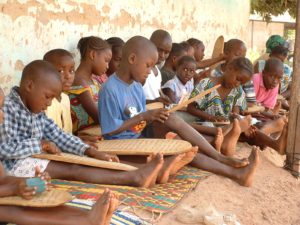
 A former Portuguese colony, Guinea-Bissau, has been affected by chronic instability since achieving independence in 1974. As of September 2023, Disability and poverty is chronic and 64.4% of the population in Guinea-Bissau live below the poverty line. A surprising 68% cannot afford a healthy and nutritious diet. Children and adults with disabilities, in particular, face major barriers, given prejudice and negative social norms with disability and poverty in Guinea-Bissau.
According to a mapping process that the Federation of Associations for the Defense and Promotion of the Rights of Persons with Disabilities in Guinea-Bissau developed, as of 2021, there are 11,548 people with disabilities in all regions of the country. However, Oio has the highest number of people living with disabilities. Specifically, around 16% of children between the ages of 5 and 17 have been found to live with some form of disability.
In light of this, international organizations like the World Food Programme (WFP), the United Nations Children’s Fund (UNICEF) and Humanity & Inclusion (HI) are partnering up with government officials and local organizations to combat the looming poverty and stigma among Guinea-Bissau youth living with disabilities.
Guinea-Bissau’s Barriers to a Fulfilling Life
Disability and poverty in Guinea-Bissau are intricately linked phenomena, reinforcing each other. In Guinea-Bissau, people living with disabilities experience higher levels of poverty, malnutrition and social marginalization. This is because low- and middle-income countries, in particular, tend to have inadequate access to essential resources and services such as health care, clean water, sanitation and nutritious food. Consequently, this leads to exclusion from work, education and social services, thus widening inequalities and exacerbating poverty.
In fact, it is estimated that at least 59% of youth with disabilities do not attend school. Education and social inclusion have become profound realities for many people living with disabilities in Guinea-Bissau. However, like numerous countries in the region, the nation still grapples with cultural discrimination against people with disabilities.
Throughout West Africa, there persist prevailing beliefs that children with disabilities are “bizarre” or “demonic,” resulting in countless stories of neglect, discrimination and ostracization. These cultural beliefs are often deeply influenced by religious backgrounds. In the rural areas of Guinea-Bissau, children with disabilities usually endure heightened levels of social marginalization. It hinders their access to education and, in some cases, leads to their confinement within their homes.
Disability Inclusive School Feeding
Inclusive approaches to children’s rights remain vital in combating high illiteracy rates. They are also beneficial for extreme inequalities between urban and rural areas. Children with disabilities are at much greater risk of malnutrition and food insecurity. As a result, organizations have shifted focus toward education and food security as a way to promote disability rights and inclusive education. According to WFP’s 2023 Practice Guide on “Disability Inclusive School Feeding,” “countries with high levels of malnutrition and nutrient deficiency often report higher rates of disability and developmental delays.”
School feeding has emerged as an innovative solution to addressing disability and poverty in Guinea-Bissau. Providing access to education and free nutritious meals has empowered children living with disabilities and their families, instilling hope for a brighter future.
In collaboration with the government and various nonprofit organizations, the WFP has spearheaded initiatives to support the integration and well-being of children with disabilities into the public school system. One initiative is Bengala Branca, Guinea-Bissau’s inaugural inclusive school catering to both children with and without disabilities.
Additionally, Mariposa is a school located in Guinea-Bissau’s capital that offers specialized education for hearing and speech-impaired learners. The school now integrates the WFP’s take-home rations program for students. Since May 2023, a pilot program has been actively establishing vegetable gardens in schools, including Mariposa, for children with disabilities. This initiative involves providing training for youth, enabling them to procure locally produced food and learn more about self-sufficiency and food diversity.
WFP provides nutritious and hot meals to nearly 179,000 primary school children in Guinea-Bissau, including those with disabilities. In a concerted attempt to tackle disability and poverty in Guinea-Bissau, along with entrenched prejudice and discrimination, the WFP’s project Education Without Borders, launched in 2020, has now successfully reached all 852 schools in the country.
Other Efforts
Other efforts have also been witnessed across Guinea-Bissau. Between 2020 and 2022, HI actively worked to increase access to education among children with disabilities by improving the accessibility of school canteens. Additionally, it conducted campaigns to raise awareness of disability issues in the regions of Bissau, Oio, Bafata, Biombo and Cacheu.
Despite having feeding programs, schools in the country frequently lack training on inclusive education and equality. They also lack accessible-friendly school infrastructure, including sanitation facilities, which makes it difficult for students with disabilities to attend.
To address this issue, UNICEF, in collaboration with HI, has directly supported the construction of WASH infrastructure in 27 schools. Under the sanitation and hygiene program, UNICEF has also trained approximately 3,000 teachers in disability accessibility. This is in addition to creating initiatives that include inclusive hygiene clubs. These steps help to reduce some of the sanitation-related barriers that prevent children with disabilities from enrolling and attending school.
– Irene Suvillaga
Photo: Flickr

Papatoetoe Food Hub Fights Food Insecurity in South Auckland
Traditional Food Practices
Land ownership, or the lack thereof, has severely affected indigenous communities’ ability to access and cultivate food. This is especially true for Māori communities, where colonization and urbanization have hindered their ability to gather and prepare traditional kai (food). In addition, the respectful use of whenua (land) is central to food cultivation in these communities. However, maintaining these values is becoming more challenging in the context of contemporary food systems. Consequently, the struggle of indigenous communities to engage in environmentally friendly farming practices is a major factor in escalating food insecurity.
The Papatoetoe Food Hub
The Papatoetoe Food Hub set up shop in South Auckland to provide sustainable and affordable meals to the community while embracing traditional values of community and environmental stewardship. A key focus, as reported by the Food Hub, is promoting knowledge exchange on growing, harvesting and maintaining crops. To this end, it conducts on-site lessons about indigenous cooking methods. The hub also prioritizes sustainable food practices aligned with Māori values, rescuing and repurposing 18.6 tons of food between September 2019 and May 2021.
A Community-Led Success Story
The Papatoetoe Food Hub adopts a community-led strategy, working in close collaboration with local schools, universities and government agencies to benefit its local community. Knowledge Auckland conducted interviews with 30 individuals about the hub, seeking to understand its impact. The study revealed the value generated by every dollar spent at the hub:
Julio Bin of the Southern Initiative observed, “The Food Hub is a tangible demonstration of how we can do things differently.” Meanwhile, a local mom emphasized, “They base the menu on what the community wants.” The Papatoetoe Food Hub continues to thrive, attracting an increasing number of patrons and even received endorsement from former Prime Minister Jacinda Ardern. The hub aims to build on this success, with local stakeholder Gael Surgenor noting, “The biggest impact is yet to come.”
Looking Forward
The Papatoetoe Food Hub exemplifies the power of community-driven solutions in combating food insecurity while preserving cultural heritage. Addressing food insecurity in South Auckland, the hub intertwines traditional values with modern sustainable practices. It offers a beacon of hope for diverse communities, showcasing a scalable model for others to follow.
– Kayleigh O’Brien
Photo: Unsplash
From Pond to Plate: Aquaculture in Zambia Is Transforming Lives
With the strategic interventions of the United States Agency for International Development (USAID) and the collaborative efforts of government initiatives, Zambia is poised to harness the potential of its growing aquaculture sector. The nation aims not only to meet the nutritional needs of its populace but also to drive sustainable development while safeguarding its resources for generations.
The Prospects of Aquaculture in Zambia
Zambia is a prominent figure in Sub-Saharan Africa’s aquaculture landscape, standing as one of the continent’s leading producers of farmed fish. Within the agricultural sector, fisheries contribute significantly, constituting 3.2% of the country’s gross domestic product (GDP). The nation boasts an annual production of 75,500 tons of tilapia, marking a nearly 10,000% increase since 1986. Despite this impressive growth trajectory, the demand for fish shows no signs of abating. Projections indicate a need for an additional 71,591 tons of fish by 2030 to meet the country’s surging population demand.
Zambia remains a net importer of fish, highlighting the persistent challenge of bridging the supply-demand gap in this vital sector. Therefore, the country stands to reap substantial macroeconomic benefits from expanding its aquaculture industry. By fostering growth in fisheries and enhancing common practices, the nation is primed not only to attain agricultural independence but also to address the pressing challenge of food insecurity, which affects 48% of the population. Recent research by the University of Stirling demonstrates the pivotal role aquaculture plays in bolstering food security in Zambia.
However, the expansion of the aquaculture industry holds promise beyond enhancing food production; it has the potential to alleviate poverty by creating employment opportunities and increasing incomes directly. Moreover, it facilitates coherent community development measures, offering a new avenue for revenue generation for entire lakeside towns. Aquaculture in Zambia often synergizes with crop agriculture, leveraging the fertile conditions and irrigation opportunities provided by lakes, fostering income diversification and growth. To ensure that farmers and fishermen can fully harness the benefits of aquaculture, various domestic and international initiatives are in place to provide support and assistance.
Zambian Government Initiatives
For decades, the Zambian government has played a pivotal role in fostering the growth of the aquaculture industry. In 2004, the introduction of the National Aquaculture Development Strategy (NADS) signaled a concerted effort to provide guidelines and support for private sector-led growth aimed at promoting entrepreneurship and bolstering production. Additionally, the establishment of the centralized Department of Fisheries underscores the government’s commitment to the sector, with five aquaculture centers positioned across the country.
These centers are tasked with conducting feasibility studies and research, particularly concerning fish nutrition and species selection, to drive innovation and sustainable development. Moreover, the Agriculture Commercialization Programme (ACP) offers low-risk financial services to farmers and fishermen, as well as provides a gateway to access relevant technologies.
Ultimately, the Zambian government’s commitment to empowering its fisheries and rural population is not only a testament to its dedication to food security but also to uplifting its most vulnerable citizens. By providing entrepreneurial and employment opportunities, initiatives like the ACP contribute significantly to poverty alleviation in Zambia.
Foreign Investment in Aquaculture
Foreign aid, particularly from USAID, plays a crucial role in fortifying aquaculture in Zambia as well. Through initiatives like feasibility tests, USAID provides invaluable insights into the profitability of aquaculture ventures, demonstrating that even modest investments can yield substantial returns.
For example, one such test revealed that the input costs for a 500 square meter pond, approximately $1,000, offer an impressive 42.38% internal rate of return.
USAID’s aquaculture initiatives in Zambia extend beyond research. For instance, the Farmer-to-Farmer (F2F) program facilitates access to emerging technologies, enhancing the quality and quantity of fish and produce available in local markets.
Similarly, FishFirst! Zambia and the USAID-Mississippi State University partnership at Zambia’s Feed The Future Innovation Lab for Fish prioritize research on fish nutrition and the development of fish-based products, such as instant porridge, which has notable potential for both domestic consumption and international export. These efforts not only promote entrepreneurship but also contribute directly to improved nutritional outcomes for rural communities.
Additionally, USAID programs equip rural Zambians with educational resources, imparting knowledge on the nutritional benefits of various fish species and offering practical guidance through recipe handbooks. Ultimately, foreign investment plays a pivotal role in augmenting food security and reducing poverty in Zambia by fostering innovation, education and economic opportunities.
Final Remark
Aquaculture in Zambia offers a promising avenue for sustainable economic growth and poverty alleviation as the country moves into the future. With support from domestic and international channels, there is immense potential for the expansion of the vital industry. With continued investment and collaboration, Zambia’s fisheries can play a pivotal role in achieving broader development goals and alleviating poverty through the creation of long-term, sustainable and profitable employment opportunities.
– Matthew Candau
Photo: Flickr
Project HOPE: Primary Care Amid Haiti’s Health Care Crisis
Haiti: A Brief History of Health Care Challenges
Since the ’80s, Project HOPE has been dedicated to aiding the people of Haiti, encompassing initiatives in maternal and child health alongside emergency interventions. Through its swift mobilization of emergency relief efforts and sustained commitment, Project HOPE has played a pivotal role in facilitating the recovery of Haiti’s health care system for enduring resilience.
The organization remains unwavering in its dedication to fortifying Haiti’s fragile health care infrastructure amid the island’s tumultuous history and prevailing struggles. As a steadfast ally, Project HOPE extends a lifeline of aid to a nation teetering on the brink of a humanitarian crisis.
Natural Disasters
The catastrophic 2010 earthquake, which claimed the lives of more than 300,000 people and obliterated 60% of the health care facilities, continues to cast a long shadow over the Caribbean island. In 2016, Hurricane Matthew compounded the damages by decimating thousands of homes and vast swathes of the region’s farmland.
Cholera Outbreaks
Frequent floods and vulnerability to earthquakes have exacerbated cholera outbreaks on the island. The disease thrives in conditions of poor water quality, inadequate waste disposal and declining hygiene standards. According to Relief Web, more than 820,000 cholera cases were reported in Haiti between October 2010 and February 2019.
In 2022, another cholera outbreak prompted Project HOPE to take action. Its efforts included supplying clinics with essential water, sanitation, and hygiene (WASH) materials, distributing hygiene kits, and training community health workers. Additionally, in January 2023, the organization initiated a multi-sectoral program funded by the United States Agency for International Development (USAID) in response to the epidemic.
Since August 2021: Project Hope’s Impact
In recent years, the nonprofit organization has adapted its strategies to address the evolving needs of the community amid the rise of gang warfare. Haiti’s health care crisis extends far beyond its disaster-prone geography, deeply rooted in a tumultuous history of political turmoil and the pervasive presence of gangs. Recent reports indicate that approximately 80% of the capital city, Port-au-Prince, is now under gang control. This multifaceted crisis has resulted in hospitals being set ablaze, medical personnel facing targeted violence, widespread roadblocks disrupting health care access, soaring malnutrition rates and alarming increases in maternal and elderly mortality.
In May 2023, Project HOPE undertook a thorough assessment of Haiti’s Grand Sud region, uncovering significant findings. More than half of the participants reported journeys of an hour to access health care facilities, with limited financial resources identified as the main hindrance. Additionally, nearly half of the surveyed women lacked access to health service facilities for childbirth. It grappled with recurrent shortages of vital medications and deficiencies in staff training. Moreover, health facilities encountered challenges in reaching areas afflicted by high malnutrition rates due to the lack of mobile medical units.
Mobile Health Care Units: A Beacon of Hope
Project HOPE’s mobile medical units (MMUs) have emerged as indispensable assets, especially in areas controlled by gangs where access to traditional health facilities is hindered, exacerbating poverty and further impeding access to essential services. These MMUs have become lifelines for communities grappling with such challenges.
Transportation routes crippled by roadblocks have made it difficult for Haitians to reach health care centers and for facilities to acquire necessary medical supplies, fuels and pharmaceuticals. A surge in internal displacement, particularly from the capital toward the southern regions, has intensified the demand for assistance.
Amid understaffed, underfunded and underresourced health facilities, mobile clinics have played a crucial role in providing essential services to vulnerable and rural communities. These include protective services and hygiene promotion activities. Additionally, Project HOPE’s MMU offers medical consultations, prescriptions and care for mental health patients and victims of gender-based violence.
From October to December 2023, Project HOPE’s MMU operated almost daily, treating more than 45,000 patients in the Sud, Nippes and Grand’Anse departments. With sustained support from USAID, two mobile clinics will be held weekly in the Nippes department, ensuring access to vital health care services for the community.
– Irene Suvillaga
Photo: Flickr
Combating the Drug Cartel Recruitment of Mexican Youth
Targeting Impoverished Children
According to the Network for Children’s Rights in Mexico, organized crime groups recruited about 350,000 young people around the country, with around 400,000 finding themselves vulnerable to drug cartel recruitment. Cartels especially target impoverished children who live in tumultuous households, swaying them to join with the promise of economic gain and even a “sense of belonging.”
Reinserta is a non-profit organization in Mexico working to protect children from this growing issue. Founded in 2013, Reinserta offers education, job training and placement and mental health support for children facing crime and violence in Mexico in general. The organization supports youth in proximity to organized crime and drug cartel recruitment with research and reintegration efforts.
Research
Since its founding, the organization has conducted six research studies and reports on violence impacting adolescents in general. It has also conducted surveys to see the impacts of drug cartel recruitment of youth more specifically. The investigation explores the prevalence and gravity of cartels recruiting young members.
It has also hosted 89 interviews with minors in juvenile detention centers and found that 67 were part of cartel activity before their arrest. All the organization’s research and data from the organization is calling attention to a problem that continues to target children who are as young as 10. Reinserta recognizes that progress begins with a comprehensive knowledge and understanding of the issue at hand.
Reintegration
For youth who have already been involved in organized crime, Reinserta offers models of reintegration and rehabilitation. It works across 14 detention centers for youth, offering education and job training and placement services. Through its work, the organization saw that eight out of 10 participating youth continued studying or found a job after Reinserta’s programs. Some of the most common jobs the young people have found are in “gastronomy, styling, barbering, sewing, serigraphy, paramedics, radio and muralism.” In total, the non-profit has impacted over 1,300 adolescents who have been in prison, with a non-recurrent rate of more than 90%, according to its website.
As drug cartel recruitment in Mexico has increased in the past years, the work of Reinserta is becoming more critical than ever. Through its important research and reintegration initiatives, Reinserta operates as one of the Mexican non-profits making the most change for adolescents affected by violence today.
– Estelle Lee
Photo: Unsplash
Tackling Poverty Among People With Disabilities in Niger
Societal Inclusion as a Strategy in Niger
Humanity & Inclusion (HI) is actively expanding its efforts in Niger to support individuals affected by armed conflicts and natural disasters. The organization is working to facilitate the socioeconomic advancement of people with disabilities through greater societal inclusion. It involves conducting research studies to identify the specific needs of individuals with disabilities and understand the barriers they encounter in achieving success when these needs are unmet.
The objective of these studies is to foster broader societal awareness of the challenges faced by people with disabilities. HI collaborates closely with local organizations, institutions and humanitarian actors to advocate for the integration of people with disabilities into society. Additionally, the organization is dedicated to ensuring that children with disabilities have access to primary education and the opportunity to pursue secondary education upon completion of their studies.
Programs for People With Disabilities in Niger
The government of Niger, along with international institutions, has implemented initiatives to support education and employment programs for individuals with disabilities. The Niger Learning Improvement for Results in Education Project, backed by $230 million, aims to improve educational access by constructing learning facilities, training educators and refining teaching methods nationwide.
Specifically, the project allocates funds for the construction of boarding schools and classrooms to facilitate girls’ access to education. Additionally, the Disability Inclusion Strategy, integrated into the International Organization for Migrant’s existing efforts, outlines the rights and needs of individuals with disabilities. This strategy emphasizes enhancing educational opportunities, particularly for girls who historically faced barriers to schooling.
Niger is committed to ensuring that individuals with disabilities have the necessary resources and opportunities to thrive and contribute to the economy. Furthermore, initiatives such as the Committee on the Rights of Persons with Disabilities, one of many policies in Niger, strive for equal opportunities and societal integration by aligning with the Convention on the Rights of Persons with Disabilities.
International Organization for Migration
In Niger, the International Organization for Migration (IOM) has organized various initiatives to connect individuals with disabilities to employment opportunities. One notable event was the observance of the International Day of Persons with Disabilities on December 3, 2019. Collaborating with local organizations in Agadez and Tahoua, the aim was to promote the societal inclusion of people with disabilities as outlined in the 2030 Agenda. The event featured conferences, presentations by local organizations, film screenings, bicycle races and poetry readings, all aimed at fostering integration and awareness.
– Ryan Patrick
Photo: Flickr
Education to prevent child labor in Bolivia
With global silver demand surging by 18% in 2023, mining companies are turning their attention to Bolivia, a country that formerly supplied 20% of the world’s silver. However, historical Spanish involvement in Bolivia’s silver mining has tarnished its reputation with exploitation. Consequently, efforts to prevent a potential increase in child labor in Bolivia and the mining industry are underway through educational initiatives led by organizations such as PASOCAP.
History of Mining
Cerro Rico, meaning Rich Mountain, towers over the city of Potosí and is famous for the world’s “richest silver deposit” discovered in 1545. During the Spanish conquest in 1532, the Spanish exploited indigenous expertise through the mita, a forced labor practice that resulted in a significant decline in the Andean indigenous population while funding the expansion of the Spanish empire.
Toxic dust and fumes exposed miners to perilous conditions, which earned Cerro Rico the name “The Mountain That Eats Men.” Estimates suggest that the forced labor at the mine claimed the lives of 8 million indigenous people and African slaves. Despite the arrival of the liberator Simon Bolivar in 1825, the mita persisted until its abolition in 1832, according to Kris Lane’s study.
Mining in Bolivia Today
Mining continues to be the primary economic activity in Potosí. However, with much of the wealth and resources already extracted, families face financial struggles, relying on the scant earnings from what remains of the plundered riches. In the past, UNICEF has stated that poverty and family breakdown are the primary causes pushing children into mining labor. Despite the Bolivian government’s classification of mining as one of the worst forms of child labor in Bolivia for its impact on health and education, according to a 2022 report, children are compelled to take risks and make sacrifices to support their families’ livelihoods.
Children who are as young as 15 have contracted silicosis, a lung disease that exposure to silica dust causes, resulting in symptoms such as fatigue, coughing, loss of appetite and death. ABC News reveals that a lack of investment and safety inspections has led to inadequate safety measures, including insufficient safety gear, power and ventilation. Additionally, miners face other hazards such as toxic gases, mine collapses, dynamite handling and electrocution from outdated machinery, according to a 2023 report. These conditions perpetuate a cycle of poverty and miners’ low life expectancy of about 45 years.
Education for the Elimination of Child Labor
Nadia Alejandra Cruz Tarifa, the Vice Minister of Equal Opportunities at Bolivia’s Ministry of Justice and International Transparency, shed light on the significant role poverty plays in driving child labor in Bolivia during her address to the 2023 Committee on the Rights of the Child.
During her speech, she emphasized the pivotal link between education and poverty elimination in Bolivia, stressing the prevalence of school dropouts as a significant challenge for the state. She applauded the effectiveness of the Juancito Pinto bonus, a government initiative that offers annual monetary incentives to students and their families, successfully encouraging millions to stay in school, OHCHR reports. By addressing financial struggles, this initiative allows students to pursue education rather than resorting to hazardous labor like mining.
The Work of PASOCAP
After a decade of dedicated effort, PASOCAP collaborated with the working children of Potosí, establishing a dedicated day of commemoration for the dignity of working children in the city on December 8. This milestone also includes the enactment of Municipal Law No. 419, regulating fund allocation for initiatives addressing protection and prevention issues concerning working children. PASOCAPS’s Casa NAT’s program enabled this achievement by empowering young children to act as agents of change, exercising their citizenship and contributing to sustainable development.
Among the institution’s many initiatives is the InterSol Program, which targets “families, guards, watchmen, children, adolescents and young people” living and working alongside Cerro Rico. It aims to empower individuals regarding their constitutional and labor rights through workshops, emphasising laws safeguarding children and women while disseminating strategies to combat child abuse and reduce child labor in Bolivia.
Another initiative, “Protagonists of Peace” supports children struggling with violence, social disadvantage and the direct impacts of mining activities. It aims to equip them with life skills, enhance opportunities and promote advocacy for their rights. The primary goal is to improve the living standards of children and families linked to mining through comprehensive training, empowering them to influence municipal policies. Additionally, the project prioritizes health and nutrition, ensuring access to primary health care services for participants.
Instead of consigning children to work in the mines of Cerro Rico, PASOCAP is providing them with opportunities to challenge the industry’s structures and develop skills that offer genuine and sustainable alternatives that break the cycle of poverty. The Cerro Rico silver mines provide a microcosm through which to examine the high rates of child poverty and child labor in Bolivia. Acknowledging the efforts of institutions like PASOCAP in protecting children is crucial in light of potential future mining activities in the country.
– Ben Miley-Smith
Photo: Wikimedia Commons
Fighting disability and poverty in Guinea-Bissau
According to a mapping process that the Federation of Associations for the Defense and Promotion of the Rights of Persons with Disabilities in Guinea-Bissau developed, as of 2021, there are 11,548 people with disabilities in all regions of the country. However, Oio has the highest number of people living with disabilities. Specifically, around 16% of children between the ages of 5 and 17 have been found to live with some form of disability.
In light of this, international organizations like the World Food Programme (WFP), the United Nations Children’s Fund (UNICEF) and Humanity & Inclusion (HI) are partnering up with government officials and local organizations to combat the looming poverty and stigma among Guinea-Bissau youth living with disabilities.
Guinea-Bissau’s Barriers to a Fulfilling Life
Disability and poverty in Guinea-Bissau are intricately linked phenomena, reinforcing each other. In Guinea-Bissau, people living with disabilities experience higher levels of poverty, malnutrition and social marginalization. This is because low- and middle-income countries, in particular, tend to have inadequate access to essential resources and services such as health care, clean water, sanitation and nutritious food. Consequently, this leads to exclusion from work, education and social services, thus widening inequalities and exacerbating poverty.
In fact, it is estimated that at least 59% of youth with disabilities do not attend school. Education and social inclusion have become profound realities for many people living with disabilities in Guinea-Bissau. However, like numerous countries in the region, the nation still grapples with cultural discrimination against people with disabilities.
Throughout West Africa, there persist prevailing beliefs that children with disabilities are “bizarre” or “demonic,” resulting in countless stories of neglect, discrimination and ostracization. These cultural beliefs are often deeply influenced by religious backgrounds. In the rural areas of Guinea-Bissau, children with disabilities usually endure heightened levels of social marginalization. It hinders their access to education and, in some cases, leads to their confinement within their homes.
Disability Inclusive School Feeding
Inclusive approaches to children’s rights remain vital in combating high illiteracy rates. They are also beneficial for extreme inequalities between urban and rural areas. Children with disabilities are at much greater risk of malnutrition and food insecurity. As a result, organizations have shifted focus toward education and food security as a way to promote disability rights and inclusive education. According to WFP’s 2023 Practice Guide on “Disability Inclusive School Feeding,” “countries with high levels of malnutrition and nutrient deficiency often report higher rates of disability and developmental delays.”
School feeding has emerged as an innovative solution to addressing disability and poverty in Guinea-Bissau. Providing access to education and free nutritious meals has empowered children living with disabilities and their families, instilling hope for a brighter future.
In collaboration with the government and various nonprofit organizations, the WFP has spearheaded initiatives to support the integration and well-being of children with disabilities into the public school system. One initiative is Bengala Branca, Guinea-Bissau’s inaugural inclusive school catering to both children with and without disabilities.
Additionally, Mariposa is a school located in Guinea-Bissau’s capital that offers specialized education for hearing and speech-impaired learners. The school now integrates the WFP’s take-home rations program for students. Since May 2023, a pilot program has been actively establishing vegetable gardens in schools, including Mariposa, for children with disabilities. This initiative involves providing training for youth, enabling them to procure locally produced food and learn more about self-sufficiency and food diversity.
WFP provides nutritious and hot meals to nearly 179,000 primary school children in Guinea-Bissau, including those with disabilities. In a concerted attempt to tackle disability and poverty in Guinea-Bissau, along with entrenched prejudice and discrimination, the WFP’s project Education Without Borders, launched in 2020, has now successfully reached all 852 schools in the country.
Other Efforts
Other efforts have also been witnessed across Guinea-Bissau. Between 2020 and 2022, HI actively worked to increase access to education among children with disabilities by improving the accessibility of school canteens. Additionally, it conducted campaigns to raise awareness of disability issues in the regions of Bissau, Oio, Bafata, Biombo and Cacheu.
Despite having feeding programs, schools in the country frequently lack training on inclusive education and equality. They also lack accessible-friendly school infrastructure, including sanitation facilities, which makes it difficult for students with disabilities to attend.
To address this issue, UNICEF, in collaboration with HI, has directly supported the construction of WASH infrastructure in 27 schools. Under the sanitation and hygiene program, UNICEF has also trained approximately 3,000 teachers in disability accessibility. This is in addition to creating initiatives that include inclusive hygiene clubs. These steps help to reduce some of the sanitation-related barriers that prevent children with disabilities from enrolling and attending school.
– Irene Suvillaga
Photo: Flickr
5 Charities Operating in Laos
GreenHeart Foundation
GreenHeart Foundation is a humanitarian nonprofit organization that has made a “continuous pursuit to address issues of poverty, gender inequality, sex trafficking and unexploded bombs and promote creative expressions through the Preservation and Perpetuation, and Promotion of culture and arts in Asia.” Alongside USAID, the foundation has helped “establish and promote cottage weaving industries along with Consortium and the Lao Women’s Union.” The project provided various benefits to more than 533 weavers. GreenHeart Foundation has helped women express themselves through their artwork which is a part of their life through their traditional cultures. Expressing themselves through creativity can help these women get recognition in a country that’s struggling with social and economic rights.
The Asia Foundation
The Asia Foundation is a nonprofit international development organization that focuses on improving lives and expanding opportunities across Asia and the Pacific. It plays an active role in working “with the Lao government to improve human rights and help communities manage the development and safeguard their natural environment.”
Natural resources account for more than a third of Laos’ total economic growth, which puts increased pressure on the environment. The Asia Foundation provided support to three villages in the Xe Bang Fai district and Khammouane province, helping the people “develop sustainable and economically viable wetland management plans.” Allowing people to use wetland resources can help them financially while also supporting “smallscale riverbank erosion protection measures,” according to The Asia Foundation.
Laos Educational Opportunities Trust (LEOT)
Established in 2006, Laos Education Opportunities Trust (LEOT) aims to “supplement local efforts and ensure students can access quality education and the skills they need to be successful in the future.” This includes community projects, scholarships and sponsorship programs that support children as students and work with isolated or rural villages to “improve the health and sanitation of families and communities.” This has posed an equal opportunity for all children regardless of their social or economic status within their family households.
Laos Rehabilitation Foundation (LRF)
Laos Rehabilitation Foundation (LRF) is a nonprofit, nonreligious, and nonpolitical organization that aims to “provide medical services to Laotian people and surrounding communities with a greater focus on children and the poor.” LRF has had many accomplishments, including “providing items of personal hygiene and clothing to the children of Home of Light, a school for blind children” in Vientiane. LRF has also completed various construction projects for the country including building various health centers and schools to help provide children the best care that they deserve.
The World Health Organization (WHO)
The World Health Organization (WHO) has been “involved in supporting the development of health services and health systems in Laos since the country became a member of the organization in 1950.” WHO’s mission towards Laos is to “achieve the highest level of health for all health sector reforms and universal health coverage for the country by 2025.” Providing health care to all people living in both rural and urban areas could help the country improve its human rights and fight poverty.
It is through these five charities operating in Laos that Laos continues to receive help to better improve their country environmentally, economically and socially. Laos could potentially improve its human rights record through charities that have helped make a difference in providing better human rights.
– Nevin Guler
Photo: Unsplash
Udaan’s Efforts in Nepal: Giving Girls a Second Chance
The Challenges Girls Face in Nepal
According to the Educational Equality Institute, societal norms, affordability issues and a lack of parental motivation hinder girls’ access to education in Nepal. Notably, 5.1% of Nepal’s population lived on $1.90 a day in 2022 and 20.27% lived below the poverty line in 2023. Poverty increases the likelihood of children, especially girls, dropping out of school. Approximately 18% of Nepalese children do not complete primary education, with girls making up 49% of this group. Parents often prioritize marriage over education for their daughters, believing they cannot secure jobs to support their parents in the future, unlike their sons. This mindset leads to many girls leaving school early, perpetuating cycles of poverty and inequality.
Transformative Education through UDAAN
Udaan has become a driving force for change, offering girls a chance to overcome societal barriers and chase their dreams. The project delivers comprehensive support through scholarships, mentorship programs and community engagement efforts. These scholarships pay for tuition, books, snacks and other educational expenses, eliminating financial hurdles and allowing girls to continue their education without interruption. Aimed at girls aged 9 to 14, Udaan features an intensive 11-month curriculum designed to challenge damaging social norms and provide a stable, secure environment for girls’ education. This enables them to catch up on missed education and rejoin the public school system within a year.
Udaan’s Efforts in Nepal: Shaping the Future
Beyond offering education to girls, Udaan also aims to prevent child marriage by providing quality education. This empowers them to make informed life decisions, secure sustainable jobs and support themselves and their families. As Udaan expands its impact, the outlook for girls in Nepal is bright. Empowering each girl to follow her dreams and contribute to her community, Udaan’s influence reaches well beyond the classroom, fostering a more equitable and inclusive society for future generations.
Looking Forward
Udaan’s comprehensive approach promises a brighter future for girls in Nepal, breaking the chains of poverty and gender bias. Udaan’s efforts in Nepal are pivotal to this mission. Through education and empowerment, this initiative paves the way for young women to achieve their potential and contribute significantly to their communities. The ripple effects of their success are bound to foster greater gender equality and economic development across Nepal. As these girls soar to new heights, they exemplify the transformative power of education in shaping societies.
– Erika David
Photo: Unsplash
Disability and Poverty in Greece
The Link Between Disability and Poverty in Greece
The country has particular issues with access when it comes to disability and poverty in Greece. According to a policy brief done by the United Nations Children’s Fund (UNICEF) in 2021, people with disabilities deal with problems in getting the appropriate health care they need. The report cites how people have to resort to private health care because of the lack of public health care. Private health care is generally more expensive and is an option that impoverished people likely do not have.
Greece also has issues with children who have disabilities. Children who have what is described as physical disabilities often do not have the correct equipment to support them in classrooms. The education system in Greece also lacks sufficient personnel to help children who have physical and mental disabilities.
The theme of access for people with disabilities appears to extend to various areas in Greece. During the COVID-19 pandemic, the National Confederation of Disabled People Greece reported in 2020 that there was a lack of assistance provided to physically disabled individuals who were confined to their homes during the crisis.
In Greece, the majority of people with disabilities face challenges due to inadequate access to physical buildings. This encompasses a lack of access to buildings, transportation and mainstream areas. It’s crucial to highlight that, according to the U.S. Department of State, such access is mandated by law. Further, according to the report, some governmental agencies within Greece stated that certain work companies excluded people who have disabilities from jobs. This includes hiring boards looking over people who have disabilities.
Actions to Help
Tactics like these are what inadvertently cause people with disabilities to fall into instances of poverty. The disability unemployment rate rose to 31.1% in 2018 from 8.9% in 2002, with predictions of the pandemic to increase the number, according to the European Commission report on disability equality in 2021.
Greece is working to solve the issue of disability and poverty in the country. In 2021, the government launched the Child Guarantee Program in partnership with UNICEF. The program is designed to support children who have disabilities in getting the quality social services they need. Together for Children, a network of different aid organizations, also provided aid for those with intellectual disabilities.
The initiative has contacted more than 2000 families to help these young people. The Upraise Disability project also helped many people with disabilities in terms of online access. The project helped around 17 people get the assistance they needed through online programs, including things like access to their therapy, among other things, during the pandemic.
– Madison McCray
Photo: Flickr