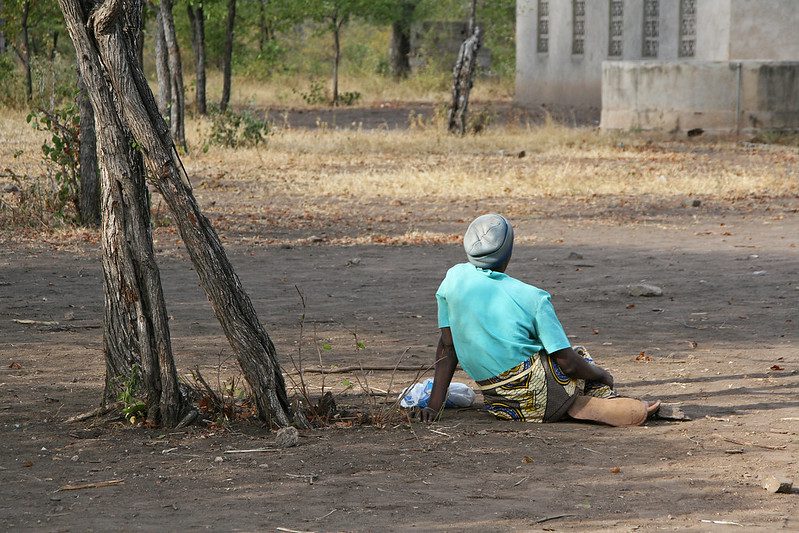
 In commemoration of the U.N. International Day of Older Persons (IDOP) in 2014, a gathering of elderly individuals convened at the African Unity Square in Zimbabwe, sharing constant accounts of their struggles. They recounted the hurdles encountered in accessing health care services, the instability of their livelihoods, the inadequacies of social security support and the injustices faced, particularly regarding the rights of older women to inheritance. Ten years later, the challenges are still present. In the latest report on the level of poverty in older age in Zimbabwe, the elderly poverty rate stood at 80%, as of 2021.
The absence of an insurance plan is among the existing reasons for old age poverty, particularly affecting elderly women in Zimbabwe. Despite a 9.1% unemployment rate, this factor deprives elderly women, this factor significantly contributes to the deprivation of elderly women, compelling them to care for children and adults in their households.
Social Insurance Schemes
In 1989, Zimbabwe established the National Social Security Authority (NSSA), which now manages the Zimbabwean social insurance programs. This program has begun issuing pensions aligned “with the foreign exchange auction rate every month.” This was evident in the pension payout during the second quarter of 2022, as the minimum pension given was equivalent to $70.
Although Zimbabwe has experienced a positive reform in its social insurance programs, it is notable that the program is only applicable to the formal sector. This is particularly ironic considering Zimbabwe is widely recognized for having one of the largest informal economies globally. Informal employment in Zimbabwe accounts for approximately 75% of its total employment, according to the World Bank report.
Harmonized Social Cash Transfer (HSCT)
The HSCT is a social protection program that focuses on households struggling with labour and food poverty. According to the World Bank, it is “an unconditional cash transfer,” the amount of which is determined by the size of the family. Elderly people benefit from this program, as the majority of them do not have a job due to their age or health.
However, despite the presence of this program, the elderly people continue to endure the consequences of the country’s socio-economic state. Established in 2011, this program has only managed to reach about 75,677 households in 26 districts out of the total 65 districts in Zimbabwe, the World Bank reports. This illustrates the low coverage rate of the program, primarily due to inadequate funding from the national budget.
Assisted Medical Treatment Orders (AMTO)
According to the World Bank, the AMTO program aims to enhance health care access for the poor and vulnerable by facilitating direct payment of medical bills to public and mission hospitals. In this program, beneficiaries apply directly to the program and are assessed on a case-by-case basis.
Although in the first quarter of 2022 about 9,540 beneficiaries benefited from AMTO, with 29 people receiving specialized treatment, the eligibility criteria for AMTO is vague, the World Bank reports.
Humanitarian Assistance Programs in Zimbabwe
Aside from the government-implemented program, the U.N. and other NGOs also have several humanitarian assistance initiatives. Among these programs is Lean Season Assistance (LSA), which aims to address food insecurity among vulnerable households affected by natural disasters, economic crises and the COVID-19 pandemic, according to the World Bank. By the end of the 2020/2021 season, approximately 1.5 million food-insecure households had received assistance, including both unconditional in-kind food and cash transfers.
UNICEF supports another humanitarian assistance program, the Emergency Social Cash Transfer (ESCT), which shares a similar mission with HSCT. Introduced in 2020, the program has reached over 113,500 people in 25,000 households, including older individuals.
Despite the positive effects of these programs on poverty, the World Bank highlights challenges such as low coverage, inadequate benefits and inefficient targeting hindered the impact of poverty reduction in Zimbabwe.
– Teniola Yusuf
Teniola is based in Norwich, UK and focuses on Good News for The Borgen Project.
Photo: Flickr

Charities Operating in Guyana
Friends of Guyana (FROG)
In an interview with The Borgen Project, founder Scott Stadum shared more about Friends of Guyana. Returned Peace Corps Volunteers, Kati Ringer and Scott Stadum founded FROG in 2007. Their original idea was to give microgrants to Peace Corps Volunteers. They wanted to fund smaller projects in Guyana, which was not available when they started. Eventually, the organization extended microgrants to anyone who wanted to start a project in or about Guyana, Stadum explained. The charity also funds projects focusing on education and health. A notable project that FROG funded was a short film called ‘The Seawall’ which was filmed and directed by Guyanese-born Mason Richards. The movie went on to show at the Cannes Film Festival a decade later, Richard Mason is now the president and chairman of FROG.
The Guyana Foundation
Supriya Singh-Bodden founded The Guyana Foundation in 2013. The charity’s focus is to provide skills training and counseling to those in need in Guyana. The charity has worked on many projects and has remarkably collaborated with the Canada Fund for Local Initiatives to build an innovative bakery in Capoey costing $15 million. The charity teaches catering, business, sewing and IT skills which people can use to start micro-businesses. The Guyana Foundation also works to teach these skills to refugees from Venezuela who have migrated to Guyana. Additionally, it provided water and solar-panelled lights to towns and villages and essentials such as blankets and curtains to schools. The charity also provides support for farmers by providing wellness classes, private counseling and informative workshops.
Food for the Poor
Food for the Poor began its work in Guyana in 1991. The charity’s goal is to transform the lives of underprivileged citizens of Guyana. The charity has a religious background and works closely with churches. Food for the Poor has carried out multiple projects within Guyana, these projects have helped fund medical care for adults and children who do not have the funds to pay for non-life-threatening medical procedures. In 2022, the charity constructed 92 houses for families and provided shelter for 552 people. The homes were partially furnished and had access to clean water and facilities. Families who did not have access to electricity were also given solar panel systems. The charity has also provided hot meals, breakfast hampers, clothing, school supplies and assistance to schools.
Save Abee Foundation
Save Abee Foundation’s goal is to build centers around the whole of Guyana that provide education to children in poverty. Save Abee provides free education in math, computer technology and English. It also provides grants for scholarships so that children can continue further education. The charity not only provides vital education for Guyanese children but also provides remote medical care. In Guyana, it can take hours for people to travel to get medical, dental and vision care. Save Abee travels to people in need to provide them with the health care that they need.
On top of this, the charity provides food, clothing and toys to those in more unfortunate communities. The Borgen Project corresponded with the Save Abee Foundation’s founder, Sham Tilak, who was born in Berbice Guyana. Impressively, the Save Abee Foundation has helped an estimated 25,000 people, the founder explained. Sham Tilak founded the foundation in 2011 and the charity is still going strong. Save Abee Foundation’s tremendous efforts have not gone unnoticed, and it has many supporters backing its cause. Starbucks, which runs The Starbucks Foundation, opened its first store in Guyana, in 2023 and donated a grant of $10,000 to Save Abee Foundation. The grant will help the foundation reach its target of educating 200 Guyanese youths on computer technology skills.
Mothers’ Union
Mothers’ Union works with people globally, and it started its charity work in Guyana in 1926. The charity has 2,300 members supporting the organization’s generous operations in Guyana. Mothers’ Union provides child day centers and parenting programs, to support families and better their relationships. The organization provides food for families in need and nutrition programs, they also opened a community shop in Annai village.
Mothers’ Union works in some of the most indigenous parts of Guyana and has supplied reusable sanitary towels for girls and provided support to women and teenagers, both male and female. The charity also runs sewing centers, where it provides school uniforms and mosquito nets, which has improved the rates of diseases spread by mosquitoes. Mothers’ Union has a religious background, and it provides prison ministry and church communities. The charity also works to educate people on gender-based violence.
Wrap Up
These five charities operating in Guyana are only a few of many helping to end poverty for Guyanese people. Guyana has made extraordinary efforts to build itself up and make positive impacts for its nationals. Access to education has risen and Guyana attained 91% and 103% enrolment at nursery and primary school levels, according to the World Bank. The World Bank also reports that an estimated 76% of Guyanese people can access health care services. The organizations listed today are a few of many charities operating in Guyana to secure a better future for its citizens.
– Raquel Smith
Photo: Flickr
Battle Against Black Fever in India Nears Victory
Former Director General of the Indian Council of Medical Research (ICMR), Dr. Nirmal Kumar Ganguly, has hailed this achievement as a significant gain for the country. Dr. Kavita Singh, Director for South Asia at the Drugs for Neglected Diseases initiative (DNDi), expects this success to enhance focus on effective public health initiatives. She believes it would “potentially attract more support and resources for similar endeavors toward other vector-borne diseases.”
Historical Context and Persistent Efforts
Black fever or visceral leishmaniasis, locally known as Kala Azar, is a lethal vector-borne disease transmitted by infected female sandflies. It is the second deadliest parasitic disease after malaria, affecting 200 million people annually in 76 countries. This infection impacts the spleen, liver and bone marrow. Without treatment, 95% of cases can be fatal, leading to weight loss, fever and anemia.
The earliest recorded instances of black fever in India date back to 1824, when an outbreak in Jessore, now part of Bangladesh, resulted in approximately 750,000 deaths over three years. Since then, India has experienced periodic outbreaks of Kala Azar every 10 to 15 years, primarily in the states of Assam, Bihar, Jharkhand and West Bengal. These outbreaks typically lasted about 10 years.
Innovative Approaches
The introduction of the indoor residual spray (IRS) of dichlorodiphenyltrichloroethane (DDT) under the national malaria eradication program in 1950 dramatically curbed the spread of Kala Azar in India. The country launched its campaign against black fever in 1992. While pushing four consecutive deadlines in 2010, 2015, 2017 and 2020, India realigned its strategies with the World Health Organisation’s (WHO) guidelines. It adopted an evidence-based practice that showed promising results in eliminating black fever.
The evolution of single-dose infusion and uninterrupted availability of drugs at the ground level has radicalized India’s battle against black fever. In 2012, 90% of the diagnosed people completed their treatments compared to 55% between 2008 and 2009. Governments at the state and national levels have announced remunerations for the patients to compensate for wage loss.
National Strategies and Surveillance Enhancements
The National Center for Vector Borne Diseases Control (NCVBDC) intensified residual spraying in villages that reported cases in the past three years. Since sandflies typically breed in the crevices of mud walls, targeting these hotspots with indoor residual spray (IRS) has curbed the spread of the disease, protecting more than 35 million people at risk. Additionally, Indian authorities have promoted concrete residential structures through the subsidized housing program, Pradhan Mantri Awas Yojana (Rural), reducing mud walls and eliminating potential breeding grounds.
In 2014, NCVBDC introduced a national database on drugs, diagnostics and vector surveillance for black fever. The database portal’s mobile application helped Accredited Social Health Activists (ASHA) detect cases and administer prescribed dosages. Since the black fever eradication program started in 1992, the number of cases has dropped by 97%, from 77,102 to 2,048 in 2020.
Looking Forward
India needs to maintain its efforts for the next three years to receive official validation from the WHO. Additionally, it is essential to eradicate post-kala azar dermal leishmaniasis (PKDL), the skin condition that occurs after black fever infection and serves as a reservoir for the parasite, to prevent the disease’s recurrence. Moreover, as of October 2023, India has reported 286 cases of PKDL.
– Soham Mitra
Photo: Flickr
Elderly Poverty in Zimbabwe
The absence of an insurance plan is among the existing reasons for old age poverty, particularly affecting elderly women in Zimbabwe. Despite a 9.1% unemployment rate, this factor deprives elderly women, this factor significantly contributes to the deprivation of elderly women, compelling them to care for children and adults in their households.
Social Insurance Schemes
In 1989, Zimbabwe established the National Social Security Authority (NSSA), which now manages the Zimbabwean social insurance programs. This program has begun issuing pensions aligned “with the foreign exchange auction rate every month.” This was evident in the pension payout during the second quarter of 2022, as the minimum pension given was equivalent to $70.
Although Zimbabwe has experienced a positive reform in its social insurance programs, it is notable that the program is only applicable to the formal sector. This is particularly ironic considering Zimbabwe is widely recognized for having one of the largest informal economies globally. Informal employment in Zimbabwe accounts for approximately 75% of its total employment, according to the World Bank report.
Harmonized Social Cash Transfer (HSCT)
The HSCT is a social protection program that focuses on households struggling with labour and food poverty. According to the World Bank, it is “an unconditional cash transfer,” the amount of which is determined by the size of the family. Elderly people benefit from this program, as the majority of them do not have a job due to their age or health.
However, despite the presence of this program, the elderly people continue to endure the consequences of the country’s socio-economic state. Established in 2011, this program has only managed to reach about 75,677 households in 26 districts out of the total 65 districts in Zimbabwe, the World Bank reports. This illustrates the low coverage rate of the program, primarily due to inadequate funding from the national budget.
Assisted Medical Treatment Orders (AMTO)
According to the World Bank, the AMTO program aims to enhance health care access for the poor and vulnerable by facilitating direct payment of medical bills to public and mission hospitals. In this program, beneficiaries apply directly to the program and are assessed on a case-by-case basis.
Although in the first quarter of 2022 about 9,540 beneficiaries benefited from AMTO, with 29 people receiving specialized treatment, the eligibility criteria for AMTO is vague, the World Bank reports.
Humanitarian Assistance Programs in Zimbabwe
Aside from the government-implemented program, the U.N. and other NGOs also have several humanitarian assistance initiatives. Among these programs is Lean Season Assistance (LSA), which aims to address food insecurity among vulnerable households affected by natural disasters, economic crises and the COVID-19 pandemic, according to the World Bank. By the end of the 2020/2021 season, approximately 1.5 million food-insecure households had received assistance, including both unconditional in-kind food and cash transfers.
UNICEF supports another humanitarian assistance program, the Emergency Social Cash Transfer (ESCT), which shares a similar mission with HSCT. Introduced in 2020, the program has reached over 113,500 people in 25,000 households, including older individuals.
Despite the positive effects of these programs on poverty, the World Bank highlights challenges such as low coverage, inadequate benefits and inefficient targeting hindered the impact of poverty reduction in Zimbabwe.
– Teniola Yusuf
Photo: Flickr
Renewable Energy in Gabon
Natural Resources
Gabon is home to an ample amount of natural resources that act as renewable resources. The biggest one in particular is water. With a vast network of rivers and streams flowing through the country, Gabon can produce 51% of its energy through hydroelectricity in 2022. Unlike other renewable resources, hydroelectricity provides a consistent supply of energy throughout the day and night. Additionally, its lower setup set-up cost and maintenance made it the perfect choice for Gabon. Many hydropower projects are starting up in both the private and government sector such as the Kinguélé Aval Hydropower Plant which will produce a massive 35 MW of renewable energy.
However, Gabon is also investing in other renewable energy sources such as solar. New initiatives such as the Ayémé Plaine solar plant can drastically transform the energy landscape by producing massive amounts of energy. In the case of this plant, it would produce a tremendous 120 MW of power and provide many skilled jobs to the nearby population.
Another resource that Gabon has is labour. Some projects like hydropower dams require hundreds of workers. With more than a third of Gabon’s population living in poverty, any type of governmental project that requires jobs could directly help provide jobs to the people of Gabon whilst helping the economy and the environment.
Governmental Action
Gabon’s government has shown a strong commitment to renewable energy in its policies and initiatives. By 2025, the government hopes that renewable energy in Gabon will account for 100% of the country’s energy. Gabon plans to boost this with major infrastructure projects such as the Grand Poubara Dam, at a cost of more than $190 million.
Renewable energy in Gabon is not the only thing that has set this country on the green path. With delicate preservation of the 88% forest landscape, Gabon can absorb up to 200 million tonnes of carbon dioxide from the air. This also serves as another source of income for the country that they can sell in open through sales in carbon markets. Gabon has also made commitments to reducing half of its greenhouse gas emissions by 2025 as well.
The Future
While it has a unique geographical advantage and a strong commitment to renewable energy, Gabon could face challenges in achieving its renewable goals. One of the biggest challenges that Gabon faces is the extension of green energy to Gabon’s rural areas. While 80% of the population lives in urban cities, the other 20% is dispersed throughout the country. While creating a system that can reach the rural regions may not only be challenging but also financially demanding, Gabon has begun working on several solutions such as a new grid and smaller plants to help address the concerns of energy poverty while also preserving its green initiative. Examples of the commitment to combatting access inequality are the construction of 163 km of 63-KV lines linking Mitzic via Oyem to Bitam and the 1-MW plant in Lambaréné.
Despite these challenges, Gabon has demonstrated the feasibility of shifting towards renewable energy on a massive scale. Gabon’s struggle to provide electricity to now having a 97% access rate to electricity highlights how a strong geological advantage and proactive governmental action can transform a country.
– Aman Chaudhary
Photo: Wikimedia Commons
Energy in Suriname: Reducing Energy Poverty
The Surinamese government has been in conversations with global oil companies that could fetch as much as $9 billion for rights to develop the area. This income could provide an instrumental opportunity for the country as 26% of its population lives in extreme poverty. Suriname President Chandrikapersad Santokhi added that this opportunity could “end global energy poverty.”
However, a lack of energy and power severely challenges poverty reduction as services like health care and education become limited. Nonetheless, Suriname has had some successful ventures in combating energy poverty and the current situation can provide the opportunity to make an impact on a larger level.
Overview of Energy in Suriname
Suriname is one of three net-zero countries in the world. Its expanse of dense forests helps it absorb more carbon than it emits, but it has also made progress in using green energy, with 38% of its overall electricity coming from hydropower. The use of multiple energy sources has helped Suriname provide power to 98% of its population. However, there are still challenges for those living in dense forest areas, primarily indigenous communities. Historically, these people relied upon old gas-powered generators for electricity, which could limit power to only four hours per day.
To address this, the government, the International Development Bank and the Caribbean Investment Facility rolled out a Sustainable Energy Framework in Suriname. This program helped bring more than 20,000 people reliable electricity through sustainable methods, including mini solar grids. The increase in power access is a key advantage for these populations in improving living conditions.
In Suriname, most of the energy is still produced from oil. Staatsolie, a state-owned organization, manages the majority of oil and gas operations in the country. It has collaborated with the government to establish sustainable standards and practices that aim to maintain its net-zero rating. The company also hosts the Suriname Energy Oil and Gas Summit and donates the event’s revenues to communities in need. This includes renovating schools for children living in poverty. Despite these positives, inequitable energy, inflation and government subsidies contribute to high power and fuel prices. The impending oil boom can address this key area.
Opportunities With Oil and Gas
Staatsolie has recently signed an agreement with two other companies to increase production in offshore oil fields. This increase is expected to begin later this year and continue until 2025. Government officials have previously declared their commitment to utilizing the influx of oil and its respective revenue for economic development.
There is an increased demand for various goods and services associated with the impending production, which will benefit Surinamese businesses and citizens. Rather than outsourcing employment, Suriname can award opportunities to its vulnerable populations and empower entrepreneurs. Investing in economic development is the key to addressing the challenges of inflation and insurmountable energy costs. In addition to employment, this is a perfect driver for organizations like Staatsolie to increase their humanitarian work to address poverty in the nation.
– William Galante
Photo: Wikimedia Commons
Private Sector Is Driving Water Solutions in Sub-Saharan Africa
The Sub-Saharan countries alone have 1.2 billion citizens and projections by the World Bank indicate that this number will increase to 2.7 billion by 2060. The International Institute for Applied Systems Analysis states that an unpredictable and erratic rainfall pattern is a major contributor to low productivity and food insecurity in Africa. This is further compounded by a low degree of mechanization, which reinforces a persistent poverty trap. Cyclical famines triggered by these factors pose a significant threat to local development opportunities.
Startups and established solar tech companies in the region are using solar energy-powered systems to tackle water scarcity. By doing so, they are setting an example for the future of farming development. This approach produces positive economic outcomes that have a ripple effect on the health and well-being of citizens and the global economy as a whole.
Blazing the Trail for Progress
Although the continent receives “60% of the world’s solar resources, Africa has only 1% of solar generation capacity.” This is largely due to economic constraints caused by reverberations from the global pandemic and the war in Ukraine. Filling in the gaps, partnerships between governments and the private sector are increasingly opening up opportunities for citizens to harness solar energy to power irrigation systems.
SunCulture is one example of the many companies and startups funding development projects in countries experiencing the highest levels of water scarcity, including but not limited to Ethiopia, Kenya, Morocco, Namibia, Nigeria, Rwanda, Senegal, South Africa, Tanzania and Uganda. SunCulture alone has raised more than “40 million to equip rural farmers with solar-powered irrigation systems.” Rural farmers previously relied on rainfall or oil power to produce the water necessary for production.
Now, with help from SunCulture, they have access to cheap and renewable energy to run irrigation systems that require “minimal maintenance.” Put simply by SunCulture’s chief of staff, Mikayla Czajkowski, solar energy offers “positive environmental impact, job creation potential and economic development potential.”
The potential for harnessing solar power is extensive. One foreign company leading the charge is Business Finland, which introduced the SolarRO 1500 desalination system in the village of Tseikuru, Kenya. Many communities living rurally or in city “slums” in Kenya have historically relied on contaminated water as the only available resource.
SolarRO utilizes solar energy to operate reverse osmosis systems. This empowers communities to clean the existing water resources without the costs that come with drilling and building irrigation systems. While irrigation systems are best for farming development, reverse osmosis offers a simpler solution to the prevalence of contaminated water, with the reliance on solar (renewable) energy being a key aspect of a cost-efficient implementation.
High Hopes and High Rewards
A SunCulture impact survey found that “89% of smallholder farmers experienced a boost in their quality of life, 90% increased their production and 87% enhanced their earnings.” The success of these projects revolves around the sustainable and efficient nature of implementation. With roughly 36.7% of the population of sub-Saharan countries living on $2.15 a day, costs present a slight challenge.
While many companies have developed solutions based on grants and funds raised, the future and sustainability of these water solutions require a structured water industry all over Sub-Saharan Africa. As communities are given access to water, impact analyses show that production capacities increase and, with it, the quality of life. By investing in solar energy solutions now, the economic and health sectors will see positive, sustainable change in the future.
As the world strives to achieve the Sustainable Development Goals, initiatives like the solar-powered water project serve as beacons of hope. They demonstrate that sustainable solutions to poverty are within reach. By leveraging renewable energy and community-driven approaches, there is the potential for clean water to catalyze positive change and create a brighter future for generations to come in rural Africa and beyond.
– Kiera Gorman
Photo: Pexels
Red Cross and UNHCR Efforts in Cabo Delgado
The UNHCR’s Efforts
The United Nations High Commissioner for Refugees (UNHCR) reported its concern about the escalating humanitarian crisis in Cabo Delgado in March 2024. Together with the government, the UNCHR and its partners balance the urgent needs of the newly displaced with the long-term needs of those forced to remain in overcrowded settlements.
UNHCR and its partners provide core relief items to internally displaced persons (IDPs), including blankets, sleeping mats, mosquito nets, jerrycans, buckets, solar lamps, kitchen sets and plastic sheets. It screens and registers people with specific needs for support and assistance. Furthermore, the organization reports that additional interventions are being planned and discussed with local authorities in the sectors of safety, water and sanitation, health, shelter and food security, though lack of funding thwarts the response.
The Red Cross: A Lifeline in Times of Crisis
The UNHCR focuses on broader humanitarian assistance, while the International Committee of the Red Cross (ICRC) serves as a lifeline for those directly affected by the conflict in Cabo Delgado. With a network of volunteers and staff on the ground, the ICRC, in collaboration with the Mozambique Red Cross (CVM), could provide IDPs with emergency assistance.
Emergency medical is one of the key services provided by the ICRC. From treating injuries sustained in the violence to combatting the recent cholera outbreak, ICRC medical teams provide indispensable support to a conflict-affected area like Cabo Delgado, where access to health care is often limited.
The ICRC also provides vital support in the form of food, clean water and shelter. In 2022, the organization delivered 6,000 household and shelter kits. In addition, it built 32 solar-powered hand pumps and washing areas, improving access to water and sanitation for 10,000 people.
Supporting Recovery and Reconnecting Families
The ICRC promotes self-sufficiency and as part of its emergency assistance, it distributed seed and tool kits to 25,000 people, to help them restart food production. It assists separated families and vulnerable unaccompanied children. The organization works with CVM to facilitate phone calls, reconnect, families and register unaccompanied minors.
In the face of conflict, the ICRC and the UNHCR have emerged to inspire hope in Cabo Delgado, Mozambique. Through their dedication and efforts, they have provided a lifeline to displaced families struggling to survive amid violence and insecurity. As the humanitarian crisis in Cabo Delgado continues to unfold, the work of these organizations remains essential in alleviating the suffering of those affected and rebuilding the future of the people of Northern Mozambique.
– Danielle Schaafsma
Photo: Unsplash
Neglected Tropical Diseases in Yemen
Dengue in Yemen
Dengue fever has significantly impacted Yemen, particularly over the past decade, with major outbreaks occurring in 2015 and 2019. Efforts to control the disease’s spread among Yemen’s conflict-affected population have been ongoing. In 2015 alone, Yemen experienced an unprecedented surge in dengue cases, with more than 6,777 suspected instances reported.
In 2019, Yemen reported 76,768 suspected dengue cases and 271 deaths, with 71% of all cases occurring in the Al Hodeidah region. This region alone recorded 5,524 cases and 11 deaths in the first month of 2019. Following the 2019 outbreak, the number of suspected dengue cases in 2020 surged to seven times the figures from 2019 and six times those from 2018.
Leishmaniasis
Leishmaniasis remains another neglected tropical disease in Yemen, which reports some of the highest case numbers worldwide. It is particularly prevalent in rural areas, with about 4,440 cases recorded in 2019. A 2023 study found that 33% of participants had active skin lesions or scars meeting the clinical criteria for leishmaniasis and 14.7% displayed suspected active lesions. The study confirmed a high prevalence of leishmaniasis in Yemen.
Schistosomiasis
Schistosomiasis remains a critical but neglected tropical disease in Yemen that urgently requires attention. In 2013, it was identified as the second leading cause of death after malaria, with an estimated 3 million cases. As of 2021, a survey revealed that the disease continues to affect a significant portion of the population. However, the risk of contracting schistosomiasis has decreased from one in five residents to fewer than one in 15.
Efforts of WHO and DNDi Programs
International organizations such as the WHO have long worked to address neglected diseases in Yemen. The WHO runs an elimination program for schistosomiasis and a control program for cutaneous leishmaniasis. These programs provide guidelines for case management, treatment, and mass drug administration, where appropriate, aiming to eradicate these neglected tropical diseases in Yemen.
The DNDi, a nonprofit organization, develops new treatments for neglected tropical diseases that primarily affect impoverished populations. It continues to research how to produce effective drugs and vaccines to treat and prevent neglected tropical diseases globally, with Yemen among the potential beneficiaries.
The ongoing conflict and humanitarian crisis in Yemen pose significant challenges to implementing and advancing programs for neglected tropical diseases. Despite these obstacles, WHO, in collaboration with local partners, continues to prioritize and support efforts to combat these diseases in the country.
Looking Forward
The combined efforts of WHO and DNDi are setting a hopeful trajectory toward mitigating neglected tropical diseases in Yemen. The innovative health strategies hold promise for improving the lives of Yemen’s most vulnerable populations.
– Olusegun Odejobi
Photo: Flickr
Gendered Wages and the Gender Wage Gap in Barbados
The Issue
The gender pay gap seems to be something of the past, but the evidence in places such as Barbados shows that this is not the case at all and that the gender wage gap remains. Women are continually experiencing negative stigma and inconsistencies in working conditions such as wages and this statistic only serves to highlight this problem. Women who are experiencing a gender wage gap are experiencing this due to, “a population’s cultural beliefs and attitudes toward women.” This means that many countries are still harboring negative and sexist attitudes towards women, which needs to change for the gender wage gap in Barbados and around the world to fully close.
Tackling the gender pay gap in places like Barbados could create better living conditions as well as more opportunities for jobs around the world. The gender wage gap in Barbados highlights the inequalities that are still prevalent between men and women, and studies show that “countries with more gender equality tend to be happier.” Improving gender equality and the gender pay gap benefits both men and women.
The Future
Mother’s Union is fighting for gender equality across the globe and support women who are in these places striving for equality as well as providing a safe space for women to talk. Since 1913, the Mother’s Union has more than 2,000 members who help reach out to women and support them in Barbados. The Mother’s Union has many different outreach programs in Barbados such as counseling services and skills training. In 2023 it also celebrated its 110th year anniversary.
– Kiera Egars
Photo: Flickr
5 Facts About Poverty in Indonesia Papua
Poverty Disparities in Indonesia
Papua and West Papua, which make up Indonesian New Guinea, have the highest poverty rates in Indonesia. More than 28% of residents in these provinces live below the poverty line, significantly higher than the national average. Moreover, factors contributing to this disparity include educational gaps, limited food resources, natural disasters and conflicts. Here are five key facts about poverty in Indonesian New Guinea.
Facts About Poverty in Indonesia
Looking Forward
Indonesia’s targeted initiatives in Papua and West Papua promise to bridge the gap in poverty and inequality. Continued focus on educational enhancements, traditional agricultural practices and resilient infrastructure development could be crucial to sustaining progress and improving lives across all provinces.
– Adrita Quabili
Photo: Unsplash