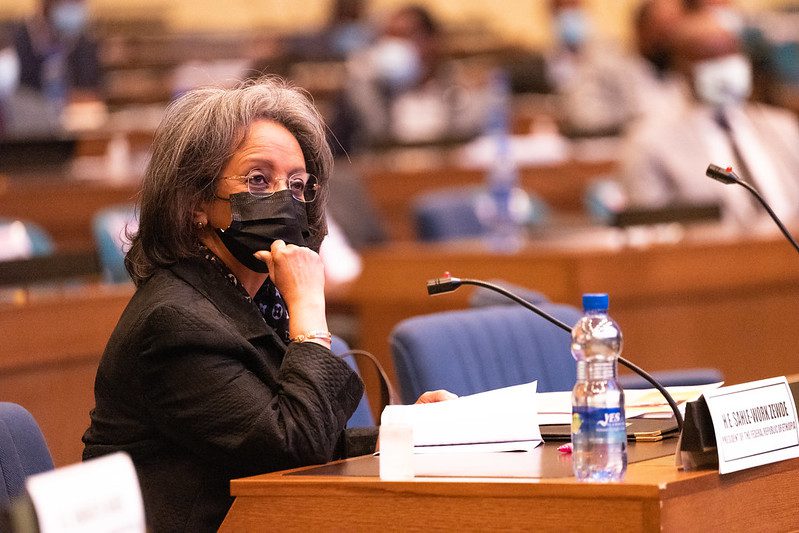
 Ethiopia is a landlocked country located in the Horn of Africa. It is Africa’s oldest independent country and holds the second-largest population on the continent, with a population of 113.6 million. It has sentiments of a Marxist past, with highly restrictive media environments and tensions within the government. Notably, in October 2018, Sahle-Work Zewde was elected as president, marking a historic milestone as Ethiopia’s first female head of state since Empress Zawditu. With her inauguration came a pledge to champion gender equality in Ethiopia, aiming to translate rhetoric into tangible progress.
Gender Equality in Ethiopia
Ethiopia has committed to improving gender equality, especially with Zewde, who made women hold half of the positions in her cabinet. Nevertheless, when it comes to female education, the improvement does not seem so drastic. Similarly, despite women’s significant contribution to the agricultural sector in rural regions of Ethiopia, their contributions often go unrecognized and they face restrictions in accessing resources and community participation.
Recent findings by the United States Agency for International Development (USAID) found that one in three women experience physical, emotional, or sexual violence and only 50% of girls who enroll in primary schools ever make it to grade five. This seems to be an issue in Ethiopia, where many girls are unable to transition to secondary and tertiary school due to distance, personal security and economic challenges. Women often face more constraints in regard to less access to credit and limited market access and 30% of Ethiopian women do not make decisions on individual and family issues such as birth control methods.
Give a Future and Gender Equality
Give A Future is a nonprofit run by a group of dedicated individuals who believe in sustainable change through cost-effective programs. It was founded almost 20 years ago by Stephanie Ferrario and her team. The initiative started with homes for street children, which then turned into many homes, three schools, a large scholarship fund for girls, a large microfinance program for women and family programs to help families with their responsibilities. Its ethos builds upon providing knowledge, training and access to credit to create changes that last a lifetime and carry on into the next generations. As they say, “Educated women make the world a better, safer, more resilient place and are good for business.”
All of Give A Future’s programs are run by Ethiopians who are motivated to make their country a better place. Recognizing the vital role education plays in shaping the future, particularly for girls, Give A Future emphasizes the classroom as a sanctuary, providing not just learning opportunities but also a haven of safety and empowerment. The Borgen Project spoke with founder Ferrario, who highlights that “education is the one thing nobody can ever take away from you” and it is always the way to build the foundations for a better life. Therefore, Give A Future provides support for girls and women who want to finish university and supports women in its microfinance program, enabling them to create and run small businesses.
This has a ripple effect and contributes toward dismantling gender inequality once and for all, one woman at a time. The small number of women in business and politics, which Ferrario tells us has remained relatively the same since Zewde was appointed head of state, is a testament to this and highlights the importance of increasing female representation and empowerment at a higher level.
Impact
Recently, Give A Future created shecan.world. On this platform, women have a voice and can tell their stories to others, creating a plethora of role models for women who have overcome challenges and tackled the obstacles in front of them. Ferrario explains how this began during lockdown by telling Ethiopian women’s stories and has now grown into a large online library of women role models with more than 400 women, 100,000 listeners and 600,000 views. The aim is to inspire other women and create a log of powerful and incredible women.
What Can We Do?
When asked what people in the Global North could do to help combat poverty not only in Ethiopia but in the Global South as a whole, her response was insightful. Central to Ferrario’s approach is the cultivation of trust, a vital component in empowering local communities to drive their own development trajectories. Rather than imposing external solutions, she advocates for investing in understanding the root causes of poverty and collaborating closely with local stakeholders and organizations. By prioritizing local expertise and perspectives, interventions can be tailored to address the specific needs and challenges faced by communities, fostering sustainable, long-term change.
– Cordelia Moore
Cordelia is based in Exeter, UK and focused on Good News for The Borgen Project.
Photo: Flickr

Give a Future: Fighting for Gender Equality in Ethiopia
Gender Equality in Ethiopia
Ethiopia has committed to improving gender equality, especially with Zewde, who made women hold half of the positions in her cabinet. Nevertheless, when it comes to female education, the improvement does not seem so drastic. Similarly, despite women’s significant contribution to the agricultural sector in rural regions of Ethiopia, their contributions often go unrecognized and they face restrictions in accessing resources and community participation.
Recent findings by the United States Agency for International Development (USAID) found that one in three women experience physical, emotional, or sexual violence and only 50% of girls who enroll in primary schools ever make it to grade five. This seems to be an issue in Ethiopia, where many girls are unable to transition to secondary and tertiary school due to distance, personal security and economic challenges. Women often face more constraints in regard to less access to credit and limited market access and 30% of Ethiopian women do not make decisions on individual and family issues such as birth control methods.
Give a Future and Gender Equality
Give A Future is a nonprofit run by a group of dedicated individuals who believe in sustainable change through cost-effective programs. It was founded almost 20 years ago by Stephanie Ferrario and her team. The initiative started with homes for street children, which then turned into many homes, three schools, a large scholarship fund for girls, a large microfinance program for women and family programs to help families with their responsibilities. Its ethos builds upon providing knowledge, training and access to credit to create changes that last a lifetime and carry on into the next generations. As they say, “Educated women make the world a better, safer, more resilient place and are good for business.”
All of Give A Future’s programs are run by Ethiopians who are motivated to make their country a better place. Recognizing the vital role education plays in shaping the future, particularly for girls, Give A Future emphasizes the classroom as a sanctuary, providing not just learning opportunities but also a haven of safety and empowerment. The Borgen Project spoke with founder Ferrario, who highlights that “education is the one thing nobody can ever take away from you” and it is always the way to build the foundations for a better life. Therefore, Give A Future provides support for girls and women who want to finish university and supports women in its microfinance program, enabling them to create and run small businesses.
This has a ripple effect and contributes toward dismantling gender inequality once and for all, one woman at a time. The small number of women in business and politics, which Ferrario tells us has remained relatively the same since Zewde was appointed head of state, is a testament to this and highlights the importance of increasing female representation and empowerment at a higher level.
Impact
Recently, Give A Future created shecan.world. On this platform, women have a voice and can tell their stories to others, creating a plethora of role models for women who have overcome challenges and tackled the obstacles in front of them. Ferrario explains how this began during lockdown by telling Ethiopian women’s stories and has now grown into a large online library of women role models with more than 400 women, 100,000 listeners and 600,000 views. The aim is to inspire other women and create a log of powerful and incredible women.
What Can We Do?
When asked what people in the Global North could do to help combat poverty not only in Ethiopia but in the Global South as a whole, her response was insightful. Central to Ferrario’s approach is the cultivation of trust, a vital component in empowering local communities to drive their own development trajectories. Rather than imposing external solutions, she advocates for investing in understanding the root causes of poverty and collaborating closely with local stakeholders and organizations. By prioritizing local expertise and perspectives, interventions can be tailored to address the specific needs and challenges faced by communities, fostering sustainable, long-term change.
– Cordelia Moore
Photo: Flickr
Comic Republic: A New Comic Book Landscape
The USA is considered the birthplace of modern comic books. Although many influential comics originate from other nations, Europe and America dominate the comic book and graphic novel landscape. However, some creators and publishers are striving to diversify this art form by incorporating African myths, sensibilities and art styles.
Comic Republic: Pioneering African Comics
Comic Republic, a Nigerian comic book publisher and multimedia company, has been creating characters that resonate globally for seven years. The company has produced dozens of characters featured in hundreds of stories and has collaborated with major corporations like BBC, Samsung and Wakanow to create characters and marketing materials. Committed to reshaping global perceptions of Africa through art and culture, Comic Republic offers all its books for free download on its website. Additionally, Comic Republic is collaborating with Emagine Content and JackieBoy Entertainment to produce a film based on their character Ireti. Announced in 2021, the project has not yet progressed, but future developments are still possible.
YouNeek: Building an African Comic Universe
YouNeek is a rising African comic studio dedicated to transforming African myths and culture into formats that appeal globally, such as comics and animation. Unlike other studios that create various worlds for their characters, YouNeek focuses on developing a shared universe of comic book superheroes, aiming for cross-medium expansion akin to Marvel Studios’ MCU. Roye Okupe, the owner and creative director of YouNeek, leads these efforts. Known for his ambition to build a multimedia empire, Roye has been making significant strides toward this goal. “Malika,” one of YouNeek’s projects, features a 15-minute animated pilot available on YouTube. In 2020, Roye secured a ten-book deal with Dark Horse Comics, a major player in the international independent comic book market and has been actively working on this commitment.
Looking Ahead
Comic Republic and YouNeek exemplify the indomitable spirit long associated with the comic book industry. Icons like Joe Shuster, Jerry Siegel, Bill Finger, Stan Lee, R. Crumb and Will Eisner have harnessed the power of comics to spark the imaginations of millions across all ages. Historically dominated by Western nations, the comic book industry is witnessing a transformative contribution from artists around the world, demonstrating that diverse nations and cultures have much to offer through the beloved artistic medium.
– Charlie McFadden
Photo: Unsplash
Food Fortification: Using Staple Foods to Combat Malnutrition
Addressing Malnutrition
Malnutrition and chronic illnesses in the Global South pose significant obstacles to achieving the United Nations Millennium Development Goals (MDGs). Concern Worldwide U.S. indicates that, at the current rate of progress, the MDG of eradicating hunger by 2030 is unlikely. Micronutrient deficiencies impact more than two billion people worldwide, with severe repercussions for the health, social and economic well-being of nations, families and individuals, particularly affecting women and children.
Strategic Approaches to Combat Malnutrition
Food fortification involves deliberately enhancing the nutritional quality of food by adding vitamins and minerals. This practice helps prevent, reduce and control micronutrient deficiencies in the general population and specific groups, including children and pregnant women. Over recent decades, large-scale food fortification has emerged as a crucial strategy to combat malnutrition, reaching billions by making staple foods like flour, rice and edible oil more nutritious.
Globally, experts rank food fortification as one of the most cost-effective interventions in global development. Nutrition International (NI), an organization dedicated to providing nutrition interventions where they are most needed, collaborates with governments, industry stakeholders and other organizations. The organization works to supply fortified staple foods and condiments by promoting mandatory fortification and enhancing social safety net programs through these partnerships.
Fortified Rice: The Bangladeshi Experience
Rice serves as the primary nutrition source in many developing countries, including Bangladesh, where extensive malnutrition and chronic illnesses persist. It accounts for 67.5% of the daily caloric intake in Bangladesh, making it the third-largest rice market globally from 2020 to 2021. Approximately 40% of the rice produced in Bangladesh is for home consumption. For poorer populations, meals typically consist of rice accompanied only by vegetables and spices. Consequently, the Bangladeshi diet often lacks essential micronutrients, contributing to a significant national burden of micronutrient deficiencies. Despite notable reductions in malnutrition rates among children and women, these deficiencies remain widespread.
According to the 2019-2020 National Micronutrient Survey of Bangladesh, approximately 61% of surveyed women did not achieve the minimum requirements for healthy dietary diversity. With assistance from Nutrition International, Bangladesh has utilized large-scale food fortification within its social safety net programs to combat micronutrient deficiencies by providing fortified rice. Collaborative efforts involving the Bangladeshi government, the World Food Programme and Nutrition International have facilitated rice fortification with zinc, iron, folic acid, vitamin A and vitamins B1 and B12. This fortified rice is distributed across Bangladesh’s districts through various points. Since launching in 2013, the initiative has reached more than 15 million people via two major safety net programs. In 2021, the fortified rice initiative expanded into commercial markets on a pilot basis.
Flour and Oil: The Case of Pakistan
Pakistan loses about 3% of its GDP or approximately $7.6 billion, annually due to malnutrition. The United Nations Food and Agriculture Organization (FAO) reports that 37.5 million people in Pakistan are not receiving proper nutrition. In response, Nutrition International, funded by U.K. aid and collaborating with Mott MacDonald, initiated a project to institutionalize fortified edible oil and wheat flour across 56 districts in Pakistan. By 2019, these ongoing efforts had significantly increased the production of fortified goods, providing more than 65 million people across the country with essential micronutrients. The program now aims to expand its reach to 155 million people with fortified edible oil and 87 million people with fortified wheat flour by 2027.
Looking Ahead
The positive impact of food fortification programs in countries like Bangladesh and Pakistan illuminates a path toward mitigating global malnutrition. The ongoing initiatives demonstrate the tangible benefits of strategic collaborations that enhance the nutritional content of staple foods, offering hope for substantial improvements in public health. As these ongoing efforts expand, the potential to significantly reduce micronutrient deficiencies and improve life outcomes for millions globally continues to grow.
– Irene Suvillaga
Photo: Flickr
How ChildFund Supports Impoverished Korean Children
By 2022, South Korea’s GDP per capita soared to $32,423, substantially higher than the international average of $12,703. Although South Korea ranks as the 13th largest economy globally and is a member of the Organization for Economic Cooperation and Development (OECD), challenges such as child poverty persist. This highlights the importance of ChildFund’s efforts to support and uplift the lives of impoverished children, ensuring that economic advancements reach all segments of society, particularly the vulnerable youth.
Children’s Well-being and Poverty in South Korea
In its studies on child well-being, the OECD discovered that 7.1% of South Korean children are at risk of relative income poverty, which is below the OECD average of 13.4%. However, a national survey using the Child Deprivation Index revealed that about 10% of South Korean children lived in poverty in 2018. This statistic suggests that official poverty rates for Korean children, typically based solely on household income, may lack broader context and thus report a lower figure of about 5%.
ChildFund Korea’s Domestic Efforts
ChildFund, established in 1938, works globally to improve the living conditions of impoverished children. Its Korean branch has been active since 1948, focusing on preserving children’s rights through various projects centered on survival, protection, development and participation. In South Korea, ChildFund aids impoverished children by providing essential childcare, covering living expenses and offering medical support. The organization supports low-income families by providing daycare services for immigrant parents and covering essentials such as diapers and groceries. For protection rights, the organization operates Green Umbrella Shelters, which offer a safe space for children facing physical and emotional abuse, providing access to counseling and medical care.
ChildFund provides social welfare centers across South Korea that help communities’ adults and elders protect children. Addressing the right to development, the organization funds educational needs for impoverished Korean children, including textbooks, school uniforms, music lessons and sports coaching. ChildFund Korea also promotes children’s right to participate by involving them in research groups and roundtable discussions, amplifying their perspectives on children’s rights.
ChildFund’s International Outreach
The organization extends its efforts beyond South Korea, assisting children in developing countries, low-and-middle-income nations and impoverished Korean children residing in North Korea, or the Democratic People’s Republic of Korea, providing childcare, emergency relief and medical support. Besides direct aid, ChildFund Korea also advocates for children’s rights legislation, aiming to improve the lives of impoverished Korean children both within South Korea and globally.
Looking Ahead
ChildFund Korea’s commitment to nurturing the well-being of impoverished children is poised to generate substantial improvements in their lives and communities. By continuing to expand its educational and health care initiatives, the organization aims to empower the next generation of South Koreans. These ongoing efforts, coupled with the ongoing advocacy for children’s rights, are crucial for building a more equitable and prosperous society.
– Estelle Lee
Photo: Flickr
HIV/AIDS in Rwanda
Rwandan Ministry of Health Initiatives
The Ministry of Health combats the stigma surrounding HIV/AIDS by updating its HIV guidelines every two years to curb the spread of misinformation, the World Health Organization (WHO) reports. Furthermore, it promotes age-specific counseling and medical training to help patients who have contracted the disease. Their media campaigns like “STOP SIDA” have also spread awareness for HIV prevention and treatment. The Ministry has increased its HIV testing efforts to catch the disease earlier. Consequently, new HIV infections have decreased by 56% over the last 15 years, according to WHO.
United States Support
The United States President’s Emergency Plan for AIDS Relief (PEPFAR) is just one program that provides medical aid to combat HIV/AIDS in Rwanda. PEPFAR supports more than 50 countries around the world to prevent HIV infections and control the pandemic. Both PEPFAR and the Center for Disease Control and Prevention (CDC) partner with the Rwandan Ministry of Health in their efforts against the spread of HIV/AIDS. This has proven quite effective and the life expectancy of those with HIV who receive treatment has increased by more than 25 years as a result. Of approximately 250,000 infected persons in Rwanda, around 210,000 of them are actively being treated for HIV, a great increase from the 1990s when there was little awareness of the disease at all.
United Nations’ Efforts
The United Nations began the Joint United Nations Programme on HIV/AIDS (UNAIDS) in 1996 to fight AIDS around the world. In Rwanda, UNAIDS has expanded HIV testing services to 99% of the country’s health facilities and prioritized prevention. The program also encourages outreach in communities with high rates of HIV infections. Moreover, UNAIDS implemented the 90-90-90 target as its goal for 2020, which consisted of diagnosing 90% of all people infected by HIV, 90% of those diagnosed beginning antiretroviral therapy (ARV) and 90% of those on ARVs having fully suppressed viral load.
The Present Day
A 2018/2019 study found that HIV among adults in Rwanda was as low as 3%. Research also revealed lower rates of HIV in younger generations than their older counterparts, indicating successful prevention measures in the country. With a negative trend in cases of HIV, it is clear the efforts against HIV/AIDS in Rwanda have proven successful and will continue to decline over time.
– Hannah Hipólito
Photo: Flickr
4 Organizations Working to Provide Disability Support in Singapore
SPD
SPD is a nonprofit established in 1964 to help people with disabilities maximize their potential and integrate into society. This organization is funding programs that provide services to people of all ages with disabilities and their families to ensure that they have all of the resources and tools needed to reach goals and attain economic wealth.
One program focuses on delivering early intervention services as soon as possible in order to enhance the outcomes of children with disabilities. This is particularly when it comes to succeeding in the school system just as much as children without disabilities.
Another program focuses on providing occupation therapy and speech therapy to people with disabilities, with the goal of them learning to manage their disabilities. Furthermore, SPD is dedicated to offering disability support in Singapore by equipping individuals with the job training and essential skills required to secure well-paying positions within the private sector.
SG Enable
SG Enable, established by the “Ministry of Social and Family Development in 2013,” is another nonprofit organization working to provide disability support in Singapore, particularly for those with visual or hearing difficulties to live as personally and financially independently as possible.
One way that SG Enables is doing this is through job development programs, which concentrate on creating jobs for people with disabilities and linking them to jobs within other organizations. Another way that this organization is working to achieve this objective is through its job training programs, which are designed to provide people with disabilities with the skills needed to raise their likelihood of qualifying for jobs in the private sector.
Disabled People’s Association
The Disabled People’s Association is a Singapore nonprofit “organization for people with disabilities run by people with disabilities.” It is also working to help people with disabilities with their education and career aspirations as well as with transportation needs to get to work and school.
The organization provides disability support in Singapore through legal representation and advocacy for their rights. This effort impacts their activities in education, in the workplace and society as a whole. It also delivers workshops to train disability advocates on how to properly represent people with disabilities and stand up against any form of institutional seclusion from society.
Furthermore, the organization advocates for policy reforms. It also communicates with elected officials in the country as well as with other influential organizations like SG Enable to continue to expand the rights and liberties of people with disabilities.
Touch Community Services Organization
Touch Community Services is another not-for-profit initiative in Singapore. The group partners with other disability organizations in Singapore to deliver resources and programs for people with disabilities. Touch Community Services’ mission is to adhere to the United Nations’ Sustainable Development Goals (SDGs). The group believes that can only be achieved if the health, safety and success of people with disabilities are advocated for.
This mindset plays a role for the organizations continuing to provide resources to those who care for people with disabilities through workshops and support groups. Since its inception, it has touched nearly 280,000 leaves, attracting 14,000 volunteers and its Wellness Group program has helped more than 164,000 people with cyber and mental fitness.
– Ryan Patrick
Photo: Wikimedia Commons
Traditional Health Systems Combatting Poverty
Despite their global prevalence and influence on Western medicine, THS has constantly been ignored and uncredited by government-recognized health systems in the era of globalization. However, with escalating health care costs, chronic pain and illness and lack of opportunity for thorough examinations and one-to-one medical attention, interest in traditional health systems and their integration into primary health care has had a resurgence as an innovative path towards poverty reduction and increased affordable public health.
Health Promotion and Poverty Reduction
There is no question that poverty and ill health are mutually reinforcing forces. Two kinds of poverty exist: Expense-induced poverty and income-induced poverty. The former is caused by sudden events such as diseases or medical emergencies. Moreover, “catastrophic health expenditure” refers to health care costs exceeding a certain percentage of a household’s income. Therefore, the risk of ailment involves much uncertainty, which can negatively impact capital.
Roughly half of the population in developing countries lacks adequate access to public health services. Despite this shortfall, many nations have rich traditions of indigenous medicine deeply intertwined with their history and culture. In regions where conventional health care is scarce, local traditional medicine often serves as a primary form of health care, highlighting its enduring cultural and social significance in addressing community health needs. THS, therefore, brings a ray of hope filled with indigenous knowledge and traditional ways of life to rural populations and low-income peoples across the globe.
Bringing Traditional Health Systems Back to the Forefront
While the Modern Western medicine (MWM) approach is rooted in pure scientific inquiry and evidence, focusing on treating the symptoms of a disease, THS tends to have a more holistic, integrative understanding of the body. It encapsulates knowledge, practices and beliefs acquired over generations to prevent, diagnose and treat physical and mental illness.
Fortunately, with traditional health medicines prevalent in most countries, the WHO has acknowledged their importance and groundbreaking potential contribution to enhancing modern health practices and systems. According to WHO’s Traditional Medicine Strategy Report (2014-2023), the integration of THS can help pave the way to achieve groundbreaking health coverage. They aid and overcome existing barriers faced by the accessibility of health care services -whether this is geographical, cultural, or organizational- and its lack of “patient-centredness.”
– Irene Suvillaga
Photo: Flickr
Solar Power Innovations Fuel Poverty Reduction in Libya
Poverty in Libya and Access to Electricity
Before 2011, Libya possessed one of the highest electrification rates in Africa, however, the opposite is true now. About one-third of Libyans do not have access to electricity. The issue becomes extra fatal during the hot summer months as the “country can only meet two-thirds of peak summer demand,” causing heat strokes and a plethora of other medical emergencies to many Libyan citizens. No power means no air conditioning, a macabre combination for a country that regularly sees temperatures exceeding 40 degrees Celsius.
No air conditioning pillages small businesses in Libya too, the lifeline to every economy. For example, butchers have to dispose of meat for sale by the masses because of spoiling without electricity for freezers. No electricity increases food waste because people cannot refrigerate their food. Energy insecurity also contracts agricultural output. That issue only worsens multidimensional poverty because it increases food insecurity, with more than 38% of Libyan children under the age of 5 suffering from chronic malnutrition.
Solar Energy Potential: A Solution to Poverty in Libya
Libya’s instabilities are comprehensive and wide-ranging. However, thanks to the country’s natural geographic state, installing solar panels could solve the issue of energy insecurity. According to Forbes, “1.2% of the Sahara desert is sufficient to cover all of the energy needs of the world.” Leveraging the Sahara desert for energy supply on an international cross-border scale is far more difficult than doing so on a national level.
Libya has the second largest share of the Sahara in Africa after Algeria and the desert covers more than 90% of Libya’s total land. Only a small fraction of that 90% could generate a surfeit of solar electric power that would provide light to 100% of Libya’s population. These stats make solar power an efficacious proposition for Libya’s energy poverty to say the absolute least. The rapid increase of solar power could rapidly decrease food poverty in Libya because it is a ubiquitously accessible and more cost-effective means to electrify homes. Higher electrification means less food waste. Solar energy is a prodigious innovation to poverty reduction in Libya.
Photovoltaic Technology in Libya
The U.S. Department of Technology explains the photovoltaic technology (PV) behind solar panel energy as follows, “When the sun shines onto a solar panel, energy from the sunlight is absorbed by the PV cells in the panel. This energy creates electrical charges that move in response to an internal electrical field in the cell, causing electricity to flow… Concentrating solar-thermal power (CSP) systems use mirrors to reflect and concentrate sunlight onto receivers that collect solar energy and convert it to heat, which can then be used to produce electricity or stored for later use. It is used primarily in very large power plants.”
Engineering solar farms to reach home electricity is not a pure plug-and-play though. “Solar energy technology does not end with electricity generation by PV or CSP systems. These solar energy systems must be integrated into homes, businesses and existing electrical grids with varying mixtures of traditional and other renewable energy sources.” Therefore, solar energy is not a replacement innovation for poverty eradication in Libya, but rather a complimentary upgrade.
According to the International Renewable Energy Agency (IRENA), the cost of solar PV technology has decreased by roughly 90% since 2009. That is a massive reduction, but the arduous cost driver for Libya could probably lie in rebuilding its electrical grid supply. Libya has spun back into its low development phase in the past 13 years. Different militant organized crime units regularly damage electricity lines in their fighting. In January 2016, an armed attack near a Benghazi power plant left five of the city’s six transformed damaged.
Positive Examples
Organizations like the Rockefeller Foundation have recently committed $10 billion for solar power energy projects in Sierra Leone. Libya’s geographical position could help the country with its solar energy projects more than any other country in the world because it is 90% desert. Another advantage Libya has over every other developing country is its rich oil reserve supply that once exported 1.6 million barrels of oil a day. Foreign governments and private companies can certainly have a financial interest in investing in Libya’s solar farm infrastructure in exchange for a reasonable oil trade deal.
The Renewable Energy Authority of Libya (REAoL) has launched multiple solar energy projects and aims to complete them in the next few years. Energy Capital & Power reports that “UAE-based Alpha Dhabi Holding and GECOL aims to construct two additional solar plants in Libya, with a target capacity of 2 GW.” Given the fact solar energy projects in Libya are still in progress without full completion, conclusions on the impact they have had on poverty eradication in Libya cannot be made yet. The caveat all boils down to Libya establishing a firm grasp of law and order, so its infrastructure remains safe from tampering. One cannot say Libya’s energy crisis is without hope. The country’s solution is under the sun and above the soil.
The Future of Libya
Libya is still very much in the midst of an overhaul and rebuild in the aftermath of a civil war that commenced over a decade ago. Energy poverty is a societal ailment that trickles down as a contributor to Libya’s food insecurity and children’s malnutrition. Poverty comes in many forms, hence why the term multidimensional poverty exists. Every type of poverty is intersectional. Solar power is a viable solution to widespread inaccessible electrification in Libya. Once Libya makes big strides in expanding its domestic solar power network, it could have a domino effect in reducing many other forms of poverty, especially food insecurity.
– Danial Osmani
Photo: Flickr
Improving the Rights of Marshallese Women
However, according to multiple organizations canvassing for gender equality, an unacceptable degree of gender “inequality” exists for women of the RMI. The tradition of matrilineal heritage, unratified discrimination rights of Marshallese women and extensive evidence of “gender inequality” combined challenge the validity of women’s rights. Moreover, 54% of women who have encountered domestic violence refrained from reporting the incidents due to either perceiving the abuse as justified or fearing reprisal.
Furthermore, they cited reasons such as a lack of awareness about their rights, the financial implications of legal proceedings and/or the distance to access courts. Therefore, the Committee on the Elimination of Discrimination Against Women (CEDAW) has stated that the Constitution of the RMI needs to be amended by including a definition of discrimination and addressing discrimination against women.
Matrilineal Tradition
The RMI is one of a few countries that maintains traditional matrilineal property systems. In this system, the property is passed down by the maternal, not the paternal line. Despite potentially having substantial land rights in the RMI, many women reside away from their ancestral land, which results in a loss of respect, influence and security, as they often relocate to their spouse’s land, away from their support networks.
Furthermore, by limiting women’s involvement in public office and electoral politics while prioritizing the education and advancement of men, commercial enterprises have marginalized women, relegating them to powerless and insignificant roles within their society.
Women’s Rights Organizations
According to the Pacific Community of the Organization of Human Rights and Social Development (HRSD), Marshallese women are entitled to equality, dignity, education and trust. The challenges of gender inequality faced by women and girls, as well as the rights of Marshallese women, remain focal points for numerous women’s organizations. Some of these organizations include:
Final Remark
The rights and dignity of Marshallese women are deeply rooted in both tradition and written laws. Supported by many women’s organizations, the rights of Marshallese women remain subjects of ongoing explanation, analysis and debate.
– Pamela A. Fenton
Photo: Flickr
3 Health Care Charities In Venezuela
Healing Venezuela
Healing Venezuela became a registered nongovernmental organization (NGO) in 2016 and provided several sustainable health care programs to help all sectors of society. Due to Venezuela’s current medical instability, Healing Venezuela has provided an allowance and sponsored junior doctors working in seven different hospitals around the country. This helps cover junior doctors’ expenses and makes it easier to see their patients without financial burdens.
In 2023 alone, up to 100 junior doctors were sponsored, which contributed toward the treatment of more than 120,000 Venezuelan patients. Helping Venezuela also advocates for women’s reproductive health by offering free contraceptive and sexual health devices to women as well as training doctors to specialize and perform portable ultrasounds in state hospitals. The initiative aims to improve the medical space in Venezuela by supporting and training doctors to help patients in need who are facing limited medical resources.
Cuatro Por Venezuela Foundation
Another one of the health care charities in Venezuela making a difference is Cuatro Por Venezuela. This foundation, formed in 2016, works and partners alongside other existing organizations to reach the needs of people in Venezuela by developing programs and sharing resources. The Cuatro Por Venezuela Foundation partnered with another organization in order to provide sustainable medication for Venezuelans who have epilepsy but do not have access to adequate treatment.
In 2021, up to 622 patients received seizure medication for the whole year in six areas in Venezuela. The foundation also has an ongoing program that gives children in rural areas three nutritious meals a day. Between 2021 and 2022, the organization provided 75,300 meals to people in the village of Camblanche in Eastern Venezuela, helping 60 children and 420 family members in the rural community.
Mercy Corps
Mercy Corps is a global group of humanitarians who all share the aim to “alleviate suffering, poverty and oppression by helping people build secure, productive and just communities.” This humanitarian team has been working in Venezuela since 2018 and has made considerable efforts to support hospitals by donating important medical equipment. In fact, in 2022, Mercy Corps donated more than 50,000 items, such as syringes and surgical gloves.
Currently, there has been a rise in maternal and infant mortality rates, whereby nine out of 10 pregnant women in Venezuela lack access to medical care. In response, Mercy Corps encourages qualified specialists such as doctors and nurses to stay and work in Venezuelan state hospitals, particularly neonatal intensive care units, by offering financial incentives. Mercy Corps proves to be effective in its aim to “alleviate suffering” by expanding medical access to many in Venezuela.
– Zaynab Yusuf
Photo: UNICEF