Give a Future: Fighting for Gender Equality in Ethiopia
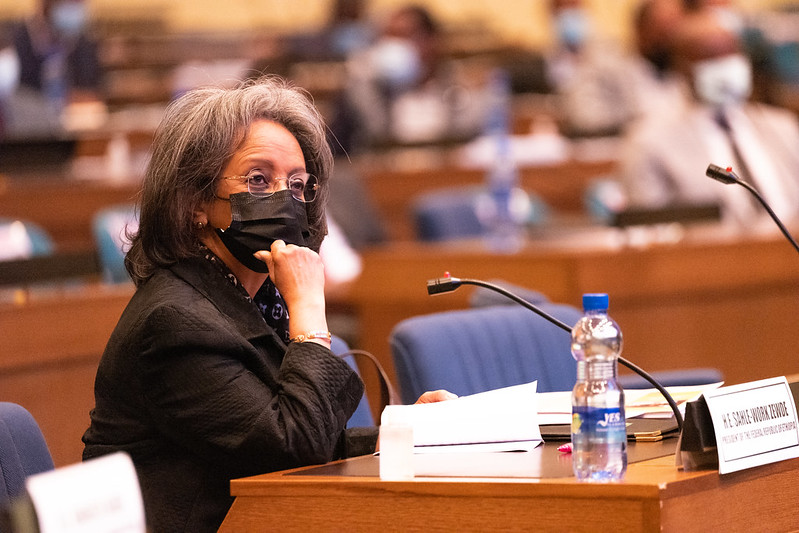 Ethiopia is a landlocked country located in the Horn of Africa. It is Africa’s oldest independent country and holds the second-largest population on the continent, with a population of 113.6 million. It has sentiments of a Marxist past, with highly restrictive media environments and tensions within the government. Notably, in October 2018, Sahle-Work Zewde was elected as president, marking a historic milestone as Ethiopia’s first female head of state since Empress Zawditu. With her inauguration came a pledge to champion gender equality in Ethiopia, aiming to translate rhetoric into tangible progress.
Gender Equality in Ethiopia
Ethiopia has committed to improving gender equality, especially with Zewde, who made women hold half of the positions in her cabinet. Nevertheless, when it comes to female education, the improvement does not seem so drastic. Similarly, despite women’s significant contribution to the agricultural sector in rural regions of Ethiopia, their contributions often go unrecognized and they face restrictions in accessing resources and community participation.
Recent findings by the United States Agency for International Development (USAID) found that one in three women experience physical, emotional, or sexual violence and only 50% of girls who enroll in primary schools ever make it to grade five. This seems to be an issue in Ethiopia, where many girls are unable to transition to secondary and tertiary school due to distance, personal security and economic challenges. Women often face more constraints in regard to less access to credit and limited market access and 30% of Ethiopian women do not make decisions on individual and family issues such as birth control methods.
Give a Future and Gender Equality
Give A Future is a nonprofit run by a group of dedicated individuals who believe in sustainable change through cost-effective programs. It was founded almost 20 years ago by Stephanie Ferrario and her team. The initiative started with homes for street children, which then turned into many homes, three schools, a large scholarship fund for girls, a large microfinance program for women and family programs to help families with their responsibilities. Its ethos builds upon providing knowledge, training and access to credit to create changes that last a lifetime and carry on into the next generations. As they say, “Educated women make the world a better, safer, more resilient place and are good for business.”
All of Give A Future’s programs are run by Ethiopians who are motivated to make their country a better place. Recognizing the vital role education plays in shaping the future, particularly for girls, Give A Future emphasizes the classroom as a sanctuary, providing not just learning opportunities but also a haven of safety and empowerment. The Borgen Project spoke with founder Ferrario, who highlights that “education is the one thing nobody can ever take away from you” and it is always the way to build the foundations for a better life. Therefore, Give A Future provides support for girls and women who want to finish university and supports women in its microfinance program, enabling them to create and run small businesses.
This has a ripple effect and contributes toward dismantling gender inequality once and for all, one woman at a time. The small number of women in business and politics, which Ferrario tells us has remained relatively the same since Zewde was appointed head of state, is a testament to this and highlights the importance of increasing female representation and empowerment at a higher level.
Impact
Recently, Give A Future created shecan.world. On this platform, women have a voice and can tell their stories to others, creating a plethora of role models for women who have overcome challenges and tackled the obstacles in front of them. Ferrario explains how this began during lockdown by telling Ethiopian women’s stories and has now grown into a large online library of women role models with more than 400 women, 100,000 listeners and 600,000 views. The aim is to inspire other women and create a log of powerful and incredible women.
What Can We Do?
When asked what people in the Global North could do to help combat poverty not only in Ethiopia but in the Global South as a whole, her response was insightful. Central to Ferrario’s approach is the cultivation of trust, a vital component in empowering local communities to drive their own development trajectories. Rather than imposing external solutions, she advocates for investing in understanding the root causes of poverty and collaborating closely with local stakeholders and organizations. By prioritizing local expertise and perspectives, interventions can be tailored to address the specific needs and challenges faced by communities, fostering sustainable, long-term change.
– Cordelia Moore
Cordelia is based in Exeter, UK and focused on Good News for The Borgen Project.
Photo: Flickr
