Food Fortification: Using Staple Foods to Combat Malnutrition
 Since 2017, the prevalence of undernourishment has risen globally, with an estimated 735 million people affected according to the 2023 Global Hunger Index. Undernutrition is linked to nearly half of all deaths among children under 5, predominantly in low- and middle-income countries. The World Health Organization (WHO) identifies micronutrient deficiencies as a significant health issue, particularly the lack of iron, iodine, vitamin A and zinc, which are crucial for growth and development. These deficiencies pose severe health risks, especially to children and pregnant women in developing nations. With inflating food costs, climate change and the growing threat of conflicts around the world, the world is experiencing its worst global food crisis in decades. In response, food fortification presents a sustainable, innovative and cost-effective strategy to combat malnutrition and micronutrient deficiencies worldwide.
Addressing Malnutrition
Malnutrition and chronic illnesses in the Global South pose significant obstacles to achieving the United Nations Millennium Development Goals (MDGs). Concern Worldwide U.S. indicates that, at the current rate of progress, the MDG of eradicating hunger by 2030 is unlikely. Micronutrient deficiencies impact more than two billion people worldwide, with severe repercussions for the health, social and economic well-being of nations, families and individuals, particularly affecting women and children.
Strategic Approaches to Combat Malnutrition
Food fortification involves deliberately enhancing the nutritional quality of food by adding vitamins and minerals. This practice helps prevent, reduce and control micronutrient deficiencies in the general population and specific groups, including children and pregnant women. Over recent decades, large-scale food fortification has emerged as a crucial strategy to combat malnutrition, reaching billions by making staple foods like flour, rice and edible oil more nutritious.
Globally, experts rank food fortification as one of the most cost-effective interventions in global development. Nutrition International (NI), an organization dedicated to providing nutrition interventions where they are most needed, collaborates with governments, industry stakeholders and other organizations. The organization works to supply fortified staple foods and condiments by promoting mandatory fortification and enhancing social safety net programs through these partnerships.
Fortified Rice: The Bangladeshi Experience
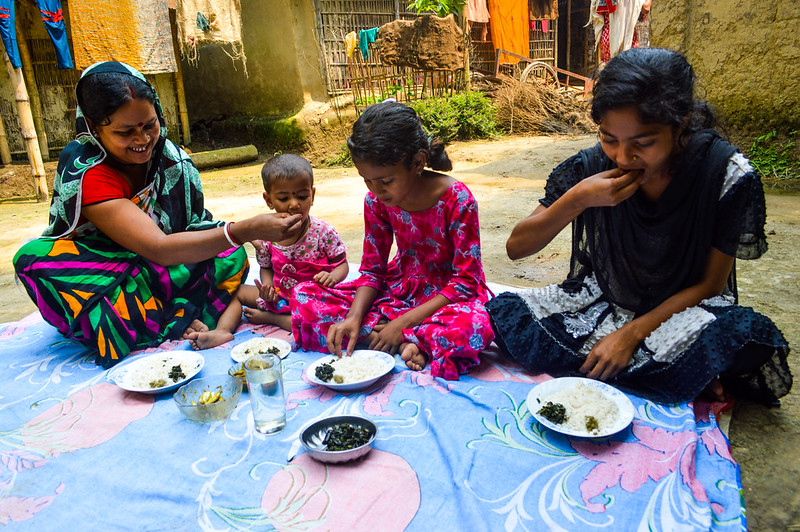
Rice serves as the primary nutrition source in many developing countries, including Bangladesh, where extensive malnutrition and chronic illnesses persist. It accounts for 67.5% of the daily caloric intake in Bangladesh, making it the third-largest rice market globally from 2020 to 2021. Approximately 40% of the rice produced in Bangladesh is for home consumption. For poorer populations, meals typically consist of rice accompanied only by vegetables and spices. Consequently, the Bangladeshi diet often lacks essential micronutrients, contributing to a significant national burden of micronutrient deficiencies. Despite notable reductions in malnutrition rates among children and women, these deficiencies remain widespread.
According to the 2019-2020 National Micronutrient Survey of Bangladesh, approximately 61% of surveyed women did not achieve the minimum requirements for healthy dietary diversity. With assistance from Nutrition International, Bangladesh has utilized large-scale food fortification within its social safety net programs to combat micronutrient deficiencies by providing fortified rice. Collaborative efforts involving the Bangladeshi government, the World Food Programme and Nutrition International have facilitated rice fortification with zinc, iron, folic acid, vitamin A and vitamins B1 and B12. This fortified rice is distributed across Bangladesh’s districts through various points. Since launching in 2013, the initiative has reached more than 15 million people via two major safety net programs. In 2021, the fortified rice initiative expanded into commercial markets on a pilot basis.
Flour and Oil: The Case of Pakistan
Pakistan loses about 3% of its GDP or approximately $7.6 billion, annually due to malnutrition. The United Nations Food and Agriculture Organization (FAO) reports that 37.5 million people in Pakistan are not receiving proper nutrition. In response, Nutrition International, funded by U.K. aid and collaborating with Mott MacDonald, initiated a project to institutionalize fortified edible oil and wheat flour across 56 districts in Pakistan. By 2019, these ongoing efforts had significantly increased the production of fortified goods, providing more than 65 million people across the country with essential micronutrients. The program now aims to expand its reach to 155 million people with fortified edible oil and 87 million people with fortified wheat flour by 2027.
Looking Ahead
The positive impact of food fortification programs in countries like Bangladesh and Pakistan illuminates a path toward mitigating global malnutrition. The ongoing initiatives demonstrate the tangible benefits of strategic collaborations that enhance the nutritional content of staple foods, offering hope for substantial improvements in public health. As these ongoing efforts expand, the potential to significantly reduce micronutrient deficiencies and improve life outcomes for millions globally continues to grow.
– Irene Suvillaga
Irene is based in Ontario, Canada and focuses on Technology and Global Health for The Borgen Project.
Photo: Flickr
