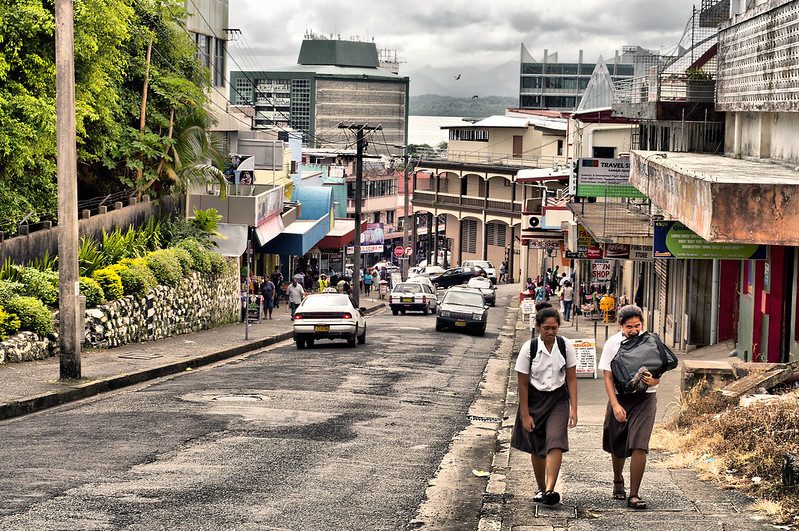
 Fiji, a collection of volcanic islands in the South Pacific, is renowned as a popular vacation destination. According to the World Bank, Fiji has a population of more than 900,000. Despite its picturesque charm, 29.9% of Fijians lived below the national poverty line in 2019. Almost a third of the population in Fiji lacks access to necessities, in part due to the islands’ remote location. However, several charities are trying to combat the severity of poverty in Fiji. Here are five charities operating in Fiji.
Fiji Red Cross Society
The Fiji Red Cross Society has been actively committed to providing humanitarian assistance for more than 70 years. One of the organization’s core National Society programs is the youth program, which collaborates with youth representatives to advocate for the rights of Fiji youths.
The charity also started the Junior Red Cross Clubs program, an educational initiative offering an extra curriculum that can teach students about disaster preparation, health and wellness and, above all else, safety. This charity shows the importance of inclusion, as more than 70% of the volunteers for the Fiji Red Cross Society are youths, which means they are at the forefront of change.
Field Ready Fiji
Educating Fijians on how to look after their community will mean they are more prepared for future natural disasters. Fiji can experience up to 15 cyclones per decade. The intense rainfall can cause horrific floods, which frequently cause loss of life and economic damage. This is why it is essential for Fiji to have disaster preparations in place to save the Fijian communities and improve the economy.
Field Ready is an organization that aims to save lives and reduce suffering. It recruits and trains local engineers and informs people on humanitarian responses to encourage local work and support in Fiji. In 2019, Field Ready received a grant from the United United Agency for International Development (USAID), enabling it to save more lives and increase “resilience to recurrent natural hazards of at least 15,000 Pacific Islanders.”
Partners in Community Development Fiji
Founded in 1979, the Partners in Community Development Fiji (PCDF) is one of the longest-running nongovernmental organizations (NGOs) in Fiji. Sustainability is an important principle to PDCF and one of its programs is the Natural Resource Management Program, which aims to promote better management of sustainable natural resources to maximize essential resources.
Additionally, the Pacific Islands Rural and Agriculture Stimulus Facility Project (PIRAS), implemented in 2022, aims to help farmers in Fiji recover from the effects of the COVID-19 pandemic. A survey conducted in 2023 shows that around one-fifth of people in Fiji reported running out of food, skipping meals or having additional stress due to the lack of food available to them because of the effect of COVID-19.
The PIRAS aims to maximize food and nutrition, security, preservation of local food and stabilization of the rural economy after COVID-19. So far, the initiative has provided water tanks and farming materials and started constructing nurseries for the 41 targeted communities.
Toomer Family Foundation
Vulnerable individuals with mental illness can feel ostracized within the community and the Toomer Family Foundation aims to support them through creative education. Some of the key programs that the charity runs are a national youth mentoring program, a family support service for mental health and community programs surrounding the arts.
Although this is a relatively recent charity founded in 2000, it has ambitious plans to grow and focus on supporting vulnerable people by creating a new structure of education surrounding the arts.
FRIEND Fiji
Improving the quality and quantity of medicine in Fiji is extremely important to help prevent diseases and improve the quality of life. Fiji’s constitution believes in the right to provide free health care to all communities. However, one of the biggest challenges is that due to its remote location, it is extremely difficult to access large supplies of medication. Fiji also has a shortage of emergency medical staff.
The Foundation for Rural Integrated Enterprises and Development (FRIEND) was founded in 2001 and aims to improve the health status of communities across Fiji. The charity is determined to support those living with genetic illnesses such as diabetes and cardiovascular issues.
Noncommunicable diseases (NCDs) account for 80% of deaths in Fiji, prompting FRIEND to also focus on sustainable medicine to combat these conditions. Additionally, the organization has established a screening system for diabetes across all communities to ensure timely treatment for everyone.
All of these charities focus on improving Fiji’s poverty issues, whether that be aiding them in better utilizing local produce or preparing for natural disasters. These charities operating in Fiji are making a real impact on the Fijian citizens. Even though it is seen as a beautiful and remote tourist location, there must still be support and funding for these charities to continue to make Fiji a better place.
– Charlotte Johnston
Charlotte is based in London, UK and focuses on Technology and Good News for The Borgen Project.
Photo: Flickr

7 NGOs Safeguarding Overseas Filipino Workers
Despite the vital role they play, OFWs often contend with insufficient protection and recognition of their rights. To address these issues, the Philippine government and various nongovernmental organizations are actively working to improve conditions for OFWs, advocating for their rights and providing essential services to ensure their welfare and security. This concerted effort aims to safeguard the well-being of OFWs and optimize the benefits of their economic contributions to the country. Here are some of the NGOs supporting OFWs:
Unlad Kabayan
UNLAD Kabayan focuses on enhancing the business skills of Overseas Filipino Workers (OFWs). Earning higher wages than their counterparts in the Philippines does not always translate to financial savvy; many OFWs, despite years of working abroad, return home without substantial savings. Established in 1996, UNLAD Kabayan equips OFWs with essential knowledge to effectively invest their earnings and start businesses. The organization also supports OFWs in adjusting back to life in the Philippines, aiding their reintegration into Philippine society. This comprehensive approach aims to ensure that OFWs can secure their financial futures and contribute positively to their communities.
The Economic Resource Centre for Overseas Workers
Filipinos working abroad often encounter numerous challenges, from accidents and financial shortages to mistreatment by employers, including unpaid wages. The Economic Resource Centre for Overseas Workers, a nongovernmental organization, provides essential economic resources to support these individuals during such difficulties. The organizations’s efforts help mitigate the impact of unexpected adversities, ensuring that OFWs have the necessary support to address their immediate financial needs.
ATIKHA
Many OFWs seek employment abroad with plans to retire in the Philippines once they have accumulated sufficient funds. However, some opt to migrate permanently to their host countries, drawn by better economic opportunities. Such migrations can be costly, requiring substantial support for the workers and their families. This is where ATIKHA, a dedicated organization, excels. Its primary goal is to assist OFW families during their migration process, providing the necessary guidance and resources to facilitate their transition to a new country.
KAKKAMPI
Founded in Geneva, Switzerland, KAKKAMPI is an association dedicated to supporting Overseas Filipino Workers (OFWs). The organization provides a broad spectrum of services, including funding classes and loans, designed to enhance financial security for OFWs. Through these ongoing efforts, KAKKAMPI aims to safeguard OFWs from exploitation and ensure they have the financial resources necessary to succeed.
WE AIM OFW
WE AIM OFW collaborates closely with the Philippine government to support the One Model and Great Community (OMG) initiative. This comprehensive program encompasses various aspects such as financial support, housing funds, livelihood programs and scholarships. The organization empowers Overseas Filipino Workers (OFWs) to manage their earnings wisely and contribute positively to their communities, ensuring their financial stability and community development.
Center For Migrant Advocacy
Founded in 2002, the Center For Migrant Advocacy dedicates itself to enhancing the welfare of overseas workers globally. The organization achieves its goals through policy advocacy, networking, information dissemination, direct assistance and capability building. Key initiatives include encouraging overseas Filipino workers (OFWs) to report any abuses they or their peers endure. By raising awareness of OFW rights and welfare, the organization plays a crucial role in protecting these rights. Additionally, the Center For Migrant Advocacy offers various volunteer opportunities, empowering individuals to contribute to meaningful change.
Global Filipino Movement
The Global Filipino Movement, established by various Christian groups, provides emotional and spiritual support to overseas Filipino workers (OFWs). Recognizing the Philippines’ predominantly Christian background, the organization acknowledges the significant role faith plays for OFWs facing loneliness and hardship abroad. The NGO delivers ministry services to OFWs and their families, helping them cope during challenging periods. Active for 13 years, the Global Filipino Movement has been instrumental in bolstering the resilience of Filipino families through tough times.
Looking Ahead
The ongoing efforts to support OFWs can potentially bring about the security of their financial futures, thereby positively impacting both home and host countries. Continued advocacy and support could be vital in addressing the challenges faced by OFWs and maximizing the benefits of their contributions.
– Neil Misola
Photo: Pexels
Clean Drinking Water for the Rohingya
For various reasons, Cox’s Bazar’s land cannot maintain clean water and much of the water tested at the beginning of the crisis showed high levels of Escherichia coli. The issue of contaminated water persisted due to limited capacity for water treatment centers, limited supplies and geographical constraints.
The WHO’s Efforts
The World Health Organisation (WHO) took action quickly. In 2018, it distributed 2,150 water filters and community filters and “conducted training for health partners on installing and maintenance of the filters,” which, in hopes, would provide five years of clean water. However, conditions remained challenging. In 2019, cholera, typhoid, diarrhea and Acute Watery Diarrhea were reported to be widespread among the refugees.
Amid the pandemic, conditions only worsened, with a virus requiring frequent handwashing; the Rohingya faced challenges combating this. Additionally, due to unsanitary water, many in the camps tested positive for hepatitis A and pregnant women posed a particular threat of contracting hepatitis E from the infected water.
The Human Relief Foundation
Access to clean water for the Rohingya has become a focus of many charitable organizations. The Human Relief Foundation (HRF) has worked toward providing more clean water for Rohingya refugees in Bangladesh. For example, HRF has built a well in Rankut, in Cox’s Bazar, where 172 school students and 35 households dwell, limiting the distance residents have to travel to collect water. This, in turn, limits the possibility of infections in the water and allows for time focused on activities like schooling and volunteering.
World Water Day 2024 Initiatives in Cox’s Bazar
In March 2024, World Water Day was celebrated in Cox’s Bazar and the surrounding host countries. Community Partners International is a nonprofit that empowers vulnerable communities in Asia. It has distributed more than 100,000 water purification tablets, 2,500 hygiene kits and around 50,000 soap packets. Additionally, it provided the Rohingya with 43,000 “household education sessions” to help address the clean water crisis.
Final Remark
Despite efforts, Rohingya refugees in Cox’s Bazar still struggle with clean water access. Continued global support and investment in WASH infrastructure and education are vital to combat waterborne diseases and improve well-being, ensuring safe water remains a priority for these vulnerable communities.
– Lydia Young
Photo: Flickr
5 Charities Operating in Fiji
Fiji Red Cross Society
The Fiji Red Cross Society has been actively committed to providing humanitarian assistance for more than 70 years. One of the organization’s core National Society programs is the youth program, which collaborates with youth representatives to advocate for the rights of Fiji youths.
The charity also started the Junior Red Cross Clubs program, an educational initiative offering an extra curriculum that can teach students about disaster preparation, health and wellness and, above all else, safety. This charity shows the importance of inclusion, as more than 70% of the volunteers for the Fiji Red Cross Society are youths, which means they are at the forefront of change.
Field Ready Fiji
Educating Fijians on how to look after their community will mean they are more prepared for future natural disasters. Fiji can experience up to 15 cyclones per decade. The intense rainfall can cause horrific floods, which frequently cause loss of life and economic damage. This is why it is essential for Fiji to have disaster preparations in place to save the Fijian communities and improve the economy.
Field Ready is an organization that aims to save lives and reduce suffering. It recruits and trains local engineers and informs people on humanitarian responses to encourage local work and support in Fiji. In 2019, Field Ready received a grant from the United United Agency for International Development (USAID), enabling it to save more lives and increase “resilience to recurrent natural hazards of at least 15,000 Pacific Islanders.”
Partners in Community Development Fiji
Founded in 1979, the Partners in Community Development Fiji (PCDF) is one of the longest-running nongovernmental organizations (NGOs) in Fiji. Sustainability is an important principle to PDCF and one of its programs is the Natural Resource Management Program, which aims to promote better management of sustainable natural resources to maximize essential resources.
Additionally, the Pacific Islands Rural and Agriculture Stimulus Facility Project (PIRAS), implemented in 2022, aims to help farmers in Fiji recover from the effects of the COVID-19 pandemic. A survey conducted in 2023 shows that around one-fifth of people in Fiji reported running out of food, skipping meals or having additional stress due to the lack of food available to them because of the effect of COVID-19.
The PIRAS aims to maximize food and nutrition, security, preservation of local food and stabilization of the rural economy after COVID-19. So far, the initiative has provided water tanks and farming materials and started constructing nurseries for the 41 targeted communities.
Toomer Family Foundation
Vulnerable individuals with mental illness can feel ostracized within the community and the Toomer Family Foundation aims to support them through creative education. Some of the key programs that the charity runs are a national youth mentoring program, a family support service for mental health and community programs surrounding the arts.
Although this is a relatively recent charity founded in 2000, it has ambitious plans to grow and focus on supporting vulnerable people by creating a new structure of education surrounding the arts.
FRIEND Fiji
Improving the quality and quantity of medicine in Fiji is extremely important to help prevent diseases and improve the quality of life. Fiji’s constitution believes in the right to provide free health care to all communities. However, one of the biggest challenges is that due to its remote location, it is extremely difficult to access large supplies of medication. Fiji also has a shortage of emergency medical staff.
The Foundation for Rural Integrated Enterprises and Development (FRIEND) was founded in 2001 and aims to improve the health status of communities across Fiji. The charity is determined to support those living with genetic illnesses such as diabetes and cardiovascular issues.
Noncommunicable diseases (NCDs) account for 80% of deaths in Fiji, prompting FRIEND to also focus on sustainable medicine to combat these conditions. Additionally, the organization has established a screening system for diabetes across all communities to ensure timely treatment for everyone.
All of these charities focus on improving Fiji’s poverty issues, whether that be aiding them in better utilizing local produce or preparing for natural disasters. These charities operating in Fiji are making a real impact on the Fijian citizens. Even though it is seen as a beautiful and remote tourist location, there must still be support and funding for these charities to continue to make Fiji a better place.
– Charlotte Johnston
Photo: Flickr
Rwanda Bill and Its Impact on People Seeking Asylum in the UK
Asylum Applications and International Rights
In the U.K., 75% of asylum applications result in the granting of the right to remain, illustrating the urgent need for safety that many people seeking asylum genuinely require, a fact often overlooked in public discourse. An asylum seeker is someone who has not yet received legal refugee status in another country and is awaiting a decision on their application. These individuals leave their home countries to escape persecution and severe human rights abuses. Despite derogatory terms such as “illegal immigrant” or “bogus cause” used against people seeking asylum, it remains a recognized international human right to apply for asylum in any country that is a signatory to the 1951 Convention.
Concerns and Consequences of the New Legislation
Under the new legislation, individuals transferred to Rwanda who later gain refugee or humanitarian status will not be permitted to enter the U.K. and must remain in Rwanda. The Refugee Council has issued a new report warning that these plans could lead to a catastrophic system failure, potentially leaving more than 100,000 people in a state of permanent uncertainty and costing taxpayers approximately £6.2 billion annually.
Organizations such as the UNHCR have expressed concerns about externalizing asylum obligations, citing risks of refoulement and a shift in responsibility for those potentially sent to Rwanda. Regarding the individuals earmarked for extradition to Rwanda, out of the 5,700 Rwanda has tentatively agreed to accept, only 2,143 are currently reporting to the U.K. Home Office and are locatable for detention.
People seeking asylum who arrive in the country often know no one. This isolation, coupled with fears of deportation to Rwanda, leads many to disappear, placing them in a highly vulnerable situation. Consequently, they face an increased risk of falling victim to crimes such as sexual exploitation and slavery.
Critical Response from Charities and Legal Advisors
Charities across the U.K. are actively opposing government actions, offering crucial information and ongoing support to people seeking asylum. Collectively, more than 250 charities have united to sign an open letter criticizing the government’s bill, arguing that it contravenes international obligations and diminishes the judiciary’s role in safeguarding human rights. Additionally, the letter criticizes the bill for neglecting the U.K.’s commitment to global responsibility for protecting those forced to seek refuge.
Refugee Action, one of the charities involved, actively supports refugees and those seeking asylum in the U.K. while also educating the public on the realities of being a refugee. This effort counters negative stereotypes often perpetuated by mainstream media. Through fundraising initiatives, the organization has secured more than £10 million for English language classes for refugees. Additionally, its advocacy includes the “Lift the Ban” campaign, which advocates outside Parliament for the right of asylum seekers to work, highlighting the challenge of surviving on just £6 a day.
Central England Law Centre
The Central England Law Centre provides free specialist legal advice to those most in need and utilizes legal processes to combat inequality. It expresses concern that the new law “would enable the Government to forcibly expel people seeking asylum—including children and survivors of trafficking and modern slavery—despite concerns they could be put at grave risk of harm and human rights abuses.” This is particularly troubling given that 41% of refugees are children, highlighting the law’s potential impact on vulnerable groups. As an independent and politically neutral entity, the Central England Law Centre ensures that all legal advice strives for clarity and justice, prioritizing the U.K.’s most vulnerable individuals.
The Broad Impact and Ongoing Support
People seeking asylum are now at greater risk than ever before. The overwhelming international support underscores the need to uphold the 1951 Refugee Convention to protect their rights. Regardless of the Rwanda policy, this situation underscores the peril faced by individuals forced to flee their homes and the controversy it stirs among those in power who are otherwise secure. Safety should not be debated; it is a fundamental right guaranteed by the 1951 Refugee Convention, which all signatories, including the U.K., are obligated to honor.
Looking Ahead
The U.K. government’s plan to deport asylum seekers to Rwanda has generated significant controversy and concern from international bodies, legal experts and the public. As the policy moves forward, its implications for the rights and safety of asylum seekers could remain a critical focus. Charities and legal organizations continue to advocate for the protection of vulnerable individuals, emphasizing the need to uphold international human rights commitments.
– Kathryn Dodd
Photo: Flickr
Fragility and Rule of Law in El Salvador: Who Bears the Brunt?
Fragility and the Rule of Law in El Salvador
Periods of political instability, including military rule, civil war and ongoing struggles for good governance mark the history of fragility and rule of law in El Salvador. At the centre of these issues lie the country’s governance structures, which demonstrate the centralization of power in the executive branch, leading to minimal checks and balances on the government. Therefore, for El Salvador, nullifying the division of powers has been essential for solidifying authoritarianism.
Consequently, according to the World Bank, governance indicators include: “Voice and Accountability; Political Stability and Absence of Violence/Terrorism; Government Effectiveness; Regulatory Quality; Rule of Law; Control of Corruption,” and in El Salvador, these issues have deteriorated. Regarding these issues, even though President Nayib Bukele took office in 2019 with a growth and anti-corruption agenda, the government with authoritarian tendencies revealed El Salvador’s deteriorating democratic prospects.
Corruption in El Salvador’s government also raises concerns about transparency, accountability and violations of civil liberties. Human rights organizations have revealed cases of arbitrary detentions, torture and other forms of mistreatment, Crisis Group reports.
Poverty, Institutional Fragility and Rule of Law
The poverty rate in El Salvador is one of the highest in Latin America, with 1.8 million Salvadorans living in poverty. Widespread poverty undermines social cohesion and contributes to institutional fragility. The lack of economic opportunities and social services increases the susceptibility of vulnerable communities to exploitation by criminal organizations.
Crime and Punishment
El Salvador faces a range of crime issues, from money laundering to drug trafficking, earning it the title of “the homicide capital of the world” in 2015. The country’s crime policy has historically focused on aggressive law enforcement measures – mano dura or iron-fist policies, which focus on crackdowns on gangs and increased policing.
Although El Salvador’s crime rate plummeted in the following years as the government responded with mano dura policies, there are concerns about the sustainability of the country’s policy response to violence and crime. Marginalized communities, including populations that poverty and violence disproportionately affect, bear the burden of these policies, facing increasing levels of police violence, arbitrary detentions and lack of due process.
The criminalization of poverty has further marginalized vulnerable populations, perpetuating cycles of social exclusion. Marginalized communities, not having access to economic opportunities and social services, often have no choice but to be involved in illicit activities. On that note, mass incarceration negatively impacts families due to parental separation as well as the impacts it generates on the youth such as social stigma, loss of financial support, poor academic performance, increased risk of abuse and increased delinquency. The cycle of poverty and violence leads to deteriorating socioeconomic outcomes, trapping individuals further within it.
Inclusive Policies and Social Justice
The case of fragility and rule of law in El Salvador framed within a discussion of crime policy presents broader problems of authoritarian populism, politics of terror and hegemony as well as the fragility of transitioning to democracy.
Nevertheless, El Salvador’s crime policy succeeded in reducing the crime rate in the country in the short term. Now it is time to focus on long-term solutions to the challenges presented by crime, poverty and social inequality, and in doing so, key priorities should include community-centered approaches, human rights protections, economic empowerment and social justice.
A prime example of this approach is the Youth Employability and Opportunities project which Plan International initiated in El Salvador in 2017. Through this project, young Salvadorans have seen improvements in their socio-economic conditions, with enhanced skills and economic empowerment leading to employment and self-employment opportunities. By generating job opportunities and improving the social fabric, the initiative took successful steps to break the link between youth involvement in crime and socioeconomic disparities in El Salvador.
Human Rights
Following the success of initiatives such as the Youth Employment Solutions project, it is vital to consider the broader framework within which human rights and socio-economic development intersect in El Salvador. One important entity actively involved in addressing these issues is the Inter-American Commission on Human Rights (IACHR), which is crucial in protecting human rights across the Americas. Recently, The IACHR has been making progress in regard to human rights practices in El Salvador. Specifically, the IACHR has focused on the state of emergency declared in the country in March 2022 to combat gang violence, conducting fact-finding missions while also releasing reports that revealed urgent issues such as the removal of constitutional rights and rising cases of arbitrary arrests. Additionally, the commission advocates for vulnerable groups and civil society, urging the government to protect judicial independence and transparent governance in order to protect civil liberties.
– Ilgın Özkul
Photo: Flickr
Confronting the Crisis: Tackling Homelessness in Panama
Poverty and Homelessness in Panama
In Panama, 22.1% of the population lived below the poverty line in 2016. Poverty mostly affects the Indigenous people of Panama, with more than half of the Indigenous population living below the poverty line.
Homelessness in Panama is a difficult issue to track. One of the biggest reasons is there are no official statistics on the exact homeless population. Homeless statistics can be hard to track due to how much the homeless population can fluctuate.
Despite Panama’s economic growth over the past 30 years, which resulted in a decreased poverty rates, poverty is still a problem in Panama. Wealth inequality is one of the biggest issues of the Panamanian economy. The Gini index is used to measure wealth inequality. The higher the number is the more inequality there is in the given country. Panama had a Gini index standing of 48.9%. For context the United States had a 39.8% rating.
The Tierra Prometida Community
Like many countries, Panama can sometimes treat homeless people poorly. This can unfortunately lead to unfair treatment of homeless people. In 2021, there was a community called the Tierra Prometida community, which was living behind the Nicolas Solano hospital. Hundreds of families called the informal settlement home until police violently evicted them. This event, along with rising prices of all goods, lead to protest marches in the country on October 27, 2021.
The Protests
The protests had two major requests, public policies and dignified jobs. The government acted on the request for public policies. On May 4, 2023, it was announced that the Panamanian government would invest $25.7 million to invest in housing solutions that would benefit more than 1,000 Panamanian citizens. These housing solutions were split between the urbanization of Isla Colón, certification of lots and plan progreso, a plan for housing improvement. Beneficiaries of the urbanization of Isla Colón will be exempt from paying for their homes.
The homeless crisis has hit the hardest in Panama city. The increase of natural disasters in the city affects the homeless population. Panama city has been receiving an increased amount of money since 2018, but very little has gone toward resolving the homeless crisis.
Looking Ahead
In conclusion, Panama’s housing crisis is a complex and multifaceted issue that underscores the broader challenges of poverty and inequality within the nation. Despite the significant economic benefits from the Panama Canal and recent government initiatives aimed at improving housing conditions, homelessness remains a pressing concern, particularly in urban areas like Panama City. The issue of homelessness is made worse by the lack of reliable data and the social inequalities that persist. Addressing this issue requires sustained and comprehensive efforts from the government, civil society and international partners to ensure that economic growth translates into tangible improvements in the living conditions of all Panamanians. As Panama navigates the post-COVID-19 era, prioritizing equitable development and inclusive policies will be crucial in tackling homelessness in Panama.
– Matthew Mendives
Photo: Flickr
Child Soldiers in Cameroon
Humanitarian Impact
In Cameroon, more than 55% of the population lives in poverty, 37.7% suffer from impoverishment and 4.4 million people require humanitarian assistance. This situation impacts their health, education, livelihood and shelter.
Cameroon faces three complex humanitarian crises: the Lake Chad Basin conflict, the North West and South West (NWSW) and the Central African Republic (CAR) refugee crisis. These humanitarian crises severely impact rural areas. The ongoing conflict and insecurity worsen poverty, illiteracy, lack of access to natural resources, limited income, minimal agriculture and livestock production.
The Boko Haram insurgency and the Anglophone Crisis led to the existence of child soldiers in Cameroon. Unidentified Boko Haram-affiliated and splinter groups recruit and use boys as young as 10 years old. These boys act as spies and undertake other tasks in the Far North Region.
With the onset of the Anglophone Crisis, perpetrators continue to exploit children. Children face abduction, denial of education and coercion to join military groups in an attempt to overcome poverty. The use of child soldiers in Cameroon deprives these children of their human rights, educational aspirations and sustainable peace.
International Laws and Conventions
The presence of child soldiers in Cameroon represents a direct contravention of international laws and conventions. Efforts by Cameroon to combat this violation must be appreciated. Further strengthening the national laws, Cameroon has ratified the Conventions on the Rights of the Child in 1993, the African Charter on the Rights and Welfare of the Child in 1997 and the Optional Protocol on the Involvement of Children in Armed Conflict in 2013. These Conventions and Protocols collaborate to prevent the recruitment and use of child soldiers in Cameroon. Demobilization, rehabilitation and reintegration into society become key factors for the protection of the child soldiers in Cameroon.
Helping the Children
Founded in 2019, Hope for Cameroon (HFC) contributes to uplifting children in Cameroon. It empowers the marginalized population and provides access to transformational educational opportunities through the HFC Education Fund from 2019. The funding program helps alleviate the financial challenges faced by these families because of the crisis within the country. Dieudonne is a recipient of this fundraising campaign. A victim of the Anglophone crisis, Dieudonne can secure the necessary funds and pursue his dreams of attending university.
Launched in 1996, Nkumu Fed-Fed is a women-based organization to help the most vulnerable groups of women and girl children belonging to the less privileged in the rural communities of Cameroon. With the ongoing conflict, Nkumu Fed-Fed works toward alleviating poverty and guaranteeing equity in Cameroonian society. This organization helps vulnerable women and girls by setting up a Community Micro-finance Credit Scheme in support of its Income Generating Activities. Additionally, Nkumu Fed-Fed supports communities requiring improvement in infrastructure within schools.
Promoting Sustainability
One of the main focuses of Deutsche Gesellschaft für Internationale Zusammenarbeit (GIZ) is rural development. Since the 1960s, GIZ has been a strong support to Cameroon. GIZ recognizes the severe poverty in Cameroon and aids the country by promoting sustainable resource management and the protection of biodiversity. This helps improve incomes and ensure food security. Furthermore, implementing subsistence farming in rural areas leads to profitable mechanisms coupled with social and environmental sustainability. This helps to tackle the issue of malnutrition among women and chronic undernourishment among children.
Efforts by national leaders, local NGOs, grassroots organizations and support from the international community create a hopefulness that Cameroon will emerge victorious in this arduous struggle.
– Caren Thomas
Photo: Flickr
Poverty Among Migrants in Northern Ireland
Data from the 2021 Census indicates that most migrants were born in the EU or other non-EU European countries, comprising 57% of all those born outside the U.K. or Ireland, with the remaining migrants coming primarily from the Middle East and North Africa.
Poverty in Migrant Communities
The Joseph Rowntree Foundation (JRF), an advocacy group from the U.K. that works to end poverty in the country, has found that recent migrants and minority ethnic groups are employed primarily in poorly paid jobs, even though many migrants are skilled and highly qualified. As a result, in work and child poverty rates are particularly high among minority and migrant populations.
The JRF report also points out that there is currently a concerning lack of data on the poverty rates and living standards among migrant communities in Northern Ireland, making it difficult to determine the exact extent of the disparity. However, JRF was able to rely upon small-scale surveys to paint a general picture of the unique challenges that migrant communities in Northern Ireland are facing. Its findings indicate that minority ethnic groups tend to earn below the average wage, even when compared to other low-grade employees. Underemployment and lack of access to social security benefits are also challenges, and language barriers, racism and lack of training often pose barriers to career advancement.
Government Policies Addressing Migrant Poverty
Despite the challenges that migrant communities in Northern Ireland are facing, there have been important policies that have helped combat these issues. The 1970 Prevention of Incitement to Hatred Act imposes penalties for hate speech and the spreading of falsehoods that incite hatred on the basis of religion, race, ethnicity or national origin.
More recently, Northern Ireland has implemented its 2015 – 2025 Racial Equality Strategy, which establishes a framework for addressing economic inequalities for racial and ethnic minorities. While JFR has cautioned that these policy measures do little to concretely address the issues facing migrants and minorities, they do function as important awareness-raising mechanisms.
Non-Profit Efforts to Mitigate Migrant Poverty
The non-profit sector has also mobilized to provide support for migrants in Northern Ireland. Established in 2002, the Northern Ireland Community of Refugees and Asylum Seekers (NICRAS) is a refugee-led community coalition that seeks to support migrant communities by providing social services, educational opportunities and English classes. Other organizations, such as the Migrant Centre NI, established in 2010, focus on advocacy, lobbying and policy reform.
While migrants in Northern Ireland continue to face many challenges, a network of government and non-profit organizations are working to ensure that migrants have access to the resources, social services and economic opportunities that will allow them to make Northern Ireland their home.
– Josephine Koch
Photo: Flickr
Fighting Against Elderly Poverty in Rwanda
Why the Elderly?
While poverty affects all sections of Rwandan society, the United Nations (U.N.) states that 16% of the population lives in extreme poverty, earning less than $1.90 per day. Its effects are particularly noticeable in the older generation. A study of hospitalized patients in the southern city of Butare noted that 17.5% of the hospital beds were occupied by people aged more than 60, most of whom suffered from infections requiring large quantities of medicine.
The increase in population in the last decade partly explains this. Demographics show that out of 12.6 million people, only 5.1% of the growing population is aged more than 60. Governmental policies and organizations invest in the younger generation, providing more opportunities for development. This means the needs of older adults are not always prioritized; consequently, they often face the harsher consequences of poverty.
Government Action
Despite this, in recent years, the Rwandan government has been developing policies that aim to improve the quality of life of elders. The National Older Person’s Policy (NOPP) is an example of one such program, which a U.N. report states aims to support 67,000 older people.
Since its original development in 2016, it has provided social protection, raised funds through stakeholders and established a National Council for Older Persons. The community-based health insurance has been particularly successful in extending health care to 87% of older people in need.
NSINDAGIZA Organization
This Rwandan organization was created in 2014 with the mission of supporting native elderly communities. It does so by raising awareness and advocating for the well-being and human rights of older people, with a particular focus on rural communities. The organization collaborates with Helpage International to regularly hold events in support of older communities.
In 2016, Elie Mugabowishema co-founded NSINDAGIZA and created the “Rwanda Leave No One Behind Network.” Elie was able to do so with the support of another nine organizations. The program centers itself around meeting the Sustainable Development Goals, advocating for the inclusion of marginalized sectors of society and protecting their human rights. This included providing sanitation facilities to locals during the COVID-19 pandemic.
Final Remark
The journey away from elderly poverty in Rwanda is long, but it is making progress step by step. Looking at the government and individual incentives directed toward improving the situation offers a hopeful path to look to the future. There is action and this is bringing positive change to Rwanda’s elderly population.
– Grace Pasqualucci Sammartini
Photo: Flickr
5 Social Movements Fighting Global Poverty
Make Poverty History (MPO)
Founded during the 2005 G8 summit, MPO emerged as world leaders convened to tackle global challenges. This gathering catalyzed the formation of movements focused on raising awareness. MPO, leveraging the summit’s political prominence, succeeded in mobilizing both the general public and influential leaders. Notably, the Live 8 event, broadcast globally, captured the attention of three billion viewers, effectively highlighting the need for overseas aid in Africa. This extensive exposure contributed to a significant commitment by the summit’s leaders: an agreement to increase international aid by $48 billion annually by 2010. MPO’s legacy continues to influence both public consciousness and political commitments to overseas aid, demonstrating the enduring impact of coordinated, global advocacy efforts against poverty.
The Global Citizen Movement
The Global Citizen Movement is an active campaign centered on defeating poverty, demanding equity and defending the planet. These goals drive the actions taken and significantly impact the living conditions of those in poverty. The movement organizes three specific campaigns aligned with these objectives. “Stop Hunger Crisis Now” aims to minimize the global hunger gap through aid and support. “Power Our Planet” promotes awareness of sustainable energy practices that can transform our use of infrastructure. “Free Up Our Funds” addresses malpractice in investments with a focus on ethical practices.
Social Watch
Social Watch is an international network of organizations dedicated to connecting people across borders. Spanning over 70 countries, it aims to eliminate all forms of racism and injustice, with a particular focus on the injustices linked to poverty and discrimination. Social Watch regularly produces reports that inform readers about significant global events impacting those suffering from poverty. Additionally, the movement utilizes its Global Policy Watch to keep people informed about key policies being developed and enacted. It promotes and explains policies with the potential to alleviate poverty, thereby raising awareness about developments and solutions related to these pressing issues.
Landless Workers Movement
The Landless Workers’ Movement, established in Brazil in 1984, continues to champion the cause of greater autonomy for land workers three decades after its inception. The organization’s primary objective is the redistribution of land to rural workers to enable them to engage in independent small-scale farming. This initiative aims to provide these workers with a stable income source and improve their living conditions by moving away from unreliable day labor. The movement also has a significant presence in Brazil’s educational sector, where it focuses on imparting agricultural skills to both adults and children, fostering self-sufficiency. Furthermore, the movement advocates for sustainable farming practices as a means to alleviate poverty in rural communities.
International Trade Union Confederation
Trade unions serve as a pivotal mechanism for workers to unite and address unjust working conditions. By forming a confederation, these unions connect movements across the globe, facilitating the exchange of experiences and resources among workers. This global network enables collaborative efforts to enhance the lives of workers universally. The movement’s primary focus is on promoting workers’ rights, often employing a coalition-forming strategy to strengthen its impact. Currently, the confederation is spearheading a “For Democracy” campaign aimed at ensuring those in power uphold the rights of workers worldwide. Additionally, the organization is advocating for a new social contract to empower individuals in their pursuit of stable employment.
Looking Ahead
Activism against social injustice continues to grow, with both historical and modern movements striving to address global poverty. Social movements fighting global poverty like Make Poverty History, the Global Citizen Movement, Social Watch, the Landless Workers Movement and the International Trade Union Confederation are leading the charge with diverse strategies to raise awareness and drive policy changes. By harnessing both digital tools and on-the-ground efforts, these movements work toward creating a more equitable world.
– Sarah Littleton
Photo: Unsplash