Everything You Need to Know about Poverty in Tibet
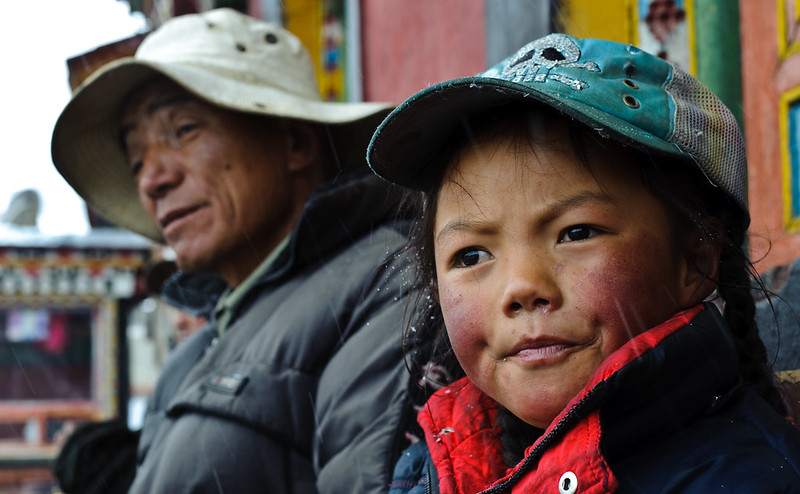 Tibet, known as the “roof of the world,” is a remote territory under China’s rule that lies north of the Himalayas and southwest of China. The region is home to 3.6 million, and many Tibetans earn less than $100 per year, unable to afford basic fruits and vegetables, with many relying solely on barley dumplings to survive. There are 628,000 Tibetans registered as poor who have been uplifted from poverty, as of late 2019. The Chinese government has allocated around 75 billion Chinese Yuan ($15.3 billion) to poverty alleviation, which led to China in 2020 declaring a “major victory” in eradicating extreme poverty in Tibet — all of Tibet’s 74 counties are no longer “poverty-stricken,” according to the Chinese government. Here’s everything you need to know about poverty in Tibet.
China’s Poverty Alleviation Tactics in Tibet
China’s mission to alleviate poverty in Tibet is synonymous with modernizing the region. Some poor Tibetans now own cars in Tibet, according to ThinkChina, with paved expressways and a billboard advertising a “Westernised” café amid the Himalayan mountains. Some young Tibetans own cell phones and dream of “leaving the mountains and plains” to Lhasa, the capital of Tibet, or to mainland China, ThinkChina says.
The Central Tibetan Administration (CTA) reported that China’s efforts are a “scheme” that the government carries out under the guise of poverty alleviation. The economic gain from China’s poverty alleviation mission has come at a large cost to rural Tibetans and their culture. The Chinese government has relocated Tibetan nomads and farmers en masse from poverty-stricken areas to other locations in Tibet or China, forcing them into military training and factory labor.
China also seeks to eliminate what it calls the “harmful influence” of Buddhism and change Tibetans’ “way of thinking” by way of “re-education,” according to the CTA. U.N. experts are “very disturbed” that around a million Tibetan children face seemingly forced cultural, religious and linguistic assimilation into the majority Han culture, the U.N. reported in February 2023.
Forced Evictions and Relocations
In May 2024, Human Rights Watch (HRW) reported that 500 Tibetan villages with more than 140,000 residents have faced or are currently facing forced eviction and relocation. When individual households are relocated, poorer households are often selected — between 2016 and 2020, 567,000 people were relocated under this program by the government. These relocations are “severely eroding Tibetan culture and ways of life,” HRW’s China director Maya Wang said.
The Chinese government states that the goal of resettling Tibet’s poorest into urban areas is to improve their housing conditions, health care and education. However, the government’s mission left many of those resettled living in poverty in urban areas, according to the United States Department of State.
Despite China’s occupation, many Tibetans’ alliances continue to lie with His Holiness the 14th Dalai Lama, who created a nonprofit organization working for the welfare of destitute Tibetans.
14th Dalai Lama’s Central Tibetan Relief Committee
Tibet used to be an independent region — in the 1950s, China forcibly claimed Tibet, destroying many Buddhist monasteries and killing thousands. His Holiness the 14th Dalai Lama fled to northern India, along with around 80,000 refugees, according to BBC. In 1994, he established the Central Tibetan Relief Committee (CTRC) in India.
The CTRC’s main objective is to rehabilitate and settle Tibetan refugees, as well as uplift the poor and make the Tibetan settlement “viable and sustainable,” according to its website. One of its primary initiatives is to “take care of genuinely poor and destitute elders who have no one to take care of them.” The CTRC has built more than 14 homes and accommodates more than 500 Tibetan elders, as of 2020.
“The awesome power that economic institutions have acquired in our society, and the distressing effects that poverty continues to wreak, should make all of us look for means of transforming our economy into one based on compassion,” His Holiness the 14th Dalai Lama wrote in 2008.
Chinese government claims it has lifted Tibet out of extreme poverty, however, the CTA, the U.N. and HRW dispute this claim. China’s poverty alleviation tactics may have diminished Tibet’s poverty in an economic sense, but individual Tibetans often remain impoverished, with their traditional culture stripped away. Human rights groups and His Holiness the 14th Dalai Lama continue to look out for poor Tibetans, ensuring proper poverty relief.
– Ahna Fleming
Ahna is based in Minneapolis, MN, USA and focuses on Good News and Politics for The Borgen Project.
Photo: Flickr
