Nongovernmental Organizations Operating in Kiribati
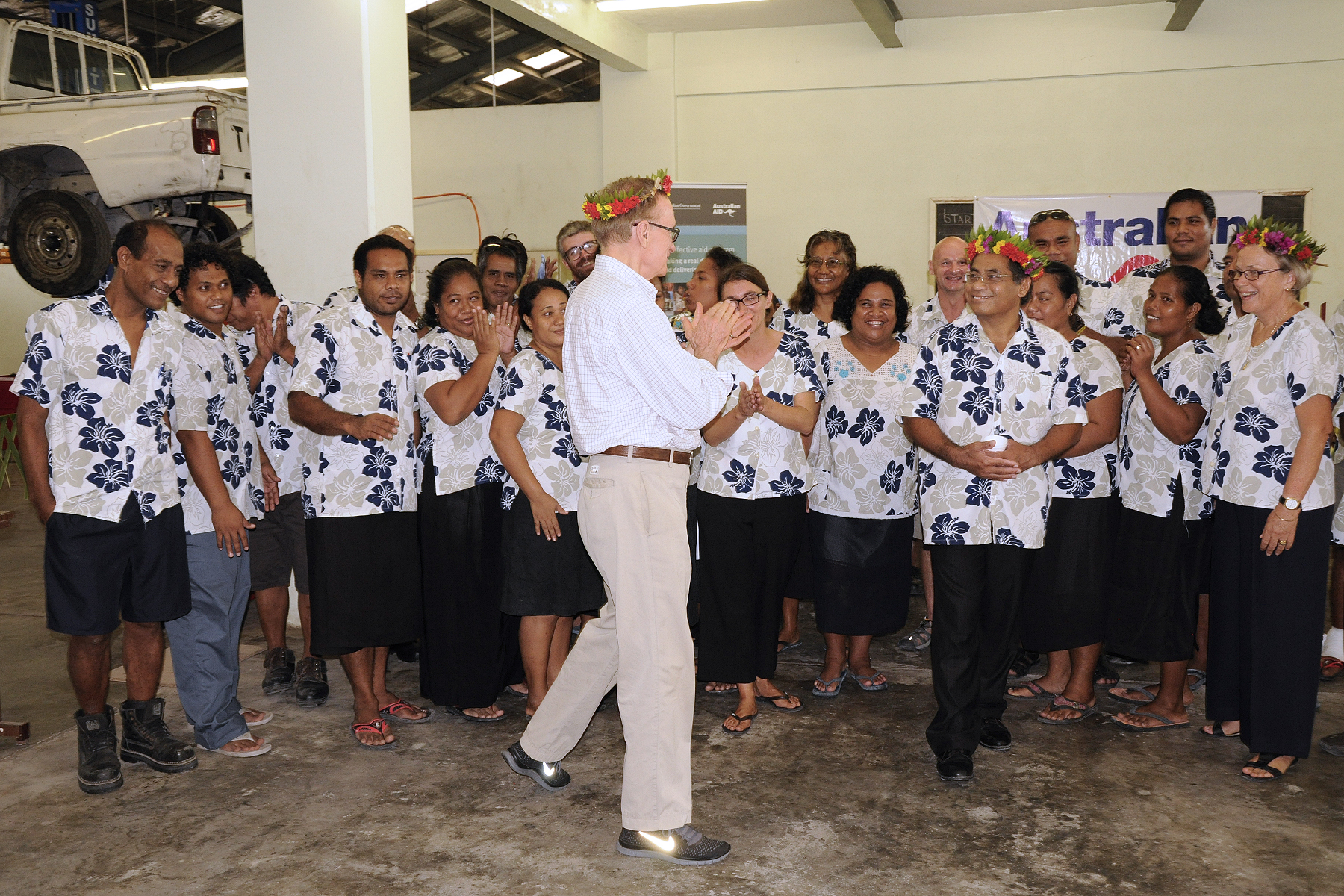 The United Nations (U.N.) currently lists Kiribati as a Least Developed Country (LDC). The U.N. defines an LDC as one that requires significant international aid to assist its development. This designation is based on three main criteria: an average income below $1,080, a low score on the Human Asset Index, an index designed to assess multiple factors in a country’s education and health outcomes and a high score on the Economic and Environmental Vulnerability Index. Additionally, the designation must be accepted by the country.
Kiribati has made significant strides in its goal of graduating from this distinction and meeting the economic threshold. However, concerns exist regarding its ability to survive independently without the support of the U.N. Situations like this are when the efforts of NGOs become crucial. With volunteer efforts working within Kiribati on a daily basis to provide its citizens with critical, potentially life-saving information, Kiribati can, in turn, place a greater emphasis on not only meeting its goal of graduation but on progressing the country’s development in order to continue the positive strides it has already made.
Nongovernmental Organizations Operating in Kiribati
The impact of nongovernmental organizations (NGOs) can be felt worldwide. In developing countries like Kiribati, homegrown efforts often arise to make drastic strides in the fight for good. Here are seven nongovernmental organizations operating in Kiribati.
KANGO
The Kiribati Association of NGOs (KANGO) helps to enact the Kiribati Vision 20 plan, a 20-year development program for the betterment of the islands. One way it does this is via one of the many workshops it holds on the island. In these workshops, participants are first educated about the Kiribati Vision 20 plan. The plan is a blueprint for the country’s long-term development goals and the U.N.’s sustainable development goals (SDGs) for Kiribati.
After the lecture, participants participated in activities, including weaving, sewing and making local handicrafts. Though it may seem pedestrian on the surface, learning to craft in this manner helps the community achieve Kiribati’s SDGs by allowing even the unemployed to contribute to the economy.
ICAAD
The International Center for Advocates Against Discrimination (ICAAD) is an advocacy group working within Kiribati to support marginalized communities on the islands. These include the indigenous peoples of Rabi island, the Banaban people. A primary goal of the ICAAD is to ensure that the voices of the native population are heard. Methods it uses to achieve this goal include artivism projects and interviews with members of the population. Highlighting and elevating the stories of these groups serves to pass on their memories and traditions to future generations, a value that can’t be calculated on a chart.
KFHA
The Kiribati Family Health Association (KFHA) works to provide crucial information and resources regarding family planning and sexual health. In addition to this, it advocates for social justice programs for marginalized groups across Kiribati. By hosting programs relating to reproductive health, critical information can be delivered to those in need of it. The most marginalized communities can receive the tools needed to thrive in times of crisis.
KTU
The Kiribati Teachers Union advocates on behalf of teachers across the islands. Providing a voice for a sector of society that is all too often overlooked, the KTU serves as an organization that can organize, negotiate and advocate on behalf of teachers across the islands. In addition, there are also separate wings of the union, including one dedicated to improving conditions for women teachers and one dedicated to those younger than 35.
Teitoiningaina
Teitoiningaina is a group dedicated to providing women on the island with crucial knowledge and resources regarding subsistence methods. Due to scarce water availability, many in Kiribati rely on water tanks for daily subsistence. In these workshops hosted by Teitoiningaina, composting techniques are among the methods taught to produce greater yields of crops. Attendees are given the ability and knowledge to better provide for their families.
KiriCAN
The Kiribati Climate Action Network (KiriCAN) is an NGO dedicated to raising awareness of the nation’s unique climate struggles. Given the Island’s location, climate and weather concerns are often crucial to its development. Mitigating the potential issues faced by its remoteness is key to the Island’s prosperity. Kirican has a long history of cleanup efforts and educational programs and its efforts to advocate for the planet are well appreciated.
Lifebox Foundation
The Lifebox Foundation, an NGO dedicated to distributing lifesaving medical equipment across the world, has a branch focused on Oceania that operates in Kiribati. Its initial goal was to distribute Pulse Oximeters to underserved communities. Though it has since expanded from this initial goal during the COVID-19 pandemic, the Lifebox Foundation demonstrated that this was still a crucial point of its operation.
Pulse oximeters are critical to COVID-19 relief efforts, as a potentially life-threatening symptom of the disease is Hypoxia or an absence of oxygen in the blood. The best tool to detect this lack of oxygen is a pulse oximeter. During the relief efforts, the Lifebox Foundation distributed more than 100 pulse oximeters to medical centers across Oceania, including Kiribati. The help of the Lifebox Foundation was key in such a critical time for Kiribati. Without it, many patients would have been left without this crucial piece of lifesaving kit.
Final Remark
These are just a few ways NGOs can impact the local Kiribati community by directly targeting key issues in the island nation. By addressing these issues on a community level, Kiribati can see its broader goals met in due time. Suppose the finish line is graduating from the LCD status. In that case, nongovernmental organizations operating in Kiribati will be the fuel needed to propel the country to its development goals.
– Malik Vega
Malik is based in Florida, USA and focuses on Good News for The Borgen Project.
Photo: Wikimedia Commons
