In May of 2012, the Daily Mail posted an article regarding author Matthew White’s book, “The Great Big Book of Horrible Things” which ranks the worst atrocities in history. The rank lists World War II as number one, the regime of Genghis Khan as number two, Mao Zedong’s regime as number three, British India famines as number four, and the fall of the Ming Dynasty as number five. The Soviet Union’s Joseph Stalin ranked as number seven, and the Atlantic slave trade as number ten. (The list of all ten is available on Daily Mail.) On another source, the worst atrocities are ranked based on death tolls marking WWII as number one, the regime of China’s Mao Zedong as number two, Soviet Union’s Stalin regime as number three, WWI as number four, and the Russian Civil War as number five.
For the purpose of objectivity, it is important to note that all atrocities are significant and that these calculations seem mostly based on numerical and statistical measures. The presented list below will rank the top five photos of atrocity based on a combination of measures: timeliness (1945-present), death tolls, and global-scale emotional significance.
1) WWII led to approximately 55 million deaths (including the Holocaust)

(the bombing of Hiroshima and Nagasaki)
2) (1949-1987) During China’s Mao Zedong regime, approximately 40 million lives were lost
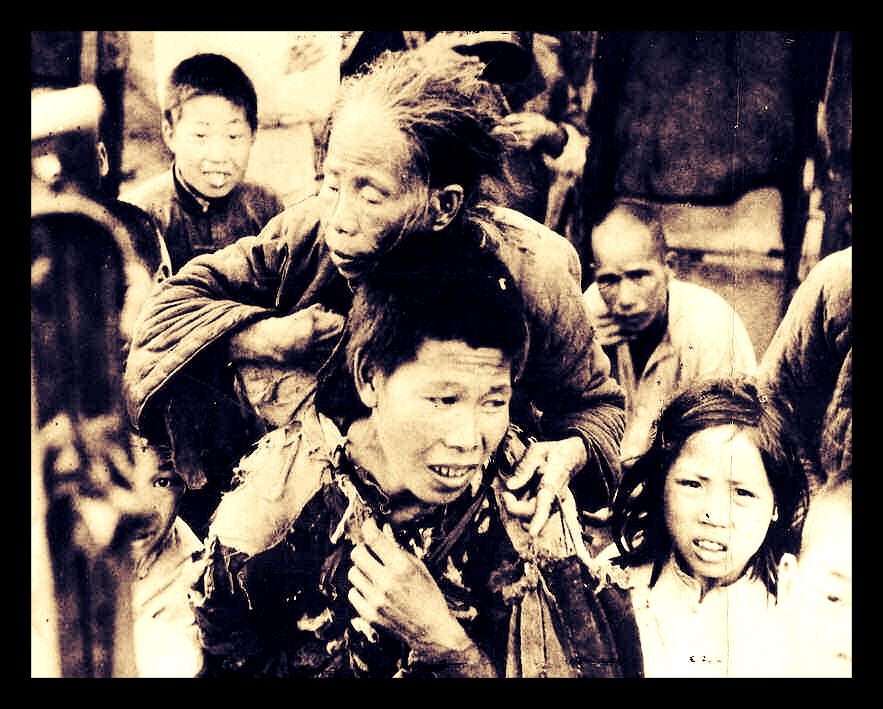
(Famine during the Great Leap Forward)
3) (1975-1979) Cambodia’s Khmer Rouge/Pol Pot regime caused approximately between 1.7 to 2 million deaths.

4) (1994) Rwanda’s genocide led to approximately 800,000 deaths
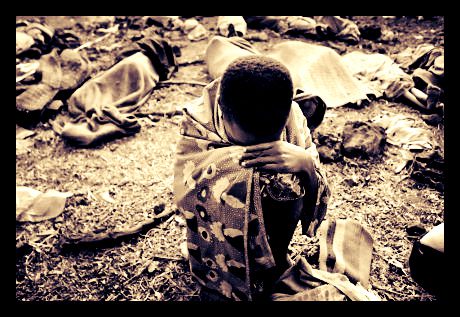
5) (1980-1989) The Soviet-Afghani War which led to approximately 1, 500,000 deaths

– Leen Abdallah
Sources: The Hemoclysm, Religious Tolerance
Photos: Daily Mail, Google, Google, Google, Google

Using Migration as an Advantage
As the world deals with the movement of millions of people as refugees, illegal immigrants, or simple shifts of communities, it is important for countries experiencing these changes in large numbers to recognize that whether they choose to identify it as an issue, for better or worse, it is not going to disappear. Secretary-General Ban Ki-moon led the first day of the 46th Commission on Population and Development in New York whose 5 days conference will address how countries should deal with migration, both internal and external.
It is at a point when halting the movements of people takes more energy and wastes more time than finding solutions that will harness their skills and help them assimilate into their new home. Ban Ki-moon brought up the reality of the situation that “It is not a question of whether to halt the movement of people across borders. The question is how we plan for such movements and make the most of them.” The same 5 goals should be taken into consideration in a variety of situations: whether it is for Syrian refugees fleeing across borders to Jordan or Iraq or Sudanese fleeing Darfur for another region in their country.
Ensuring the safety of migrants and a legal passage
Creating a direct connection between the policies on migration and the job market
Recognizing the presence of illegals and addressing their concerns
Facilitating societal integration for the migrants into their new communities
Allowing for a timely return to home countries if necessary
While these goals are clearly easier said than done, following this path would ensure that migration is not a win-lose situation but more of a win-win. For countries experiencing such population patterns, we must hope that they understand how important working with migrants is to not only better their lives, but perhaps better the lives of their country’s long time citizens, economy, and general fit into the global arena.
– Deena Dulgerian
Source: UN News Centre
Bieber Concert Tickets Benefit the Red Cross
For Justin Bieber, Jonas Brothers and One Direction fans, there is an ultimate concert package available right now until April 26, 2013, to meet and see all of them in concert – and the best part is the auction price benefits the American Red Cross.
CharityBuzz.com is hosting the auction, where four people will win:
The American Red Cross prevents and alleviates human suffering due to emergencies and natural disasters, by mobilizing the power of volunteers and the generosity of donors. It is not a government agency, it is independent and neutral, and operates for the good of all. The Red Cross originated in 1863 to care for and protect wounded soldiers and introduced a common red cross symbol to protect medical personnel on the battlefield. The global Red Cross, and more recently Red Crescent, mission and scope have evolved into the world’s largest humanitarian network – the only NGO with specific responsibilities outlined in the Geneva Conventions. Today, the American Red Cross and its partners provide humanitarian assistance to the world’s most vulnerable populations.
Some celebrities know they have an obligation to give back to the people and communities that built them, and they are in a unique position to have a massive impact. The bid now stands at $10,500.
– Mary Purcell
Source: CharityBuzz, Red Cross
Bill Clinton’s First Tweet: the Global Initiative
Bill Clinton was featured recently on the Colbert Report to talk about his global initiative. Here are some of the main questions and responses that Stephen Colbert asked the former U.S. President.
Why help other people?
We live in an interdependent world… The more you reduce poverty overseas, the more you increase education and improve healthcare and empower women and girls, the more you will have growth overseas the more there will be global growth, the better off Americans will be. Every time you cut off somebody else’s opportunities, you shrink your own horizons.
But why ‘Global Initiative’? Why not call it the ‘Clinton America Initiative’?
Fixing America, in part, depends upon having a more receptive world to improve in, one that makes our growth more relevant and effective.
How would you compare CGI to other big groups that get together like TED Talks?
The simple answer is that here, everybody is expected to make a commitment..I thought people were tired of meetings and just wanted to do something, and it turned out that a fair number were.
Would you like to break into the 21st century right now and send in your first tweet?
Just spent an amazing time with Colbert. Is he sane? He is cool! #CGIU
As Colbert sends in Clinton’s first tweet, he says, “sir welcome to the future.”
– Leen Abdallah
Source: YouTube
Can Converting Cellulose Into Starch Solve World Hunger?
When considering the most pressing issues confronting global poverty in the next 30 to 40 years, none are more alarming than the food shortages predicted to accompany a worldwide population of over nine billion people. In an effort to ameliorate future food insecurity, more and more research funding has been allocated towards finding sustainable, nutrient-dense complex carbohydrates capable of meeting the caloric demands of a greatly expanded populace. Quite astonishingly, in a turn of events that have even researchers optimistic about future food security challenges, scientists have recently discovered a way of converting cellulose into starch.
Researchers at Virginia Tech’s College of Agricultural and Life Sciences, along with their College of Engineering devised an ingenious method of converting cellulose into starch by utilizing a process involving cascading enzymes. Basically, enzymatic reactions transform cellulose – an abundant carbohydrate contained in the cell wall of plants – into amylose and ethanol, which means that absolutely nothing goes to waste. The potential of the cellulose to starch conversion opens up exciting new frontiers in the fight against world hunger, as humans generally derive 20 to 40 percent of their daily caloric intake from complex carbohydrates such as starch.
In regards to the process of converting cellulose into starch, Associate Professor of Biological Systems Engineering Y.H. Percival Zhang remarked that “Cellulose and starch have the same chemical formula, the difference is in their chemical linkages. Our idea is to use an enzyme cascade to break up the bonds in cellulose, enabling their reconfiguration as starch.”
Scientific breakthroughs such as converting cellulose into starch serve to unlock the potential of feeding the entire world’s population without the necessary land, water, and fertilizer usage that wreaks havoc on the earth’s delicate ecosystems. Furthermore, by harnessing the scientific technology necessary to transform something as abundant as plant cellulose into a viable human food source, future challenges such as global food security are looking much more surmountable.
– Brian Turner
Source: Science Daily
Photo: National Geographic
$500 Million ‘Rescue Mission’ Initiative Launched
Under the budget cuts that went into effect as of January 1, 2013, non-profits are predicting that there will be 1.1 million fewer mosquito nets distributed, 300,000 fewer people with access to clean water, and 2 million people with reduced or zero access to food aid. This is cause for serious concern as we look at being less than 1,000 from the end date for the Millenium Development Goals (MDG).
World Vision launched the $500 million ‘rescue mission’ dubbed “For Every Child” which seeks to raise $500 million by 2015. It is the farthest-reaching endeavor World Vision has ever taken on. The initiative will focus on clean water, fighting communicable diseases, providing small loans to families, and protecting children from human trafficking.
When the government cuts budgets, it can be difficult for non-profit organizations to get the start-up capital they need to start new ventures. This campaign is important to continue the life-saving work World Vision is already doing around the world. It will hopefully fill the gap from government funds and continue to promote the MDGs as we near the final stretch. We have halved poverty in the last decade and it is very possible to continue the downward trend, but it is going to take a lot of hard work.
While the needs are great and the costs seem high, the alternative to pushing forward is not an option. As Richard Sterns, Executive Director of World Vision put it, “We’ve taken a hard look at the needs that exist today. They are great, but we refuse to believe that poverty is too big, too expensive, or too difficult to overcome-because for the millions of children living in poverty, the stakes couldn’t be higher.”
– Amanda Kloeppel
Source: Christian Post
Conference Focuses on Improving Newborn Health
In the first newborn health conference, international healthcare organizations are pleased with advancements to improve the health of newborns in developing countries. These organizations include the United Nations Children’s Fund (UNICEF), the US Agency for International Development and the Bill & Melinda Gates Foundation. Although newborn deaths, malnutrition, and stunted development are beginning to decrease, representatives of aid organizations say that more support is needed.
Attendees of the conference are planning to release a “global action plan” in the upcoming year to present a strategy for even further reducing these newborn deaths. With this new call to action, we can hope to see the current statistics for newborn deaths and illnesses continue to decrease.
Unfortunately, newborn deaths are all too common in the developing world. In 2011, approximately 20,000 newborn babies died and, in 2009, there were over 22,600 stillbirths in South Africa. The global statistics are even more shocking. 60.9 million children died in 2011 and, of these, 43 percent of deaths occurred during the first four weeks of life, three million died within a week, and two million babies died the day they were born.
Graca Machel, the wife of Nelson Mandela, spoke urgently on the subject. She pronounced the issue of newborn health to be a top priority for UNICEF. “Too many of our newborn children here in Africa are dying too early. We are not reaching the targets we have set ourselves in the (UN) Millennium Development Goals. The issue of newborn health has long been a hidden challenge,” she said.
All organizations involved remain committed to working together to reduce newborn death rates through research and by working with the agriculture department to address malnutrition, the cause of stunted growth. The groups also plan to implement programs on training midwives and newborn healthcare education. Together, UNICEF, USAID, and the Bill & Melinda Gates Foundation hope to change the lives of millions of new babies.
– Mary Penn
Source: BDLive
How the 2022 World Cup Could Help Alleviate Poverty
Qatar will be hosting the World Cup in 2022 which creates the problem of dealing with the high climate experienced by the region. Temperatures in Qatar reach roughly 104 Fahrenheit and while the World Cup has relatively little effect of many impoverished nations the developments made to assist in cooling the stadium could be implemented throughout the Middle East.
Nasser Al-Khelaifi, a former professional tennis player and current sports businessman, is acting as the organizing committee’s director of communications and marketing. The stadium has already had a cooling system installed which has earned it the title of being the first and only cooled stadium in the world. However, the main element of the 2022 World Cup that could help alleviate poverty is the method in which they power the cooling system.
Al-Khelaifi is working with companies in Germany to develop a more resilient solar power grid to help power the stadium. Germany has thus far been leading the way in solar power technology and should prove useful in developing a new technology to deal with the conditions of harvesting power in the desert. The main problems in harvesting solar energy in the desert are keeping the grids clean enough to run efficiently.
By working to develop grids more resistant to the harsh environment of the desert, Al-Khelaifi could be producing a useful technology to assist in powering the impoverished communities which lie in some of the world’s harshest environment.
When the new solar power grids are not using the energy gathered by the grids for the World Cup in 2022, it will be put toward powering the neighboring communities.
– Pete Grapentien
Source: Arab Times
Photo: Ahram Online
IMF and World Bank Back Bold Poverty Agenda
On Saturday both the IMF and World Bank backed a bold poverty agenda to eradicate extreme poverty within a generation. The goal comes from the Development Committee – a subcommittee of both the IMF and the World Bank.
This bold poverty agenda serves as a “historic opportunity” to make a difference. World Bank president Jim Yong Kim has called the initiative an important step towards the eradication of world poverty, but one that will require focus, innovation, and commitments from everyone in order to succeed.
The logistics of the Development Committee’s plan include reducing the percentage of people who currently live on less than $1.25 a day to three percent of the global population by 2030. Additionally, the committee would like to work towards raising the incomes of the poorest 40 percent of people in each country.
While this seems to be a noble and necessary goal, the committee did note the obstacles they will need to overcome to be successful. The committee and agenda will need to be supported by strong growth across the developing world, as well as an unmatched translation of growth into poverty reduction in several of the world’s poorest countries.
Among the aforementioned challenges, the committee has also recognized the institutional and governance challenges that will have to be overcome, along with substantial investments in infrastructure and agricultural productivity. All of the above challenges, while difficult to overcome, express the World Bank and IMF’s renewed commitment to eradicate extreme poverty.
The committee’s exuberance for this goal stems from Dr. Kim’s passion for eradicating global poverty. The committee members have supported Dr. Kim’s vision. Committee chairman, Marek Belka, explains that Dr. Kim has been very influential in expressing the World Bank Group as a partner in the fight against extreme poverty.
This announcement aligns closely with the World Bank’s core mission of creating a world free of poverty and follows the recent spring meetings in Washington.
– Caitlin Zusy
Source: AFP
Photo: Google
Top 5 Photos of Atrocity
In May of 2012, the Daily Mail posted an article regarding author Matthew White’s book, “The Great Big Book of Horrible Things” which ranks the worst atrocities in history. The rank lists World War II as number one, the regime of Genghis Khan as number two, Mao Zedong’s regime as number three, British India famines as number four, and the fall of the Ming Dynasty as number five. The Soviet Union’s Joseph Stalin ranked as number seven, and the Atlantic slave trade as number ten. (The list of all ten is available on Daily Mail.) On another source, the worst atrocities are ranked based on death tolls marking WWII as number one, the regime of China’s Mao Zedong as number two, Soviet Union’s Stalin regime as number three, WWI as number four, and the Russian Civil War as number five.
For the purpose of objectivity, it is important to note that all atrocities are significant and that these calculations seem mostly based on numerical and statistical measures. The presented list below will rank the top five photos of atrocity based on a combination of measures: timeliness (1945-present), death tolls, and global-scale emotional significance.
1) WWII led to approximately 55 million deaths (including the Holocaust)
(the bombing of Hiroshima and Nagasaki)
2) (1949-1987) During China’s Mao Zedong regime, approximately 40 million lives were lost
(Famine during the Great Leap Forward)
3) (1975-1979) Cambodia’s Khmer Rouge/Pol Pot regime caused approximately between 1.7 to 2 million deaths.
4) (1994) Rwanda’s genocide led to approximately 800,000 deaths
5) (1980-1989) The Soviet-Afghani War which led to approximately 1, 500,000 deaths
– Leen Abdallah
Sources: The Hemoclysm, Religious Tolerance
Photos: Daily Mail, Google, Google, Google, Google
Second Green Revolution in India
For India, the issue of food security has been a chronic blight that has plagued the 1 billion strong nation ever since its beginnings. Recently, the government has launched a comprehensive program aimed at alleviating the widespread malnutrition and low birth weights of many infants and children. In a bold move to add even more momentum and resources toward the fight against food insecurity, the Department of Agriculture has launched the Second Green Revolution in India.
The Second Green Revolution in India was celebrated during the farming festival of Uzhavar Thiruvizha, which will last until May 20th. During the festival, organized by the Department of Agriculture and Ministers from varying levels of Indian Government, farmers were invited to take part in educational seminars covering issues such as water usage, soil testing, and pest control. In addition to the educational aspects of the Uzavar Thiruvizha, 114 farmers also received financial assistance and farming assets valued at 72.42 lakhs.
In regards to the overall goals of the Second Green Revolution in India, Joint Director of Agriculture Mohammed Kalimullah Sherif remarked that “Under the ‘Second Green Revolution’ underway in the State, it has been planned to double the crop production and increase the revenue of farmers threefold over a period of three years ending 2015.”
Government investments such as the Uzhavar Thiruvizha highlight the ongoing commitment of the Indian government in tackling future food security challenges and alleviating chronic malnutrition. Furthermore, through the coordinated efforts of the Second Green Revolution in India, the mission of doubling current agricultural outputs is a goal that has never been more attainable.
– Brian Turner
Source The Hindu
Photo DeshGujarat