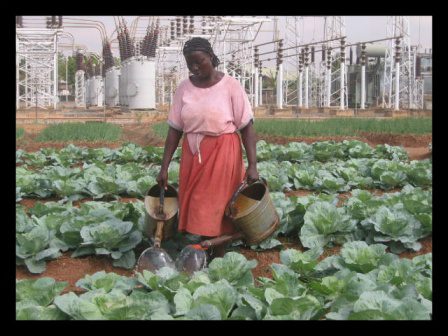
USAID in Africa creates many new advantages for the US beyond humanitarian aid, such as fostering strategic national security partners and increasing US economic prospects. George Ingram and Steven Rocker recommend four strategies to better utilize and direct foreign assistance to the region.
In June 2012, President Obama established his development priorities in the region with the White House’s U.S. Strategy toward Sub-Saharan Africa, focusing on economic growth, food security, public health, women and children, humanitarian response, and climate change.
From 2002 to 2012, the total USAID money in sub-Saharan Africa nearly quadrupled, from roughly $1.94 billion to $7.08 billion. The assistance money was largely focused on global health spending, specifically the President’s Emergency Plan for AIDS Relief (PEPFAR). But even beyond global health, the U.S. is the leading donor of humanitarian aid to sub-Saharan Africa, particularly in the area of emergency food aid. The Obama administration also provides assistance in agriculture development through its Feed the Future program, a global hunger and food security initiative. Overall, USAID operates 27 different regional missions in 47 African countries – the top five being Kenya, Nigeria, Ethiopia, Tanzania and South Africa.
U.S. development assistance brings government agencies, American organizations and businesses into collaboration with Africans who are trying to put their own communities and countries onto a more prosperous social, political, and economic plane. There are three critical reasons why the US should invest in Africa:
1. Humanitarian interests – Through moral obligation the U.S. has historically been the leading donor of humanitarian assistance in the region. It is part of the American ethos to continue to respond compassionately to people in their most desperate times of need.
2. National security interests – There are continued terrorist concerns in Somalia and Mali, with the potential new threats in Nigeria (the U.S.’s largest trading partner in sub-Saharan Africa). USAID must continue to be very active in these regions particularly to prevent any terrorist strongholds from cementing and to maintain stability.
3. Economic interests – From 2001 to 2010, six of the fastest-growing economies in the world were in Africa. In 2011, foreign investment to sub-Saharan Africa amounted to more than all the development assistance funding for the whole world. Many countries are recognizing and acting on increasing commercial opportunities in Africa.
Four ways to make U.S. aid to Africa more effective:
1. Sustainable health systems – The majority of health assistance to Africa is used to finance the delivery of health services, which is not sustainable. Greater focus needs to be directed to building health practices that Africans can carry out on their own.
2. Disaster preparedness – For all the humanitarian aid delivered, very little is allocated toward disaster prevention and preparedness. By focusing more resources and expertise toward these areas, the U.S. could reduce the need for large international disaster relief, and save lives.
3. Economic growth – The U.S. should leverage its assistance to stimulate economic growth. Congress and U.S. officials should engage the Export-Import Bank, Department of Commerce, Overseas Private Investment Corporation, U.S. Trade and Development Agency and the U.S. Trade Representative to ensure that a range of government policies and programs are encouraging equitable economic growth for all, and commercial opportunities for U.S. businesses.
4. Democratization and good governance – The U.S. needs to give greater attention and support toward governance policies and oversight; including improving the governmental collection of revenues, transparent budgeting, and building the capacity of civil society and legislative systems.
– Mary Purcell
Source: Brookings
Photo: ruaf.iwmi.org

UNICEF’s Global Education First Initiative
Josephine Bourne is the Associate Director of UNICEF. She sat down for an interview with the Inter Press Service to give her thoughts on the upcoming meetings to be held in Washington D.C. on the Global Education First Initiative.
The meetings will bring together Ministers in Finance from the Democratic Republic of the Congo, Haiti, South Sudan, Yemen, Nigeria, Ethiopia and Bangladesh. The topic of conversation will focus on sustainable solutions between the private sector and civil society organizations. The meetings will center around the importance of education on the global economy.
Bourne believes that the initiative will provide an increased pressure for political commitment in the field of education. She stated that UNICEF would like to continue to work towards ensuring education for the most vulnerable children, particularly girls, with disabilities as well as children living in conflict territories.
When Bourne was asked if there was one thing in particular that greatly diminished a child’s opportunity to obtain an education, she bluntly stated that being born into poverty as a girl in a rural area is a huge disadvantage. The longer a girl is able to attend school, the fewer children she will have – an incredibly important factor in poverty reduction.
Around the world, girls who have seven years of education have 2.2 fewer children than those that do not. When those girls have children, those children will be healthier and better educated, helping to lower the poverty percentage in their given communities. Bourne believes that this environment leads to economic growth, more female leaders, and more sustainable development.
In the interview, Bourne was also asked about gender equality and education. She said that girls from disadvantaged groups are oftentimes the most marginalized because of the special risks that could take them out of school. She believes that there is serious inequity in schools around the world.
Women’s education and empowerment have been a popular theme in the media lately with the recent release of the documentary “Girl Rising”. While this is a very positive thing, Bourne was quick to note, however, that the increased media attention to gender and education inequality, as well as the empowerment that comes with it are not enough to bring about social change. In her opinion, in order to create lasting change, we need the complete commitment of all duty bearers; from organizations such as UNICEF and the UN to parents and communities; to be involved in the promotion of the human right of education for all children around the world.
– Caitlin Zusy
Source: Inter Press Service
Photo: UNESCO
High School Students Fight World Hunger
For the fourth year, more than 200 Ottawa Township High School students became part of the solution to world hunger.
Each year, students in the school’s Freshman Academy have been asked to come up with solutions to the problems of world hunger and limited access to clean drinking water, said teacher Pamela Cronkright.
“Students research local and international organizations and then choose which one they want to help,” she said. They sometimes raise funds for the organization; often they volunteer at a local organization or “create and present a public service announcement”encouraging others to get involved.
Preliminary totals show this year the students raised more than $12,000, volunteered more than 250 hours, and created public service announcements seen by thousands, Cronkright said.
Students can select from a list of organizations, or suggest one, to send the money they have raised.
Triplets Sam, Matt and Emily Poundstone, of Marseilles, with the help of their family, held a pancake breakfast that brought in $565 for the Marseilles Food Pantry.
Officially, it was Sam and Matt’s project. Emily and a friend saved their lunch money to raise $50 more in contributions.
Silver Young, Bethany Crum, Shelby Leonard and Sarah Lyons held a bake sale outside Handy Foods. Rachel Thrush and another student sold candy bars, which raised $150.
Cronkright said one non-auditory special needs student programmed a presentation into a speech machine and went homeroom to homeroom and gave his “talk” while his aide held his poster. He collected $83.
Students decided to send most of their funds to charity: Water, a global nonprofit organization, builds wells to provide drinking water in developing nations, and Heifer International, another global nonprofit, provides livestock, seeds, and trees to those in need.
Locally, in addition to the Marseilles Food Pantry, students volunteered or raised money for the Community Food Basket, Illinois Valley Public Action To Deliver Shelter, and the Ottawa YMCA.
Tom Hart, another Freshman Academy faculty member, also led this year’s World Hunger Awareness Project, but shifted the credit to Cronkright.
“She was the one who came up with this idea,” Hart said. “I’m just following along.”
– Katie Brockman
Source My Web Times
Photo The Wild
Top 10 Microfinance Blogs
Blogs are a great way to hear a variety of voices and experience an issue from diverse perspectives, and there are a variety of sites full of information, opinions, and more. Below are 10 interesting blogs that present unique perspectives on the topic of microfinance.
– Katie Brockman
Source: Opportunity International
Photo: Fairview High School
Increased Immunizations in Zambia
The World Health Organization has reported that increased immunizations in Zambia from GAVI (Global Alliance for Vaccines and Immunizations) funding are having an incredibly beneficial impact. GAVI funding has exposed Zambia to new technologies and vaccines for a gamut of preventable diseases. These diseases range from Hepatitis B+, influenza, and measles among others. Increased funding for vaccinations allows Zambia to protect a greater percentage of their population, and it allows them to make important strides towards improved health conditions, something they have struggled with in the past.
The country is also looking forward to increasing their Human Papiloma Virus (HPV) vaccinations in the near future. The main goal of the increased funding for vaccinations is that they will have the ability to help more children. Children are substantially more exposed to hunger, malnutrition and diseases, and this is a step in the eradication of such problems.
Zambia has been the beneficiary of funding totaling the U.S. $3,208,160 for vaccines and immunizations. Representatives from The World Health Organization note that Zambia is striving to greatly improve their child’s health conditions, as well as to achieve the Millennium Development Goals. Immunizations have been a great part of this success. Zambia’s government has shown a strong commitment to improvement. The WHO admits that while Zambia has various shortfalls and economic limitations, there are improvements being made. The government is working hard to help and care for its citizens.
This is good news. Increased vaccinations help lower child mortality rates, and increase the overall quality of life in developing regions. They also work to limit overpopulation. Immunizations and health improvements are vital to poverty reduction. International commitment to countries and governments such as Zambia is exactly what we need.
– Caitlin Zusy
Source: Times of Zambia
Photo: The International
UNICEF Focuses on Stunted Children
One of the many harmful consequences of malnutrition in children is permanent “stunting” of the mind or body. The United Nations Children’s Fund is addressing this issue that affects more than 25 percent of children less than five years old. The organization is particularly concerned because “stunted” kids are put in a severe disadvantage for the rest of their lives.
According to Anthony Lake, executive director of UNICEF, there are several ways to help prevent birth of stunted children. Some of these methods include advocating for breastfeeding, proper vitamin intake, and consuming clean water. Lake explains a child with access to these important elements is likely to have his or her brain and body develop normally. Children who do not receive the necessary nutrient are also put at risk for numerous other illnesses or even premature death.
The first two years of life are the most significant to a child’s health. Even in the womb, children are at risk if the mother is not dedicated to a balanced diet, drinking clean water, and consuming enough Vitamin A, iron, or folic acid. If a child does experience stunted growth or “stunting,” there is no way to reverse the damage after the age of two.
Anthony Lake describes “stunting” as “the least understood, least recognized and least acted upon crisis.” Unlike being underweight, stunted children can never be fully cured. Thus, the child must carry out his or her life with an underdeveloped brain and possible nerve and cell damage. Not only is this catastrophic for the child’s learning capacity and future career, but it is also detrimental to society as well.
Most stunted children live in Sub-Saharan Africa and South Asia. In India, 48 percent of children under five years old suffer from “stunting.” All of these children will never have the chance to live up to their full potential. When new generations are unable to contribute intellectually and financially to society, the country’s entire economic system suffers. UNICEF is tackling the issue of one child at a time.
– Mary Penn
Source: News OK
Photo: CNN
Poorest Countries Showing Greatest Commitment to Combating Hunger
Poverty is no match for combating hunger and undernutrition, something that some of the world’s poorest countries are proving to be true according to data collected by the Hunger and Nutrition Commitment Index. Some of the poorest countries are staying true and strong to their political commitment to tackle the issue, which many economically strong countries are failing to do. These countries have the funds and means to address the issue, yet they fail to put forth the initiative to adequately address it.
Hunger and undernutrition affect people all across the world, in nations poor and rich. Thus, it is necessary for governments and people to be completely committed and put forth an effort to combat hunger, saving lives, improving quality of life, and allowing people to fully reach their capacities – both socially and economically.
The Hunger and Nutrition Commitment Index (HANCI) “ranks governments on their political commitment to tackling hunger and undernutrition… to provide greater transparency and public accountability by measuring what governments achieve, and where they fail, in addressing hunger and undernutrition,” according to their website. Its data comes from 45 countries located across the globe and, according to the lead HANCI research, Dr. Dolf te Lintelo, the point is to “shine a spotlight on what governments are doing, or failing to do, towards addressing hunger and undernutrition.”
African countries, such as Malawi and Madagascar, were amongst the top countries showing “high commitment” to solving the problem of hunger. Yet, many African countries with robust economies, such as Nigeria and South Africa, showed very little commitment, bringing into question what seems to be the motive behind improving their economies as there has been little done to help those that are under-nourished and hungry.
The HANCI website goes into great detail as to which countries have high commitment and which countries fail in their commitment efforts, as well as interactive tools that allow people to explore the data. Visit it here: https://www.hancindex.org/.
– Angela Hooks
Sources: AllAfrica, HANCI
Photo: Hunger and Nutrition Blog
Stunting: Why Fighting Hunger is Important
In a conference held in Ireland, Anthony Lake, the executive director of UNICEF, reminded us why fighting hunger is so important. A recently released UNICEF report stated that more than a quarter of children under the age of five are permanently stunted from malnutrition. Children who are permanently stunted lack the physical and intellectual capacity to achieve their full potential. If the 165 million children been exposed to better nutrition, breastfeeding, and clean water in their first two years of life, they could have reached normal brain and body development.
Lake has urged that fighting hunger is important because children who are permanently stunted will suffer increased vulnerability to illness and early death. In order to combat this, UNICEF believes children need increased access to Vitamin A, iron, and folic acid in the womb, as well as a balanced diet and clean drinking water in the first two years of life. UNICEF argues that the minimum requirements should without question be universally available to every child on the planet.
If a child is permanently stunted from hunger, their brain never properly develops. It is unfixable. While we can fix hunger later, once a child is permanently stunted there is no going back. These children will be at a disadvantage in school. They will not learn at as quick of a pace, nor as much as their peers. This is a clear violation of the child’s human rights. And worst of all, it is something that can be corrected.
Formats such as UNICEF conferences, while not always providing the brightest or happiest news, raise awareness. Learning statistics and facts behind global hunger and poverty have the power to motivate society to get more involved. Technology and international cooperation and funding can help put an end to this problem. The permanent stunting of children serves as a reminder of why fighting hunger is important.
– Caitlin Zusy
Source: Medical Xpress
Photo: CNN
The Bank of Agriculture Boosts Small Scale Farmers
The Bank of Agriculture typically provides credit to commercial farmers and smallholders. Thus, it is quite unique that they are collaborating with the Kebbi State government. Getting support from the Kebbi State government ensures that the government will provide other tools and support necessary to help boost small scale farmer food production and lead to the success of the program put in place by the Bank of Agriculture. Kebbi State Governor, Alh. Saidu Dakingari, has already made a public statement in which he has promised support for the small scale farmers that receive some of the money put up by the Bank of Agriculture.
The success of the program will lead to better food security, reduce the number of those living in poverty, and help generate employment opportunities.
– Angela Hooks
Source: AllAfrica
Photo: New Nigerian Newspapers
India Experiments With Cash Assistance Program
With social programs across the world, corruption and inefficiency are always an issue. In India, the Public Distribution System, or PDS, is the largest network that provides food and other necessities to the 350 million who live below the poverty line. Economists have recently begun to formulate an experiment to get aid directly to the hands of recipients in the form of checks that they can spend as they choose.
PDS currently uses ration cards which allow people to buy grains at a cheaper price. However, there are quite a few middlemen and illegal happenings which can end up leaving anywhere from five percent to 15 percent of the original amount to the ration cardholder. With this new proposition, however, the government must deal with many theories and statistics of failure and the possibility of biting off more than they can chew.
The cash system would require recipients to open bank accounts. Only 40 percent of Indians currently have a bank account due to the impracticality of it for rural dwellers who either do not have close access to a bank or are not able to pay the fees required to have one. The idea of banking correspondents has been suggested to counter this issue. These correspondents can be explained as human ATMs who physically go to villages and customers, allowing them to withdraw money.
Reetika Khera, an economist from the Indian Institute of Technology conducted a survey asking PDS users their preference for food vs. cash. Although two-thirds said they preferred food, Paul Niehaus of GiveDirectly (an NPO that works to transfer donations electronically to poor Kenyans) warns that surveys are not the best way to test the theories. Most people who are a part of PDS have been living in a paternalistic system, as Indian economists say, where they have become comfortable and accustomed to the ration cards and are told how to spend their benefits.
These cash systems have been implemented in Mexico and Brazil where families must meet certain benchmarks and goals in order to receive their benefits. Although India’s population is significantly larger, certain states which have already put this new system to use have noticed an improvement in the distribution of funds and a decrease in corruption.
– Deena Dulgerian
Source: Co.EXIST, NY Times
Why the US Should Invest in Africa?
USAID in Africa creates many new advantages for the US beyond humanitarian aid, such as fostering strategic national security partners and increasing US economic prospects. George Ingram and Steven Rocker recommend four strategies to better utilize and direct foreign assistance to the region.
In June 2012, President Obama established his development priorities in the region with the White House’s U.S. Strategy toward Sub-Saharan Africa, focusing on economic growth, food security, public health, women and children, humanitarian response, and climate change.
From 2002 to 2012, the total USAID money in sub-Saharan Africa nearly quadrupled, from roughly $1.94 billion to $7.08 billion. The assistance money was largely focused on global health spending, specifically the President’s Emergency Plan for AIDS Relief (PEPFAR). But even beyond global health, the U.S. is the leading donor of humanitarian aid to sub-Saharan Africa, particularly in the area of emergency food aid. The Obama administration also provides assistance in agriculture development through its Feed the Future program, a global hunger and food security initiative. Overall, USAID operates 27 different regional missions in 47 African countries – the top five being Kenya, Nigeria, Ethiopia, Tanzania and South Africa.
U.S. development assistance brings government agencies, American organizations and businesses into collaboration with Africans who are trying to put their own communities and countries onto a more prosperous social, political, and economic plane. There are three critical reasons why the US should invest in Africa:
1. Humanitarian interests – Through moral obligation the U.S. has historically been the leading donor of humanitarian assistance in the region. It is part of the American ethos to continue to respond compassionately to people in their most desperate times of need.
2. National security interests – There are continued terrorist concerns in Somalia and Mali, with the potential new threats in Nigeria (the U.S.’s largest trading partner in sub-Saharan Africa). USAID must continue to be very active in these regions particularly to prevent any terrorist strongholds from cementing and to maintain stability.
3. Economic interests – From 2001 to 2010, six of the fastest-growing economies in the world were in Africa. In 2011, foreign investment to sub-Saharan Africa amounted to more than all the development assistance funding for the whole world. Many countries are recognizing and acting on increasing commercial opportunities in Africa.
Four ways to make U.S. aid to Africa more effective:
1. Sustainable health systems – The majority of health assistance to Africa is used to finance the delivery of health services, which is not sustainable. Greater focus needs to be directed to building health practices that Africans can carry out on their own.
2. Disaster preparedness – For all the humanitarian aid delivered, very little is allocated toward disaster prevention and preparedness. By focusing more resources and expertise toward these areas, the U.S. could reduce the need for large international disaster relief, and save lives.
3. Economic growth – The U.S. should leverage its assistance to stimulate economic growth. Congress and U.S. officials should engage the Export-Import Bank, Department of Commerce, Overseas Private Investment Corporation, U.S. Trade and Development Agency and the U.S. Trade Representative to ensure that a range of government policies and programs are encouraging equitable economic growth for all, and commercial opportunities for U.S. businesses.
4. Democratization and good governance – The U.S. needs to give greater attention and support toward governance policies and oversight; including improving the governmental collection of revenues, transparent budgeting, and building the capacity of civil society and legislative systems.
– Mary Purcell
Source: Brookings
Photo: ruaf.iwmi.org