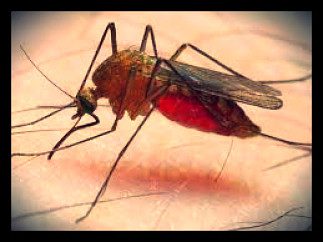
Harvard epidemiologist Caroline Buckee has figured out a way to use a cell phone tower in Kericho, Kenya to help in the fight against malaria. She was able to interpret data showing that individuals who are making phone calls or sending text messages in Kericho were more likely to travel to a different region in Kenya, which is a known hotspot for Malaria.
This data has fed into a new set of predictive models. These models have shown the most effective places to attack the malaria parasite, showing researchers sources and hotspots. This data mining will help to organize a currently unorganized system of record keeping. The models may also help design new measures that are likely to include campaigns to send text messages to people warning them to use bed netting, as well as to help officials choose where to focus their control efforts.
Eliminating malaria is just one of the potential benefits of this technology. It can also build tools that health-care and government workers can use to detect and monitor epidemics, disasters, and optimize transportation systems. Data mining could prove particularly useful in poorer countries where there is currently little to no actual model in place.
This type of phone tracking could also be useful for other trends and figures such as employment trends, poverty, transportation and economic activity within a given region. Countries without a functioning census could benefit quite a bit from this type of technology. Cell phones have the capability to provide researchers with all of the infrastructures that are already built in the developed world.
Careful precautions are being taken to ensure an individual’s privacy is not infringed upon. However, this has not stopped many corporations from expressing concerns about releasing their customer’s data to the wrong hands.
Data-mining is handing a road map to a population’s movements and trends pinpointing them in given locations. Researchers, like Buckee are taking every step possible to show people the importance of data-mining. Buckee has explained that with phone data, the possibility to target drug-resistant strains of the malaria parasite becomes a possibility. This could help eliminate the proliferation of the disease.
“This is the future of epidemiology,” Buckee says. “If we are to eradicate malaria, this is how we will do it.”
– Caitlin Zusy
Source: Technology Review
Photo:NPR

Women Thrive Worldwide: Raising Women’s Voices
Women and children make up the majority of people in the world who live on less than $1 a day. Women are often responsible for providing for the family and keeping them healthy, yet, tragically, they often eat last and eat least. However, if this fragile population is given the chance to realize their full potential, they have the power to lift their communities and, indeed, entire countries out of poverty.
Far too often, global decisions about poverty and developing countries are made without accounting for the needs of women and girls. Without the opportunity to learn skills like reading and writing, it is nearly impossible for them to escape the cycle of poverty.
So what’s the solution?
Women Thrive Worldwide believes that the solution lies in raising women’s voices. Their staff works every day to ensure that the United States is investing in women and girls around the world and listening to what they have to say when it comes to making decisions on the global level by working with grassroots women’s organizations from Afghanistan to the Philippines to Zambia as well as dozens of other countries.
Women Thrive Worldwide purports that real change happens when women and girls are at the table and able to talk about what’s most important to them — issues such as freedom from violence, access to a quality education, and economic opportunity to lift their families out of poverty.
The organizations’s goal is to help bring the voices of women and girls around the world into discussions about the policies that impact their lives. Only then can their needs, priorities, and concerns be meaningfully addressed and effective solutions adopted to reduce poverty at the local level.
– Katie Brockman
Source: Huffington Post
Photo: Women Thrive
Eclampsia a Threat to Women During Childbirth
During an orientation on women’s maternal health, The Target States High Impact Project (TSHIP), a non-government organization funded by USAID, released its findings that Eclampsia is the cause of 80% of deaths that occur during childbirth in Nigeria.
Eclampsia is a condition when the infected woman experiences extreme bleeding while giving birth. Pregnant women suffering from Eclampia will experience chest pains, convulsions, seizures, and hallucinations. The disease then attacks all of her multiorgans like the brain, lungs, livier, and chest.
The good news is that Eclampsia can be cured if the infected woman is treated in time. Testing urine samples and changes in blood pressuring during pregnancy can identify the disease before the woman goes into labor. Once Eclampsia is detected, it can be treated with Magnesium Sulphate, an injection that brings the woman back to consciousness while she is in labor. The best way to ensure a safe birth is by going to a doctor once labor begins.
Dr. Habib Sadauki, TSHIP Deputy Chief of Party Maternal, warned women of the dangers of giving birth at home. When having a home birth and severe bleeding occurs, the woman is at high risk of dying during labor. If pregnant women would “seek adequate antenatal services” when they are in labor, maternal deaths could be reduced by 70%.
At the conference, Dr. Sadauki explained how malaria and anemia are the other two main causes of deaths during pregnancies. Once again, he urges women to seek medical attention and also to sleep in insecticide-treated mosquito nets. Childbirth can a very dangerous time for the mother and child and Dr. Sadauki hopes that pregnant women will seek medical attention to prevent possible disease and death.
– Mary Penn
Source: Vanguard
Photo: School Work Helper
Peace Walk with the Dalai Lama
On April 18, the Dalai Lama took part in a Peace Walk on the Serpentine Pedestrian Peace Bridge in Derry, Ireland. The 70 year-old Dalai Lama was invited by Richard Moore, founder of Children In Crossfire, to partake in a major UK City of Culture celebration. Moore invited the Dalai Lama to speak at the event attended by 2,500 people and to walk across the peace bridge in order to reiterate to people worldwide that peace is the only path for the future. Moore invited the Tibetan spiritual leader to return to Derry in order to signify how far the city had come in the last decade and how it will continue to flourish. Moore said that the Peace Bridge was not the only symbol of a positive future, but the youth as well.
Accompanying the the Nobel Peace Laureate as he walked across the bridge were 300 school children singing Peace is Flowing like a River, the leaders of the Catholic and Church of Ireland dioceses, Monsignor Eamonn Martin, Bishop Ken Good and Richard Moore.
After crossing the Peace Bridge, the Dalai Lama addressed the crowds gathered at an old British army site, the Venue Arts Center. “This century should be the century of dialogue. The last century was the century of violence…Whenever you face problems, try to solve them through dialogue and talk,” said the Dalai Lama. Among his thoughts on peace and compassion, he also reiterated that it is not only political leaders, but every person’s responsibility to be accepting, compassionate and open-minded towards one another to ensure true and lasting peace.
– Kira Maixner
Source: Belfast Telegraph
World Vision’s 30 Hour Famine
This April 26-27 is the 30 Hour Famine weekend, and thousands of teenagers across America will go hungry to support children across the world as part of World Vision’s fundraiser. World Vision is a leading Christian ministry serving people in nearly 100 countries, and the funds from the famine go to areas of the globe that need the money the most.
QUICK FACTS:
+ about 112,000 teenagers will choose to fast for 30 hours in the pursuit of learning about hunger and making a real-life difference in the lives of hungry children around the world.
+ Just over 3,000 Famine groups will participate.
+ Millions of dollars will be raised. Remember: $1 feeds a child for a day and $30 feeds a child for a month; compounded, $360 feeds a child for a year.
As a result of this weekend alone (not the whole year), approximately:
+ 11,667 otherwise hungry children will be fed for an entire year.
+ Or, 140,000 hungry children will be fed for a month.
Not only does the famine raise money for the poor across the globe, it teaches young adults about how those people live each and every day and raises awareness of global hunger and world poverty. By participating in the famine, teenagers learn how to advocate and make a difference in the lives of others.
– Katie Brockman
Source: World Vision
Could Cell Phones End Malaria?
Harvard epidemiologist Caroline Buckee has figured out a way to use a cell phone tower in Kericho, Kenya to help in the fight against malaria. She was able to interpret data showing that individuals who are making phone calls or sending text messages in Kericho were more likely to travel to a different region in Kenya, which is a known hotspot for Malaria.
This data has fed into a new set of predictive models. These models have shown the most effective places to attack the malaria parasite, showing researchers sources and hotspots. This data mining will help to organize a currently unorganized system of record keeping. The models may also help design new measures that are likely to include campaigns to send text messages to people warning them to use bed netting, as well as to help officials choose where to focus their control efforts.
Eliminating malaria is just one of the potential benefits of this technology. It can also build tools that health-care and government workers can use to detect and monitor epidemics, disasters, and optimize transportation systems. Data mining could prove particularly useful in poorer countries where there is currently little to no actual model in place.
This type of phone tracking could also be useful for other trends and figures such as employment trends, poverty, transportation and economic activity within a given region. Countries without a functioning census could benefit quite a bit from this type of technology. Cell phones have the capability to provide researchers with all of the infrastructures that are already built in the developed world.
Careful precautions are being taken to ensure an individual’s privacy is not infringed upon. However, this has not stopped many corporations from expressing concerns about releasing their customer’s data to the wrong hands.
Data-mining is handing a road map to a population’s movements and trends pinpointing them in given locations. Researchers, like Buckee are taking every step possible to show people the importance of data-mining. Buckee has explained that with phone data, the possibility to target drug-resistant strains of the malaria parasite becomes a possibility. This could help eliminate the proliferation of the disease.
“This is the future of epidemiology,” Buckee says. “If we are to eradicate malaria, this is how we will do it.”
– Caitlin Zusy
Source: Technology Review
Photo:NPR
Eva Mendes and Half the Sky
In late 2012, the Public Broadcasting Service (PBS) created a documentary about women living in developing countries called Half the Sky. This documentary examines the lives of many women in third world countries who have suffered through rape, prostitution, slavery, violent marriages, and other forms of oppression. By interviewing numerous women, Half the Sky is able to construct a common bond that promotes a sense of connectivity for all women and all humanity. Eva Mendes is one of the celebrities participating in this eye-opening project.
While the documentary takes the viewer to many different parts of the world, like Cambodia and Vietnam, Eva travels to Sierra Leone to talk to women about empowerment and to raise awareness of violence against females.
The film advocates women in leadership roles who advocate for women victims of rape and physical abuse. In one instance, a woman, who was abducted at the age of 13 and forced into prostitution, now provides shelter and counseling for girls who escaped from similar situations. Eva Mendes also had the opportunity to interview a particularly inspirational woman who had the courage to press charges against the men who raped her.
Half the Sky focuses on how women are fighting back against gender-based violence and paints a relatively optimistic future. Although in some societies female violence is still the norm, many women are attempting to create and implement the concept of women’s rights. It may be a long battle in some countries, but, as Eva Mendes notes, even small progress is worth celebrating.
It is easy for some documentaries to merely show story after story about women who have suffered from violence; Half the Sky is a different kind of documentary. It shows the viewer that even in the midst of discrimination and struggle, these women are able to overcome their past experiences and emerge ready and eager to help other women. These women refuse to be silent and submissive. That is something that every gender and nationality can relate to.
– Mary Penn
Source: policymic
Video: You Tube
Springsteen Joins Academy of Arts and Sciences
The American Academy of Arts and Sciences boasts the membership of some of the most accomplished individuals in the fields of arts, science, academics, writing, and civil, corporate, and philanthropic leadership. “Election to the Academy honors individual accomplishment and calls upon members to serve the public good,” said Academy President Leslie C. Berlowitz. “We look forward to drawing on the knowledge and expertise of these distinguished men and women to advance solutions to the pressing policy challenges of the day.”
In January, Springsteen was named MusiCares, Person of the Year. The nonprofit organization was set up in the ’80s by the same entity that gives out the Grammys — the National Academy of Recording Arts and Science.
The new class will be inducted at an October 12 ceremony at the Academy’s headquarters in Cambridge, Massachusetts.
– Katie Brockman
Source NJ
Instagram to Fight World Hunger
Manos Unidas is a non-profit organization working with the Association of the Catholic Church in Spain. The charity works to promote development in the third world. They focus on working to eradicate the structural causes of hunger, disease, and underdevelopment such as injustice, prejudice, and inequality. Geographically, Manos Unidas works in Africa, Asia, American, and Oceania to assist in development causes there.
The filter can be downloaded from the Apple Store or Google Play store. Once downloaded, anytime a user post a picture of food, they can add the filter #FoodShareFilter. This immediately adds the message, “This picture helps millions of people not to suffer hunger.” It is an easy way to raise awareness in posting photos that would normally be posted.
The #FoodShareFilter is available in both English and Spanish and costs$0.99 in the Apple Store and $1.16 in Google Play. The app was launched late last week and all proceeds from the purchase of the app go directly to the charity. Check it out and download the app to start raising awareness on world hunger!
– Amanda Kloeppel
Source: WkBW Eyewitness News
Photo: Goodnet
Human Rights a Priority for World Bank
When the World Bank does not consider the human rights of a specific country before investing, the organization risks unintentionally hurting the extremely poor in that country. This happens because some development ends up benefiting the wealthy people while the poor suffer. For example, poor farmers may lose their land, and therefore livelihood, in order to build new housing structures that have been sanctioned by the World Bank.
The group advocating for human rights standards in the World Bank includes representatives for the Special Rapporteur (and its sub-groups on extreme poverty and human rights, rights of indigenous peoples, and rights to food) and the Independent Expert on foreign debt and human rights.
As such, the World Bank can expect to hear arguments from this group urging them to consider issues like “disability, gender, labor, land tenure, and the rights of indigenous people” in the meeting. These suggestions will also be open for public comment. The goal of adding human rights criteria to World Bank standards is to ensure that the poor benefit development as well as wealthy people.
The World Bank will update its “safeguard policies,” its social and environmental policies, to make sure that the voices of the poor are not overpowered by the wealthy. This review, which will analyze the activities of the World Bank for the past two years, is a huge opportunity for the organization to begin to reach out to the world’s poorest.
– Mary Penn
Source: India Blooms
Photo: The Foundry
Fight World Hunger With Your Smartphone
Listen up smartphone users! It’s never been easier to fight world hunger.
Taking food shots with your smartphone and sharing them on Instagram or Twitter has become a huge craze. This new app, the first supportive Instagram filter, lets you post those photos and help a good cause to fight world hunger.
The aim for FoodShareFilter, an app created by DDB Spain, is to raise money for an El Salvadoran charity called Manos Unidas. The charity promotes development and preventing hunger in third-world countries.
All you have to do is download the filter from the Apple Store or Google Play, take the picture, and post it using #FoodShareFilter. The income from each app download is donated to the charity.
In addition, every time a user takes a photo of their food and applies #FoodShareFilter, it immediately adds the message “This picture helps millions of people not to suffer hunger,” and shares it on your Instagram page. That way, you raise awareness while posting photos.
Although FoodShareFilter is in Spanish, an English version is also available.
FoodShareFilter was launched late last week. It is available in the Apple Store for $0.99 and in Google Play for $1.16.
– Katie Brockman
Source WKBW
Photo FoodShareFilter