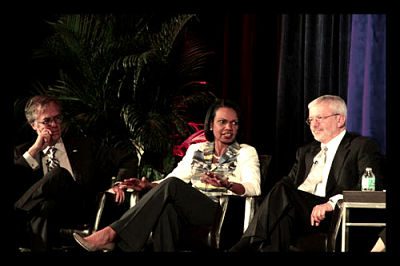
The United States Global Leadership Coalition (USGLC) has released a publication titled the “Report on Reports” every year since 2008. These publications are designed to analyze reports issued by different groups that address development and diplomacy, and to then come to a consensus about the best way to address certain areas.
The USGLC was established in 1995 and works with over 400 businesses and non-governmental organizations to create viable solutions for global development and diplomacy. They also work with religious leaders, academics, and community leaders in an effort to reach out to people from many different perspectives.
Members of the USGLC Advisory Board include Colin Powell, Madeleine Albright, Hillary Clinton, Henry Kissinger, and Condoleezza Rice.
The 2012 Report on Reports was issued in June of this year. The report, which analyzed more than 30 reports across the political spectrum, outlined six major areas of consensus that the USGLC wanted to focus on in order to improve the United States’ diplomatic relationships and development efforts across the globe.
The first area identified is to strengthen civilian power. The USGLC concluded that the civilian foreign service workforce must continue to grow in order to protect national security and promote our interests.
The second area of consensus is to ensure results-driven development, emphasizing transparency, accountability, and regular evaluations of all development efforts.
The third area is to leverage the private sector. Rather than focusing purely on public and governmental development efforts, the USGLC supports increased cooperation with private sector groups like academic institutions and foundations.
The fourth area identified is to maintain sufficient resources, particularly to support civilian contributions to national security.
The fifth area of consensus is to improve coordination among the players, especially streamlining government agencies to improve coordination, clarity of leadership, and consistency in our development and diplomacy.
The sixth and final area is simply to prioritize. The USGLC emphasizes that although the need for development will continue to increase, we must do our best to match that need with our efforts.
Clearly, the overall emphasis of the 2012 Report on Reports is increased civilian and private-sector participation in U.S. diplomacy and development efforts across the globe. The Center for Strategic and International Studies noted that this will require support for budget reallocation from both ends of the political spectrum to fund this increased participation in these efforts. Furthermore, the bipartisan emphasis of the Report on Reports indicates the need for policymakers to reach across political lines in order to pursue the best interests of both the United States and the developing world.
What does this mean for the United States and the way that it proceeds in its global development efforts? In simple terms, the 2012 USGLC Report on Reports seeks to expand the base of participants in global development by including the civilian and private sectors and also seeks to improve bipartisan cooperation about these efforts. As we move forward in the upcoming years, the USGLC’s recommendations will improve the efficiency, participation, and success of our diplomatic and developmental projects around the world.
– Sarah Russell Cansler
Sources: United Global Leadership Coalition, United States Global Leadership Coalition 2013 Reports on Reports, The Center For Strategic and International Studies
Photo: One

Definition of Poverty: What Is It, Exactly?
In the vaguest sense of the word, Merriam-Webster will tell you that general poverty is “the state of one who lacks a usual or socially acceptable amount of money or material possessions.” This is just about as much as anyone with a context clue for the word poverty could define it as. But what is it really? What does it mean to live in poverty? There are different types and levels, in a sense, of poverty. Each country tends to have different cut off points that determine whether they are truly impoverished or not. But it is generally accepted that those living in such a way that it is difficult to make ends meet, are impoverished. So what are the different levels?
There are several million people living at or nearby the poverty line just in the United States, but even our poverty line is higher than that of the world’s poorest countries. A person living alone and unmarried is allotted just over $11,000 or less to meet the poverty requirements set by the government. And while survival in our country would be absolutely difficult on this meager income, many people are living on even less. In fact, there are 2.4 billion people living at the poverty line of $2 a day, this comes to less than $3,000 income in an entire year. That is two dollars every day to feed themselves and their families. All that money to have a place to live and water to drink and clothes to wear. Defining poverty means looking at the fact that people are going without the full education or access to good jobs that they so desperately need to pull themselves out of this way of life. People living this way often have to choose one necessity over another in order to make sure that at least some of the needs are met and taking any government assistance when possible, like food stamps and welfare. And it gets even worse than that.
What about extreme poverty? This is recognized as living on less that $1.25 a day as defined by the World bank in 2008 and there are over 1 billion people living in this state. This level is decided by a lack of clean water, housing, food, health care and education. Some of the countries most beset by this issue include Africa, Afghanistan, and Haiti. Most things that other people take for granted, those living in extreme poverty must go without. People living in extreme poverty suffer much higher rates of infant and maternal mortality. 22,000 children around the world die every day in the poorest countries due to unchecked illness and succumbing to malnourishment. In fact 1 billion out of 2.2 billion children in the world are living in poverty conditions such as these. At this point every aspect of survival becomes a struggle. It is not simply a matter of going without health care to ensure that there is enough food in the house. It is instead going without reasonable amounts of anything at all and living a day by day existence.
What about social poverty, or social exclusion? Poverty is not only defined in a monetary fashion. Income poverty is the most commonly looked at, but there is such a thing as social poverty. This is defined as lacking cultural inclusion due to the inability to conform to society’s ideal norms due to a lack of education, skills, money, health care, child care, and a certain type of living condition. This multidimensional measurement of poverty brings all these into consideration to define itself as the inability to participate in the community socially whether on that national, local, or even familial level. While it is much more difficult to measure than what is called absolute poverty, it is still considered to be an important aspect of poverty by many in the world. It is thought that a quality of life should also be applied to standards of living.
All in all, while poverty is defined much in the same way that any word is, it is a constantly adjusting thing as it is an active part of life itself. It fluctuates regularly and changes to meet the times. Hopefully, with the right amount of work and education, it will also become a part of our past as opposed an all too realistic part of our present.
– Chelsea Evans
Sources: Merriam-Webster, Families USA, Global Issues, UNESCO, One Day’s Wages
Photo: Photo Brazil
Torture Camps in the Sinai Desert
Various Bedouin tribes have turned the Sinai Triangular Peninsula into a nightmare for Africa with their torture and human trafficking. The tribes profit through their kidnapping regime and ransom strategies, making millions of dollars in the process.
This kidnapping racket has existed for many years. Bedouin tribes snatch refugees during their flight from their home countries or while they are in refugee camps. Have left their homes to build a better life, the kidnapped victims largely originate from Eritrea, Somalia, Ethiopia, and Sudan, often on their way to Europe or Israel. There have been reports of bribed border-patrolmen who enable the kidnappings. The victims are next transported to Sinai, where they are tortured and held for ransom. Oftentimes, they are sold multiple times, passed from trader to trader with new ransoms each time. The ransom fees reach up to $50,000, an impossible amount for most African refugee families.
While held in the camps, sickening acts of torture take place. Various forms of physical torture, sexual torture, and starvation are among the most common. One means of transport involves placing the victims in metal shipping containers without ventilation or toilets. The Physicians for Human Rights director, Shahar Shoham, has reported over 1,300 individual incidents of torture in Sinai alone. However, Shoham reports the majority of torture cases go undocumented. Known torture methods include upside-down hanging, electric shocks, and pouring liquid plastic on them, sometimes while on the phone with their families in an attempt to scare their relatives into providing the ransom money.
According to the New York Times, abductors have captured over 7,000 refugees, with 4,000 of their victims dying durring imprisonment. Even if captives manage to escape or be released due to a paid ransom, their situation remains bleak. They are left to wander around the Israeli border and attempt to make the dangerous border-crossing. They must also avoid Israeli and Egyptian police, or risk being arrested or deported back to the countries they originally fled.
Even with all this information available, little is being done to address the problem. In fact, the problem is reported to be worsening. Friendly Bedouin tribes offer assistance to escaped torture camp victims, but do not have the political clout necessary to make any real change. Opponents of the torture camps fear a massive bloodshed if any attempts are made to stop the kidnapping heists. The Egyptian government has essentially turned a blind eye on this deadly region as well, leaving these victims on their own to fight for their rights.
– Allison Meade
Sources: CBN, Canada Free Press
Photo: Blogspot
Malnutrition in India – An Unspoken Diagnosis
Health reporter Harman Boparai recently travelled to India where he once practiced as a physician to learn more about child health in the country. In the pediatric ward at Panna District Hospital, Bopari reported that the children, who suffered from different illnesses and came from different villages, were all extremely undernourished. Nutrition has increasingly been recognized as a basic but crucial contributor for social and economic development.
According to the World Health Organization, 165 million children under 5 years of age suffered from stunted growth in 2011.This means that one in four of the world’s children did not get the right nutrients or food to grow. Of the total number of malnourished children in the world, one in every three lives in India. Adequate nutrition is essential in early childhood to ensure healthy growth, a strong immune system, proper organ formation and function, and neurological and cognitive development.
Economic growth and development also require well-nourished populations who have the capablity to learn new skills, think critically, and contribute to their communities. Boparai later traveled to New Delhi where he talked with individuals working on the issues. At Save the Children India, Shireen Miller, the nonprofit’s director for advocacy, explained that the implementation of government food security programs was essential to the survival of children in the country. “Malnutrition is a critical factor in child survival,” she said. “When we say that a child dies of illnesses like diarrhea and pneumonia, it is because of the fact that they’re malnourished which has reduced their ability to withstand that illness.”
According to UNICEF, in India, around 46 percent of all children under 3 are too small for their age, and 47 percent are underweight. The severity of the issue of malnutrition varies across states, with Kerala among the lowest rates at 27 percent, and Madhya Pradesh at the highest rate of 55 percent. To reverse the current trend, the Government of India started a program under the Integrated Child Development Services (ICDS), which works to provide poor Indian children with the nutrients needed to grow and end malnutrition in India. The program not only provides immunization and supplementary nutrition, but also educates pregnant women and mothers of young children on health and nutrition.
ICDS in India is the world’s largest integrated early childhood program, with over 40,000 offices nationwide. The program today covers over 4.8 million expectant and nursing mothers and over 23 million children under the age of six. Of these children, approximately half participate in early learning activities. Across the developing world, 66 million children go to primary school hungry. This lack of nutrition means these children are less likely to perform at their full potential in school. The World Food Programme estimates that $3.2 billion is needed annually to reach all 66 million hungry school-aged children, or less than 0.2 percent of the world’s military spending.
– Ali Warlich
Sources: Global Post, WHO, UNICEF, Global Issues
What is Comic Relief?
Laughter is fr universal language, and comedy is a much broader medium, than given credit for. Laughing is disarming, warm, enjoyable, and can help unite people. It isn’t a stretch to imagine that comedy can also connect and rally people to fight intractable problems. Humor can indeed be a powerful weapon against the scourge of something like global poverty and the absences of technology and education in communities. This is the very idea behind Comic Relief, an organization operating in the United Kingdom and abroad that stands up to poverty.
Existing officially as both a company and charity in the UK, Comic Relief began in 1985 during Christmas season at a Sudanese refugee camp. Renowned and well-meaning British comedians hoped to raise awareness of the Sudanese plight and the Ethiopian famine going on. The success of that first event spawned more live comedic appearances in Sudan and gave way to Red Nose Day in 1988, which brought much needed attention and money to the region that went directly to relief. Since that time, Comic Relief has grown in size and scope, spreading laughter and awareness of numerous other initiatives.
One of those other initiatives is Send My Friend to School (https://www.sendmyfriend.org/)
A very personal and striking account of Comic Relief in action is the story of teen sisters Hazel and Hiayisani in Tembisa, South Africa. Orphaned after their mother’s sudden illness and death, older sister Hazel was now in the position of caring for herself and her sister. Poor and completely exposed to the worst of society, they were at risk of being split up by Social Services, falling into a life of crime or the world of sexual slavery. However, after finding the Bishop Simeon Trust, a Comic Relief partner in Tembisa, the girls were able to join other orphans. They now receive a stipend and care packages from the trust to live on, free education, and enjoy time at the Bishop Simeon facility with other teenagers.
Comic Relief is best known for its initial and ongoing fundraiser, Red Nose Day. Happening every few years, this international event is celebrated mainly in the UK and Africa. For those who participate, the objective is to put on a red nose and be ridiculous. Proceeds from the event go directly to initiatives like the ones mentioned above, aimed at education and the changing of negative international typecasts.
Comic Relief has shown that maybe laughter is the best medicine for social ails.
– David Smith
Sources: Comic Relief –History, Send My Friend –About, West African Art Pops Up in London, Comic Relief –Hazel and Hiayisani, Africa, Red Nose Day –What Is It?
Photo: BBC
How to Prevent Poverty
Understanding how to prevent poverty has been an issue of great concern both in the United States and across the globe. Countries like the U.S., in a position to prevent poverty in less developed nations, are particularly interested in determining the causes of poverty in order to effectively alleviate poverty at home and abroad. By understanding what it is that leads to impoverishment in specific communities and countries, poverty reduction efforts are more likely to prevent poverty all over the world.
Though poverty and extreme poverty, as terms, have been defined as living under a certain dollar amount per day, what causes poverty is often much more complicated. The World Bank defines global poverty as a pronounced and multidimensional deprivation in wellbeing. That is, what it is to be considered poor or impoverished depends on a number of different conditions and factors that vary from community to community. For example, one family may have the dollar amount sufficient to feed itself but lack adequate access to education or water.
Because poverty represents such a wide variety of conditions, how to prevent poverty is an issue that requires a complex understanding of the circumstances in which one is working. Not only that, effective poverty prevention and reduction strategies will necessarily include either a multidimensional approach or take place in a network of projects that strive to prevent or reduce poverty on various levels. For instance, Plan Canada, a Canadian-based charity organization founded in 1937, takes a five-step approach in its strategy to prevent poverty worldwide.
Plan Canada’s Tools for How to Prevent Poverty
The United Nations Population Fund (UNFPA) reports that slower population growth and investments in reproductive health and HIV prevention, as well as women’s empowerment and gender equality are also important steps toward preventing poverty. In fact, the UNFPA considers universal access to reproductive health information and services to be an “essential” condition to achieve the U.N. Millennium Development Goals by 2015.
How to end poverty is a complicated question, but significant research like that taken to synthesize the reports discussed above suggests that it is not an impossible question to answer. Quite the contrary, there are thousands of organizations across the globe working on just that question every day. Collaborative and coordinated efforts, in recognition of the diverse causes of poverty, will no doubt win the day. In the meantime, these strategies continue to develop in scope and sophistication.
– Herman Watson
Sources: The Borgen Project, Plan Canada, United Nations Development Programme, United Nations Population Fund
Photo: Soda Head
The UMCOR Organization Makes a Difference
The United Methodist Committee on Relief, also know as UMCOR, is a humanitarian relief and development organization which aims transform and strengthen individual’s lives and their communities by providing humanitarian relief in the United States and abroad.
UMCOR helps communities which have been effected by natural disasters, war, or conflict. Although UMCOR is not a first response organization, its volunteers are always on high alert to help those in need. The United Methodist Committee on Relief aims to establish a “new normal” for the communities they are helping, and help each individual return to their everyday lives.
The organization empowers local businesses, hospitals, schools, and churches in Third world countries. UMCOR travels to different areas of the world visiting communities and addressing health, sanitation, poverty, sustainable agriculture, and food security issues.
UMCOR has helped millions around the world and believes that each and every individual has God given worth and dignity, which is why the organization does not discriminate against race, religion, gender, or sexual orientation.
The organization helps communities recover from disaster and sustain their improvement. Volunteers remain in the communities after recovery has occurred to provide individuals with an education, training, and support. UMCOR also works towards preventing the spread of malaria and other health issues such as HIV/AIDS, maternal and child survival, water and sanitation, congressional health, and hospital strengthening.
UMCOR also partners with other organizations to address issues, including the Bill and Melinda Gates Foundation and the U.N. Foundation. A representative from the U.N. Foundation stated that UMCOR is making a big difference in numerous individual’s lives by not wishing for a difference, but instead is going out there and is making a difference.
The United Methodist Committee on Relief is an organization which is making great strides in global development and international aid. By working in over 80 countries, and providing individuals with an education, training, and support, UMCOR has become a leading organization in humanitarian relief.
– Grace Elizabeth Beal
Sources: UMCOR, Imagine No Malaria, UN Foundation
UNICEF Steps Up to Aid Namibia as Drought Worsens
Namibia is currently facing its worst drought in three decades. Located in southwest Africa, Namibia is one of the driest countries in the world. All 13 regions of Namibia have been affected by the drought with major shortages of food and water, but the north has been hit the worst. In order to compensate, many families are forced to sell livestock, reduce the number of meals per day, or migrate to the cities in search of work. Angola has also been affected by the drought. With migrants from both Angola and Namibia flooding into nearby countries in search of food, the crisis is beginning to take on a regional dimension.
In Namibia’s northwestern Kunene region, agriculture is limited by the area’s dry and sandy soil. Local populations are semi-nomadic and rely heavily on livestock. In search of fresh pasture, these local populations have been forced from their villages and their traditional way of life. The young men are visibly absent from the region, as many of them have left their villages to find the distant stretches of pasture for their livestock.
Typically, Namibia experiences only light and erratic seasonal rains. For the last thirty years, the country has experienced low seasonal rainfall. But after a second year of failed rains, the country is now in a state of emergency. Because of the prolonged dry season, the Government estimates that 2013 crop yields will be 42 percent lower than those of 2012. With only one harvest per year, the country will not see another harvest season until March 2014. Namibia’s cereal crop output is expected to be 50 percent below average. A third of the population, some 780,000 people, are at risk of malnutrition – this includes 110,000 children under the age of five.
When declaring a state of emergency, Namibian President Hifikepunye Pohama said, “It has now been established that climate change is here to stay and humanity must find ways and means of mitigating its effect.” The Namibian government has committed $20.7 million in assistance to affected people, but aid so far has been insufficient.The Namibian government has warned that there might not be enough water for its people, which puts livestock at risk, further prolonging the crisis. Many families have applied for food aid, but few have received anything.
In order to help the 110,000 children at risk of malnutrition in Namibia, UNICEF has pledged $7.4 million to the country. According to Micaela Marques De Sousa, UNICEF’s Namibia representative, “Shortages of food and water are increasing the immediate threat of disease and malnutrition…But anecdotal reports already indicate children are dropping out of school, a clear sign of stress and vulnerability in families.” In addition, the International Federation of Red Cross and Red Crescent Societies has issued an appeal for $1.45 million, in hopes of helping 55,000 people in Northern Namibia.
– Kelsey Ziomek
Sources: Reuters, The Guardian, OCHA, UN News Centre, The Washington Post, IOL News, IRIN Africa, ReliefWeb, UNICEF
Photo: Thomson Reuters Foundation
5 Powerful Advocates of Female Education
1. Malala Yousafzai works tirelessly as a young advocate for female education, despite being shot in the head last year by the Taliban for these very same efforts. She—in her bravery and brilliance– exemplifies the struggle for girls’ education everywhere.
2. Hillary Rodham Clinton, having served as the first lady and Secretary of State, is now a partner with her husband and daughter at the Bill, Hillary, and Chelsea Clinton Foundation. Within the organization, she has committed herself to improving access to female education and empowering women worldwide.
3. Richard Robbins directed Girl Rising, the extremely popular new documentary that tells the stories of nine struggling girls in the developing world. The film, which has met with great success, espouses the urgent global need for equal access to education.
4. Nicholas Kristof and Sheryl WuDunn published “Half the Sky: Turning Oppression Into Opportunity for Women Worldwide” in 2010, a compelling journalistic account of the developing world, and more specifically, of its disadvantaged women. The book, which spans the entire globe and a diverse set of lifestyles, seems to somehow convey a singular edict: in order to progess—particularly in the developing world– we must provide all women access to an adequate education.
5. Lawrence Chickering has worked for more than thirty years in order to improve the conditions of girls in the developing world, particularly in India, a country where 40% of women are not educated beyond the fifth grade level. His NGO, Educate Girls Globally, has significantly improved female enrollment, retention, and performance in India’s government schools, giving girls access to a variety of transformative resources.
– Anna Purcell
Sources: CBS News, Huffington Post, The Guardian
2012 USGLC Report on Reports: What We Can Learn
The United States Global Leadership Coalition (USGLC) has released a publication titled the “Report on Reports” every year since 2008. These publications are designed to analyze reports issued by different groups that address development and diplomacy, and to then come to a consensus about the best way to address certain areas.
The USGLC was established in 1995 and works with over 400 businesses and non-governmental organizations to create viable solutions for global development and diplomacy. They also work with religious leaders, academics, and community leaders in an effort to reach out to people from many different perspectives.
Members of the USGLC Advisory Board include Colin Powell, Madeleine Albright, Hillary Clinton, Henry Kissinger, and Condoleezza Rice.
The 2012 Report on Reports was issued in June of this year. The report, which analyzed more than 30 reports across the political spectrum, outlined six major areas of consensus that the USGLC wanted to focus on in order to improve the United States’ diplomatic relationships and development efforts across the globe.
The first area identified is to strengthen civilian power. The USGLC concluded that the civilian foreign service workforce must continue to grow in order to protect national security and promote our interests.
The second area of consensus is to ensure results-driven development, emphasizing transparency, accountability, and regular evaluations of all development efforts.
The third area is to leverage the private sector. Rather than focusing purely on public and governmental development efforts, the USGLC supports increased cooperation with private sector groups like academic institutions and foundations.
The fourth area identified is to maintain sufficient resources, particularly to support civilian contributions to national security.
The fifth area of consensus is to improve coordination among the players, especially streamlining government agencies to improve coordination, clarity of leadership, and consistency in our development and diplomacy.
The sixth and final area is simply to prioritize. The USGLC emphasizes that although the need for development will continue to increase, we must do our best to match that need with our efforts.
Clearly, the overall emphasis of the 2012 Report on Reports is increased civilian and private-sector participation in U.S. diplomacy and development efforts across the globe. The Center for Strategic and International Studies noted that this will require support for budget reallocation from both ends of the political spectrum to fund this increased participation in these efforts. Furthermore, the bipartisan emphasis of the Report on Reports indicates the need for policymakers to reach across political lines in order to pursue the best interests of both the United States and the developing world.
What does this mean for the United States and the way that it proceeds in its global development efforts? In simple terms, the 2012 USGLC Report on Reports seeks to expand the base of participants in global development by including the civilian and private sectors and also seeks to improve bipartisan cooperation about these efforts. As we move forward in the upcoming years, the USGLC’s recommendations will improve the efficiency, participation, and success of our diplomatic and developmental projects around the world.
– Sarah Russell Cansler
Sources: United Global Leadership Coalition, United States Global Leadership Coalition 2013 Reports on Reports, The Center For Strategic and International Studies
Photo: One
Irrigation Could End Poverty
By now, it is a well known fact that clean water is necessary for drinking and hygiene. About 1.1 billion people go without clean water every day and must rely on polluted or infected supplies to survive. Even more than that go without basic sanitation. But, water is not just for human consumption and cleanliness. Access to good water can be the difference between eating and starving for rural farmers throughout Sub-Saharan Africa. In order to grow sufficient crops, farmers need water and frequently must rely on sparse rains and transporting water on their own to provide for the plants they are attempting to grow.
Only four percent of rural farmland is irrigated, even though up to 40 million hectares are proven to be appropriate for irrigation. Farming in Africa has proven to be a difficult endeavor at the best of times. Rainfall has become unpredictable and crop yield is often too low to feed a family, let alone to sell in a market. The frustrating part is that there is plenty of water available underground, but the farmers lack an affordable way to actually obtain it.
Large, centralized irrigation schemes are usually built around a major dam and were very successful, especially during the so-called Green Revolution. Millions of people were brought out of hunger as a result. But they often proved to be environmentally destructive and tend to be very expensive to build and use, especially for those living in Africa.
The answer to providing access to crop irrigation for poor rural farmers in Africa could be much smaller, like the treadle pump. The pump is used by stepping up and down with the long poles, or treadles, that activate the suction and pump water out of the ground. One family told Sandra Postel, who of the National Geographic Freshwater Initiative, that their $35 investment brought them $100 in revenue the first year they used it.
The downfall of a pump like this is that it requires a lot of physical work to use and ends up taking time away from other important activities like schooling and harvesting. Nonetheless, several companies such as KickStart have created variations of the treadle pump to help spread the use of irrigation. With their affordable irrigation pumps, KickStart has been able to help 750,000 Africans pull themselves out of poverty. Groups like FarmAfrica have gone in and taught the farmers how to use the pumps and what crops to grow to get the best yield. Until small motorized pumps are more universally available and affordable, the benefits of being able to grow enough food to eat and sell seriously outweigh the issue of having to operate to pump manually.
– Chelsea Evans
Sources: Global Issues, National Geographic, FarmAfrica, KickStart
Photo: Indiegogo