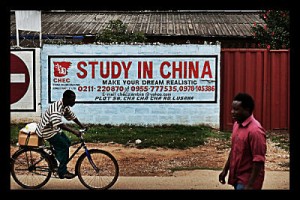
Schooling in the United States and Europe was a source of great fascination to Africans in the 1970s, 80s and early 90s. Over 80 percent of Africans seeking to further their education abroad ended up in these two regions.
Today the West continues to be the first choice for African students, with nearly 55 percent of those studying abroad choosing Western countries, especially France. More and more Africans, however, are now being drawn to Asian universities.
China, a country at the center of this new development, is continuing to improve and advance its educational ideals. In the last five years, Beijing has spent more than $1.26 trillion on education, a target of 4 percent of China’s GDP. The country has an unswerving teacher development scheme. Historically, teaching has been a highly respected profession.
Once teachers are employed in China they must experience a vigorous system of continuous professional development. Groups of teachers work together with master teachers on lesson plans and general improvement.
According to China’s university and college admission system, the number of international students studying in China has significantly increased. In particular, African students are pouring into more than 660 higher education institutions in the country.
Besides the thriving educational culture, the increased enrollment is imperative for Africa’s future because the country can learn from China how best to utilize and manage its many natural resources.
Africa has a dream of reproducing China’s success in manufacturing, construction, technology and healthcare. The economic powerhouse’s sustained growth has primarily been anchored on continuous technological innovation and industrial diversification. The industrial dynamics caused the shift from an agrarian society, where nearly 90 percent of the labor force worked, to non-agriculture and manufacturing sectors. The change was gradual, but continuous and unstoppable.
Today, manufacturing is the economic backbone of China. Its emergence as a manufacturing powerhouse has been shocking. In seventh place in 1980, China overtook the US two years ago to become the world’s largest producer of manufactured goods.
China also used its large manufacturing engine to increase living standards by doubling the country’s GDP per capita over the last decade — the kind of achievement that took the industrializing United Kingdom 150 years. Now, Africans seek to imitate China’s economic accomplishments through knowledge transferred from Chinese classrooms and lecture halls.
The process started a decade ago when African nations began to sponsor their most academically gifted students to attend schools in China. Meanwhile, China also sponsored students majoring in medicine, engineering, economics and journalism. In 1983, China sponsored 400 students. In 2005, the number increased to 2,000. Last year, it funded university education for 5,500 students.
As Africa seeks to learn the best from the best, it is important that the country also cultivates the culture of working hard. China’s forward-looking system has put it on the right path to success. There is no mystery to its methods. China succeeded because it knew what it wanted. This should be the culture that African students studying in China bring back home.
– Scarlet Shelton
Sources: Global Times, UNESCO, Novexcn.com
Photo: Moment

Global Poverty Top 5 Books
If you are looking to know more about global poverty and modern international issues, the list below will give you a good starting point. Enjoy your reading!
1. Half the Sky: Turning Oppression into Opportunity for Women Worldwide (Nicholas Kristof and Sheryl WuDunn) – Gender Equality
In their latest publication, Nicholas Kristof and Sheryl WuDunn captivate readers with accounts of women across the developing world. The struggles of these women are devastating and immense: more women have been murdered due to their gender than people killed in all of the 20th century genocides combined. Yet, amongst the murder, sexual assault and misogyny that so many women still face in regions characterized by poverty, Kristof and WuDunn have uncovered stories of resilience and hope. Tellingly, the struggle for gender equality simultaneously remains the paramount moral struggle of the 21st century, as well as the greatest source of optimism for the future.
2. Mountains Beyond Mountains: The Quest of Dr. Paul Farmer, a Man Who Would Cure the World (Tracy Kidder) – Public Health
In a non-fiction biography, Tracy Kidder illuminates the industrious philanthropist and physician Paul Farmer and his transformative work fighting tuberculosis in Haiti. Harvard-educated and a MacArthur “genius,” Farmer works tirelessly as an advocate for those most in need of modern medicine. Intricately and beautifully, Mountains Beyond Mountains conveys the dire medical needs of those living in abject poverty while also illuminating the radical change that can stem from one person.
3. Behind the Beautiful Forevers: Life, Death, and Hope in a Mumbai Undercity (Katherine Boo) – Global Poverty
Having lived in Bombay’s Annawadi slum for three years, Katherine Boo’s newest work illuminates the lives of those who live on the edge of traditional poverty and widespread globalization, a precarious position unique to the 21st century and India. The narrative, which follows the struggles and triumphs of the slum’s residents, uncovers the grace and poignancy in those too often forgotten, those whose real, daily struggles stretch beyond the reach of the Western imagination.
4. The Dragon’s Gift: The Real Story of China in Africa (Deborah Brautigam) – Chinese Politics in Africa
Deborah Brautigam’s latest book on global poverty demystifies the recent upsurge in Chinese aid throughout Africa. The account, which addresses the tendentious, ongoing conversation revolving around the reality of the Chinese involvement, addresses the surplus of opinions concerning the nature of such aid. Brautigam dismisses myths and underscores facts, providing a lucid account of Chinese aid. Instead of simplifying the conversation to a discussion of merely advantageous economics, Brautigam provides intelligent and interesting insights into China as an unexpected philanthropic force.
5. The Bottom Billion: Why the Poorest Countries are Failing and What Can Be Done About It (Paul Collier) – Global Poverty
Written by one of the world’s foremost experts on African economies, Paul Collier transforms the traditional way in which readers think about global poverty and aid. Collier’s solutions, many of which revolve around empowerment and domestic sustainability, captivate and motivate. Imbued with a wealth of information, The Bottom Billion is an essential text for anyone involved in the struggle against global poverty.
– Anna Purcell
Sources: NY Times, Huffington Post, The Guardian
Photo: Global Fusion
Sanitation and Clean Water is an Issue In Liberia
In 2003, Liberia finally came out of a thirteen-year long civil war that ravaged the country and left the inhabitants riddled with poverty. Right after the end of the war, the unemployment rate was listed at 85 percent of the population. The populations in the slums skyrocketed and the people living there were left with little choice of where to obtain water or where to use the bathroom. During the war, rebels destroyed much, if not all, of the water and sanitation infrastructure the country once had. A decade later, much of the population is still impoverished and lacking access to the basic needs of potable water and a sanitary living area. In 2010, there were almost 4 million people living in Liberia, over 1 million of which were rural poor. However, there is a stress for clean water in slums, from where a number of people from rural areas fled to Monrovia during the fighting and violence in an attempt to find refuge. For every four people, there is one living without access to clean water and sanitation in Liberia, and for every five deaths in the country, one is a result of contaminated water sources. In fact, in 2012, the World Health Organization discovered that E. coli was present in 58 percent of the city’s water due to public defecation. This spreads illness such as diarrhea and perpetuates the issue, creating a cycle of illness through dirty water. Liberian president, Ellen Johnson Sirleaf, has pledged to double the amount of access to safe water in four years, but has clearly fallen short of this claim. Phillip Marcelo of Rhode Island’s Providence Journal is spending two weeks in Liberia this month to investigate what progress has been made since the end of the war and the installation of democracy within the country. He notes that at the entry to the slums at West Point Beach, there is a massive pile of trash marking the place. The defecation of children is all over the beach and people are being forced to buy their water from “distributors.” While adults have been banned from using the beach as a bathroom and there are pay toilets in the slum, there is often still no other option. Because of this, the spread of cholera is common along with other water-borne diseases. The government is opening up nine new toilets for the area, but the inhabitants are not sure a real difference can be made considering there are more than 50,000 people living the area. Aid groups are investing time and money into providing Liberia with better access to clean water, with the hope that this will cease to be an issue in the coming years, if not in time to meet the Millennium Development Goals. Non-profit organization Waves for Water has raised $15,100 towards the goal of $25,000 to help provide clean water filters for over 60,000 people living in poverty in Liberia. WaterAid, another NGO, also works in Liberia and happens to be an organization for which President Sirleaf is an ambassador. Last year, they were able to reach 17,000 people and provided them with clean water or sanitation facilities. Help for Liberians is out there and there are solutions to the present issues, but it will take a while to recover completely from the devastation of the war. Simply put, it is going to take plenty of hard work and a revamp of the entire infrastructure of the country in order to change the conditions of those living in the slums of Liberia. – Chelsea Evans Sources: Providence Journal, Rural Poverty Portal, Waves for Water, PBS, WaterAid Photo: Sanitations Update [hr top]
$30 billion per year is needed to end world hunger.
$660 billion per year is the amount Congress spends on Defense.
CSR: Ethics or Marketing?
As a modern business trend, it is hard to know whether “corporate social responsibility”—or CSR—will be a lasting ethos that transforms the way companies conduct business or a passing fad designed to make big corporations more likable. CSR may be thought of as a corporation’s conscience—a set of internal policies that govern how the company interacts with and relates to its community, its people and its environment.
There is no question that executives and business leaders have adopted the lexicon of corporate social responsibility. As The Economist notes, “It would be a challenge to find a recent annual report of any big international company that justifies the firm’s existence merely in terms of profit, rather than service to the community.” In the late 1990s, a group of CEOs went as far as launching a global organization—the World Business Council for Sustainable Development—for the purpose of discussing strategic issues related to sustainable business practices. The rhetoric is clear: corporations care.
The question is what kinds of corporate actions have resulted from the emerging ethos of CSR. One area where companies have been keen on improvement is energy reduction. For example, General Mills instituted an energy audit program, and in 2012 reduced its energy consumption by 7 percent. It’s a win-win for General Mills—the company saves money and highlights its commitment to the environment. Other corporations like Solo Cup Company are engaging their employees to help with community cleanup events, trash collection programs or recycling drives at Solo facilities.
But some critics question the motives of companies that institute policies and public relations campaigns related to corporate social responsibility. One argument is that CSR is simply a marketing scheme developed to attract consumers to certain brands.
Many dissenters point out that markets are not concerned with ethics or social responsibility. In an article for the Stanford Social Innovation Review, Deborah Doane explains, “CSR can hardly be expected to deliver when the short-term demands of the stock market provide disincentives for doing so.”
While the companies and critics each present compelling arguments for or against CSR, it may be that corporate social responsibility is just a negotiated balance between companies and the communities in which they operate. It is how the company achieves or bolsters legitimacy with its potential consumers. The business benefit, of course, is that the company will profit in some way from its investment in CSR. After all, conventional wisdom says the primary objective of any corporation is not principle, but profit.
– Daniel Bonasso
Sources: Standford Social Innovation Review, The Economist, Corporate Watch
Photo: Career Realism
Join The Borgen Project in Fighting for the Underdog
What is it? from THE BORGEN PROJECT on Vimeo.
Zonal Champions: Reinventing Word of Mouth Advertising in South Africa
Despite advances in advertising in recent years, word of mouth is still considered by many marketing experts to be the best form of advertisement. As businesses look to increase their presence in South Africa, word of mouth publicity could be the key to appealing to otherwise unreachable demographics.
Zonal champions, as they are called by marketing agency Creative Counsel, are human advertisements. They are members of local communities who are employed to represent a brand and promote appropriate products during their everyday conversations. The potential consumers are able to freely question zonal champions about the products, allowing for all curiosities to be satisfied before a purchase is made.
Nontando Vena, a zonal champion for South African mobile phone company Vodacom, says she doesn’t have conventional work hours. Instead, she promotes the brand “24/7, 365,” and members of her community occasionally refer to her as “Miss Vodacom.”
The merits of zonal champions are numerous for both the customers and the providers. For businesses, zonal champions are able to reach rural parts of Africa that traditional advertisements are unable to. Upwards of 550 million people are without electricity in Africa, which represents a massive untapped market for businesses to sell products. A zonal champion only needs two to four days to be properly trained, and they can continuously reach rural customers on a daily basis.
South African consumers are more welcoming of zonal champions than they would be of commercials and billboards. Consumers are more trusting of a friend or family member than they are of an advertisement, and this is especially true in South Africa. Zonal champions are able to give a familiar face to otherwise detached companies, which let consumers feel more comfortable with new brand names.
Economically, zonal champions are also beneficial to the many rural consumers who are forced to be judicious with their income. While the income of South Africans has risen by upwards of 170% in the past decade, the average annual income is still about $6,258. As a result, South African consumers are extremely hesitant to invest in products they are unfamiliar with. By answering questions and recommending products, zonal champions are able to engage local citizens and let them know if the product being offered will meet their needs.
In addition to the benefits for businesses and consumers, the zonal champions themselves are able to benefit from this unique form of employment. Unemployment in South Africa remains very high, with up to 24% of citizens without work. Many of these people have no access to education, and therefore are considered “unemployable.” There are no prerequisites to become a zonal champion, and the work itself primarily involves being present in a community. This allows a new opportunity for these “unemployable” citizens to find work and curb the harsh unemployment rate in the process.
Africa’s economy is among the fastest growing in the world now, and international businesses are starting to take notice. President Obama’s recent trip to Africa highlights the continent’s growing relevance in the global economy, and zonal champions will surely play a large role in growing markets in these once impoverished parts of the country. With the numerous advancements in technology and advertising in recent years, zonal champions prove that old fashioned conversation is still as relevant as ever.
– Timothy Monbleau
Sources: Linkedin, How We Made It In Africa, CNN, Creative Counsel, BBC, Google Currency Conversion, World Bank, Vodacom
Photo: Riger Jabber
Saving the World One Drop at a Time
The struggle to access clean water in many developing nations is no secret. Every year, between six to eight million people perish due to water-borne diseases or lack of water. Another cause of concern lies in the fact that over two thirds of the global population lives on the driest half of earth. Experts estimate that 2.5 billion people lack proper water sanitation, and another 783 million completely struggle to locate access to any source of water.
In response to these alarming facts, the United Nations has declared 2013 the UN International Year of Water Cooperation to bring a revitalized focus and attention to these water issues. The purpose of using water as the year’s theme is to ignite change in this crisis. The plan is to draw more attention to successful water projects that have worked in various areas in an attempt to spark innovation and spread ideas in areas needing water development. Other initiatives in the Year of Water Cooperation include increasing water education, working with regional leaders to develop relationships focused on addressing issues, settling border disputes involving water, and fundraising and developing necessary legal limits.
The UN chose the name International Year of Water Cooperation to highlight the necessity of forming regional bonds and of leaders working together to address the problems. The theme is meant to inspire countries to share and work as a team to save millions of lives. Since there are many different cultural, political and social factors at play in this global issue, cooperation remains the key to moving forward.
This initiative was started back in December 2010, among a United Nations General Assembly delegation. The idea began by thinking of water as a chain: connected by various water basins, rivers and groundwater flow all around the world. One objective of the year is to increase collaboration over sharing these resources to reach a maximum number of people, effectively creating a chain reaction.
If the water initiative goes successfully, not only will millions of lives be saved from simple prevention of disease, diarrhea and dehydration, but conflicts over water and ethnic fighting will simultaneously decrease. The UN chose a strikingly important issue to focus on during 2013, with the potential to make an impact on the lives of billions of people around the planet.
– Allison Meade
Sources: UN News Centre, UN Water, United Nations
Photo:
Higher Education in China for African Students
Schooling in the United States and Europe was a source of great fascination to Africans in the 1970s, 80s and early 90s. Over 80 percent of Africans seeking to further their education abroad ended up in these two regions.
Today the West continues to be the first choice for African students, with nearly 55 percent of those studying abroad choosing Western countries, especially France. More and more Africans, however, are now being drawn to Asian universities.
China, a country at the center of this new development, is continuing to improve and advance its educational ideals. In the last five years, Beijing has spent more than $1.26 trillion on education, a target of 4 percent of China’s GDP. The country has an unswerving teacher development scheme. Historically, teaching has been a highly respected profession.
Once teachers are employed in China they must experience a vigorous system of continuous professional development. Groups of teachers work together with master teachers on lesson plans and general improvement.
According to China’s university and college admission system, the number of international students studying in China has significantly increased. In particular, African students are pouring into more than 660 higher education institutions in the country.
Besides the thriving educational culture, the increased enrollment is imperative for Africa’s future because the country can learn from China how best to utilize and manage its many natural resources.
Africa has a dream of reproducing China’s success in manufacturing, construction, technology and healthcare. The economic powerhouse’s sustained growth has primarily been anchored on continuous technological innovation and industrial diversification. The industrial dynamics caused the shift from an agrarian society, where nearly 90 percent of the labor force worked, to non-agriculture and manufacturing sectors. The change was gradual, but continuous and unstoppable.
Today, manufacturing is the economic backbone of China. Its emergence as a manufacturing powerhouse has been shocking. In seventh place in 1980, China overtook the US two years ago to become the world’s largest producer of manufactured goods.
China also used its large manufacturing engine to increase living standards by doubling the country’s GDP per capita over the last decade — the kind of achievement that took the industrializing United Kingdom 150 years. Now, Africans seek to imitate China’s economic accomplishments through knowledge transferred from Chinese classrooms and lecture halls.
The process started a decade ago when African nations began to sponsor their most academically gifted students to attend schools in China. Meanwhile, China also sponsored students majoring in medicine, engineering, economics and journalism. In 1983, China sponsored 400 students. In 2005, the number increased to 2,000. Last year, it funded university education for 5,500 students.
As Africa seeks to learn the best from the best, it is important that the country also cultivates the culture of working hard. China’s forward-looking system has put it on the right path to success. There is no mystery to its methods. China succeeded because it knew what it wanted. This should be the culture that African students studying in China bring back home.
– Scarlet Shelton
Sources: Global Times, UNESCO, Novexcn.com
Photo: Moment
Poor People: Do They Hold Societies Back?
You’ve probably heard people discuss the burden that poor people place on society, or the need for them to “pull themselves up by their own bootstraps.” If not, only look to Mitt Romney’s infamous comment from the 2012 presidential campaign, in which he referred to the 47% of Americans who are “dependent on the government” and who could never be convinced to “take personal responsibility and care for their lives,” for an example.
Psychologist Herbert Gans writes about the labeling of the poor as “undeserving” and the effects that such labels have in society. He posits that deeming the poor undeserving fulfills a wide array of functions for the affluent. Primarily, this phenomenon distances the labeled from the labelers, allowing the situation to be cast firmly as “us-versus-them.”
By casting poverty as something that happens to “them,” but not to “us,” one can tap into a well-known psychological bias explained by psychologist Jeremy Dean on PsyBlog.
He describes the phenomenon using sports teams. When a fan sees a member of their team score, they are likely to praise the player’s talent and hard work. On the other hand, when a fan sees a member of the opposite team score, it’s usually attributed to dumb luck or a missed call. By the same token, when a fan’s team loses, it can easily be chalked up to a rough week or a rowdy crowd.
However, a fan would rarely claim that his team won because another team had a difficult week. In other words, one works much harder to make excuses for people that they perceive as “one of us.” This same principle can be applied to almost any facet of society, including poverty.
When poor people are considered to be fundamentally different from us, it becomes more difficult to empathize with their situations. Unfortunately, it also becomes easier to blame the poor for their poverty and struggles, consciously or otherwise.
Some may not concretely be thinking that women in sub-Saharan Africa should just stand up for themselves already, but it is often easier to sympathize with women who live in societies that look most like ours.
For example, when America discovered that Ariel Castro had held three women captive in his Ohio home for a decade, outrage erupted. People were horrified that something this appalling could happen here, to people “like us.” Meanwhile, similar atrocities are happening worldwide every day and our indignation may go just far enough to get us to make an online donation.
While it is incredibly difficult for one to truly comprehend the obstacles faced by the poor, it is important to remember that “we” are not so terribly different from “them.” The balance between recognizing these differences and the similarities is a delicate and important one, and one that is immensely tough to strike.
It is imperative to acknowledge that everyone has different experiences and struggles, and that the wealthy often do not know how best to help the poor. Simultaneously, it is important to keep in mind that the wealthy and the poor are both just groups of people, who usually have a lot more in common than they think.
– Katie Fullerton
Sources: The American Journal of Sociology, PsyBlog, NY Daily News, ABC News
Sources: Danutm
New Strategy to test Tuberculosis in Asia
Over 600 million people in Bangladesh, Pakistan, and India are infected with the tuberculosis bacterium Mycobacterium tuberculosis. Each year, at least three million people reach the potentially deadly staged called active TB. The disease is still treatable at this stage with antibiotics, but traditional tests miss more than one out of three active cases. An average of 400,000 people die from the disease in South Asia every year.
For the first time, thanks to a new strategy developed at University of California, Davis (UC Davis) Health System, the disease can be effectively detected in children. Over 20,000 people in Pakistan will now be tested for the dangerous stage using the scientific breakthrough.
In traditional screening, a laboratory worker must identify the bacterium in a sputum sample observed under a microscope. Unfortunately, this test rarely picks up more than 50 percent of active cases of lung TB. The new TB screening looks for antibodies in the blood that are found only when a person is fighting off active TB. This new test is expected to detect 80 percent of active cases.
Another advantage to the new strategy is the speed of the screening. While the sputum microscopy test requires three sputum samples collected over a three-day period, the new test requires only a few drops of a blood sample and results are provided in two hours. According to researchers, because it takes such little time, millions more people can be screened worldwide per year.
An additional limitation of conventional screening comes from the very use of sputum samples. Children often have trouble providing a sputum sample, and are often missed in TB screening. TB can also be inactive in the lungs but active in other organs and tissues, cases that are missed by sputum screening. These two undetectable groups account for over 20 percent of all active TB cases.
The new strategy is based on an FDA-approved diagnostic instrument and was developed by UC Davis Medical Center scientists along with colleagues in Pakistan. Preliminary trials were funded by the U.S. Agency for International Development (USAID), and were reported in the journal Clinical and Vaccine Immunology. USAID and the World Health Organization (WHO) fund today’s large-scale research. An additional grant was awarded in July 2013 from the U.S. State Department and USAID, which will focus on developing and commercializing the TB test in partnership with the Forman Christian College in Pakistan.
“The fast turn-around time of the new antibody diagnostic test, in combination with high number of patients who can be tested, should enable millions of more TB patients to be screened,” said Imran Khan, assistant professor in the Department of Pathology and Laboratory Medicine, and Center for Comparative Medicine at the UC David Medical Center. “As a result, effective treatment can be provided in a more timely fashion to reduce the spread of this deadly disease.”
– Ali Warlich
Sources: UC Davis Health System, WHO
Photo: News Medical
What is Venture Philanthropy?
Venture philanthropy originated in the mid-1990s in the United States and began spreading through Europe around 2002. It is largely modeled after venture capitalism, in which professional investors use third-party funds to help startup businesses get off their feet.
In a similar way, venture philanthropists use their influence and skills to provide charities or socially minded enterprises with financial and non-financial aid. Venture philanthropy is often undertaken by organizations, which lend support to anywhere from 3 to 15 charities or socially conscious businesses. Individuals, families, and institutions usually provide the organizations’ funds.
The venture philanthropy movement originally began as an alternative to traditional philanthropy, in which high-quality nonprofits are given capital and room to work as they see fit.
Meanwhile, venture philanthropists are much more highly involved. Beyond just donating significant amounts of money, they may hold positions as board members or offer skills-based donations, such as business planning or executive coaching.
According to a 2004 report by Venture Philanthropy Partners, small and local nonprofits often lack the support they need. They can, therefore, be significantly helped by venture philanthropy, which provides long-term financial support, strategic advice, and helpful professional connections.
Depending on the goal of the philanthropy, and the types of organizations supported, venture philanthropists often choose to give in different ways. While some organizations dole out non-returnable grants seen as investments with only social returns, others use various types of loans to help charities or social enterprises get started and continually grow. Once these loans are repaid, the money is reinvested in another organization or startup company.
Venture philanthropists also generally commit to multi-year support at a substantial level, with the goal of financial independence once funding ceases. Additionally, venture philanthropists aim to improve the long-term viability of their investees by funding core operating expenses, rather than individual projects or programs.
Finally, venture philanthropists highly emphasize results and good business practices. They generally hold their recipients to high accountability and management standards, and expect goals to be achieved. This highlighting of measurable outcomes is one of the more obvious similarities between venture philanthropy and venture capitalism.
Venture philanthropy allows donors to become highly invested while working with charities and social entrepreneurs. It also provides many organizations, especially small and local ones, with the long-term and varied assistance they need.
By providing an alternative to hands-off donations, venture philanthropy encourages people to actively change the world around them. It has possibly even substantially widened the range of people becoming philanthropists by appealing to a field of entrepreneurs whose experience and expertise can be valuable assets to charities and socially conscious startup businesses.
Venture philanthropy offers a unique and very often successful approach to improving our society and the world, and should therefore enjoy continued support.
– Katie Fullerton
Sources: Social Innovations Europe, Forbes, Slate, Venture Philanthropy Partners
Photo: Francis Moran
Tax on Carbon Dioxide Emissions to Potentially Help South Africa’s Poor
This year, South Africa has launched a new tax on carbon dioxide emissions in an effort to create a lower carbon future and a greener economy.
Finance Minister Pravin Gordhan has announced a Carbon Tax Policy White Paper that will describe the placement of taxes based on pounds of carbon dioxide emissions. Currently, South Africans already pay some unofficial carbon emission taxes, such as taxes on automobile emissions and electricity. However, the new carbon tax policy would introduce a new tax of 120 rands, or about 12 dollars, per ton of carbon dioxide equivalent.
The tax will be effective in 2015 and increase 10 percent between 2015 and 2020.
South Africa is one of the 20 nations that produce the most carbon emissions into the atmosphere. Increasing use of fossil fuels in recent years has led to rapid climate change. For developing or poor nations, the warming climate means that people are losing the ability to grow enough food.
In other places, environmental disasters bring ruin to land. Drying water sources means that women and children will have to walk farther and farther to find water. As carbon emissions increase, inequality and poverty only grow. Thus, it is imperative for nations such as South Africa to make a difference by reducing their carbon footprint.
The creation of a stricter carbon emissions tax means that the government, businesses, civil society and other stakeholders must have the same understanding of carbon emissions: it is something that needs to be eliminated progressively.
By enforcing taxes, the government of South Africa provides an incentive for companies and organizations to take up greener technologies. This would help to shift production from a high emissions approach to a new standard of a green technology.
Though the carbon tax sounds like a good way to fight environmental degradation, the tax could still negatively affect poorer households. The poor of South Africa spend significantly more of their income on food and energy. In some instances, these poor will eventually spend up to 40 percent more of their income on such basic necessities.
Furthermore rising coal-based electricity prices have increased more and more in recent years. This has put enormous pressure on low-income households. For these households that don’t have the luxury of spending freely on energy, a tax on carbon dioxide producing energy sources could be a great burden.
Moreover, there is also a worry that the carbon tax won’t be strict enough due to the possibility of exemptions. The proposed carbon tax provides a tax-free exemption threshold of 60 percent. When such exemptions exist, it is easy for carbon emissions to simply be ignored as groups or companies vie for exemptions. Exemptions mean that the people may be tempted to prioritize money over truly reducing the carbon footprint.
Perhaps the best way to think about this potential carbon dioxide tax is to consider poverty first. While the tax helps to reduce emissions, it can also generate billions of rands in revenue.
Additionally, it is important to note that greener technology can provide thousands of new employment opportunities for South Africa’s jobless.
– Grace Zhao
Sources: Mail and Guardian, BD Live, Times Live
Photo: The Guardian