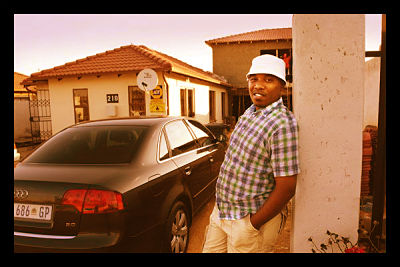
The middle class is essential for economic and democratic growth. The continent of Africa, consisting of 54 independent countries, contains the poorest countries in the world, according to the human development index created by the United Nations. However, over the last 15 years, the middle class in Africa has grown.
As the middle class expands, so does consumerism. The growth of the African middle class not only means more stability for Africa, but also more profit for American businesses. More of the African population is buying televisions, cell phones, and leisure and entertainment items, which Western companies provide.
But, how is the African middle class defined? In the U.S., there is a struggle to define the middle class. However, it is clear that those earning about $20,000 to $120,000 a year would categorize themselves as middle class. In Africa, the range is quite different. The middle class consists of those earning $2-$20 a day, or $730-$7,300 a year.
A strong and large African middle class is beneficial. The African middle class consumed approximately $680 billion in 2008, consisting of nearly a quarter of Africa’s GDP. At this rate, Africa will comprise approximately 3 percent of worldwide consumption by 2020, with about $2.2 trillion of consumer spending. The middle class will help grow the economy as they have more income to spend and can invest more of their finances in health and education. However, 60 percent of the African population continues to earn a meager $2-$4 daily.
Those in this floating class, earning $2-$4 a day, are at risk of leaving the middle class and descending into poverty. This represents 180 million people. The floating class could slip into poverty very easily; a job loss or the death of the head of household could cause the slip. Therefore, a balancing act is required to help grow the middle class while also preventing the floating class from slipping back into poverty.
Policies that focus on both human capital development and job generation will ensure the growth of the African middle class. Continued improvements in governance, better access to technology, the rapid spread of mobile telephones, and the better use of natural resources are necessary. Additionally, social changes and policies that focus on education and health will work to support those earning $2-$4 a day.
The U.S. should continue investing in Africa through aid. History demonstrates that the U.S. benefits greatly by assisting poorer countries. For instance, from 1960 to 1974 the U.S. provided South Korea with $5.6 billion in aid. In 2010, the annual U.S. export to South Korea was $38.8 billion. But this is just one example. Find more information about the benefits of reducing global poverty here.
Now is the time to increase the investment in Africa. As the middle class is beginning to grow, investment in Africa will result in a more stable economy, growth of democracy, and an increase in consumerism. Both the U.S. and Africa will benefit from building a strong middle class throughout Africa.
– Caressa Kruth
Sources: How We Made It In Africa, UN Development Program, The Borgen Project, National Geographic
Photo: Forbes India

What Is the Poverty Trap?
In biology, there are two feedback loops – positive and negative. A negative feedback loop works by Effects which disrupt the Cause; for example, cold temperatures prompt the thermostat to activate heating, which raises the temperature and therefore requires the heat to be shut back off. A positive feedback loop works in exactly the opposite way – more Effect produces more Cause which produces more Effect, ad infinitum; this regulates the production of Oxytocin in a woman’s body during pregnancy, and is only ended by the expulsion of the fetus from the mother’s body. The mechanism commonly called the poverty trap is a social positive feedback loop. And this is why it is so difficult to eradicate.
Unlike pregnancy, there is no terminal event which can tell social institutions and infrastructure, “Enough!” Poverty can endure forever; it is a stable state. Many conditions of deprivation can be tolerated once a person is familiar with the new sensation, and poverty is one of these. Furthermore, the system of poverty is complemented by a system of affluence, which also operates by a positive feedback loop. The richer an individual becomes, the more opportunities there are to increase that affluence. This is not to suggest that rich cannot become poor and vice-versa; merely that in capitalist systems, wealth has a tendency to accumulate, like gravity pulling particles in a vacuum slowly toward one another.
If no forethought is given to this positive feedback loop, as has been the case in America over the last decades, it can become nearly impossible for those at the bottom of the socioeconomic pyramid to reach the top. School is the exemplary case of needing money to make money – without a college education, and increasingly, graduate-level education, many job opportunities are simply out of reach. Loans exist, but conditions are becoming less favorable, and the standard repayment plan on a Stafford Unsubsidized Loan adds nearly 50 percent of the principal in interest over the course of repayment.
A favorite ideology of Americans is that popularized in the 1980s: pull yourself up by your bootstraps. Indeed, this is a critical piece of the solution; a capacity and willingness to commit oneself to improvement is a prerequisite to improvement. However, it also turns a blind eye to the fact that institutions are, by design, resilient to the whims of individuals. An institution which is dysfunctional for one individual is often functional for another. Those for whom institutions function well are understandably reluctant to see them evolve into something less favorable.
That said, in theory, an institution does not answer to those in the ruling party, but operates under mechanisms which dictate it serve the greatest number of people in the best possible way. The legislation pushed by Franklin Delano Roosevelt during the Great Depression (the New Deal) and by Harry Truman after World War II (the Marshall Plan, the attempt to temporarily nationalize steel and coal businesses in Europe) was responsible for putting millions to work.
Simply put, the poverty trap is human in operation and institutional in design. Both must evolve if the trap is to be disarmed.
– Alex Pusateri
Sources: A Better World, Prospect
Photo: Zionadventures
Worst Western Hemisphere Country to Grow Old in
According to the Global Age Watch Index, Honduras is the worst Western hemisphere country to live in as an elderly person. The survey measured income security, health status, employment and education, and enabling the environment. It is important to understand and consider the well-being of the elderly in different countries, because their mortality is a good indicator of a country’s total development.
Over half of the participants reported not feeling safe using public transportation or walking alone at night. According to the World Bank, “Between 2005 and 2011, the homicide rate in Honduras more than doubled from 37 to 91.6 murders per 100,000 inhabitants.” The lack of a pension system leaves 70 percent of Hondurans above the age of 60 in poverty.
Less than seven percent of Honduras’s population is 60 years old or over, which correlates with the poor living conditions of the elderly. Moreover, it is harder to advocate for better condition for the elderly when they are a minority. Inversely, developed Western countries have high aging populations and living standards for the elderly. Larger aging populations have more representation, especially in democratic countries. Therefore, governmental policies are more favorable to the elderly.
Population make-up significantly impacts the future of a country. Countries with large youth populations are more inclined to political instability. The Arab Spring, for example, was started in countries with large populations of youth. The Survey was created by the United Nations Population Fund and covered 98 percent of the world’s elderly. It was motivated by the growing aging demographic in the world’s population.
As expected, traditionally developed countries fared better in the survey – Sweden, Norway and Canada top the list of best countries to grow old in.
– Nicole Yancy
Sources: Foreign Policy: Think Again Global Aging, Foreign Policy: The Arab World’s Youth Army, The Guardian, World Bank, IB Times
Photo: Billweeks
Tom Hiddleston: Movie Villain, Humanitarian Hero
Tom Hiddleston is best known for playing Loki in the blockbuster hits Thor and The Avengers. Although he plays a despicable villain on-screen, his true persona is much more akin to that of the heroes his character so ardently despises. Since January 2013, Hiddleston has been an active and vocal supporter of UNICEF.
The British actor first became involved with UNICEF when he went on a trip to Guinea in West Africa to see the work that the organization is doing. While there, he met with children and members of the communities to see how UNICEF has impacted their lives. Hiddleston wrote six blog posts about his experiences there, ranging in topic from the various projects that have been implemented to playing soccer with local children.
As a ‘high profile’ supporter of the cause, much of his role is to raise awareness of UNICEF’s work and make their efforts known to a wider audience. His efforts have found resounding success: social media sites are rife with groups eager to support Hiddleston and his efforts. One group, called Hiddlestoners Have Heart, started an online fundraising event to support UNICEF UK with the goal of raising £14,000. To date, they have more than doubled that sum, raising a total of £32,771.34 (about $52,522 USD).
To further his advocacy efforts, Hiddleston also took part in 2013’s Live Below the Line Challenge. This annual campaign raises awareness of global poverty by challenging its participants to “live on the equivalent of the extreme poverty line for 5 days.” That means living off of £1 or $1.50 per day. As one would expect, he found the challenge to be extremely difficult, but ultimately very enlightening. He again wrote about it for the UNICEF blog, saying that the challenge taught him to think about food differently, to be less wasteful, and that it instilled in him a sincere sense of gratitude that he has never faced such hunger.
Tom Hiddleston’s involvement with UNICEF stands as an important reminder of the need to be active participants in the fight against global hunger and poverty. If the villainous Loki can find it in his heart to become a global citizen and to help those less fortunate, then certainly anyone can.
– Rebecca Beyer
Feature Writer
Sources: UNICEF, Live Below The Line, Hiddlestoners Have Heart
Photo: BuzzLamp
What is ColaLife and How Does it Affect the World?
In every corner of the world, people know the famous Coca-Cola logo. There are few places on the entire planet that a person might venture to and find Coke products scarce and in low supply, including underdeveloped nations. If the Coca-Cola Company has access to these distant regions and manages to vend their products, why do these nations go without vital medications and health treatments?
Simon Berry, a worker for UK Aid, originally had this question which led to the birth of an organization: ColaLife. ColaLife began on the Internet in 2008, and since, has gained thousands of online-based supporters. Running on a staff primarily composed of volunteers, ColaLife utilizes the same means that the Coca-Cola Company and other worldwide producers use to put their products in every place they can. The organization accomplishes these goals by making use of innovations and networks, like those at Coca-Cola, and opening supply chains and distribution channels for simple medications to reach those in need.
The statistics speak for themselves – in many of these developing areas of the world, 1 in 9 children die at very young ages to preventable diseases, such as diarrhea, the second largest killer of children. Statistics such as this one are what prompted Simon and others to put the plans for ColaLife in motion and provide assistance and medicine in areas where they were previously inaccessible.
Aside from donations and sponsorships, ColaLife has also taken to the internet and social media to bring awareness to these preventable deaths and their mission to end them. The independent non-profit group can be found on Facebook, Twitter, Flickr, and they also maintain YouTube and SoundCloud channels.
– Ryan Miller
Sources: ColaLife, Product Design of The Year 2013
Photo: The Dieline
Belize Accuses Wealthy Nations of Abandoning Goal 8
On September 30, Foreign Minister Wilfred Erlington of Belize reprimanded developed countries for abandoning goal eight of the Millennium Development Goals– a global partnership for development. The Millennium Development Goals were agreed upon by world leaders at a UN Summit in 2000, aiming to eradicate extreme hunger and poverty through eight different steps by 2015. The United Nations and many developed countries have been criticized for their apparent slack in achievement.
“We note with disappointment, that the rich countries have not even been able to bring themselves to honor their commitment to contribute even the 0.7 per cent of their gross domestic product as official domestic assistance to poor countries,” said Mr. Erlington.
In terms of other assistance, the resources being provided by the international community, other financial institutions and private donors are not nearly enough of what is needed by poor countries to attain the Millennium Development Goals. Now, 13 years later, only a minority of countries are proving successful in attaining the Goals. Unfortunately, the vast majority shows very few signs of development.
Pressure has continually been put on the developed countries to finally step up, once and for all, and put their best foot forward. The battle against global poverty cannot be fought without their leadership, and it is a constant source of frustration for many of the developing nations.
Alva Romanus Baptise, Minister of external fairs of Saint Lucia stressed that global interdependence demands that “the strong help the weak so that everyone gets strong.” Belize’s expression of this omnipresent issue serves as just one voice for the hundreds of abandoned nations.
– Sonia Aviv
Sources: UN News Centre, Scoop
Photo: Caribbean 360
Taiwan Takes Firm Stance Against Human Trafficking
October 1, 2013 marked the opening ceremony of the International Workshop on Strategies for Combating Human Trafficking in Taipei City, Taiwan. The workshop serves to stimulate conversation and collaboration for human rights protection and is organized by the National Immigration Agency under the Ministry of the Interior. Around 200 policy experts and officials from Taiwan and abroad attended, including those from Brazil, Canada, Vietnam, the U.K. and 16 other countries.
Vice President of the Republic of China (ROC), otherwise known as Taiwan, Wu Den-yih, took a staunch stance against human trafficking at the opening ceremony. He stated that protecting human rights is a universal value that needs international attention. He also highlighted the firm commitment of the ROC government against human trafficking and violations of human rights.
In the days after the opening ceremony, the workshop hosted six discussion panels ranging from topics pertaining the protecting the youth from sex crimes to trying to prevent modern-day slavery and labor exploitation. Many guest speakers were featured at panels, including officials from the U.S. Department of Homeland Security.
This year was the fourth consecutive year that the U.S. State Department awarded Taiwan the Tier 1 status of the U.S. State Department Trafficking in Persons (TIP) Report, based on the government’s effort to fight human trafficking. While the Department of State places countries into one of three tiers, this ranking has no indication of the prevalence of human trafficking in the country, or lack thereof. The ranking simply acknowledges the effort a government has made to make human trafficking a pressing concern in the national political discourse and to attempt to address the problem.
Nevertheless, Taiwan’s ranking demonstrates its commitment of protecting human rights and ending human trafficking. In recent years, Taiwan has been improving law enforcement training, strengthening support services by building shelters and providing temporary work, and establishing policy strictly prosecuting traffickers, such as the Human Trafficking Prevention Act.
– Rahul Shah
Sources: UNPO, AIT, US State Department
Photo: American Institute in Taiwan
Africa’s Rising Middle Class
The middle class is essential for economic and democratic growth. The continent of Africa, consisting of 54 independent countries, contains the poorest countries in the world, according to the human development index created by the United Nations. However, over the last 15 years, the middle class in Africa has grown.
As the middle class expands, so does consumerism. The growth of the African middle class not only means more stability for Africa, but also more profit for American businesses. More of the African population is buying televisions, cell phones, and leisure and entertainment items, which Western companies provide.
But, how is the African middle class defined? In the U.S., there is a struggle to define the middle class. However, it is clear that those earning about $20,000 to $120,000 a year would categorize themselves as middle class. In Africa, the range is quite different. The middle class consists of those earning $2-$20 a day, or $730-$7,300 a year.
A strong and large African middle class is beneficial. The African middle class consumed approximately $680 billion in 2008, consisting of nearly a quarter of Africa’s GDP. At this rate, Africa will comprise approximately 3 percent of worldwide consumption by 2020, with about $2.2 trillion of consumer spending. The middle class will help grow the economy as they have more income to spend and can invest more of their finances in health and education. However, 60 percent of the African population continues to earn a meager $2-$4 daily.
Those in this floating class, earning $2-$4 a day, are at risk of leaving the middle class and descending into poverty. This represents 180 million people. The floating class could slip into poverty very easily; a job loss or the death of the head of household could cause the slip. Therefore, a balancing act is required to help grow the middle class while also preventing the floating class from slipping back into poverty.
Policies that focus on both human capital development and job generation will ensure the growth of the African middle class. Continued improvements in governance, better access to technology, the rapid spread of mobile telephones, and the better use of natural resources are necessary. Additionally, social changes and policies that focus on education and health will work to support those earning $2-$4 a day.
The U.S. should continue investing in Africa through aid. History demonstrates that the U.S. benefits greatly by assisting poorer countries. For instance, from 1960 to 1974 the U.S. provided South Korea with $5.6 billion in aid. In 2010, the annual U.S. export to South Korea was $38.8 billion. But this is just one example. Find more information about the benefits of reducing global poverty here.
Now is the time to increase the investment in Africa. As the middle class is beginning to grow, investment in Africa will result in a more stable economy, growth of democracy, and an increase in consumerism. Both the U.S. and Africa will benefit from building a strong middle class throughout Africa.
– Caressa Kruth
Sources: How We Made It In Africa, UN Development Program, The Borgen Project, National Geographic
Photo: Forbes India
Malala Interviewed on The Daily Show
Malala Yousafzai was interviewed on The Daily Show with John Stewart. Malala become a public figure after being shot by the Taliban.
Pressure on Developed Nations to Contribute More Aid
Leaders have begun to discuss what will replace the Millennium Development Goals once they reach expiration in 2015. Mukhisa Kituyi, the new secretary general of UNCTAD, the UN Trade and Development body, stated that aid-flows from wealthy nations were drying up and that developing economies must contribute more in order to assist the poorer nations.
Kituyi, who took office last month, urged Brazil, China, and other emerging economies to take responsibility for the fight against extreme poverty. “From Brazil to China, while they have shown a willingness to invest in economic infrastructure – the construction of roads, railways, and ports – that capacity should also extend to the construction of social infrastructure,” he said.
There has been constant pressure on developed nations to contribute more aid in both reaching the Millennium Development Goals and ending extreme poverty; however, Kituyi’s call for action represents one of the rare voices asking the developing nations to pay tribute as well.
UNCTAD, which was formed in 1964, is seen as the intellectual counterweight to the World Bank and the IMF, urging even more liberalized trade and deregulated finance. However, in recent years, some of the organization’s staff members are increasingly concerned about Unctad’s future. Kituyi claims that he is determined to boost the organization’s reputation, and is especially concerned in taking part in the formation of what follows the Millennium Development Goals.
– Sonia Aviv
Sources: The Guardian, International Development News, News 168
Photo: The Habari Network
Inflation and Food Shortages in Venezuela
For residents of Venezuela, food and grocery shortages have become a part of daily life. Outside of many government-subsidized grocery stores, people line up before dawn hoping to purchase what they can before supplies run out. Items such as milk, meat and toilet paper are bought up quickly. The shortages have lasted for more than a year, prompting calls for President Madura to reevaluate the economic policies of his predecessor, Hugo Chavez.
Though Venezuela is one of the most oil rich nations in the world, it is struggling to mitigate inflation and keep subsidized grocers stocked with products. Many experts say that strict price controls are to blame for the country’s economic problems, while President Maduro insists that it is all part of an effort by the opposition and CIA to destabilize the government and sabotage Venezuela’s oil industry.
Asdrubal Oliveros, an economist at one of Venezuela’s leading consulting firms, told the Guardian that the current crisis is the result of several factors, which include the country’s overreliance on imports and the government price controls. Another factor is the decrease in agricultural production due to the government’s recent land expropriations. “It’s cheaper to import than it is to produce,” Oliveros said. “That’s a perverse model that kills off any productivity.”
Many economists echo Oliveros analysis, saying that the Venezuelan government is not helping the problem by fixing prices so low. When prices are set low, companies and producers are not able to make a profit—this, in turn, leads to a cessation of farming, manufacturing, and production. Originally designed to help Venezuela’s poor and working classes afford food and staples, the price-fixing program has instead led to empty shelves and long queues.
After becoming President of Venezuela, Hugo Chavez and his ministers sought to reduce the growing wealth disparity in their country. To achieve this, they implemented price controls on certain goods so as to make them cheaper for individuals and families with lower incomes. This step and increased spending on social programs, however, may be contributing to the country’s current economic crisis.
Aggravating the problem is the fact that inflation is increasing at an alarming speed. In August, 12-month interest rates rose to 45.4 percent. This is the highest since Venezuela’s hyperinflation crisis in the mid-1990s. Officials in Maduro’s government have said that they will be considering changes in the country’s economic policies in an effort to combat the rising prices and food shortages in Venezuela.
– Daniel Bonasso
Sources: The Guardian, New York Times, Wall Street Journal