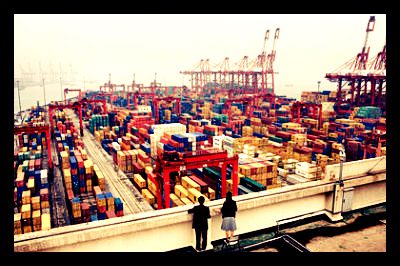
China has more than likely overtaken the US as the world’s top trading nation, a title the US has held for decades. According to the latest data, China’s total trade has grown at an annual rate of 7.6 percent to an incredible $4.16 trillion last year. While the US has yet to release it’s full-year figures, it’s trade for the first 11 months of 2013 totaled only $3.5 trillion.
In 2009, China became the world’s biggest goods exporter. Along with that, its imports have also risen amid an expanding economy. “It is very likely that China has overtake the US to become the world’s largest trading country,” said Zheng Yuesheng, a spokesman for China’s custom’s administration.
However, concerns in recent months over the accuracy of China’s export data have been brought to light. There has been speculation that some Chinese exporters may be overstating their shipments in an attempt to evade restrictions on importing funds into the country.
Sun Junwei, China economist at HSBC in Beijing, has said the measures that were implemented to weed out fake trade activities appear to be working. Junwei believes that compared to last year, these activities have actually decreased.
Even when addressing the inflated numbers, some analysts believe that China would still take the top spot from the U.S.
“The gap between the overall trade of China and the US is likely to be almost $250 billion in 2013,” Rajiv Biswas, chief economist Asia-pacific at IHS, told the BBC.
China’s growing trade prowess has been fueled by economic growth of around 10% a year in the past three decades. This progress has propelled the country up the list of biggest economies, it’s middle class garnering wealth and boosting its’ overall global trade.
This progress can be attributed to a shift from the production of textiles and light industrial products to more sophisticated products including cell phones and other gadgets. The amount of available labor has allowed for this incredible increase.
China has also recently overtaken the U.S. as the biggest oil importer of oil, amid rising demand for fossil fuels. However, this has brought in an assortment of environmental difficulties that the government is still having difficulties addressing.
Mr. Zhen predicts that because of structural reforms in China and a lowered outlook for commodity prices, an even stronger trade performance by China is possible in 2014.
The first time China became the world’s biggest goods exporter was in 2009, and now its total exports and imports make up for more than 1/10th of the total world trade, up from 3 percent in 2000.
The economic competition between America and China is a favorite subject of the American people as well as a motive for a large number of decisions undertaken by politicians. President Obama has used this competition to enforce education initiatives to fend off countries such as China that will “out-compete” the U.S.
If the latest prediction out of the Centre for Economics and Business Research is correct, then the Chinese economy will grow larger than America’s in 2028. However, predictions stating that its economy will surpass ours in 2016 have been made while others stake claims that it already has.
In terms of economic output per capita, however, the U.S. is still vastly ahead of the Chinese by a factor of more than eight. This is because there are far fewer Americans than Chinese, so even if the outputs were equal, there’s a lot less people to share it with. Meaning, the average American is wealthier than the average Chinese.
Ultimately, it becomes important to note rather than “beating” the Chinese, it is more important to collaborate with our cousins across the globe, with hopes to increase the goods and services available to the U.S.
– Chloe Nevitt
Feature Writer
Sources: BBC, CNN, RT, TIME
Photo: Sino Mania

Why Poverty? Film Provokes Poverty Advocacy
Why Poverty? is a collaborative effort whose mission is to get people thinking about poverty and what they can do to help end it. Working with award winning film makers, talent that is just starting out and documentary film makers from all over the globe, Why Poverty? wants to reach wide and diverse audiences to get perspective on what poverty really is and what actually needs to be done about it.
Documentaries include factual information about the various causes and effects of extreme poor. Short films are thought provoking and inspiring to deliberately force audiences to question what they have learned and what they can do next. The effort was launched by the nonprofit organization called Steps.
All of the film and video content on the Why Poverty? website is free for non commercial purposes.
Students who want to show a film to their class or bloggers who are spreading the word to their readers are both allowed to take and share content from the Why Poverty? films. Many of the films investigate how inequality in communities lack of education in children, corruption in government and economical failures can all lead to poverty in nations across the globe.
Visiting foreign lands and talking to people living under these conditions is an example of how the films bring the questions surrounding the issue of global inequality to life. What does it take to feed a family? Is it okay for some people to be rich beyond their wildest dreams while others cannot afford to eat? Does gender make a difference in the chances someone has to escape poverty?
Filmmakers collaborate with writers and documentary experts to find out.
Half the battle of ending poverty is education and awareness. Nobody can help solve a problem about which they know nothing. Millions and millions of people all over the world are struggling with disease, lack of clean water, hunger, violence and economical instability. People live in distress and fear, and nations like the United States and other fully developed countries are in a position to help.
Wealthy and powerful, the leading nations have the ability to put an end to the suffering in many parts of the world. Implementing time conscious policies and aid programs would pose a fraction of the cost of military spending or other government department budgets. Why Poverty? asks the general public to think about the facts and consider ways that the everyday person and not just the government can take action.
– Kaitlin Sutherby
Sources: Healthedeals, Bloomberg Opinion, The Washington Post
Photo: BBC
Lauded Kenyan Author: “I Am a Homosexual, Mum”
Renowned Kenyan author Binyavanga Wainaina, a 43-year -old man, has come out stating that he is gay, becoming one of the most well-known Africans to ever do so publicly. He published a piece on the websites AfricaisaCountry.com and Chimurenga.co.za called “I am a homosexual, mum,” in which he imagines telling his mother on her deathbed that he is gay.
“Nobody, nobody, ever in my life has heard this. Never, mum. I did not trust you, mum. And. I. Pulled air hard and balled it down into my naval, and let it out slow and firm, clean and without bumps out of my mouth, loud and clear over a shoulder, into her ear. ‘I am a homosexual, mum,’” Wainaina writes.
Wainaina’s coming out coincides with the debate and passage of stringent anti-gay laws in Nigeria and Uganda, as well as existing laws prohibiting homosexuality in most African nations, including his native Kenya.
In fact, LGBT Kenyans can be put in jail for up to ten years if they are convicted of participating in homosexual acts, though the law is not often applied. Kenya’s culture remains conservative in regards to homosexuality.
In Nigeria, the government passed a ruling outlawing gay marriage, gay organizations and attending social or political gatherings related to gay causes. Moreover, Uganda has been mired in international controversy over its harsh anti-gay rhetoric and laws.
Not all African nations, however, forbid homosexuality. In a groundbreaking move, South Africa’s 1997 constitution legalized gay marriage.
It is within this African cultural framework that Wainaina has received criticism and praise, though he says the support has been overwhelming.
Wainaina took to Twitter, saying, “Ten million thank yous to the thousands of Africans and others who have given all kinds of public love, [and] support. We live in a beautiful continent.”
He elaborated in an interview with The Global Post, saying that, “It seems like doom and gloom, but my feeling is that the law is a reaction to a thing that they know has traction. And that’s a good thing. There’s no way to put that shit back in the box.”
Wainaina had contemplated coming out publically sooner, especially while he tried to reconcile his relatively free lifestyle in Nairobi and knowing that other LGBT Africans were being persecuted.
As a frequent traveler to Nigeria, Wainaina has sharply condemned the country’s new anti-gay marriage law, saying it “shames us all.” He also states that visiting the country now that he has come out will be an “adventure.”
To those who argue that homosexuality is “un-African,” Wainaina also has sharp words. He points to deeply entrenched puritan values stemming from Victorian era churches, as well as propaganda and fear-mongering as the culprits behind the creation of the fallacious idea that homosexuality is wrong, unnatural, and un-African.
The 2002 Caine Prize-winning author is poised to embrace his role in fighting for the rights of LGBT Africans, and he believes people are ready.
“People who live in societies where you are being lied to a lot value truth,” he states. “I’m a pan-Africanist; I belong to this continent.”
– Kaylie Cordingley
Sources: BBC, Global Post, Huffington Post, The Guardian
Photo: Internaz
Forbes’ Inspiring 30 Under 30
Forbes released its 2014 list of “30 Under 30 who are Changing the World,” which recognizes 30 notable young people in 15 different categories such as education, finance, science and Hollywood who are making a big impact in their chosen field.
Forbes recognized 30 inspiring people in the Social Entrepreneur category who are working in various fields such as girls’ education, rural agricultural development, mobile phone access in remote locations and the creation of online giving platforms.
Those honored were a part of a pool of nominated people who were then selected by philanthropist and former-eBay president Jeff Skoll, Cheryl Dorsey of Echoing Green — which funds social entrepreneurs — and Randall Lane, Editor-in-Chief of Forbes.
Some notable entries in Forbes’ Inspiring 30 Under 30: Social Entrepreneurs include the following people.
Malala Yousafzai, 16, and Shiza Saheed, 24, joined forces in 2012 after Malala was shot in the head by the Taliban in retribution for her vocal stance on the importance of girls’ education. Saheed became Malala’s “chief strategist” for how Malala’s courage and activism could be utilized on a broad scale to create lasting global change.
They cofounded the Malala Fund, have raised $400,000 in grants from the World Bank and from Angelina Jolie and Brad Pitt, and have become a powerful symbol of the movement for girls’ education and female empowerment around the world.
Kennedy Odede, 29, grew up in the Kenyan slum of Kibera where he was called to action by the community’s desperate conditions, especially for women and girls. He founded the organization Shining Hope for Communities (SHOFCO), which runs the tuition-free Kibera School for Girls, a health clinic, community center, clean water initiatives and revenue-generating activities for adults in the community.
SHOFCO’s overarching idea is that if community development can be visibly linked to gender equity initiatives, people will support the empowerment of girls.
Odede and SHOFCO have been recognized by the Clinton Global Initiative and the Newman’s Own Foundation and will be featured in a forthcoming women’s rights documentary by New York Times contributor Nicholas Kristof.
Esra’a Al Shafei, 27, is the founder of Mideast Youth, which promotes social justice, political dissent, and open journalism in the Middle East and North Africa. Further, the organization runs online platforms for activist musicians (https://mideastunes.com/) and for young members of the LGBT community in the region.
Bryan Baum, 24, is the co-founder of Prizeo, which raffles various experiences with A-listers such as Justin Bieber, One Direction, Muhammad Ali and Alicia Keys in order to benefit non-profit organizations. Prizeo has to-date raised $3 million for charities, including St. Jude, Typhoon Haiyan Relief and Invisible children.
Talia Leman, 18, was only ten years old when she raised $10 million for Hurricane Katrina relief. Since then she has created RandomKid, which facilitates the efforts of young people who want to make an impact on the world.
Ten cents of every fundraised dollar on the site goes into a general pool for future efforts. The site has engaged projects from over 12 million young people from 20 countries.
– Kaylie Cordingley
Sources: Prizeo, Forbes, Shining Hope for Communities, RandomKid, Malala Fund
Photo: NWHM
Zimbabwe Facing Food Crisis Due to Corn Shortage
Zimbabwe announced plans last Friday to import 150,000 tons of corn from South Africa in attempt to stave off the threat of mass starvation as poor crop yields and bad credit plunge the country into its worst food crisis in years.
A UN report found that at least 2.2 million Zimbabweans will require food assistance before the next harvest season to survive. Many people in rural areas are subsisting only on what wild fruit they can find.
Zimbabwe was once known as southern Africa’s breadbasket, but is now suffering low yields of its staple crop due to last year’s droughts, the late arrival and poor distribution of rainfall and an infestation of army worms. Economic collapses and poor planning by the government exacerbated the bad growing season, and Zimbabwe was able to produce only 800,000 of the 2.2 million tons of corn necessary to feed its population.
Scarcity has driven the price of corn up 20 percent since 2012, according to the to US-based Famine Early Warning System (FEWSNET).
“Communities, especially rural ones, are facing a twin evil: food is scarce, and that tends to push prices up,” Innocent Makwiramiti, an economist and former executive officer of the Zimbabwe National Chamber of Commerce, told reporters.
“The government has no money to import enough grain so that people can buy it at subsidized levels,” Makwiramiti said. “The hungry are therefore forced to buy from private sellers, who charge high prices.”
Zimbabwe’s hyperinflation and resulting economic freefall, which many critics blame on President Robert Mugabe and his chaotic ascension to power, threaten the country’s ability to borrow to feed its citizens.
In the past, Zimbabwe has combated inflated food prices by importing grains on credit from neighboring countries like Zambia, many of whom are no longer willing to gamble that they will be paid back. In October, Zambia reversed its decision to give Zimbabwe 150,000 tons of corn on credit, instead requesting cash up front.
Zimbabwe managed to obtain only 14,000 tons.
Many Zimbabweans are angered by the response from President Mugabe and his ZANU PF party, who have acknowledged the food crisis and promised that “no Zimbabwean will die of hunger” but have yet to reveal any concrete plans to address food scarcity or the underlying economic problems ravaging the country.
In addition to a poor growing year and an economy in free fall, Zimbabwe’s food crisis has roots in Mugabe’s violent redistribution of land in 2000. Many white landowners fled the country as government forces seized their farms.
Instead of turning land over to Zimbabwe’s poor black farmers, as he had promised, Mugabe gifted properties to leaders of his ruling party, whom left much of it unattended and improperly cared for. Ironically, the farming surplus that Zambia has experienced, allowing them to sell corn to Zimbabwe, can be attributed at least in part to white farmers chased out of the country.
It will take time for Zimbabwe’s economy to rebound, but its people are dying now. The 150,000 tons of corn recently granted by South Africa will help some, but without money or credit, Zimbabwe and its citizens will be largely dependent on food aid from international organizations. Now is the time to get involved.
– Sarah Morrison
Sources: All Africa, New Zimbabwe, New Zimbabwe, New York Times, World Food Programme
Photo: The Guardian
Christina Aguilera Raises $37 million for World Hunger
Christina Aguilera is a pop singer that has remained popular since the 1990’s. She is best known for her powerhouse voice, acting roles and position as a Judge on NBC’s “The Voice.” Aguilera has been given the title of “Princess of Pop,” “The Voive of Her Generation,” “One of the Best Vocalists in the World” and “Queen of Reinvention.”
However, Christina Aguilera is not as well known for her role as a humanitarian.
In the past, Aguilera has supported many charities, including the Red Cross, Refuge, World Food Programme (WFP,) World Hunger Relief and more. She has recorded a John Lennon song in order to raise funds for Amnesty International. She has also raised awareness and funds for Haiti following the nation’s tragic earthquake in 2010.
Recently, she worked as an ambassador for the Yum! Brand to help raise over $37 million to fight world hunger.
The funding goes toward Yum!’s WFP disaster relief and school meal programs. David Novak, Chairman and CEO of Yum!, stated that with the help of Christina Aguilera, the brand was “able to raise more awareness than ever about this critical issue.”
Yum! Brand is a company that owns the Kentucky Fried Chicken, Pizza Hut and Taco Bell franchises. The organization’s World Hunger Relief is the world’s largest private sector hunger relief effort and includes over 130 countries and over 1 million employees and associates.
Novak believes that “it is unacceptable that nearly one billion people around the world are going to bed hungry every night. We believe that it is our privilege and responsibility to do everything we can to make a difference in fighting world hunger to save lives.”
Since 2007, the WFP has raised over $185 million to help combat world hunger.
– Lienna Feleke- Eshete
Sources: MusicTimes, Look to the Stars
Photo: ME News Wire
5 Most Common Neglected Tropical Diseases
Neglected tropical diseases (NTDs) affect 1 billion people, or one out of every six individuals, every year. Half a million people die from NTD related effects, the majority of whom are impoverished children, women and persons with disability. Although methods of prevention and treatment are available, these diseases remain extremely common in parts of Africa, Asia, Latin America and the Caribbean.
The following list of NTDs represents approximately 90% of the global NTD burden, along with methods of treatment and prevention.
1. Onchocerciasis
Also known as “river blindness,” this disease is transmitted via black flies carrying the onchocerca volvulus parasite. The parasite causes debilitating itching and upon reaching the eyes, visual impairment and eventually blindness. It is the second leading cause of infection-induced blindness, behind Trachoma, with 37 million people infected with the disease.
A single, annual dose of Mectizan controls the disease and relieves symptoms. Some countries in Latin America successfully eliminated disease transmission after administering the drug for twenty years which lends hope to its possible elimination in the African continent.
2. Trachoma
One of the oldest infectious diseases known to mankind and the leading source of global blindness, is caused by the bacterium Chlamydia trachomatis. Eye-seeking flies transmit the disease from an infected person’s eye discharge to uninfected hosts.
Repeated infections result in a scarred interior eyelid thereby forcing eyelashes to turn inward thus scratching the cornea, all of which is followed by blindness. It affects about 21.4 million people, of whom 1.2 million are blind.
It is hyperendemic in remote poor rural areas of Africa, Central and South America, Australia and the Middle East.
The World Health Organization (WHO) recommends the SAFE strategy (Surgery, Antibiotic treatment, Face washing and Environmental changes) to limit its spread.
3. Schistosomiasis
Or, snail fever, is a parasitic disease transmitted by freshwater snails to bathing or swimming humans. Urniary schistosomiasis progressively damages the bladder, ureters and kidneys. Intestinal schistosomiasis enlarges the liver and spleen, damages the intestines and creates hypertension of the abdominal blood vessels. It affects 200 million people, and in children can impair growth and cognitive development.
A single dose of praziquantel with repeated community distribution treats and controls the disease.
4. Soil-transmitted helminthes
Affects more than 880 million children around the world. The intestinal worms may result in diarrhea, abdominal pain, anemia, general malaise and severe infection can impair growth and cognitive development.
Improved sanitation, health education and the periodic administration of anthelminthics to at-risk groups limits the rate of transmission.
5. Lymphatic filariasis (LF)
Also known as elephantiasis, is a mosquito-borne disease which results in painful swelling of the limbs and genitals. Over 120 million people are currently infected and nearly 1.4 billion people are at risk in 73 countries.
The WHO recommends yearly large-scale Mectizan and albendazole doses for four to six years to interrupt transmission.
This information was compiled from the Neglected Tropical Disease NGDO Network, World Health Organization and the Center for Disease Control.
– Emily Bajet
Sources: Neglected Tropical Diseases (NGDO) Network, WHO, WHO Programmes, Center for Disease Control and Prevention(CDC)
Photo: Bullion Street
Top 5 Global Health Books
Next time you take a trip to Barnes & Noble, or the next time you support your local bookstore, wander into the health section. Of course grabbing the new John Grisham or Twilight novel is exciting, but perhaps your next reading assignment can be thoughtful as much as enjoyable.
So bring out the coffee and curl up to these top 5 global health books.
1. Mountains Beyond Mountains: The Quest of Dr. Paul Farmer, A Man Who Would Cure the World by Tracy Kidder
This book follows Farmer as a Harvard-trained physician traveling the world to create Partners in Health. A philanthropist who endorses the mantra “the only real nation is humanity,” the reader is taken on a journey from Haiti through Russia.
2. The Invisible Cure: Africa, the West, and the Fight Against AIDS by Helen Epstein
An autobiographical treatise by Epstein on the ways AIDS has ravaged Uganda and the African continent. Epstein, as a scientist, analyzes her experiences without apology in order to provide a context for the exciting scientific discoveries that unfortunately have not found equal footing in Africa.
3. Infections and Inequalities: The Modern Plagues by Paul Farmer
This is a treatise by Farmer concerning the unequal diagnoses of diseases such as AIDS, tuberculosis and malaria abroad. “Cost effective” methods of healthcare have lead to poor communication between patients and doctors, and Farmer seeks to combat such healthcare.
4. Rx for Survival: Why Me Must Rise to the Global Health Challenge by Philip Hilts
A companion to the PBS series “Rx for Survival: A Global Health Challenge,” Hilts brings a journalist’s touch to this investigation of the global locations where old diseases are constantly threatening to re-emerge.
5. Race Against Time: Searching for Hope in AIDS-Ravaged Africa by Stephen Lewis
In this book, Lewis poses pragmatic solutions for meeting the United Nations’ Millennium Development Goals by fighting the AIDS pandemic first and foremost.
– Taylor Diamond
Sources: Good Reads, Global Health Hub
Photo: UDaily
U.S. Response to the Syrian Refugee Crisis
CNN reports that the U.S. only accepted 30,000 Syrian refugees this fiscal year. Over the past three years, civil war has claimed the lives of 50,000 Syrians and produced 2.3 million refugees, half of them children. The United Nations High Commission for Refugees wants to settle 30,000 of these people this year.
Yet, in the past, the United States has led the world in resettlement and humanitarian efforts.
U.S. Senator Dick Durbin said that the United States’ overly broad immigration bars are preventing Syrian refugees from taking asylum here — approximately 135,000 refugees have applied for asylum in the U.S.
The small nations surrounding Syria have welcomed refugees. Lebanon and Jordan began accepting refugees early on with individual families taking friends, family members and even strangers into their homes. Refugee camps were later built to house Syrians.
Lebanon has taken in more than 860,000 asylum seekers, more than 20% of its entire population. The town of Arsal, with a population of only 35,000, had taken in 19,000 refugees when it received an additional 20,000 in November.
Some 700,000 Syrian refugees are residing in Turkey. While 200,000 of these are being housed in 21 refugee camps, the remainder have found shelter in towns and cities.
While these countries have been generous, they do not have the space or resources to house this number of refugees and are beginning to see a rise in social and economic tensions. Schools and hospitals are running out of space and incomes have been dropping as residents compete for work.
The U.S. Department of State and USAID have been major sources of funding for humanitarian programs, providing basic necessities such as food, water, tents and medical supplies.
The United States has provided $300 million to Jordan since 2012. It has helped the country to expand its social services to be able to house Syrian refugees, for example 5 schools were built and 62 others were expanded.
However the U.S. is still lagging behind other countries in resettlement. Since the beginning of the Syrian civil war only 90 Syrians have found asylum in the United States. In contrast, Sweden has accepted 14,700 refugees and Germany has accepted 18,000.
Both Senator Dick Durbin and Senator Lindsay Graham are pushing for immigration reform that will allow for the acceptance of more Syrian refugees into the U.S.
– Elizabeth Brown
Sources: CNN, U.S. Department of State, U.S. News, Think Progress
Photo: UN News Centre
10 Facts about Martin Luther King, Jr.
Martin Luther King, Jr. was an American hero and civil rights activist. His teachings are still an inspiration today and his influence is immortalized in a national holiday, Martin Luther King, Jr. Day. Below are some interesting facts about this great leader:
1. At 35 years old, Martin Luther King, Jr. was the youngest man to have ever received the Nobel peace prize. Currently Tawakkol Karman of Yemen is the youngest winner, at 32.
2. Dr. King worked for Economic Equality, not just civil rights. After the passage of the 1964 Civil Rights Act and the 1965 Voting Rights Act, Dr. King began the Chicago campaign. It targeted the economic reality of segregation and focused attention on the plight of the urban poor in the north.
3. Martin Luther King, Jr. improvised entire parts of the “I Have a Dream” speech, including the famous “dream” passage. It was edited right up to the moment Dr. King began speaking.
4. Dr. King is the only non-president to have national holiday dedicated in his honor and also the only non-president memorialized on Washington D.C.’s Great Mall.
5. In 1963, Dr. King was named Time Magazine’s Man of the Year. King garnered a lot of attention that year for leading the March on Washington and delivering his famous “I Have a Dream” speech.
6. While at Crozer Theological Seminary in Pennsylvania, Dr. King was elected president of his senior class, which was predominately white.
7. His Seminary Professor gave him a C+ in a Public speaking course! King was renowned for his great public oration, but even he didn’t master the skill over night.
8. Many Civil Rights Activists did not support the 1963 “March on Washington for Jobs and Freedom.” Some leaders, such as Malcolm X and Storm Thurmond, held different views on the civil rights movements and, at times, disagreed with Dr. King’s approach.
9. Martin Luther King made an impact even while in jail. After being detained for defying an injunction against protests in Birmingham, Dr. King wrote his “Letter from Birmingham Jail.” It detailed reasons for acting to change civil rights in Birmingham and around the country and became a monument of the Civil Rights Movement.
10. Mahatma Gandhi and the principle of non-violent action heavily influenced Dr. King. King was introduced to the ideology while at a lecture given in Philadelphia by the president of Howard University.
Martin Luther King, Jr. firmly believed that everyone, regardless of their background, should receive equal treatment under the law and have an opportunity to live, as well as receive education and work without being discriminated against. This is a message we must remain committed to in our fight against the global inequality that characterizes poverty in the world today.
– Martin Levy
Photo: Richton Park Library
Sources: Constitution Center: Five Facts about Martin Luther King, Jr, The King Center, BBC, NobelPrize.org
China Overtakes the U.S. as World’s Top Trader
China has more than likely overtaken the US as the world’s top trading nation, a title the US has held for decades. According to the latest data, China’s total trade has grown at an annual rate of 7.6 percent to an incredible $4.16 trillion last year. While the US has yet to release it’s full-year figures, it’s trade for the first 11 months of 2013 totaled only $3.5 trillion.
In 2009, China became the world’s biggest goods exporter. Along with that, its imports have also risen amid an expanding economy. “It is very likely that China has overtake the US to become the world’s largest trading country,” said Zheng Yuesheng, a spokesman for China’s custom’s administration.
However, concerns in recent months over the accuracy of China’s export data have been brought to light. There has been speculation that some Chinese exporters may be overstating their shipments in an attempt to evade restrictions on importing funds into the country.
Sun Junwei, China economist at HSBC in Beijing, has said the measures that were implemented to weed out fake trade activities appear to be working. Junwei believes that compared to last year, these activities have actually decreased.
Even when addressing the inflated numbers, some analysts believe that China would still take the top spot from the U.S.
“The gap between the overall trade of China and the US is likely to be almost $250 billion in 2013,” Rajiv Biswas, chief economist Asia-pacific at IHS, told the BBC.
China’s growing trade prowess has been fueled by economic growth of around 10% a year in the past three decades. This progress has propelled the country up the list of biggest economies, it’s middle class garnering wealth and boosting its’ overall global trade.
This progress can be attributed to a shift from the production of textiles and light industrial products to more sophisticated products including cell phones and other gadgets. The amount of available labor has allowed for this incredible increase.
China has also recently overtaken the U.S. as the biggest oil importer of oil, amid rising demand for fossil fuels. However, this has brought in an assortment of environmental difficulties that the government is still having difficulties addressing.
Mr. Zhen predicts that because of structural reforms in China and a lowered outlook for commodity prices, an even stronger trade performance by China is possible in 2014.
The first time China became the world’s biggest goods exporter was in 2009, and now its total exports and imports make up for more than 1/10th of the total world trade, up from 3 percent in 2000.
The economic competition between America and China is a favorite subject of the American people as well as a motive for a large number of decisions undertaken by politicians. President Obama has used this competition to enforce education initiatives to fend off countries such as China that will “out-compete” the U.S.
If the latest prediction out of the Centre for Economics and Business Research is correct, then the Chinese economy will grow larger than America’s in 2028. However, predictions stating that its economy will surpass ours in 2016 have been made while others stake claims that it already has.
In terms of economic output per capita, however, the U.S. is still vastly ahead of the Chinese by a factor of more than eight. This is because there are far fewer Americans than Chinese, so even if the outputs were equal, there’s a lot less people to share it with. Meaning, the average American is wealthier than the average Chinese.
Ultimately, it becomes important to note rather than “beating” the Chinese, it is more important to collaborate with our cousins across the globe, with hopes to increase the goods and services available to the U.S.
– Chloe Nevitt
Feature Writer
Sources: BBC, CNN, RT, TIME
Photo: Sino Mania