The process of collecting contributions in the form of ideas and services is not a new phenomenon. In fact, crowdsourcing has historically been used to solve challenging innovation problems.
Companies have for a long time used consumer wisdom to tackle tough scientific and technological challenges, design new products, generate marketing ideas and increase customer satisfaction. Platforms like the Heineken Ideas Brewery, BMW customer innovation lab and My Starbucks Ideas show how major organizations are successfully tapping into the power of the crowd to co-create innovative concepts.
Beyond simply a new approach to research and development, some companies have taken crowdsourcing a step further. Organizations are now using the powerful platform to tackle social challenges in the areas of sustainability and poverty reduction.
Unilever Foundry Ideas is a crowdsourcing platform that was launched by a corporate giant, Unilever in 2015. Through the platform, Unilever seeks to make sustainable living mainstream by sourcing ideas from customers and entrepreneurs. An article in CSR Asia talks about the success of Unilever Foundry ideas highlighting how it has generated over 300 ideas to encourage recycling of bathroom products, reduction of water dependency while doing laundry and invention of concepts for more luxurious and sustainable showers for the future.
“Big social, environment and economic issues are so huge that no one organization or company or group can solve them alone,” says a Unilever Foundry Ideas representative. “Aspects of sustainability affect all of us and so all of us have ideas.”
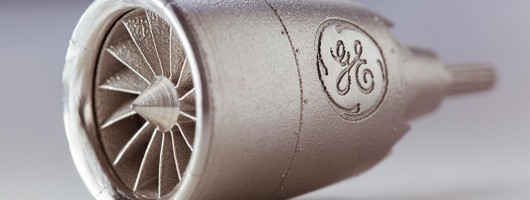
General Electric has the open innovation branch of its Ecomagination program. This is a collaborative problem-solving environment.
Open innovation posts a variety of challenges and creates an open call to the global brain, a growing community of over 400 million, to submit creative ideas to tackle these challenges. Contributors of winning ideas normally receive cash prizes, internships and future collaboration opportunities.
Open innovation has so far fielded challenges in the areas of solving water scarcity through Water Reuse and managing chronic disease by developing wearable monitoring technologies to mention a few.
BASF, one of the world’s leading chemical companies, has the co-creation platform the Creator Space. In 2015, Creator Space conducted a tour in six cities around the globe, Mumbai, Shanghai, New York, Sao Paulo, Barcelona and Ludwigshafen. Creator space aimed to develop solutions for problems that citizens in the different cities were facing. It did this through enlisting inputs from government officials, NGOs, the society as well as artists.
In Mumbai, for example, BASF Creator Space was tackling the challenge of water accessibility. According to a white paper on the Mumbai visit, a holistic approach has been developed to augment Mumbai city’s plans to revamp the on-grid water infrastructure.
Coca-Cola takes part in the crowdsourcing space by hosting an annual grant challenge known as “Shaping a Better Future”. For the grant, Coca-Cola has partnered with the Global Shapers Community of the World Economic Forum to scale proven solutions to the world’s biggest problems.
There are over 500 Global Shaper hubs around the world that comprise of young people with an exceptional drive to make a contribution to their communities. They have a focus on matters such as bettering the environment, kick-starting civic engagement and eradicating poverty to name a few.
Coca-Cola offers five 10,000 dollar grants through the program to accelerate the most impactful and promising Global Shaper hub projects.
François Pétavy, eYeka CEO notes that crowdsourcing often has its beginnings in the creation of better products and experiences, but often results in a more collaborative and sustainable world.
– June Samo
Sources: BASF 1, BASF 2, Coca-Cola, Crowdsourcing.org, CSR Asia, Entrepreneur, GE 1, GE 2, Open Innovation, Unilever

Design 2 Transform Hackathon
CBOs are nonprofit, private or public outfits that represent a significant segment of the community. Each CBO is engaged in meeting human, educational, environmental or public safety needs.
The organizing principle of the event is that involving a diverse mix of individuals will generate richer outputs. Thus a background in software development and web design is not a pre-requisite.
“Anyone with whatever skill can come and be part of the change we all want to see,” says Nelson Kwaje, team leader of Design 2 Transform. “The person with the web design skills in the team will teach the rest of the members how to do it, practically, the accountant will help create the content, the photographer will advise on the photos…everybody can do something!”
At the event’s inaugural edition in January 2016, 45 volunteers worked together to successfully create six websites for six orphanages that previously did not have a presence in cyberspace.
According to organizers of the hackathon, the capability of a CBO to connect with donors and partners is severely limited when they lack an online presence. The organizers’ hope is that the websites created during the hackathon will address this issue. In addition, the websites serve to create platforms where the CBOs can broadcast their stories and projects to a greater audience.
The second edition of the event, much like the first, involved volunteers working in teams. Each team was assigned a CBO and was asked to deliver a website, social media pages, a logo, a business card, a letterhead and a banner.
For example, Kenya Deaf Agenda, which deals with disability stigma, and Karinde Child Love, which provides a home to Kenyan street children, are two of the 10 CBO’s that will soon have active websites designed during the second edition of Design 2 Transform Hackathon.
One of the key supporters of the second Design 2 Transform Hackathon was the Kenyan company LIVELUVO. Through its app, LIVELUVO has created a “Digital Village” that connects individuals and organizations with the services and information they seek. Though this network, businesses can reach new customers and individuals can gain access to potential employers.
Ryan Doyle, Head of Community Development at LIVELUVO says that the company was happy to support the hackathon due to the beautiful meeting of talent, community and enthusiasm that the event promotes. According to Doyle, a professional website amplifies an organization’s voice. He hailed the collaborative efforts of Design 2 Transform to empower the community.
Organizers of the Design 2 Transform Hackathon echo the sentiment that volunteers not only contribute to a good cause, but can also gain opportunities from the hackathon. Some such opportunities include training by professionals, interaction with web designers and business opportunities and partnerships.
— June Samo
Sources: Design 2 Transform 1, Design 2 Transform 2, LUVO, My Luvo 1, My Luvo 2, NNLM, Shiku Ngigi
Photo: Flickr
What Causes Famine in Africa?
What causes famine in Africa? Over 40 million African lives are threatened by famine and food crisis. A number of factors contribute to widespread and stubborn famine, such as extreme weather, weakening currencies and a failure to mobilize resources.
Although international aid is an imperative aspect of a country’s ability to cope, food aid alone will never solve the reoccurring problem.
“Food aid is focused on short-term emergencies and doesn’t address the causes of the crisis,” according to Poverties, an organization that provides social and economic research. “That’s why even if it’s badly needed in emergencies, a long-term plan is also vital.”
Programs such as The Purchase for Progress and World Food Program seek to develop local farming industries. Investing in agriculture prevents future food shortages and supports a local economy rather than only relieving famine in the short-term.
For international aid to be most effective, it is crucial that it arrives in a timely fashion in predictable amounts and is properly targeted. An earlier response to a crisis builds resilience in a community and is more cost-effective than waiting to treat seriously malnourished people. According to Mail and Guardian Africa, the continent needs at least $4.5 billion for emergency relief.
Across the Horn of Africa and South Sudan, a combination of war and severe drought create food insecurity.
“In war, food sometimes becomes a weapon,” according to World Food Program, the world’s largest humanitarian organization addressing hunger. “Soldiers will starve opponents into submission by seizing or destroying food and livestock and systematically wrecking local markets. Fields are often mined and water wells contaminated, forcing farmers to abandon their land.”
Continuous fighting hinders food aid; the areas that need it the most are the areas hardest to reach due to the security situation. Ethnic discrimination is a factor as well as the region being hit hard by AIDS. The disease causes those weakened by starvation to be unable to fight for survival.
Instability in the market causes food prices to fluctuate, making it difficult for the poor to have access to nutritious food consistently. These spikes in price hit children and the elderly the hardest.
With unrestricted access and thorough planning, international aid can drastically relieve food crisis. Providing resources and assistance to Africans can foster sustainable development strategies specific to the region and its weather as well as boost economic development, preventing famine in the future.
– Emily Ednoff
Sources: Poverties, Mail & Guardian Africa, Deutsche Welle, World Food Programme
Photo: Flickr
Neil Patrick Harris & Disney Team Up for Make-A-Wish
From the end of February through March 14, Neil Patrick Harris appeared across many a social media feed wearing Mickey Mouse ears to promote the 60th anniversary of the Disneyland resort in Anaheim, California. However, there was more to the picture than the actor’s love of Disney: It was also the launch of the Share Your Ears campaign for the Make-A-Wish Foundation.
Share Your Ears is an innovative campaign designed to get everyone involved in the spirit of giving. For every picture posted on social media with someone wearing mouse ears with the hashtag #ShareYourEars, Disney donates five dollars to Make-A-Wish International. While the campaign has a million dollar limit, the awareness the campaign raises for the work of Make-A-Wish is priceless.
Disney and Make-A-Wish have a special relationship that goes back to the foundation’s inception. Make-A-Wish grants wishes to children with life-threatening illnesses, and many children wish to visit Disneyland. In fact, according to Look to the Stars, over 8,000 wishes related to Disney are granted annually.
By sporting the mouse ears, Harris helped set off a campaign for a truly worthy cause. Since its founding in 1980, Make-A-Wish has fulfilled the wishes of 350,000 children worldwide in over 50 countries.
President and CEO of Make-A-Wish, David Williams, acknowledges Disney’s outsized role in granting wishes. “The Share Your Ears campaign captures the excitement and creativity that we all associate with Disney. Since the very first wish, Disney has provided wish kids and their families with experiences beyond their wildest imaginations. We couldn’t be more grateful.”
As part of the campaign, the Disneyland resort is also selling 7,500 mouse ear hats emblazoned with the logo, “Wishes Really Do Come True.” This will raise an additional $150,000 for Make-A-Wish on top of the one million dollars raised by the hashtag campaign.
Neil Patrick Harris was also in the fundraising spirit, modeling a special pair of ears that serve as the prize of a special sweepstakes. By donating $10, $25 or $50 to Make-A-Wish, entrants have a chance to win a pair of Mickey Mouse ears adorned with Pave diamonds, Swarovski crystals and white gold.
The spirit of giving is infectious, and Disney hopes that the Share Your Ears campaign will spread that spirit throughout its fan base. Bob Chapek, the resort’s chairmen, explained that “For 35 years, Walt Disney Parks and Resorts has been proud to work with Make-A-Wish to make dreams come true for thousands of children, and now we’re excited to give Disney fans the opportunity to help us make a difference for even more.”
When actors, entertainment companies and foundations come together to reach out to fans, the effect multiplies. Money is raised, but more importantly, people get excited to raise money for a worthy cause and uplift the most vulnerable among us. They continue to donate beyond the campaign. By working together with Disney and Make-A-Wish, Neil Patrick Harris has helped created a future where wishes really do come true.
– Dennis Sawyers
Sources: InStyle, Look to the Stars, Make-A-Wish International, The Orange County Register
Photo: All Ears
Smartphone App to Detect Blindness in Kenya
The product of collaboration between The London School of Hygiene and Tropical Medicine and a group of Kenyan doctors, The Portable Eye Examination Kit (or PEEK), is a smartphone app that promises to help deal with blindness in Kenya, Business Daily Africa reports.
According to PEEK’s official website, any smartphone equipped with the app can provide accurate eye tests by taking high quality photos of the retina. Such photos will enable an ophthalmologist to “view cataracts clearly enough for treatment classification, detect signs of glaucoma, macular degeneration, diabetic retinopathy and signs of nerve disease.” The app displays its versatility in that it will also help doctors with identifying other health problems including “severe high blood pressure and diabetes.”
According to their website, PEEK’s developers believe that this advanced technology simplifies the process of retinal analysis, saving users considerable time and effort, compared to the traditional method of using an ophthalmoscope.
In a March 3 article, Ventures Africa reported that PEEK has recently been launched in the Trans-Nzoia county in Kenya. As it is explained later in the article, this particular county was chosen due to its high rate of vision problems. In an interview with Ventures Africa, one of the co-founders of the app Dr. Hillary Rono said that “out of the 2.5 million people in the region, 80 percent have eye problems that, if not checked, would lead to avoidable blindness.” More surprisingly, “five in every 1,000 people in the region are blind,” Dr. Rono continued.
PEEK has been brought to use in up to 350 schools in Trans-Nzoia, as reported by Business Daily Africa. Ventures Africa reports that “21,000 school children in the district and 900 were found visually impaired and were referred to the Kitale County Hospital Eye Unit for treatment.”
PEEK has already made considerable strides in combatting blindness in Kenya, and its developers hope to expand the project in the future. According to Business Daily Africa, the app is in line with Operation Eyesight and Christian Blind Mission, sponsored by the Standard Chartered Bank. The project has “helped to restore sight to more than 8,000 children,” said the bank’s chief executive Lamin Manjang. “The project has a target to reach 120 million people globally.”
Although considerable progress has been made in the fight against blindness in Kenya, much work remains to be done. “With around 1 in 10 men and 1 in 20 women color-blind, it’s important to be aware of what you can and can’t see,” says PEEK’s website. Developers are still exploring ways to add new capabilities to the app, including a wider range of color blindness and contrast tests.
– Hoa Nguyen
Sources: Peek Vision, Business Daily Africa, Ventures Africa
Photo: TechIslet
Crowdsourcing Multinationals Solve Social Problems
The process of collecting contributions in the form of ideas and services is not a new phenomenon. In fact, crowdsourcing has historically been used to solve challenging innovation problems.
Companies have for a long time used consumer wisdom to tackle tough scientific and technological challenges, design new products, generate marketing ideas and increase customer satisfaction. Platforms like the Heineken Ideas Brewery, BMW customer innovation lab and My Starbucks Ideas show how major organizations are successfully tapping into the power of the crowd to co-create innovative concepts.
Beyond simply a new approach to research and development, some companies have taken crowdsourcing a step further. Organizations are now using the powerful platform to tackle social challenges in the areas of sustainability and poverty reduction.
Unilever Foundry Ideas is a crowdsourcing platform that was launched by a corporate giant, Unilever in 2015. Through the platform, Unilever seeks to make sustainable living mainstream by sourcing ideas from customers and entrepreneurs. An article in CSR Asia talks about the success of Unilever Foundry ideas highlighting how it has generated over 300 ideas to encourage recycling of bathroom products, reduction of water dependency while doing laundry and invention of concepts for more luxurious and sustainable showers for the future.
“Big social, environment and economic issues are so huge that no one organization or company or group can solve them alone,” says a Unilever Foundry Ideas representative. “Aspects of sustainability affect all of us and so all of us have ideas.”
General Electric has the open innovation branch of its Ecomagination program. This is a collaborative problem-solving environment.
Open innovation posts a variety of challenges and creates an open call to the global brain, a growing community of over 400 million, to submit creative ideas to tackle these challenges. Contributors of winning ideas normally receive cash prizes, internships and future collaboration opportunities.
Open innovation has so far fielded challenges in the areas of solving water scarcity through Water Reuse and managing chronic disease by developing wearable monitoring technologies to mention a few.
BASF, one of the world’s leading chemical companies, has the co-creation platform the Creator Space. In 2015, Creator Space conducted a tour in six cities around the globe, Mumbai, Shanghai, New York, Sao Paulo, Barcelona and Ludwigshafen. Creator space aimed to develop solutions for problems that citizens in the different cities were facing. It did this through enlisting inputs from government officials, NGOs, the society as well as artists.
In Mumbai, for example, BASF Creator Space was tackling the challenge of water accessibility. According to a white paper on the Mumbai visit, a holistic approach has been developed to augment Mumbai city’s plans to revamp the on-grid water infrastructure.
Coca-Cola takes part in the crowdsourcing space by hosting an annual grant challenge known as “Shaping a Better Future”. For the grant, Coca-Cola has partnered with the Global Shapers Community of the World Economic Forum to scale proven solutions to the world’s biggest problems.
There are over 500 Global Shaper hubs around the world that comprise of young people with an exceptional drive to make a contribution to their communities. They have a focus on matters such as bettering the environment, kick-starting civic engagement and eradicating poverty to name a few.
Coca-Cola offers five 10,000 dollar grants through the program to accelerate the most impactful and promising Global Shaper hub projects.
François Pétavy, eYeka CEO notes that crowdsourcing often has its beginnings in the creation of better products and experiences, but often results in a more collaborative and sustainable world.
– June Samo
Sources: BASF 1, BASF 2, Coca-Cola, Crowdsourcing.org, CSR Asia, Entrepreneur, GE 1, GE 2, Open Innovation, Unilever
Emma Watson: HeForShe and Gender Equality
On March 8, 2016, Emma Watson turned the Empire State Building pink in honor of International Women’s Day. As a U.N. Women Global Goodwill Ambassador, Watson helped launch the HeForShe solidarity movement for gender equality in 2014 and continues to keep the issue at the forefront of international politics.
In fact, Watson admitted in a February 2016 interview with feminist author bell hooks that she was taking a year off from acting to focus solely on her work with U.N. Women and the HeForShe movement.
The HeForShe movement affirms that gender equality is not just a women’s issue but an issue that affects all people. HeForShe recognizes men and boys as partners for women’s rights and provides a platform from which they can become agents of change towards the achievement of gender equality.
While some progress towards gender equality has been made over the last decade, major disparities still exist. The World Economic Forum’s 2015 Global Gender Gap Report revealed that the global average annual earnings for women in 2015 just reached the average annual amount men were earning ten years go.
The Forum states that achieving equal pay will take 118 years if economic progress continues at its current pace.
Emma Watson has spoken around the globe on the issue of gender equality in order to involve hundreds-of-thousands of men in the movement.
In the first quarter of 2016 alone, she’s started an online feminist book club, organized HeForShe arts week in New York City, unveiled a new HeForShe website and released a 26-page report in Esquire Magazine on why gender equality is an issue that involves all of us. So far, HeForShe has been the subject of more than 2 billion conversations on social media.
One of the most notable initiatives of the movement Watson helped organize is IMPACT 10x10x10. IMPACT engages governments, corporations, and universities and has them make concrete commitments to gender equality. The three IMPACT groups are made up of ten heads of states, ten corporate executives, and ten university leaders.
The participating IMPACT Champions, all male, include the Prime Minister of Japan, the President of Rwanda, the CEO of Tupperware Brands, the COO of Twitter, and the President of the University of Sao Paulo Brazil.
These individuals are committed to making gender equality an institutional priority and then sharing what they learn with other organizations so that their changes can be replicated.
Watson and the ten IMPACT corporate executives recently met at the 2016 UN World Economic Forum in Davos to unveil their Corporate Gender Parity Report. The report revealed that within the ten corporations, 71% of board members were male, 73% of senior leadership positions were male and 60% of the overall global workforce were male.
The report also revealed the impact commitments the corporations plan on implementing to achieve gender parity. They include:
In a recent interview at the inaugural HeForShe arts week, Watson was asked what’s next for gender equality and she stated, “we really want to crowdsource as many different strategies from all over the world so that we can try and build a really comprehensive guide to how we can make a tangible difference and make it happen.”
HeForShe is off to an impressive start in 2016 and continues to power towards its goal of gender equality by 2030.
– Brian Zepka
Sources: HeForShe 1, HeForShe 2, HeForShe 3, Paper Mag, World Economic Forum, HeForShe Impact 10x10x10 2015 Corporate Parity Report, HeForShe YouTube Channel
Photo: Flickr
The Clinton Foundation: Bill’s Other Legacy
Bill Clinton will always be remembered first and foremost for his eight years in the White House, but he has another legacy that deserves just as much attention: The Clinton Foundation.
Founded in 1997 with a focus on Little Rock, Arkansas, the foundation has grown into an international powerhouse that has raised more than $2 billion to fund charity work around the world.
Like most ex-presidents, Clinton initially faded from the public eye. According to the Washington Post, he spent much of his time watching TiVo. Then, in 2002, he moved the Clinton Foundation to Harlem, New York, following Hillary Clinton’s successful election bid for U.S. Senate.
The foundation brought in consultants from Booz Allen Hamilton to give advice to small business owners in the local community, and the projects piled on from there. Using his celebrity power, Clinton was able to consistently recruit top-notch partners. Besides Booz Allen, he also brought in Princeton Review to bolster local students’ SAT scores.
It was not until 2002, however, that Clinton’s international work began. He met an old friend, former President of South Africa, Nelson Mandela, at an AIDS conference. Mandela reminded Clinton of a promise he made while still in office, a promise to help Africa after he left.
That promise materialized into the Clinton Health Access Initiative (CHAI). According to the Clinton Foundation Website, CHAI has helped reduce the cost of lifesaving HIV/AIDS medication from $10,000 annually for one patient to only $100 to $200. This has helped over eight million people in developing countries, many of them in Africa, afford medication without which they’d die.
CHAI was so successful that it became its own organization, but the Clinton Foundation actively promotes nine other initiatives: the Clinton Climate Initiative, the Clinton Development Initiative, the Clinton Foundation in Haiti, the Clinton Glustra Enterprise Partnership, the Clinton Global Initiative, the Clinton Health Matters Initiative, the Clinton Presidential Center and Too Small to Fail and No Ceilings: The Full Participation Project.
The Clinton Foundation is unique in that its initiatives are its own. It consists of over 2,000 employees that serve both as administrators and field workers. As such, it operates more as a nonprofit consulting firm than a grant-making agency. A New York Times story from 2015, for example, reports that the group’s work in Rwanda includes such diverse efforts as teaching farmers to double their yields, training nurses and specialists and supporting factories that turn soybeans into cooking oil.
Behind the power of the Clinton Foundation is Bill’s celebrity. As ex-President of the most powerful country in the world, he truly is a star among stars. With this power, he has been able to raise funds that few others on Earth could hope to achieve and partner with the best organizations to put the money to good use.
As the 2016 presidential election approaches, increasing scrutiny is being paid to the foundation. With Hillary as the first female President and Bill as the first “First Man,” some people would worry about influence-buying through the foundation. Still, the breadth and depth of the good work of the Clinton Foundation cannot be denied. Bill could’ve easily faded into the background after his presidency. Instead, he used his influence and recognition to benefit not just the United States, but the entire world.
– Dennis Sawyers
Sources: New York Times, The Clinton Foundation, The Washington Post
Five Ways Global Communities Fight Poverty in Ghana
A non-profit organization called Global Communities works to end poverty in Ghana with a 5-point plan in conjunction with USAID’s Multi-Sectoral Nutrition Strategy.
The non-profit organization works in more than 20 countries around the world, with Ghana being a focus of the recent programs. Global Communities, created about 60 years ago, works with the private sector, governments and local communities to provide the “means and ability to live and prosper with dignity,” something it ensures under its organization’s vision.
The Maryland-based organization paired with USAID in support of the Multi-Sectoral Nutrition Strategy to be implemented over the years 2014-2025. The program’s goal seeks to reduce chronic malnutrition by 20 percent over those 11 years. Global Communities has put forth these five goals in hopes of accelerating the fight against malnutrition in Ghana.
1. Provide more opportunities for economic growth through microfinance
Individuals who do not have access to the capital provided by large financial services corporations can gain access to funds through various microfunding institutions. These smaller companies allow a more intimate relationship between the lender and the borrower. Global Communities works through Boafo Microfinance Services in order to provide low-income Ghanaians with the money for new businesses, education and homes.
2. Build a more “resilient” Ghana by improving the nutrition in local diets
In order to reach this goal, Global Communities has partnered with the USAID/Ghana Resiliency in Northern Ghana (RING) program to “reduce poverty and improve the nutritional status of vulnerable populations.” The introduction of the sweet potato in local Ghanaian farms was a successful implementation of the partnership. Both USAID and Global Communities hope to educate communities on the importance of good nutrition instead of just providing temporary relief.
3. Create pathways for urban youth to become financially independent
Global Communities has joined the Youth Inclusive Entrepreneurial Development Initiative For Employment in opening up the construction sector to Ghana’s youth. In five of the biggest cities in Ghana, the initiative hopes to “reach more than 23,000 youth” by teaching them the skills for employment. Because Africa’s youth makes up a majority of the population, targeting this demographic is the most effective way to reducing poverty in Ghana.
4. Improve access to clean water and sanitation
Working with both the public and private sector, Global Communities is working to enhance the current water and sanitation infrastructure. With focus on “slum communities” in three cities, the non-profit seeks to optimize every individual’s condition while constructing water and sanitation services that can be sustainable. These efforts are paired with USAID’s Water Access Sanitation and Hygiene for the Urban Poor (WASH-UP) and USAID’s WASH for Health (W4H). An important part of the relief is affecting a change in behavior which can help create a poverty-free society that operates without relief.
5. Upgrade local neighborhoods and reinforce political and social institutions
After the basic needs of food, water and shelter are met, a society can begin to upgrade its political, economic and social conditions. Global Communities, with the Bill & Melinda Gates SCALE-UP program, echoes this idea as it reinforces educational and financial institutions for residents in the low-income communities of Accra and Sekondi-Takoradi. The expansion of government services, such as female inclusivity and public transportation, in those regions is being implemented through the Our City, Our Say project.
Global Communities is just part of a larger non-profit coalition fighting against global poverty in Ghana. The process includes numerous programs with funding from various foreign governments, each generating results through their focus on different parts of the Ghanaian society. Readers can follow the various programs and outcomes on the Global Communities website.
– Jacob Hess
Sources: Global Communities 1, Global Communities 2, USAID 1, USAID 2
Photo: Borgen Project
The UN Unites Gender Equality and Global Education
International Women’s Day 2016 rekindled awareness of the progress of the Sustainable Development Goals (SDGs), particularly the fifth goal to achieve gender equality.
While the number of impoverished women has decreased by 50 percent since 1995 and 90 percent of girls attend primary school, the lack of access to secondary school and the prevailing workplace gender gap beg the question: How will gender equality be achieved by 2030?
Fast Company reported that in North Africa and the Middle East, millennial women have as few employment opportunities as did their mothers and grandmothers and they are three times less likely to run a business than their male counterparts. Ellen Johnson Sirleaf, the first female president of the Republic of Liberia, estimated that full gender equality will require a minimum of 80 years.
One of the surest catalysts to accelerate gender equality is to give women and girls better access to education. Educated women lead healthier lives, provide for their families and better contribute to society. Consequently, in order for the world to complete the fifth SDG, it must achieve worldwide quality education as well.
“Education is key to opening up so many opportunities for girls. We can’t emphasize that enough,” Terri McCullough, director of No Ceilings: The Full Participation Project, told Bustle.
On March 8, the U.N. Statistical Commission met with the Economic and Social Council and the U.N. General Assembly to discuss electing gender equality as a global education indicator.
Indicators enable world leaders to monitor the progress of the SDGs within their countries to ensure the goals remain on track. Both gender equality and global education require reaching out to the 510 million women who remain illiterate.
If approved, the official statement would read, “Extent to which (i) global citizenship education and (ii) education for sustainable development, including gender equality and human rights, are mainstreamed at all levels in (a) national education policies, (b) curricula, (c) teacher education and (d) student assessment.”
Establishing gender equality as a global education indicator will help countries analyze each factor of global education and pinpoint where progress is lacking. One major barrier between women and education is negative cultural perception of educated females.
In order to help more girls receive an education, countries must change the public opinion of girls and education. The Global Education Monitoring (GEM) Report launched an Instagram campaign to investigate the pervasiveness of gender bias in textbooks worldwide. GEM Report will also host a side-event at the May 2016 Women Deliver Conference to improve training for female teachers.
The balance of gender equality and education benefits men as well as women. Mandisa Shields of The Daily Orange pointed out that when women are not qualified to work in the fields of their choice, men are required to fill the vacant positions, weakening the labor force. As a result, countries suffer both academically and economically.
The ultimate goal of each country is absolute eradication of global poverty, a goal that depends on the full completions of the other SDGs. At the announcement of the SDGs, Irish president Michael Higgins told the U.N., “We cannot achieve the new Sustainable Development Goals if we do not achieve gender equality.”
– Sarah Prellwitz
Sources: Daily Orange, EFA Report, Bustle, Fast Company, Irish Aid
World Leaders Meet to Discuss Global Education Aims
During the two-day event, speakers lectured on a variety of topics pertinent to the advancement of global education. These included such timely topics as the need for education to combat the spread of terrorism, and the lack of access to education for refugees, such as the three million children currently out of school due to war in Syria.
Workshops and debates were also held to challenge attendees to consider the practicality of solutions.
The Varkey Foundation, a nonprofit organization with the goal of improving education for underprivileged children, convened educators, academics, nonprofit leaders and government leaders, including 22 education ministers.
The aim of the Varkey Foundation is involving everyone in producing real-world global education solutions.
“The main topic will be rethinking collective responsibility for public education. This is in the context that there are still half a billion children in failing schools all around the world,” Varkey CEO Vikas Pota told Education Journal prior to the summit.
Sunny Varkey, Founder of the Varkey Foundation, did an interview with the online magazine Teach UAE. In that article he states, “it is not only important to find more money to overcome the crisis, but my belief is that by pooling our creativity, generosity, and persistence, we can collectively overcome this education crisis. If we work together – government, business and civil society – we have it in our power to finally give every child their birthright: a good education.”
Notable among the speakers at this year’s summit were: Tariq Al Gurg, CEO, Dubai Cares, UAE, as well as Sir Martin Sorrel, Group Chief Executive of WPP and Irina Bokova, Director General of UNESCO. According to the UNESCO website, Bokova spoke to the need for stronger education systems and the importance of strong teachers.
Bokova also spoke of the importance of education in combating radicalism. “Education is a vital tool also in the fight against violent extremism, to counter radicalisation.”
The GESF summit also featured a Global Teacher Prize. The winner was picked from a list of 50 which were drawn from thousands of nominations from countries around the world. According to the Education Journal, the idea behind this was to nominate an exceptional teacher in order to highlight the importance of educators.
The winner of the prize at this year’s summit was Hanan Al-Hroub, a female Palestinian teacher. The prize includes an award of $1 million.
The MENA Herald reported that The Varkey Foundation initiated three new alliances for promoting global education which met for the first time at the GESF 2016 Summit: the Alliance on Girls’ Education, the Alliance on Teachers and the Alliance on Innovation. Alliance partners include government leaders and representatives from UNESCO, Harvard University and Amazon.
They will produce their findings and recommendations at next year’s summit.
– Katherine Hamblen
Sources: Financial Express, TeachUAE, Education Journal, UNESCO, MENA Herald, The Herald
Photo: Education Journal Me