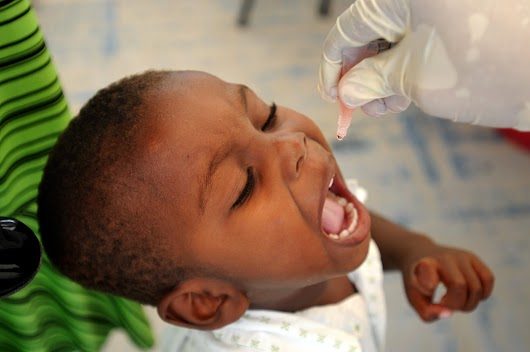
In the process of discerning how to stop polio permanently, health professionals must focus on the developing world.
Poliomylelitis, commonly known as polio, is a disease that spreads through contaminated water or food supplies. It can cause paralysis and in rare cases, even be lethal.
Most infected people (90 percent) have no visible symptoms of being infected with polio. However, some initial symptoms of the disease may include fever, fatigue, headache, and vomiting. These are quite similar to the symptoms of the common influenza virus.
However, as polio progresses, stiffness in the neck and pain in the limbs will occur.
The stiffness and pain then progresses into irreversible paralysis, usually in the legs of the infected person. So how does one stop an “invisible” disease? How to stop polio throughout the world?
The Polio Eradication and Strategic Endgame Plan 2013-2018 endeavors to build a polio-free world by 2018 through a four-step plan:
1. “Detect and interrupt all poliovirus transmission;
2. Strengthen immunization systems and withdraw oral polio vaccine;
3. Contain poliovirus and certify interruption of transmission;
4. Plan polio’s legacy.”
The first two steps are the most important when discerning how to stop polio. Detection of poliovirus is difficult, because there are two strains which have the ability to paralyze: wild poliovirus and circulating vaccine-derived poliovirus (cVDPV).
According to the WHO, polio has no known cure once a person is infected. However, there is an oral polio vaccine available.
An oral vaccine works by containing a weakened form of the virus (in this case poliomylelitis). This virus then enters the child’s bloodstream and activates an immune response.
The vaccine-virus then replicates in the child’s intestine for a limited period, building up crucial antibodies necessary for fighting off a future polio infection. The child then excretes this vaccine.
This excreted vaccine-virus will continue to survive and becomes a circulating vaccine-derived poliovirus (cVDPV). In developing countries with poor sanitation, cVDPV will infect people who haven’t received the vaccine yet.
Consequently, the oral vaccine can spread the disease just as often as it prevents it.
By contrast, the injectable poliovirus vaccine (IPV) does not have an active form of the poliovirus. Therefore, it cannot infect another individuals.
Switching from an oral poliovirus vaccine (OPV) to an injectable poliovirus vaccine (IPV) eliminates the potential of cVDPV occurring in a population.
The strain of poliovirus utilized in IPV shots is inactivated. When recipients excrete it, there is no chance of contracting polio from the excrement.
OPVs are often used in developing countries with large rural populations lacking in access to medical facilities. This is because oral polio vaccines do not require the sterile needles for injections.
The Polio Global Eradication Initiative seeks to make a smoother transition from the oral vaccine to an injected one by creating a multi-step process. Instead of immediately removing OPVs from circulation, they plan to first use a different OPV and supplement it with an IPV.
This transition must occur globally in order to be successful. A bivalent OPV will decrease the chance of cVDPV. Eventually, all countries will be able to switch to using IPV shots.
How to stop polio? Ensuring that all countries have access to proper medical care and sanitation services is a start. It is also important to continue to spread awareness of the importance of vaccinating children against polio.
– Bayley McComb
Photo: USAID

The Hidaya Foundation: Guiding to Education
Since its official launch in 1999, the Hidaya Foundation has participated in solutions to a wide range of global issues: making potable water accessible, planting trees, helping individuals create small businesses and more. The foundation also addresses public health issues through a dissemination of healthcare programs and medical camps to regions where treatments are difficult to obtain or simply not to be found.
Though it participates in many facets of humanitarian work, the principal aim of the Hidaya Foundation is to create educational opportunities in remote and impoverished areas. However, Hidaya’s founder, Waseem Baloch has pointed out that the promotion of education by itself in impoverished regions can be futile without other methods of support. “We realized that when people don’t even have one proper meal, how can they worry about education? Hence we support social welfare and health care as well.” Baloch said.
The Hidaya Foundation achieves its objectives by providing subsidies for orphans, operating and maintaining schools, funding education for impoverished individuals and even providing education courses to adults. In addition, the organization diverts at least half of its resources towards projects that center around agriculture, farming, science and technology.
The “No Orphan Without Education” project provides food, medicine, water and other commodities to ensure that the orphan has to worry about only his or her schooling. The foundation removes all obstacles that could impede the educational progress of involved orphans, and simply requires that the orphan is continuously attending school. All these services are provided based on need with a cost to the foundation of $10 per month for each orphan.
Impoverished students, from primary education to university levels, are able to receive support from the foundation to continue their education. The foundation is currently offering support to over 11,000 individuals. Support comes in the form of tuition fees, school supplies, housing costs etc. The foundation is able to support these students with anything from $5 to $50 a month depending on individual circumstances.
Through funds that are largely received from individual donors, hundreds of thousands of dollars are provided monthly to the Hidaya Foundation’s various humanitarian programs across Africa, Asia, and North America.
Financial support for the foundation has grown exponentially since 1999. In that year the organization fell just short of $112,000 in donations. Six years later, the foundation had raised over $4 million in support of its cause. This rapid growth has given the foundation the ability to begin hiring employees overseas and to develop teams that can respond efficiently to natural disasters when they strike.
Aamir Malik, the foundation’s IT and Advertising Director, and a long-time volunteer for the organization, commented on the rapid success of the foundation, “Donations have increased because Hidaya Foundation has been able to make an impact as it is quick to respond to calamities. Hidaya Foundation always backs up its work by updating the public about what it’s doing.”
The associates of the Hidaya Foundation are very optimistic about the future of the organization. They have confidence that the growth they have experienced will continue, and that they will be able to replicate their efforts in many more locations throughout the world.
– Preston Rust
Photo: Flickr
Rethinking Water Quality in the United States
Elevated levels of contaminants like E.coli can cause gastrointestinal illness, reproductive problems and neurological disorders in the immunologically comprised, such as infants, the elderly or individuals who are already ill.
The Center for Disease Control (CDC) also requires every community water supplier to provide an annual Consumer Confidence Report that includes information on the local drinking water quality, any contaminants found in the water supply and how consumers can get involved in protecting and upholding their water quality.
So how do water crises like the Flint water crisis, which drew national media coverage in January of this year, happen?
According to CNN, around two years ago, the state of Michigan decided to switch Flint’s water supply from Lake Huron to the Flint River, a local river notorious for being filthy. Residents of Flint did not believe the state government would actually go through with the switch, but they did, compromising the quality of drinking water available to the residents of the town.
The Flint River is highly corrosive and eroded the iron water mains as well as the lead service lines leading into residents’ homes, allowing near-toxic levels of iron and lead to enter the water (and the systems of anyone who dared drink the now-brown tap water).
Flint’s water crisis emphasizes the importance of activism at the individual level. Understanding where drinking water comes from and what constitutes good water quality in the United States is important, as is knowing how to contact your local representatives and voice your concerns.
If everyone was better informed about where his or her drinking water comes from, common water contaminants and symptoms of illnesses related to these contaminants, water crises like Flint could be avoided in the future.
– Bayley McComb
Photo: Flickr
Hippocampus Learning Centres: Education in Rural India
The most recent census published by the Indian government in 2011 reported 73 percent of India’s total population as literate. This is an increase from the 2001 census, which stated a 65 percent literacy rate.
At first glance these numbers seem may relatively low for a rapidly growing country with a huge presence in the global market. However, a gap in literacy rates based on location and gender becomes evident when looking more closely at the data.
Rural literacy is estimated to be 68 percent while the urban literacy rate is 84 percent. This disparity grows worse when looking at the difference in these rates among men and women in rural areas: 77 percent of men and only 58 percent of women can read and write.
One of the most commonly cited reasons for lower female literacy is the general attitude towards girls within Indian society. The Indian government has even acknowledged the country’s female infanticide problem.
Girls are seen as a burden due to the still prevalent dowry system in rural, traditional areas. Many families struggle to afford the price of marriage.
These statistics make it evident that India has a strong need for the Hippocampus Learning Centres.
Poverty is another major reason for the gap in education across the board in rural India. Poverty usually correlates with lower quality education as well as less access to schooling.
Many families within these communities rely on agriculture to survive. Consequently, it is common for children to spend their time working on their family’s land to help provide income and food. When these children are able to attend school, the quality of education they receive is sometimes unsatisfactory. In a Times of India article, the author recalls, “most classrooms weren’t being led by teachers, because there simply weren’t enough teachers to take each and every class.”
The Indian government implemented Sarva Shiksha Abhiyan (SAA) in 2001, “to provide for a variety of interventions for universal access and retention, bridging of gender and social category gaps in elementary education and improving the quality of learning.”
SAA has led to numerous schools being built as well as trained teachers and free school supplies. This act was designed to universalize and improve upon elementary education within India.
The program has helped to increase literacy, however reports of underpaid teachers and crumbling rural schools still remain. In addition to structural issues, problems such as the recent water crisis in Kanpur have strained the ability for children in these areas to attend school.
While these schools have a long way to go, Hippocampus Learning Centres are showing promise within rural areas. These centres are designed to fill the gaps within The Right to Education Act passed by the Indian government.
HLC views the current curriculum within rural Indian schools to be inadequate. These private supplemental learning institutions attempt to provide more education for the poor at a low cost, with the help of third party investors.
While Hippocampus Learning Centres show great promise within rural India, there is always room for progress. The continued investment into public schools within rural areas as well as supplemental learning centers could further close the education gap.
– Saroja Koneru
Photo: Flickr
How to End World Hunger in 10 Steps
Ending world hunger is far less complicated than most people assume. In a world where one in every nine people goes to bed hungry, how do governments and their respective societies ensure people have access to the nutrition they need? Many international organizations are leading the charge to end world hunger, setting manageable goals and creating guidelines to fight against poverty. The World Food Programme’s former executive director, Josette Sheeran outlined a straight-forward approach on how to end world hunger in 10 steps.
How to End World Hunger
The United Nations, UNICEF and The World Food Programme are just a few examples of groups that have brought widespread relief to nations around the globe.
– Jacob Hess
Photo: Flickr
PROMESA: A Bill to Address Poverty in Puerto Rico
Poverty in Puerto Rico continues to be a major issue, indicating that the island is anything but a “rich port.”
For many years, Puerto Rico has relied heavily on tourism to boost its economy, but the Zika virus, which is linked to severe birth defects and neurological diseases, has scared many tourists away during the peak of tourist season.
As a precaution against contracting the virus, tourists have canceled their plans to visit the island, resulting in a loss of about $28 million in revenue.
In addition, the island cannot pay its $72 billion of debt or meet the $30 billion shortfall in its state pension fund. At this rate, Puerto will soon run out of money.
According to The Week, for decades Puerto Rico issued bonds to cover budget deficits. However, the securities are exempt from federal, state and local taxes, making them attractive to investors. In 1996, Congress ended tax breaks for U.S. manufacturers operating in Puerto Rico. As a result, the island doubled its debt over the next 10 years.
Unemployment in Puerto Rico currently stands at more than 12 percent and the poverty rate is a staggering 45 percent. The Week also reports that the foreclosure rate is increasing, water and electricity rates have spiked and sales tax rose last year from seven to 11.5 percent, the highest in the U.S.
In addition, more than 440,000 Puerto Ricans have fled the country for mainland states, primarily nearby Florida.
In 2014, the U.S. Census estimated that 58 percent of children live below the federal poverty rate in Puerto Rico. It has been documented that children who experience poverty are at a higher risk for health problems, academic difficulties, criminal behaviors and unemployment. Children in Puerto Rico are faring worse than other U.S. Hispanics due to low quality early childhood care and education.
The Obama administration is working closely with Puerto Rico officials to resolve the crisis. They have dedicated a team to closely monitor the crisis and provide financial advice. The administration has aided in providing a steady flow of previously obligated federal funds to the island.
In May 2016, the U.S. House of Representatives proposed a bill that would create a federal control board to oversee Puerto Rico’s finances, manage any debt restructuring and enforce balanced budgets. On July 9, 2016, the U.S. House of Representatives approved the bill, sending it to Senate for consideration.
However, a $2 billion payment is due on July 1. Gov. Alejandro Padillo said in an appeal to the U.S. Senate in December, “We have no cash left.” In a statement, the White House urged Senate to act promptly “so the president can sign the bill into law ahead of the critical July 1 debt payment deadline.”
House Speaker Paul Ryan also insisted Congress act quickly, warning lawmakers of a “deepening crisis” on the island. Ryan said, “The island is shutting down with closed schools; hospitals are beginning to close, that’s today. Tomorrow there could be policemen without cars, there could be blackouts at hospitals.”
The Obama administration has warned that, if unaddressed, poverty in Puerto Rico could grow into a humanitarian crisis. If the bill is passed, Congress can provide the critical tools Puerto Rico needs to restructure its debt, fix its healthcare system and jumpstart its economy.
– Jacqueline Venuti
Photo: Flickr
The Economic Importance of Breastfeeding
The importance of breastfeeding is not limited to health benefits. Higher rates of breastfeeding reap economic benefits too, which in turn can alleviate the strain of poverty in developing nations.
According to a series of studies published in The Lancet, a British medical journal, if a greater number of women breastfed from birth through at least six months of their baby’s life, it could save nearly 820,000 lives and billions of dollars.
The United States Department of Agriculture (USDA) estimates that if 50 to 75 percent of mothers breastfed through six months, the U.S. alone would save $3.6 billion each year.
The actual savings could be even higher, as these figures come from the cost savings of only three illnesses that are most common among children who are not breastfed. Breastfeeding reduces the risk factor of many other diseases and health complications as well.
In poorer countries, breastfeeding substantially reduces the number of childhood deaths from preventable diseases such as pneumonia and diarrhea.
These diseases are most commonly found in children in poor and underdeveloped countries, which typically already suffer huge economic losses from health problems.
Not only can breastfeeding greatly reduce the risk of these health problems, it can also save millions that would be spent treating these diseases after the fact.
The continued evidence of the importance of breastfeeding is greatly heartening. The difficulty is in getting this critical information to the women who need it most.
As a Huffington Post article explains, the real and current battle involves increasing awareness and education specifically to poorer mothers about the importance of breastfeeding.
Investments in healthcare programs in developing countries should continue focusing on health education, with a strong priority on basic elements of women’s health.
By increasing awareness of women’s health, including the importance of breastfeeding, countries can save many precious lives and valuable resources.
– Emily Milakovic
Photo: Flickr
Three Year Plan to Rebuild Schools After Nepal Earthquake
The 2015 Nepal earthquake left over 1 million children without a school. A little over a year has passed since the 7.8 magnitude earthquake that killed thousands.
However, unrepaired damage continues to plague the country. The scope of the damage and political difficulties have meant much of the country still lies in rubble.
But the nation is making progress. Newly announced plans for reconstruction have set a three-year timeline for various progress goals, with education infrastructure named a top priority.
The Nepal earthquake destroyed 17,000 classrooms of nearly 8,000 schools, and the aftershocks damaged an additional 20,000 classrooms. While the donations obtained as of April 2016 tallied approximately $200 million, this was sufficient to repair only 1,700 schools.
Due to limited funding, the initial rebuilding efforts will focus primarily on education infrastructure in the hardest hit regions of the country. Over the course of three years, the national government hopes to accomplish significant rebuilding.
The overall economic impact of the earthquake on Nepal is estimated at nearly $7 billion. The country’s long history of political tension, combined with the magnitude of reparations needed, has led to an atmosphere of political urgency.
These tensions have aggravated preexisting political divides and slowed down measures to hasten reconstruction. Frustration with the situation has led to protests following the earthquake, making the need for efficient rebuilding of education infrastructure all the more urgent.
In the months following the earthquake, many students had to use temporary classrooms. These classrooms are not strong enough to withstand heavy Nepal weather (including monsoons). However, students have already used them for an entire winter season.
For those involved in the rebuilding efforts of prior learning spaces, avoiding the continued use of these classrooms is a top priority in order to provide students with a safe and stable learning environment.
The Nepal government continues to seek methods for resolving political differences and hastening reconstruction as much as possible. However, the three year-plan emphasizing education infrastructure represents major progress.
Additionally, humanitarian development organizations such as Plan International have contributed in the wake of the disaster. The organization recognized the importance of this project and hence began a classroom-rebuilding initiative.
Plan International seeks to rebuild 20 of the schools that the Nepal earthquake destroyed. They also plan to repair 1,600 damaged classrooms.
In order to further extend the positive impact of these schools, the buildings will have reinforcements that can withstand tough weather conditions. Additionally, Plan International will provide extreme weather training for students and teachers.
The students who lost their learning spaces in the Nepal earthquake will gain more than a building from this project.
They also represent increased safety for students. Schools not only provide education, but they also operate as a safe space. This rebuilding project could enact a decline in exploitation, child marriage and trafficking threats.
– Charlotte Bellomy
Photo: CNN
How to Stop Polio for Good in the Developing World
In the process of discerning how to stop polio permanently, health professionals must focus on the developing world.
Poliomylelitis, commonly known as polio, is a disease that spreads through contaminated water or food supplies. It can cause paralysis and in rare cases, even be lethal.
Most infected people (90 percent) have no visible symptoms of being infected with polio. However, some initial symptoms of the disease may include fever, fatigue, headache, and vomiting. These are quite similar to the symptoms of the common influenza virus.
However, as polio progresses, stiffness in the neck and pain in the limbs will occur.
The stiffness and pain then progresses into irreversible paralysis, usually in the legs of the infected person. So how does one stop an “invisible” disease? How to stop polio throughout the world?
The Polio Eradication and Strategic Endgame Plan 2013-2018 endeavors to build a polio-free world by 2018 through a four-step plan:
1. “Detect and interrupt all poliovirus transmission;
2. Strengthen immunization systems and withdraw oral polio vaccine;
3. Contain poliovirus and certify interruption of transmission;
4. Plan polio’s legacy.”
The first two steps are the most important when discerning how to stop polio. Detection of poliovirus is difficult, because there are two strains which have the ability to paralyze: wild poliovirus and circulating vaccine-derived poliovirus (cVDPV).
According to the WHO, polio has no known cure once a person is infected. However, there is an oral polio vaccine available.
An oral vaccine works by containing a weakened form of the virus (in this case poliomylelitis). This virus then enters the child’s bloodstream and activates an immune response.
The vaccine-virus then replicates in the child’s intestine for a limited period, building up crucial antibodies necessary for fighting off a future polio infection. The child then excretes this vaccine.
This excreted vaccine-virus will continue to survive and becomes a circulating vaccine-derived poliovirus (cVDPV). In developing countries with poor sanitation, cVDPV will infect people who haven’t received the vaccine yet.
Consequently, the oral vaccine can spread the disease just as often as it prevents it.
By contrast, the injectable poliovirus vaccine (IPV) does not have an active form of the poliovirus. Therefore, it cannot infect another individuals.
Switching from an oral poliovirus vaccine (OPV) to an injectable poliovirus vaccine (IPV) eliminates the potential of cVDPV occurring in a population.
The strain of poliovirus utilized in IPV shots is inactivated. When recipients excrete it, there is no chance of contracting polio from the excrement.
OPVs are often used in developing countries with large rural populations lacking in access to medical facilities. This is because oral polio vaccines do not require the sterile needles for injections.
The Polio Global Eradication Initiative seeks to make a smoother transition from the oral vaccine to an injected one by creating a multi-step process. Instead of immediately removing OPVs from circulation, they plan to first use a different OPV and supplement it with an IPV.
This transition must occur globally in order to be successful. A bivalent OPV will decrease the chance of cVDPV. Eventually, all countries will be able to switch to using IPV shots.
How to stop polio? Ensuring that all countries have access to proper medical care and sanitation services is a start. It is also important to continue to spread awareness of the importance of vaccinating children against polio.
– Bayley McComb
Photo: USAID
Olam International Pledges to Help End Global Poverty
Agri-business firm Olam International has pledged to help eradicate global poverty and mitigate climate change impacts that threaten food security.
Olam International is a world-leading firm operating in 70 countries, supplying food and raw materials to over 16,200 customers worldwide. Its business model is based on ensuring that profitable growth is achieved in an ethical, socially responsible and environmentally sustainable way.
The agri-business knows its responsibility to the earth, as changing weather patterns are affecting crops and communities. The organization realizes that climate change will threaten food security by creating less than ideal conditions for optimal food production, thus threatening the world’s chances to end global poverty.
According to Olam, “Ensuring we and our 4 million farmer suppliers, the vast majority of whom are smallholders in emerging markets, are implementing mitigation and adaptation measures to achieve the 2°C goal is therefore integral to our strategy.” In addition, the company has adopted four of the 17 Sustainable Development Goals set out by the United Nations.
“Based on our configuration of assets and our capabilities across the 70 countries that we operate in, we have chosen four of the SDG Goals where we believe we can create a real impact,” said Sunny Verghese, the chief executive of Olam, at the U.N.’s High Level Thematic Debate on Achieving the Sustainable Development Goals.
Olam is prioritizing mitigating climate change through multiple goals: reducing GHG emissions from their farming and processing operations, adapting their own farming operations to build in climate resilience, encouraging farmer suppliers and logistics providers to improve their GHG emissions intensity and collaborating at a sector level to speed up implementation of climate-smart practices.
Olam will accomplish these goals through public, private and plural society partnership. Verghese said at the debate that a U.N.-to-private-sector partnership is key to successfully implementing the SDGs.
Verghese went on to say, “If after all of this hard work and overwhelming effort, if we are not going to be leaving a better place for our children, what is the point of it all?”
– Kerri Whelan
Photo: Flickr
Debt Crisis Bill Reduces Child Poverty in Puerto Rico
The United States House of Representatives amended the Puerto Rico debt crisis legislation and passed a bill aimed to reduce child poverty in Puerto Rico.
The legislation received support from both parties and passed in a landslide last Thursday. The voice vote approved the bill at 297-127.
The amendment will now move to the U.S. senate, where it is expected to receive a similar level of support.
Representatives David Jolly and Carlos Curbelo (R-FL) were the coauthors of the bill. It is a part of the Puerto Rico Oversight, Management and Economic Stability Act, or PROMESA.
PROMESA is designed to allow the Puerto Rican debt commission to continue its work on a professional survey of the debt plaguing the island.
However, the second part of the amendment requires the territory’s Congressional Task Force on Economic Growth to report any recommended programs or changes to federal law needed to reduce the number of children living in poverty in Puerto Rico.
According to the most recent Community Report of the U.S. Census from 2010, 56 percent of Puerto Rico’s children live below the poverty line. Some estimates are even higher.
The island is also $72 billion in debt. Because of this major debt crisis, the territory has had to close nearly 250 schools and hospitals. The crisis also forced them to lay off many workers.
But it wasn’t just the high poverty rate that motivated this bill. The debt crisis negotiations took on a high level of urgency due to the recent breakout of the mosquito-born virus known as Zika.
The territory may see a significant number of cases of this virus. In addition, the outbreak would likely add to the strain the island is already facing in its public health district. This could lead to an even bigger increase in poverty levels, and it has prompted U.S. policy makers to act.
The executive director of the religious development coalition Jubilee USA, Erin LeCompte, was a strong advocate for the amendment.
He said that it was important to design the language of the bill to create a clear set of targets for child poverty reduction. He labeled the amendment as a “moral imperative.”
“Child poverty in Puerto Rico is its own crisis. I’m grateful for such bipartisan support in the House of Representatives to address the high child poverty rates in Puerto Rico. As we reduce the debt we must reduce the 56% child poverty rate on the island,” LeCompte said.
A number of additional religious groups also supported the child poverty reduction amendment. Some of these include the US Conference of Catholic Bishops, Catholic Charities USA, the United Methodist Church, the Presbyterian Church of USA, the United Church of Christ, the Union of Reform Judaism and the Church of the Brethren.
– Katie Grovatt
Photo: Flickr