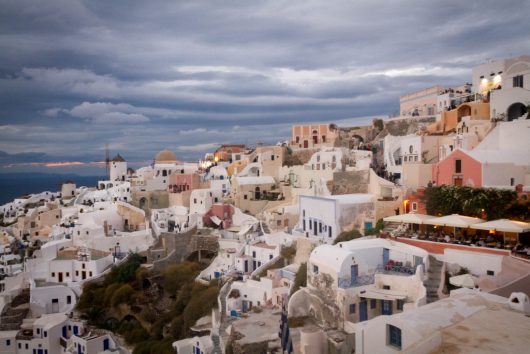
 Many know the island of Lesbos as a small, quiet vacation island. It embodies the quaint characteristics of Greece, with its freshly caught fish and rural roads through mountain ranges. But what many people do not know is that Lesbos also accepted nearly 60 percent of the migrants that entered Greece last year because of its location at the northern tip of the country.
The small town of around 100 residents became a familiar name for media centers around the world covering the refugee crisis, as most Middle Easterners seeking asylum, shelter and safety arrive in the town on a daily basis.
Already doomed by the government’s economic crisis, the island has been overwhelmed with balancing compassion and aid for refugees while having their tourist-dependent economy wane because of the arrival of the refugees. Along with the refugees, international organizations like the United Nations and other NGOs also began to arrive in an attempt to stabilize the region and help the refugees. One of the most notable of these organizations is Lighthouse Relief.
LightHouse Relief, a Swedish nonprofit organization, works to provide relief to refugees who arrive in the Katsikas and Ritsona camps in mainland Greece, in addition to providing ecological support of Lesvos. Skilled volunteers from around the world give their time to work with the organization on the ground to help people.
The organization was started in September 2015 by a group of volunteers working on the northeastern coast of Lesvos in Skala Sikamineas. There were no other organizations present at that time to help the Greeks who were attempting to aid the incoming refugees, so LightHouse Relief volunteers rented nearby land and prepared to have a long-term presence.
The organization’s main goal is to provide relief to children, women, and the elderly through their various programs and initial help of migrants when they arrive on shore. Since October 2015, LightHouse Relief has been able to provide a reception camp with electrically-heated tents and playgrounds for children.
One of their biggest projects is Lighthouse ECO Relief,which stands for Environmental Clean-Up Operation. So far, 600,000 lifejackets and 10,000 rubber dinghies have been discarded on the shores all around Lesvos, hurting the ecosystem of the area and making it a more dangerous destination for subsequent migrants. This project removes trash, lifejackets and broken boats.
All volunteers have to at least be 21 and committed to staying for a minimum of three weeks. Holidays are no exception, as multiple volunteers were standing on the shore waiting for migrants to arrive on Christmas morning, prepared to give warm clothes and a Christmas Dinner on the beach to help the refugees feel as though they were home as well.
Volunteers must also have some sort of a background in the resources that the organization tries to provide. From nutrition to being a midwife, to language skills, all of their volunteers are prepared to have lasting effects on all of the people they encounter.
– Ashley Morefield
Photo: Flickr

Why the World’s Aid to Education Dropped Again
The fourth agenda of the Sustainable Development Goals aims to “ensure inclusive and equitable quality education and promote lifelong learning opportunities for all.” This includes ensuring “that all girls and boys complete free, equitable and quality primary and secondary education” by 2030.
According to the Education for All Global Monitoring Report, this would require an annual total cost averaging $340 billion between 2015 and 2030 for low and lower income countries, more than double the amount previously estimated. The cost will more than triple in low income countries. This is mainly due to population growth and lower GDP per capita in developing countries.
In this context, the decline in aid to education seems alarming. Four of the main donors, France, Japan, Netherlands and Canada decreased their support due to domestic austerity measures while facing economic depression. The Netherlands, for one, cut their aid by over a third in 2011. As Pauline Rose, director of the Education for All Global Monitoring Report, said, “it is essential that donors maintain their funding, and make sure it is reaching the countries—and children—most in need.”
Furthermore, analysis shows the steepest drop in aid to education in Sub-Saharan Africa, where half of the world’s out of school children reside. Of the “57 million out-of-school children of primary age, almost half (49 percent) will probably never enter school. A further 23 percent have attended school but dropped out, and the remaining 28 percent are expected to enter school in the future.”
Precedence in the region suggests that this drop is not a one-time occurrence but part of a continuing stagnation. The educational progress of this region has been closely related to economic growth. In periods of steady growth of an annual one to two percent per capita, more resources were allocated to education although the school age population had actually increased. This implies that a long-term solution must include investment in local businesses and infrastructure, in addition to education itself.
– Haena Chu
LightHouse Relief Brings Hope to Refugees on Greek Shores
The small town of around 100 residents became a familiar name for media centers around the world covering the refugee crisis, as most Middle Easterners seeking asylum, shelter and safety arrive in the town on a daily basis.
Already doomed by the government’s economic crisis, the island has been overwhelmed with balancing compassion and aid for refugees while having their tourist-dependent economy wane because of the arrival of the refugees. Along with the refugees, international organizations like the United Nations and other NGOs also began to arrive in an attempt to stabilize the region and help the refugees. One of the most notable of these organizations is Lighthouse Relief.
LightHouse Relief, a Swedish nonprofit organization, works to provide relief to refugees who arrive in the Katsikas and Ritsona camps in mainland Greece, in addition to providing ecological support of Lesvos. Skilled volunteers from around the world give their time to work with the organization on the ground to help people.
The organization was started in September 2015 by a group of volunteers working on the northeastern coast of Lesvos in Skala Sikamineas. There were no other organizations present at that time to help the Greeks who were attempting to aid the incoming refugees, so LightHouse Relief volunteers rented nearby land and prepared to have a long-term presence.
The organization’s main goal is to provide relief to children, women, and the elderly through their various programs and initial help of migrants when they arrive on shore. Since October 2015, LightHouse Relief has been able to provide a reception camp with electrically-heated tents and playgrounds for children.
One of their biggest projects is Lighthouse ECO Relief,which stands for Environmental Clean-Up Operation. So far, 600,000 lifejackets and 10,000 rubber dinghies have been discarded on the shores all around Lesvos, hurting the ecosystem of the area and making it a more dangerous destination for subsequent migrants. This project removes trash, lifejackets and broken boats.
All volunteers have to at least be 21 and committed to staying for a minimum of three weeks. Holidays are no exception, as multiple volunteers were standing on the shore waiting for migrants to arrive on Christmas morning, prepared to give warm clothes and a Christmas Dinner on the beach to help the refugees feel as though they were home as well.
Volunteers must also have some sort of a background in the resources that the organization tries to provide. From nutrition to being a midwife, to language skills, all of their volunteers are prepared to have lasting effects on all of the people they encounter.
– Ashley Morefield
Photo: Flickr
3 Quotes from Donald Trump About Foreign Aid
With the Democratic and Republican National Conventions coming up in July, now is a crucial time for voters concerned with U.S. foreign aid to review the candidates’ platforms.
Republican presidential candidate Donald Trump has voiced a spread of controversial beliefs about many issues during his presidential campaign. According to Impact 2016, a non-partisan initiative of the USGLC, Trump’s foreign policy platform is currently small.
He is a self-proclaimed master of the “art of the deal” who claims to hold the ability to negotiate from international business experience. Some of his major foreign policy points have been his concern with creating a stronger military and deterring Mexicans and Syrian refugees from immigrating to the U.S.
In regard to foreign aid, Impact 2016 reports that Trump has emphasized domestic development over global development during his candidacy and in past statements. Considering this fact, here are three thought-provoking quotes from Donald Trump about what he thinks of the U.S. giving foreign aid to developing nations.
Trump’s vision seems to be overwhelming against increasing U.S. foreign aid. Even so, perhaps some of his comments, such as the one about PEPFAR, show that he is willing to promote certain government humanitarian organizations in select cases.
Hopefully, Trump’s comments about foreign aid listed here and elsewhere are informative and helpful to voters as they decide which candidate will best address global poverty and the stability of the world.
For more quotes from Donald Trump on foreign aid, please see this article from The Borgen Project.
– Addie Pazzynski
Photo: Flickr
Ecuador Looks for Education Solutions Following Earthquake
UNESCO’s Santiago regional office is working with the Ecuador Education Ministry, UNICEF, Plan International and Save the Children to find temporary solutions to improve Ecuador’s education sector in the months following its worst natural disaster in decades.
The earthquake that struck Ecuador on April 26 left parts of the country in ruins, killed more than 650 people and left many more injured, according to The United Nations High Commission for Refugees (UNHCR).
Their report states that some 73,000 displaced people live in organized shelters and camps, either with host families or in random sites around the country.
The goal is to establish temporary educational spaces that allow the continuation of classes and educational activities in secure spaces so that the primary and secondary education of children is not further disrupted following the earthquake.
“Education is a lifeline for children going through the trauma of chaos and destruction,” said Grant Leaity, UNICEF Representative in Ecuador. “It helps give them a daily routine and a sense of purpose and puts them on track for psychological recovery.” Education is key for these children, both short term and long term.
According to UNICEF, over 280 schools were damaged by the earthquake. This left approximately 120,000 children out of education.
UNICEF is currently working with the Ecuadorian government to help children return to their regular routines by providing 50 temporary learning spaces for 20,000 children. The organization also aims to distribute basic school supplies to 60,000 children and teenagers in 700 different schools.
– Michelle Simon
Photo: Flickr
DREAMS Innovation Challenge: Empowering Young Girls
On March 15, 2016, the U.S. Global Strategy to Empower Adolescent Girls was launched by Secretary Kerry. According to the U.S. Department of State Official Blog, “Investing in girls’ education is not only the right thing to do, it’s the smart thing.”
In September 2015, the Sustainable Development Goals were adopted by 193 nations. They seek to achieve these goals by 2030. The investment in girls’ education supports the targets of quality education, gender equality, suitable work opportunities and good health.
The DREAMS Innovation Challenge is an organization that is offering $85 million for innovative approaches to reduce HIV infections in young girls in sub-Saharan Africa.
Part of achieving an AIDS-free generation is empowering young girls through education. DREAMS has partnered with PEPFAR (President’s Emergency Plan for Aids Relief) to address the social isolation, economic disadvantage, discriminatory cultural norms, orphanhood and gender-based bias that prevents adolescent girls from attending or remaining in school.
Similarly, Let Girls Learn, a United States initiative to ensure girls receive an education, recognizes that keeping girls in school can transform their families, communities and countries. Societies with educated women are healthier and stronger because more of the population has the skills, expertise and self-assurance to lift themselves out of poverty.
Providing adequate resources and opportunities for empowering young girls to pursue their dreams facilitates global development, security and prosperity. The gender and age of children should not be seen as setbacks. Rather, they are key factors in a society’s ability to grow socially and economically.
As stated in the Executive Summary of the U.S. Global Strategy to Empower Adolescent Girls, “While adolescence is a time of great vulnerability for girls, it is also an ideal point to leverage development and diplomacy efforts. It is an opportunity to disrupt poverty from becoming a permanent condition that is passed from one generation to the next.”
– Emily Ednoff
Photo: Flickr
Students in South Africa Protest Rising Costs of Education
The government budget for the past year only temporarily fixed the financial issues being protested, and violence continues. Students at the University of the Free State were attacked during their protest by rugby spectators, while students at Pretoria University have burned buses and artwork in clashes over language instruction policies.
A possible solution to the issue would involve allotting more funding in the next budget for public education and universities. If tuition prices were lowered, more students in South Africa would be able to attend university, thus beginning to dispel the conflict over tuition prices.
Protests began at Tshwane University of Technology, where students were unable to register for courses because of their outstanding debt. The National Student Financial Aid Scheme (NSFAS) was incapable of meeting its funding commitments, causing a wave of anger amongst the students when their education was disrupted by this failure of the NSFAS. Additional funding for NSFAS was included in the 2016 budget in attempt to dispel protests, but the protesters are still active and escalating in violence.
Education continues to suffer in South Africa due to the unaffordable costs of higher education. A majority of the funding to remedy the protests has gone to North-West University, where academic activities were suspended for over a month.
The shadow higher education minister, Belinda Bozzoli, claims that “radical student groups” had “directed money away from the legitimate needs of thousands of poor students.” She says that though some of the damages can be covered by insurers, universities are suffering and unable to provide adequate education while under attack.
Inequality in South Africa is a major cause for the protests. Approximately 70 percent of South Africans are paid so little that they qualify for free state housing. These citizens cannot afford university tuition fees.
Students in South Africa in poor financial situations can apply for a bursary to fund part of their education. However, students must pay off a portion of debt before graduating and pay their loans in full immediately upon graduation.
As a result of the conflict over tuition prices, the government has continued to freeze the increasing tuition prices for two years—a short-term solution for a long-term, foundational issue.
– Amanda Panella
Photo: Flickr
Is the United States Doing Enough for the Poor?
With nearly 842 million people suffering from chronic hunger, the role of the United States in eradicating global poverty is becoming more important.
President Obama’s Feed the Future program aims to “strengthen food security and nutrition for millions of people by focusing on the smallholder farmers at the foundation of the world’s agriculture system.” USAID reported that targeting the agricultural sector, like the program does, is “at least twice as effective at reducing poverty as growth in other sectors.”
Initiatives similar to Obama’s Feed the Future give the appearance that the United States is doing enough for the poor globally. The Center for Global Development produces an annual report called “The Commitment to Development” Index, which rates a country’s finance, technology, environment, trade, security, migration and overall aid in the past year. The United States was ranked 21 out of 27 developed countries, which puts them in the bottom third based on foreign aid.
While ranked 6th in both trade and security aid, the Center for Global Development rated the United States as 27th and 26th in the finance and environment aid categories. That puts the most prominent developed nation behind countries in economic snafus like Greece and Ireland in those categories. The data analysis blames the low ranking on “improper environmental monitoring and a low score on the Financial Secrecy Index.”
A PhD student from Stanford University named Lauren Prather researched why countries like the United States post such low foreign aid numbers. Her study compared a population’s desire to give with the amount that was actually given. In the end, she found “a clear relationship between citizens’ support for foreign aid and the amount their country gives.”
Does that mean that the average person in the United States is not doing enough for the poor globally? Prather conducted another study measuring an American’s chance of providing aid based on where it is going. Prather a survey of 1000 people and found that “A majority of Americans supported giving both food and money to their conationals, while a majority supported cutting both entirely for foreigners.”
Prather’s research and “The Commitment to Development” Index reveal the United States’ lack of urgency when it comes providing foreign aid. In addition, a Gallup poll released in 2014 shows that African approval of U.S. leadership dropped to a record low of 59 percent.
Research indicates that procrastinating the objective of poverty eradication is a threat to the global political and economic order. “The weaknesses of poor states could destabilize the entire international system,” asserts Vincent Ferraro, author of a Wilson Center report titled “Should Global Poverty be a U.S. National Security Issue?”
The perception that the United States is doing enough for the poor globally via foreign aid is quickly corrected by research and data done by several organizations. Programs supported by USAID like Feed the Future can provide another way forward in the global arena of poverty relief. Ferraro concludes by saying, “A reformulation of the national interest to include global interests is necessary because our world scarcely resembles that of 17th century Europe.”
– Jacob Hess
Photo: Flickr
These Publicly Listed Firms Are Fighting Poverty in India
In January 2016, Narayana Health was publicly listed on the Bombay Stock Exchange and was immediately valued at $1 billion. Narayana Health was founded in 2000 as a private firm that provided heart surgeries and checkups to low-income individuals at affordable costs.
The expansion of the private firms in the healthcare sector of India, especially the development of firms catering to impoverished communities, is compensating for the lack of government expenditure on public healthcare.
In addition, the World Bank estimates that as of 2014 India only spends 4.7 percent of its gross domestic product (GDP) on healthcare. Most developed countries spend almost double this percentage on healthcare, with the U.S. at a high of 17.1 percent.
Ujjivan, a private microfinance firm based in India, also went public on April 28 of this year. The financial services firm provides small, interest-free loans to women in poverty. Founded in 2005, Ujjivan is now worth over $600 million (40 billion Indian Rupees) and is expecting to transform into a small bank for the poor.
The firm has also started to give loans to micro and small enterprises, with the aim of reducing poverty in India at the individual level.
These loans allow women and small enterprises to develop their own businesses without having to go through the tedious and often unsuccessful process of obtaining a bank loan. Forbes contributor Nish Acharya reported that “the poorest people in the world, who, contrary to conventional wisdom, had a higher repayment rate than the typical borrower.”
According to Forbes, the “social enterprise” model allows for the business to be more innovative in terms of solutions, as they have the larger focus on raising quality of living standards.
The success of these firms will perhaps become a model for other social entrepreneurs around the world, going beyond alleviating poverty in India.
– Isabella Farr
Photo: Flickr
Sustainable Relief: How Helping the Individual Helps the Group
When fighting poverty, reaching the most people possible with the least amount of resources is the goal of many organizations providing direct help, but this may not be a sustainable relief method.
Most international groups provide relief through vast shipments of medical supplies, food and clean water. Such large-scale approaches do their best to relieve the pressures of malnourishment and poor sanitation, but they are temporary solutions that require constant replenishment.
More sustainable relief methods are being used which empower an individual or a group of individuals to create solutions that are self-sufficient. When one person can resolve their own situation, the group benefits from that individual’s new income, access to food or other general life improvements.
An example of this is the empowerment of Edith, an urban farmer in Zimbabwe. A food shortage in the country has caused many communities to experience stunting in the growth rates of the youth and adults. According to ONE, an organization working to end preventable disease and extreme poverty in Africa, “less than a fifth of children [in Zimbabwe] under two receive the recommended minimum acceptable diet for adequate nutrition.” The result has been that “28 percent [of children in Zimbabwe] are stunted or have heights too low for their age.”
Directly providing the proper nutrients to the individuals that need them is a big challenge. Instead of large-scale international shipments, local projects financed by the U.N. are empowering individual farmers in the community, like Edith, to provide the necessary food to her peers. Without the financial aid of the U.N., “we cannot afford to water our home gardens as the municipality imposes stiff penalties on excessive water use,” she says.
Edith is part of a program that provides small community farmers with the appropriate seeds and tools like a solar-powered borehole. With the new machinery, she and a handful of other farmers have successfully reduced the level of malnutrition in her village. “This is certainly boosting not only our purses but most importantly nutrition,” reports Edith.
The Organization for Economic Cooperation and Development (OECD) has endorsed this bottom-up approach as an essential way to reduce poverty. In a paper produced by the organization, individual empowerment is heralded as the key to achieving sustainable development goals. More specifically, these four good donor practices are highlighted by the research:
All of these points stress the importance of an individual’s political and economic freedom, allowing them to rise out of poverty on their own. Edith’s story exemplifies the ability of financial empowerment to expand the potential of the individual, ultimately benefiting his or her community as a whole.
– Jacob Hess
Photo: Public Domain Image
Hunger in the Isle of Man
In recent years there has been a rise in the rates of hunger in the Isle of Man. Captain Simon Clampton from the Salvation Army tells the BBC, “when people think of the Isle of Man they think of an affluent society but we have a hidden problem”.
In 2012 the Manx Salvation Army reported increasing rates of hunger, as indicated by the over 500 food appeals made by individuals and families. Although this number may seem insignificant compared to the 87,545 population (as of 2015), hunger rates are expected to increase. In an effort to assist the “hidden hungry“, multiple organizations have created and donated to food banks on the Isle of Man.
A Steering committee has planned to establish food banks throughout the island, based on the current U.K. system. Sue Johnson, a member of the committee thinks that many citizens suffering from hunger in the Isle of Man may be hesitant to ask for help.
This reality could explain why hunger rates in the country have yet to be officially reported by the CIA World Fact Book. However, the committee is devoted to helping anyone in need of assistance. Johnson tells the BBC, “I think we will be surprised at not only the amount of people who come forward, but with the type of people who come forward. These are difficult economic times and we want to put in a system which acts as a sort of safety net”.
The Isle of Man Food Bank, established in 2013, provides those in need not only with food, but also diapers and other baby items, toiletries, kitchen utensils and guidance.
The food bank, along with the Housing Matters homeless charity organization, started gardening in 2015 to supplement donations to the food bank.
The Salvation Army, Housing Matters, Crossroads Care, the Church of England and local homeless charity Kemmryk have all contributed to the food bank project on the Isle of Man.
Although hunger in the Isle of Man has been on the rise since 2012, recent food bank projects are working to support citizens who are struggling financially.
– Carrie Robinson
Photo: Flickr