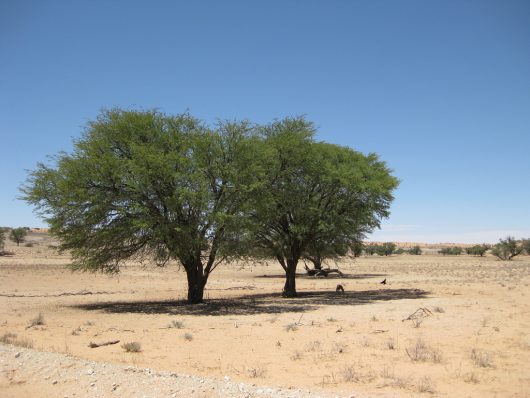
A group of friends envisioned an environmentally friendly business. They combined one friend’s knowledge of tree planting with the world’s desire for apparel, which is how Tentree was formed.
For every item purchased from the clothing line, 10 trees are planted. In an article published by the Business Development Bank of Canada (BDC), the company measures its success not on profits but by how many trees they have planted.
Tentree’s website includes an interactive map which displays where the trees have been planted all over the world. As of September 2016, the company has planted 9,382,290 trees. The following is a list of countries and its respective number of trees planted:
- Madagascar – 4,936,830
- Senegal – 1,395,500
- Nepal – 1,463,290
- Ethiopia – 724,140
- India – 135,800
- Malawi – 225,000
- Kenya – 149,540
- Canada – 57,780
- Haiti – 278,560
- Cambodia – 10,290
- United States – 5,000
The website includes information on what individual consumers’ trees accomplish for the world and community. Some important contributions made by trees that are highlighted include lifting water out of the soil, providing food for the local population, supplying oxygen to breathe and removing carbon dioxide from the air.
A village in Madagascar, Mahabana, has seen the largest number of trees planted and the greatest improvement from the program. Tentree started a project in the village with 40 people working to plant trees.
In an interview with Now This, Kalen Emsley, one of the co-founders of the company reports that the project has grown to over 450 people working full time, completely supported by Tentree.
The restoration of the ecosystem of mangrove trees has lead to a return in wildlife, a rebounding fishing industry and people have been able to start selling fruit.
According to Canadian Broadcasting Corporation (CBC), Tentree planted 7,000 trees in the Lac La Ronge Provincial Park along with the government in the province after forest fires ravaged parts of Saskatchewan.
The forest fires burned parts of the park in 2015. Tentree announced their plans to help replant trees at the Saskatchewan Fashion Week. They shipped donations of clothing people who were evacuated in the Fort McMurray wildfire this summer and are beginning to make plans for replanting in that area.
Tentree hopes their environmentally friendly business goes beyond helping the environment. They work with local and global nonprofit organizations to ensure prime results like WeForest, Canadian Wildlife Federation, Eden Reforestation, American Forests and Trees for the Future. They hire people from the local communities to grow, tend and plant the trees.
As stated on the Tentree website: “Every consumer that purchases a Tentree branded piece of clothing is showing their dedication to the values our team shares: environmental stewardship, social responsibility, and the hope for a brighter future.” Tentree hopes to make a lasting community, both locally and globally, with their environmentally friendly business of clothing and tree planting.
– Rhonda Marrone
Photo: Flickr

Tentree: Environmentally Friendly Business Through Selling Clothes
A group of friends envisioned an environmentally friendly business. They combined one friend’s knowledge of tree planting with the world’s desire for apparel, which is how Tentree was formed.
For every item purchased from the clothing line, 10 trees are planted. In an article published by the Business Development Bank of Canada (BDC), the company measures its success not on profits but by how many trees they have planted.
Tentree’s website includes an interactive map which displays where the trees have been planted all over the world. As of September 2016, the company has planted 9,382,290 trees. The following is a list of countries and its respective number of trees planted:
The website includes information on what individual consumers’ trees accomplish for the world and community. Some important contributions made by trees that are highlighted include lifting water out of the soil, providing food for the local population, supplying oxygen to breathe and removing carbon dioxide from the air.
A village in Madagascar, Mahabana, has seen the largest number of trees planted and the greatest improvement from the program. Tentree started a project in the village with 40 people working to plant trees.
In an interview with Now This, Kalen Emsley, one of the co-founders of the company reports that the project has grown to over 450 people working full time, completely supported by Tentree.
The restoration of the ecosystem of mangrove trees has lead to a return in wildlife, a rebounding fishing industry and people have been able to start selling fruit.
According to Canadian Broadcasting Corporation (CBC), Tentree planted 7,000 trees in the Lac La Ronge Provincial Park along with the government in the province after forest fires ravaged parts of Saskatchewan.
The forest fires burned parts of the park in 2015. Tentree announced their plans to help replant trees at the Saskatchewan Fashion Week. They shipped donations of clothing people who were evacuated in the Fort McMurray wildfire this summer and are beginning to make plans for replanting in that area.
Tentree hopes their environmentally friendly business goes beyond helping the environment. They work with local and global nonprofit organizations to ensure prime results like WeForest, Canadian Wildlife Federation, Eden Reforestation, American Forests and Trees for the Future. They hire people from the local communities to grow, tend and plant the trees.
As stated on the Tentree website: “Every consumer that purchases a Tentree branded piece of clothing is showing their dedication to the values our team shares: environmental stewardship, social responsibility, and the hope for a brighter future.” Tentree hopes to make a lasting community, both locally and globally, with their environmentally friendly business of clothing and tree planting.
– Rhonda Marrone
Photo: Flickr
Inequality and Hunger in Colombia
Colombia is the second largest country in South America, with a population of 47.7 million people. It also boasts the third-largest economy in the region with a poverty level below 30 percent. Despite these promising statistics, hunger in Colombia is an important problem.
The Colombian Platform for Human Rights, Democracy and Development reports that at least 41 percent of Colombian households are affected by food insecurity, and rates of food insecurity in rural areas may be as high as 58.8 percent. In fact, between 15,000 and 40,000 people die every year in Colombia due to the direct or indirect consequences of hunger.
In recent decades, Colombia has restructured its domestic food transactions so as to better compete with the global market. The strategy, implemented in the 1990s, was hailed as “the social management of land.” It focused on ensuring that the country exported “economically relevant” goods, and consolidated regional competition agreements and rural entrepreneurial projects. Food production for domestic consumption is discouraged and policies that benefit large export agribusiness companies are supported instead.
Income and land inequality plague Colombia. The richest 20 percent of the population controls 62.7 percent of the national income, while the poorest 20 percent receives a mere 2.5 percent. National land ownership patterns look the same. A mere 0.06 percent of landholders own 53.5 percent of the rural area. Small farmers also have a hard time getting access to credit benefits which further hurts their opportunities for production.
The World Food Programme and Action Against Hunger humanitarian organizations have been working to address inequality in Colombia. In 2015, the WFP began implementing the Protracted Relief and Recovery operation, which aims to reach 660,000 conflict-affected people within three years, improving access to food in remote areas.
Action Against Hunger works with vulnerable communities displaced by conflict and political instability in Colombia. The organization also focuses on long-term food security and has provided life-sustaining support for tens of thousands of Colombians. Its food security, nutrition and health programs provide services such as emergency food distribution and supplementary nutritional support for children. The organization also responds to recent severe floodings by distributing water shortage tanks and filters around the region.
With help from humanitarian organizations such as these, there is hope for an end to hunger in Colombia.
– Marcelo Guadiana
Top 10 Facts about Prevention of the Zika Virus
The Zika virus has become one of the most discussed global health issue since outbreaks resurfaced on the island of Yap in 2007.
The virus has caused many health problems and prenatal risks. It’s important to be educated on its transmission and origin in order to reduce the probability of outbreaks within households and communities. Here are the 10 most interesting facts about the virus.
– Shanique Wright
Photo: Flickr
The Importance of Montessori Education
Montessori education is a different method of education that focuses on student development rather than learning. In other words, it does not emphasize exams, quizzes or grades. In fact, it aims to create mature and socially adept students. The system was invented by Maria Montessori around 1900 in Italy to educate poor children.
In a study in the U.S., students following the Montessori system performed better than traditional students. The biggest differences were in social skills and behavior. There is also more beliefs of justice and fairness in Montessori Education and emotionally positive feelings.
The Montessori education believes that children learn best when they choose by themselves what to learn. In Montessori classes today, there are children from different age backgrounds who participate in various activities. Teachers are only there to guide the children through the activities.
In Montessori classrooms, children learn the value of independence. This makes them capable of making the right decisions and seeking knowledge by themselves. Also, they learn to support and help each other which builds a sense of responsibility. Tracy Yarke, a teacher who uses Montessori style at Rasmussen College says the style uses the child’s interests to spark learning and develop at their own pace.
By focusing on multiple activities with different paces for every child, Montessori education helps build leadership, coordination and concentration skills. This is a lot of freedom for the students to pick up their own activities but they are all performed with specified parameters. Students are also taught in a family based environment. It gives them the support and the encouragement to seek knowledge by themselves.
A recent report by Dr. Elliott Landon, a superintendent of schools in Long Beach, explained that improving the quality of education in both local and national levels is associated with providing a good pre-school education. The number of Montessori school in the U.S. has increased by 33 percent since 1981.
On a global level, Montessori schools have opened in various locations around the world. There are schools in Egypt, Thailand, Tanzania, Mexico and Argentina. Most of these schools started operating quite recently in the twenty-first century. The schools have gained support among refugee communities in those developing countries. Montessori education in developing countries also aims to give better chances for disadvantaged children who face problems to acquire basic traditional education.
– Noman Ahmed
Photo: Flickr
GE’s Commitment to Developing Electricity in Africa
General Electric, or GE, has been a household brand and extraordinarily successful energy company since the early 20th century in the United States; however, few Americans know about the huge impact that GE has had in Africa.
While GE has operated in Africa for over a century, in 2011 the company began investing heavily in African power. The company currently operates in Angola, Nigeria, Kenya and South Africa. Among those, South Africa has the most robust power grid, with 80 percent of its rural homes having access to electricity.
For most other parts of Africa, access to electricity is far less abundant. In a report by the International Energy Agency (IEA), in 2013 an estimated 635 million or two-thirds of the population in Africa lived without electricity. All but 1 million of these individuals were located in the sub-Saharan region.
The almost universal lack of energy in Africa is a very costly problem. The IEA estimates that it would require over $300 billion in investments to achieve universal access by 2030.
Despite the seemingly dire status of infrastructure for electricity in Africa, GE has committed many significant resources across the continent in the past few years. GE employs 2,600 people in Africa, reports $4 billion in revenues and sponsors a volunteer program in various African countries.
The energy company also plans to expand to countries whose economies are struggling like Ethiopia and Mozambique. Just a quarter of the population of Ethiopia and only a fifth of the population of Mozambique had access to electricity in 2012 according to World Bank data.
A recent GE project will add a 300 megawatt system to Ghana this year, bringing an additional 20 percent of electrical capacity to the country’s entire grid.
Global CEO of GE, Steve Bolze commented on the company’s progress in Africa, saying “Africa for now is a $4 billion business for GE. It’s a big business. It’s going double digit. Our power business is close to 35 percent of that.” Additionally, the company plans to invest $2 billion in Africa in the next two years, and double its African workforce.
– John English
Photo: Flickr
Emmanuel Ngulube and USAID: The Malawi Hunger Fight
Emmanuel Ngulube — a Zambian native — has dedicated his life to the Malawi hunger fight. Before Ngulube decided to take on the battle of food insecurity in Malawi, he worked as a program specialist for the USAID in Zambia. Zambia, like many African countries, has experienced devastating natural disasters.
Ngulube acknowledged how fortunate his family was to survive the Zambian drought of 1980, because his “father worked for the mines and he could afford to buy food imported by the government, but others relied on emergency food assistance.” USAID’s Food for Peace mission has allowed Ngulube to find his niche and find creative ways for Malawi to establish strong food security.
The current conditions of Malawi resonated with Ngulube, because of the country’s past and most recent history with natural disasters. A record-breaking flood ripped through Malawi just last year, that left tens of thousands stranded. This year Malawi underwent a terrible drought and vast crop failure due to a warm oceanic phase called El Niño. The aftermath of El Niño left 6.5 million people in a crisis of food insecurity in Malawi.
Since Malawi is consistently plagued with natural disasters, its government has created an advanced technology that has assisted the country and its citizens with predicting natural disasters. Thanks to sufficient financing from the Global Facility for Disaster reduction and Recovery, Malawi has been able to establish the Malawi Disaster Risk Management project.
The Malawi Disaster Risk Management project has “led to advanced disaster preparedness by the country’s citizens, who are better able to predict catastrophic events and, therefore, more effectively prepare for them.”
Being able to prepare for natural disasters before they hit is crucial to Malawian citizens’ survival because the majority of them rely on rain-fed agriculture to make a living. One natural disaster can be the difference between a bountiful harvest and a catastrophic event.
For example, the Shire River Basin — which floods yearly — affects thousands each year and heavily hinders lower income families from recovering from natural disasters.
Malawi has developed an economic vulnerability and Disaster Risk Assessment that indicated “annual flood damage in the Shire River Basin resulted in an average loss of 0.7 percent of GDP ($9 million) per year. Elsewhere in the country, drought caused an average economic loss of 1 percent annually ($13 million).”
Although stopping natural disasters from affecting the country of Malawi is a tall task, Ngulube has fallen in love with helping the local communities create new ways to sustain themselves and recover from the tragic times of the past. Ngulube’s influence can be seen within many communities, whose battle with food insecurity in Malawi has been greatly reduced. Ngulube’s progress has only reassured him that his efforts are making a real difference.
– Terry J. Halloran
Photo: Flickr
Unemployment in Afghanistan Soars as Drawdown Continues
Afghans have been caught in a vise of lost employment from decreased U.S. military expenditures in the country and a decrease in foreign aid expenditures. The withdrawal of security forces is also linked to increased violence in the country, leading to additional economic instability.
Though President Obama gave the order to slow the withdrawal of non-combat troops from the country in July, the drawdown continues. The new plan involves keeping 8,400 troops in Afghanistan into 2017, down from the current number of 10,000.
This news comes at a time when many Afghans rely on employment in service industries surrounding the foreign military presence in Afghanistan which stems back nearly 15 years.
Political instability and security concerns amid rising violence have also negatively impacted economic growth in the country. According to a report by the World Bank, economic growth in Afghanistan made only a modest gain from 1.3 percent in 2014 to 1.5 percent in 2015.
The sluggish economic growth and pronounced unemployment in Afghanistan has led to a spike in poverty as the rate increased from 35.8 percent in 2011-12 to 39.1 percent in 2013-14.
Faced with unemployment, poverty and violence, many young people in Afghanistan have made the choice to flee the country. Seeking a better life in Europe and the U.S., the young workers have joined the stream of refugees fleeing conditions in the Middle East.
According to the U.N. High Commissioner for Refugees, Afghans made up about 20 percent of the over 1 million refugees arriving in Europe in 2015. Many of those leaving are young adults who are desperately needed to help rebuild the war-torn country. Efforts by the Afghan government to stem the exodus have not found success.
Speaking about the unemployment crisis, former U.S. ambassador to Afghanistan James Cunningham said, “Everybody anticipated that this was going to be a problem because of the drop-off in the economic opportunity after the bulk of international forces were transiting out. Unfortunately, the government effort to reorganize itself to deal with the economy didn’t materialize as they had hoped.”
Continued unemployment in Afghanistan will bolster instability as additional people flee the country or become susceptible to extremism. It remains to be seen if the country will descend into the same failed-state status it held prior to the U.S. invasion in 2001.
– Will Sweger
Photo: Flickr
Oranga Tamariki Replaces Child System in New Zealand
With more than 300,000 children living in poverty in New Zealand, an increase of 45,000 since 2015, the country’s government has chosen to replace its Child Youth Family system (CYF) with the Ministry for Vulnerable Children, Oranga Tamariki. The new ministry will begin operating by April 2017. It will aim to address the well-being of vulnerable children and help ease their transition into adulthood.
According to the UNICEF country executive director, New Zealanders have developed a lack of empathy for the country’s most vulnerable individuals, and child poverty has become a pattern in the island nation of 4.5 million.
The new ministry was named to reflect the fact that six out of 10 children in state care are Maori, aboriginal New Zealanders. According to children’s commissioner and judge Andrew Becroft, the new ministry’s Maori name represents the most vulnerable 20 percent of New Zealand’s children.
According to Social Development Minister Anne Tolley, “The new ministry, new name and completely new operating model reflects our determination to remain absolutely focused on the individual needs of each child.” Tolley said the new ministry will be responsible for child care and protection, youth justice services and community investments associated with vulnerable children.
Oranga Tamariki has received an initial primary investment of $200 million in New Zealand’s 2016 budget. The ministry has five focal points aimed at prevention, intensive intervention, care support services, transition support and a youth service dedicated to restricting reoffenses and providing trauma counselling for beneficiaries.
On September 13, State Services Commissioner Peter Hughes announced the appointment of Gráinne Moss as establishment chief executive of Oranga Tamariki. Moss is expected to serve a five-year term as chief executive once the ministry is fully established on April 1, 2017.
New Zealand’s treatment and protection of children is scheduled to come under review, with its five-year U.N. scorecard due.
– Shanique Wright
Photo: Flickr
Eight Facts About Poverty in Barbados
Barbados is known as a beautiful tourist destination in the Caribbean, but poverty in Barbados is still an issue that is being addressed.
While poverty in Barbados is still an issue, efforts are underway to change the status quo and improve the lives of future generations.
– Edmond Kim
Photo: Flickr
Improving Education in Qatar: Learning for a New Era