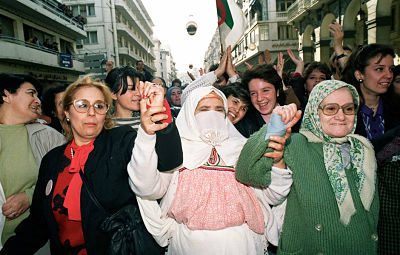
Situated in the northernmost part of Africa on the south side of the Mediterranean Sea between Tunisia and Morocco, Algeria is the continent’s largest country—and for the past half-century, it has been plagued by violence. This country is ripe with history, and here’s some of the most important of Algeria’s facts and figures.
France first seized the People’s Democratic Republic of Algeria back in 1830, ending three centuries of Algeria as an autonomous province of the Ottoman Empire. By 1954, the Algerian War of Independence had broken out, which was largely motivated by the National Liberation Front (the FLN—the nation’s primary political party), and they successfully gained their autonomy from France in 1962.
The current President of Algeria is Abdelaziz Bouteflika, who won the presidency in the 1999 election and has held power ever since. In 1991, a civil war broke out with Muslims against the government; when Bouteflika was elected in 1999, he was able to restrain the conflict of a brutal civil war by introducing a national reconciliation policy, restoring economic stability within the country.
When regarding facts and figures on Algeria’s economy, it is largely dominated by hydrocarbons. These hydrocarbons account for 30 percent of the country’s GDP, 60 percent of budget revenues, and close to 95 percent of all export earnings, as Algeria holds the 10th-largest reserve of natural gas globally. Algeria’s economy also enjoys an extremely low debt, at just 2 percent of GDP.
When it comes to Algeria’s facts and figures regarding its climate, it is mainly arid to semi-arid, with wet winters and hot, dry summers along the coast—dusty, sand-laden wind is very common in the summertime. The average elevation is about 800m, contains 17.3 percent of usable agricultural land, and its main natural resources are petroleum, natural gas, iron ore, phosphates, uranium, lead and zinc.
Algeria’s environment is subject to biodiversity, climate change, desertification, endangered species, hazardous wastes and ship pollution, among others.
Some of the leading current issues involving Algeria’s environment include the Mediterranean Sea becoming polluted from factors such as oil wastes, soil erosion and fertilizer runoff.
According to the Central Intelligence Agency, as of July 2016, facts and figures regarding the population of Algeria were at 40,263,711 people, with 99 percent of the population being Muslim and predominantly Sunni. The most common of languages in the nation are Arabic, French and Berber.
When broadcasting to the population, the government exercises a strong hold over the media, and the radio sector of the media is entirely state-run.
A major issue within Algeria is human trafficking, with women being subjected to atrocities such as forced labor, sex trafficking, prostitution, domestic service and begging. As for men, they can be subject to forced labor, criminal networks and domestic servitude.
Fortunately, slight improvement has been made with Algeria moving from a category three to a category two in human trafficking.
– Sara Venusti
Photo: Google

Why Is the Dominican Republic Poor?
According to a 2014 World Bank Report on Dominican inequality, only 2 percent of the population climbed to a higher income group, as opposed to the Latin American and Caribbean average of 41 percent. The 2003-2004 Dominican economic crisis is partly to blame. Several Dominican banks collapsed and the Dominican Peso experienced severe inflation. While the economy has recovered from the crisis, the nation’s poorest residents have been left behind.
As recently as 2013, according to the Palma ratio, the wealthiest 10 percent of Dominicans earn as much as 2.5 times as the bottom 40 percent. In the U.S., that earning disparity is only 1.9.
Why is the Dominican Republic poor? Poor Dominicans have it especially bad in urban areas. The cost of living is so high in urban areas that the Dominican minimum wage has failed to keep pace. At 8,310 Dominican Pesos (DOP) per month, roughly $175, many residents have a hard time covering the basic necessities.
Access to basic education is another issue that needs addressing when answering the question “why is the Dominican Republic poor?” Many kids simply drop out of school to help provide for their families. Children that do attend schools must cope with overcrowding and inexperienced teachers. Failure to receive an education lends itself to several problems and has been linked to an increased teen pregnancy rate on the island.
Fortunately for the Dominican Republic, GDP per capita has been steadily growing at one of the fastest rates in the world, due in part to an injection of American tourism dollars. In December 2016, President Danilo Medina promised to redouble efforts to include the country’s poorest citizens in the economic boom, and increase spending on the nation’s public school system.
The World Bank has suggested that the government make direct investments in both informational and physical infrastructure that promote upward mobility and increase access to the expanding labor market. This could include expanding access to the internet and investment in the nation’s schools and teachers.
In answering the question of why the Dominican Republic is poor, we must understand that while the island nation itself isn’t poor, problems of wealth inequality and barriers to accessing information and education still persist. But, the Dominican government is not oblivious to these problems. Through investment in infrastructure and the expanding labor market, the government hopes to raise the incomes of its poorest citizens.
– Tj Anania
Photo: Flickr
Debt Crisis Affects Human Rights in Puerto Rico
The human rights of Puerto Ricans have been radically affected as the U.S. government works with Commonwealth officials to manage and reduce the debt crisis in Puerto Rico. Essential public services including healthcare, education, social security and basic necessities of food and housing have been undermined as further spending cuts were made in an attempt to recover the economy.
After being in an economic recession for nearly a decade, Puerto Rico relinquished control of its finances after filing for bankruptcy in May 2017. The lack of protection under Chapter Nine bankruptcy leaves the government in Puerto Rico with fewer means to restructure debt. With their inalienable right to self-determination in jeopardy, citizens of Puerto Rico faced the opportunity to claim equal rights as U.S. citizens by voting for statehood, according to Governor Ricardo Rosselló. With only 23 percent of eligible voters casting ballots on June 11, the quest for financial relief and development remains in the hands of the U.S. Congress.
Puerto Rico is a U.S. territory with its own constitution and government. Island residents elect a governor and members to the island’s legislature, but they may not vote in the U.S. general election for president and they do not have a voting member of Congress. Becoming the fifty-first state would allow the island access to bankruptcy protection, although many still oppose statehood.
The financial crisis is also deteriorating human rights in Puerto Rico in terms of health care. Low-income citizens are currently only able to access healthcare through Affordable Care Act funds, which are nearly exhausted. With these funds running out, Puerto Rico could use all of its Medicaid funding, plunging the island into a health crisis, and putting healthcare for the poor and elderly in danger.
Among the 400,000 people who have left for the mainland since 2004 are doctors and physicians, primarily for economic opportunities. Puerto Rican residents have lower household incomes and higher child poverty rates than those living in the U.S. With an increasing number of hospital closures, Puerto Ricans are at risk of losing access to healthcare services.
The debt crisis has also shed light on discriminatory policies affecting human rights in Puerto Rico for people with disabilities. Puerto Ricans with disabilities are excluded from the federal Supplemental Security Income program (SSI), leaving them to rely on limited support. SSI provides American citizens with disabilities residing in the U.S. with $540 per month, while the federal Aid to the Aged, Blind, or Disabled Program can only provide Puerto Ricans with disabilities $74 per month.
Basic necessities such as the right to adequate food and housing are slipping out of financial reach in Puerto Rico. The cost of living on the island is high, with grocery products 21 percent higher than the U.S. average. According to the Bureau of Labor Statistics, the unemployment rate in Puerto Rico is 11 percent, and with 45 percent of residents below the line of poverty, adequate housing has become increasingly difficult to pay for.
Juan Pablo Bohoslavsky, an independent expert on the effects of foreign debt on human rights, said, “Schools are paying a significant amount of their funds to provide school children at least with one decent meal.” The right to education has been steadily declining in Puerto Rico, with 150 schools being closed and an anticipated 600 due to close within the next five years.
Whether the island becomes a state or a nation, one thing is clear: financial reform measures must ensure that human rights in Puerto Rico are protected.
– Jennifer Mcallister
Photo: Google
A Country Steadily Improving: Algeria’s Facts and Figures
Situated in the northernmost part of Africa on the south side of the Mediterranean Sea between Tunisia and Morocco, Algeria is the continent’s largest country—and for the past half-century, it has been plagued by violence. This country is ripe with history, and here’s some of the most important of Algeria’s facts and figures.
France first seized the People’s Democratic Republic of Algeria back in 1830, ending three centuries of Algeria as an autonomous province of the Ottoman Empire. By 1954, the Algerian War of Independence had broken out, which was largely motivated by the National Liberation Front (the FLN—the nation’s primary political party), and they successfully gained their autonomy from France in 1962.
The current President of Algeria is Abdelaziz Bouteflika, who won the presidency in the 1999 election and has held power ever since. In 1991, a civil war broke out with Muslims against the government; when Bouteflika was elected in 1999, he was able to restrain the conflict of a brutal civil war by introducing a national reconciliation policy, restoring economic stability within the country.
When regarding facts and figures on Algeria’s economy, it is largely dominated by hydrocarbons. These hydrocarbons account for 30 percent of the country’s GDP, 60 percent of budget revenues, and close to 95 percent of all export earnings, as Algeria holds the 10th-largest reserve of natural gas globally. Algeria’s economy also enjoys an extremely low debt, at just 2 percent of GDP.
When it comes to Algeria’s facts and figures regarding its climate, it is mainly arid to semi-arid, with wet winters and hot, dry summers along the coast—dusty, sand-laden wind is very common in the summertime. The average elevation is about 800m, contains 17.3 percent of usable agricultural land, and its main natural resources are petroleum, natural gas, iron ore, phosphates, uranium, lead and zinc.
Algeria’s environment is subject to biodiversity, climate change, desertification, endangered species, hazardous wastes and ship pollution, among others.
Some of the leading current issues involving Algeria’s environment include the Mediterranean Sea becoming polluted from factors such as oil wastes, soil erosion and fertilizer runoff.
According to the Central Intelligence Agency, as of July 2016, facts and figures regarding the population of Algeria were at 40,263,711 people, with 99 percent of the population being Muslim and predominantly Sunni. The most common of languages in the nation are Arabic, French and Berber.
When broadcasting to the population, the government exercises a strong hold over the media, and the radio sector of the media is entirely state-run.
A major issue within Algeria is human trafficking, with women being subjected to atrocities such as forced labor, sex trafficking, prostitution, domestic service and begging. As for men, they can be subject to forced labor, criminal networks and domestic servitude.
Fortunately, slight improvement has been made with Algeria moving from a category three to a category two in human trafficking.
– Sara Venusti
Photo: Google
Water Quality in Bhutan Improves After New Government Policies
The Bhutan Drinking Water Quality Standard was adopted in 2016 by the National Environment Commission to protect public health and improve water quality. Unclean water has been traced to numerous diseases, such as cholera, fluorosis and typhoid fever. Before the standard was adopted, water providers had no obligations to conduct water testing and treatment. This left the 745,000 Bhutanese citizens with potentially hazardous water.
According to the standards document, the objectives are:
To further ensure better water quality, Bhutan hosted a National Water Symposium (NWS) on May 9, 2017. The NWS will improve water quality in Bhutan by devising a system of water management and sustainability. Organizers of the Symposium gathered 60 water sanitation professionals to decide priority focus areas for the twelfth Five Year Plan (FYP), a series of five-year economic goals.
One of these focus areas is supplying and conserving safe drinking water for families. Climate change’s effects in the region have made water conservation a significant concern. While Bhutan has one of the highest per capita water availabilities in the world, the rapidly melting glaciers and snow in the country’s often cold region pose a threat to future water availability. The Symposium will identify ways to manage and conserve natural water resources to improve water quality in Bhutan.
According to the Bhutan Times article, “National Water Symposium Brings Experts Together,” event organizer Lyoncchen Tobgay said that “managing water resources and providing continuous safe drinking water to every household is one of the flagship projects prioritized in the twelfth FYP.”
With the new standards and efforts from participating agencies from the National Water Symposium, Bhutan’s water quality should vastly improve over the next few years.
– Marie Adigwe
Photo: Google
Why Is Swaziland Poor?
Buffeted over the course of the last few years by drought, the high prevalence of HIV/AIDS and increasing food insecurity, the Kingdom of Swaziland continues its struggle with poverty. It is a lower-middle-income nation with approximately 63 percent of Swazis living below the poverty line. Why is Swaziland poor?
In understanding why Swaziland is poor, there is a need to explore the unequal distribution of land and wealth within the nation. A small, landlocked country in southern Africa, Swaziland is home to 1.1 million people. The majority live on government-owned Swazi National Lands, often less than one hectare in size. On the other hand, private title deed lands receive significant investment and produce important Swazi exports like sugar and wood.
With a rapidly increasing population size, land availability has decreased, and Swaziland’s poor have been forced to farm on the increasingly over-cultivated land. According to the International Fund for Agricultural Development, the intensification of land use may lead to a further decrease in productivity, poorer living conditions and an increase in a number of people living in poverty.
During the 2015-16 agricultural season, Swaziland, already susceptible to low and unpredictable amounts of rainfall, experienced one of its worst droughts in the last 35 years. The drought caused poor harvests and a decrease in food security, which now affects more than 30 percent of the population. Approximately 6 percent of children under the age of five are underweight, and 3 percent of Swaziland’s annual GDP is lost due to child malnutrition.
The answer to the question of why is Swaziland poor must also consider the presence of diseases like HIV/AIDS. According to the Centers for Disease Control and Prevention (CDC), Swaziland has one of the highest rates of HIV/AIDS in the world. This leaves nearly 45 percent of children orphaned and vulnerable. HIV affects 26 percent of those between the ages of 15 and 49, greatly diminishing the country’s workforce and life expectancy, which is approximately 49 years.
Swaziland also has one of the highest incidence rates of tuberculosis, and 80 percent of tuberculosis patients are also affected by HIV. In its effort to provide care and treatment to HIV and tuberculosis patients, the CDC has provided thousands in Swaziland with antiretroviral treatment, HIV testing and counseling services since 2012. These services attempt to both help those needing treatments and ease the strain put on the economy by these diseases.
According to Geremia Palomba, in charge of conducting the International Monetary Fund 2017 visit to Swaziland, the main challenges currently facing the country are the significant fiscal readjustments and reforms needed to ensure future economic stability.
“Policies need to be carefully designed to address the main sources of recent fiscal deterioration and include both expenditure and revenue measures that can support long-term growth,” Palomba stated in an end-of-mission press release. “Structural reforms to address the lack of skilled workers, better align wage and productivity dynamics, simplify business regulations and strengthen the institutional environment have the potential to significantly boost investment and employment.”
By focusing reform efforts on these particular issues, Palomba believes that Swaziland may be able to achieve sustainable economic growth that is both strong and inclusive and will contribute greatly to the lasting stability of the country.
– Amanda Quinn
Photo: Flickr
World Health Organization Prioritizes Global Mental Illness
Mental illness has recently become one of the top priorities of the World Health Organization (WHO). Though most renowned for contributions to the prevention and treatment of physical disabilities, the WHO has embarked on a lengthy Mental Health Action Plan that addresses global mental illness exclusively.
The action plan, initiated in 2013 and meant to see completion in 2020, outlines four encompassing goals:
More specifically, the WHO seeks to achieve these goals by promoting human rights for the mentally ill, increasing access to health care for all groups of people around the globe and supporting research as well as research-backed treatment methods. On May 29, 2017, the organization endorsed an action plan specific to dementia, in concordance with the 2013-2020 Mental Health Action Plan, which included objectives such as risk-reduction and improved care systems. Additionally, the WHO initiated a year-long global campaign against depression, highlighted on World Health Day of 2017.
While mental health is a universal concern, the WHO has pointed to low-income regions in particular as at-risk. Not only is there a strong correlation between mental illness and poverty, but poorer populations are less likely to have access to adequate health care and information concerning treatment. Often, they receive little to no protection against discrimination. Therefore, the WHO has particularly emphasized mental health care implementation in developing nations.
The scope and intensity of the WHO’s global mental illness action plan mirror the severity of the issue. Behavioral health disorders are on the trajectory to surpass all other diseases as a major cause of disability by 2020. Each year, approximately $2.5 trillion is lost in the global economy to mental illness; this number is expected to increase to $6 trillion in a little over a decade. Approximately one in every four people in the world suffers from mental illness.
Fortunately, there is strong evidence that efforts to address global mental illness can aid both prevention and treatment tremendously. For example, enabling health care systems to detect behavioral abnormalities in children could have an enormous impact, as early diagnosis makes a substantial difference in the treatment of mental disease. By employing effective strategies that maximize global impact, the 2013-2020 Mental Health Action Plan is certainly a promising step in the right direction.
– Kailey Dubinsky
Photo: Flickr
Constitutional Protection for Human Rights in Costa Rica
Human rights in Costa Rica are established and protected by the country’s constitution. In the interest of protecting these rights, the Ombudsman’s Office was established to monitor complaints against government institutions and injustice. The office releases an annual report that evaluates the preservation of each constitutional right. All human rights abuses are covered in the report, along with progress being made to prevent future abuse.
According to the 2016 annual report on human rights in Costa Rica, there were four principal human rights violations. These abuses included overcrowded prisons, sexual orientation and gender identity-based discrimination, infringement on the rights of indigenous people and trafficking of persons.
Listed below are descriptions of each major human rights violation as well as the measures currently in place to minimize these abuses and protect human rights in Costa Rica.
Costa Rica is among many other constitutional republics that still has room for improvement. Although human rights in Costa Rica seem well-established, abuses of these rights show the importance of continual effort to improve governmental systems.
– Haley Hurtt
Photo: Google
The Main Causes of Poverty in Uganda
Although Uganda is a Sub-Saharan African country with one of the highest rates of poverty reduction, the country remains among the poorest in the world. According to a 2016 poverty assessment, poverty in Uganda reduced significantly between 2006 and 2013. The number of Ugandans living below the poverty line declined from 31.1 percent in 2006 to 19.7 percent in 2013.
The issue now is the sustainability of this poverty reduction, as Uganda is lacking important non-monetary resources. These include sufficient sanitation, access to electricity, health and well-being, education and nutrition. Discussed below are the causes of poverty in Uganda and their implications.
4 Leading Causes of Poverty in Uganda
The persistence of poverty in Uganda, despite significant poverty reduction, conveys the need for further governmental assistance and global contribution. To sustain poverty reduction for developing nations, more attention to foreign aid policy is needed.
– Haley Hurtt
Photo: Flickr
Why is Honduras Poor?
By nature, the cycle of poverty is difficult to break. But, in particular, rampant violence and a lack of education in Honduras contribute to poor living conditions for many.
Honduras has long been considered one of the most violent places to live, not only in Central America, but in the world. A majority of this violence is the product of drug trafficking and related gang behavior, with which police are often complicit. Since 2014, when Honduras boasted the highest murder rate in the world, homicide rates have been in decline but remain high nonetheless. In 2016, the murder rate accounted for 59.1 deaths per every 100,000 people.
Poverty in Honduras
Although in recent years Honduras has become safer, violence—regardless of its magnitude—breeds instability, and those who live in extreme poverty are the most vulnerable to that conflict. Violence in poor areas only serves to perpetuate poverty and increases the difficulty of escaping from it, answering in part the question of why Honduras is poor.
Violence also fosters an environment that is not particularly welcoming to potential business investors. In a country where un- and underemployment contribute to both income inequality and poor living conditions, extreme violence further hinders the ability of those living in poverty to improve their quality of life.
The Honduran economy has achieved some recovery recently; however, violent disturbances and a lack of economic opportunity leave much to be desired. Honduras faces challenges attracting business—the World Bank ranked it 125 out of 185 countries in regards to ease of doing business—but the current dependence on agriculture also poses economic complications.
The livelihoods of many Hondurans depend on agriculture. Agricultural success relies on factors outside of human control, such natural disasters, which can render a poor family without food or means to support themselves. Over time, the agricultural sector in Honduras has lost its value and is now only two-thirds of its former revenue, as the price of Honduran exports has decreased.
Violence and agriculture are not the only answers that can be pointed to in regards to the question of why Honduras is poor. Although many Hondurans have access to education and primary school enrollment is close to 100 percent, the quality of education is poor. Once students move past primary school, there are simply not enough secondary school facilities, and the dropout rate skyrockets.
For many, an education is the first step to a life spent outside of poverty. The quality and accessibility of education in Honduras must be improved, especially in rural areas, in order to improve the lives of the poor.
While the answers to the question of why Honduras is poor are multifaceted, the solutions to these issues lie within those answers. By focusing on reducing violence and improving education within Honduras, improvements can be made to alleviate poverty.
— Jennifer Faulkner
Photo: Pixabay
Four Reasons Why Bolivia Is Poor
Bolivia is a state plagued with inequality and inadequate development, making it the poorest nation in South America. Poverty affects the majority of the population, with almost 40 percent of Bolivians living in extreme poverty. Despite the land’s rich natural resources, Bolivia’s lack of human development hinders the state’s economic, social and political progress.
Here are four reasons why Bolivia is poor:
Political Instability
In the 1980s, Bolivia found itself in a deep economic recession and, in turn, suffered from inflation, unemployment and overall stagnation. It took the country 25 years to rebound in terms of GDP per capita. Just as the nation recovered, the early 2000s saw an outbreak of political instability with the resignation of President Hugo Banzer in 2001, followed by four controversial presidents within the next five years.
This political impermanence was greatly due to the recent discovery of natural gas in Bolivia and the government’s plans to export the reserves. This caused violent discourse between the Bolivian population and the government.
Insufficient Education
Public school education in Bolivia is of extremely poor quality, particularly in rural areas where teachers are not likely to be properly trained. Unsurprisingly, private education is too expensive for most. Thus, a vicious cycle of poor families staying poor while wealthy families progress is very apparent; without a good education, it is almost impossible to escape poverty.
Lack of Clean Water and Sanitation
In rural areas, many people are forced to drink contaminated water, as they are without clean, natural or portable water alternatives. This puts communities at significant risk for disease and illness. Diarrhea is one of the most common and serious consequences of drinking contaminated water and is responsible for over one-third of deaths of Bolivian children under five.
Since the 1990s, access to clean water has improved significantly. However, this improvement is concentrated in urban areas, rather than the rural areas where sanitation is needed most.
Low Productivity in Rural Areas
More than 80 percent of Bolivia’s rural population lives below the poverty line, a fact that is largely due to the low productivity of small-scale farming. With no mass production techniques and frequent water shortages, the quality of product and the money said products generate remain low.
Furthermore, a basic lack of infrastructures, such as water management systems and roads, is also responsible for why rural Bolivia is so poor. Without roads, transportation is expensive and ultimately inhibits farmers’ profits.
Bolivia’s human development index ranks 104th out of 174 countries and territories. Lack of prosperous and equal human development is the biggest challenge facing the nation and is the foremost reason why Bolivia is poor. Fortunately, the Bolivian government recognizes this and has put forward a variety of programs to alleviate poverty. Poverty decreased immensely in Bolivia from 65.2 percent in 2002 to 35.7 percent in 2007, demonstrating Bolivia’s progress and dedication to assisting its impoverished citizens.
– Catherine Fredette
Photo: Google