A Country Steadily Improving: Algeria’s Facts and Figures
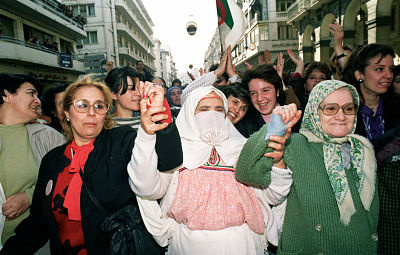
Situated in the northernmost part of Africa on the south side of the Mediterranean Sea between Tunisia and Morocco, Algeria is the continent’s largest country—and for the past half-century, it has been plagued by violence. This country is ripe with history, and here’s some of the most important of Algeria’s facts and figures.
France first seized the People’s Democratic Republic of Algeria back in 1830, ending three centuries of Algeria as an autonomous province of the Ottoman Empire. By 1954, the Algerian War of Independence had broken out, which was largely motivated by the National Liberation Front (the FLN—the nation’s primary political party), and they successfully gained their autonomy from France in 1962.
The current President of Algeria is Abdelaziz Bouteflika, who won the presidency in the 1999 election and has held power ever since. In 1991, a civil war broke out with Muslims against the government; when Bouteflika was elected in 1999, he was able to restrain the conflict of a brutal civil war by introducing a national reconciliation policy, restoring economic stability within the country.
When regarding facts and figures on Algeria’s economy, it is largely dominated by hydrocarbons. These hydrocarbons account for 30 percent of the country’s GDP, 60 percent of budget revenues, and close to 95 percent of all export earnings, as Algeria holds the 10th-largest reserve of natural gas globally. Algeria’s economy also enjoys an extremely low debt, at just 2 percent of GDP.
When it comes to Algeria’s facts and figures regarding its climate, it is mainly arid to semi-arid, with wet winters and hot, dry summers along the coast—dusty, sand-laden wind is very common in the summertime. The average elevation is about 800m, contains 17.3 percent of usable agricultural land, and its main natural resources are petroleum, natural gas, iron ore, phosphates, uranium, lead and zinc.
Algeria’s environment is subject to biodiversity, climate change, desertification, endangered species, hazardous wastes and ship pollution, among others.
Some of the leading current issues involving Algeria’s environment include the Mediterranean Sea becoming polluted from factors such as oil wastes, soil erosion and fertilizer runoff.
According to the Central Intelligence Agency, as of July 2016, facts and figures regarding the population of Algeria were at 40,263,711 people, with 99 percent of the population being Muslim and predominantly Sunni. The most common of languages in the nation are Arabic, French and Berber.
When broadcasting to the population, the government exercises a strong hold over the media, and the radio sector of the media is entirely state-run.
A major issue within Algeria is human trafficking, with women being subjected to atrocities such as forced labor, sex trafficking, prostitution, domestic service and begging. As for men, they can be subject to forced labor, criminal networks and domestic servitude.
Fortunately, slight improvement has been made with Algeria moving from a category three to a category two in human trafficking.
– Sara Venusti
Photo: Google
