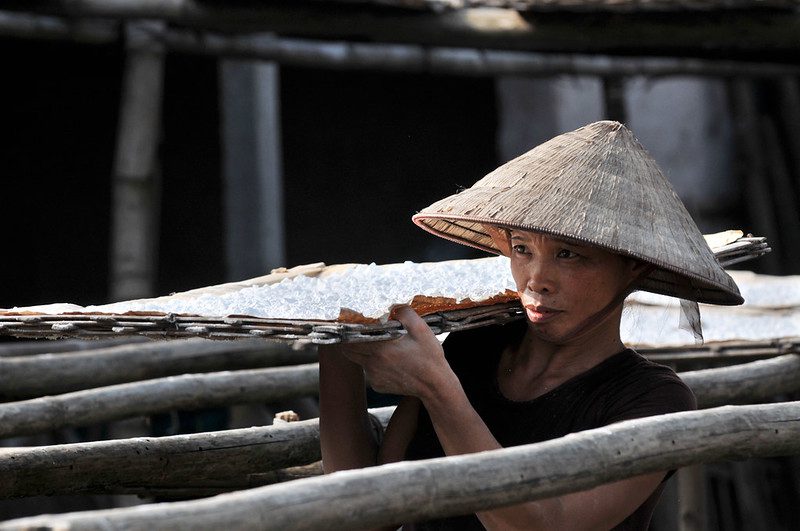
Lack of human rights in Vietnam remains a major issue. Citizens proceed to fight for their oppressed freedoms of speech and assembly, while harsh police brutality and imprisonment for activists and bloggers continues.
Authorities within The Communist Party of Vietnam continue to restrict basic rights, as bloggers and activists face frequent physical assaults and trial charges. According to the Human Rights Watch, during 2016, at least 34 people reported that unknown assailants beat them. Nguyen Chi Tuyen, a 43-year-old dissident blogger from Hanoi, wasn’t able to identify his attackers. However, he stated with complete certainty, “We know they were organized by the [country’s] security forces.”
The number of bloggers and activists convicted and sentenced to prison has risen from 7 to at least 19 within the past year. Consequently, it is clear that many human rights in Vietnam, such as freedom of speech and assembly, have been seized by the government.
Many of the bloggers on trial were accused of “abusing rights to freedom and democracy to infringe upon the interests of the state.” The judge who ordered their conviction also stated that their articles “present a one-sided and pessimistic view, causing anxiety and worry, and affecting people’s confidence [in the Communist Party].”
Despite the government’s accusations during these trials, many citizens argue that they have a hidden agenda working to withhold human rights in Vietnam. Governmental restrictions on freedom of movement are often used to keep bloggers and activists from attending public events, such as protests or human rights discussions.
Prominent rights campaigner Nguyen Quang A and blogger Pham Doan Trang were strategically detained by the government to prevent them from attending a private meeting with President Barack Obama during his visit to Vietnam. In reference to Nguyen Quang A, the Human Rights Watch reports that “between late March and early August 2016, police detained him six times to prevent him from meeting with foreign diplomats and delegations including Germany, the United States, the European Union and Australia.”
Commenting on the lack of U.N. assistance, Nguyen Anh Tuan, a 27-year-old Hanoi activist, stated, “I would say that the U.N. in Vietnam is very active when it comes to the less sensitive issues, for example, HIV prevention, but when it comes to political rights, for example, freedom of expressions, freedom of assembly, freedom of association, they are less active.”
As forceful government intervention continues to keep citizens from their basic human rights in Vietnam, it is important that their struggle for justice does not go unnoticed and more drastic interference is taken on the part of the United Nations.
– Kendra Richardson
Photo: Flickr

Truth About Poverty in Chile
Chile is currently struggling with its finances and education system. A public charity called Hogar De Cristo conducted a survey concluding that 58 percent of Chileans found that a lack of opportunities and education were the leading causes of poverty in Chile.
This recognition has shown that poverty in Chile, as well as poverty in general, is multidimensional rather than solely related to a lack of money. In addition to those mentioned above, Chileans accredit their poverty to laziness, addictions, lack of state support, abandonment and disease.
Poverty in Chile: Facts and Figures
Poverty in Chile has a fairly low percentage of 14.4 percent, which is lower than the United States. However, Chile’s problem lies in the country’s high rates of income inequality: and this alone has driven around 10 percent of people into poverty.
The inequality also reverts back to the poor education systems. There are approximately 75,000 Chilean children who do not attend school. The number of uneducated closely correlates with those living in the deepest poverty.
At first glance, Chile’s economy appears stable. In fact, in 2011, Chile was even voted as the 44th country for highest human development rates by the United Nations. These rankings were achieved by collecting the national averages, meaning that this can hide the truth about the country’s inequality.
In truth, 75 percent of growth out of 8.4 percent went to the rich, and only 10 percent went to the poor. This information is not clear in reports about the nation. The world acknowledges Chile as a developed country, but only 20 percent have incomes matching those of a developed country. The rest, what is hidden, exposes the true extent of poverty in Chile.
The Chilean economy is reliant on copper prices. Chile’s GDP rises when prices go up, but this alone does not create jobs that lead to prosperity. The truth about poverty in Chile shows that the GDP growth does not always benefit the majority of people.
In order to reduce poverty in Chile, national and international education reform advocates suggest significantly increasing expenditures in education. The goal would be to produce quality institutions and in turn, reduce poverty. Some economists even suggest a change in tax rates, because the low tax rates are one main reason why inequality has not been reduced. By fixing the tax problems, Chile could solve issues like the poor education and poverty significantly.
– Katelynn Kenworthy
Photo: Pixabay
10 Important Facts About Refugees in Djibouti
The plight of refugees is of interest currently both in political and humanitarian terms. Refugees suffer a great uprooting from their homes, from their lifestyles and often experience a cultural shock at refugee camps. At their most vulnerable point, refugees must depend on stop-gap solutions to see them through their temporary and difficult living situations.
Djibouti is temporary shelter to thousands of refugees, as they search for a home beyond Djibouti. A tiny country on the Eastern coast of Africa, Djibouti is at the point where three countries meet: Somalia, Ethiopia and Eritrea. A narrow part of the Red Sea separates Djibouti from Yemen. Here are ten facts about refugees in Djibouti:
These facts about the refugees in Djibouti show that they are suffering because of bloody conflicts and harsh environmental conditions, circumstances beyond their control. Fortunately, Djibouti’s welcoming of refugees underscores the importance of being open to those impoverished by their circumstances.
Through examining even 10 facts about the refugees in Djibouti, the realization of how refugees can positively contribute to business and social networks is emphasized. Ultimately, communities must fuse together to advocate for solutions to poverty.
– Smriti Krishnan
Photo: Google
Equator Prize: 7 Inventive, Local, Sustainable Solutions
The 15 winners include grassroots projects located across Africa, Latin America, Eastern Europe and Southeast Asia. They range from a campaign to secure management of a community Mangrove forest in Thailand to the Mali Elephant Project, which protects endangered elephants while working to reduce violence in a war-torn area of Mali.
However, these 15 winners are only the beginning. Across the globe, communities have created local, sustainable solutions to preserve their homelands. These solutions also help feed and educate children and promote peace and justice in their society.
In celebration of its 15th anniversary, the Equator Initiative launched a database that includes 500 of the local, sustainable solutions nominated to receive the 2017 Equator Prize. Here are seven of the most creative and impactful initiatives that local people developed in answer to the challenges they face:
The winners of 2017 Equator Prize have received more than a reward. They have created local, sustainable solutions that have transformed their community. Consequently, their successes can serve as examples and inspiration for future projects.
– Emilia Otte
Photo: Google
Common Diseases in Nepal and Why The Country is Susceptible
In order to talk about common diseases in Nepal, one must first examine some of the facts and statistics that make the country prone to disease. Nepal, a Himalayan country with a population of nearly 29 million, is located in South Asia. It is home to some of the highest mountains in the world, such as the third tallest mountain, Kanchenjunga, situated on the border of Nepal and India, and the world’s highest mountain, Mount Everest, located on its border with China. The birthplace of Gautama Buddha, Nepal is a favorite tourist destination for mountaineers and trekkers, while also attracting visitors for its rich cultural heritage, ancient temples and palaces.
Nepal was a monarchy for centuries until it was abolished in 2008 and the country was declared a republic. It is one of the poorest countries in Asia, and between 2010 and 2011 nearly 25 percent of its population was living on less than $1.25 a day. The mountainous and tectonically active terrain makes Nepal highly prone to natural disasters, which are some of the most common causes of death in the country, and obstruct its development. A devastating 2015 earthquake that killed nearly nine thousand people and injured thousands more remains one of the worst disasters in the country’s history.
Plagued with geological vulnerability, poverty and the associated issues of poor sanitation, air pollution and a lack of proper healthcare, Nepal is replete with both communicable and non-communicable diseases. According to data from the Institute for Health Metrics and Evaluation (IHME) and the World Health Organization (WHO), below is a list of common diseases in Nepal with some of the highest death rates.
Most Common Diseases in Nepal
According to the annual report of the Department of Health Services, Government of Nepal, for the years 2014 and 2015, combined efforts by the government and various national and international organizations toward the prevention and control of diseases in Nepal have achieved improved health outcomes over the years. These outcomes include higher life expectancy and reduced maternal and infant mortality rates. The report also identifies existing problems and challenges in the health sector and delineates possible actions for addressing these issues for continued progress.
– Ranjna Madan-Lala
Photo: Flickr
10 Facts About Refugees in Mongolia
Mongolia is a landlocked country in Asia with a population of just over 3,000,000. This East Asian nation is home to a small, yet geopolitically significant refugee population. Here are 10 facts about those displaced refugees in Mongolia:
Though their numbers may seem small, Mongolia still plays a crucial role in aiding North Korean refugees and defectors. Mongolia’s situation reminds us that even helping a handful of individuals has an impact on both personal lives and international relations.
– David Mclellan
Photo: Flickr
Canada Follows Sweden’s Lead With Feminist Foreign Policy Plan
Since 2015, the nation has revisited and revitalized the initiative regularly. Goals for 2017 focus on increasing rights for female migrants and refugees; creating economic freedom for women via legislation; reducing violence against women; capitalizing on women’s potential to suppress conflict and encouraging sexual and reproductive rights.
A statement on the Government Offices of Sweden’s website details plans to service these goals. Leaders plan to allocate funds through relevant stakeholders, who will utilize aid to combat human rights abuses, endorse women’s financial and judicial empowerment and enact laws that provide women the same rights that men have.
Funds will also benefit initiatives to break down cultural associations between masculinity and violence, encouraging men to act as peacemakers in their homes and communities, as well as bolster movements to provide open access to contraceptives.
Canada has recently adopted a similar feminist foreign policy plan. Like Sweden, Canada recognizes that significant improvements in global poverty over the past few decades have not provided equal benefit to both men and women. To foster equal opportunities, Canada will strategically invest foreign aid in efforts seeking to improve women’s access to resources that can raise them from poverty.
A statement on the Government of Canada website acknowledges the challenges for women in developing countries. The difficulty lies in intersections of deeply-rooted inequality, conflict and consequences of climate change. The statement also highlights that with enough support, women can better help their families and communities.
Human dignity, security, climate action and inclusive governance comprise the core values of Canada’s plan. Their ultimate goal is to reduce poverty and promote economic advancement by empowering women to participate readily in politics, the workforce and their communities.
Canada’s statement also includes plans to involve men and boys by disputing the norms that reinforce gender-based injustice. They also provide an intersectional scope that includes the interests of people of all races, ethnic backgrounds, identities and abilities.
While timeworn power structures cause disproportionate struggles for destitute women and girls, leaders around the globe are eager to eradicate the imbalance. Feminist foreign policy is an essential step toward this goal.
– Madeline Forwerck
Photo: Flickr
Wealth Inequality: On the Causes of Poverty in Mexico
The definition of wealth inequality is the unequal distribution of household or individual income across the various participants in an economy. Wealth inequality is a daunting social issue persisting in many countries. It is one of the main causes of poverty in Mexico.
Wealth inequality in Mexico is extremely high. Although Mexico is among the top 14 richest countries as calculated by GDP, over half the population lives in poverty. The gap between the wealthy and the poor in Mexico continues to expand.
Consuelo Lopez-Zuriaga, the Oxfam Mexico Executive Director states that “while the wealth of Mexican multimillionaires is multiplied by five, 48 percent of state schools have no access to sewage, 31 percent have no drinking water, 12.8 percent have no bathrooms or toilets and 11.2 percent have no access to electricity.”
Just one percent of the population owns about half of the country’s wealth. While their wealth increases, the poverty rate in Mexico has not decreased by much, leaving an estimated 53.3 million people living below the poverty line. From 2012 to 2014, the poverty rate in Mexico only fell by 0.3 percent. This implies that efforts to confront the issue have been unsuccessful.
President Peña Nieto recognizes that inequality along with corruption and global economic turmoil are the primary challenges that Mexico’s economy faces. Under President Peña Nieto, the poverty rate has only increased, and many criticize him for a lack of dedication to combating poverty. In fact, some say that encouraging large-scale private and foreign investment is the primary focus of the administration.
Though there are small successes in developmental programs aimed at combatting poverty in Mexico, it is not enough to resolve the underlying issues. Wealth inequality is one the worst causes of poverty in Mexico that is unsolved as it continues to increase the poverty rates. Strategization by those in power will need to be rethought in order to better distribute wealth to Mexico’s citizens in the future.
– Danyel Harrigan
Photo: Flickr
10 of the Most Common Diseases in Afghanistan
The World Health Organization (WHO) recently called the health status in Afghanistan one of the worst in the world. Most of the common diseases in Afghanistan are communicable, and epidemics are happening more frequently than in the past. The health system is trying to recover from decades of neglect, under-funding, institutional vacuum and fragmentation. These are the 10 most common diseases in Afghanistan:
These 10 common diseases in Afghanistan can be deadly when untreated. Luckily, many medical relief organizations are working to eradicate the likelihood of these diseases and to provide vaccinations to those in need of them.
– Emily Arnold
Photo: Google
The Current Issue of Human Rights in Vietnam
Lack of human rights in Vietnam remains a major issue. Citizens proceed to fight for their oppressed freedoms of speech and assembly, while harsh police brutality and imprisonment for activists and bloggers continues.
Authorities within The Communist Party of Vietnam continue to restrict basic rights, as bloggers and activists face frequent physical assaults and trial charges. According to the Human Rights Watch, during 2016, at least 34 people reported that unknown assailants beat them. Nguyen Chi Tuyen, a 43-year-old dissident blogger from Hanoi, wasn’t able to identify his attackers. However, he stated with complete certainty, “We know they were organized by the [country’s] security forces.”
The number of bloggers and activists convicted and sentenced to prison has risen from 7 to at least 19 within the past year. Consequently, it is clear that many human rights in Vietnam, such as freedom of speech and assembly, have been seized by the government.
Many of the bloggers on trial were accused of “abusing rights to freedom and democracy to infringe upon the interests of the state.” The judge who ordered their conviction also stated that their articles “present a one-sided and pessimistic view, causing anxiety and worry, and affecting people’s confidence [in the Communist Party].”
Despite the government’s accusations during these trials, many citizens argue that they have a hidden agenda working to withhold human rights in Vietnam. Governmental restrictions on freedom of movement are often used to keep bloggers and activists from attending public events, such as protests or human rights discussions.
Prominent rights campaigner Nguyen Quang A and blogger Pham Doan Trang were strategically detained by the government to prevent them from attending a private meeting with President Barack Obama during his visit to Vietnam. In reference to Nguyen Quang A, the Human Rights Watch reports that “between late March and early August 2016, police detained him six times to prevent him from meeting with foreign diplomats and delegations including Germany, the United States, the European Union and Australia.”
Commenting on the lack of U.N. assistance, Nguyen Anh Tuan, a 27-year-old Hanoi activist, stated, “I would say that the U.N. in Vietnam is very active when it comes to the less sensitive issues, for example, HIV prevention, but when it comes to political rights, for example, freedom of expressions, freedom of assembly, freedom of association, they are less active.”
As forceful government intervention continues to keep citizens from their basic human rights in Vietnam, it is important that their struggle for justice does not go unnoticed and more drastic interference is taken on the part of the United Nations.
– Kendra Richardson
Photo: Flickr
10 Facts About Uzbek Refugees
The Republic of Uzbekistan is a Central Asian country with a population of about 32 million. From 1924 to 1991, Uzbekistan was a constituent republic within the Soviet Union. Since gaining independence in 1991, the Uzbek people have been dominated by an authoritarian government. Here are 10 critical facts about Uzbek refugees from the former Soviet state:
Torture is commonplace in the Uzbekistan justice system, and adults and children are subjected to forced labor. Collecting data on Uzbekistan, especially on its human rights violations is difficult. This lack of information is due to Uzbekistan refusing to allow U.N. human rights experts access to the country since 2002.
Some Uzbek refugees have had to bounce from country to country until they feel safe from the Uzbekistan government. Furthermore, countries like neighboring Kyrgyzstan, close to Uzbekistan geographically and culturally, deport Uzbek refugees in compliance with the Uzbekistan government’s request. Kyrgyzstan has never granted the request of an Uzbek refugee.
President Islam Karimov ruled Uzbekistan from its independence from the Soviet Union until his death in September 2016. The current president, Shavkat Mirziyaev, has vowed to bring human rights reforms to Uzbekistan. However, organizations like the Human Rights Watch say that there has been little to no progress thus far.
– David Mclellan
Photo: Google