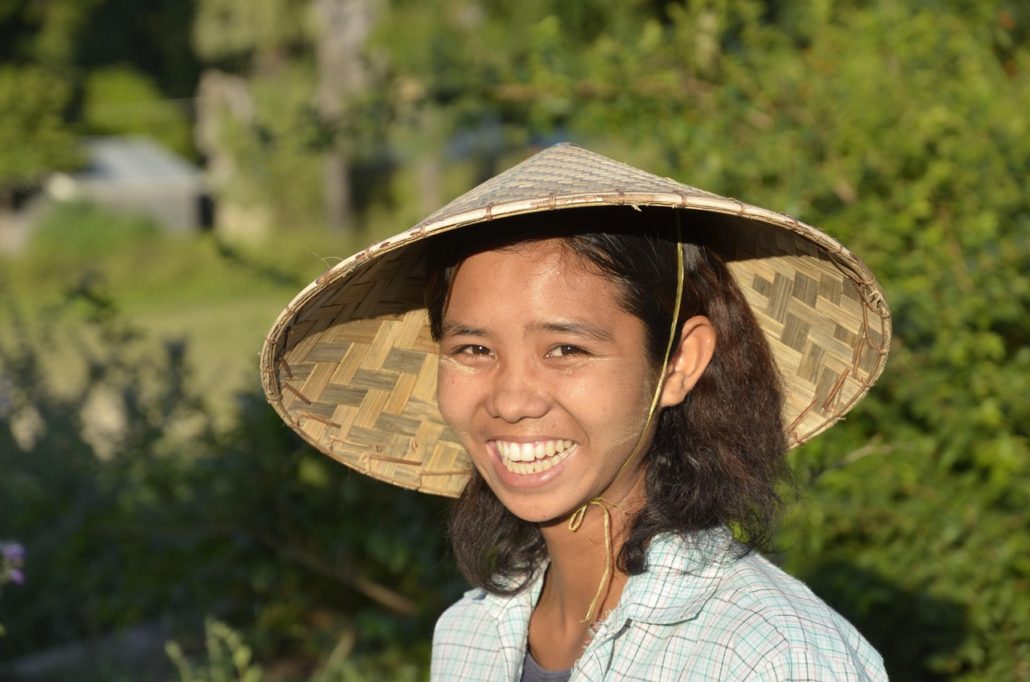
 More than 32% of the population in Myanmar lived below the national poverty line in late 2023/early 2024 and about two-thirds face economic insecurity. These most recent statistics erase all of the progress the country had made since 2015.
By 2017, the poverty rate in Myanmar had dropped below 25% with 24.8% of the population living below the national poverty line. However, conflict, political instability and a faltering economy (just 1% GDP growth) have displaced more than 3 million people and worsened living conditions. These challenges underscore the need for bold and proven strategies to achieve poverty reduction in Myanmar. Here are five solutions for poverty reduction in Myanmar.
1. Revive Rural Agriculture
Almost half of Myanmar’s workforce depends on agriculture; however the yields remain low. Climate-smart seeds and improved irrigation can greatly improve the output of yields.
From 2019 to 2022, the Climate Smart Rice Project helped 4,100 farmers in Shan, Mon, Mandalay and Bago adopt improved seed varieties and water-saving practices. These efforts increased rice yields by up to 22% while reducing methane emissions and water use. Similarly, the MYRice Pilot Program by IRRI introduced better post-harvest drying and storage techniques. This reduced crop losses and increased the market value of rice by 15%.
Investing in value chains, such as processing, transport and storage, not only increases rural incomes but also creates jobs and reduces food waste, contributing significantly to poverty reduction in Myanmar.
2. Scale Up Social Protection
A limited number of vulnerable households benefit from social safety nets. In Chin, Rakhine, and Kayin states, which are part of the nationwide rollout that began in 2017, the Maternal & Child Cash Transfer (MCCT) program has provided 15,000 kyats per month (about $10–11 USD) to pregnant and lactating women for up to 24 months, supporting their children’s crucial first 1,000 days. As of October 2019, the program reached 33,723 women in Chin State and 124,719 women in Rakhine State.
Meanwhile, Yoma Social Development Association’s mobile health initiatives in Karen State have tackled child malnutrition by training mothers in organic vegetable cultivation. In 27 villages, field facilitators identified children with moderate acute malnutrition and then equipped women, especially expectant and breastfeeding mothers, with seeds (e.g. beans, okra, eggplant) and farming tools. They also held nutrition awareness sessions and cooking demonstrations, resulting in a “noticeable improvement in positive social behaviors related to nutrition,” particularly for children under five.
3. Invest in Smart Infrastructure
A shocking 84% of rural households lack electricity access in Myanmar. NGOs, like Techno Hill, have implemented solar micro-grids which serve 700 households and deliver 24/7 power to remote villages.
Moreover, by investing in all-weather rural roads and digital infrastructure, daily life in underserved regions can be transformed as economic productivity would be boosted and various aspects of life, such as education, disaster resilience, financial services and health care would be greatly improved, helping to reduce poverty in Myanmar.
4. Expand Financial Access
Only 23% of adults possess formal bank accounts, according to CGAP and GSMA. Expanding mobile banking and microfinancing services will create many opportunities for millions currently excluded from formal finance. Wave Money dominates the mobile finance market here—holding more than 80 % market share and serving about 38 % of the population via its agent network of 50,000 outlets. In 2019 alone, its transaction volume more than doubled to 6.4 trillion kyat ($ 4.3 billion USD).
KBZPay, which the KBZ Bank developed and launched in October 2018, has rapidly scaled, amassing more than 6 million downloads, serving 4 million customers, and enabling seamless digital access via a network of 280,000 agents nationwide.
5. Govern With People, Not Just for Them
Corruption and opaque procedures pollute trust and public support. In Kachin, Kayah and Ayeyarwady, community budgeting and public scorecards have allowed for more responsive local services and reduced fund leakages. It is important to note that in conflict zones, poverty reduction and peacebuilding work in tandem as displaced households can be supported through integrated Humanitarian-Development-Peace (HDP) approaches.
Moving Forward
Despite Myanmar’s worsening poverty crisis, there are tested and scalable solutions already in place: cash transfers, solar energy, climate-resilient farming, mobile finance and community-led governance. These interventions have demonstrated measurable impact and represent a viable path forward.
The future of poverty reduction in Myanmar depends on building on what works and ensuring these strategies reach the most affected, including rural communities, women, ethnic minorities and displaced families. While the challenges remain immense, the tools for transformation are already in motion.
– Arabella D’Aniello
Arabella is based in The Hague, Netherlands and focuses on Technology and Solutions for The Borgen Project.
Photo: Pixabay

Disability and Poverty in Yemen: What NGOs Are Doing Right Now
Intersecting Barriers
Destroyed roads, damaged bridges and collapsing health facilities isolate rural districts. Families often travel for hours to reach the nearest functioning clinic, only to discover medicine shortages or unaffordable fees. Children with disabilities rarely enter classrooms because buildings lack ramps, teachers lack training and transport costs exceed family budgets. A 2023 policy study found that the Ministry of Education and the Social Fund for Development must still reach 70% of rural areas with inclusive services. Exclusion starts early and lasts a lifetime, trapping entire households in chronic poverty.
Poverty and Disability by the Numbers
War continues to expand these figures. Landmines, air-delivered munitions and improvised explosives have caused thousands of amputations since 2015, swelling rehabilitation queues and deepening poverty gaps. Disability and poverty in Yemen continues to reinforce each other with every passing year of conflict.
NGO Response: Humanity & Inclusion
Humanity & Inclusion (HI) returned to Yemen in 2014 and built a nationwide rehabilitation network. Between 2015 and 2024, HI:
HI teams operate inside hospitals in Sana’a, Hajjah, Aden, Lajih and Taizz. Mobile outreach units extend care to frontline villages where no other provider can travel safely. By pairing physical rehabilitation with mental-health counselling, HI helps survivors regain mobility, return to school or work and reduce their dependence on cash assistance.
Government and Donor Action
While NGOs rebuild individual lives, large-scale income support remains critical. The Emergency Cash Transfer Project, which Yemen’s Social Welfare Fund launched with support from UNICEF and the World Bank’s International Development Association in August 2017, channels quarterly payments to every district in the country. By May 2018, the program had reached 1.5 million of the poorest families—about 9 million people or one-third of the population.
Each household receives the local-currency equivalent of $30 USD, a sum that covers staple foods and basic medicines and keeps children in school. Because registration lists include people with disabilities, the project injects direct purchasing power into some of the most excluded households.
Inclusive Education
The Social Fund for Development works with the Ministry of Education to expand inclusive schooling. By late 2024, the partnership had integrated children with disabilities into 400 public schools through teacher training, resource rooms and small-scale infrastructure upgrades.
Although coverage remains uneven, the initiative demonstrates how low-cost adaptations—braille textbooks, sign-language modules and community-based rehabilitation volunteers—can open classrooms and reduce long-term dependency.
Toward an Inclusive Recovery
Conflict still blocks Yemen’s path to stability, yet targeted interventions prove that progress is possible. Humanity & Inclusion restores mobility and dignity one patient at a time. The Emergency Cash Transfer Project prevents destitution for millions and keeps the economy alive at neighborhood level. Government-supported inclusive education starts to break the link between disability and illiteracy. Donors and policymakers can scale these models by:
Yemen cannot afford to rebuild without its most vulnerable citizens. A recovery strategy that places people with disabilities at its center will not only cut poverty but also strengthen social cohesion and economic resilience. The numbers show that inclusive solutions already work; sustained investment will multiply those gains and move Yemen closer to a future where disability and poverty in Yemen no longer dictate a person’s fate.
– Nafeesah Rahman
Photo: Unsplash
Vocational Education Training Centers in The Bahamas
Poverty and Food Insecurity in The Bahamas
The Bahamas is a fairly wealthy country, with a GDP of $13.2 billion USD. However, this outward facing wealth masks “important structural, social, and economic challenges” that require attention. Issues like poor infrastructure, marked income inequality and vulnerability to natural disasters deeply affect the population of The Bahamas and contribute to the relatively high rate of poverty.
The percentage of people living below the poverty line rose from 9.3% in 2001 to 12.8% in 2013, the last time the Household Expenditure Survey was conducted. In addition, the rate of poverty is almost double the average in households where the head does not possess any sort of formal schooling, sitting at 25%.
Many families in The Bahamas are also dealing with issues of food insecurity. The lack of infrastructure makes it difficult to monitor this issue. However, it is apparent through the fact that many people, especially children in school, have considerable difficulty accessing nutritious food. Because The Bahamas has a small landmass and does not possess an ideal geography for agriculture, they are heavily dependent on food that is imported from other countries. This makes healthy, high quality food more expensive and less accessible for the population.
Providing Sustainable Solutions
Combatting both issues of poverty and food insecurity is the One Eleuthera Foundation, which is focused on sustainable community improvement. Its two Centers for Training and Innovation (CTI) provide education for a wide variety of careers, including courses in carpentry, culinary arts, sewing, housekeeping, electrical installation, plumbing, nail technology and many others. Its mission is to provide quality education to Bahamians, in order to allow them more and better employment opportunities to provide for themselves and their families. In June 2024, they had 63 students graduate from both of its vocational education training centers in The Bahamas, in Harbour Island and South Eleuthera.
However, what makes the CTI stand out from other vocational education training centers in The Bahamas (such as the Bahamas Technical and Vocational Institute) is its Training Farm. The goal of this farm is to educate farmers on sustainable and advanced growing techniques, and increase the amount of food grown locally. The facilities of the solar powered farm include a one acre greenhouse, a hydroponic pond, raised soil beds and a honey processing facility for local beekeepers to name a few. It also offers a variety of classes and workshops for local farmers year-round, either free of charge or at a very low cost.
Another element of its Training Farm is the Farmer’s Fresh Market, where residents can come and purchase fresh produce from the farm, as well as other local goods and specialty items. This is an incredible initiative that makes local, high quality fruits and vegetables more easily accessible to the population.
Looking Ahead
Poverty and food insecurity are still issues that impact the quality of life of Bahamians. However, through its CTI, the One Eleuthera Foundation is helping to build a community of people who are able to produce more food, as well as support both themselves and its economy. It is making a tangible positive impact, one student at a time.
– Delaney Gouveia
Photo: Unsplash
Bridging the Gender Wage Gap in the Maldives
Legal Frameworks in Place
The Maldives has implemented legal reforms to support gender equality. The Gender Equality Act (2016) prohibits gender-based discrimination and mandates equal pay for equal work. The Constitution of 2008 affirms equal rights for all citizens, regardless of gender. Additionally, the government introduced a 33% quota for women in local councils to promote female political participation.
Despite these advancements, enforcement remains uneven. Women continue to face limited access to high-level positions in both the public and private sectors. As of 2024, women hold just 5% of seats in the national parliament, highlighting gaps in political representation.
Occupational Segregation and Labor Disparities
According to UNDP, women comprise 45.6% of the labor force, while men account for 77.1%. The employment gap is most evident in high-paying sectors such as construction and tourism, where male workers dominate.
The Ministry of Tourism’s 2022 Employment Survey found that women make up only 11% of resort workers, with Maldivian women representing just 8%. This underrepresentation is compounded by “occupational segregation,” in which women are concentrated in lower-wage, lower-skill jobs, limiting earning potential and career advancement.
Education and Economic Opportunity
Women in the Maldives enjoy near-universal literacy, with a 98.1% female literacy rate as of 2019. However, disparities increase in higher education and employment. Only 37% of tertiary education graduates in 2021 were women, according to the Ministry of Higher Education, restricting access to technical and leadership roles.
The gap in employment outcomes is also tied to unpaid care responsibilities. A 2023 report by the Maldives Policy Think Tank revealed that women spend 19 hours per week on domestic work which is more than double the time spent by men. This time spent contributes to the “time poverty” and limiting participation of women in the formal workforce.
The UNDP’s Women in the Workforce Program
An active and impactful effort to address wage inequality is the “Women in the Workforce” program, launched in 2020 by UNDP Maldives in collaboration with the Ministry of Economic Development. The program provides vocational training, job placement services, soft skills workshops and childcare support, aiming to boost women’s employment in formal sectors.
In addition to this initiative, several other programs are helping to reduce the wage gap and promote women’s economic empowerment in the country. The National Gender Equality Action Plan (GEAP) 2022-2026, which the Ministry of Gender, Family and Social Services (MoGFSS) developed in partnership with UNDP Maldives, prioritizes “Economic Empowerment” as a key focus area. This plan aims to ensure equal participation and remove barriers to women’s economic activities.
At the same time, the Asian Development Bank (ADB) has funded the “Strengthening Gender Inclusive Initiatives (SGII) Project,” which partners with the Ministry of Finance on gender-responsive budgeting. This project also supports the Ministry of Economic Development in transitioning women from informal to formal employment, with initiatives such as affordable childcare subsidies. Complementing these efforts, the UNDP Maldives Gender Equality Strategy 2023-2026 outlines the organization’s commitment to fostering gender-equal, sustainable economies.
Looking Ahead
While the Maldives has made significant strides in legislation and program development to address the gender wage gap in the Maldives, sustained progress requires continued investment in implementation and accountability. The Asian Development Bank (ADB) notes that increasing female participation in the workforce can significantly boost the country’s GDP and reduce poverty. Ongoing efforts such as workforce training, business mentorship and inclusive policy design are helping to narrow the wage gap. Expanding access to affordable childcare and increasing women’s representation in high-growth industries remain critical areas for further development.
As these efforts scale and enforcement of equality laws strengthens, the Maldives moves closer to building a more inclusive economy, where every citizen, regardless of gender, has equal opportunity to succeed.
– Sriya Regulapati
Photo: Pexels
The Price of Rice: Rising Rice Prices in the Philippines
A Surge in Prices
In 2024, the country experienced one of the worst rice price hikes in decades due to the Russia-Ukraine war and the export restrictions that India imposed. By March 2024, rice inflation soared to 24.4%, a staggering increase that has greatly affected the people of the Philippines. The Philippines, which heavily relies on rice imports to stabilize its supply, was caught between global price fluctuations, local supply chain issues and climate-related production setbacks. As prices climbed, families that spent a significant portion of their income on food found themselves choosing between meals and other essentials.
Poverty statistics have illustrated the direct result of this inflation. By the end of 2024, 63% of Filipino families considered themselves poor, according to a Social Weather Stations (SWS) survey. That figure marked a 17% increase from just nine months prior and represented the highest self-rated poverty level in over 20 years.
Many respondents attributed their worsening condition to the surge in food prices, especially rice. This increase hit the poorest Filipinos—often small-scale farmers, informal workers and residents of rural areas—the hardest.
Government Response
Recognizing the urgency of the crisis, the Philippine government implemented several key measures, including an executive order No. 62 (July 2024), which reduced rice import tariffs to bring in cheaper foreign rice and curb inflation. This helped minimize rice inflation from 19.6% in December 2023 to 0.8% by December 2024.
To further aid in the rising rice prices, the Department of Social Welfare and Development launched a subsidized rice initiative, selling rice at 29 pesos per kilo to poor households. This program reportedly helped feed more than 35 million Filipinos.
By March 2025, inflation had slowed to 1.8%, its lowest in nearly five years, driven in part by a 7.7% drop in rice prices. Despite short-term progress, experts warn that the Philippines remains vulnerable to recurring food crises. The agricultural sector suffers from underinvestment, outdated farming practices, climate risks and logistical inefficiencies. More than 10 million Filipino rice farmers still struggle with low productivity and limited government support. In the long run, solving the rice crisis is not just about lowering prices, it is about transforming the system.
Final Remarks
The recent rising rice prices in the Philippines revealed how tightly the issues of food and poverty correlate in the Philippines. While emergency responses have provided a degree of relief, long-term solutions will require structural reforms and sustained political will. Experts and officials aiming to boost domestic rice production and reduce import dependence are pushing long-term agriculture reforms. The continued push of agricultural reforms is essential to breaking the cycle of poverty and building a more equitable future for the Philippine people.
– Meagan Beaver
Photo: Pixabay
Foreign Aid to Peru: Transforming Health Care
These structural issues became ever more apparent with the COVD-19 pandemic as it hit Peru’s vulnerable health care system badly. Experts said that Peru’s largest issue was the insufficient funding and lack of preparation within its health care system. As of July 2022, authorities reported 6,500 COVID-19 cumulative deaths per million people, the highest in the world. The pandemic led to public outcry and put political pressure on the Peruvian government to pass lasting health reforms.
Following these challenges, Peru is moving to reform its health care infrastructure notably with the launch of its National Health Investment Program (PRONIS) in February 2025. Due to the heart of the issue of the pandemic-era being decentralization – this plan prioritizes the construction of Level III-1 hospitals, regional facilities capable of delivering advanced medical scale.
The G2G Model
In August 2024, Peru’s Ministry of Health (PRONIS) and the U.K. government signed a new Government to Government (G2G) agreement worth $630 million USD aiming to bolster hospital infrastructure for 5 million Peruvians in the north of the country. It aims to increase health care provisions in these areas, reducing the regional health care gap in the country via the building of multiple modern hospitals. This marks a modern model of foreign aid to Peru that goes far beyond traditional financial support.
The Memorandum of Understanding (MoU), which was signed in March 2025, also commits the British Embassy in Lima and the Peruvian government to promote the development of public-private partnerships for the operation and maintenance of infrastructure developed through Government-to-Government (G2G) Agreements.
The New Hospitals of the Future
There are two flagship hospitals being built under the Peru-UK G2G healthcare partnership aiming to benefit around 5 million in the north. One of them is the Trujillo Regional Teaching Hospital. The president said that more than $327 million USD will go into the health care infrastructure, featuring 28,600 state-of-the-art medical devices.
The Piura High-Complexity Hospital is receiving an investment of $259 million USD and will also be level III-1. The hospital will include 600 beds and more than 7,000 medical devices.
The Government of Peru and the United Kingdom later expanded their collaboration on high complexity hospital infrastructure to incorporate the Guillermo Diaz de la Vega Regional Hospital in Apurimac into the agreement. This will be the first high-complexity facility in one of the country’s most underserved Andean regions. These hospitals will likely be in operation by late 2028.
In Peru, there is an inverse correlation between poverty and access to quality health care. This is higher among the older population. With the focus of upgrading health care infrastructure in rural areas where people often have limited access to quality health care, the foreign aid to Peru from the U.K can help alleviate poverty by reducing preventable illnesses, lowering expenses and enabling individuals to lead healthier lives.
A Healthier Future
This G2G model not only strengthens bilateral ties between the U.K. and Peru but marks a movement to restore confidence in public works. The transformation of health care infrastructure via the new hospitals demonstrate how quality health care can be accessible across the country to all civilians. The targeting of health care gaps in impoverished areas highlights a strategic move towards equal healthcare for all. The G2G model fosters mutual accountability, with Peru maintaining its operational control but with the U.K.’s technical expertise. This serves as a model for future foreign aid – it’s a blueprint for impactful international cooperation that will have transformative results for the people of Peru.
– Hannah Latham
Photo: Unsplash
Disability and Poverty in Senegal
The Creation of the Equal Opportunity Card
Disability and poverty in Senegal impact each other. Living with a disability may be more expensive due to necessary accommodations such as wheelchairs, health care or visual assistance. Therefore, intervention is frequently necessary. First implemented in 2012, The Carte d’Égalité des Chances (CEC) originated to provide accommodations to people with disabilities. These accommodations include the Family Allowance Programme, health care such as the Universal Health Coverage Plan, assistance with employment, vocational training, education, transportation and other services that may otherwise be challenging to access.
While receiving health care prior to the CEC was possible, it was extremely difficult – especially for individuals with disabilities – due to financial reasons.
As of 2019, Senegal issued at least 50,006 cards which resulted in 17,614 individuals registering in mutual health funds, 25,507 benefitting from a family security grant and 633 gaining free access to “Dakar-Senegal dem dikk,” a public transport network. Although further work is needed to fully implement this card in society, as the International Budget Partnership explains, this card has assisted many and has the potential to continue doing so.
Inclusive Schooling
The United Nations International Children’s Emergency Fund encouraged the Government of Senegal to re-engage with a national policy draft that supports inclusive education. Lt. Aliou Badara Diallo Elementary School, with support from the Sensorial Handicap Cooperation, has given many children the opportunity to thrive, flourish and grow, all while getting a quality education in a supportive environment.
Advancing Equal Opportunities
Humanity & Inclusion’s (HI) program in Senegal encourages the integration of people with disabilities into the workforce and society through training, vocational and economic inclusion projects. Projects that HI is running include the creation of a Master’s degree in inclusive education, introducing sign language to inclusive employment spaces and a national campaign that’s dedicated to fight prejudices which prevent children with disabilities from going to school. In addition, HI works to spread awareness and improve the accessibility of infrastructure and services.
Access to Education
Statistics prove that most disabled people in Senegal have less than primary school education. The rate is higher among people who experience “at least a lot of functional difficulty” (82%), compared to “no difficulty” (66%).
This is likely because some standard schooling lacks inclusive programs that accommodate different ways of learning. Sightsavers’ inclusive education pilot project – launched in three mainstream schools in Dakar, Senegal – ensures children with disabilities receive a proper education that meets their needs. This project is a great example of an initiative that increases education access to those with disabilities.
The Promotion of Awareness and Support
In 2010, Senegal signed the social orientation law n°2010-15 of July 6 into law to protect the rights of people with disabilities. This law is meant to put social measures into action that ensure fair treatment and equality, however, it is loosely followed. In order for people with disabilities to fully benefit from the social orientation law n°2010-15, the implementing texts must be signed and enforced.
Accommodating Sanitation Facilities
People with disabilities, particularly those who use wheelchairs, may find it challenging to use a standard sanitation facility. Including amenities such as universally accessible toilets and showers can promote the equal treatment of people who are disabled in public spaces. A four component project called the Rural Water Supply and Sanitation Project for Senegal aims to increase the accessibility of improved water and sanitation services in selected rural areas, benefiting all individuals.
Looking Ahead
With initiatives like the Equal Opportunity Card and Lt. Aliou Badara Diallo Elementary School, decreasing discrimination while promoting equality is clearly on Senegal’s agenda. Although disability and poverty in Senegal are prevalent, they do not go ignored. Despite being a developing country that fights widespread poverty, Senegal has shown its commitment to supporting disabled individuals and ensuring fair treatment.
– Casey Relyea
Photo: Unsplash
Diseases Impacting Tonga
Main Health Issues
The main health concerns impacting Tonga are noncommunicable diseases (NCDs), such as obesity and diabetes. Tonga has the second-highest obesity rate in the world, with more than 70% of Tongans obese. Additionally, an estimated 40% of Tonga’s population has type 2 diabetes, while 30–40% are affected by NCDs.
The leading cause of NCDs in Tonga is poor diet. Tonga is a developing country and according to the Asian Development Bank, 20% of its population lives below the poverty line. Most people cannot afford healthier food options, relying on cheap imported fat, sodium and sugar foods. Mutton flaps, in particular, are a common and affordable staple despite their extremely high-fat content. Over time, they’ve become a prominent part of Tongan cuisine, with many people developing a lifelong taste for them from childhood.
Smoking is another major contributor to the high rates of NCDs in Tonga. Tobacco use is widespread, with an estimated 30% of adults smoking and 19.5% of youths aged 10–14 also using tobacco. Cigarette use significantly increases the risk of NCDs such as cancer, heart disease and diabetes.
Among communicable diseases, Tonga experienced a measles outbreak in 2019, with more than 500 confirmed cases but no reported deaths. The outbreak affected several Pacific island nations, including neighboring countries like Fiji and Samoa. In Tonga, the outbreak began after rugby players returned from New Zealand.
Solutions
The Tongan government has taken steps to combat the NCD epidemic in the country. It has increased taxes on unhealthy foods such as mutton flaps, turkey tails, corned beef and sugary drinks. The government also plans to make healthier options (such as fish) more available.
Nongovernmental organizations (NGOs), including the Pacific Community (SPC) and World Health Organization (WHO), are also active in Tonga. They support awareness campaigns, school-based health programs and community screenings for hypertension and diabetes.
The Tonga Health Promotion Foundation, a local NGO, collaborates with government and international agencies to promote physical activity and reduce tobacco and alcohol use. These combined efforts aim to shift dietary habits and reduce risk factors contributing to NCDs in Tonga.
Conclusion
Tonga faces a severe health crisis driven by poverty, poor diets and widespread tobacco use. NCDs like obesity and diabetes are rampant, affecting a large portion of the population. While government policies and taxes on unhealthy foods help, long-term change depends on partnerships with NGOs like WHO and SPC. These efforts aim to improve public health and secure a healthier future for Tongans through education and prevention programs.
– Samriddha Aryal
Photo: Flickr
WHO Advocates Progress for Syrian Women’s Health
Gender-Biased Laws Upon Women in Syria
Extremist groups Jabhat al-Nusra, Islamic State of Iraq and Sham have imposed strict gender-biased laws upon women in Syria. Women have unlawfully become required to wear hijabs and full-length robes and threatened if they do not comply, according to Human Rights Watch. Failure to conform leads to misogynistically charged discrimination, barring girls from attending schools, moving freely in public and working.
Since the onset of the Syrian Civil War and its backlash effects on women, the WHO has championed programs in Syrian women’s health care that offer rehabilitation and education services alongside their advocacy for systemic changes. Since 2018, the WHO has institutionalized routine care for victims of gender-based violence.
Syria’s Health Care System
The prolonged conflict has desecrated approximately half the health care infrastructure in Syria, resulting in a shortage of medicine, facilities, health workers and equipment. More than 100 health facilities in northwest Syria have sustained severe damage and a loss of complete funding. More than 15.9 million people are left in need of health support, including 257,000 pregnant women, according to the United Nations Population Fund (UNPF).
With women making up nearly 50% of Syria’s population and the majority of those displaced in refugee camps, the WHO has launched targeted programs to address their health needs. According to the WHO, these initiatives ensure that “every woman enjoys her right to the highest attainable standard of health.”
Advancing Gender Equality in Syria’s Health System
The WHO base in Syria has “mainstreamed gender equality in its programming.” It assures women the highest standard of care through pregnancy, birth, violence and discrimination. By educating women on how to make informed decisions about their health care, the Syria-based program has made meaningful progress in preventing the rise of mental health issues and gender-based violence.
These efforts empower women with knowledge, helping them protect their well-being and advocate for their rights in a challenging environment. The organization provides essential psychosocial treatments to aid in women’s mental and physical health after facing gender-based violence. According to the WHO team in Syria, these services have been implemented in health facilities around Syria.
The fertility rate in Syria was reported by the WHO at 2.7% per woman in 2021, a reduction from 3.4% recorded in 2010. In light of this, reproductive health care in Syria has been threatened by unjust rulings. The WHO and UNPF support hospitals in northeast Syria by providing natural and c-section births, family planning, nursing and how-to care.
Looking Forward
“As we continue supporting gender mainstreaming in the health sector through research, policy formulation and capacity-building, we draw our inspiration and strength from the women of Syria, who, together with other members of society, drive gender transformative changes in achieving universal health coverage and health for all,” the WHO said.
– Chloe Fox Rinka
Photo: Flickr
HIV/AIDS in Estonia
What Is HIV/AIDS?
HIV/AIDs is a virus that attacks a person’s immune system and weakens it, leading to an increased number and severity of infections. People can get HIV/AIDS by having sex with someone who has it and is not receiving proper medical treatment, or by sharing needles and other drug injection equipment with someone who has HIV/AIDS and is not receiving proper medical treatment.
Without proper treatment, HIV leads to AIDS. Without treatment, someone with AIDS lives about three years. While there is no cure for HIV, people can get antiretroviral therapy, sometimes called ART. With ART, people with HIV can live long, happy lives.
HIV/AIDS in Estonia
Most new HIV diagnoses in Estonia are in people over the age of 40. Authorities reported that more than half of the new cases of HIV/AIDS in Estonia in people who originally came from outside the country. As of 2023, most of the people who got HIV in Estonia contracted it from heterosexual sex (sex between a woman and a man).
The capital city of Tallinn and North-Eastern Estonia report the majority of new cases. These areas also have the highest rate of people injecting drugs in the country.
Treatment and Prevention of HIV/AIDS in Estonia
In 1987, Estonia started biological surveillance of HIV/AIDS. The government developed and adopted the first National Program for AIDS Prevention in 1992. Since then, the government has made improvements in the prevention and treatment of HIV/AIDS in Estonia.
Since 2016, health care institutions provide free HIV testing, and pharmacies sell home HIV tests. Then, since 2017, family doctors in Estonia have had an unlimited budget for HIV testing. This has paid off as the number of people tested has increased since the 2000s.
Cases of HIV/AIDS have decreased across the country. Particularly among young people. In 2001, there were 560 cases of HIV diagnosed in 15 to 19-year-olds. By 2016, doctors diagnosed only three cases among that age group.
A program of sex education that includes information about HIV/AIDS has been implemented in Estonian schools. The county has also launched multiple media campaigns focused on prompting the use of condoms and HIV testing.
Poverty and HIV/AIDS can form a vicious cycle. Someone living in poverty is more likely to get HIV than someone who is not. The high cost of treatment can then further increase poverty. By having HIV testing be free, Estonia has addressed this problem.
Looking Ahead
The Estonian government and health organizations need to scale up HIV/AIDS testing and target it more effectively to vulnerable populations, such as sex workers and drug users. There is also a lack of proper preventative equipment, such as condoms and clean needles, within certain prisons in Estonia. However, with continued efforts to treat and prevent HIV/AIDS in Estonia, hopefully, it can become a thing of the past.
– Axtin Bullock
Photo: Unsplash
5 Bold Solutions for Poverty Reduction in Myanmar
By 2017, the poverty rate in Myanmar had dropped below 25% with 24.8% of the population living below the national poverty line. However, conflict, political instability and a faltering economy (just 1% GDP growth) have displaced more than 3 million people and worsened living conditions. These challenges underscore the need for bold and proven strategies to achieve poverty reduction in Myanmar. Here are five solutions for poverty reduction in Myanmar.
1. Revive Rural Agriculture
Almost half of Myanmar’s workforce depends on agriculture; however the yields remain low. Climate-smart seeds and improved irrigation can greatly improve the output of yields.
From 2019 to 2022, the Climate Smart Rice Project helped 4,100 farmers in Shan, Mon, Mandalay and Bago adopt improved seed varieties and water-saving practices. These efforts increased rice yields by up to 22% while reducing methane emissions and water use. Similarly, the MYRice Pilot Program by IRRI introduced better post-harvest drying and storage techniques. This reduced crop losses and increased the market value of rice by 15%.
Investing in value chains, such as processing, transport and storage, not only increases rural incomes but also creates jobs and reduces food waste, contributing significantly to poverty reduction in Myanmar.
2. Scale Up Social Protection
A limited number of vulnerable households benefit from social safety nets. In Chin, Rakhine, and Kayin states, which are part of the nationwide rollout that began in 2017, the Maternal & Child Cash Transfer (MCCT) program has provided 15,000 kyats per month (about $10–11 USD) to pregnant and lactating women for up to 24 months, supporting their children’s crucial first 1,000 days. As of October 2019, the program reached 33,723 women in Chin State and 124,719 women in Rakhine State.
Meanwhile, Yoma Social Development Association’s mobile health initiatives in Karen State have tackled child malnutrition by training mothers in organic vegetable cultivation. In 27 villages, field facilitators identified children with moderate acute malnutrition and then equipped women, especially expectant and breastfeeding mothers, with seeds (e.g. beans, okra, eggplant) and farming tools. They also held nutrition awareness sessions and cooking demonstrations, resulting in a “noticeable improvement in positive social behaviors related to nutrition,” particularly for children under five.
3. Invest in Smart Infrastructure
A shocking 84% of rural households lack electricity access in Myanmar. NGOs, like Techno Hill, have implemented solar micro-grids which serve 700 households and deliver 24/7 power to remote villages.
Moreover, by investing in all-weather rural roads and digital infrastructure, daily life in underserved regions can be transformed as economic productivity would be boosted and various aspects of life, such as education, disaster resilience, financial services and health care would be greatly improved, helping to reduce poverty in Myanmar.
4. Expand Financial Access
Only 23% of adults possess formal bank accounts, according to CGAP and GSMA. Expanding mobile banking and microfinancing services will create many opportunities for millions currently excluded from formal finance. Wave Money dominates the mobile finance market here—holding more than 80 % market share and serving about 38 % of the population via its agent network of 50,000 outlets. In 2019 alone, its transaction volume more than doubled to 6.4 trillion kyat ($ 4.3 billion USD).
KBZPay, which the KBZ Bank developed and launched in October 2018, has rapidly scaled, amassing more than 6 million downloads, serving 4 million customers, and enabling seamless digital access via a network of 280,000 agents nationwide.
5. Govern With People, Not Just for Them
Corruption and opaque procedures pollute trust and public support. In Kachin, Kayah and Ayeyarwady, community budgeting and public scorecards have allowed for more responsive local services and reduced fund leakages. It is important to note that in conflict zones, poverty reduction and peacebuilding work in tandem as displaced households can be supported through integrated Humanitarian-Development-Peace (HDP) approaches.
Moving Forward
Despite Myanmar’s worsening poverty crisis, there are tested and scalable solutions already in place: cash transfers, solar energy, climate-resilient farming, mobile finance and community-led governance. These interventions have demonstrated measurable impact and represent a viable path forward.
The future of poverty reduction in Myanmar depends on building on what works and ensuring these strategies reach the most affected, including rural communities, women, ethnic minorities and displaced families. While the challenges remain immense, the tools for transformation are already in motion.
– Arabella D’Aniello
Photo: Pixabay