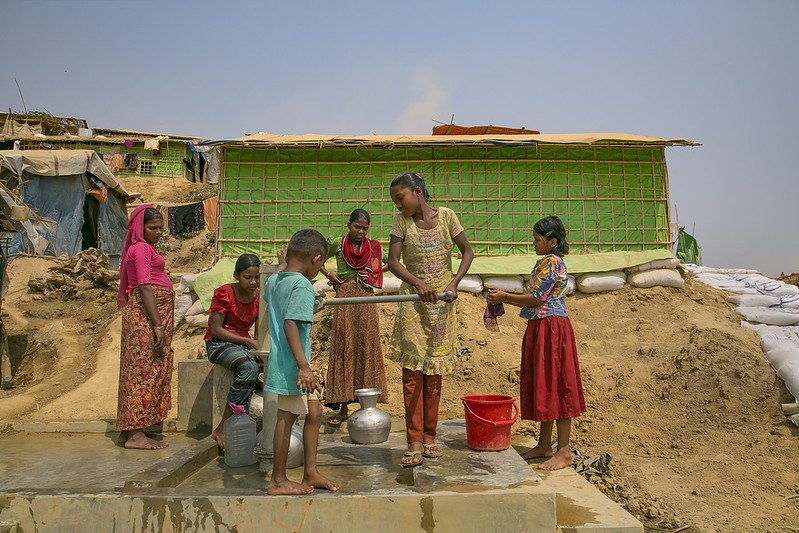
 Refugees from Myanmar face staggering levels of trauma, stress, and mental and physical health challenges, made worse by living conditions in refugee camps across Southeast Asia. The toll on health is especially severe, but telehealth offers hope by expanding health care access for Myanmar refugees.
The Crisis in Myanmar
Since 2017, nearly 1.5 million people have fled Myanmar amid the country’s humanitarian crisis, and 3.5 million are considered internally displaced. Most of these refugees are Rohingya Muslims from Rakhine State, who have lived without citizenship and faced persecution since 1962. Following the military coup in 2021, the military forced additional ethnic groups — including the Shan, Karen, and Kachin, among others —to flee their homes. Around 70% of the refugees are women and children. Many now live in overcrowded camps in neighboring Bangladesh.
The twin forces of violence and displacement have stripped Myanmar’s refugees of their homes, livelihoods, social support networks and health care, leaving them deeply impoverished. UNDP reported that as of 2024, nearly half the population in Myanmar lived below the poverty line, while 76% lived at or close to subsistence level, numbers which surged just in the three years since 2021.
As is common in conflict situations, access to health care is a luxury. This is due not only to cost and shortages of trained medical personnel, but also to the challenge of delivering proper care in temporary and scattered refugee camps.
In Cox’s Bazar refugee camp in Bangladesh, where most refugees have relocated, communicable and waterborne diseases run rampant, and mental health is severely impaired.
Telehealth as a Lifeline
Telehealth expands health care access for Myanmar refugees by connecting them with the care they need. The digital delivery of services simplifies the diagnosis, treatment, monitoring and follow-up for many physical and mental health conditions. Patients also do not have to travel as far — Cox’s Bazar is more than an hour by foot from the nearest health center, and clinics within the camp are understaffed and not always open 24 hours a day.
Within a few months of the military coup, the Ministry of Health of the National Unity Government launched its “Telekyanmar” initiative to provide telehealth services to people in Myanmar. The program’s telehealth clinics grew rapidly; by month three, almost all of Myanmar’s 330 townships had a telehealth clinic. As of May 2024, more than 71,000 people have registered with Telekyanmar, with over 178,000 consultations provided by both general practitioners and specialists.
The World Health Initiative, a U.S.-based nonprofit, also runs a program within Cox’s Bazar and at HOPE Field Hospital inside the camp since 2018. It provides a “specialized medical care that would otherwise not be available,” drawing on the expertise of volunteer physicians across a range of clinical disciplines, as well as virtual care devices donated by Teladoc Health.
One such device, the wheeled and collapsible Teladoc Health Lite, includes a touchscreen interface, audio system, port panel and a storage compartment for peripherals like stethoscopes and privacy headsets — all enabling clear and seamless video and communication between doctor and patient. Even with subpar Internet connectivity, doctors from anywhere in the world can beam in from their own remote devices, according to the World Telehealth Initiative.
The Global Case for Telehealth
The benefits of telehealth cannot be overstated. Essential health care services remain out of reach for half of the world’s population because they are “inaccessible, unavailable, unaffordable or of poor quality.” Every year, millions die from conditions that would be entirely preventable in high-income countries.
The poor suffer the most from this lack of access to critical health care, and telehealth offers a way to address this by enhancing and simplifying access to specialty providers.
Telehealth brings numerous other benefits:
- Lower costs for patients and health systems
- Increased flexibility in scheduling and delivery
- Elimination of geographic distance
- Facilitation of mental health support
- Promotion of health equity
- Decreased transmission of infectious diseases
The Future
Despite the advantages, challenges remain. Telehealth requires reliable Internet access, appropriate devices, and training for patients on device use and for providers on how to deliver care effectively. Language differences and cultural barriers can also complicate care delivery, and privacy worries are a reality for displaced persons who have not had the best relationship with authorities.
However, these obstacles are not insurmountable, given the ongoing, demonstrable improvements in the technology. Telehealth represents a promising approach with significant potential to expand health care access, improve health outcomes and help chart a pathway out of poverty for one of the world’s most vulnerable populations.
– Amanda Sablan
Amanda is based in Kensington, MD, USA and focuses on Technology and Global Health for The Borgen Project.
Photo: Flickr

Pakistan’s Water Crisis: The Indus Water Treaty Suspension
The Indus Water Treaty is one of the most successful international treaties in the world; however, after a military conflict between India and Pakistan that began in April 2025, India’s Prime Minister Narendra Modi suspended the treaty, attempting to increase India’s control of the basin. While infrastructure to control the basin would take India some time to complete, Pakistan’s existing water crisis would certainly worsen without access to this resource.
Pakistan’s Water Crisis
Water has always been scarce in Pakistan due to low rainfall in its alluvial plain climate, but currently, Pakistan could be one of the most water-stressed countries in the world. Administrative challenges and shortcomings – such as policy implementation delays, regulatory enforcement deficiencies, inefficient data collection and unsatisfactory climate adaptations – have hindered resource management and, as a result, access to water for people in Pakistan, significantly worsening the water crisis.
In June 2025, usable water reserves dropped drastically, with experts reporting a cumulative decrease of 723,000 feet over just four days. Pakistan experienced 67% less rainfall than usual in the winter 2024 to 2025, making the season one of the driest in the country’s history. The hardest-hit region, Sindh, recorded a 90% reduction in rainfall, and Pakistan’s agricultural center, Punjab, documented a 69% reduction.
As Pakistan relies on the basin’s water for around 90% of its agriculture, water from the Indus Basin is essential for food cultivation. Farming in Pakistan could be severely limited due to a lack of water from the basin, causing people to lose both livelihoods and access to indispensable crops.
Unstable Hydropower System
Because of an unstable hydropower system, Pakistan relies heavily on coal imports. A lack of water and an increased investment in power from fossil fuels could cause an increase in coal imports; at a time when around 60% of Pakistan’s GDP is burdened by debt, this will further economic hardship and hinder Pakistan’s ability to invest in hydropower infrastructure or diversification in the energy sector.
In 2022, Pakistan suffered the costliest flood ever recorded: the disaster disrupted lives, upended agricultural infrastructure and rendered water undrinkable. Because the Indus Water Treaty suspension has resulted in India withholding information on Indus Basin water levels, Pakistan may experience a greater risk of sudden, disastrous floods.
As it stands, only about 39% of people living in Pakistan have access to clean water, and estimates place up to 90% of available water being subpar quality. If water from the Indus Basin is cut off, Pakistani people are at risk of further losing access to the drinking water needed to sustain lives and communities.
NGOs Support Communities in Need
As Pakistan’s water crisis has endured, NGOs have played a pivotal role in offsetting harm. Humanitarian groups help install handpumps, solar-powered filtration systems and water-extracting boreholes to help ensure people in Pakistan have access to clean water.
Ek Plate Biryani installed more than 600 hand pumps across Thar – a district in Sindh, Pakistan – by the end of 2024. Each pump provides about 50 to 100 Pakistani people with safe drinking water daily.
Human Appeal uses donations to help build water wells in Pakistan with its multinational Water and Sanitation projects. Water wells are critical to combating water scarcity, as they can provide whole communities with water for drinking, cooking, bathing and agriculture.
In November 2023, WaterAid Pakistan announced its Country Programme Strategy for 2023-2028 that aims to expedite WASH progress in the country, emphasizing solutions that bolster public health outcomes and consider climate change challenges.
Looking Ahead
Following sustained tensions between Pakistan and India that instigated the Indus Water Treaty suspension, Pakistan’s water crisis is becoming increasingly dire. Though it could take years for India to build the infrastructure needed to cut off Pakistan from the Indus Basin, imperative next steps to support those affected by Pakistan’s water crisis include community mobilization, practical legislation, dam building, water conservation and diplomatic negotiations between Pakistan and India.
– Erin Hellhake
Photo: Flickr
Everything To Know About HIV/AIDS in Mongolia
In the context of public health, Mongolia has been largely spared from large-scale epidemics. HIV prevalence remains low, but that does not mean the risk is absent. For a nation often overlooked in global health discussions, Mongolia’s quiet battle against HIV is a story of early success—and urgent, unfinished business. Here is information about HIV/AIDS in Mongolia and efforts to combat it.
The Prevalence of HIV/AIDS in Mongolia
Mongolia has maintained a low overall HIV prevalence, estimated at around 600 people living with HIV in 2023. Men account for a significantly larger proportion of cases than women. While the numbers remain low compared to other countries, the number of cases has been slowly increasing over time. This highlights the need for sustained prevention efforts and real awareness campaigns.
The country reports fewer than 100 AIDS-related deaths annually, a reflection of progress in raising awareness, early detection and improved access to antiretroviral therapy (ART). However, treatment coverage remains below international targets; approximately 39% of people living with HIV receive ART, falling short of the UNAIDS 95-95-95 goals aimed for 2030. Without adequate treatment, the virus risks spreading further, especially among vulnerable populations.
Key Populations Most Affected by HIV/AIDS
Sexual contact is the primary mode of transmission. Certain groups carry a disproportionate burden of HIV infection:
Poverty and HIV/AIDS in Mongolia
Poverty exacerbates vulnerability to HIV infection and limits access to health care services in Mongolia. Many people living in poverty, particularly in rural and ger (traditional tent) districts around Ulaanbaatar, face barriers such as transportation costs, limited health care infrastructure and social stigma. These challenges reduce access to testing and treatment, increasing the risk of undiagnosed and untreated infections.
Mongolia’s Efforts To Address HIV/AIDS
To address these challenges, Mongolia has implemented several programs focused on vulnerable populations and poverty reduction:
Looking Ahead
Mongolia has kept HIV prevalence and AIDS-related deaths relatively low, but a slow rise in new cases, especially among impoverished and stigmatized groups, presents ongoing challenges. Addressing poverty’s role in HIV vulnerability and improving health care access through innovative programs and sustained investment will be essential for Mongolia to sustain its progress and meet international targets. With continued commitment, Mongolia can look forward to a healthier future.
– Julia Skowrońska
Photo: Flickr
Innovations in Poverty Eradication in Panama
Programs in poverty eradication in Panama have grown over the past few decades, thanks to the Panamanian government, creating innovative approaches to improve the lives of its citizens, such as increasing jobs for the nation and social programs such as the Universal Educational Social Assistance Program (PASE-U) and the Panamá Solidario emergency program. Despite these advancements, the region faces challenges, particularly in addressing income inequality.
Job Creation and Economic Prosperity
Panama’s rapid economic growth has been a cornerstone of its poverty reduction efforts. Between 1990 and 2019, the country’s economy grew at an average rate of 5.8% annually, thanks to the usage of the Panama Canal. This pace significantly outpaced the regional average of 2.6%. This growth has translated into improved labor conditions for the people of Panama, with mean hourly real wages increasing by 60%, the employment rate rising from 48% to 63% and women’s labor force participation increasing from 34.1% to 55.5%. This increase in jobs has decreased the number of people living in poverty in Panama, plummeting from 50.2% in 1989 to 12.9% in 2021.
This is just one step in poverty eradication in Panama, as giving people jobs and positive economic growth in a country can hopefully help all classes of people in Panama, not just the wealthy business owners.
Social Protection Programs
Innovative social protection programs have been a crucial strategy to poverty eradication in Panama. The Universal Educational Social Assistance Program (PASE-U) and the Panamá Solidario emergency program are notable examples. Starting in 2020, the PASE-U objectives are to prevent school dropout, raise enrollment and school attendance rates and motivate to strengthen academic improvement. This is done by a government allowance to students who continue to pursue education, with the benefits of 270 PAB for primary school students, 360 PAB for presecondary school students and 450 PAB for secondary school students (PASE-U).
Panamá Solidario’s emergency program prioritized the purchase of local production from both agribusinesses and producers, for the manufacture of bags and delivery of products of agricultural and livestock origin. This program aimed to continue economic production in light of the COVID-19 pandemic. The results of the program were widely successful, as the nation delivered more than 6 million bags of meals until January 2021. About 2.1 million physical bonds and 4.7 million digital vouchers were credited to continue economic growth. The Panamá Solidario would support more than 1.6 million Panamanians during the COVID-19 pandemic, maintaining economic growth.
Addressing Inequality
Despite these achievements in addressing poverty reduction, Panama continues to grapple with significant income inequality. The country ranks third in South America and Central America for income disparity, with the poorest 20% earning just 1.2% of the total labor income, while the wealthiest 20% claim 32.7%. Geographic disparities are also pronounced, with poverty rates being higher in the rural areas of the region, compared to urban areas. Indigenous communities face even greater challenges, with 69.4% living in poverty and limited access to basic services such as education and health services.
Future Directions
Progress is still occurring, as the World Bank Group’s Poverty and Equity Assessment of Panama suggests that Panama must prioritize policies that expand access to basic services, improve job quality, enhance human capital and promote household resilience in the long run. Addressing the structural challenges that perpetuate inequality for the people of Panama will be essential for achieving shared prosperity.
Panama’s strides towards poverty eradication are a testament to the power of innovative approaches and sustained economic growth. While challenges remain, the country’s commitment to improving the lives of its citizens offers a long-term goal for a more equitable and prosperous future for the people of Panama.
– Dylan Fly
Photo: Flickr
How AI in South Africa Fights Poverty
Despite challenges, South Africa leads Africa in harnessing artificial intelligence (AI) to revive struggling industries, boost productivity and drive economic development. Indeed, the 2024 Global Index on Responsible AI ranks it as the continent’s top performer. The implementation of AI in South Africa plays a key role as the country fights poverty, by addressing structural inequalities and innovating health care, agriculture and the workforce.
AI in South Africa Fights Poverty
In 2019, South African President Cyril Ramaphosa announced the establishment of a commission to help the country benefit from the Fourth Industrial Revolution (4IR). The 4IR represents the ongoing technological transformation in society, driven by advances in modern technologies and artificial intelligence. Indeed, the commission’s efforts have opened new opportunities for South African society to integrate more effectively into a technology-driven workforce.
The creation of the AI Institute of South Africa further expands career and educational pathways for both students and professionals. Former IT students founded the institution to equip citizens with the skills needed for a digital workforce. It offers internships, job placements and professional development opportunities in the IT and engineering sectors, helping individuals thrive in a technology-driven economy.
Universities and research institutions also play an important role in building digital and technical skills, offering postgraduate programs focused on AI and data analytics. The University of Pretoria’s Data Science for Social Impact group offers courses in big data and natural language processing, while TVET colleges and Sector Education and Training Authorities deliver programs focused on 4IR.
These measures aim to directly reduce unemployment in South Africa. They support economic development by enhancing digital skills within the workforce.
AI in Agriculture
South Africa’s agricultural sector faces serious challenges from unpredictable and frequent natural disasters, which reduce crop yields and cause livestock losses. Rising food prices hit rural communities hardest, increasing the risk of food insecurity. Statistics South Africa revealed that by 2023, 19.7% of households had experienced some form of food insecurity.
Using AI in South Africa through digital agricultural technologies offers a chance to increase productivity and improve resource efficiency. For example, tools like Aerobotics use drone and satellite technology to detect pest and disease outbreaks, providing valuable support to rural communities with limited data access. Insights on irrigation and fertilisation strategies, predicted yields and water usage help farmers allocate resources more effectively, according to the 2024 GSMA report.
Alongside these technologies, locally led initiatives such as the ITIKI project demonstrate how AI can also strengthen food security by addressing climate-related risks. Led by the Central University of Technology, the project uses AI and indigenous knowledge to forecast droughts and track food security, GSMA reports. Delivering real-time insights to farmers and decision-makers aids in reducing crop loss. Additionally, farmers are guided to interventions and insights combat food insecurity in rural communities.
By strengthening agricultural resilience and efficiency, AI in South Africa plays a vital role in reducing food insecurity and alleviating poverty in vulnerable communities.
AI in Health Care
South Africa has seen significant advances in equal access to healthcare. As of 2025, the World Health Organization (WHO) projects that essential health care services will cover 6.2 million additional people.
The implementation of AI in South Africa further drives innovation in the health care sector by improving diagnostic accuracy, easing workloads and expanding access to services in rural areas. With 62% of health care leaders adopting AI for decision-making and treatment monitoring, South Africa is outpacing the global average in key areas of health tech adoption.
Data-driven decision-making and personalised healthcare initiatives significantly ease pressure on the public health sector. The government-led MomConnect initiative uses AI-powered messaging and virtual symptom assessments to support pregnant mothers. Timely health advice has improving maternal and child health outcomes, GSMA reports.
By expanding access to quality care, AI in healthcare plays a key role in reducing health-related poverty and bridging gaps in vulnerable communities.
The Future of AI in South Africa
Continued implementation of advanced technology in South Africa supports strong economic growth. Furthermore, AI-driven solutions directly address long-standing social challenges effectively by improving the quality of life in vulnerable areas.
South Africa’s National Artificial Intelligence Policy Framework aims to harness the long-term societal and economic benefits of advanced technologies. It sets clear guidelines for integrating AI in alignment with the country’s existing socio-economic goals. By doing so, the framework helps maximize AI’s potential while minimizing associated risks.
To fully realise the benefits of AI in South Africa, active collaboration between policymakers, government and citizens should drive inclusive policies, ensure equitable access to technology and prioritise solutions that address poverty and inequality. Indeed, with a shared commitment to innovation and ethical development, South Africa is well-positioned to shape a future where AI empowers its people and strengthens its society.
– Beatrice Punt
Photo: Flickr
C3’s Fight Against Child Marriage in India
At the forefront of efforts to resolve the issue is the Centre for Catalyzing Change (C3), a nonprofit organization working tirelessly to empower girls, shift mindsets and create systemic change. C3 believes that when girls are educated, healthy and supported, they can break the cycle of child marriage and build stronger futures for themselves and their communities.
Understanding the Challenge
Child marriage remains alarmingly prevalent in India, especially in rural areas. According to the United Nations International Children’s Emergency Fund (UNICEF), nearly one in four girls in India gets married before the age of 18. Girls forced into early marriage are more likely to drop out of school, experience complications from early pregnancy, suffer from domestic violence and face limited economic prospects.
Behind these statistics are complex factors: poverty, lack of access to education, deeply entrenched gender norms and the belief that marriage offers girls social or economic security. The COVID-19 pandemic only worsened the situation, with reports of rising child marriage rates during lockdowns.
About C3
Founded in 2002, C3 is a nationally recognized nonprofit organization (NGO) dedicated to improving the lives of women and girls across India. C3 envisions a world where all women and girls can realize their full potential, participate in decisions that affect them and live lives of dignity and equality. C3 works at the intersection of education, health, leadership and rights. Its child marriage prevention initiatives rely on community partnerships, grassroots mobilization and evidence-based advocacy.
C3’s Approach to Ending Child Marriage
C3’s multi-layered strategy addresses both the symptoms and root causes of child marriage:
Looking Ahead
In Bihar and Jharkhand—two states with high child marriage rates—C3 has reached more than 100,000 adolescent girls. It has engaged thousands of community members through workshops, leadership training and school-based interventions. With the help of C3 and other advocates, 23 child marriages have already been prevented. Despite progress, it appears ending child marriage in India still requires more effort. Social stigma, poverty and weak enforcement continue to pose challenges. But C3 remains committed by adapting to new realities, scaling what works and deepening its impact.
In 2025 and beyond, C3 aims to:
Ultimately, by empowering girls and challenging harmful norms, C3 is helping build a more just, equal and hopeful India for everyone.
– Meagan Beaver
Photo: Flickr
Expanding Health Care Access for Myanmar Refugees
The Crisis in Myanmar
Since 2017, nearly 1.5 million people have fled Myanmar amid the country’s humanitarian crisis, and 3.5 million are considered internally displaced. Most of these refugees are Rohingya Muslims from Rakhine State, who have lived without citizenship and faced persecution since 1962. Following the military coup in 2021, the military forced additional ethnic groups — including the Shan, Karen, and Kachin, among others —to flee their homes. Around 70% of the refugees are women and children. Many now live in overcrowded camps in neighboring Bangladesh.
The twin forces of violence and displacement have stripped Myanmar’s refugees of their homes, livelihoods, social support networks and health care, leaving them deeply impoverished. UNDP reported that as of 2024, nearly half the population in Myanmar lived below the poverty line, while 76% lived at or close to subsistence level, numbers which surged just in the three years since 2021.
As is common in conflict situations, access to health care is a luxury. This is due not only to cost and shortages of trained medical personnel, but also to the challenge of delivering proper care in temporary and scattered refugee camps.
In Cox’s Bazar refugee camp in Bangladesh, where most refugees have relocated, communicable and waterborne diseases run rampant, and mental health is severely impaired.
Telehealth as a Lifeline
Telehealth expands health care access for Myanmar refugees by connecting them with the care they need. The digital delivery of services simplifies the diagnosis, treatment, monitoring and follow-up for many physical and mental health conditions. Patients also do not have to travel as far — Cox’s Bazar is more than an hour by foot from the nearest health center, and clinics within the camp are understaffed and not always open 24 hours a day.
Within a few months of the military coup, the Ministry of Health of the National Unity Government launched its “Telekyanmar” initiative to provide telehealth services to people in Myanmar. The program’s telehealth clinics grew rapidly; by month three, almost all of Myanmar’s 330 townships had a telehealth clinic. As of May 2024, more than 71,000 people have registered with Telekyanmar, with over 178,000 consultations provided by both general practitioners and specialists.
The World Health Initiative, a U.S.-based nonprofit, also runs a program within Cox’s Bazar and at HOPE Field Hospital inside the camp since 2018. It provides a “specialized medical care that would otherwise not be available,” drawing on the expertise of volunteer physicians across a range of clinical disciplines, as well as virtual care devices donated by Teladoc Health.
One such device, the wheeled and collapsible Teladoc Health Lite, includes a touchscreen interface, audio system, port panel and a storage compartment for peripherals like stethoscopes and privacy headsets — all enabling clear and seamless video and communication between doctor and patient. Even with subpar Internet connectivity, doctors from anywhere in the world can beam in from their own remote devices, according to the World Telehealth Initiative.
The Global Case for Telehealth
The benefits of telehealth cannot be overstated. Essential health care services remain out of reach for half of the world’s population because they are “inaccessible, unavailable, unaffordable or of poor quality.” Every year, millions die from conditions that would be entirely preventable in high-income countries.
The poor suffer the most from this lack of access to critical health care, and telehealth offers a way to address this by enhancing and simplifying access to specialty providers.
Telehealth brings numerous other benefits:
The Future
Despite the advantages, challenges remain. Telehealth requires reliable Internet access, appropriate devices, and training for patients on device use and for providers on how to deliver care effectively. Language differences and cultural barriers can also complicate care delivery, and privacy worries are a reality for displaced persons who have not had the best relationship with authorities.
However, these obstacles are not insurmountable, given the ongoing, demonstrable improvements in the technology. Telehealth represents a promising approach with significant potential to expand health care access, improve health outcomes and help chart a pathway out of poverty for one of the world’s most vulnerable populations.
– Amanda Sablan
Photo: Flickr
CDB and the Global Alliance Against Hunger and Poverty
After electing its newest president in 2025, Daniel Best, the CDB is working to address geopolitical tensions and shifting financial conditions, while approving a historic $460 million from the Special Development Fund — an amount intended to sustain the organization for three years. Best is intending to start in his newly appointed position, hitting the ground running by looking to introduce three new financial products to support a just green transition and reduce investment risk for the private sector. Furthermore, he’s made it an utmost priority to address the United Nations (U.N.) Sustainable Development Goals (SDGs) 1 and 2 by joining the Global Alliance Against Hunger and Poverty.
Integration with the Global Alliance Against Hunger and Poverty
The Global Alliance Against Hunger and Poverty is a governance structure that focuses on accelerating the achievement of specifically SDG 1 and 2—No Poverty (1) and Zero Hunger (2). Many board members of the CDB have reached out to the press, explaining that the organization sought to join the Global Alliance Against Hunger to address globalized poverty and food insecurity through sustainable agricultural practices. In addition, this decision could enhance domestic lives in the Caribbean by working with international programs and partners incorporated with the Global Alliance Against Hunger and Poverty.
Before publicly joining this fight alongside such an established organization, the CDB pledged to support the Alliance’s objectives through knowledge sharing, ethical engagement and the development of solutions tailored to the needs of vulnerable communities, including Indigenous populations and tribal groups. Both governance bodies have been made aware of the disproportionate poverty indigenous populations experience in not just the Caribbean, but all of Latin America. Of the 42 million Indigenous people living in the region, 43% live in poverty — more than twice the rate of non-Indigenous populations in Latin America — deepening their underrepresentation in areas such as the humanities and politics, according to Elizabeth Wong’s article Indigenous Erasure and Resistance in the Caribbean. Fortunately, the CDB and Global Alliance Against Hunger and Poverty are exploring strategies on how to address this long-established systematic oppression.
Furthering Progress
While addressing domestic issues with support from international partners is a strength of the Caribbean Development Bank, the organization also maintains a mutual aid agreement to advance the SDGs abroad. However, this task could be a lot more challenging, as in the last year, the World Bank has found a divergence in SDG 1 and SDG 2—which primarily have a close correlation with one another—in the past one to two decades. This could mean several things, ranging from poor or outdated data and analysis tools or genuine economic gaps in certain countries.
Moving Forward
The CDB appears to be in a position to be a key contributor in providing aid to address the issue and resolve weaker data systems among affected nations. As a region that many consider data poor, the integration of new data systems—if the U.N. can successfully achieve this—could improve the region’s capacity to properly track poor and malnourished environments. This could legitimize the organization’s influence, effectively resulting in its global expansion to provide improved analysis measures for more data-poor nations and regions.
– Sam Barbagallo
Photo: Flickr
The HIV Epidemic in Eastern Europe and Central Asia
What is the Elton John AIDS Foundation Doing Now?
The Foundation implemented the RADIAN initiative in 2019 to address the HIV Epidemic in Eastern Europe and Central Asia. RADIAN was conceived with the partnership of Gilead Sciences. It focused on action, investment, care, and resources to improve the quality of life of people at risk of or living with HIV in the affected region.
More recently, in 2024, the Foundation introduced RADIAN 2.0, a new initiative to better implement RADIAN’s achievements to combat the HIV Epidemic in Eastern Europe and Central Asia. The objectives of RADIAN 2.0 are:
HIV and Poverty
Some structural drivers increase the HIV epidemic in Eastern Europe and Central Asia. The term structural drivers refers to “a range of factors, acting at macro and community levels, that fundamentally shape and influence patterns of HIV risk behaviour, and facilitate or impede an individual or group’s ability to access services and/or adhere to treatment” (STRIVE Research Consortium ), according to the Foundation. These structural drivers result in stigma and discrimination experienced by key populations and people living with HIV, which negatively affects their lives. This, in turn, contributes to the risk of contracting HIV, and then AIDS, and then dying. Some structural drivers of HIV include poor healthcare access, poor education, gendered violence, stigma and discrimination, and drug use.
How Does RADIAN 2.0 Help Combat HIV/AIDS?
RADIAN 2.0 works at the macro and community levels, creating structural interventions. At the macro level, the initiative may focus on changing discriminatory policies and legislation, improving economic and social conditions, modifying cultural and religious norms and changing the legal justice and law enforcement practices.
At the community level, the initiative may focus on reducing stigma and discrimination, creating educational and economic opportunities, changing gender norms and reducing inequality and improving access to health care services, according to the Foundation.
Why is RADIAN Important?
Eastern Europe and Central Asia are regions where new HIV infections and AIDS – related deaths are rising. Out of the 21 million people living with HIV, 41% are not aware that they have HIV, and 50% are not receiving treatment, which is below global targets. RADIAN, through its partnership with Gilead Sciences, was the Elton John Foundation’s answer to this growing problem.
Until the conception of RADIAN 2.0, RADIAN has significantly impacted the HIV response. With the help of local community services, RADIAN has reached over 310,000 people with essential HIV services and linked almost 35,700 people to HIV treatment. RADIAN 2.0 will build off the accomplishments of RADIAN in order to meet the changing needs of marginalized communities.
The Future
Even though HIV is declining globally, Eastern Europe and Central Asia are one of the regions where the HIV epidemic is worsening. In this region, new HIV diagnoses increased by 20%, and AIDS related deaths increased by 34% since 2010. “Over the next five years, RADIAN 2.0 will continue to address structural drivers of the epidemic, strengthen HIV health systems, and enhance the capacities of local organizations for a lasting impact,” says Daniel O’ Day, Chairman and Chief Executive Officer, Gilead Sciences. RADIAN has had a positive impact on HIV in Eastern Europe and Central Asia. It is hoped that RADIAN 2.0 will do the same.
Elton John created the Elton John AIDS Foundation in 1992 after losing loved ones to AIDS. He has worked to end the HIV epidemic once and for all. To put it in Elton John’s words, “All it takes is a bit more funding and a bit more understanding. All it takes is dialogue.”
– Abirame Shanthakumar
Photo: Wikimedia Commons
Being Poor in Sudan
Historical Context and Conflict
Sudan has struggled with internal conflicts for a substantial portion of its history, from the Mahdist Revolution (1881-1898) to the Sudanese Civil War (2023-present). These conflicts have driven many innocent bystanders into extreme poverty and deprivation. The current Civil War officially broke out on April 15, 2023, when a power struggle between two rival factions of the military triggered the conflict. The Sudanese Armed Forces (SAF), led by General Abdel Fattah al-Burhan, and the Rapid Support Forces (RSF), led by Mohamed Hamdan Dagalo, were at the center of this struggle. This conflict has rapidly escalated into one of the worst humanitarian crises in the world.
The Hunger Crisis
The effects of these long-standing conflicts have led to lasting damage to the country’s stability, devastating Sudanese infrastructure and agricultural lands. According to the nonprofit organization Action Against Hunger, 24.8 million people are living in food poverty and need aid, alongside hundreds of thousands living in famine-like conditions. This is nearly half of the population.
Hyperinflation has further exacerbated the hunger crisis. According to the International Monetary Fund (IMF), the annual inflation rate reached an astonishing 359% in 2021. Additionally, IMF data shows that businesses and traders raised prices by 200% last year. Sudanese citizens now struggle to find basic food staples like sorghum, rice, beans and sugar due to scarcity and high prices.
Unemployment and Economic Collapse
Being poor in Sudan means facing a daily reality of unemployment as ongoing conflict has led to the job market and economy crashing down. Before the war, unemployment rates in Sudan were already high. Since 2023, these rates have only increased. According to the International Food Policy Research Institute (IFPRI), the Civil War contributed to the estimated loss of more than 5 million jobs and $5 billion in Sudan’s economy in the first year of the war.
Education Crisis
The conflict has severely disrupted access to education. The conflict has destroyed or repurposed schools and has forced millions of children out of education. International organizations have made significant efforts to solve this problem. UNICEF has launched a ‘learning passport,’ delivering education through digital platforms. This initiative has reached more than 12,000 children around Sudan.
The Global Partnership for Education (GPE) has also launched multi-million dollar packages to assist with education, ensuring that all children can access education even during crises, by helping train teachers and distributing various materials. These packages have helped more than 285,000 children in Sudan.
International Developments, Positive Progress and Aid
Amidst all this seemingly negative news, there have been substantial efforts to progress, alongside these education initiatives to help fight being poor in Sudan. Many major international organizations have committed to helping in relief efforts:
Looking Ahead
Being poor in Sudan today means struggling with hunger, unemployment, lack of education and ongoing displacement. The compounded effects of war, economic instability and food scarcity have fabricated a humanitarian emergency. However, the work of international aid agencies and education initiatives brings a glimmer of hope for millions of these vulnerable Sudanese citizens.
– Emma Dornan
Photo: Flickr
COPHCI: Addressing Disability and Poverty in Côte d’Ivoire
A Closer Look at Disability and Poverty in Côte d’Ivoire
Côte d’Ivoire has seen a rapid rise in the Human Development Index (HDI) since the turn of the 21st century, surpassing the threshold of a country with medium development in 2017. This has resulted in a windfall of social progress in the country, with life expectancy at birth increasing by over 10 years by 2023-24, and the average GNP nearly doubling in the same time frame.
Nevertheless, people with disabilities (PWDs) in Côte d’Ivoire still face a litany of impediments which keep them from reaping the rewards of such progress and from proper inclusion in their communities. For instance, an observational study by COPHCI found that 83.56% of polling stations lacked accessibility for PWDs during the presidential elections in 2020, and the legislative elections in 2021. Additionally, UNICEF found that only 26% of children with disabilities had access to education. Such glaring inadequacies in the treatment of children and adults with disabilities have created a dire need for a reimagined approach to inclusivity in Côte d’Ivoire.
The burden to change the status quo has thus fallen on local organizations – often working in collaboration with one another – to support those whom the country’s hastening development has neglected. Many also work on building ties with various government ministries in an effort to highlight the often-ignored ails which the country faces.
COPHCI’s Fight
COPHCI is an umbrella organization, heading more than a dozen Federations which are separated by type of disability or by the specific needs of disabled individuals. It acts as a central unifier for all of these groups, working as, in their own words, a liaison between them.
COPHCI seeks to give a voice to the usually voiceless and bring awareness to problems which are otherwise completely overlooked by authorities. As an umbrella organization, COPHCI focuses primarily on awareness-raising, and it has acted as a crucial part of many social inclusion and aid initiatives undertaken in Côte d’Ivoire.
For this reason, workshops and community events form the backbone of much of the work which COPHCI does. Not only do they meet with and educate disadvantaged communities, they also act as a link between them and Côte d’Ivoire’s governing bodies. In 2024, the organization undertook a number of initiatives, one of which was a two-day November workshop with fellow advocacy groups to push for the involvement of PWDs in the burgeoning economic development of the country. As the economy continues to expand, COPHCI has worked tirelessly to ensure that space is made for people who have historically been left out of the job market.
Key to the country’s development is the Youth Employment Agency, an agency which has worked to improve employment opportunities for youth in Côte d’Ivoire since its establishment in 2015. COPHCI has worked tirelessly to lobby this agency, especially in 2024, and successfully pushed for a special desk for people with disabilities. This was a major victory for PWDs in the labor market, finally giving them a voice and place in the economic expansion of their country.
Continuing the Fight in 2025
COPHCI has so far stayed out of any headlines in 2025, however, the group’s website shows its continued efforts to train caregivers and educate local communities. As Côte d’Ivoire continues to blossom on the world stage, it is organizations like COPHCI which will ensure that disabled and disadvantaged people can finally take part in their country’s progress, and that disability and poverty in Côte d’Ivoire cease to be a barrier of entry to participation.
– Alex Degterev
Photo: Unsplash