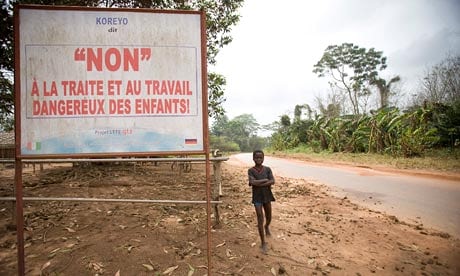
 Slavery is never an easy problem to confront. It is uncomfortable and unpleasant to think about, a complex jumble of economics, politics, culture, and dozens of other areas. It is also very uncomfortable to address the possibility that many western clothes and electronics are made by slaves. However, poverty cannot end completely without ending slavery, and slavery will not end without an end to poverty. They feed off one another, so in order to end poverty, people must end modern slavery as well.
Society tends to imagine slavery as an issue of the past, a horrible chapter of human history that closed with the ban on the slave trade in Europe and the emancipation proclamation in America. But slavery has continued, and today, there are more people in slavery than at any other time in human history. Twenty-seven million people are enslaved today, 79 percent of whom are women and children. Almost every country in the world is somehow involved in human trafficking and slavery, either as a country of origin, transit or destination.
Many people who become trapped in slavery are the people who are already trapped in poverty. People in extreme poverty often try to find ways out of their desperate situation, and many are lured into the slave trade with promises of education, steady work and a better life. Instead, they are sold into slavery, often for as little as $90 a person, and imprisoned with literal chains or psychological pressure. They can then be forced into different types of slavery, including sexual exploitation and prostitution, forced labor, being compelled to act as beggars, benefit fraud and organ removal.
There are laws and international protocols against the slave trade, but they are poorly enforced and often ineffective. Victims fear coming forward to the authorities because of stigmas and the risk of imprisonment or deportation, even when they are the victims, not the criminals. The victims are often the ones to carry the social shame and punishments while the conviction rate for the slave traders remains low.
Ending modern day slavery feels like a difficult task. There is no open slave trade to end as there was in the 1700s and 1800s. The U.N. is one of the many organizations working to free people and give them a new life. Since the early ’90s, it has freed more than 90,000 people by working to prevent trafficking and protect victims. However, there are still millions more to free and prevent from becoming victims in the first place. The State Department has devised a strategy of prosecution, protection and prevention, the “3 P’s” that are aimed to end modern slavery.
One of the most important ways to end modern slavery is by preventing it. Both slavery and poverty are about “excluding people from economic and social justice,” so addressing economic and social issues deals with slavery and poverty together. By preventing individuals from falling into the desperate situations of poverty, they are less vulnerable to slave traffickers. Preventing social exclusion and discrimination is also an important step to stop slavery. Slowing the supply of victims by addressing these social and economic causes is a crucial step to ending modern slavery. Since many of these problems are also related to global poverty, this is a win-win situation.
Protection is another key way to end slavery. The movements of refugees and migrants have made many people more vulnerable, so safe migration and trade unions can help keep workers from becoming susceptible to the slave trade. Those already trapped in the slave trade should receive the proper treatment and legal action. This leads to the final P, which is prosecution of those running the slave trade. The low prosecution rates provide little deterrence for those involved with the slave trade, so cracking down on prosecution can act as a form of further deterrence.
Compared to the number of people in poverty, about 10 percent of the world’s population, the number of people in slavery is small. However, these 27 million people deserve far better treatment. Addressing the issues of poverty that cause the desperation can help end modern slavery, and ending modern slavery helps end poverty.
– Rachael Lind

Countries Target Hepatitis Elimination
According to information from the World Health Organization (WHO), 28 countries representing approximately 70% of the global health burden are establishing hepatitis elimination committees. More than half of these countries have already committed funding for hepatitis responses.
Dr. Tedros Adhanom Ghebreyesus, the WHO Director-General, finds the commitment of these countries encouraging. “Identifying interventions that have a high impact is a key step towards eliminating this devastating disease. Many countries have succeeded in scaling-up the hepatitis B vaccination. Now we need to push harder to increase access to diagnosis and treatment,” Dr. Tedros said in a statement from the WHO.
Hepatitis (which means inflammation of the liver) is caused by toxins, certain drugs, diseases, heavy alcohol use and bacterial and viral infections. The disease is spread when blood or other bodily fluids enter the body of an uninfected person. Symptoms include jaundice (yellowing of the skin and eyes), fatigue, abdominal pain, swelling, chest pain, abdominal swelling, fever, and diarrhea.
The WHO report was released to coincide with World Hepatitis Day and is calling on countries to increase their commitment to end the disease. The current theme of World Hepatitis Day is Eliminate Hepatitis, focusing on increased awareness, diagnosis, universal vaccination and treatment.
Viral hepatitis affected 325 million people worldwide in 2015 and is responsible for 1.34 million deaths. The two main killer strains of hepatitis B and C affected 257 million and 71 million people respectively. WHO data shows that more than 86% of countries that were reviewed have already set national hepatitis elimination targets. More than 70% have begun to develop national hepatitis elimination programs by enabling access to effective prevention, diagnosis, treatment and care services.
Dr. Gottfried Himschall, WHO’s Director of the HIV Department and Global Hepatitis Program acknowledges that awareness of hepatitis is gaining momentum but also states that there are too many people living with hepatitis that don’t know they have the disease or cannot access treatment.
“For hepatitis elimination to become a reality, countries need to accelerate their efforts and increase investments in life-saving care. There is simply no reason why many millions of people still have not been tested for hepatitis and cannot access the treatment for which they are in dire need,” Dr. Himschall said in a statement from the WHO.
The World Hepatitis Summit in Sao Paulo, Brazil, organized jointly by the WHO, the World Hepatitis Alliance (WHA) and the government of Brazil, will bring together key players in hepatitis elimination. The summit will be held Nov. 1-3 and promises to be the largest global event to advance the viral hepatitis agenda.
– Drew Hazzard
Photo: Flickr
10 Facts About Health in Libya
Malika Saim, a Doctors Without Borders staff member currently working in Libya, said that Libya is “a country where the problems aren’t immediately obvious, but so much is needed.” With continued cooperation between Libyan officials and international aid organizations and ongoing peace talks, hopefully health in Libya will improve, providing care to those who need it most.
– Sean Newhouse
Photo: Google
Mozambican Adaptation Project to Combat Climate Change
As a result of climate change, rainfall becomes unpredictable, and extreme weather occurrences like drought that occur every three to four years become more frequent. Flooding and cyclones threaten the health and economic stability of many Mozambicans. In 2015, flooding affected 160,000 people, displaced 50,000 and killed 159 in central and northern Mozambique. Furthermore, the country suffered great economic damage to infrastructure, as flooding collapsed roads and bridges.
Mozambique’s mangrove forest in Bon Sinais River, Icidua, Quelimane has completely flattened out as locals use the trees for building and fuel, and the clear space for harvesting salt. Mangroves protect communities that have improperly built homes that are incapable of withstanding strong winds.
USAID funded the Mozambican adaptation project by equipping five municipalities: Pemba, Quelimane, Nacala, Mozambique Island and Mocimboa de Praia. Throughout the next few years, the Coastal City Adaptation Project (CCAP) will see more than 200,000 mangrove trees planted on 37 acres in Icidua, resulting in decreased erosion and flood prevention and an increase in fishing.
Pemba, Mozambique has witnessed the heaviest rainfall in 40 years destroy the homes of its community. The Mozambican adaptation project will commence dune restoration and a phone-based early warning system that allows communities to quickly learn about and prepare for disaster. This emergency response system will prevent flooding damages that have previously destroyed the homes and taken the lives of many.
If the Mozambican adaptation project cannot combat climate change, by 2075 semi-arid and arid areas can expect a 2-3 percent increase in solar radiation and a 9-13 percent increase in evapotranspiration. Mozambique will see an overall 2-9 percent decrease in precipitation and a 5-15 percent decrease in precipitation during the rainy season from November to May.
– Tiffany Santos
Photo: Flickr
Why Education in Niger Falls Short
Although education in Niger is compulsory between the ages of seven and 15, the country has one of the lowest literacy rates in the world. Less than one-third of adults can read and write. Having such a low literacy rate throughout the country limits Niger’s ability to address its widespread poverty. Improved literacy can positively contribute to economic and social development by promoting economic growth, reducing crime, increasing civic engagement and preventing disease. Education is a truly powerful tool, and it is one that Niger desperately needs.
Education in Niger also needs to acknowledge girls and young women. In 2009, less than half of young girls were enrolled in primary school. The low attendance rates correlate with the high number of child marriages in Niger. When more than one-third of women in Niger are married before age 15, child-rearing takes precedence over finishing a basic education. This trend also reflects in female literacy rates: less than a quarter of young women can read and write. Other Niger populations vulnerable to limited educational opportunities include people in rural and nomadic areas and those with disabilities. If Niger wants to improve the state of its education system, it cannot forget those who can so easily be forgotten.
The government of Niger recognizes that building a better education system must be a priority for the country. A government program has been put in place to improve education in Niger and schooling is available free of charge. Partnering with the Millennium Challenge Corporation and the United States Agency for International Development, the Niger Education and Community Strengthening program aims to provide more opportunities for students and developing the links between local communities and schools.
However, progress is still slow. The population of those who are illiterate or uneducated is still staggering, and it takes time to implement effective outreach. A high population growth rate, low enrollment rates and high dropout rates also all hinder current efforts. Continued support and awareness of education in Niger is crucial in bridging the gaps and propelling the country toward a healthy, educated future.
– Allie Knofczynski
Photo: Flickr
Government Works to Decrease Poverty Rate in Madagascar
Due to the severely high poverty rate in Madagascar, improvements are a long, uphill battle. A recent report found obstacles to poverty reduction include a lack of infrastructure, poor access to markets, land degradation and volatile food prices.
Unproductive micro-enterprises are another barrier. Small businesses cannot grow and create more jobs because of a low demand for non-agricultural products. Widespread poverty constricts Madagascar’s consumer base.
The government of Madagascar is not idly standing by while millions suffer in poverty. President Hery Rajaonarimampianina made poverty reduction, infrastructure development and educational attainment national priorities following his election in 2014. The government is adhering to these goals through several national strategies and multiparty agreements.
In cooperation with the United Nations, Madagascar adopted a national biodiversity plan that includes the Agriculture Livestock and Fisheries Sectorial Program. This program should ensure economic growth through investments in agriculture and export sectors. It also resolves to reduce poverty by improving farm productivity and household income through crop diversification.
Another method through which the poverty rate can decrease is Madagascar’s work to improve education. One tactic Madagascar has implemented in this regard is building literacy centers for people to learn reading, writing and math necessary for further technical training.
The government is also trying to eliminate gender discrimination with land ownership law enforcement and awareness workshops concentrated in the most rural, impoverished regions. Dispelling customary notions that prevent women from inheriting land will allow more women to support themselves and their families.
In April, Madagascar outlined its poverty reduction strategy in an economic development report submitted to the International Monetary Fund. In it, the government vows to prioritize social and poverty-related spending in the federal budget. Contained within that promise is the continuation of integrating teachers into the civil service and distributing school kits. Those two practices will lessen the financial burden on families and local organizations that have to pay for children’s education.
Madagascar’s national strategy also calls for macroeconomic stability and a strong financial system. This would ensure a healthy reduction in inflation and stable prices that guarantee sound purchasing power for consumers.
Madagascar is not battling its high poverty rate alone. The African Development Bank, the World Bank Group and the United Nations Development Programme pledged $6.4 billion to Madagascar for its 2017-2020 development projects.
Madagascar’s economy is gradually improving. Its GDP growth rate was 3.3 percent in 2014 and is projected to reach 4.5 percent this year, which should stimulate job growth and pull people out of poverty.
The poverty rate in Madagascar can decrease if the government follows through on its many objectives to improve the lives of its people.
– Kristen Reesor
Photo: Flickr
Exploring Common Diseases in Malaysia
Some of the major infectious diseases for Malaysia include what is known as dengue fever and the water contact disease called leptospirosis.
Leptospirosis is described by the World Health Organization (WHO) as a bacterial disease that is contracted through exposure to animal urine or things that have been contaminated by animal urine. The bacteria can enter the body in several ways, including cuts or through mucous membranes like the mouth, nose and eyes.
If one were to contract this disease, they could expect several discomforting symptoms: chills, redness in the eyes, jaundice, abdominal pains, hemorrhages in the skin or mucous membranes, vomiting, diarrhea, a rash and severe headaches are likely to occur in the early stages.
One of the other common diseases in Malaysia, the previously mentioned dengue fever, is much more difficult to avoid, due to its method of contamination; dengue fever is transmitted by mosquitoes.
People who have been infected by dengue will have a high fever (around 104 degrees Fahrenheit) coupled with several other flu-like symptoms, such as pain behind the eyes, muscle and joint aching, nausea, vomiting, rash, swollen glands or severe headaches. These symptoms can last anywhere between two and seven days, and the incubation period lasts between four and ten, after the bite.
Being a tropical nation, the Malaysian environment’s natural humidity is prone to hosting mosquitoes, among other insects. The mosquito population is helped by rapid urbanization and unclean, unprotected water supplies.
Thankfully, a vaccine has been discovered within the past two years. This vaccine, called Dengvaxia, was created by the vaccinations division of Sanofi, officially named Sanofi Pasteur. Other vaccines are being worked on as well, some in phase three of clinical trials.
Currently, the main method for fighting against dengue fever is through preventing mosquito bites. This method utilizes sanitation, insecticides, avoiding the creation of mosquito-prone habitats and early clinical detection of the illness. On the ground, the implementation of these strategies can be as simple as covering a waste basket and disposing of food properly.
— Stephen Praytor
Photo: Flickr
How USAID is Improving Girls’ Education in Pakistan
The challenge of child education in Pakistan stems from a variety of human rights issues, from the Taliban preventing girls from going to school to the practice of child marriage. Although these threats continue to diminish, they are still affecting girls’ education in Pakistan.
Only 54 percent of girls are enrolled in primary school, and this number drops to just 30 percent for secondary school. From there, it is estimated that only one in 10 will complete their secondary schooling, being pulled out of school for financial reasons or to be forced into marriage. These practices are typically concentrated in rural areas, but affect girls throughout Pakistan.
With secondary education difficult to access for many girls because they are subject to arranged marriages or financial pressures, USAID has started a program to focus on girls’ access to secondary education. So far, USAID has created 33 schools covering sixth through eighth grade for girls between 11 and 19. These schools will be set up in rural villages where there are often no existing secondary schools for girls.
USAID is also working to improve other dimensions of Pakistan’s education crisis. USAID has done so by building and repairing more than 1,135 schools since 2011, and by educating more than 660,000 primary-level students through its reading program. USAID has also committed over $70 million to implement its Empower Adolescent Girls strategy in order to help educate more than 200,000 young girls in Pakistan.
In addition to improving students’ access to education, USAID is investing in teachers by repairing and building the 17 Faculty of Education centers in Pakistan as well as by providing more than 3,100 scholarships for aspiring teachers to earn their education. USAID has also trained more than 25,000 teachers and school administrators since 2014.
When a child is educated, their livelihoods improve and they are given the tools necessary to be lifted from poverty. While there are still far too many children out-of-school in Pakistan, USAID is working tirelessly in order to give every child access to a complete education.
– Kelly Hayes
Photo: Flickr
Smart Cities in Nigeria to Help the Country Stay Connected
Recently, the Federal Government of Nigeria decided to embrace the idea of smart technology and incorporate it into Nigeria’s cities, hence the smart cities initiative. This initiative aims to implement technology with internet capability throughout as much of Nigerian city life as possible, in order to connect everyone’s devices to the extent similar to a country like the United States.
This will be accomplished through a partnership with Huawei, a global technology company with over 180,000 employees. The company’s goal is stated to be to build a “better-connected world.”
In 2016, there were 75 million smart phone users in Africa, but this number is expected to reach 512 million by 2018. Therefore, the Ministry of Communications in Nigeria has decided to launch the Smart City initiative in order to involve state and local governments in the push for smart cities.
Mr. Tank Li, the managing director of Huawei Technologies Nigeria Limited, states that the “Nigerian government has realized the potential of its digital economy. Unlocking the dividends of digital economy becomes imperative in the face of dwindling oil revenue…infrastructural deficit, high unemployment rate, harsh business environment and corruption amongst others.”
The idea of a digital economy is growing in importance in today’s world, and it is something Nigeria seeks to embrace with its smart cities initiative. Smart cities in Nigeria will hopefully turn Nigeria’s economy in a sustainable positive direction, creating opportunity and efficiency in the next ten years, potentially adding up to $88 billion to the GDP in Nigeria and more than three million jobs.
Germany has stated a willingness to assist and partner with Nigeria as the smart cities initiative develops. The German ambassador to Nigeria stated that Germany is ready to partner with Nigeria from the debate stage to the implementation level.
“We project in the near future a digital economy that will bring about enormous changes in society,” said Li. “This fourth industrial revolution is going to impact people’s lives in unimaginable ways and this will happen through the convergence of the cyber and physical worlds. The implementation of smart cities in Nigeria is a way for Nigeria to keep up with the ever-changing digital world.”
– Ellen Ray
Photo: Google
End Modern Slavery to End Poverty
Society tends to imagine slavery as an issue of the past, a horrible chapter of human history that closed with the ban on the slave trade in Europe and the emancipation proclamation in America. But slavery has continued, and today, there are more people in slavery than at any other time in human history. Twenty-seven million people are enslaved today, 79 percent of whom are women and children. Almost every country in the world is somehow involved in human trafficking and slavery, either as a country of origin, transit or destination.
Many people who become trapped in slavery are the people who are already trapped in poverty. People in extreme poverty often try to find ways out of their desperate situation, and many are lured into the slave trade with promises of education, steady work and a better life. Instead, they are sold into slavery, often for as little as $90 a person, and imprisoned with literal chains or psychological pressure. They can then be forced into different types of slavery, including sexual exploitation and prostitution, forced labor, being compelled to act as beggars, benefit fraud and organ removal.
There are laws and international protocols against the slave trade, but they are poorly enforced and often ineffective. Victims fear coming forward to the authorities because of stigmas and the risk of imprisonment or deportation, even when they are the victims, not the criminals. The victims are often the ones to carry the social shame and punishments while the conviction rate for the slave traders remains low.
Ending modern day slavery feels like a difficult task. There is no open slave trade to end as there was in the 1700s and 1800s. The U.N. is one of the many organizations working to free people and give them a new life. Since the early ’90s, it has freed more than 90,000 people by working to prevent trafficking and protect victims. However, there are still millions more to free and prevent from becoming victims in the first place. The State Department has devised a strategy of prosecution, protection and prevention, the “3 P’s” that are aimed to end modern slavery.
One of the most important ways to end modern slavery is by preventing it. Both slavery and poverty are about “excluding people from economic and social justice,” so addressing economic and social issues deals with slavery and poverty together. By preventing individuals from falling into the desperate situations of poverty, they are less vulnerable to slave traffickers. Preventing social exclusion and discrimination is also an important step to stop slavery. Slowing the supply of victims by addressing these social and economic causes is a crucial step to ending modern slavery. Since many of these problems are also related to global poverty, this is a win-win situation.
Protection is another key way to end slavery. The movements of refugees and migrants have made many people more vulnerable, so safe migration and trade unions can help keep workers from becoming susceptible to the slave trade. Those already trapped in the slave trade should receive the proper treatment and legal action. This leads to the final P, which is prosecution of those running the slave trade. The low prosecution rates provide little deterrence for those involved with the slave trade, so cracking down on prosecution can act as a form of further deterrence.
Compared to the number of people in poverty, about 10 percent of the world’s population, the number of people in slavery is small. However, these 27 million people deserve far better treatment. Addressing the issues of poverty that cause the desperation can help end modern slavery, and ending modern slavery helps end poverty.
– Rachael Lind
Malaysian Government Stifles Poverty
Malaysia has been successful in eradicating most poverty in the country with less than 1 percent of households living in extreme poverty. The states of Penang, Selangor, Malacca and the federal territories showed marked improvements in 2012 with no extreme poverty in these regions.
“This is proof that the Federal Government’s initiatives to eradicate poverty have succeeded and been of benefit to the rakyat regardless of differences in political ideology,” Malaysia’s economic planning minister Tan Sri Nor Mohamed Yakcop said.
The Malaysian government has done an admirable job of exceeding the Millennium Development Goals which were introduced in 1990. Malaysia succeeded in halving the number of people living on less than a dollar a day much before the 2015 expectant date.
“This is a result of rapid economic development and the effectiveness of poverty eradication programs carried out by the government,” Yakcop said.
According to the Malaysian government, fewer than 110,000 people were living in poverty and that the poverty statistics had nearly been halved within the span of three years. According to this information, the overall poverty rate in Malaysia dropped to 1.7 percent in 2012 which is a significant change compared to the 3.8% in 2009.
The fall in poverty rates was felt in both urban and rural areas. In urban areas, the number of impoverished people fell to just 1 percent in 2012 compared to 1.7 percent in 2009. In rural areas, the numbers were staggering. Poverty rates dropped from 8.4 percent in 2009 to 3.4 percent in 2012.
The focus of the Malaysian government has shifted toward the well-being of “the bottom 40” or poorest 40 percent of the population. Between From 2014 the average household of “the bottom 40” grew at 11.9 percent a year compared to 7.9 percent from 2009 for the total population.
Income inequality still remains a major issue in Malaysia compared to other East Asian countries but the disparity is gradually declining. According to its Gini coefficient, a measurement of income inequality where 0 and 1 indicates perfect inequality, Malaysia scored around 0.49, one of the highest in the region.
Though Malaysia still has some significant work to do as long as income equality, state programs have been put in place to alleviate much of the disparity. With the help of its own government, Malaysia stands as a significant example of a success in the region.
– Drew Hazzard
Photo: Flickr