New Commitments: G7 Foreign Aid Investment Programs
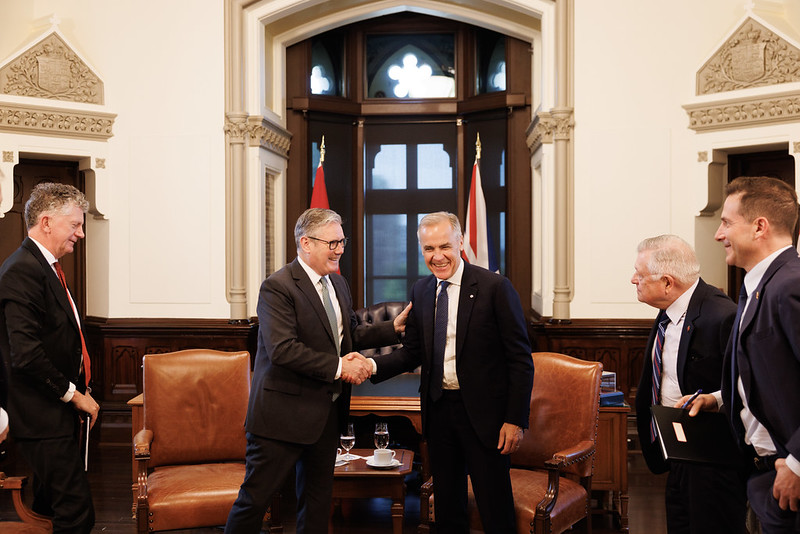 Amid a global context of geopolitical conflict and economic uncertainty, G7 leaders announced the establishment of two new projects to finance overseas development and a commitment to advancing a third, launched under Canada’s G7 Presidency in 2018. These initiatives cover contributions to multilateral development banks and mobilizing the private sector. The G7 foreign aid goal is to advance and achieve the Sustainable Development Goals (SDGs) in developing countries.
What is the G7?
In 1975, the United States (U.S.), the United Kingdom (U.K.), France, Italy and West Germany established the Group of Six as a forum for noncommunist global powers to discuss international economic tensions. Since then, there have been additions and removals of member states, and its economic purposes continue to adapt in response to the geopolitical conflicts of the day.
In the 1980s, for example, leaders made efforts to increase engagement with human rights and global stability. Then, the beginning of the 21st century saw the prioritization of human rights and increased attention toward issues including climate change and gender equality. The group has also played a crucial role in uniting multilateral donors for project funding. In 2025, members are the U.S., the U.K., France, Japan, Germany, Italy and Canada, making it the G7.
ODA in the 2025 G7 Summit
Hosted in Kananaskis, Canada, the 2025 G7 summit prioritized Official Development Assistance (ODA) for peace and security, private investment and long-term prosperity through partnerships outside of the group. For 2025, the G7 foreign aid agenda included advancing the International Assistance Innovation Program (IAIP), which launched as a five-year pilot project under the Canadian G7 presidency in 2018. New announcements included the Private Capital Mobilization Initiative (PCMI) and a project to expand innovative financing to multilateral development banks.
The IAIP follows eight principles endorsed by G7 ministers responsible for humanitarian action and development assistance. These include promoting inclusive innovation, investing in locally-driven solutions, taking intelligent risks, using evidence to drive decision-making, seizing learning opportunities, ensuring the impact of innovations, facilitating multilateral collaboration, identifying scalable solutions and integrating proven innovations into larger programming. The 2025 summit announced a commitment of $290 million over a five-year period to promote the mobilization of private investment toward developing countries.
In addition, the PCMI project received an allocation of $101.3 million over five years to address the obstacles to private sector investment. This involves working with organizations such as the Global Infrastructure Facility and Scaling Capital for Sustainable Development (SCALE). Among other goals, the partnership aims to accelerate infrastructure projects and provide targeted support for project planning and de-risking instruments.
Finally, the Innovative Financing at Multilateral Development Banks Project has pledged up to $400 million to multilateral development banks through portfolio guarantees. The initiative focuses on developing countries in the Caribbean and Latin America, licensing the Inter-American Development Bank and the Caribbean Development Bank (CDB) to provide $1.6 billion in new financing to support development. The CDB itself received $200 million to be spent providing essential support for borrowing countries.
Looking Ahead
Though the G7 is an economy-focused coalition of democratic countries, its goals have included strengthening the economies of underdeveloped countries and collaboration with multilateral agencies. Under the Canadian Presidency, the 2025 G7 foreign aid achievements reflected this by mobilizing projects facilitating private sector investment, including guarantees protecting private investors from financial losses when investing in multilateral development banks. With governments slashing ODA budgets, encouraging the involvement of the private sector has the potential to stimulate a new era of investment in the developing world.
– Emily Galán
Emily is based in Edmonton, Alberta, Canada and focuses on Global Health and Politics for The Borgen Project.
Photo: Flickr
