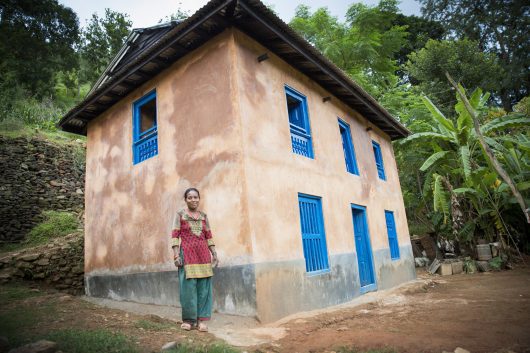
 Build Change, a nonprofit based in the United States, is helping people in developing nations build earthquake and typhoon resistant buildings.
The nonprofit was founded by earthquake engineer Elizabeth Hausler in 2004. The issue of resistant housing in developing nations had been on her mind ever since the 2001 earthquake in Gujarat, India. About 20,000 people were killed in this earthquake due to their unreinforced stone masonry housing collapsing.
This event made her realize the urgency of teaching safe construction methods to people living in developing nations that are at risk for natural disasters such as earthquakes. In an interview, Hausler said, “When earthquakes happen in the U.S. or Japan, very few people are killed. It costs a lot of money but there are very few deaths in earthquakes. But in developing countries thousands and thousands of people are still killed by earthquakes.”
In order to effectively introduce safer building alternatives to people in impoverished communities, Build Change takes a variety of approaches in the communities they hope to improve.
For example, it trains local builders, engineers, homeowners and government officials to build resistant houses and buildings. The organization makes sure the changes are simple and affordable for the community, yet effective. By introducing new construction methods that also involve new materials, Build Change creates more jobs in engineering, construction and materials production in the places they work.
Additionally, it works with governments to develop building code enforcement. It makes sure there are building inspectors within the society that ensure buildings are built according to the safety code.
The nonprofit also helps homeowners get access to the money they need to either strengthen their existing house or build it to be earthquake-resistant. They do this by by partnering with local governments to provide people access to microloans.
So far, Build Change has helped build 51,296 safer buildings, trained 27,857 people and created 12,303 jobs.
It currently works in Colombia, Guatemala, Haiti, Indonesia, Nepal and the Philippines, and has worked in Bhutan, China, India, Ecuador, Iran and Peru in the past.
Thanks to Build Change, thousands of people living in earthquake and typhoon-prone areas can now sleep peacefully at night, knowing they are protected if a natural disaster strikes.
– Anna Gargiulo
Photo: Flickr

PoaPower Provides Energy to Rural Communities
The Global Innovation Fund is a nonprofit dedicated to investing money in new innovations that combat poverty issues in the developing world. One of their recent investments aims to combat the clean energy disparity in rural communities in Africa. PoaPower provides energy to rural communities at an affordable “pay-as-you-go” rate. The Global Innovation Fund has invested £150,000, or just over $191,970, in a pilot program based in Kenya that has brought energy to over 100 households.
In 2015, over 34 million Kenyans lived in rural communities throughout the country. Located in eastern Africa, bordering the Indian Ocean, Kenya’s primary energy usage is industrial. According to PoaPower, 80 percent of Kenyans lack affordable electricity, with data showing that 75 percent of families have children that require adequate lighting to finish homework. Another issue is the use of kerosene lamps in homes that have risks of indoor air pollution and fires.
By signing up with local PoaPower agents in their area, Kenyan households are able to receive enough energy to run their homes on an affordable “pay-as-you-go” model through the pilot program. The model allows for PoaPower to sell energy at a metered rate with no upfront costs. This allows even the lowest income households to receive energy quickly and when they need it. PoaPower provides energy to rural communities in Kenya that would otherwise be completely off-grid.
Testimonials provided by PoaPower include that of Samuel Mwangi, who stated, “Although power lines run over my house, I could not afford the connection fee. Now with PoaPower I have all the electricity I need – it’s even enough to run my laptop!”
In 2015, PoaPower received recognition for its efforts from Menorca Millennials, who invited the team to a 20-day focus program in Spain highlighting startup innovations that focus on tackling world issues on a global scale with new business models such as their pay-as-you-go program.
– Riley Bunch
Photo: Flickr
Why Education in Singapore Is So Good
Education in Singapore has been receiving a lot of praise. When Singapore gained independence from the British, it was a low skill labor-driven market. However, over a period of 50 years, the government managed to create an incredibly advanced education system, where graduates went on into highly skilled jobs. How did this happen?
A Success Story: Education in Singapore
In 2015, the Organization for Economic Cooperation and Development (OECD) rated Singapore as having the best education system in the world. OECD director Andreas Schleicher says that students in Singapore are especially proficient in math and the sciences. In English, the average Singaporean 15-year-old student is 10 months ahead of students in western countries and is 20 months ahead in math. Singaporean students also score among the best in the world on international exams.
Education in Singapore is superior because the classes are focused on teaching the students specific problem solving skills and subjects. The classroom is highly scripted and the curriculum is focused on teaching students practical skills that will help them solve problems in the real world. Exams are extremely important and classes are tightly oriented around them.
Authorities in Singapore are also constantly trying to reevaluate and improve the education system. Recently, many students have reported rising levels of overstress and psychological problems brought on by academic rigor. In response, Singapore has stopped listing the top-scoring student on the national exam in order to ease some of the pressure students may feel. The country has also incorporated a strategy called Teach Less, Learn More, which encourages teachers to focus on the quality of education, not the quantity.
Another reason the education in Singapore is so excellent is simply the Singaporean culture. Parents play a crucial role in their child’s education. The “talent myth,” which states that some kids are naturally smarter than others, is non-existent in Singapore. A local newspaper, The Straits, reported that 70 percent of parents sign their children up for extra classes outside of their regular school hours. In local bookstores, over half of the store is dedicated to educational material.
The education system in Singapore is, in many ways, superior to the education system in the Western world. This is largely due to the country’s culture and first-rate educational leadership. Singapore has a lot to teach the rest of the world; if other countries would adopt some of Singapore’s strategies, there would surely be improvement in education around the globe.
– Bruce Edwin Ayres Truax
Photo: Google
Why Is Chad Poor?
1. Climatic Variations
As Chad’s climatic conditions can change drastically from droughts to torrential rains and flooding, the nation lacks reliable production of harvests, which is the main answer to the question, “Why is Chad poor?” Because the amount of rainfall varies drastically from one year to the next, harvests of staple foods such as millet and maize are often put in jeopardy. When a period of drought lasting over a year is followed by heavy rains that bring floods and destroy crops, food insecurity becomes a consistent threat and ongoing problem. According to the World Food Programme, Chad ranks 73rd out of 78 countries on the Global Hunger Index.
2. Poor Public Services
While there are a few hospitals and health centers within the country, the facilities within them are poor and understaffed. According to the World Health Organization (WHO), there were only 345 doctors working in the country between 2000 and 2010, which equates to just 0.4 physicians for every 10,000 people. Along with a lack of access to proper healthcare, underdeveloped infrastructure and limited human resources serve as major obstacles towards the education of those within Chad, as only one-third of adults are literate and just two-thirds of youths are enrolled in basic schooling.
3. Economic Misfortune
Another critical area in need of assessing in order to answer the question “Why is Chad poor?” is the recent oil crisis. Since joining the list of oil-producing countries in 2003, Chad’s economy has been heavily dependent on oil. With the plunge in oil prices in 2014, the nation has faced a continuing recession, leading to projected cuts in public services as well as an expected rise in poverty.
While the question “Why is Chad poor?” may seem too complicated to determine, reducing poverty within the nation, as well as globally, is a highly achievable task. Through the assistance of foreign aid, developing nations are able to increase the accessibility of productive public services, and for Chad, this would mean a major increase in the amount of citizens able to experience the empowerment of an education and good health in their future.
– Kendra Richardson
Photo: Flickr
5 Myths About Developing Countries
Africa is a continent with many countries of different backgrounds and diverse cultures. However, Africa is often the subject of sweeping generalizations and assumptions; for example, every person in Africa is poor and living in a rural area. This disregards the 54 nations in Africa with different histories, cultures and traditions, as well as countries on every other continent that might struggle with poverty.
The Borgen Project works specifically to debunk this particular misconception, as the United States spends less than 1% of its federal budget on foreign aid. Norway, the most generous nation, spends 3%. Everyone can do better.
Not only is this untrue, it disregards all of the middle-class working citizens who have found success in developing countries. The rise of technology use includes the rise of accessibility. Nigeria, for example, is one of many African countries that has embraced new technology and encouraged its spread with a Smart Cities Initiative.
The cause-effect relationship in this misconception is backwards. In terms of myths about developing countries, this one disregards all the corruption present in developed countries. It assumes that corrupt policies and practices are inherently rampant in developing countries, continuing to limit them. However, corruption happens everywhere; it is simply highlighted in developing nations. Furthermore, foreign aid makes developing countries less vulnerable to corruption, not more corrupt.
“Too many” is a matter of opinion, and the opinion in developed countries is not inherently superior. Because of poverty, families do not have access to sex education or contraception, meaning the decision to have more kids is not really a decision.
These are just a few of the common misconceptions surrounding the developing world. However, all of them are due to be changed.
– Ellen Ray
Photo: Flickr
Build Change Helps Countries Survive Natural Disasters
The nonprofit was founded by earthquake engineer Elizabeth Hausler in 2004. The issue of resistant housing in developing nations had been on her mind ever since the 2001 earthquake in Gujarat, India. About 20,000 people were killed in this earthquake due to their unreinforced stone masonry housing collapsing.
This event made her realize the urgency of teaching safe construction methods to people living in developing nations that are at risk for natural disasters such as earthquakes. In an interview, Hausler said, “When earthquakes happen in the U.S. or Japan, very few people are killed. It costs a lot of money but there are very few deaths in earthquakes. But in developing countries thousands and thousands of people are still killed by earthquakes.”
In order to effectively introduce safer building alternatives to people in impoverished communities, Build Change takes a variety of approaches in the communities they hope to improve.
For example, it trains local builders, engineers, homeowners and government officials to build resistant houses and buildings. The organization makes sure the changes are simple and affordable for the community, yet effective. By introducing new construction methods that also involve new materials, Build Change creates more jobs in engineering, construction and materials production in the places they work.
Additionally, it works with governments to develop building code enforcement. It makes sure there are building inspectors within the society that ensure buildings are built according to the safety code.
The nonprofit also helps homeowners get access to the money they need to either strengthen their existing house or build it to be earthquake-resistant. They do this by by partnering with local governments to provide people access to microloans.
So far, Build Change has helped build 51,296 safer buildings, trained 27,857 people and created 12,303 jobs.
It currently works in Colombia, Guatemala, Haiti, Indonesia, Nepal and the Philippines, and has worked in Bhutan, China, India, Ecuador, Iran and Peru in the past.
Thanks to Build Change, thousands of people living in earthquake and typhoon-prone areas can now sleep peacefully at night, knowing they are protected if a natural disaster strikes.
– Anna Gargiulo
Photo: Flickr
Poverty in Libya War
Poverty in Libya is notoriously hard to define. An estimate based on surveys of sub-groups puts about one-third of Libya’s population below the poverty line. However, no specific figure exists.
Libya’s economy is directly dependent on its political stability, as most countries are. The country struggled with a civil war starting in 2014 which impacted Libya’s economy greatly, due to its dependence on oil and gas exports. Armed conflict between rival forces over control of the largest oil terminals in 2015 caused a decline in crude oil production which has yet to recover. In fact, production today is only at one-third of what it was before this political conflict.
While the government of Libya is officially “in transition,” its leaders historically have not used its financial resources to develop the national infrastructure. As a result, poverty in Libya persists in the form of widespread power outages, limited access to clean drinking water, medical services and safe housing, as well as decreased security due to political instability.
An added threat is the presence of extremists associated with the Islamic State of Iraq and the Levant (ISIL), who attack Libyan oilfields, further detracting from future government revenue.
The GDP in Libya is estimated to have declined by 10 percent along with a per capita income of less than $4,500. Inflation runs rampant due to high food prices and the tendency of some citizens to stockpile food.
In order to combat poverty in Libya, organizations like the World Bank have committed to supporting Libya’s economic recovery. As of spring 2016, support includes technical assistance, analytical services and trust fund/grant financing.
The World Bank has created threemedium-termm objectives for promoting economic growth in Libya: increasing accountability and transparency, improving the delivery of services and creating jobs. Hopefully these will be accomplished in the near future by partnering with donor agencies and people from different parts of Libya to make sure the plan for recovery is Libyan-owned.
– Ellen Ray
Photo: Flickr
Human Rights in Belize: How Police Brutality is Being Resolved
In the country of Belize, there are about 366,000 citizens to take care of. These 366,000 individuals may be different from one another, but they are all entitled to basic rights. Human rights in Belize are not perfect, nor will they ever be, but are a work in progress as efforts are continuously being made to better them.
One major issue in Belize is police brutality. This past April, a video of an altercation between citizens and police in San Pedro Central Park went viral. While attempting to bring a woman to the police station, the police proceeded to kick her. They also fired gunshots, injuring five people. Although PC Norman Coye and PC Darnell Madrill of the San Pedro Police Department were charged for wounding others in the incident, the victim of the incident remains disappointed in how the situation is being handled. Since there were other officers involved, she finds it unfair that only two were reprimanded for their actions.
According to the U.S. 2016 Country Reports on Human Rights Practices, in 2015 there were 217 new complaints of police abuse. Despite that large increase, less than half of them were actually investigated.
With police brutality being a major concern in Belize, it is a priority to resolve it. One of the first steps in finding a solution is addressing the problem. Thankfully, public officials in Belize are doing so. The United Women’s Group criticized the police’s mishandling of the incident in San Pedro Central Park. Besides expressing disappointment in the way the Police Professional Standards Branch responded to it, they also urged the government to bring justice to the victims and properly punish the officers involved.
Besides the United Women’s Group, others are acknowledging police brutality in Belize. First Lady Kim Simplis Barrow also made a public statement in response to the same incident. She not only told the Belize Police Department to handle situations less violently, but also asked the Professional Standards Branch of the Department to thoroughly investigate the case.
A person of higher power has the ability to influence more people, since they have a larger following. By taking a public stance, different organizations and individuals are leading others to acknowledge the problem by doing so themselves. Human rights in Belize will continue to improve as more people take a stand against police brutality.
– Raven Rentas
Photo: Flickr
The New Green Revolution in Africa
In 2006, the DTMA (Drought Tolerant Maize for Africa) Initiative was launched with the aim of increasing crop output and negating the effects of drought in several countries across sub-Saharan Africa. The project has brought together all types of communities, from local agricultural groups and seed producers to research institutions and NGOs.
Of course, this ultimately raises the most the most important question of all: has the new green revolution in Africa succeeded?
“Green Revolution” is a term defined as the increased production of crop yields through the use of improved technological application, the use of pesticides and better management. There are a few areas where this definition applies more to the successes of the DTMA Initiative. In 2015, the drought-resistant maize improved crop output in 13 countries, including Uganda, Ethiopia, Kenya, Malawi and others. The International Maize and Wheat Improvement Center (CIMMYT) has reported that hybrid seeds will benefit an estimated 2.5 million people in the region.
“I was truly amazed. I harvested 110 kilograms of maize from the tiny demonstration plot,” 61-year-old farmer Jotham Apamo, whose farm previously yielded a mere 10 kilograms, told WIPO Magazine. “[Before] there was hardly any gain for me. I was pushed into debt. I couldn’t feed my family or pay for my children’s school fees.”
In the meantime, Kenyan scientists at the Jomo Kenyatta University of Agriculture and Technology (JKUAT) have been studying and perfecting the creation and application of this crop (as well as studying disease-resisting properties) since 2013. Researchers have stated that the hybrid seed responsible for Africa’s next green revolution will be available later this year.
– Brad Tait
Photo: Flickr
Nine Facts For the Causes of Poverty in Bahrain
The road to and away from poverty is rarely an uncomplicated one. Poverty in Bahrain is one such nuanced phenomenon. The country officially reports that zero percent of people live below the poverty line, and the country excels in many social and political sectors. However, impoverished people do exist in Bahrain, albeit in small numbers. The following are nine important facts about Bahrain, concerning both its causes of poverty and its successes.
If these facts say anything, it’s that a country’s poverty rate does not necessarily speak to the quality of basic human rights like education, water, sanitation, political participation and job security. A fluctuating oil industry is one of the main causes of poverty in Bahrain. However, with aluminum production, finance, construction, banking and tourism all gaining economic momentum, Bahrain may be within range of economic stability and a decrease in poverty.
– Sophie Nunnally
Photo: Flickr
Improving the Education System in Ghana
The United Nations Children’s Fund (UNICEF), the Ministry of Education, and the Ghana Education Service have created a 45-page document called the Inclusive Education Policy. Launched to combat special education discrimination, its mission statement is straightforward, saying: “inclusive schools must recognize and respond to the diverse needs of their students, accommodating both different styles, rates of learning and ensuring quality education to all through appropriate curricula, organizational arrangements, teaching strategies, resource use and in partnerships with their communities.”
Among other documents, the Inclusive Education Policy is anchored in the 1992 constitution of the Republic of Ghana, the Disability Act and the Education Act and will be reviewed every five years. The Inclusive Education Policy calls on parents, teachers, community leaders, government officials and the wider Ghanaian society to reevaluate deep-rooted, misguided ideas. It aims to change systems, create mechanisms, equip schools and perpetuate the beliefs that all children can learn, have a right to learn and learn differently. The education system in Ghana is working to ensure that children with and without disabilities have an encouraging physical, social, emotional and psychological environment to learn in. Despite the Inclusive Education Policy, kids with disabilities are still at risk of stigma, misunderstanding and discrimination in their local communities.
Under the Ghana Education Service, the Special Education Division started implementing Inclusive Education Policy fundamentals in the Greater Central Accra and Eastern Regions. In 2011, the policy covered 529 schools in 34 Ghanaian districts. In the summer of the following year, UNICEF implemented the policy in 14 more schools. In early 2017, UNICEF and the United States Agency for International Development provided 21 kindergartens across 11 districts with child-sized wheelchairs, crutches, complete spectacles, hearing aids, Snellen charts, tossing rings, tennis balls, basic screening materials, drums and assistive devices for assessment centers and schools.
– Tiffany Santos
Photo: Flickr