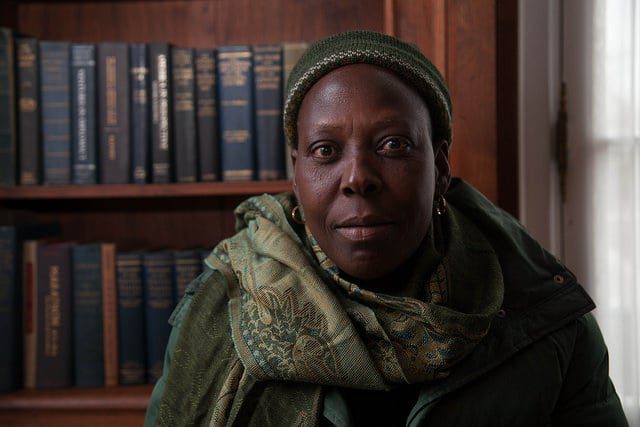
 Medical anthropology, the study of health and healthcare in the context of specific cultures, exemplifies how the application of social sciences can improve policymaking. Medical anthropologists work within communities and observe health behaviors, which provides them with qualitative data that can inform healthcare-related aid. In this way, medical anthropology improves aid. Medical anthropologists have not only created aid organizations, such as Partners in Health, but also identified health issues in developing nations and discovered ways to make aid implementation more effective.
When Ebola began spreading rapidly throughout Liberia and Sierra Leone, knowing the cause of the disease was not enough to help aid organizations combat it. In 2014, the World Health Organization conducted medical anthropology-based research to pinpoint what was promoting the virulence of the disease. Among other data, the study found that the culture of burial in Liberia and Sierra Leone contributed significantly to the spread of Ebola.
WHO and other organizations’ attempts to quell Ebola include the cremation of the virus’ victims. However, the locals of Liberia and Sierra Leone view such a practice as an affront to their culture and traditions. In these regions, it is customary to have intimate contact with bodies during funeral ceremonies, including washing the corpse and even kissing it.
In order to eliminate the influence of regional funeral customs on Ebola transmission, WHO began promoting culturally compliant alternatives to burial rather than cremation. Funeral ceremonies performed for individuals who have died in war, which do not require a physical body, are now an encouraged alternative for the burial of Ebola victims. For the moment, Ebola outbreaks have been controlled. According to the CDC, over 25,000 cases of Ebola were recorded in West Africa between 2014 and 2016, while only 8 cases were reported from May 2017 to July 2017.
The Ebola crisis is not the only example of how medical anthropology improves aid and contributes to better global health. In 1997, researchers at the University of South Florida searched for cultural explanations for the shocking prevalence of dengue fever in the Dominican Republic. They discovered that, for a start, dengue education needed to be reformed.
In Dominican culture, women are in charge of collecting water for the household, so health organizations teach women how to clean water and prevent mosquitoes, the vectors of dengue fever, from breeding. However, men in Dominican communities control stored water, kept outside the home. The anthropologists discovered that men had not been taught how water sources and dengue were related, and thus left stored water sources uncovered, which allowed dengue-carrying mosquitoes to spawn.
The insight provided by medical anthropology allows aid organizations to implement healthcare reforms in culturally sensitive ways that are cohesive with local traditions, which in turn makes them more effective. Additionally, living within a culture, as many anthropologists do, helps them detect overlooked behaviors that may seriously impact health and healthcare initiatives.
– Mary Efird
Photo: Flickr

10 Facts About the Genocide of Yazidis by ISIL
Top Yazidis Genocide Facts
– Tripti Sinha
Photo: Flickr
US Calls for Aid to the Central African Republic
Cicilline specifically criticized the 2017 withdrawal of U.S. special operation forces in the African country. Since the withdrawal, members of the Lord’s Resistance Army, a rebel faction in CAR, have continued to attack civilians, particularly in the country’s southeast region.
Since its independence from France in 1960, CAR has experienced near-constant sectarian violence and political instability, usually caused by religious or ethnic conflicts. Its economy, infrastructure and development have suffered as a result.
The Central African Republic ranks last on the U.N. Human Development Index. More than 60 percent of the population lives in poverty, and only 36.8 percent are literate. Preventable diseases, such as malaria and malnutrition, have contributed to an average life expectancy of 52.3 years.
According to Oxfam, 60 percent of CAR is controlled by rebel groups. In fact, the U.S. suspended embassy operations in CAR from December 2012 to September 2014 due to violence spurred by civil war. This violence also has displaced 600,000 people.
The U.S. has historically provided aid to the Central African Republic. In the past two years, the U.S. spent more than $500 million in humanitarian, development and security assistance to CAR. The U.S. also supported U.N. peace operations in CAR, which sent more than 10,000 peacekeepers to the embattled country.
However, the U.S. recently decreased aid to the Central African Republic. For FY 2017, the U.S. sent $48.6 million in aid to CAR, compared to $64.7 million in FY 2016. USAID also stated their purpose in CAR is to primarily respond to humanitarian crises as opposed to supporting long-term development.
The U.N. mission mandate in CAR ends in November. At that time, the U.N. Security Council can send additional peacekeeping support to the country.
CAR remains a complicated geopolitical issue. Nonetheless, the international community remains committed to providing aid to the Central African Republic to promote stability and development and empower its population to rise out of poverty.
– Sean Newhouse
How a United Nations Declaration Protects Indigenous Groups
Across the globe, indigenous peoples are often marginalized by the law and face harsh discrimination. A large contributor to the increased vulnerability of indigenous peoples to violence and human rights abuses comes from their displacement. Indigenous groups tend to share a common key value based on their land. When they are taken away from that land, many groups find it much more difficult to fully exercise their human rights.
The declaration, though legally nonbinding, is significant because of the participation of indigenous peoples in its drafting. The document recognizes that all of the human rights outlined in previous United Nations declarations apply to indigenous peoples. While the declaration was supported by most countries, Australia, New Zealand the United States and Canada voted against it.
However, two years later in 2009, Australia voiced its support for the law, signaling progression toward advancing human rights for all of its citizens, and closing the gap between indigenous and non-indigenous Australians. The country has already been considering constitutional changes based on the document.
Following the formal endorsement of the United Nations Declaration of the Rights of Indigenous Peoples in Australia, the government took crucial steps in implementing the core values outlined in the document. In order to educate Aboriginal and Torres Strait Islander peoples about their rights, the Australian government distributed a comprehensive guide to the U.N. document.
The guide to understanding the declaration in Australia specifically addresses rights to country, resources and knowledge, as well as self-governance and more. The document has received a large degree of legitimacy, due to support from not only the Australian government but also countries all across the world, making it an important tool for Aboriginal and Torres Strait Islander peoples to invoke when addressing the human rights violations and discrimination to which they may be subjected.
The adoption of the declaration, after its initial rejection, does not create legal obligations for the countries that support it. What it does do, however, is allow Aboriginal and Torres Strait Islander peoples to use the language of human rights to influence government policies. The Declaration of the Rights of Indigenous Peoples sends a clear message that governments cannot avoid international scrutiny for mistreatment of and violations against their indigenous groups.
– Richa Bijlani
Photo: Flickr
Education in Senegal
Hunger in Malaysia on the Decline
However, Malaysia’s Poverty Line Income differs from the standard $1 USD per day (purchasing power parity) poverty line. When converting to international standards, it results in Malaysia having a higher poverty rate.
There has never been a problem of chronic hunger in Malaysia. Many nutrition programs have been incorporated into the rural development programs and have proved successful. According to the World Health Organization, consumption of fewer than 1,960 calories a day is a mark of food poverty. A great indicator of successful eradication of hunger in Malaysia lies in the fact that its daily per capita intake of calories has been consistently above the standard mark. The average was 2,969 in 1999.
The government introduced the Applied Food and Nutrition Programme in 1972 to improve nutrition and alleviate hunger in Malaysia. It aimed to increase the production of nutritious foods and promote supplementary feeding of pregnant and lactating mothers as well as infants and school-going children.
The Nutrition Rehabilitation Programme started in 1989, focusing on malnourished children. Food baskets containing nutritional supplements are distributed to such children on a monthly basis.
The results have been very positive. Only 1 percent of Malaysia’s children under the age of five are severely underweight, while the proportion of moderate underweight malnutrition has declined from 25 percent in the early 1990s to 12 percent in 2001.
Malaysia has overcome poverty through an inclusive approach to growth and equity. But there are still vulnerable groups, like single female-headed households and the elderly. Also, many Orang Asli still face extreme poverty. To move forward, a new consensus has to be built around a poverty line that is more balanced in line with international standards, as was suggested by the UNDP.
– Tripti Sinha
Photo: Flickr
10 Facts About the Somali Civil War
A conflict that began in 1991, the Somali civil war has ravaged the Horn of Africa ever since. The civil war began as an armed resistance to the Siad Barre regime, which grew into a much larger conflict between various competing factions after the overthrow of Barre.
10 Facts about the Somali Civil War
The above 10 facts about the Somali civil war are just a brief overview of the long and complex conflict. Though things appear to be improving in Somalia, with the government finally gaining a more secure foothold, the famine and attacks by groups like al-Shabaab still leave the nation in a precarious situation.
– Erik Halberg
Photo: Flickr
A Look at Education in Guyana
How Medical Anthropology Improves Aid
When Ebola began spreading rapidly throughout Liberia and Sierra Leone, knowing the cause of the disease was not enough to help aid organizations combat it. In 2014, the World Health Organization conducted medical anthropology-based research to pinpoint what was promoting the virulence of the disease. Among other data, the study found that the culture of burial in Liberia and Sierra Leone contributed significantly to the spread of Ebola.
WHO and other organizations’ attempts to quell Ebola include the cremation of the virus’ victims. However, the locals of Liberia and Sierra Leone view such a practice as an affront to their culture and traditions. In these regions, it is customary to have intimate contact with bodies during funeral ceremonies, including washing the corpse and even kissing it.
In order to eliminate the influence of regional funeral customs on Ebola transmission, WHO began promoting culturally compliant alternatives to burial rather than cremation. Funeral ceremonies performed for individuals who have died in war, which do not require a physical body, are now an encouraged alternative for the burial of Ebola victims. For the moment, Ebola outbreaks have been controlled. According to the CDC, over 25,000 cases of Ebola were recorded in West Africa between 2014 and 2016, while only 8 cases were reported from May 2017 to July 2017.
The Ebola crisis is not the only example of how medical anthropology improves aid and contributes to better global health. In 1997, researchers at the University of South Florida searched for cultural explanations for the shocking prevalence of dengue fever in the Dominican Republic. They discovered that, for a start, dengue education needed to be reformed.
In Dominican culture, women are in charge of collecting water for the household, so health organizations teach women how to clean water and prevent mosquitoes, the vectors of dengue fever, from breeding. However, men in Dominican communities control stored water, kept outside the home. The anthropologists discovered that men had not been taught how water sources and dengue were related, and thus left stored water sources uncovered, which allowed dengue-carrying mosquitoes to spawn.
The insight provided by medical anthropology allows aid organizations to implement healthcare reforms in culturally sensitive ways that are cohesive with local traditions, which in turn makes them more effective. Additionally, living within a culture, as many anthropologists do, helps them detect overlooked behaviors that may seriously impact health and healthcare initiatives.
– Mary Efird
Photo: Flickr
Child Vision: Glasses for Children in Impoverished Countries
Child Vision glasses are different from conventional glasses because they are adjustable. Each lens is actually two lenses with space in the middle. After taking a simple eye chart test, kids put on the Child Vision glasses and they can adjust it themselves. They cover one eye and turn a knob that will adjust the glasses.
The knob adjusts the liquid that is inside the lenses. The liquid causes the lenses to expand or contract, thus adjusting the prescription of the glasses. Kids turn the knob until they can see clearly. Once they can see clearly, they take off the adjustors to seal the prescription. Unfortunately, that means that kids only have one opportunity to correct their vision, but it seems that the success rate is high.
Out of all the users of adjustable glasses, 92 percent of them were able to correct their vision. One of the main reasons why glasses are considered a luxury is because of their price. The average price for glasses is about $196. The creators of Child Vision recognized this problem and worked to make the adjustable glasses affordable for those in the developing world. The average cost for Child Vision glasses is €16, or about $19.
One of the best things about these glasses is that they do not need an optometrist to correct their vision. Anyone with basic training can administer an eye chart exam to help kids learn if they need glasses.
Thanks to Child Vision, glasses for children in impoverished countries are now available. These low-cost adjustable glasses are easy to adjust and give to kids. Child Vision is giving kids the glasses they need so they can better participate in school and make the most of their education.
– Daniel Borjas
Photo: Flickr
Hunger in Djibouti: Working Towards Self-Sufficiency
Background
Hunger in Djibouti can be chalked up to a few different causes.
Good News
Fortunately, international programs are working toward a lasting solution to hunger in Djibouti. The World Food Programme has been working since the late 1970s to prioritize government support in stabilizing hunger. Projects the World Food Programme has made headway on include providing nutrition to women and children, for refugees, and in schools. In addition, U.N. agencies are working in collaboration with the government to help with severe food insecurity and hunger emergencies and develop long-term solutions to avoid such crises in the future.
These agencies may not be eliminating hunger in Djibouti entirely. Still, they are working toward providing the people of Djibouti with lasting development plans that have the potential to become self-sustaining solutions.
– Casey Hess
Photo: Flickr
Updated: September 19, 2024