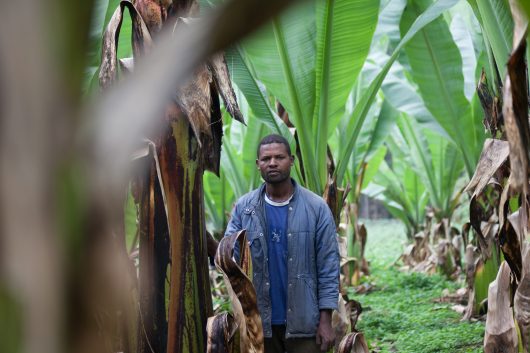
 According to USAID, Ethiopia’s economy is dependent on agriculture, which is 43 percent of the GDP and 90 percent of Ethiopia’s exports. With such a significant economic reliance on a single sector, the community must section a large amount of dedicated time and resources towards agriculture’s viability for food security in Ethiopia.
Barriers to Food Security in Ethiopia
Access to weather-resistant seeds, fertilizers and pesticides is limited in Ethiopia. On top of that, only a small percentage of the land is actually irrigated. All of these combine to threaten agricultural output. The livelihoods of farmers are at risk if they do not have high enough crop yields to support themselves and sell in the market.
Since its discovery in 1939, there is one crop that has continued to contribute towards food security in Ethiopia. It is a crop that farmers do not worry about and it is a source of nutritional value for all consumers. This crop is commonly referred to as the “false banana.”
The Importance of the “False Banana”
Its scientific name is Ensete ventricosum; it is a perennial crop indigenous to Ethiopia. Enset is called the “false banana” because of its similarity in appearance. However, it is usually taller and fatter, with no edible fruits.
Over time, it has ranked as the most important cultivated staple food crop in the highlands of central, south and southwestern Ethiopia. It has been discovered to be weather resistant, which earned enset another title: “the tree against hunger”.
This weather resistance happens because the bulk of this plant is composed of air, then water and then fiber. The cells in the leaves hold an incredible amount of water for years. Therefore, even if Ethiopia faces a drought, this incredible plant can survive up to seven years without rain.
The main product of enset is the starchy pit from its “pseudo-stem,” which is pulped and then fermented for a few months before producing kocho, which is a solid staple that is eaten with bread, milk, cheese, cabbage, meat or coffee. Its diversity in usage makes it an excellent crop to bring food security to Ethiopia. According to an article published by Kyoto University, over 15 million people depend on enset to supplement their diets.
Bacterial Wilt and Solutions
Recently, a bacterial wilt caused by Xanthomnas campestris has ravaged enset, putting many enset farming systems at risk. As of 2017, according to a publication on Agriculture and Life Security, “up to 80 percent of enset farms in Ethiopia are currently infected with enset Xanthomonas wilt.” This disease has forced many farmers to abandon their crop production and threatens their survival.
Control of this bacterial disease is challenging, but sanitation and reducing the bacteria’s transmission rates are key. The same study from Agriculture and Life Security wrote that “Management practices recommended for EXW and BXW include uprooting and discarding infected plants, planting healthy, disease-free plants from less susceptible varieties, disinfecting farm tools after every use, crop rotation, avoiding overflow of water from infected to uninfected fields, removing alternate hosts around plants…”
The government must focus on educational programs to teach farmers how to manage all of the above steps towards reducing bacterial wilt in their enset plants.
Another method is currently in process, led by the International Institute of Tropical Agriculture, which has partnered with the National Agricultural Research Organization and the African Agricultural Technology Foundation in order to develop transgenetic enset that are resistant to the bacterial wilt disease.
This project, if a success, will reduce the losses of small-scale farmers strongly relying on enset as a staple food. It would distribute the necessary resources and infrastructure to farmers to plant this new, bacterial-resistant enset. Thanks to dedication and scientific advancements, a project such as this one will help contribute to food security in Ethiopia.
– Caysi Simpson
Photo: Flickr

Infrastructure in the Marshall Islands
The Marshall Islands are at risk of sinking, flooding and other natural disasters. The nation must develop better infrastructure to combat the approaching threats and has planned a number of projects for improving infrastructure in the Marshall Islands.
In 2014, a major project was completed on the island of Majuro, which is the nation’s most populated island. The Pacific Adaptation to Climate Change (PACC), which focuses on building resilience to climate change in Pacific communities, directed the project.
The project focused on providing water security to the islands’ inhabitants and renovating the island’s biggest reservoir. The capacity of the reservoir was increased by five million gallons. Improvements to the reservoir system were much needed as it had not been significantly updated to match population increases since its creation in the 1970s.
The country’s National Strategic Plan 2015-2017 outlined a number of other projects dealing with the improvement of infrastructure in the Marshall Islands. The infrastructure development sector comprised of five strategic areas:
Transportation is a major concern for the government and citizens of Marshall Islands, as only one airline services the nation. Air and water transportation are also important for its tourist economy.
The plan’s call for a revision of the National Energy Plan promotes sustainable, clean, reliable and affordable energy for the residents of the islands. Having access to green electricity and energy is important for dealing with natural disasters. The National Strategic Plan outlines many more reforms to infrastructure in the Marshall Islands and other areas of governance, many of which are currently being carried out.
Infrastructure in the Marshall Islands is a priority. Disaster preparedness is important for the citizens of the nation, and improving infrastructures like energy production and transportation are crucial. The government has outlined comprehensive plans for reforming outdated systems and hopefully, it will continue to be diligent in the future.
– Liyanga de Silva
Photo: Flickr
Sustainable Agriculture in Niger Building Resistance to Climate Change
Because of its desert terrain, known as the Sahel, which stretches from the Atlantic Ocean to the Red Sea, agriculture is a difficult way to cultivate a living, and yet only a small percentage of the population does not use it. But because the 12 percent of arable land in Niger is found along the southern border, most farmers and citizens focus on subsistence farming, which means they only grow enough to feed themselves and their families. With increasing periods of drought and desertification, this is becoming more difficult.
With that in mind, sustainable agriculture in Niger focuses on projects that will counteract unpredictable climate issues such as droughts. By doing so, Niger and other groups hope to create a more resilient agricultural sector. For example, in 2014 the United Nations coordinator for emergency relief, Valerie Amos, estimated that in the Sahel region, 20 million would face hunger that year. In a region where so many go hungry, innovation is a necessary way to combat this and every success counts.
Consider the concept of agroforestry that Niger and the NGO World Vision have successfully implemented. Instead of using excess resources to plant new trees, Niger farmers have protected the trees that spontaneously grow on their lands, and as a result, have added five million trees to the landscape in the past 20 years.
Trees provide numerous benefits such as increased soil fertility, firewood and fruits for human consumption. In 2009, a report stated that this new style of sustainable agriculture in Niger increased food production by 500,000 tons, enough to feed 2.5 million people.
In 2011, the World Bank approved $111 million in finances to improve sustainable agriculture in Niger. Called the Climate-Smart Agriculture Support project, which is the first in Africa to assist specifically with climate-smart agriculture, will directly benefit 500,000 farmers in 44 communities in the country.
It hopes to enhance productivity and provide resilience against greenhouse gas emissions. More specifically, it will focus on distributing and using improved, drought-tolerant seeds, and expand the use of agroforestry to combat climate issues. With this action, the World Bank and Niger hope to combat climate shocks, particularly droughts. With stability on its mind, Niger continues to find innovations and projects that will make its agricultural sector a more profitable and sustainable endeavor.
– Nick McGuire
Photo: Flickr
Training Projects Growing Sustainable Agriculture in Burundi
Burundi is a landlocked country in the African Great Lakes region in East Africa. It is one of the poorest nations in the world, with almost 90 percent of its population living in rural areas. Most of its citizens rely on agriculture and livestock for their livelihood, meaning that working towards sustainable agriculture in Burundi is a crucial goal.
There are several ongoing projects that aim to foster sustainable agriculture in Burundi. For instance, the Food and Agriculture Organization of the United Nations (FAO) is involved in an integrated project to strengthen people’s livelihoods through sustainable and efficient agricultural intensification. The FAO is working closely with the Agricultural Research Institute of Burundi and the Scaling Up Nutrition Movement on this project in order to “help communities living in these watersheds to better manage their land and improve their means of food production and nutrition.”
The primary way this project is achieving its goal is through establishing and maintaining farmer field schools that teach farmers good farming practices. For instance, in an attempt to improve agricultural production in a sustainable manner, the integrated aquaculture and agriculture system established in Mwaro province provides an opportunity to produce crops, fish and small livestock in a relatively small area. Both men and women farmers attend these farmer field schools to receive training in production management. A facilitator guides these self-identified trainees with the goal of increasing capacity development through practices that promote sustainable agriculture in Burundi, including composting techniques, edible mushroom cultivation, fish pond management and erosion control.
This project has already managed to achieve several successes. For instance, due to this project, nearly 200 households established micro-gardens in urban and peri-urban places, thereby creating opportunities for smallholders to produce despite the very limited land availability. Additionally, the project also facilitated the “reinforcement of erosion control and watershed stabilization techniques using integrated forestry practices, perennial forage grasses and field mapping.” As a result of this project, farmers have also been able to plant improved seeds of staple crops in their fields and the community has planted more than 49,000 fruit tree saplings.
Several issues threaten sustainable agriculture in Burundi. For instance, Burundi faces land degradation and soil impoverishment due to high populations, deforestation, overgrazing, loss of habitats and water scarcity. The country has taken several significant measures to address and improve soil fertility such as erosion control measures, riverbank protection, forestry plantation, agroforestry plantation and management. In fact, the country now has a “national framework investment in sustainable land management and new laws on land, forestry and biodiversity conservation.”
Another project called Supporting Agricultural Productivity in Burundi (PAPAB), led by the IFDC, Alterra Wageningen UR, Oxfam Novib and ZOA aims to sustainably increase food production and improve the food security of at least 480,000 farming families in Burundi. By taking a participatory approach centered on integrated management, PAPAB promotes market-oriented and sustainable agricultural techniques. Recognizing that smallholders produce little to meet their own needs, let alone those of the market, PAPAB works to introduce efficient and well-integrated farming practices. It plans on using techniques such as improving farmers’ access to fertilizers and farmer-to-farmer knowledge transfer and collaboration in order to increase efficiency and production.
Burundi is highly vulnerable to the effects of climate change, and the current political instability in the country only adds to its challenges. Malnutrition in the country is one of the highest in the world. Sustainable agriculture is one of its biggest challenges and an important goal. Hopefully, these projects will continue to improve and promote sustainable agriculture in Burundi.
– Mehruba Chowdhury
Photo: Flickr
Improving Infrastructure in Mauritius
In June 2014, the African Development Bank approved a $116.7 million loan to the Mauritius Central Electricity Board for a project intended to redevelop Port Louis’ power plant. The electricity produced by the project’s installations will be distributed to all the corners of Mauritius’ main island, where 97 percent of its population resides. Residents of residential areas, including workers of industrial zones, will benefit from reduced emissions and noises.
Mauritius also has a dwindling water supply due to old pipes and infrastructure. In February 2015, the country’s government revealed plans to renew and replace these pipes and ensure an annual water supply. A new dam will be built at Rivière des Anguilles, improving Mauritius’ water supply in the southern region as well. New water treatment plants will also be constructed at La Nicolière and Bagatelle.
Wastewater infrastructure in Mauritius is also in need of care. The Mauritian government promised to review a program that could ensure a competitive wastewater disposal technology for the environment. The program will also address sanitation problems in the former CHA housing estates and regions that are vulnerable to environmental hazards regarding water disposal.
In March 2016, plans were announced to develop Mauritius’ airport, meaning traffic could increase throughout the country’s roads as well. Construction for an access road to Sir Seewoosagur Ramgoolam International Airport began, marking the first major infrastructure project for Mauritius that year. The road would provide a bypass to reduce traffic congestion, enhance road safety in residential areas and offer an alternative route to the airport in case of emergencies.
Nandcoomar Bodha, the Minister of Public Infrastructure and Land Transport, highlighted three guiding principles for the construction work: no cost variations, no delays and high-quality work. Bodha commended the company Omnicane for providing 50 arpents of land to the road project as well. Jacques d’Unienville, Omnicane’s CEO, says the new road has to promote the country because it will be a gateway between Mauritius and visitors from abroad.
Mauritius’ Prime Minister Pravind Jugnauth realizes that traffic jams cost the country four billion rupees annually. In September 2017, Mauritius began a $560 million project for a new light rail system that could cut these traffic jams and the country’s business costs. The rail system will connect Curepipe, a central Mauritius town, to the Port Louis capital. Officials say the project’s first stage where Port Louis and Rose Hill are connected is expected to reach completion by September 2019.
Projects for the country’s power source methods, water supply and decreasing traffic will continue to improve infrastructure in Mauritius. The country’s economy will also benefit from reducing the costs of energy expenses and traffic jams. Mauritius’ infrastructure can continue improving so long as more projects are started to help the country’s restructuring process.
– Rhondjé Singh Tanwar
Photo: Flickr
False Banana Brings Food Security in Ethiopia
Barriers to Food Security in Ethiopia
Access to weather-resistant seeds, fertilizers and pesticides is limited in Ethiopia. On top of that, only a small percentage of the land is actually irrigated. All of these combine to threaten agricultural output. The livelihoods of farmers are at risk if they do not have high enough crop yields to support themselves and sell in the market.
Since its discovery in 1939, there is one crop that has continued to contribute towards food security in Ethiopia. It is a crop that farmers do not worry about and it is a source of nutritional value for all consumers. This crop is commonly referred to as the “false banana.”
The Importance of the “False Banana”
Its scientific name is Ensete ventricosum; it is a perennial crop indigenous to Ethiopia. Enset is called the “false banana” because of its similarity in appearance. However, it is usually taller and fatter, with no edible fruits.
Over time, it has ranked as the most important cultivated staple food crop in the highlands of central, south and southwestern Ethiopia. It has been discovered to be weather resistant, which earned enset another title: “the tree against hunger”.
This weather resistance happens because the bulk of this plant is composed of air, then water and then fiber. The cells in the leaves hold an incredible amount of water for years. Therefore, even if Ethiopia faces a drought, this incredible plant can survive up to seven years without rain.
The main product of enset is the starchy pit from its “pseudo-stem,” which is pulped and then fermented for a few months before producing kocho, which is a solid staple that is eaten with bread, milk, cheese, cabbage, meat or coffee. Its diversity in usage makes it an excellent crop to bring food security to Ethiopia. According to an article published by Kyoto University, over 15 million people depend on enset to supplement their diets.
Bacterial Wilt and Solutions
Recently, a bacterial wilt caused by Xanthomnas campestris has ravaged enset, putting many enset farming systems at risk. As of 2017, according to a publication on Agriculture and Life Security, “up to 80 percent of enset farms in Ethiopia are currently infected with enset Xanthomonas wilt.” This disease has forced many farmers to abandon their crop production and threatens their survival.
Control of this bacterial disease is challenging, but sanitation and reducing the bacteria’s transmission rates are key. The same study from Agriculture and Life Security wrote that “Management practices recommended for EXW and BXW include uprooting and discarding infected plants, planting healthy, disease-free plants from less susceptible varieties, disinfecting farm tools after every use, crop rotation, avoiding overflow of water from infected to uninfected fields, removing alternate hosts around plants…”
The government must focus on educational programs to teach farmers how to manage all of the above steps towards reducing bacterial wilt in their enset plants.
Another method is currently in process, led by the International Institute of Tropical Agriculture, which has partnered with the National Agricultural Research Organization and the African Agricultural Technology Foundation in order to develop transgenetic enset that are resistant to the bacterial wilt disease.
This project, if a success, will reduce the losses of small-scale farmers strongly relying on enset as a staple food. It would distribute the necessary resources and infrastructure to farmers to plant this new, bacterial-resistant enset. Thanks to dedication and scientific advancements, a project such as this one will help contribute to food security in Ethiopia.
– Caysi Simpson
Photo: Flickr
Myna Mahila Foundation: Menstruation in Mumbai is Not Shameful
Seventy-five percent of women in India buy sanitary napkins in a brown paper bag or wrapped up in paper because they feel immense shame related to menstruation. This is especially common in more urban areas like Delhi and Mumbai. There is a clear stigma surrounding menstruation in Mumbai, which greatly increases health risks because women are not taking care of their bodies as they should be.
Whether over fear of social discrimination or other reasons, many women change their attitudes and behaviors during menstruation. For example, nearly 50 percent of respondents to a survey by Quartz Media reported that they do not share a bed with their significant other during their periods. Other actions include isolating themselves in their bedroom, avoiding touching food due to a fear of contamination and using old rags rather than sanitary napkins so that shopkeepers do not judge them.
Recent movements have begun in order to destroy this stigma surrounding menstruation in Mumbai and throughout India. Myna Mahila Foundation is an organization that is attempting to make menstruation a less shameful topic.
In 2015, a college student studying at Duke University discovered how she would contribute to this movement. While volunteering in the slums of India, Suhani Jalota looked at the women around her and came to a realization. Jalota recognized that, in a place where menstruation was considered impure, the solution was to talk about empowerment.
With support from her father, Jalota launched the Myna Mahila Foundation in order to employ poor women in Mumbai. She wanted to train the organization’s employees to be entrepreneurs who could create their own products for income. These products just happened to be sanitary products for menstruation and maternity.
Jalota wanted to teach women how to be comfortable talking about their bodies and the natural bodily function of menstruation. She began by employing four women, training them to feel comfortable describing how pads work and then selling them door-to-door.
A few years later, the Myna Mahila Foundation now employs close to 20 women, has sold over 20,000 pads and has over 1,000 loyal customers. The dedicated team, aside from making and selling menstrual and maternity products, also holds workshops and camps to educate women and foster leadership development throughout the community in Mumbai. Its focus on generating empowerment for women has certainly paid off.
One testimonial cited on the foundation’s website says “Before I joined Myna Mahila Foundation, I would be scared to even leave my house to go to the market. But the women I have met here have changed my life – they help me realize my self-confidence and stand by me when I need help. I never want to go back home at the end of the day, as I learn I can only hope that we have many more Myna Mahila in the time to come!”
Jalota’s inspirational goal came true because of her determination to make a change and the support she has received from her family and community. By working together, they are challenging the stigma surrounding menstruation in Mumbai and giving women the confidence they need to chase down their own dreams just like Jalota has.
– Caysi Simpson
Photo: Google
Economic Impact of Refugees on Neighboring Countries
Refugees taking asylum within other countries’ borders affect the economy of the host country and surrounding countries. People fleeing usually choose neighboring countries of their homeland, some of these being lower-income developing countries. While the effects are varying, several outcomes influence the economy of the host country in a positive manner and indirectly act as an economic impact of refugees on neighboring countries.
Education for Refugees
One such outcome is the development of education for refugees. This provides education for children in the host country that originally could not obtain such an opportunity. The use of international aid organizations has furthered the building of schools and training of teachers. These organizations seek to invest in the host countries development to ensure that the needs of the refugees are met, and thus bolstering that country’s economy.
Each individual person seeking asylum also brings a skill from home to the new country. As unemployed refugees come, there are a variety of skills and occupational backgrounds that are also brought — for instance, doctors, lawyers, nurses and carpenters. This influx of vocational skills can alleviate issues of a demographic crisis or an in-country population decrease.
Refugee Economic Status
Establishing desirable economic status as an individual provides an economic gain to the country and allows refugees to more easily integrate or move into other surrounding countries. An economic gain to the host country in the form of a working-class can result in positive economic impacts on neighboring countries.
Economic stimulus for the host country can further be developed through local food purchase, non-food items such as shelter materials, disbursements made by aid workers and assets brought by refugees. Purchasing products from neighboring countries is another of the positive impact of refugees on neighboring countries.
Refugee Strain on Infrastructure and Foreign Aid
A large influx of refugees to host countries does strain the country’s current economic infrastructure and call for emergency financial assistance. In a case study done on the 1999 Kosovar refugees, the International Monetary Fund and the World Bank estimated that host countries needed $52 to $188 million to appropriately deal with humanitarian needs. To accomplish this, these countries often look to developed countries to provide foreign aid.
Foreign aid given by countries can help increase the host country’s economy while also providing a peaceful presence to aid the in-need nation. Aid simultaneously benefits the receiving countries economy and the giving-country’s future economic gain and presence in foreign affairs.
Although hosting a large population of refugees can create a burden (especially on developing countries), the positive impact of refugees on neighboring countries is extremely apparent. These benefits provide an incentive to give asylum to those fleeing from conflict.
– Bronti DeRoche
Photo: Flickr
Crime and Punishment: Causes of Poverty in Central America
Central America links North and South America and includes countries such as Guatemala, El Salvador and Panama. Tropical and evergreen rainforests bring a wealth of biodiversity and beauty to the region; however, these countries face high infant mortality, low life expectancies and especially devastating poverty. Here is an analysis of the main causes of poverty in Central America.
Oppressive Histories
The Central American countries have histories which involve changes in power to those who wish to conquer them. This began with Columbus and the Spanish conquest of the region, where oppression was the norm as the years went on and the region was ruled by different European elites who put down the indigenous people.
This treatment and “status quo” continued until independence reached the region in the 19th Century. By this point, though, a classist system had already been put in place, and the effects of which can still be seen in modern times. Many attribute Costa Rica’s relative success to the fact that there was only a small indigenous population when the Spaniards conquered the region, the numbers allowing them to avoid the tiered class system that developed in neighboring countries.
Unequal Distribution of Wealth
Of the main causes of poverty in Central America, unequal distribution of wealth is by far the most consistent. The region has seen periods of boom and bust since the end of World War II, yet the vast difference in wealth distribution remained unchanged for decades. If wealth inequality remains the same, the only way to reduce poverty is by raising incomes.
In this region, industry remains limited due to a lack of mineral and energy resources making factory jobs scarce while agriculture still dominates. These factors make it increasingly difficult for citizens to gain increased incomes; however, an adjustment to wealth inequality may not increase incomes, but it does reduce poverty.
From 2008 to 2014, there was a period of decreasing wealth inequality due to a rise in minimum wage. This change led to an almost doubling of the middle class, and with formal employment, millions were able to ascend classes and overall statistics improved, including a 65 percent decrease in infant mortality. Yet, despite these promising changes, the region remains the most unequal region in the world for prohibiting the decline of poverty.
Gangs and Drug Violence
One of the largest setbacks faced by Central America is the success of gangs and the drug trade. Many of the Central American countries are referred to as “transit countries” as they transport cocaine and other drugs from South to North America. With the increase of drug trafficking, there has also been an increase in organized crime brought about by competition between trafficking groups as well as the governments of the countries they operate within.
Instead of putting money into social programs which could alleviate poverty, the government must use resources to fight against these illegal activities and violence. The effects of the drug trade and organized violence can be seen in the number of children from Honduras, Guatemala and El Salvador found in Mexico attempting to flee their home countries. This number reached 16,000 in the first few months of 2016.
These main causes of poverty in Central America are certainly problematic, but all hope is not lost. These countries have made significant improvements in different areas in recent years and will continue to do so in the address of the most pressing problems. With foreign aid and government cooperation, these countries can move past these issues and put the lives of their citizens first.
– Megan Burtis
Photo: Flickr
Developing Better and More Sustainable Agriculture in Bulgaria
The Food and Agriculture Organization of the United Nations (FAO) recently partnered with the nation in order to aid sustainable agriculture in Bulgaria. The partnership itself, advocating for small family farms in order to maintain the country’s food supply, has been helping to reduce food insecurity and produce nutrition research.
The partnership aligns with Bulgaria’s 2014-2020 National Development Strategy and the European Commission program to aid agriculture and rural development in countries such as Bulgaria. The FAO recently reported how invasive species may be to blame for Bulgaria’s food insecurity and unsustainable farming practices.
One officer on the FAO research team, Norbert Winkler-Ráthonyi, claimed in the report that Europe and Central Asia, in particular, are subject to these invasive species, saying, “Invasive insects, in particular, are damaging forests here.” Winkler-Ráthonyi continued to explain how invasive species usually began within a small region, but could easily intensify within a larger territory such as a forested area.
The FAO continues to monitor and research various insects within Bulgaria and its surrounding territories in order to identify the insects that are creating said damage. Furthermore, the FAO’s push to promote small family farms may aid sustainable agriculture in Bulgaria, as, in smaller regions, there is a smaller chance of invasive species damaging the area compared to larger regions.
On October 18, 2017, the Forest Invasive Species Network was established in order to aid in regulation and research the invasive species that are damaging sustainable agriculture in Bulgaria, Europe and areas within Central Asia. Winkler-Ráthonyi suggested that the creation of this network would “trigger region-wide cooperation on forest invasive species management.”
Organizations such as the FAO highlight the significance of looking into the problems of food scarcity like sustainability, rather than just population or economics. With the FAO and its networking, it remains a possibility that the issue of invasive species could be reduced in order to further nutritional and sustainable agriculture in Bulgaria and other countries around the world. Sustainability can no longer be just a goal but an expectation.
– Tatum Higginbotham
Photo: Flickr
5 Current and Important Development Projects in Suriname
There are several important development projects in Suriname that are currently taking place to help the country positively progress. The United Nations Development Programme, the Caribbean Development Bank and the Inter-American Bank all currently have active development projects in Suriname.
Suriname’s economy is dependent on mineral resources such as oil, gold and bauxite as well as natural resources, due to the fact that four-fifths of the country is covered by tropical rainforest. The country as a whole, however, still needs help to keep its economy from faltering and to improve climate control.
The UNDP’s Projects
The United Nations Development Programme (UNDP) is one of the organizations that has implemented different development projects in Suriname to assist in the country’s needs when it comes to climate change. The UNDP currently has three active development projects in Suriname called National REDD+ Strategy, Suriname Global Climate Change Alliance and Strengthening the National Assembly of Suriname.
The National REDD+ Strategy project’s purpose is “to ensure success in continuing to preserve Suriname’s natural capital, enhance the value of forest-related services and benefits for its peoples and contribute to the international fight against climate change and the preservation of healthy ecosystems.”
The Suriname Global Climate Change Alliance project’s purpose is to support Suriname in improving its current climate change adaptation and mitigation efforts by providing more knowledge on the effects of climate change and developing tools that target adaptation measures, as well as strengthen capacities for mangrove conservation.
The Strengthening the National Assembly of Suriname project’s purpose is to provide best practices in parliamentary development, good governance, policy guidance and initiate capacity building initiatives.
The CDB’s Projects
The Electricity System Upgrade and Expansion Project is another development project in Suriname that has been created by the Caribbean Development Bank (CDB) and the government of Suriname. The project’s objective is to deliver a more reliable, efficient and sustainable electricity supply in Suriname.
When discussing the importance of the project to Suriname, Vice President of Suriname Ashwin Adhin said, “Our government will leave no stones unturned to achieve the objectives necessary to improve the energy sector. We will do this together with CDB and other important people and institutions.”
The IDB’s Projects
Inter-American Development Bank (IDB), which is the largest source of development financing for Latin America and the Caribbean, has also partnered with Suriname to create a developmental project to assist the country’s needs. The IDB Group Country Strategy with Suriname 2016-2020 project’s objective is to support Suriname’s economic stabilization.
This project is complemented by a longer-term view on the modernization of the public and private sectors in the country. Reducing subsidies, lowering public spending while protecting the social safety net, strengthening public administration and strengthening human capital are all important parts of the project’s focus.
Development projects in Suriname like the ones these organizations are implementing will continue to help the country of Suriname in its goal to become a thriving country.
– Kennisha L. Crawford
Photo: Flickr