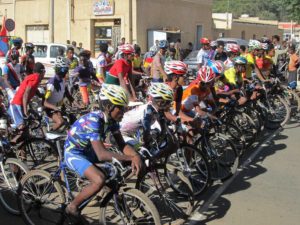
 In 2024, Biniam Girmay, the Eritrean cyclist, won several stages of the Tour de France; this was the first occurrence of a black rider winning a segment of the race. Further, this was the first time an African obtained the prestige of wearing a green jersey during any tour. In addition, Rwanda is to host the 2025 Union Cycliste Internationale (UCI) Road World Championships, another remarkable development in Africa’s series of firsts.
Racing is making substantial strides for inclusivity, diversity and multilateral cooperation. The inclusion of the African market benefits both the sport and the continent, which is now a great opportunity for material advancement and international investment.
The First Few Stages
The globalization of cycling is accompanying the inevitable march of progress. As companies, ideologies and values leak across the globe, the sport of cycling is pedaling into the limelight; meter by meter, creeping into the center of cultural exchange. The notoriety began in 2022, when Girmay won a stage at the prestigious Giro d’Italia and thrust Black Africans into the center of cycling. Over the past several years, Girmay has remained a successful sprinter, securing various victories across various races and stages.
His acumen was reaffirmed in 2024, with his green jersey, during the Tour de France. Girmay initiated an organized effort from the UCI to breach the African market and has remained an inspiration for many African cyclists. About the state of the presence of African cyclists, Girmay said, “It’s really good for the impact, a good vision for young talent, because if you work on that, especially in the European teams, if they invest a lot in African cycling for sure we can have a more global sport. And that’s always nice to see.”
Pushing Forward
Since then, the UCI has initiated establishing a training center for aspiring Black African cyclists. More than 10 to Brittany, France, to train for future competitions; the athletes originate from many countries, each representing their distinct cultures on the European roads. The aspiration of the program, endorsed by both the UCI and the International Olympic Committee (IOC), is to have local athletes excel in the regional Kigali championship. As such, they have been targeting young riders, hoping that, in two years, sundry successful characters will graduate from this program. The project began in 2023, hoping to prepare a generation of people capable of shining during the Rwandan competition.
The aforementioned World Championship in Kigali, Rwanda, is the axis for this whole affair. Announced in 2024, during the Zurich Championship, the monumental decision possesses the potency to establish a robust cycling community in Africa. With, on average, 124 countries broadcasting the race and more than 330 million viewers, this event is phenomenal exposure for the region.
The Last Few Stages
The tournament itself provides the potency for a thriving tourist industry. Any single international event unleashes a myriad of positive, economy-stimulating effects. This venture hopes to both inspire local athletes and expose the world to Rwanda. With each cyclist, a team, along with several fans and mechanics, will follow in tandem. These individuals will be exposed to the sprawling hills, vibrant grass and vivid culture.
This affair is an opportunity for Rwanda’s tourism industry to thrive, not only for the tenure of the competition but also for the residual effects of exposure. With this, faculties and institutions of commerce will be erected, providing adequate edifices for the constituents to operate, interact with and purchase from. For comparison, there was a 4.8% increase in foreign tourists during the 2016 Rio Olympic Games.
As for the athletes themselves, with the introduction of an additional sports industry, more aspirants will have the opportunity to be sponsored. While it is difficult to establish oneself in a sport requiring substantial infrastructure, heroes grant locals international exposure, thereby revitalizing the sport and the residents. Further, there is debate regarding “muscle drain,” or the impact of physically capable laborers leaving their respective nations for better opportunities.
Despite all of this, professional athletes are given the ability to return to their respective communities with connections and wealth. Potentially inspiring a new generation of athletes, all of whom can escape poverty by being thrust into the limelight. An amalgam of the aforementioned themes is present in Kenya, wherein the town of Eldoret benefited from the reinvestment of the country’s professional athletes.
The Finish Line
The finish line has yet to be crossed and many countries still suffer from poverty. However, as the bike pedals forward, the checkered line becomes more perceptible. The competition, the athletes-in-training and the current stars all provide distinct chances for prosperity.
Progress induced by globalism establishes the possibility of flourishing tourism and hospitality industries and reinvestment from athletes. As the line draws near, the glistening prospect of wealth becomes palpable. The internationalism of cycling is beneficial for the sport, as an abstraction and for the people.
– Jackson Hufman
Jackson is based in Glenwood, MD, USA and focuses on Good News and Celebs for The Borgen Project.
Photo: Flickr

Solar Power in Yemen Eases Energy Crisis
Clean Water in Al Maqatirah
Finding clean water has been a challenge for many Al Maqatirah District residents. An outdated system lacking functionality and the high cost of diesel fuel created a difficult choice: pay for expensive and potentially unsafe local water or travel long distances to buy it from somewhere else.
Thanks to a 2025 project sponsored by the United Nations Development Programme (UNDP) and several partners, 5,827 Yemenis no longer face this dilemma. The old pipelines have been replaced by a solar-powered water system that provides immediate access to reliable drinking water and sets Al Maqatirah toward long-term sustainability. This project is a clear example of the humanitarian potential of solar power in Yemen.
Powering Livelihoods in Al-Ghaydah
Meanwhile, the city of Al-Ghaydah struggled with an entirely different problem. Climate instability, rising fuel prices and energy shortages threatened the Bawazier Ice and Fish Preservation Factory operations. The facility is a critical part of the coastal community, which relies heavily on fresh fish for sustenance and employment. Without a way to preserve their catch, fishermen risked losing their livelihoods and families their dinners.
Recognizing the urgency, the World Bank, UNDP and Yemen’s Small and Micro Enterprises Promotion Service stepped in with a solution. In 2023, they gave the factory a grant, allowing it to transition 25% of its energy to solar power. This reduced reliance on diesel has enhanced efficiency, lowered monthly energy costs by $875 and created new job opportunities. As a result of this successful model of solar power in Yemen, higher-quality fish is now sold at lower prices and a community vulnerable to changing climatic conditions has become more sustainable.
Keeping the Lights on in Hospitals
Ensuring hospitals remain operational is essential, particularly in a country where 21.6 million desperately need humanitarian aid. However, 46% of Yemen’s health care facilities are either partially operational or completely out of service. A driving force behind this number is a long-standing energy crisis, which has significantly inhibited hospitals from giving patients the care they desperately need.
Once again, solar power in Yemen provides a source of hope. Through a partnership between the UNDP and the Kuwait Fund for Arab Economic Development, four hospitals have been provided with renewable energy systems. This project hopes to see Yemeni patients receive high-quality health care by installing solar panels that keep the lights on. Enabling their communities to become cleaner and more environmentally friendly.
A Brighter Future for Yemen
As these examples show, solar power in Yemen has the potential to make a substantial difference in the lives of some of the world’s most impoverished citizens. It could help provide clean drinking water to the 18 million people without access. It could put food on the table for the 17 million suffering from severe malnutrition. Furthermore, it could also curb outbreaks of preventable infectious diseases that fuel the humanitarian crisis. In a country plagued with hardship, renewable energy illuminates a path forward.
– Caroline Clark
Photo: Flickr
How AI Is Improving Education Systems in the DRC
A Nation of Paradox
Despite the DRC being the world’s largest cobalt producer and rich in many natural resources, 28 million Congolese civilians are experiencing acute food insecurity. At a time of great struggle, the people of the DRC suffer at the hands of one of the most persistent and far-reaching conflicts in Africa. An estimated 7.8 million civilians have been internally displaced. At the same time, schools, homes and public infrastructure are destroyed in pursuit of land and resources.
Following years of colonial rule, President Félix Antoine Tshisekedi Tshilombo is accused of contributing to a status quo that perpetrates human rights violations against his people. Hence, DRC ranks among the highest globally in corruption, where wealth fuels conflict and extraction rather than public and economic development. Not only have these issues created an ongoing humanitarian crisis, but they also contribute to unemployment and poverty. More than 70% of the Congolese population lives on less than $2.15 per day.
Education Systems in the DRC
These immense challenges have shattered the education system in the DRC. Around 7.6 million children and half of all girls between the ages of 5 and 17 no longer attend school. Many struggle to complete their studies due to barriers like resource shortages, long distances or economic challenges.
With many schools and education systems destroyed, those operating in the DRC often struggle with overcrowding and underfunding, severely limiting education quality amid ongoing economic and social instability. These compounded challenges lead to low enrollment rates and expose children to serious risks. These include forced recruitment, child labor, violence and deepening poverty, harsh realities in a country where daily survival is already a struggle.
The AI Revolution in Africa
In a changing Africa, AI is set to play a significant role in addressing the challenges faced within public education. By bridging the digital divide and increasing access to quality schooling, AI platforms could prepare students more fully for the demands of a fairer workforce. African EdTech startups have grown rapidly in recent years, offering content that supports learning and teaching in diverse settings. Many now provide materials in African languages and dialects, helping re-empower local communities during uncertain times.
Yet, regardless of AI’s undeniable potential, the DRC ranked 181st globally on the AI Government Readiness Index between 2023 and 2024. This low ranking reflects widespread concerns about government effectiveness and the scalability of AI in underserved rural areas. Despite these hurdles, AI-powered tools now facilitate opportunities for basic educational tools tailored with digital platforms such as Schoolap. These platforms show promise at a time when the DRC’s education system is facing existential threats.
Schoolap
Since its founding in 2017, Schoolap has expanded rapidly, especially after the COVID-19 pandemic accelerated digital learning. The platform now features more than 20,300 educational resources, 6,000 partner schools, 1.9 million registered students and around 105,000 participating teachers across six provinces.
In the face of these many great challenges, by engaging students with innovative adaptive learning platforms, AI is providing children with new and efficient means of education. These means are easier to access and less dependent on their location or socioeconomic status. The app requires users to complete an account form to access its content. This form identifies the learner’s level of study, after which they can access online courses in multiple formats, designed for both primary and secondary students and educators.
Conclusion
The Schoolap platform offers a simple solution as Congolese schools continue to close. It combines digital curriculum management with interactive tools that can address the growing needs of the faltering education systems in the DRC. While the road to long-term safety and security is dangerous, platforms such as Schoolap reveal promising new pathways. They offer more accessible education for the children of a nation deeply affected by war, corruption and the mismanagement of public resources.
– Gabriel John Gunn
Photo: Flickr
Agricultural Technology: Food Systems in Vietnam
About Food Insecurity in Vietnam
Although Vietnam is a major food exporter, around 10–11% of its population still faces moderate or severe food insecurity, mainly in rural and ethnic minority communities. The impact of changing weather patterns – causing fluctuating weather, saltwater intrusion and exposure to floods or droughts – is a culprit guilty of destabilizing Vietnamese agricultural production.
An aging workforce and declining productivity among its labor pool. In Vietnam, the average age of farmers has risen significantly in recent years, and its general agricultural labor force has been shrinking.
Challenges in supply chain issues, which the agricultural industry is particularly susceptible to due to fragmented production, frequent changes in season or weather, issues with storage and food maintenance, etc. This is especially true in Vietnam where, in 2017, the World Bank put out a report detailing the weaknesses of Vietnam’s agricultural supply chains and the costly consequences for the nation’s GDP. The report stated that, “the main constraint on Vietnam’s agriculture supply chains is the lack of an integrated, end-to-end supply chain model, according to Mr. Julien Brun, Managing Partner at CEL Consulting.” These all disrupt production and access to nutritious food, leaving vulnerable groups at risk despite the nation’s agricultural growth.
The Rise of AgTech
What the World Bank recommends – and what is generally becoming not simply a need, but a requirement for a competitive agricultural market – is a rise in agricultural technology: to increase productivity, to keep track of and forewarn of market or natural fluctuations and to facilitate logistical efficiency.
Fortunately for Vietnam, while it is not immune to global agricultural issues, it is also not immune to global agricultural solutions. Agrifoodtech investment in developing markets reached $3.7 billion in 2024, surging a remarkable 63% year-over-year (YoY) and bucking the 4% decline observed in the agrifoodtech sector at the global level.
Techcoop
One of the leading firms in this Agtech revolution is a small startup by the name of Techcoop, which sees 2025 as its year of stardom—both in terms of funding and public recognition. According to the website TechInAsia, “This Series A round is one of the largest in Vietnam’s agritech sector, reflecting the growing demand for tech-driven agriculture solutions.”
What Techcoop does is address one of the main hindrances to supply chain issues in Vietnam’s agricultural industry, which, as aforementioned, the World Bank reported to be one of the sector’s major issues: namely supply chain and logistics inefficiency. Techcoop enables an integration of data into the agrarian world of farming through, among other things:
Techcoop is on the forefront not simply of Agtech, but also operates at its intersection with financial and legal technology facilitating the movement of financial funds and the drafting of contracts.
Supply Chain Efficiency
This work of easing and improving supply chain efficiency has allowed Techcoop to address Vietnam’s logistical shortcomings. With how small-scale farming can be, agribusiness and local farmers have often been fragmented or lacking in their communication. Techcoop offers data analytics and tracking to mediate between them – allowing for a quantification of production to track the progress of contractual obligations, with data offered as an efficient and understandable language between various actors in the supply chain. This is increasingly important to consumers who more and more want greater farm-to-shelf traceability. Techcoop enables this through allowing for easier tracking of actors and processes within the complex agricultural supply chain.
AgTech’s Role in Vietnam’s Trading Shifts
Startups like Techcoop that are participating in and forming this agritech revolution are going to be increasingly vital given the global shock to trade that Trump’s “Liberation Day” tariffs represented. Vietnam, having recently made a deal with Trump, opted to reduce U.S. tariffs on most goods to 20%, down from the previous 46% – but only in exchange for a 0% tariff on U.S. exports to Vietnam. This represents a major shift in Vietnam’s agricultural sector, which now has to compete with U.S. agricultural goods on home turf. Now, more than ever, Agtech matters in ensuring Vietnam’s agricultural productivity remains at a competitive level – particularly when facing U.S. goods paired with their own surge in agricultural technological innovation. Techcoop and companies like it will increasingly become the go-to solution for sustaining food systems in Vietnam – one of the nation’s most vital sectors.
– Inaam Munsoor
Photo: Wikimedia Commons
Addressing Mental Health in Guinea-Bissau
A System Without Specialists
As of 2017, Guinea-Bissau had zero practicing psychiatrists. The country’s ratio of just 0.13 doctors per 1,000 inhabitants falls far below global standards for basic health care. This shows that mental health support is almost absent from the primary care setting. Additionally, a screening of adults attending general health facilities in Guinea-Bissau revealed that at least 12% had a diagnosable mental disorder. This shows the urgent need for integrated mental health services in the nation’s fragile health system.
A baseline study found that general practitioners correctly diagnose only one in three patients, meaning that the people in Guinea-Bissau’s rural communities are unknowingly struggling with mental disorders. They carry a silent weight that forces them to push through each day with far greater effort than others, struggling in isolation just to survive.
Poverty and Psychological Strain
Things such as rising climate anxieties and pandemic poverty are worsening mental health in Guinea-Bissau. In 2021, the poverty rate was reported to have increased by 2.8 percentage points, adding an additional 80,000 poor. Research shows that mental illness reduces employment and therefore income.
Cultural Beliefs and Stigma
Mental health in Guinea-Bissau is often interpreted through a spiritual lens. Communities blame mental issues on things like curses and ancestral wrath. As a result, individuals often look down upon seeking help from medical professionals. Sixty-three percent of rural mothers go to the witchdoctor, and 65% believe that curses have the power to kill. While traditional healers play a vital role in this community, their methods can delay access to cures. Stigma remains a barrier to those suffering silently.
Lending a Helping Hand
This West African nation faces a mounting crisis that demands international attention. Every person deserves access to necessities like mental health care. Guinea-Bissau’s struggle is a global problem; poverty, trauma and neglect reflect broader challenges that low-income countries face worldwide.
Progression Efforts
Mental health in Guinea-Bissau is beginning to see a glimpse of hope in this landscape. International organizations such as the World Health Organization (WHO) have stepped in to support the country. Guinea-Bissau’s fragile health system has improved as groups are working to train general health workers in basic psychiatric care.
The NOVAFRICA Knowledge Center is working to strengthen health care in Guinea-Bissau through an inclusive and culturally sensitive approach. Its model brings together modern medical practitioners and traditional healers, including witchdoctors, to bridge trust gaps and improve access to care. By acknowledging and respecting spiritual traditions deeply embedded in the community, NOVAFRICA promotes the acceptance of modern medical practices and helps lay the groundwork for more effective health interventions, including in mental health.
The Path Forward
In collaboration with NGO VIDA, NOVAFRICA supported the launch of a community health insurance program that allows residents to pay affordable premiums in exchange for access to medical care, transportation and essential medicines. Though the country still lacks a national suicide prevention strategy, collaborative efforts between NGOs and local health authorities are laying groundworks for a future policy reform.
Guinea-Bissau’s challenges are steep, but the people are resilient. With continued international support and growing local engagement, the nation is taking its first steps toward a future where the silenced have a voice. Acknowledging, treating and respecting mental health is not just the goal, it is the path to a future defined by dignity and resilience.
– Marissa Schoth
Photo: Unsplash
Closing the Gender Wage Gap in Nepal for Dalit Women
Barriers to Wage Equality
The Nepal Labor Force Survey in 2022 found that women earned on average 23% less than men. Specific up-to-date statistics on the gender wage gap in Nepal by caste are chronically lacking; however, an overrepresentation of Dalit women in low-paying, informal positions will likely compound the already existing gender wage gap. This means employers often neglect to give them the same wage protections and labor rights as those in more formal employment.
Furthermore, the Haliya system forces a specific community of Dalits into bonded labor from birth, making them work off ever-increasing debt. Although the government banned this system in 2008, it still traps thousands from lower castes, often women, in agricultural slavery. This has contributed to a poverty rate of almost 42% amongst the Dalit population, almost double the national average of 21.6%. This pattern of poverty and wage discrimination can trap Dalit women in a generational cycle of systematic oppression.
Legislative Victories
In spite of these persistent challenges, a growing body of legislation is helping to lay the groundwork for greater gender and caste wage equality. The 2015 constitution itself marked a huge stride in eliminating the gender wage gap in Nepal. Article 18 sets out the right to equality from gender and caste based discrimination, with Article 38 also specifically outlining the rights of women, which include rights to special opportunities for employment based on the principle of positive discrimination. This move by the Nepali government represents meaningful legislative progress and demonstrates at least in principle, support for wage equality.
The 2017 Labor Act reinforced this by outlining a “prohibition on discrimination in remuneration for equal work.” However, it is also true that while ground-breaking, lawmakers and government institutions have not been able to comprehensively enforce this legislation. Nepali society still has not fully accepted these legislative changes, and in many rural communities, authorities have struggled to enforce equality, leaving a regional divide in the gender wage gap. Despite this, these laws provide a critical foundation, giving advocates, communities, and Dalit women themselves the legal tools to push for lasting change.
ADWAN: Association for Dalit Women Advancement of Nepal
For those fighting against wage inequality in Nepal, there is no greater tool than education. If marginalized groups can access education, then they are substantially more likely to escape the generational gender and caste-based cycles of poverty. Bisjnu Maya Pariyar and other advocates for Dalit Women set up the Association for Dalit Women Advancement of Nepal (ADWAN) in 1998 as a vehicle to fight against this discrimination. At the core of its work is the principle that “equality is unfeasible without education.” This is the idea that economic emancipation begins with education. This is why ADWAN funds a variety of adult literacy and scholarship programs aimed at women and Dalit women specifically.
There are signs that programs like this are having an impact. In 2001, the literacy rate for Dalit women stood at just 7.2%. By 2015, this had increased to 34.8% reflecting the work that organizations like ADWAN are doing to further women’s education and thus increase the economic opportunity available to Dalit women.
Looking Ahead
Despite the persistence of the gender wage gap in Nepal, there is substantial evidence suggesting its effect is weakening. The government has made significant legislative progress in outlawing wage discrimination. In fact, the 2024 Women, Business and the Law index, which measures the laws that affect women’s economic opportunity, scored Nepal 80.6/100, higher than all its neighboring countries. While these legislative victories may not yet have trickled down to affect Nepali society fully, the direction of travel is undoubtedly positive. The tireless efforts of Dalit women organizing, educating and advocating for their rights has made much of this progress possible. From grassroots initiatives like ADWAN to national legislative change, a growing movement is demanding a more equitable future. If this momentum continues, the next generation of Dalit women may enter a workforce where equal pay is not an aspiration, but a reality.
– Adam Walsh
Photo: Wikimedia Commons
Project HOPE: Improving Syria’s Health Crisis
In the middle of Syria’s health crisis, Project HOPE, in coordination with the Jordan Health Aid Society-International (JHASi), is delivering essential medical supplies and working with local partners to assess health and humanitarian needs. The team has identified shortages of medicine, basic medical supplies and staff.
Problems Facing Health Care Infrastructure
Diseases, such as cholera and acute watery diarrhoea, are spreading due to Syria’s health crisis. According to Dr. Altaf Musani, the U.N. World Health Organization Director of Health Emergencies, more than 1,444 suspected cases of cholera and seven associated deaths have been recorded. He said, “We know that when cholera gets hold in camps, it can serve as a brush fire, increasing both morbidity and mortality.” He also warned that more than 416,000 children in Syria are at risk from severe malnutrition and that at least half of children under 5 suffering from severe acute malnutrition are not receiving treatment. Dr. Musani also noted that more than 50% of the maternity hospitals in northwest Syria have suspended operations due to underfunding since September 2024.
Dr. Musani said that Syria’s health crisis is partly because the country’s health facilities lack funding and face shortages of skilled workers and equipment. The war forced 50% to 70% of the health workforce to leave the country to look for other opportunities and the health infrastructure still needs investment.
The Impact of Syria’s Health Crisis
Syria’s health care system has undergone a lot of changes in the past decade. The conflict itself devastated the health care system due to loss of health infrastructure, systematic attacks on health care facilities and the mass exodus of health care workers. Parallel governance structures resulted in a fractured and inconsistent health care landscape.
The full impact of Syria’s health crisis falls most heavily on vulnerable populations. Women in need of maternal care face restricted access to maternal health care facilities. Children experience disrupted vaccine schedules and a shortage of pediatric care. Refugees and internally displaced people lack even basic medical services. Older individuals and people with chronic conditions experience inconsistent access to necessary medications, which intensifies preventable health complications.
HOPE in Syria
Project HOPE delivered the first nonprofit shipment of medical supplies to southwestern Syria with the support of JHASi and the Al Yusr Charity Organization. The shipment included essential medicine and medical supplies for more than 5,000 people. This part of the country had previously been inaccessible to aid organizations following the end of the Assad regime, contributing to Syria’s health crisis.
Project HOPE has been operating in southern Syria and has assessed 13 hospitals and medical centers in the Daara and Suwayda Governorates since mid-December to identify the greatest health needs. The assessment found significant gaps in health care, nutrition, mental health support and water, hygiene and sanitation services. “Southern Syria desperately needs humanitarian attention, including food aid, health sector support, clean water and mental health care services, particularly for vulnerable groups like women, children, older adults and people with disabilities,” said Laith Salman, Project HOPE’s Team Lead in Syria.
Looking Ahead
Project HOPE has made accomplishments in the field by working to relieve the complications caused by Syria’s health crisis. “A large portion of the population is experiencing trauma, depression and anxiety due to the effects of war. While there are efforts from NGOs to provide mental health and psychological (MHPSS) support, there is a significant lack of trained mental health professionals, specialized facilities and MHPSS programs in the area to help those suffering from the psychological aftermath of decades of conflict,” says Laith Salman. Syria will require continued support from NGOs to recover from its post-conflict health crisis. Project HOPE is one example of an organization providing ongoing assistance to help address the impact of the conflict.
– Abirame Shanthakumar
Photo: Flickr
Tackling Food Waste In Indonesia
Historically, Indonesia has had difficulty maintaining a sustainable relationship with food consumption, as well as with lumber, fossil fuels, land use and water. Even though Indonesia may appear to have enough resources to provide for everyone, more than 8% of its population—about 24 million people—lives in poverty. While facing numerous ecological issues and overconsumption, Indonesian federal policymakers have attempted to address these problems while managing other environmental challenges that have arisen in recent years.
Causes of Food Waste in Indonesia
On the surface, food waste may seem like an issue that can be tackled easily. However, many developed nations, especially the most populated ones, have had continuous trouble adapting to cultural factors, logistical issues and faulty manufacturing. For Indonesia specifically, these issues, along with harvest losses and the country’s climate, speed up the process of food waste compared to other nations.
Harvest loss is a detrimental issue for Indonesian produce farmers because significant amounts of their crops are lost before reaching the market due to a lack of access to modern technologies for harvesting, processing and storing crops. When these crops face exposure to Indonesia’s constant humid climate, the conditions quickly cause spoilage, either before or after they reach a retailer.
When citizens of Indonesia search for produce at vendors or markets, perceptions of food quality often influence high food waste. Much of consumer behavior has progressively been influenced by Western consumption patterns that suggest a lack of interest in food that may not appear aesthetically pleasing, leading to the discarding of large amounts of food. Unfortunately, this cultural phenomenon of waste does not only reside on the individual level.
According to information reported by news portal Tempo, the biggest contribution to wasted food comes from hotels, restaurants, catering, supermarkets and the behavior of people who like to leave their food. Aksamala Foundation research results in 2016 showed that 35% of restaurants in Jakarta throw away excess unsold food per day, with an average of 2-3 kilograms per restaurant.
Consequences of Food Waste
Plenty of consequences have emerged from overconsumption, most notably food insecurity. When retailers have limited access to fresh produce or when produce spoils quickly, prices can rise due to supply issues. Although Indonesia may remain one of the world’s largest food producers, the amount of waste, if managed properly, can meet the food needs of more than 3 billion people; it still faces challenges within its supply chain when delivering food to those in impoverished areas who require immediate access to quality nourishment. Environmental and economic impacts are the two other major consequences of food waste.
The World Bank assessed in 2019 that Indonesia lost $29 billion in one year due to food waste. Furthermore, the Food and Agriculture Organization (FAO) has conducted a study that food waste accounts for 8% of greenhouse gas emissions, not to mention the amount of natural resources that go to waste when growing produce that immediately gets thrown out.
Spearheading a Sustainable Change
As of 2024, Indonesia has lowered its food waste per capita to 51.95 kg, compared to 2021 when the waste per capita was 75.66 kg. When tackling these issues, Indonesia relied on technological and digitalization methods, including artificial intelligence (AI) networks that can identify patterns, predict the molecular structure of bioactive compounds and predict the expiration of a commodity.
Other methods, such as data systems, have proven useful when tracking produce in transport from rural to urban areas, ensuring appropriate preservation. If an issue arises in the supply chain, it becomes easier to isolate and resolve. Many other traditional strategies carried out among the public consist of encouraging community efforts toward upcycling organic and non-organic waste through individual efforts or organizations like Waste4Change, supporting the country’s goals for a more sustainable future.
– Sam Barbagallo
Photo: Flickr
How Recycling Ghost Nets Fights Poverty Globally
Ghost Net to Soccer Net in the Caribbean
Sandals Foundation, owned by Sandals Resorts (a chain of resorts based in the Caribbean), started a program called Future Goals. It works to pick up environmentally-damaging ghost nets discarded in coral reefs, repurposing them into soccer nets for local kids beginning in the island of Curaçao.
They want to encourage more kids throughout the Caribbean to play soccer (locally known as football). The program hopes to foster life skills in disadvantaged youth, opening opportunities in their futures. Simultaneously, the Future Goals program promotes environmental sustainability in Caribbean communities.
From Under the Sea to (Magic) Carpet in the Philippines
In the Philippines, commercial fishing once sustained the local economy. However, now, most of the fish supply is depleted and only the plastic waste remains, leaving local communities without a living, and thus 60% are below the poverty line.
With the help of organizations like NetWorks, Filipino fishermen clean up the waste and recycle the fishing nets by turning them into carpets. Both retrieving the materials from the ocean and making these carpets out of recycled materials provide these Filipinos with jobs and a source of income. The process has been so successful that it has spread across communities in the Philippines.
One Man’s Trash Is Another’s Treasure in Cameroon
When invasive plant species disrupted the ecosystem in one fishing village in Cameroon, the livelihoods of local communities quickly became unstable, and countless fishermen lost their jobs. NetWorks also established a program in Cameroon, providing them with jobs retrieving fishing nets from the water to be recycled. In return, they receive stamps, which they can exchange to pay for fundamental services like health care and even their education.
Fishing Nets in Seychelles to Patagonia Shorts
Seychelles, an island nation in the Indian Ocean, constantly experiences firsthand the effects of ocean pollution with ghost nets washing up on shore. One startup, Brikole, receives old fishing nets from Spanish and French fishing companies and then employs locals to process the materials and ship them to a company that makes products for big-name clothing companies including Patagonia. Each sustainable step of the way, recycling ghost nets fights poverty.
Plastic is infamous. With a decomposition date hundreds of years in the future, each neglected plastic bag, thrown-away bottle, and discarded fishing net contributes to global environmental concerns. Simultaneously, the news constantly recycles a gloomy narrative that global poverty is a hopeless situation. Yet innovative people around the world have found a solution fighting both problems rather than giving up hope. Surprisingly, their efforts have proven how recycling ghost nets fights poverty in diverse places–the Caribbean, the Philippines, Cameroon, and Seychelles. These repurposed fishing nets have transformed into employment opportunities for locals, acting as a buoy while poverty threatens to capsize low-income communities in developing countries.
– Klara Jones
Photo: Flickr
Pedaling to Prosperity: African Cyclists
Racing is making substantial strides for inclusivity, diversity and multilateral cooperation. The inclusion of the African market benefits both the sport and the continent, which is now a great opportunity for material advancement and international investment.
The First Few Stages
The globalization of cycling is accompanying the inevitable march of progress. As companies, ideologies and values leak across the globe, the sport of cycling is pedaling into the limelight; meter by meter, creeping into the center of cultural exchange. The notoriety began in 2022, when Girmay won a stage at the prestigious Giro d’Italia and thrust Black Africans into the center of cycling. Over the past several years, Girmay has remained a successful sprinter, securing various victories across various races and stages.
His acumen was reaffirmed in 2024, with his green jersey, during the Tour de France. Girmay initiated an organized effort from the UCI to breach the African market and has remained an inspiration for many African cyclists. About the state of the presence of African cyclists, Girmay said, “It’s really good for the impact, a good vision for young talent, because if you work on that, especially in the European teams, if they invest a lot in African cycling for sure we can have a more global sport. And that’s always nice to see.”
Pushing Forward
Since then, the UCI has initiated establishing a training center for aspiring Black African cyclists. More than 10 to Brittany, France, to train for future competitions; the athletes originate from many countries, each representing their distinct cultures on the European roads. The aspiration of the program, endorsed by both the UCI and the International Olympic Committee (IOC), is to have local athletes excel in the regional Kigali championship. As such, they have been targeting young riders, hoping that, in two years, sundry successful characters will graduate from this program. The project began in 2023, hoping to prepare a generation of people capable of shining during the Rwandan competition.
The aforementioned World Championship in Kigali, Rwanda, is the axis for this whole affair. Announced in 2024, during the Zurich Championship, the monumental decision possesses the potency to establish a robust cycling community in Africa. With, on average, 124 countries broadcasting the race and more than 330 million viewers, this event is phenomenal exposure for the region.
The Last Few Stages
The tournament itself provides the potency for a thriving tourist industry. Any single international event unleashes a myriad of positive, economy-stimulating effects. This venture hopes to both inspire local athletes and expose the world to Rwanda. With each cyclist, a team, along with several fans and mechanics, will follow in tandem. These individuals will be exposed to the sprawling hills, vibrant grass and vivid culture.
This affair is an opportunity for Rwanda’s tourism industry to thrive, not only for the tenure of the competition but also for the residual effects of exposure. With this, faculties and institutions of commerce will be erected, providing adequate edifices for the constituents to operate, interact with and purchase from. For comparison, there was a 4.8% increase in foreign tourists during the 2016 Rio Olympic Games.
As for the athletes themselves, with the introduction of an additional sports industry, more aspirants will have the opportunity to be sponsored. While it is difficult to establish oneself in a sport requiring substantial infrastructure, heroes grant locals international exposure, thereby revitalizing the sport and the residents. Further, there is debate regarding “muscle drain,” or the impact of physically capable laborers leaving their respective nations for better opportunities.
Despite all of this, professional athletes are given the ability to return to their respective communities with connections and wealth. Potentially inspiring a new generation of athletes, all of whom can escape poverty by being thrust into the limelight. An amalgam of the aforementioned themes is present in Kenya, wherein the town of Eldoret benefited from the reinvestment of the country’s professional athletes.
The Finish Line
The finish line has yet to be crossed and many countries still suffer from poverty. However, as the bike pedals forward, the checkered line becomes more perceptible. The competition, the athletes-in-training and the current stars all provide distinct chances for prosperity.
Progress induced by globalism establishes the possibility of flourishing tourism and hospitality industries and reinvestment from athletes. As the line draws near, the glistening prospect of wealth becomes palpable. The internationalism of cycling is beneficial for the sport, as an abstraction and for the people.
– Jackson Hufman
Photo: Flickr
Looking Forward: Innovations in Poverty Eradication in Ukraine
The World Bank Initiatives
In 2023, the World Bank raised $38 billion for emergency financing relief initiatives for Ukraine. They also instituted the Ukraine Relief, Recovery, Reconstruction and Reform Trust Fund (URTF) to help the Ukrainian government fund administrative services, implement relief efforts and plan Ukraine’s recovery and reconstruction agenda. The URTF is also being used to fund efforts to repair infrastructure and reinstate public services, such as public housing and healthcare.
European Aid
In 2025, Spain, Germany, the U.K., France, Italy and the Nordic countries allocated a total of €72 billion in aid for Ukraine, marking a record for the most funding Europe has ever allocated to Ukrainian relief efforts. Indeed, many European countries increased their contribution to Ukraine after the U.S. decided not to allocate any funds to aid initiatives for them this year. The Nordic Countries and the U.K. are currently at the forefront of Europe’s foreign aid initiatives, filling the U.S.’s significant financial gap.
UN efforts
In 2024, the U.N. spent a total $685 million in foreign aid for Ukraine, allotting these funds to restoring economic growth in Ukraine, building housing and healthcare and education initiatives, amongst other efforts. In total, the U.N. supported 230,000 civilians through vocational training/job programs, helped 31,000 Ukrainians find housing and delivered around 800 metric tons of medical supplies to frontline regions.
CARE relief efforts for Ukraine
CARE International is currently working with numerous NGOs and other human rights organizations to implement innovations in poverty eradication in Ukraine. It is currently in partnership with the Charity Foundation Stabilization Support Services, the International Renaissance Foundation, Ukraine House and multiple women’s rights organizations to help provide humanitarian assistance, financial/operational assistance in the development of Ukraine’s democratic government and institute various programs that protect women’s and minority rights. CARE also partners with People in Need to help provide basic survival materials to Ukrainian citizens. It also developed a 24/7 psychosocial assistance hotline to safeguard the mental well-being of Ukrainian citizens.
Restore Ukraine
Founded in February 2022 after the invasion of Ukraine, Restore Ukraine prioritizes restoring Ukrainian cities and communities. Currently, they are in partnership with the International Organization for Migration, the International Justice Mission, Project Dynamo, MATTER, Goodwill, U.S.-Ukraine Foundation and United Help Ukraine, amongst others, to help distribute food, hygiene kits and construction materials to help sustain different shelters and hospitals in Ukraine. It has distributed more than 300 tons of food and 650 tons of construction materials since the start of its organization, helping more than 4,000 Ukrainians receive survival materials in the midst of the current political turmoil.
The Future
While many charity organizations, NGOs, and human rights organizations have mobilized to help institute poverty eradication innovations in Ukraine, the fight for poverty alleviation in Ukraine is far from over. Issues regarding income inequality, household financial well-being, labor market shortages, destruction of infrastructure and various other issues continue to tarnish the economic, social, and political state of Ukraine. The immense global contribution to the restoration of Ukrainian democracy and the well-being of its citizens signifies hope for the state of Ukraine. The efforts to eradicate poverty in Ukraine persist, no matter how long it may take to stabilize the welfare of its citizens.
– Ava Lachini
Photo: Flickr