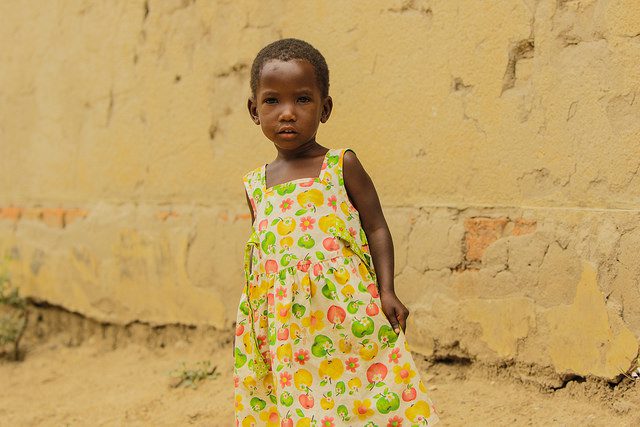
 Significant improvements have been made in the accessibility and quality of girls’ education in Uganda. The female literacy rate has increased from 45 percent in 1991 to 68 percent in 2014.
Continuing this trend for girls’ education in Uganda is necessary to transform the country. However, there are still numerous barriers preventing girls from completing their education.
School Attendance
Despite being compulsory, 13 percent of girls between the ages of 6 and 12 didn’t go to primary school in 2011. Of the girls that did go, only 53 percent actually completed the required seven years. In secondary school, which typically encompasses students from 13 to 18 years old, female attendance significantly drops; 30 percent of girls between these ages weren’t enrolled in secondary school in 2011.
Poverty is one of the key reasons girls drop out of school. Impoverished families often need their daughters to stay at home and help with the housework or other income-generating activities. Some families have to marry off their young daughters to receive a dowry, which prevents them from continuing their education. Of the girls that stopped attending school, 40 percent dropped out because of child marriage.
Gender Roles
Another key barrier to girls’ education in Uganda are the traditional gender roles and male-dominated society. Women and girls are expected to do the majority of the domestic labor, often leaving little time to attend school and do the assigned homework.
In some areas, girls are actively discouraged from attending school. Instead, they are told education is for boys. Female students are often stigmatized as being promiscuous. These beliefs can be perpetuated in the classrooms if they are held by teachers, peers and eventually the girls themselves. The desire to participate and even attend classes suffers as a result.
The facilities and teaching style of schools were not designed to accommodate girls. The lack of proper sanitation and privacy makes it difficult for girls to attend school while menstruating. Girls can also face risks associated with a lack of security at schools, such as sexual abuse.
Alleviating Poverty
Improving girls’ education in Uganda can help pull families, and perhaps even the country, out of the poverty cycle. Every additional year of education yields a 10-25 percent increase in the income of a woman. An educated woman will then reinvest 90 percent of this income into her family. Helping a girl complete her schooling will double the likelihood that she will send her own children to school.
Educating girls can also help control the rapid population growth. Uganda currently has a 3.2 percent population growth rate, which is the fifth-highest in the world. On average, a mother has her first child at about 19 years old. Because women start having children at such a young age, Uganda also has a high fertility rate of about 5.7 children per woman.
By keeping girls in school, the rates of child marriage and teen pregnancy significantly decrease. If all girls were able to complete their education, the rate of teenage pregnancy would decrease by 59 percent.
Improvements for Girls’ Education in Uganda
Girls’ education in Uganda has been steadily improving, but still has a long way to go. Much of this progress was a result of the 1997 implementation of free, universal primary education. This policy significantly helped decrease the gaps in primary enrollment between girls and boys.
However, a report by the Uganda Bureau of Statistics, using 2014 Census data, found that although there were similar levels of primary school education between boys and girls, there were significant disparities in performance, levels of classroom engagement and access to facilities. In addition, there are still significant gender disparities in enrollment for secondary schools.
Because of the profound implications of girls’ education in Uganda, many organizations are determined to continue improving its accessibility and quality. Some of the most effective are local programs, which were developed to address specific problems in Uganda.
Nonprofit Uganda For Her began after one Ugandan noticed the poor access to sexual and reproductive health information for girls in rural areas of the country. It has since broadened into a more comprehensive strategy for empowering girls and women. The Girl Up Initiative Uganda has similarly local roots. The organization was founded when three individuals recognized the lack of educational opportunities for girls living in urban slums.
These organizations address the unique challenges girls in Uganda face when trying to attend school. Educating girls creates a ripple effect, helping families and communities break free from poverty.
– Liesl Hostetter
Photo: Flickr

Liberty & Justice and Clothing for All
Chid Liberty, an entrepreneur, created the clothing manufacturing company Liberty & Justice. Its purpose is to not only change the manufacturing industry for many but also to empower others to continue their education. Instead of just thinking about how the clothes would be made, Chid also thought about the way their formation could change a society, piece by piece.
Encouraging Education
Liberty & Justice manufactures clothing for brands while focusing on making political and economic change in Liberia. Its directors are largely female, with 90 percent of the workforce being women, and its factory is fair trade certified. With its UNIFORM brand, every purchase provides a uniform for a child in Liberia so they may attend school. For a student, a uniform is not only a confidence boost but also reduces absenteeism and improves test scores, according to an MIT study.
Liberty & Justice is headquartered in New York City, but its owner and workers originate from Liberia. Chid said his calling was to return to Africa and provide decent jobs empowering fellow Africans. Taking advantage of the Africa Growth and Opportunity Act, he began exporting to the U.S., creating interest in his products.
Setting an Example
What really began to spark interest was the treatment of Liberty & Justice workers. With the female workers being paid fair salaries and the collective workforce owning 49 percent of the shares in the company, Liberty & Justice set itself apart from companies exploiting the poor and taking advantage of necessity. Although the company owns 51 percent of the factory from which its clothing comes, Chid does not take a salary, instead focusing his earnings on his workers and incentivizing them to take pride in their business.
Liberty & Justice’s Goals
Liberty & Justice has a five-year social plan it intends to fulfill. It not only includes expanding the Liberian economy but also creating health clinics and providing scholarships for the same children it provides the uniforms. Chid himself was a privileged child, living in Europe and experiencing indulgences common in the Western world. Upon learning how people in his native country lived, he intended to provide as much as he could by giving back in the form of creating jobs.
Liberty & Justice is truly a corporation set on changing the Liberian story from one of poverty to one of growth and development. Chid created this goal with the intention of changing the story for the 70 percent of Liberians living in poverty and instead offering them a chance at a safe and fulfilling life.
– Kayleigh Mattoon
Photo: Flickr
Top 10 Crucial to Know Facts about Poverty in Lebanon
Lebanon is a small nation wedged between the Mediterranean Sea to the west, Israel to the south and Syria to the northeast. Despite its size and a population of only six million, Lebanon became a center of trade in the Middle East during the mid-1900s. It is also known for its diverse culture in which Shia and Sunni Muslims live alongside a large Christian minority and other smaller groups.
The outbreak of the Lebanese Civil War in 1975 undermined the country’s prosperity and stability. The conflict lasted 15 years and Lebanon has struggled to recover ever since. While Lebanon remains a relatively wealthy nation in the region overall, its economic situation has become increasingly complicated and many people living in the country do not benefit from that wealth. Here are the top 10 facts crucial to know about poverty in Lebanon.
Top 10 Facts about Poverty in Lebanon
Building a Safety Net
The Lebanese Civil War severely damaged the country’s economy and infrastructure and the modern refugee crisis has only increased the strain. That said, several promising programs could alleviate these problems and reduce the impact of poverty in Lebanon.
While Lebanon’s social programs are still relatively young and often haphazard, the government has formed two primary means of relieving poverty: the National Social Security Fund and the Emergency National Poverty Targeting Programme. Expanding and improving these programs along with continued investment in infrastructure and education could make an enormous difference in the lives of thousands of Lebanese citizens.
Unfortunately, these government programs do not cover refugees. U.N. humanitarian aid has traditionally stepped up to fill this void, but even these resources have recently begun to dry up.
Response from the International Community
These 10 facts about poverty in Lebanon illustrate a complex and ongoing struggle to improve living conditions in the country. As the Syrian conflict continues, the government of Lebanon will have to continue to cope with an unstable region and an increasingly large population of foreign refugees within its borders.
Thankfully, Lebanon is not alone. In April, around 50 countries met in Paris at the CEDRE Conference where they pledged to invest more than $11 billion into Lebanon’s economy. Time will tell if measures like these will accomplish their goal of restoring prosperity to Lebanon and, eventually, to the Middle East.
– Josh Henreckson
Photo: Flickr
Congo Child Soldiers
Since the 1990s, the Democratic Republic of the Congo (DRC) has experienced extreme violence between armed forces and diverse groups of rebels. Many armed forces have since recruited thousands of child soldiers. Today, the U.N. has declared the recruitment of Congo child soldiers an “endemic.”
The Situation
The head of the United Nations Organization Stabilization Mission in the Democratic Republic of the Congo (MONUSCO), Martin Kobler, has stated that “This situation is unacceptable and has been going on for much too long with impunity. Recruiting children into armed groups is a crime, and destroys the lives of the victims who are forced to do things that no child should be involved in.” MONUSCO reported that an estimated 8,546 children were recruited into diverse armed groups in the DRC between 2009 to 2015. By recruiting more and more Congo child soldiers, it will only create a cycle of violence passed down to further generations. Not only are children forced to leave their families, but they are used as fighters and sex slaves, often leaving them in a position deprived of all educational attainment and daily trauma. Nevertheless, when child soldiers return back to their communities, they are often shunned by their families and are unable to reintegrate into all aspects of society.
Recruitment of Girls
Many children are forced into a life of violence unwillingly, but in some cases, children believe that by joining armed groups, it will give them an escape of a life plagued by poverty. It’s often difficult to obtain accurate data on the number of girls recruited by the DRC’s armed groups however, Child Soldiers International states that almost 7 percent of child soldiers are girls. This number is seemingly disproportionate, leaving many girls unaccounted for.
A Huffington Post interview indicates that many girls cannot afford the fees of local schools and believe that joining local militia groups would ensure security, food and a life outside of poverty. Nevertheless, many parents of girls believe that their daughter’s recruitment will protect their village from plundering and attacks. However, as one past girl soldier interviewed says, “I would wake up and find myself naked…They gave us drugs so that we would not get tired of all of them using us.” Young girls soon find out that recruitment means a life of sexual abuse and slavery.
The Future
It must be noted, that with the help of the DRC’s government and international efforts, the recruitment of Congo child soldiers is steadily declining. In 2009, the DRC adopted the “Law for the Protection of Children,” making the recruitment and use of children in armed conflict illegal. In 2012, the government also signed a “Plan of Action with the United Nations to prevent and put an end to the recruitment and use of children, as well as other serious violations of children’s rights committed by security forces.” In this way, the country has begun to take serious measures against the recruitment of child soldiers. Furthermore, many organizations such as Child Soldiers International are working to ensure that past child soldiers receive an education and are working to integrate them back into society.
– Emma Martin
Photo: Flickr
Male Champions of Change: Transforming Gender Norms in Zimbabwe
Zimbabwe faced a devastating drought in 2016 and food security continues to be a major problem in the South African country, primarily affecting young children. Since 2010, the U.S. Agency for International Development (USAID) has been heavily involved in assuring Zimbabweans’ food security, focusing on supporting farmers, strengthening agricultural markets and managing natural resources.
USAID increased its spending in Zimbabwe by $21.5 million in 2015, expanding interventions to water sanitation and hygiene. However, gender norms in Zimbabwe also affect the lack of food security, especially for children.
Gender Norms in Zimbabwe
Most men in Zimbabwe have little to do with feeding or caring for their children, leaving mothers to do the majority of child-rearing. But for three meals a day, Zimbabwean mothers must search for firewood, make a fire, collect water, cook and clean dishes. The rest of most mothers’ days are spent tending to their families’ crops, leaving little time for mothers to focus on childcare and healthy nutrition.
Social and gender norms in Zimbabwe combine to mean that men are not heavily involved in child rearing, which is viewed as a women’s responsibility. The concept that men get involved with their children is so foreign to Zimbabwean culture that men who do involve themselves get accused of being under a love spell or potion.
USAID’s members realized that working with men is essential to transforming gender norms and thereby ensuring healthy feeding practices for children. The agency started implementing the Male Champions of Change (MCC) strategy to change gender norms in Zimbabwe, using the motto, “Indoda Emadodeni,” meaning Man Among Men.
Male Champions of Change
Australia was the first to formally implement the MCC Institute under the Australian Human Rights Commission. The MCC Institute is a collaborative initiative that strives to address entrenched gender inequalities. Now, MCC’s strategy is used by a number of organizations worldwide, such as the U.N. and USAID.
As its name suggests, MCC targets men. The MCC Institute was actually founded by a woman and women are heavily involved in the Institute, but the founder recognized that political power still rests largely in the hands of men and engaging men would help accelerate change. Changing gender norms in Zimbabwe is more than just a women’s issue, and men have a responsibility to step up beside women to advocate for equality.
MCC involves appealing to men rationally and emotionally. Its strategy defines the business, economic and social benefits of gender equality and urges male leaders to confront and understand the challenges women close to them face every day.
MCC encourages men to support:
MCC in Zimbabwe
In Zimbabwe, USAID’s MCC campaign focuses primarily on gender equality within households. In comparison, the MCC Institute of Australia focuses more on equality in the workplace and in society in general.
Participants of USAID’s MCC campaign, called Male Champions, recruit their peers and hold monthly meetings and group training. At the meetings, Male Champions discuss their roles and responsibilities at home and the interactive training sessions challenge the men to debate and resolve gender-related problems. The meetings also specifically address gender and social norms that present barriers to good nutrition and gender equality.
Male Champions in Zimbabwe come to recognize that their manhood will not be diminished by cooking. One Male Champion said that he learned how to make his daughter porridge and feed her. A USAID survey also found statistically significant improvements in supportive behaviors such as:
USAID also saw an increase in joint decision-making between spouses from 30 percent to 82 percent in just one year. Overall, USAID’s MCC campaign has made a significant difference in changing gender norms in Zimbabwe to ensure gender equality and nutritional security for children.
– Kathryn Quelle
Photo: Flickr
Creating New Priorities: Hope for Girls’ Education in Nicaragua
Nicaragua is one of the poorest countries in the Western Hemisphere, second only to Haiti. Its alarming levels of poverty have had a detrimental effect on the quality of education in the country, disproportionately affecting children in rural areas. While the completion rate of primary education has experienced an upward trend in recent years, the issue of education in Nicaragua demands further attention. Specifically, girls’ education in Nicaragua faces unique challenges and requires sustained action and support.
Access to Education
Access to education only slightly differs between young male and female children. This makes the education system of Nicaragua look quite good in terms of gender equality, yet that is only because the access to education lacks overall for both genders.
Nicaragua is ranked 12 out of 145 countries in gender gap index with a score of 0.776 out of 1.00, which would represent no inequality. Despite being ranked so high, the education system is still lacking due to how many children, male and female, are not in school. The enrollment of male and females in primary, secondary and tertiary education are fairly equal.
It is difficult for these children, specifically girls, to receive an education because of the poverty in their country. The families of these children start to heavily rely on them for economic support by the time they reach the age of 10. These children are frequently forced to drop out of school before the fifth grade to help support their families economically.
Creating New Priorities
Females are often relied on to do domestic work, such as take care of their siblings and other chores within the household while their mothers work. Girls’ education in Nicaragua becomes second priority to their domestic duties.
In 2010 1,046 females were out of school, compared to the 10,868 male children that were not. Unfortunately, as these children grow older it becomes increasingly difficult for them to remain in school. For 2010 adolescents, there were 25,747 males out of school, and 18,861 females out of school. This shows there is not a large disparity between boys and girls suffering in education, but yet males are expected to go out into the workforce if they leave school while females are not.
Overcoming Obstacles For a Bright Future
Overall, females face greater challenges in accessing education than their male counterparts. Females in Nicaragua face strict gender norms and religious beliefs that are deeply rooted in their society. They face adolescent pregnancy which is a great indicator of dropping out of school at an early age. These females also feel pressured to help their families with domestic responsibilities for no pay because of the way women are viewed in their society. All these factors lead to a significant struggle in females overcoming hurdles and receiving an education in Nicaragua.
Although there is more work to be done, girls’ education in Nicaragua has improved greatly over the past few decades. Sixty-nine percent of females completed primary education in 2000, and that figure is projected to reach 91 percent by the year 2020. The completion of secondary education by females in 2000 was 49 percent and is estimated to reach 70 percent by the year 2020. These gains demonstrate hope for the future of girls’ education in Nicaragua.
– Ronni Winter
Photo: Flickr
10 Important and Relevant Facts About Poverty in Santiago
Santiago, Chile is a magnetic city that draws many people in because of the city’s alluring cultural life. Chile’s industry is mostly congregated in the Greater Santiago region.
Cultural Importance in Santiago
The industries consist of textiles, shoes, clothes, food products, copper mining and metallurgy have made this region prosperous. As a result, there has been a rise of a growing financial district known for its stock exchange and banking.
Even though Santiago is often viewed as an industrial hub, many in this prosperous city are left with little and struggle to survive. To recognize the needs of Santiago, here are 10 key facts about poverty in Santiago.
10 Key Facts About Poverty in Santiago
Aid groups, such as the Chilean Red Cross have implemented tactics to improve healthcare in Santiago. They are trained to respond to epidemic controls, as well as promoting healthcare education and preventing diseases. Among the highest of the International Federation of Red Cross’s goals is fostering community empowerment.
– Stefanie Babb
Photo: Flickr
The Ways How the US Benefits From Foreign Aid to Kyrgyzstan
Kyrgyzstan, once part of the Soviet bloc, transformed from a one-party communist state into a republican democracy in 1991. Despite its reforms, though, the country is beset by both extreme poverty and government incompetence. With a significant portion of the population destitute, a thriving illegal narcotics market and ethnic tensions between native Kyrgyz and migrant Uzbeks, American investment in its government and people would see substantive U.S. benefits from foreign aid to Kyrgyzstan in terms of security.
State of Kyrgyzstan
Kyrgyzstan’s location in geographically-isolated Central Asia and its lack of natural energy resources, such as oil and gas, prevent it from emulating the industrial rise of neighboring economic goliaths, Russia and China.
The inherent difficulty of encouraging economic growth, coupled with institutional problems and social disorder, has resulted in high poverty rates in Kyrgyzstan. As of 2010, more than 40 percent of Kyrgyzstan residents live below the poverty line. High rates of homelessness and unemployment have turned many to narcotics.
Factors Leading to Revolution
Trafficking drugs across a long, unguarded border with other Central Asian countries linked to Afghanistan is a profitable enterprise, making it lucrative to those who do not have sustainable incomes. The second-largest city in Kyrgyzstan, Osh, is often referred to as the “drug capital” due to the volume of illegal narcotics that passes through the city near Kyrgyzstan’s southern border.
In 2012, authorities seized at least six tons of various substances ranging from cannabis to heroin. The rampant nature of the drug problem, and the government’s inability to resolve it, was one factor that led to revolution.
In June of 2010, more than 350 people were killed in southern Kyrgyzstan during the Second Kyrgyz Revolution over a variety of issues — rape, wealth inequality between rural Kyrgyzstan migrants and urban Uzbeks and gang turf wars over the aforementioned drugs were a few. About 66 percent of Kyrgyzstan’s population is Kyrgyz, with some 14 percent identifying as Uzbeks. The violence between the two ethnic groups in the larger frame of regime change displaced hundreds of thousands of citizens and left the region in turmoil.
Ethnic Tension and Cultural Conflict
Poverty is a breeding ground for radicalism. Its perpetuation is often a vicious cycle, wherein poverty causes political instability, resulting in civil wars and terrorism at home and abroad. These conflicts then wipe out much-needed crops and necessary social institutions like hospitals and schools. In Kyrgyzstan’s case, ethnic tension resulted from lopsided poverty and unaffordable utility prices.
It would be a mistake to assume, however, that the conflict between Uzbeks and Kyrgyz is limited to only Kyrgyzstan or Central Asia. In April 2017, an Uzbek born in Kyrgyzstan killed 14 in St. Petersburg, Russia by rail attack. In October 2017, an Uzbek immigrant killed eight in New York by driving a truck through pedestrians. More than 1,500 Uzbeks have joined the Islamic State, ostracized by many of the countries — especially Kyrgyzstan — they once lived in.
This global violence, spawned in part by the ineptitude of a corrupt and autocratic government in preventing the continuance of radicalization, is not in the interest of either the Kyrgyzstan people or the United States. Just as Kyrgyzstan benefits from foreign aid to Kyrgyzstan, the U.S. benefits from foreign aid to Kyrgyzstan.
In the decades since the Soviet Union’s dissolution, subsequent American administrations have supplied aid intended mostly for the Kyrgyz Republic’s agricultural economy and on-the-ground humanitarian efforts. But it can do more — more for its government and more for its people.
U.S. Benefits From Foreign aid to Kyrgyzstan
Earmarking additional funds could support anti-corruption initiatives to dampen the prevalence of drug transport and abuse among the population. Increased investment in Kyrgyzstan’s energy sector could also diminish dependence on foreign energy and stabilize utility prices. A reduction in poverty and boost in living standards would increase income equality and alleviate some of the tension between Uzbeks and Kyrgyz that currently plagues the country, and by extension of terrorist activity, the world.
As terrorism is such a buzzword in American politics today, preventing it would surely be high on most elected officials’ to-do lists. Helping the Kyrgyz Republic overcome its multidimensional poverty — which can prevent terrorist activity and save lives both in the United States and abroad — would increase national security at a fraction of the cost of not doing so.
To reiterate: the U.S. benefits from foreign aid to Kyrgyzstan. The current administration’s plan to drastically cut its designated aid funds would render most, if not all, of these benefits void.
– Alex Qi
Photo: Flickr
Mountains to Climb and Progress Made: Girls’ Education in Peru
Issues Within Peru
Corruption still plagues the country and many of the government sectors are still underdeveloped — as evident when exploring the gap in the education system. However, Peru experienced an economic boom in the past several years. Between 2002 and 2013, the annual average growth rate was 6.1 percent. This growth is due to the nation’s rich abundance of mineral resources, as well as structural reforms that allow for the implementation of infrastructure and programs that counter this issue.
The Inter Press Service (IPS) news agency conducted a study comparing rural to urban education attendance rates. The study found that 83.7 percent of 12 to 16-year-olds attended schools in urban areas compared to the 66.4 percent of the same age group in rural areas.
Contributing Factors to Education Lack
The Peruvian poverty rate pushes parents to allow only one child to continue an education, which leads to an emphasis placed on male education. Statistics show that only 43 percent of rural women complete secondary school, compared to 58 percent of men. This can be attributed to the fact that many girls are expected to balance a life between work, school and domestic chores, which often inhibits the opportunities for an equal education. It is common to encourage work over education, and an estimated 34 percent of children in Peru work in order to help their families. Often their jobs are arduous, and children are rarely adequately paid.
Girls’ education in Peru can often be hindered by family commitments. However, an important contributor to the percentage of female school dropouts is the location of most secondary schools, which are usually found in more urban areas. Long walks to school often reduce the time a girl has to help out in the home and study.
In Peru, 21.7 percent of the population live in poverty. In rural areas, 13 percent of people live in extreme poverty, surviving on an average of $56 per day. This creates a tough environment for the continuation of girls’ education in Peru.
Peruvian Hearts
Over the past several years, programs such as Peruvian Hearts have been set up to ensure girls access to an education beyond elementary school. One such initiative provides scholarships, room and board for secondary school as well as college tuition.
Girls are chosen based on their academic strength, drive and financial need. The organization emphasizes the necessity for family support and ensures each girl’s family commits to that support.
Peruvian Hearts has a 100 percent success rate with its students, and students are found more likely to continue their education with the continuous help of this organization. Such support empowers and provides opportunities for girls who might otherwise lack the resources to do so themselves, while also simultaneously aiding the reduction of poverty in Peru.
Power of Boarding Schools
On top of these programs, boarding schools have been set up in rural areas by organizations such as the Sacred Valley Project. The organization is set up in Ollantaytambo in the Sacred Valley. One of their boarding schools here allows students to focus on their education, without the concerns of family or other commitments.
Girls will usually spend the week at school, and if possible, return home at the weekends. The Sacred Valley Project has saved an average of four hours of walking, per day, for each of its 22 students.
Despite certain setbacks, the government of Peru has made strides in the education system. Between 2002-2015, the deficit of schools in rural areas of Peru decreased from 515 to 69 thanks to the Peruvian Ministry of Education. Since 2011, the government’s education budget increased by 88 percent, and its initiative ensured the building of further infrastructure in such rural locations and improving teaching as an industry.
Equal Education
These new priorities are shown in Peru’s staggering progress, and ensures girls access to an education in the future as well. Organizations such as Peruvian Hearts and The Sacred Valley Project are spearheading the rise in education rates, especially for girls in rural communities.
This, paired with the economic boom of Peru and the improvement of their infrastructure, is radically changing the education sector. It is creating an environment where girls have more access to an education, especially in rural areas.
– Trelawny Robinson
Photo: Flickr
Details Matter: How the Media Misrepresents South Sudan
South Sudan has spent the last five years locked in brutal civil war. A quick Google search regarding South Sudanese current affairs indicates how the media misrepresents South Sudan. It’s clear that the global news cycle focuses heavily on the darkest moments of this conflict. Al Jazeera’s South Sudanese frontpage is plastered with the following soundbites: “South Sudan: Aid Agencies Struggle to Reach those in Need,” “‘Sick and Hungry’: The Human Cost of South Sudans Civil War,” and “Maternal Death Rates in South Sudan One of World’s Highest.” Similarly, the New York Times starkly reminds its audience that in South Sudan “A Never-Ending Hunger Season Puts Millions in Danger.”
Clearly, the South Sudanese civil war has caused a great deal of suffering. Generally, though, large news agencies provide less airtime to cover the good and instances of perseverance that exist in the face of this struggle. Without paying close scrutiny to such hope-filled details, it’s not difficult to see how the media misrepresents South Sudan. It’s difficult to realize that amongst the seemingly endless stories of pain there are moments of hope. Here are a few examples.
South Sudanese Youth Soccer
In the winter of 2018, the South Sudan Football Association (SSFA) held a youth tournament in Juba, a major South Sudanese city. The event took place over the course of series of days, one of which was national Unity Day — a South Sudanese holiday dedicated to the promotion of togetherness in the country.
Maria Dudi, the minister of sport in South Sudan, had high hopes for the event, saying “The main objective of National Unity Day is to promote the integration of diverse populations through sports of fair play and sportsmanship.” The event was supported by Japanese International Cooperation Agency, a branch of the Japanese government dedicated to developmental assistance in struggling countries.
On May 18, the Facebook page for the SSFA posted regarding intensified efforts to train a new cadre of young referees so that they are capable of operating on the world stage. These efforts, alongside youth tournaments, indicate a renewed hopefulness that South Sudan’s passion for soccer can be used as a vehicle for cooperation and global recognition.
Natural Resources
South Sudan currently faces tremendous economic challenges that are only compounded by the presence of guerrilla warfare throughout the country. Despite this, South Sudan possesses significant potential for economic development due to its abundance of natural resources.
South Sudan houses large oil reserves and vast resource-rich forests. This abundance of resources further highlights how the media misrepresents South Sudan — it’s uncommon for large-scale news agencies to remind their audiences of the economic potential of a nation supposedly destitute and wartorn.
At present, foreign involvement in South Sudan primarily focuses on humanitarian aid rather than investment, as immediate civilian welfare is the highest priority. With the help of the U.N., and the stability provided by eventual peace conferences, South Sudan has the resources to garner the attention of foreign investment, which in turn could slowly bolster its economy.
Promise of Peace Talks
A variety of major players in the African world have stepped in to contribute to South Sudanese peace efforts. Kenyan politician Raila Odinga has offered to mediate and broker peace talks between South Sudan’s rival constituents, with the aid of the Intergovernmental Authority on Development (IGAD). Odinga has plans to meet separately with each constituent prior to any official peace conference. South Sudanese president Salva Kiir has been openly receptive to the notion of a peace conference with his rebel rival, Dr. Riek Machar.
Additionally, the U.N. has entered the fray and imposed a June 30th deadline for the talks. Another deadline looms ahead on July 1, which is the African Union Summit slated to be held in Mauritania. While the past few years have housed a number of recent failed South Sudanese peace talks, these recent events hold a renewed sense of positive momentum and hope for the future.
– Ian Greenwood
Photo: Flickr
What is Impacting Girls’ Education in Uganda
Continuing this trend for girls’ education in Uganda is necessary to transform the country. However, there are still numerous barriers preventing girls from completing their education.
School Attendance
Despite being compulsory, 13 percent of girls between the ages of 6 and 12 didn’t go to primary school in 2011. Of the girls that did go, only 53 percent actually completed the required seven years. In secondary school, which typically encompasses students from 13 to 18 years old, female attendance significantly drops; 30 percent of girls between these ages weren’t enrolled in secondary school in 2011.
Poverty is one of the key reasons girls drop out of school. Impoverished families often need their daughters to stay at home and help with the housework or other income-generating activities. Some families have to marry off their young daughters to receive a dowry, which prevents them from continuing their education. Of the girls that stopped attending school, 40 percent dropped out because of child marriage.
Gender Roles
Another key barrier to girls’ education in Uganda are the traditional gender roles and male-dominated society. Women and girls are expected to do the majority of the domestic labor, often leaving little time to attend school and do the assigned homework.
In some areas, girls are actively discouraged from attending school. Instead, they are told education is for boys. Female students are often stigmatized as being promiscuous. These beliefs can be perpetuated in the classrooms if they are held by teachers, peers and eventually the girls themselves. The desire to participate and even attend classes suffers as a result.
The facilities and teaching style of schools were not designed to accommodate girls. The lack of proper sanitation and privacy makes it difficult for girls to attend school while menstruating. Girls can also face risks associated with a lack of security at schools, such as sexual abuse.
Alleviating Poverty
Improving girls’ education in Uganda can help pull families, and perhaps even the country, out of the poverty cycle. Every additional year of education yields a 10-25 percent increase in the income of a woman. An educated woman will then reinvest 90 percent of this income into her family. Helping a girl complete her schooling will double the likelihood that she will send her own children to school.
Educating girls can also help control the rapid population growth. Uganda currently has a 3.2 percent population growth rate, which is the fifth-highest in the world. On average, a mother has her first child at about 19 years old. Because women start having children at such a young age, Uganda also has a high fertility rate of about 5.7 children per woman.
By keeping girls in school, the rates of child marriage and teen pregnancy significantly decrease. If all girls were able to complete their education, the rate of teenage pregnancy would decrease by 59 percent.
Improvements for Girls’ Education in Uganda
Girls’ education in Uganda has been steadily improving, but still has a long way to go. Much of this progress was a result of the 1997 implementation of free, universal primary education. This policy significantly helped decrease the gaps in primary enrollment between girls and boys.
However, a report by the Uganda Bureau of Statistics, using 2014 Census data, found that although there were similar levels of primary school education between boys and girls, there were significant disparities in performance, levels of classroom engagement and access to facilities. In addition, there are still significant gender disparities in enrollment for secondary schools.
Because of the profound implications of girls’ education in Uganda, many organizations are determined to continue improving its accessibility and quality. Some of the most effective are local programs, which were developed to address specific problems in Uganda.
Nonprofit Uganda For Her began after one Ugandan noticed the poor access to sexual and reproductive health information for girls in rural areas of the country. It has since broadened into a more comprehensive strategy for empowering girls and women. The Girl Up Initiative Uganda has similarly local roots. The organization was founded when three individuals recognized the lack of educational opportunities for girls living in urban slums.
These organizations address the unique challenges girls in Uganda face when trying to attend school. Educating girls creates a ripple effect, helping families and communities break free from poverty.
– Liesl Hostetter
Photo: Flickr