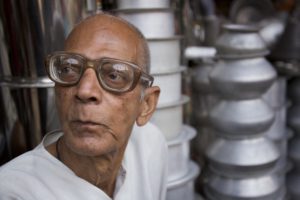
 For every $5 donated to VisionSpring, a low-income adult gets their eye prescription, a pair of glasses expected to last two years, and an estimated 120 percent increase from their initial income directly due to the glasses. This organization’s strategy zeroes in on the local: optometrists; female vision entrepreneurs as saleswomen; wholesale partnerships with government agencies, local hospitals and NGOs; and corporate social responsibility projects with large businesses. VisionSpring supports women, local business and helps create sustainable supply chains in the countries it works in.
Jordan Kassalow is the founder and visionary behind this organization that has already generated over $1.2 billion of economic impact. In 2019, he published his book “Dare to Matter,” in which he describes his journey. Starting as a mediocre student due to a rare eye disease, he had a post-graduation epiphany that people’s lives have meaning through their work to make the world better. While on a volunteer medical mission in the Yucatán Peninsula, Jordan gave an extremely nearsighted child a pair of glasses – and his sight.
Seven years later, Dr. Kassalow founded what would become VisionSpring today, to return productivity and livelihoods to the 2.5 billion sight-impaired people in the world who lack glasses. From the beginning, the organization has sought to empower women in the communities where it works. The Borgen Project interviewed Dr. Kassalow about how VisionSpring supports women in its sight-focused mission.
When you first had people on the ground, how did you reach people – and specifically women – to let them know about the vision entrepreneur opportunity?
There are a few reasons why we select women. One was because there was a higher rate of unemployment or underemployment with women. So, they are a natural, existing workforce that was underutilized. That was the whole root of the idea, to create livelihoods for the women and sustain livelihoods for their customers. (Microcredit research) showed pretty clearly that when you gave women access to resources that a lot of virtuous things started happening in society: their fertility rates would go down, the health of their children would go up, their housing conditions would go up and so forth.
We partnered with microcredit organizations and eye hospitals (for more advanced cases and to) give some credibility to the women who worked for us. The microcredit organizations were already in the communities where we worked (and) had a whole list of good customers who had exhibited their capacity to pay back their loans. So, it was largely through local credit organizations that we started identifying women and continued to source people.
I read in your book about one vision entrepreneur, Rama Devi, who has her husband driving her on a motorcycle so she can reach more people. It seems to upset traditional gender roles and has vision entrepreneurs stepping out of their traditional jobs at home (and) making more money than their husbands. Did you ever see any conflict of interest or anything like that?
Particularly in that area of India where we were working which had a Muslim culture primarily. It was somewhat antithetical to the historical-cultural norms for women to take on these more entrepreneurial roles, so we lost some of our best salespeople. We found that women would come, educated, supported somewhat by their husbands and fathers-in-law. But there seemed to be almost an expectation that they wouldn’t succeed. So, they would let them (work) while the stakes were low. But for those who would start to succeed, and the money would start to flow in, we saw many cases where they had to withdraw from the program, not because of a lack of their interest, but because of pressure from their husbands or fathers or so forth. So, we definitely did experience that.
I wanted to ask how (the See to Learn) strategy of providing glasses to schoolkids differs from adults. What initially drew you to this sector of the population?
I’ve always looked at vision as an input to global development and human development. The two areas most impacted by poor vision are productivity in work and learning in school. When you start an organization that has basically no human and financial resources, it’s good to try to take the really big problem and break it down to its component parts and strategically start with the place (that) execution-wise is the simplest. So, we started with See to Earn because it only required four different prescriptions.
Now, in kids, there is no similar corollary to simple, ready-made non-prescription reading glasses. Each kid has their own unique kids’ glasses (and) unique prescription, so it gets more complicated and you need higher trained people.
What we do is training teachers to do the work of the vision entrepreneur. (They do) the vision acuity test and figure who can pass and fail. And kids who fail, which in India is usually about 10 percent, get seen by a team of (local) optometrists who come once all those kids are identified. We can make about 70 percent of those glasses on the spot and (the rest) we custom make in the lab.
You mention in a 2017 interview with Mary Magistad from PRI that you encountered the issue of girls thinking they are less marriageable if they wear glasses. How have you amended your practice to account for cultural differences in the different countries you’ve worked in?
The cultural context is very important in our local operations. Particularly with girls, we find that almost the parents look for an excuse to take them out of school. If they are nearsighted and not thriving in school, they’ll be pulled out of school more quickly than the boys will. That’s a huge injustice.
Studies have shown that girls in India believe that, if you wear glasses, you are less marriable. We recently did a film that tracks a girl through identifying that she can’t see all the way to getting glasses and using them in school. We are trying to normalize, if you will, glasses through this film. It’s meant to be used as part of the curriculum before the team of optometrists comes to the school.
Dr. Kassalow’s newest breakthrough was the founding of EYElliance, a multinational coalition working towards integrating innovations into public and private sectors of countries around the world. Currently, with more than 40 member organizations (including USAID), EYElliance is Dr. Kassalow’s next big step towards achieving his original goal: getting eyeglasses to everyone who needs them. Hopefully, Kassalow’s ongoing priority that VisionSpring supports women will demonstrate to other international aid organizations that women are the building blocks to international development.
– Daria Locher
Photo: Wikimedia

Sanitation in Rohingya Refugee Camps
Sanitation and Water Issues
The largest refugee camp area in Bangladesh is Cox’s Bazar, where over 900,000 Rohingya people have taken up residence across 27 different locations. The area, not designed to hold this many people for so long, faces extreme overcrowding. The overcrowding is so dire, Bangladesh has been searching for ways to send back the refugees. It has been difficult for many to have adequate sanitation in Rohingya refugee camps. There has even been a worry that existing wells have been constructed too close to the latrines. If this is the case, mass disease outbreaks could occur without sanitation improvements. However, organizations like the United Nations High Commissioner for Refugees (UNHCR) and Oxfam have been working to improve these conditions.
Cox’s Bazar is very susceptible to long dry seasons, from November to April or even May. Long dry seasons lead to the main water reservoirs that the refugees use for their water drying up. Shallow tube wells that some organizations have constructed are also very susceptible to drying. The dry season has been much worse recently due to the climate changes associated with El Niño. To make matters worse, the rain has come only in dramatic cyclones. To ensure sanitation in Rohingya refugee camps, including clean water access and improve sanitation, organizations developed and implemented deep-well tubes.
Deep tube wells penetrate the ground past surface-level aquifers and reach the more stable water table beneath. These wells allow for more consistent water access. The water is then piped up to above-ground tanks with solar energy, where it can be monitored and the quality of water can be maintained at safe levels. Constructed in many strategically placed areas of Cox’s Bazar, there are over 20,000 shallow and deep tube wells in place. With the rapid construction of these wells, the UNHCR and Bangladeshi government have reached the goal of 20 liters per person every day.
Rohingya Women and Issues of Safety
The issue of proper latrine construction and maintenance has also been an issue that plagues the Rohingya refugees, particularly women. Many women and girls do not feel safe using the latrines, or even walking to them. They are typically in very difficult-to-reach areas of the camps. Refugees often must walk down steep, muddy slopes to reach the toilets and showers. Other than the trek, the latrines typically have no roofs or doors, and sometimes have little to no walls. In an area with hundreds of thousands of people, a third of Rohingya women did not feel safe taking a shower or using the toilet, according to a study conducted by Oxfam in 2018.
Refugee women need to feel safe and comfortable. Oxfam has been working with the women to design new latrines. These efforts also help women become more involved in the decision-making processes in the camps. The newly designed latrines have a full four walls, as well as a door, a sink and a stall. By involving more women in infrastructure projects such as these, they become more empowered and eager to participate in decision-making processes. This creates a lasting effect, especially in the younger Rohingya generations, that ensures greater stability among gender equalities in a place where women are largely left out of critical decision discussions.
The Future of Rohingya Refugees
The number of Rohingya refugees in Bangladesh is higher than ever. But these refugees have seen major improvements through the engaging and effective efforts from many humanitarian organizations, both governmental and non-governmental. While there are still challenges to overcome, continued improvements in water access means improved sanitation in Rohingya refugee camps and clean water for refugees. Oxfam works to provide upgraded latrines and toilet sanitation for better privacy and safety for women and children. In addition, the construction of thousands of deep-tube wells ensures that no disease outbreaks will take place on account of contamination from the toilets.
While the situation in Myanmar and Bangladesh remains tumultuous, those affected experience rapid developments in their living conditions. More refugees are likely to enter Cox’s Bazar, but sustained support from the international community ensures that more refugees than ever are able to have improved sanitation in Rohingya refugee camps.
– Graham Gordon
Photo: Wikimedia Commons
Combating Linguistic Genocide in Colombia
Colombia has the second-largest population in South America and is host to more than 80 indigenous ethnic groups which comprise the country’s most vulnerable demographic. Amidst the tectonic power struggles that have persisted throughout Colombian history, the plight of indigenous peoples remains at the forefront. Ethnic minorities in Colombia are struggling to subsist. This began when the Spanish colonized the Colombian territory in the 16th century and continues presently in the form of cultural erasure, resource wars and forced displacement. Dozens of indigenous leaders have suffered murder in recent years. The historic Peace Accord of 2016 created various power vacuums in the country, allowing guerilla offshoots to invade remote, newly-vacated territories. In October 2019, five indigenous dignitaries from the Tacueyo reservation in southwest Colombia suffered assassination. A challenge is the linguistic genocide in Colombia.
Efforts for cultural preservation, however difficult, have helped quell instances of neo-imperialism and given Afro-Colombian and native indigenous populations teeth. Jonathan E. Bonilla, a researcher and linguistic preservationist from Instituto Caro y Cuervo, is among a small group of advocates working to give these minority communities access and representation to ensure their continuity. The Borgen Project interviewed Bonilla to discuss linguistic genocide in Colombia.
Interview with Jonathan E. Bonilla
TBP: How do efforts for linguistic preservation help alleviate poverty amongst indigenous and Afro-Colombian groups?
Bonilla: All indigenous languages spoken in Colombia are at risk because their speakers are in physical danger. For example, the systematic murder of social leaders, mostly indigenous, who fight for land restitution or are against mining, expansive livestock or illicit crops, has been proven. The rivers—sources of food and water for the communities— are getting poisoned with mercury for the extraction of gold and other precious metals. The indiscriminate felling of forests and the diversion of water resources has expanded the agricultural frontier. Many communities have moved to urban areas where the dominant language is Spanish due to the war and invasion of their territories. All these factors put the physical survival of the people at risk, their languages by default.
TBP: Why is the definition of poverty further complicated in the context of indigeneity?
Bonilla: Poverty is a concept of the West as it has to do with the daily purchasing power of a person or family. In the case of indigenous communities, the majority live from sustainable agriculture, the production and sale of handicrafts, the raising of domestic animals, fishing, hunting and harvesting of seasonal fruits. For this reason, indigenous communities always fight for the respect and expansion of their ancestral territories. The greater the amount of territory without exploitation for economic purposes, the greater food security. Poverty in the communities is evident when they are forced to leave their territories and relocate to unfamiliar ecosystems. To give an example, guerrillas, paramilitaries, coca merchants and ranchers displaced the Nukak, a hunter-gatherer people who currently suffer from extreme poverty.
Another reason that leads to indigenous poverty is the reduction or overexploitation of their territories. For example, the Wayuu have suffered the diversion of their rivers. Therefore, their lands have dried up and now they have no way to feed their children or raise animals for food. The problem of water scarcity in the deserts of La Guajira has led to malnutrition and the death of indigenous children.
Finally, I want to highlight a form of poverty that occurs due to changes in agriculture’s activities. With bonanzas of exploitation of resources, such as oil, cocoa or marijuana, many indigenous people abandon their crops. Individuals gain purchasing power thanks to the money they earn as day laborers, so they prefer to buy food. When these bonanzas disappear, young people do not want to re-sow land or do not know how to do it because they never had the opportunity to learn. This creates unstable food systems and situations of poverty.
TBP: Is it possible to recover lost languages on the brink of extinction? Is there any state-sponsored or private initiatives in Colombia that are working to do just that?
Bonilla: It’s possible, but requires the commitment of the community and the accompaniment of linguistic experts and pedagogues. For example, at the Caro y Cuervo Institute—a government entity attached to the Ministry of Culture—we are carrying out projects to document, revitalize and strengthen languages based on that of Native Languages (Law 138, 2010).
We are currently working on documenting the Kawiyari language which is at high risk of extinction and has less than 30 speakers in Vaupés. After documenting, the entire process of design and development for language teaching and teacher training will begin. I mentioned that Spanish (as the dominant language) poses a threat to indigenous languages. This year, we will offer certification classes in teaching Spanish as a second language in intercultural contexts. Training indigenous people to teach Spanish creates a precedent of additive bilingualism. That is, Spanish will no longer impose itself in a strange, hegemonic way, but rather, will be taught contextually and be used to strengthen the cultural aspects of the community. International private aids are usually only concerned with documentation and data collection. For example, ELDP from the University of London is a fund to collect audio samples of disappearing languages but is not involved in revitalization or recovery projects.
TBP: What is the relationship between indigenous languages and peacekeeping in postwar Colombia?
Bonilla: Many indigenous communities have oral formulas inbuilt in their ancestral knowledge, such as prayers, songs, declarations to attract good, to be happy, to achieve tranquility and to ward off evil. In these post-war times, it would be important for the government to give the floor to elders. For example, among the Sikuani, there are songs so that objects, such as bullets, do not cause damage. The Karijona and Uitoto have dances to forgive and receive enemies with open arms. Indigenous languages are full of strategies that have allowed indigenous peoples to survive endless threats since the colonial period and that can serve as models to bring us closer to collective peace in our country.
FEM (Fundación por la Educación Multidimensional) is a Colombian nonprofit organization working to aid Colombia’s post-conflict rehabilitation efforts. It follows a bottom-up model, empowering marginal indigenous communities through sustainable development projects and horizontal dialogues between local leaders, stakeholders and government actors. Ethnic education is a large part of FEM’s mission statement; FEM is concerned with advancing Colombia’s immaterial heritage—such as songs, dances and the trades—that the conflict has jeopardized, which should help combat the linguistic genocide in Colombia. For more information on how to donate or get involved, visit https://www.femcolombia.com/.
– Elena Robidoux
Photo: Flickr
Combating Hunger Through FeelGood Grilled Cheese
FeelGood is devoted to the goal of ending extreme poverty by 2030 with the help of over 1,500 volunteers. Aisha White is one of those volunteers. As a freshman at the University of Pittsburgh, White received a flyer regarding a meeting about grilled cheese, “I love food and I love volunteering, so it seemed like a good fit. Like most students who attend their first meeting, I was drawn in by the grilled cheese—but stayed for the community of people who not only cared about ending global poverty but were dedicated to ending it in our lifetime.”
The FeelGood grilled cheese system operates on three levels, the first is raising money. Originally, selling sandwiches was an easy way for FeelGood founders Kristin Walter and Talis Apud-Hendricks to raise money for their favorite non-profit organizations. Today, chapters raise between $15,000 to $30,000 a year and every cent goes to the Commitment 2030 Fund, a group of organizations whose initiative is to eliminate global poverty by the year 2030 in a sustainable manner. These organizations include the Pachamama Alliance, Water for People, The Hunger Project and Choice Humanitarian.
The second level of operations is conversation. FeelGood provides anyone who visits a grilled cheese shop the opportunity to engage in a dialogue on global hunger and poverty. President of the Boston University Chapter Abigail Mack says FeelGood is “an interesting way to get people involved and to take something really simple like cheese and bread and then turn it into a really big impact to make a difference.” This leads to the third level, empowering youth. For more than a decade, FeelGood grilled cheese delis have displayed a proven means of empowering students with the opportunity to run a business and work towards ending global poverty by 2030. Anna Yum, Vice President of the BU chapter, says, “We’re not just asking for money, we’re also creating a business model.”
Students can get involved by joining a chapter or starting one if their university does not have an existing chapter. As a low-effort way to get involved, any student can visit a local chapter or event to make a donation by purchasing a grilled cheese sandwich.
– Adam Bentz
Photo: Flickr
The Elders’ Advocacy in Africa
Created in 2007 by former President of South Africa, Nelson Mandela, The Elders is an independent group of global leaders that work together for social justice and human rights. The organization promotes advocacy through several different avenues including supporting ethical leadership and multilateral cooperation, assisting conflict countries and regions, enacting interventions for global health coverage and working with governmental leaders to enact justice for citizens. For its current activities, The Elders’ advocacy in Africa is particularly notable.
Girls Not Brides Organization
In 2011, The Elders created the Girls Not Brides organization, dedicated to ending child marriage practices. The organization is based in 100 countries and became an independent charity in 2013. The Elders member, Graca Machel, is co-founder and champion for Girls Not Brides. The organization’s efforts to improve the lives of women extends through the Elders’ advocacy work in Africa.
The African Union joined Girls Not Brides to support ending child marriages and initiated a campaign in 2014 that extended to 2017. The African Union’s and Girls Not Brides’ comradery resulted in 22 countries supporting their initiatives. By December 2017, these countries included Benin, Burkina Faso, Cameroon, Chad, the Democratic Republic of Congo, Ethiopia, Eritrea, Ghana, Guinea, Kenya, Liberia, Madagascar, Mali, Niger, Nigeria, Senegal, Sierra Leone, Sudan, The Gambia, Uganda and Zimbabwe.
Advocacy in Zimbabwe
Zimbabwe became part of the African Union’s campaign towards ending child marriages in Africa in 2015. Through its efforts, the Zimbabwe Constitutional Court banned marriages under the age of 18. Prior to the impact of Girl Not Brides in 2016, one in three girls or 31 percent married before the age of 18. In addition, 4 percent of girls married before the age of 15.
The Zimbabwean government held to its new principles, recognizing 18 as the minimum age for marriage. The Customary Marriages Act in Zimbabwe, which previously had no minimum age requirement, restricted legal marriage to 18 years of age in 2016. In 2016, the Zimbabwean courts also revoked provisions that permitted teenage girls to marry with their parents’ consent. According to a study by the Zimbabwe Demographic and Health survey in 2015, 77 percent of women between ages 15 and 19 were unmarried in Zimbabwe versus the 17 percent that were married. Through Girls Not Brides, the Elders’ advocacy in Africa helped extend to specifically benefiting girls in Zimbabwe.
Advocacy in South Africa
Beyond Girls Not Brides, The Elders’ advocacy in Africa also extends to supporting South African health reforms. On September 6, 2019, The Elders’ chair, Grace Machel, backed health reforms in South Africa on behalf of the organization. The National Health Insurance (NHI) reforms are being proposed by the current President of South Africa, Cyril Ramaphosa, to “improve publicly funded health care and build social solidarity.” The Washington Post cites that 84 percent of South Africa’s 59 million people lack medical insurance, further highlighting the need for reforms.
The South African news source, News24, describes that under NHI reforms, the government will implement a package of health services. The package includes health services for free at both private and public medical facilities. Health care could then be more accessible with state control.
The Impact of Personal Experience
The Elders supports these reforms as a chance for South Africa to create equality in its health care systems and reduce the corruption of private insurance schemes. The promotion of universal health coverage from The Elders comes from a place of experience in its home countries. Richard Lagos, former President of Chile, and Gro Harlem Brundtland, Prime Minister of Norway, spoke out about universal health coverage reforms and the benefits to their respective countries after periods of dictatorship. Lagos and Brundtland commented, while giving speeches in South Africa, that universal health coverage is key in rebuilding civic life. The advising of the South African government comes from personal experience, hoping to better the lives of South African citizens. News24 cites that the NH1 reforms plan to go into effect by March 2020.
Overall, The Elders’ advocacy in Africa highlights the improvements made for citizens through the creation of Girls Not Brides. However, meetings and support for African governments bring positive change. This highlights the effectiveness and reasoning of why its meetings with African leaders are vital. Through The Elders’ efforts, Africa gains both concrete developments to help girls and provide support from a place of wisdom.
– Natalie Casaburi
Photo: Pixabay
Tools and Tech Helping Women in Africa
In recent years, people have made many efforts to help women in Africa complete their daily tasks faster and more efficiently by providing tools and technology. However, there is still a long way to go until these extraordinary women will have tools on par with what is available to women in western countries.
Water Collection
In 24 sub-Saharan African countries, adult females are usually responsible for water collection. About 14 million African women trek over 30 minutes, either barefoot or in rubber sandals, across rough terrain daily. Many of these women carry a bucket or Jerry Can, which is a container to carry fuel or water. These can hold around 40 pounds of water that they balance on top of their heads.
Recently, a project in Mozambique helped nearly 4,000 people by allocating an innovative technology called the Hippo Roller. The Hippo Roller is a South-African-made drum that helps users roll up to 20 liters of water on the ground instead of carrying it on their heads. This allows women in Africa to carry or roll up to five times more water than they usually would. This technology empowers women in Africa by allowing them more time to focus on other necessary tasks, like education, social development and local entrepreneurship. Hippo rollers go to the neediest in the communities first, but with a cost of $125 each, there are rarely enough to go around.
The Search for Firewood
African women walk for hours each day to collect branches and roots for firewood. Over 80 percent of Africa’s energy supply comes from wood and African women spend more than 20 hours per week collecting it. This wood is necessary for women in Africa to cook breakfast, lunch and dinner for their families. African women may spend several hours searching for wood which prevents them from accomplishing other tasks that would benefit and empower them.
Green Energy BioFuels is a company that produces the KIKE Green Cookstove and an ethanol cooking gel that is safe for women in Africa to cook meals for their families without creating the health hazards that current traditional methods do. So far, Green Energy has sold over 200,000 cookstoves in West Africa. Cookstoves that do not rely on wood fuel can help save over 4 million lives annually. In addition to this, African women can worry less about their health and have a more positive outlook on the future.
Investing in African Women
In sub-Saharan Africa, female entrepreneurs hold the highest rates of entrepreneurship globally at 25.9 percent. Many of these women have small businesses that can help them accrue enough income for survival. African women account for nearly 40 percent of the SSA workforce.
The Economic Commission for Africa and its partners started the African Women Leadership Fund which aims to aid the growth of African women-owned and operated businesses and provide services that will help these women be successful. Over the next 10 years, the fund will invest in over $500 million into African Women-led companies.
African women have extraordinary abilities that help them complete difficult daily tasks. However, they cannot achieve these tasks without great risks to their health and well-being. The support that many are implementing to innovatively assist African women will empower them and enrich their lives.
– Lisa Di Nuzzo
Photo: Flickr
5 Authors Who Dealt With Poverty
Throughout history, humans have mastered the art of storytelling. Through images, oration and literature, authors have told unique stories that reflect their culture and experiences. Books endow readers with the gift of understanding another perspective. While some authors have enjoyed lavish lifestyles, others traveled down a rugged road with only a dream. These are five authors who dealt with poverty.
5 Authors Who Dealt With Poverty
These five authors who dealt with poverty are examples of people who did not give in to the demeaning nature of poverty. They used literature as an outlet to convey their deepest emotions. Books entail more than fictional elements. They are a reflection of the events and hardships in the author’s life with perennial lessons, and these authors are an exemplification of this.
– Jai Shah
Photo: Flickr
VisionSpring Supports Women While Spreading Sight
Jordan Kassalow is the founder and visionary behind this organization that has already generated over $1.2 billion of economic impact. In 2019, he published his book “Dare to Matter,” in which he describes his journey. Starting as a mediocre student due to a rare eye disease, he had a post-graduation epiphany that people’s lives have meaning through their work to make the world better. While on a volunteer medical mission in the Yucatán Peninsula, Jordan gave an extremely nearsighted child a pair of glasses – and his sight.
Seven years later, Dr. Kassalow founded what would become VisionSpring today, to return productivity and livelihoods to the 2.5 billion sight-impaired people in the world who lack glasses. From the beginning, the organization has sought to empower women in the communities where it works. The Borgen Project interviewed Dr. Kassalow about how VisionSpring supports women in its sight-focused mission.
When you first had people on the ground, how did you reach people – and specifically women – to let them know about the vision entrepreneur opportunity?
There are a few reasons why we select women. One was because there was a higher rate of unemployment or underemployment with women. So, they are a natural, existing workforce that was underutilized. That was the whole root of the idea, to create livelihoods for the women and sustain livelihoods for their customers. (Microcredit research) showed pretty clearly that when you gave women access to resources that a lot of virtuous things started happening in society: their fertility rates would go down, the health of their children would go up, their housing conditions would go up and so forth.
We partnered with microcredit organizations and eye hospitals (for more advanced cases and to) give some credibility to the women who worked for us. The microcredit organizations were already in the communities where we worked (and) had a whole list of good customers who had exhibited their capacity to pay back their loans. So, it was largely through local credit organizations that we started identifying women and continued to source people.
I read in your book about one vision entrepreneur, Rama Devi, who has her husband driving her on a motorcycle so she can reach more people. It seems to upset traditional gender roles and has vision entrepreneurs stepping out of their traditional jobs at home (and) making more money than their husbands. Did you ever see any conflict of interest or anything like that?
Particularly in that area of India where we were working which had a Muslim culture primarily. It was somewhat antithetical to the historical-cultural norms for women to take on these more entrepreneurial roles, so we lost some of our best salespeople. We found that women would come, educated, supported somewhat by their husbands and fathers-in-law. But there seemed to be almost an expectation that they wouldn’t succeed. So, they would let them (work) while the stakes were low. But for those who would start to succeed, and the money would start to flow in, we saw many cases where they had to withdraw from the program, not because of a lack of their interest, but because of pressure from their husbands or fathers or so forth. So, we definitely did experience that.
I wanted to ask how (the See to Learn) strategy of providing glasses to schoolkids differs from adults. What initially drew you to this sector of the population?
I’ve always looked at vision as an input to global development and human development. The two areas most impacted by poor vision are productivity in work and learning in school. When you start an organization that has basically no human and financial resources, it’s good to try to take the really big problem and break it down to its component parts and strategically start with the place (that) execution-wise is the simplest. So, we started with See to Earn because it only required four different prescriptions.
Now, in kids, there is no similar corollary to simple, ready-made non-prescription reading glasses. Each kid has their own unique kids’ glasses (and) unique prescription, so it gets more complicated and you need higher trained people.
What we do is training teachers to do the work of the vision entrepreneur. (They do) the vision acuity test and figure who can pass and fail. And kids who fail, which in India is usually about 10 percent, get seen by a team of (local) optometrists who come once all those kids are identified. We can make about 70 percent of those glasses on the spot and (the rest) we custom make in the lab.
You mention in a 2017 interview with Mary Magistad from PRI that you encountered the issue of girls thinking they are less marriageable if they wear glasses. How have you amended your practice to account for cultural differences in the different countries you’ve worked in?
The cultural context is very important in our local operations. Particularly with girls, we find that almost the parents look for an excuse to take them out of school. If they are nearsighted and not thriving in school, they’ll be pulled out of school more quickly than the boys will. That’s a huge injustice.
Studies have shown that girls in India believe that, if you wear glasses, you are less marriable. We recently did a film that tracks a girl through identifying that she can’t see all the way to getting glasses and using them in school. We are trying to normalize, if you will, glasses through this film. It’s meant to be used as part of the curriculum before the team of optometrists comes to the school.
Dr. Kassalow’s newest breakthrough was the founding of EYElliance, a multinational coalition working towards integrating innovations into public and private sectors of countries around the world. Currently, with more than 40 member organizations (including USAID), EYElliance is Dr. Kassalow’s next big step towards achieving his original goal: getting eyeglasses to everyone who needs them. Hopefully, Kassalow’s ongoing priority that VisionSpring supports women will demonstrate to other international aid organizations that women are the building blocks to international development.
– Daria Locher
Photo: Wikimedia
Examining the Health Care System in Zambia
Universal Health Care
Private vs Public Healthcare
Even though there are a good number of public and private health facilities, a lot of the public hospitals are chronically underfunded. Another major problem in the public healthcare sector is that there is inequality in the order that doctors meet with patients. As mentioned above, the public sector is divided into three divisions, level one hospitals are in charge of provision of services and level two and three hospitals are referral or specialized hospitals.
District Health Offices (DHOs) are staffed by community health assistants (CHAs). Over the course of their one-year training, they are prepared to improve the management of malaria, child and maternal health and common preventable health conditions. DHOs spend 80 percent of their time on disease prevention and health promotion and another 20 percent “at the health post.”
There are good private hospitals in Zambia’s big cities, for example, Lusaka. They offer their services to everyone with the majority of people that participate in the private sector being foreigners or affluent Zambians. Over 50 percent of formal health services in rural Zambia are private clinics or hospitals. They also account for 30 percent of all health care in the nation. Even though they offer higher quality services at a faster rate, when a serious medical emergency presents itself, the majority of the time people will be evacuated to South Africa since they are able to provide better medical services.
Pharmacies
Diseases
Zambia’s top five killer diseases are HIV/AIDS, neonatal disorders, lower respiratory infections, tuberculosis and diarrheal diseases. Zambia also sits in the malaria belt, so it is recommended to have a mosquito net to prevent mosquito bites. Other diseases like cholera and dysentery are common during rainy seasons. The Centers for Disease Control and Prevention (CDC) has been helping Zambia since 2000 after establishing an office in the nation. The CDC “funds and assists international and local organizations” like the Ministry of Health to “provide health services at the national and community level.” In addition, the CDC has performed more than 173,000 medical male circumcisions and has prevented 98 percent of HIV exposed infants from getting HIV in 2018.
– Isabella Gonzalez
Photo: Flickr
Female Weaving Co-op in Mexico Promotes Equality
Female weaving co-ops began to proliferate in Mexico in the late 20th century, especially in the country’s most impoverished areas. Indigenous Mexican women living in these areas found it imperative to collectivize to navigate an oppressive socio-political landscape. Vida Nueva is one example of a co-op that grew out of this context. This female weaving co-op promotes gender equality in Mexico in ways that people never before imagined.
How This Female Weaving Co-op Promotes Gender Equality in Mexico
Oaxaca is the second-poorest state in Mexico, with historically low GDP growth relative to the national average. In Oaxaca, 28 percent of the population lives in extreme poverty, a statistic due mainly to income disparities between rural and urban centers and the region’s low manufacturing capacity. In the small township of Teotitlán del Valle, Zapotec women feel social and economic marginalization the hardest, because they must contend with a communal infrastructure that favors men and limits their participation in municipal government. Until the 1990s, women could not pursue education or obtain a drivers’ license.
Today, many Zapotec women are still illiterate and bound to male intermediaries so they may engage meaningfully with the economy. This is especially the case regarding the textile industry, their principal export. Under these conditions, even their own reproductive health can present a source of ignorance.
Weaving Cooperatives as a Means of Social Change
The establishment of weaving cooperatives has benefitted Zapotec communities like Teotitlán in confronting the onset of globalization and neoliberal economics in Mexico. This phenomenon has proven to be damning to rural indigenous communities throughout the country. However, the biggest impact changes in textile production have been in improving gender relations in otherwise patriarchal contexts.
Since Zapotec women began weaving, their stake in local politics has increased, as well as their lobbying ability. Exposure to new markets through access to technology and travel has led to instances of financial and ideological independence. They have placed new importance on education and female empowerment, reshaping social norms to value female labor and domestic contributions at home.
Vida Nueva
Vida Nueva (New Life in Spanish) is an all-female weaving cooperative changing the social geography for women in Teotitlán for the better. The group comprises of solteras or unmarried women, widows and the wives of migrants, who banded together in an attempt to circumvent merchant control over their products. When starting, the women struggled to sell their rugs independently due to a language barrier (most do not speak any Spanish), stigmas against indigenous Mexicans in the city, exploitative bureaucracy and male backlash within their community.
A chance encounter with Flor Cervantes, a social justice promoter in Oaxaca with over eight years of self-esteem workshops under her guidance, gave Vida Nueva the architecture to develop into what it is now. Under Cervantes’ guidance, the women learned about their bodies, their business potential and how best to advocate for themselves. With this knowledge, Vida Nueva began to expand. It eventually gained recognition from the United Nations and the licensure to sell its goods worldwide. Through education and cooperative production, Vida Nueva regained control over the production and sale of its work.
While Vida Nueva’s biggest impact on gender equality in Mexico is qualitative, concrete change also exists. By 2004, nearly 15 percent of households in Teotitlán participated in textile cooperatives. This is a considerable increase since Vida Nueva’s inception in 1996.
According to the New York Times’ measure last year, the textile industry involves almost all of Teotitlán’s 5,500 residents in some way. Since the early 2000s, higher volumes of female co-op members received invitations to attend community assemblies. Now, it is commonplace for whole collectives to receive written invitations. This serves as evidence that a once-rigis, patriarchal local government is finding women to be more valued assets.
Giving Back
At no point in becoming independent artisans did the women of Vida Nueva compromise their practice. They continue to use the natural dyes (made from pomegranate, marigolds, pulverized insects, etc.) and the arduous weaving techniques that predated colonization. Vida Nueva is a community-driven project with a localized vision. Every year, the collective sponsors a new initiative to improve the quality of life in Teotitlán for all residents. Since starting, the group has championed recycling and forestation efforts, senior care services and feminism.
– Elena Robidoux
Photo: Taken by Elena Robidoux
5 Universities Fighting Global Poverty
In any global issue, college students are some of the most useful people in spreading awareness about global poverty. Throughout the years, many colleges have joined to spread awareness about impoverishment and the following five are just a few examples of the many domestic and international universities fighting global poverty.
5 Universities Fighting Global Poverty
Whether students or professors lead these initiatives, one cannot doubt that universities fighting global poverty have and will continue to have a significant impact. The efforts to raise awareness about poverty, understand and improve agriculture in developing countries and map countries to determine infrastructure needs are just a few of the components that should help reduce poverty around the globe.
– Christian Moore
Photo: Flickr