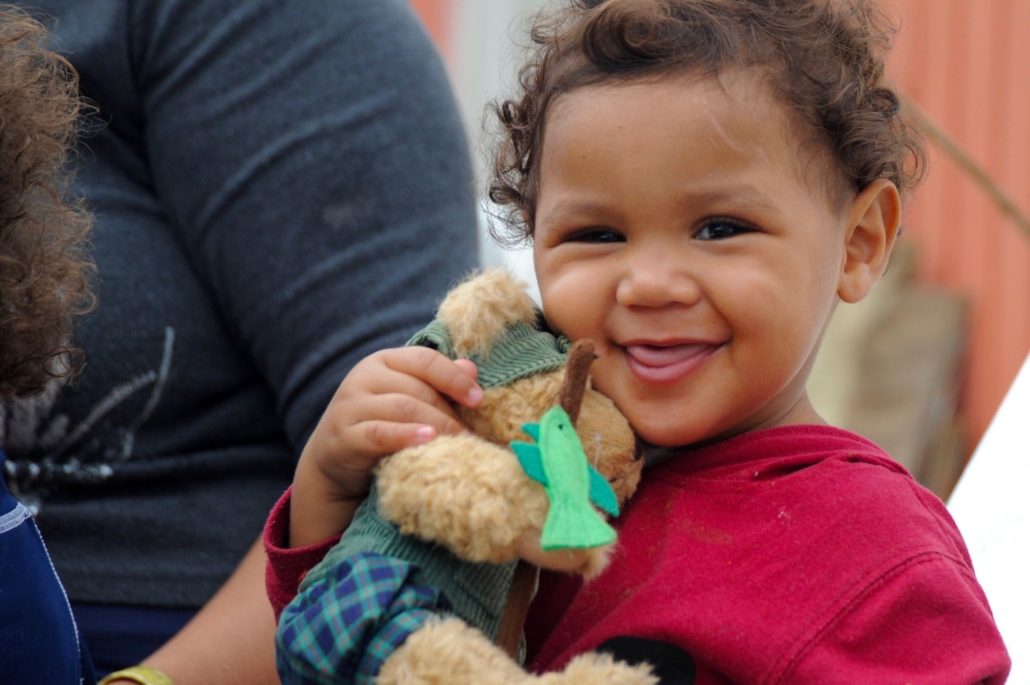
Mental health is at the forefront with many other illnesses and disabilities. It can in many ways be just as dangerous if not more dangerous than physical disabilities or illnesses if it does not receive treatment. Mental health issues do not only affect the individual suffering from the illness but also the family and loved ones around. Many countries experience high levels of mental illness in all of its extremities. Mental health in Puerto Rico has become a serious conversation among the island’s people.
Mental Health in Puerto Rico
A study published in April 2019, determined the ongoing mental health impact that Hurricane Maria had on the island’s children. Much of the talk about mental health on the island is closely related to the storm. Researchers from the Puerto Rico Department of Education and the Medical University of South Carolina collaborated to study and examine the storm’s effects on the people’s well-being. A significant amount of public school students ranging from third grade to twelfth grade and lived through the storm participated in the study. About 7.2 percent of them showed clinical symptoms of PTSD.
Many regard the mental state of a country’s youth as crucial. For this reason, a group of volunteers from Fundacion Pro Ayuda de Puerto Rico or the Puerto Rico Help Foundation allied with Departamento de la Familia (Family Department) and started a project in 1997. The project’s name was Hogar Santa Maria de Los Angeles or Santa Maria de Los Angeles House.
Fundacion Santa Maria de Los Angeles (FSMA)
The Foundation’s original purpose was to give housing to young pregnant girls who lacked family support and socioeconomic resources. The name of the organization later changed to Fundacion Santa Maria de Los Angeles (FSMA). It reflects that the organization intends to provide help and care as a nonprofit organization and not just by providing housing.
FSMA benefits from donations that private organizations and the government of Puerto Rico make. It also receives individual or personal donations. Throughout the years, FSMA has adjusted to the times and necessities of youth. It offers new services to new communities with at-risk kids. It is one of the most trusted centers with the most complete help, prevention, training and therapy programs on the island.
FSMA’s Success
One of the greatest achievements that the Foundation has had is the decrease of teenage pregnancies at three schools in San Juan. Executive Director, Jose A Benitez-Gorbea states that “these three schools had an average of six pregnancies per year.” The organization made a module for every school semester centered on safe sex.
FSMA taught about protection, the risks and consequences of actions. The three schools began to have positive results and attained the goal of complete eradication of teenage pregnancies. The seminars also encouraged pregnant adolescents and motivated many away from depression. Today, none of the schools that participated in the Foundation’s program have a single occurrence of teenage pregnancy.
In the year 2018, FSMA helped 9,800 people that hurricanes Irma and Maria affected. It also provided aid to 500 people a month through its seminars. Its goal is to create a better standard of life for all and awareness of mental health throughout Puerto Rico.
FSMA’s Services
There is a necessity to create awareness regarding mental health in Puerto Rico. Some communities are vulnerable to mental illnesses because they do not have the resources to pay for medical services and psychological therapy. FSMA’s mission is to help and offer a safe place with room and board. It provides “food, objects of primary necessity, medical and psychological assistance and love,” said Jose A Benitez Gorbea.
Schools, public housing and other communities hold seminars on prevention and education on subjects that affect today’s youth. The subject matters that the seminars cover include bullying, suicide, depression, anxiety, self-esteem, self-care, responsible sex, management of emotions and how to maintain a healthy social life among others.
FSMA’s Team
The team includes a group of professionals dedicated to mental health. Two psychologists are responsible for clinical supervision and the coordination of the other positions. There is also one social worker in charge of the records who also helps with crisis intervention. FSMA collaborates with the Universidades Interamericana and Carlos Albizu of San Juan. There is a training clinic center where 15 students from these universities do their clinical practice to obtain their doctorates. Theses students offer seminars and work every day with patients in therapy.
In the administrative sector, there is an executive director, an assistant administrator and a service helper. “There is also a huge help which also comes from fifteen volunteers. Eleven belong to the union of directors and four are individual volunteers. These volunteers are in charge of making fundraising activities possible,” said Jose A Benitez-Gorbea.
The Future
FSMA is one of many organizations that is aware of the importance of mental health in Puerto Rico. It began assisting the physical, emotional and psychological needs of pregnant adolescents over 20 years ago. Today, it continues to provide support and care. FSMA eradicates teenage pregnancies in lower-income public schools in San Juan. It also facilitates the improvement of the emotional and psychological conditions of many kids. FSMA puts a stop to suicide, mutilation and risky behavior. The Foundation supports encourages and influences the island’s youth. FSMA believes that the youth of the country relies on the future.
– Francisco Benitez
Photo: Flickr
Eradicating Polio in Developing Countries
People often think of polio as a disease of the past; but for many in Pakistan, Afghanistan and Nigeria, it is still a very real threat. Poliomyelitis, more commonly known as Polio, is an infectious disease that can result in base level symptoms similar to the flu, or on the more extreme end, it can invade an individual’s spinal cord or brain causing paralysis. Paralysis is the symptom people most commonly associate with Polio because of how deadly it can be. As the disease progresses slowly, the individual eventually loses function across their body and requires outside assistance to do even the most basic task of breathing. Without medical assistance, the individual will asphyxiate. Here is some information about eradicating Polio in developing countries.
Eliminating Polio
Vaccination is the only way to eradicate Polio. Children’s bodies become prepared to fight the disease more effectively with vaccination. Almost all children or 99 out of 100 will have protection from Polio as long as they receive all recommended courses of the vaccination.
However, sanitation also plays a key role in preventing the spread of Polio in the interim. The virus lives in individuals’ throats and intestines, so open sewage systems can leave a community more vulnerable to the spreading virus. The virus can thrive in feces for weeks before dying, leaving plenty of opportunities for people to come into contact with the virus and spread it.
Eradicating Polio is highly dependent on herd immunization, so it is integral that mass vaccination initiatives go to all corners of a country. By immunizing everyone who can take the vaccine, the risk of the disease spreading and those unable to take the vaccine contracting it reduces.
The Reasons Polio Still Exists in Pakistan, Afghanistan and Nigeria
Though there have been major advancements in eradicating Polio in Pakistan, Afghanistan and Nigeria, they still remain vulnerable due to the fear that the vaccine may cause fainting spells and death in children, which are false claims. Additionally, open sewage systems in rural areas and the difficulty to dispense full courses of vaccination to individuals in rural areas play a role in the continued life of Polio.
There is also the issue of spreading. In Afghanistan and Pakistan, the majority of new cases of Polio are often in the tribal areas surrounding the shared border of the two countries. The unchecked border often has people traveling back and forth so they are hard to pin down to receive their full course of vaccinations. This also allows for the virus to spread faster and makes it more difficult to isolate the infected.
Nigeria is doing relatively well with the fight towards eradicating Polio. The country no longer has an active outbreak, but it is at high risk of having an outbreak. This is due to active initiatives within the country to assure widespread vaccination and hygiene education to prevent the spread of the virus.
Mutations
Another massive issue these countries and doctors are having with eradicating Polio is that the virus is mutating. In June 2017, there were 21 cases of vaccine-derived Polio in the world. This has been caused by remnants of the oral vaccine getting loose in the environment where it is regaining strength and infecting people. The oral vaccine is from a weak form of the Poliovirus that allows the recipient’s immune system to fight off the virus and become more adept at fighting the active virus if it ever enters their body.
Many also consider the mutated and strengthened strain of the vaccine-derived disease to be more deadly as it has a higher risk of causing paralysis in those infected.
Solutions
The organization, Global Polio Eradication Initiative, is a public-private partnership working in tandem with national governments and private partners including the World Health Organization (WHO), Rotary International, the U.S. Centers for Disease Control and Prevention (CDC), the United Nations Children’s Fund (UNICEF) and the Bill & Melinda Gates Foundation. Together, they are attempting to roll out vaccines and education programs to aid in eradicating Polio internationally. The organization works with 200 countries and 20 million volunteers to ensure that everyone has the opportunity to live a life free of the pain Polio brings upon individuals and communities.
As of 2019, it has vaccinated over 2.5 billion children, and the number is only growing. This is an incredibly important program, as the alleviation of the threat of infection for every reduces the stress on government health programs. There is also a reduction in the personal and financial burden of contracting and surviving Polio from the shoulders of millions of families.
Through vigilant vaccination distribution and educational programs, the hope is that in the near future, people will be able to live in a world free from the crippling implications of the Poliovirus.
– Emma Hodge
Photo: Flickr
8 Facts About Education in Uganda
Uganda has seen significant improvements in enrollment of children in primary school over the years. As one of the youngest countries in the world with one of the fastest-growing populations, the country must work even harder to continuously improve education as a means to ensure the productivity of its increasing youth population and help reduce poverty levels. Below are eight facts about education in Uganda that show where the country stands and what more it can do to improve.
8 Facts About Education in Uganda
These eight facts about education in Uganda highlight the urgent need to ensure that education in Uganda continues to improve in terms of both quality and access. The government’s and other humanitarian organizations’ efforts will help Uganda reduce poverty as well as significantly improve the lives of its citizens.
– Sophia Wanyonyi
Photo: Wikimedia Commons
Examining Mental Health in Puerto Rico
Mental health is at the forefront with many other illnesses and disabilities. It can in many ways be just as dangerous if not more dangerous than physical disabilities or illnesses if it does not receive treatment. Mental health issues do not only affect the individual suffering from the illness but also the family and loved ones around. Many countries experience high levels of mental illness in all of its extremities. Mental health in Puerto Rico has become a serious conversation among the island’s people.
Mental Health in Puerto Rico
A study published in April 2019, determined the ongoing mental health impact that Hurricane Maria had on the island’s children. Much of the talk about mental health on the island is closely related to the storm. Researchers from the Puerto Rico Department of Education and the Medical University of South Carolina collaborated to study and examine the storm’s effects on the people’s well-being. A significant amount of public school students ranging from third grade to twelfth grade and lived through the storm participated in the study. About 7.2 percent of them showed clinical symptoms of PTSD.
Many regard the mental state of a country’s youth as crucial. For this reason, a group of volunteers from Fundacion Pro Ayuda de Puerto Rico or the Puerto Rico Help Foundation allied with Departamento de la Familia (Family Department) and started a project in 1997. The project’s name was Hogar Santa Maria de Los Angeles or Santa Maria de Los Angeles House.
Fundacion Santa Maria de Los Angeles (FSMA)
The Foundation’s original purpose was to give housing to young pregnant girls who lacked family support and socioeconomic resources. The name of the organization later changed to Fundacion Santa Maria de Los Angeles (FSMA). It reflects that the organization intends to provide help and care as a nonprofit organization and not just by providing housing.
FSMA benefits from donations that private organizations and the government of Puerto Rico make. It also receives individual or personal donations. Throughout the years, FSMA has adjusted to the times and necessities of youth. It offers new services to new communities with at-risk kids. It is one of the most trusted centers with the most complete help, prevention, training and therapy programs on the island.
FSMA’s Success
One of the greatest achievements that the Foundation has had is the decrease of teenage pregnancies at three schools in San Juan. Executive Director, Jose A Benitez-Gorbea states that “these three schools had an average of six pregnancies per year.” The organization made a module for every school semester centered on safe sex.
FSMA taught about protection, the risks and consequences of actions. The three schools began to have positive results and attained the goal of complete eradication of teenage pregnancies. The seminars also encouraged pregnant adolescents and motivated many away from depression. Today, none of the schools that participated in the Foundation’s program have a single occurrence of teenage pregnancy.
In the year 2018, FSMA helped 9,800 people that hurricanes Irma and Maria affected. It also provided aid to 500 people a month through its seminars. Its goal is to create a better standard of life for all and awareness of mental health throughout Puerto Rico.
FSMA’s Services
There is a necessity to create awareness regarding mental health in Puerto Rico. Some communities are vulnerable to mental illnesses because they do not have the resources to pay for medical services and psychological therapy. FSMA’s mission is to help and offer a safe place with room and board. It provides “food, objects of primary necessity, medical and psychological assistance and love,” said Jose A Benitez Gorbea.
Schools, public housing and other communities hold seminars on prevention and education on subjects that affect today’s youth. The subject matters that the seminars cover include bullying, suicide, depression, anxiety, self-esteem, self-care, responsible sex, management of emotions and how to maintain a healthy social life among others.
FSMA’s Team
The team includes a group of professionals dedicated to mental health. Two psychologists are responsible for clinical supervision and the coordination of the other positions. There is also one social worker in charge of the records who also helps with crisis intervention. FSMA collaborates with the Universidades Interamericana and Carlos Albizu of San Juan. There is a training clinic center where 15 students from these universities do their clinical practice to obtain their doctorates. Theses students offer seminars and work every day with patients in therapy.
In the administrative sector, there is an executive director, an assistant administrator and a service helper. “There is also a huge help which also comes from fifteen volunteers. Eleven belong to the union of directors and four are individual volunteers. These volunteers are in charge of making fundraising activities possible,” said Jose A Benitez-Gorbea.
The Future
FSMA is one of many organizations that is aware of the importance of mental health in Puerto Rico. It began assisting the physical, emotional and psychological needs of pregnant adolescents over 20 years ago. Today, it continues to provide support and care. FSMA eradicates teenage pregnancies in lower-income public schools in San Juan. It also facilitates the improvement of the emotional and psychological conditions of many kids. FSMA puts a stop to suicide, mutilation and risky behavior. The Foundation supports encourages and influences the island’s youth. FSMA believes that the youth of the country relies on the future.
– Francisco Benitez
Photo: Flickr
10 Facts About Girls’ Education in Malaysia
There is a jarring gender gap within Malaysia’s workplace despite the fact that there are more women than men in higher education institutions in the country. Girls are also more successful in primary school than secondary school because of teaching tactics and gender stereotyping they encounter in schools. Below are 10 facts about girls’ education in Malaysia.
10 Facts About Girls Education in Malaysia
Literacy Rate: The literacy rate between boys and girls is unequal. Malaysia measures its literacy rate by how many people over the age of 15 can read and write. The population’s literacy rate is 94 percent. Meanwhile, it is 96.2 percent among boys and 93.2 percent among girls.
The Women’s Aid Organization (WAO): The Women’s Aid Organisation in Malaysia advocates for gender equality and provides refuge for domestic abuse victims. It emerged in 1982 and works to raise awareness in order to increase Malaysia’s understanding and respect for women. The WAO has reached over 3,000 women and has provided 154 women and children refuge in 2018. It understands that education is important and at its shelters, it provides educational programs for children as well as lessons about domestic abuse.
Gender Stereotyping: Malaysia is reviewing its current textbooks from gender equality yielding perspective. A social media post in 2018 triggered this by bringing attention to gender stereotyping within Malaysian textbooks in elementary schools. The textbooks taught girls how to be wives, weave and sow. Malaysia is now trying to ensure boys and girls do not have stereotyped life roles.
Gender Parity in Secondary Education: Based on data from the EFA Global Monitoring Report in 2008, Malaysia will likely not achieve total gender parity for enrollment in secondary education in Malaysia by 2015 or 2025 based on past trends. This report also determined that there are more boys enrolled in secondary education than girls, however, the drop out rate is higher for boys. This information stands true today.
Girls Education Improvements: Still, there have been improvements. In 1957, only 33 percent of girls enrolled in secondary school, but in 2018, girls’ enrollment rose to 75 percent. Both society and education institutions changed their attitudes about whether girls should receive education or not, which influenced this increase. It is no longer as unusual for girls to seek an education to gain a career, so schools started changing the curriculum to include girls.
Likelihood of Dropping Out: According to an Organisation for Economic Cooperation and Development report in 2015, boys are three times more likely to drop out after secondary school than girls. Many dropouts come from impoverished families because boys receive encouragement to do manual labor jobs so they can make money at a young age. Meanwhile, girls are more likely to go to higher education institutions than boys.
Gender Disparity at University: The only Malaysian public university with extreme gender disparity against women is the National Defense University of Malaysia. Thirty percent of those attending the university are female because Malaysians do not typically see jobs within the uniformed forces as suitable for women. The uniformed forces, which include the military, police and fire and rescue forces, reported that 10 percent of the military are women. Additionally, the percentage of female cops in high ranking officer positions rose from 59 percent (2012) to 74 percent (2016) because the country is gradually finding it more acceptable for women to work these jobs.
Merit Rather than Discrimination: In Malaysia, colleges choose applicants based on merit and women do not receive any discrimination. The gender gap within STEM fields seems to be based on gender stereotyping within society. Malaysian society has often thought that girls should be mothers and wives, and until recent years, that was what many expected. This, in turn, caused a lack of interest among women and girls to seek out education.
Absence of Women in Leadership Positions: Women make up 62 percent of the total enrollment in higher education institutions. However, women are still absent from many leadership, business labor market or decision-making positions. MiWEPs, a nonprofit that works with Malaysian Indian women from three categories including employed women of blue or white-collar professions, self-employed or entrepreneurs, advocates for and helps women to be in manager, Board of Director and C-suite positions.
Policies to Increase Girls Participation in STEM Education: The Malaysian government has placed STEM education as a focus in the process of becoming a developed nation. It acknowledges the role of women and has formulated policies such as the Malaysia Woman Policy in 2009 and the National Policy on Science, Technology, & Innovation in 2013-2020. These policies have increased women researchers form 35.8 percent in 2004 to 49.9 percent in 2012.
These 10 facts about girls’ education in Malaysia show that women are taking over universities and higher education institutions, but secondary school girls are still struggling with gender bias. Government policies veered towards economic education, women’s welfare and STEM fields are leading Malaysia to have more gender equality and women in leadership positions.
– Taylor Pittman
Photo: Flickr
Poverty in Big Data
Cell Phone Data
Satellite Imagery
Civil unrest and harsh conditions can make it dangerous to gather data on poverty in some regions. These factors can disincentive data collection and cause years of gaps in survey data. A new remote method of analyzing public data on physical regions has helped demystify treacherous terrain. Satellite images of the Earth’s terrain, also known as Earth observations, display signals of wealth in a region. By measuring the luminosity of man-made light at night, researchers can make estimates of the economic status of an area. A proven correlation between illuminated areas, electric power consumption, and a country’s GDP justify these estimates. This is a fast and efficient method of obtaining data from a country that has seen natural disasters or civil war.
Social Media
The digital footprint of social media users, or lack thereof, can be useful in estimating data on the development of areas. According to the Pew Research Center, 53 percent of those in emerging nations use social media. Internet use correlates with the GDP per capita of a country, so the rising numbers of users are promising. However, sub-Saharan Africa and India are falling behind the rest of the world.
– Nicholas Pirhalla
Photo: Flickr
The Link Between Drug Trafficking and Poverty
People who live in low-income communities often face different types of challenges than those who live in more comfortable economic situations. People who live in poverty-stricken areas often do not have access to proper education, clean running water, shelter, food or health care. Along with the lack of basic humanitarian needs is the instability of life and income. All of these factors come together into the complex relationship between drug trafficking and poverty.
El Chapo
Those who live in poverty may be in vulnerable situations that lead to their participation in the drug trade. Some examples have proven that exposure to drugs and drug trafficking can influence adolescents into doing and selling drugs. Lastly, the fact that these people do not have a stable form of income also leads them to drug trafficking because of the fast and vast amounts of money that can come from selling drugs.
Joaquín Archivaldo Guzmán, also known as El Chapo, is one of the world’s biggest drug lords. American actor Sean Penn was pictured with Guzmán in 2016 when they sat down for a seven-hour-long meeting. Even though Penn’s intention was to start a conversation about the war on drugs, he actually discovered the impact that Guzmán’s drug trafficking activities had on his community and personal life.
Raised in a very humble and very poor Mexican family, Guzmán grew up on a ranch called La Tuna that offered no job opportunities. The only way his family was able to survive and have food on the table was because of the growth and sale of marijuana.
Guzmán acknowledged the way that drugs ruin human lives in the sense that poverty pushes individuals into the drug trade, but it does not stop there. This destruction consists of violence and conflict, which adds on to this vicious cycle of people falling into the drug trade in exchange for money to live. Writer for the Guardian, Nick Croft, said that “poor development fuels conflict, which fuels the drug trade, which fuels conflict, which fuels poverty.”
The Unexpected Outcome
When a person has no way to make money to maintain themself or their family, drug trafficking can often seem like the fastest and easiest way to make up for those financial losses. It is interesting to see the way that Guzmán’s drug trafficking activities actually helped his town rather than tainting it. His drug deals offered many people in the area job opportunities that were not present before. It also created a safe environment for those living nearby because of the massive power Guzmán had in the drug community. Everyone had a sense of stability because of the illegal trade activity that was going on around them, and it is this paradox that highlights the complexity behind the relationship between poverty and drug trafficking.
These people who have nothing, and often do not receive anything to help themselves, increasingly must choose between two lives. One is a life full of hard work with little to no returns of money, leading to a lack of education, water and food. Meanwhile, the second is a life of illegal activity that could possibly shed light on the daily hardships that those in impoverished areas face.
What the Research Says
A study by Joshua Okundaye, Drug trafficking and addiction among low-income urban youths: An ecological perspective, provides an analysis of drug use, drug trafficking and drug addiction among low-income youths living in urban areas.
It demonstrates the way that people living in poverty can be more vulnerable to drug-related situations because of the interactions within the microsystems and mesosystems they live in. Microsystems refer to “the family, the classroom, the neighborhood, the community center and the playground” while mesosystems are the “interrelationships between two or more of the microsystems.”
By looking at drug trafficking through this ecological perspective, one can see the way that this relationship is all about the point in which “independent systems or groups meet and interact.” It is exactly this point that differentiates socioeconomic groups. Those living in areas where poverty levels are higher are more prone to becoming involved in drug dealing than those who live in more privileged areas.
The finding of this study is that after evaluating the young people studied and the facts, drug trafficking is the main source of behavioral issues. With the elements of parental drug use, communication with local dealers, the number of times people ask young people to participate, age and the actual size of the person, drug trafficking becomes a key component in poverty.
The relationship between drug trafficking and poverty is very complex in the sense that it puts families and individuals in positions where they have to choose between life or death. In this case, life is the sense that one can either remain in their impoverished life while death is where if they do not take on this illegal activity, they will die with the few resources they have.
– Isabella Gonzalez Montilla
Photo: Flickr
7 Facts About the Rising Genocide in Ethiopia
Over 3 million people have had to move due to ethnically motivated attacks. Some people have burned churches and there have been many recent deaths in ethnic-based conflicts. If these conflicts do not stop soon, a horrific genocide in Ethiopia could ensue. Here are some facts about the rising genocide in Ethiopia.
7 Facts About the Rising Genocide in Ethiopia
While a full-blown genocide has thankfully not occurred in Ethiopia yet, genocide in Ethiopia is certainly a looming possibility. If the Ethiopian government is able to defuse the conflicts and figure out how to handle them, these conflicts might be able to resolve without outside interference.
– Emily Oomen
Photo: Flickr
10 Facts About the United State’s Southern Border
The border between the United States and Mexico is the second-largest border in the world, spanning about 2,000 miles long. The fences have made it harder to cross but Mexico has been the driving force of U.S. immigration control and has deterred hundreds of thousands of Central Americans from traveling north of the border. Despite the recent headlines surrounding the border dividing the U.S. and Mexico, many people do not have much knowledge about the topic. Here are 10 facts about the United State’s southern border.
10 Facts About the United State’s Southern Border
These 10 facts about the United State’s southern border have shown that cutting off aid to the countries of Central America, closing the U.S.-Mexico border and increasing family apprehensions and separations are not going to make the issues circling the border disappear. However, people are doing work on all sides, from Mexico’s government to the CDC and Customs Border Protection officers, in an effort to improve the structure, avoid chaos and move forward with the progress at the southern border.
– Na’Keevia Brown
Photo: Flickr
8 Facts About Breast Cancer
8 Facts About Breast Cancer
NGOs Helping
The disease has taken many lives and is still the most common cancer in women and in developing countries. However, there are organizations dedicated to stopping the disease for good. The Susan G. Komen foundation is the leading breast cancer organization in the world that is currently using their donations toward research and education for all women with breast cancer. Another example is The Young Survival Coalition, an organization that focuses on treating women under 40 who develop the disease. It uses the donations toward research and life improvement for women who have it and who survived it. All these facts point towards a bright future for the fight against breast cancer.
– Reese Furlow
Photo: Pixabay
Facts about Heart Disease in the Caribbean
Factors Contributing to Heart Disease
There are several risk factors that contribute to heart disease. According to the World Health Organization, reducing salt intake, reducing alcohol intake, avoiding tobacco, eating fruits and vegetables and getting physically active consistently can reduce cardiovascular disease. Low-income families are at risk because of a lack of proper health-care. The WHO stated that opportunities for early intervention are often missed because primary health care programs aren’t always available to low-income families. Late detections of cardiovascular diseases more often than not mean early deaths.
The Financial Impact of Cardiovascular Disease on Families
Caring for someone with cardiovascular disease can be time and energy-consuming, and without sufficient healthcare, paying for the bills out of pocket heavily impacts families. According to the WHO, cardiovascular diseases further contribute to poverty. According to a Harvard study, by 2020 the Global cost of Heart Diseases will rise by 22 percent. The current global cost of cardiovascular diseases is $863 billion. As cardiovascular diseases rise countries must spend money on screening, primary and secondary prevention, hospital care, and lost productivity due to premature deaths.
Jamaica and Barbados Hit by The Risk of Heart Disease
Countries like Barbados and Jamaica demonstrate that heart disease in the Caribbean is becoming more prevalent. In 2015 Barbados reported spending $64 million treating cardiovascular diseases and diabetes, and an economic loss of $145 million dollars. Surveys done in schools in Barbados found that 18 percent of students eat fast food more than twice a week and nearly three-quarters of students drink soda more than once a day.
Jamaica is also experiencing an alarming rise in cardiovascular-related diseases. In early 2018, a report found that in 2017 30,000 children in Jamaica between the ages of 10 and 19 had been diagnosed with hypertension. In Trinidad and Tobago, the situation is similar to one out of every four deaths being caused by a noncommunicable disease with heart disease as the leading cause.
The Reason Behind Cardiovascular Disease
The rise in heart disease in the Caribbean over the years is concerning. In Barbados, Sir Trevor Hassell, the President of the Healthy Caribbean Coalition believes that an increase in processed foods and a decrease in “locally grown indigenous staples” are to blame. The director of George Alleyne Chronic Disease Research Centre at the University of the West Indies (UWI) Cave Hill, Barbados, Professor Alafia Samuels said, “We do not eat the way our grandmothers used to eat. In the Caribbean, we have been importing more and more food and some of the main things that we are importing are the things that are leading to some of the challenges.”
Looking to the Future
Despite these harrowing statistics, there is hope. Expansive efforts to tackle cardiovascular disease in the Caribbean have been taken. In 2017 The Healthy Caribbean Coalition enacted the Civil Society Action Plan 2017-2021: Preventing Childhood Obesity in the Caribbean.The plan aims to bring the rising trend of obesity to a complete 360-turn by 2025. By collaborating with governments, civil society organizations, and other international partners, the HCC will tackle childhood obesity on a number of different levels. Some of the HCC’s top priorities are Trade and fiscal policies, nutrition literacy, early childhood nutrition, marketing of healthy and unhealthy foods and beverages to children, school-and-community based interventions, and resource mobilization. Upon providing assistance and education to the citizens and their governments alike, the HCC will positively impact the health conditions of the people in the Caribbean.
– Desiree Nestor
Photo: Flickr
“The Borgen Project is an incredible nonprofit organization that is addressing poverty and hunger and working towards ending them.”
-The Huffington Post
Inside The Borgen Project
International Links
Get Smarter
Ways to Help