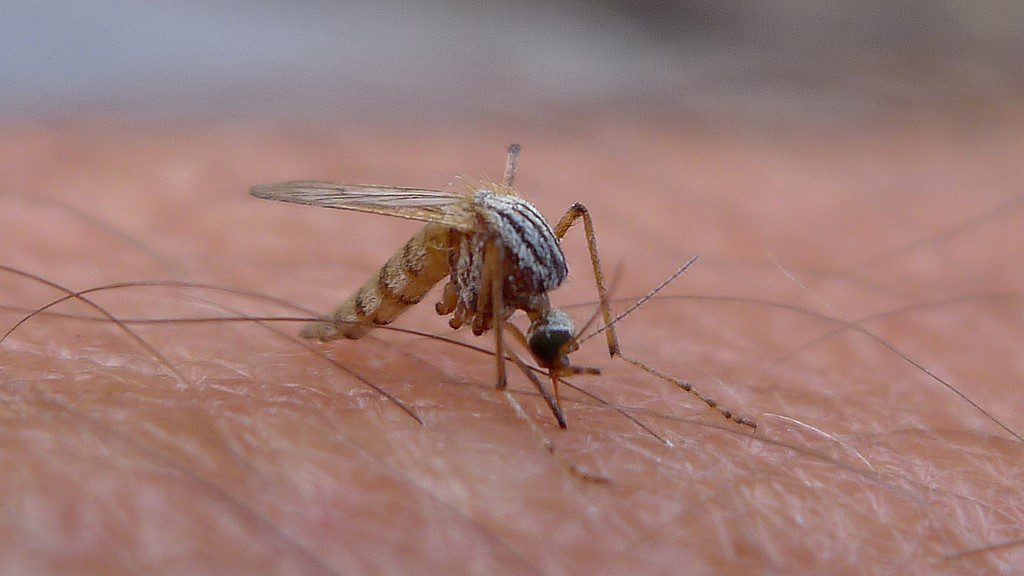
Diseases transmitted by mosquitoes, including malaria and the Zika virus, abound in hotter, more humid countries and regions including Mexico, Central and South America, the Caribbean and tropical areas of Southeast Asia, Oceania and Africa. Whereas malaria has many symptoms like high fever, diarrhea, nausea and sweating, the Zika virus is not as easily detectable. Its symptoms are milder, and this includes rashes, itching, high fever and muscle pain. Accordingly, the organization Our Health reduces mosquito-borne illnesses in Honduras through numerous efforts.
The Ways that Our Health Reduces Mosquito-Borne Illnesses
Our Health is a project that Global Communities runs and the United States Agency for International Development (USAID) funds. It works with the Honduran Ministry of Health (SESAL). There are two parts to Our Health, which focuses on strengthening communities and improving education.
The goals of the first part are to increase the number of response activities in Honduran communities to prevent Zika transmission and to improve the communication of said activities. This focus is on the poor, urban areas of Honduras, including Tegucigalpa, San Pedro Sula, Choloma, La Lima and Villanueva. At the moment, Our Health has 36 health establishments and 360 communities to help prevent the spread of the Zika virus. However, being successful in promoting the power of communities means it must have a way to implement this community-based solution. Its implementation phase takes an estimated three years with the first phase taking one year. The first phase fosters community-led responses to Zika outbreaks and building up communities in general. The second phase takes the remaining two years. This phase continues to strengthen the relationships from the first phase, organizing the community, allocating responsibilities and promoting positive behavior.
The second part of Our Health focuses on three aspects:
- Education
- Working with the Honduran Ministry of Education and the Ministry of Health
- Improve understanding of these diseases including how they spread and how people can prevent them
Our Health reduces mosquito-borne illnesses by educating children to bring awareness to their families. The children can teach their families what they have learned. This does not have a predicted time period but has already started in 76 educational centers in Honduras, benefiting 29,000 kids and 1,230 teachers. The program provides teachers with virtual training and teaching materials to prevent the transmission and spread of Zika. This also supports the first part of Our Health in promoting community participation. Moreover, fifth and sixth graders receive education on how to prevent disease through a number of activities including theater, poetry, singing and drawing, as well as creating models to show their own knowledge about the Zika virus. The teachers firmly believe that addressing Zika in the classroom and spreading the knowledge to homes and communities is vital.
General Solution to Malaria
The Honduran Ministry of Health recently received a donation of more than 12 million lempiras (around $487,899 USD) in Hudson pumps, deltamethrin and bendiocarb (insecticides) and mosquito nets treated with long-lasting insecticide. People also know this as MTILD. It is using this donation to fight Anopheles and Aedes mosquitoes which spread the Zika virus. MTILD use in vector control strategies and are effective in preventing malaria.
The Ministry of Health implemented these methods in Gracias a Dios and Islas de la Bahía. In addition, the Ministry of Health installs the insecticide-filled pumps in each home. This helps spray the homes on a bi-yearly basis and keeps mosquitoes away. In 2018, two spray cycles sprayed around 50,000 homes. As a result, this helped 303,467 people. Furthermore, in 2019, it expected to spray around 60,000 double-cycle homes. This protected an additional 218,959 people. For 2020, the biyearly spray might increase by 62,050 and with an additional 116,872 mosquito nets installed. As for cases of malaria, as of 2017, 1,287 people received treatment against malaria. In 2018, there were 651 cases. Additionally, the project hopes to lower it to zero cases in 2020.
Honduras’s Health Surveillance Unit works towards controlling malaria in the country. Over the past three years, malaria cases have been lower than 56 percent in the six biggest departments of Honduras. It works together with communities to address malaria Also, Honduras’s Health Surveillance Unit monitors the areas with surveillance, increases their coverage and secures treatment for victims.
– Nyssa Jordan
Photo: Flickr
10 facts about sanitation in Nigeria
In November 2018, Nigeria’s President Mohammadu Buhari declared a state of emergency in the country’s WASH (water, sanitation and hygiene) sector. Sub-Saharan Africa ranks as having the most limited access to clean water and sanitation and the region is most significantly influenced by the situation in Nigeria. These 10 facts about sanitation in Nigeria explore the impact of poor living conditions and the current efforts it is making to improve WASH conditions.
10 Facts About Sanitation in Nigeria
Improving sanitation in Nigeria is crucial to making progress in health and allowing for economic development. These 10 facts about sanitation in Nigeria illustrate the severity of the current situation and the many ways in which progress is possible. While access to WASH services in Nigeria has decreased since 1990, new technologies and projects such as the WET toilet and CLTS are working towards improving sanitation in Nigeria. Despite the political instability in Nigeria, the National Action Plan that the government launched shows initiative and potential for stronger political action toward universal access. Educating and engaging the communities themselves can influence change and encourage governmental action.
– Maia Cullen
Photo: UNICEF
The Nobel Prize and Anti-Poverty Efforts
The Nobel Prize is an international award that many people recognize and shares its name with Alfred Nobel, innovator and inventor of dynamite, among other things. Somewhat ironically, the Peace Prize given in his name holds the most prestige of nearly any accolade an individual can receive in his or her lifetime, but only constitutes one of the fields in which the committee can award a Nobel Prize. The others, physics, chemistry, medicine, literature and economic sciences, celebrate specific advancements or landmarks in their respective disciplines. The Nobel Prize and anti-poverty efforts have more in common than one might think. The Nobel Memorial Prize in Economic Sciences emerged in 1968, making it the newest of the prizes, but nonetheless important. The 2019 edition went to a trio of Boston, Massachusetts-based economists, two from the Massachusetts Institute of Technology and one from Harvard University, two highly acclaimed and respected academic institutions with cutting edge research capabilities in multiple fields. Abhijit Banerjee, Esther Duflo and Michael Kremer deservingly received the Nobel Memorial Prize in Economic Sciences for their experimental approach in alleviating global poverty, closely tying the 2019 Nobel Prize and anti-poverty efforts.
Groundbreaking Statistics
Banerjee, Duflo and Kremer form past and present leadership of the Abdul Latif Jameel Poverty Action Lab (J-PAL), a global research center with the goal of reducing poverty by advocating policy formation on the basis of scientific evidence. Beginning in 2003, J-PAL works with governments and non-government organizations to identify and carry out interventions where its data analysis deems them most effective. Using randomized control trials (RCTs) similar to ones used in medical fields as the core of its evaluation, its methods have become widely accepted by the global economic policy community. Over the course of the last 20 years, J-PAL linked 986 randomized evaluations across its affiliates in 83 countries to understand if interventions work or not and allow the numerous social sector organizations who use them to adjust policies and practices accordingly. These interventions focus on a wide variety of issues, such as education deficiency and child health. Its studies can have a profound impact, as over five million Indian children received tutoring as a result of one of the studies, the foundation of its Nobel Prize and anti-poverty efforts.
Economic Masterminds
The Royal Swedish Academy of Sciences attributes its efforts as integral to the evolution of development economics into a flourishing field. The academy, which annually awards each prize, notably made Duflo the youngest economic laureate in its history and only the second woman to receive the prize, making 2020’s Nobel Prize and anti-poverty efforts that much more significant. Just as a landmark, the committee deemed J-PAL’s focus on real-world solutions with economic applications extraordinary, whereas previous awards in the field of Economic Sciences boasted theoretical achievements. Rather than focusing on improving the developing world as a whole through economic theory or answers to macroeconomic questions, J-PAL addresses need at a localized level and introduces practical solutions to tangible problems. Beyond the tutoring in India example, J-PAL tested how eradicating parasitic worms affected school attendance among children, the placement of additional teachers in a classroom or monitoring teachers’ attendance with cameras, how access to bank or microfinance loans can improve living standards and even how voting behavior varies depending on specific appeals made by candidates in an election campaign.
J-PAL vs the World
However, despite objective advancements based on RCTs, people should not view them as unmitigated successes, argues Sanjay Reddy of Foreign Policy Magazine. He notes that these Randomized Control Trials promised to assess whether people benefitted from a change in circumstances simply because they had the motivation or better positioning to fare better from it. In reality, he says, one cannot tell whether these projects or initiatives worked because people took advantage of them or because they just work, though the link between these recipients of the 2019 Nobel Prize and anti-poverty efforts is undeniable.
Reddy’s analysis may seem like splitting hairs, especially against the background of the broader perspective J-PAL’s studies bring. Karla Hoff of the Brookings Institute praises the Nobel Prize and anti-poverty efforts that J-PAL has undertaken for a fundamental shift in the culture of development economics and economic as a whole. In addition to directly helping people most in need, the nonprofit challenged deep assumptions about individuals and the decisions they make, questioning the essence of economic development. It altered many things about the field, including the ways, places and kinds of people economists work with.
– Alex Myers
Photo: Flickr
The Life of Father Lee Tae Seok
South Sudan is one of the most poverty-ridden countries in the world. British explorer Samuel Baker originally established it as a colony named Equatoria in 1870, but the colony later joined with Sudan, which was another former British colony, in 1947. When the Arab Khartoum government, a reigning government at the time, did not grant political participation to the southern populace, the country plunged into two bloody civil wars. The first civil war lasted from 1955 to 1972, and the second civil war lasted from 1983 to 2005. During both of the civil wars, an estimated 2.5 million people died. Most of the casualties were civilians who died from starvation and drought. After numerous peace talks, South Sudan declared independence in July 2011.
Even after independence, armed conflicts between the South Sudanese government and the opposition forces riddled South Sudan. Currently, there is a peace agreement between the South Sudanese government and the opposition forces to create a transitional government by February 2020. This is the country where Father Lee Tae Seok, nicknamed “the Schweitzer of Sudan” found his calling.
Who is Father Lee Tae Seok?
Father Lee Tae Seok was born in 1962 in Busan, South Korea. After losing his father at the age of 9, Fr. Lee’s mother supported the family by working as a seamstress in a market in Busan. After graduating from medical school in 1987, Fr. Lee worked as an army medical surgeon until 1990. In 1991, he entered a Salesian seminary, and after becoming a priest in June 2001, he went to South Sudan as a deacon in November 2001. Here, Fr. Lee saw the harsh reality of South Sudan. The sight of lepers and Hansen’s disease patients made a deep mark on his memory. Fr. Lee’s fellow missionaries reported that the sight he witnessed overcame him to the point where he had to run into a bush. After his ordination in June 2001, Fr. Lee returned to South Sudan.
Father Lee’s Contributions to South Sudan
After revising his medical knowledge about tropical diseases in a Kenyan hospital, Fr. Lee made his way to a small South Sudanese village named Tonj. Fr. Lee made many contributions to the people of Tonj. He dug wells to provide more sources of water and cultivated a field to grow crops and vegetables for the villagers. Fr. Lee also erected a medical clinic in Tonj. In this clinic, he treated over 300 patients on a daily basis. In addition to daily clinical duties, Fr. Lee also went out in his Jeep to find patients who could not travel to his clinic. As words about his clinic started to spread throughout the region, an increasing number of patients came to it. Eventually, Fr. Lee erected a bigger clinic with the help of the villagers of Tonj.
Father Lee Helps the Youth
In addition to his medical contributions, Fr. Lee also made a remarkable mark upon the youth of Tonj. After erecting his clinic, he established schools and other facilities to educate the youth of Tonj. In these schools, he taught math and music for the children of Tonj. It is during this time that Fr. Lee established the Don Bosco Brass Band. In order to establish this band, Fr. Lee asked many of his friends in South Korea to send him crates of instruments. The Don Bosco Brass Band traveled throughout South Sudan to spread the message of peace in war-torn South Sudan through music.
Father Lee’s Legacy
Fr. Lee’s contribution to the people and the youth of Tonj left a deep mark. After receiving a cancer diagnosis in 2008, Fr. Lee passed away in January 2010. He was 47 years old. As of 2018, Fr. Lee’s life and efforts in South Sudan are in social studies textbooks. However, Fr. Lee’s legacy stretches beyond just textbooks. In 2018, a former student of Fr. Lee became a doctor. Dr. Thomas Taban Akot graduated from Inje University, which was Fr. Lee’s alma mater. In his interview with Hankyoreh newspaper in South Korea, Dr. Akot recounts the effect Fr. Lee had in his life. Dr. Akot told Hankyeoreh, “I could never have been a doctor had it not been for Father Lee,” expressing his desire to carry on the wishes of Father Lee Tae Seok.
Father Lee Tae Seok’s life is a story of compassion. Through his actions and efforts, Fr. Lee exemplified the message that compassion and solidarity can be a powerful force for change. Fr. Lee is also a powerful reminder that an individual is capable of changing the lives of numerous people. The country’s textbooks commemorate Fr. Lee Tae Seok’s work of love and compassion. After Fr. Lee’s passing, the Salesian order in Tonj is continuing his mission. As South Sudan moves toward a transitional government, many hope that South Sudan will remember Father Lee’s message of love and peace.
– YongJin Yi
Photo: Wikimedia Commons
Poverty in Xinjiang Province, China
Poverty in China’s Xinjiang Province
The historic racial tension between the Uighurs and Hans seems to be the root cause of poverty in Xinjiang. The Uighurs are a Turkic-speaking Sunni Muslim minority in China. In general, the Hans Chinese and the Uighurs disagree on who has the historic claim to Xinjiang. Since 1949, and centuries before, the Uighurs resisted the Chinese control over Xinjiang. After the collapse of the Soviet Union in 1991, there was a surge of support for the Uighur separatist groups within Xinjiang. The Chinese government feared that this Uighur support for separatism might lead to the region declaring itself as a separate state called the East Turkestan. Due to this fear, the Chinese government started to characterize the Muslim traditions, practices and activities of the Uighurs as a national security threat.
The Chinese government’s hostile stance against the Uighurs had a wide-reaching effect throughout Chinese society. After years of the Chinese government’s repression of Uighurs’ religious practices and culture, it has presented the Uighurs as terrorist sympathizers to the general Chinese public. This perception of the Uighurs is a further cause of poverty in Xinjiang. According to The Guardian’s reporter Gene A. Bunin, it is common for businesses to deny service to a Uighur person. Due to the Chinese government’s crackdown on the Uighurs, many Uighurs are losing their rights, livelihoods and potentially their lives. Bunin reported that Uighur restaurants in inner-China are the only ones on their street that Chinese flags and posters about the determined struggle against terrorism cover.
China’s Strike Hard Campaign
In 2014, the Chinese government launched the Strike Hard campaign, which aimed to quell these Uighur separatist sentiments. While the government presented this campaign as a campaign to eradicate terrorism within China, the Strike Hard campaign justified the establishment of political reeducation camps throughout Xinjiang. An estimated 800,000 to 2 million detainees are Uighurs and other Muslims. Reports suggest that Chinese authorities arrested these detainees for trivial reasons such as traveling to a Muslim country, attending services at mosques and sending texts containing Quranic verses. While official reports about the detention camps are scarce, some have made allegations against the Chinese government for torture, sexual abuse and mistreatment of the detainees.
The Xinjiang Economy
While Xinjiang’s economy largely depends on agriculture, there is a recent push to develop the region’s mineral resource harvesting and heavy industries. The recent growth in China’s energy needs further increased the importance of the region to the Chinese government. Some estimations state that Xinjiang has 38 percent of coal reserves, 30 percent of crude oil output and 30 percent of natural gas output in China. During China’s economic boom in the 1990s, the Chinese government invested heavily in Xinjiang’s industrial and energy projects. This, however, meant the mass migration of the Hans Chinese into Xinjiang. The Chinese government stated that this mass migration of the Hans to Xinjiang happens in the name of national unity and inter-ethnic mingling. However, many Uighurs protested that the Hans Chinese were taking their jobs, making it difficult for the Uighurs to support themselves.
In 2018, the Chinese government launched a three-year plan to eradicate poverty in Xinjiang. While people do not know the exact amount of money the Chinese government will spend on its poverty relief program, the $960 million the Chinese government spent in 2017 gives hope to many people in Xinjiang. In addition, many think that the forced detention of the Uighurs, which caused poverty in Xinjiang, is the result of the Chinese government’s desire to secure Xinjiang in its Belt and Road Initiative. Since Xinjiang will play a big part in the project, many think that the Chinese government is trying to eradicate any possibility of separatist activity in Xinjiang.
Poverty in Xinjiang presents a bleak picture. More specifically, poverty in Xinjiang is the story of the Uighurs. The picture of Uighurs forcefully detained against their will is reminiscent of the Orwellian dystopia that many are familiar with. While the Chinese government’s heavy investment in Xinjiang might have improved the economic conditions in the region, many are still doubtful that this improved economy is benefiting the already marginalized Uighurs. The international community still looks to China, hoping that China will improve its human rights abuses in Xinjiang.
– YongJin Yi
Photo: Flickr
10 Facts About Life Expectancy in Nicaragua
Nicaragua is the largest country in Central America and the second most impoverished nation in the Western Hemisphere. With a population of 6.4 million, nearly 50 percent live on just $2 a day. Though Nicaragua’s odds seem to be against it, the last two decades have shown an increase in life expectancy, averaging 74.5 years, which is an increase of six years since the late 90s. There are many contributing factors to this increase. Below are 10 facts about life expectancy in Nicaragua.
10 Facts About Life Expectancy in Nicaragua
The years of dedicated collaboration and innovation created health modifications that directly impact the life expectancy of Nicaraguans. These 10 facts about life expectancy in Nicaragua illustrate how far it has come in the last 20 years and how far it has to go before it has health, wealth and happiness.
– Marissa Taylor
Photo: Flickr
10 Facts about Sanitation in South Africa
South Africa, the southernmost country in Africa, is home to over 58 million people and recognizes 11 official languages. People also often refer to it as the “rainbow nation” for its wide diversity in culture. Today, people often link South Africa to its challenges with water supply and sanitation, and conversely, its recent achievements in both categories. Here are 10 facts about sanitation in South Africa.
10 Facts About Sanitation in South Africa
While these 10 facts about sanitation in South Africa show that the country still has several measures to make in terms of upholding human dignity, cleanliness and safety, its government and several organizations are taking action. With the help of these projects, improvements are happening every day as the country continues to take steps towards a cleaner, safer future.
– Hadley West
Photo: Flickr
10 Facts About Life Expectancy in Croatia
Croatia is a small country in Southeastern Europe’s Balkan Peninsula on the Adriatic Sea. It is about 56,594 square kilometers, which is smaller than West Virginia and has a population of about 4.2 million. As of 2018, Croatia’s overall GDP was $60.8 billion, according to the World Bank. The country’s economy received a boost from joining the European Union in 2013 that helped facilitate its recovery from the 2008 global financial crisis.
However, the country still faces challenges. Due to factors including an aging population, increasing levels of emigration and a declining birth rate, Croatia’s population has been in decline for decades. After reaching a peak of 4.7 million in 1990, the population dipped back to levels that the country saw in 1960. Many expect Croatia’s population to slip to 3.4 million by 2050. Enmeshed within the discussion of Croatia’s population is the aspect of life expectancy. Croatia’s average life expectancy is 77.8 years. Here are 10 facts about life expectancy in Croatia.
10 Facts About Life Expectancy in Croatia
These 10 facts about life expectancy in Croatia show that the health care system is not perfect, indicating life expectancy is not as high as it could be. However, the nation does boast several positive characteristics. The evolving internal and external economics and unfolding policy initiatives in the country are likely to impact life expectancy, as well as other quality of life elements.
– Amanda Ostuni
Photo: Flickr
10 Facts About Sanitation in Indonesia
10 Facts about Sanitation in Indonesia
These 10 facts about sanitation in Indonesia highlight some of the commendable progress that the government and different NGOs have made in the WASH sector and also describe some challenges that need to be addressed urgently. Ensuring universal access to clean water and improved sanitation should be one of the priorities for Indonesia, as it is a basic human right and vital for the socio-economic development of the nation.
– Minh-Ha La
Photo: Flickr
Labor Exploitation at Foxconn China
Labor Exploitation at Foxconn China
In 2010, labor exploitation at Foxconn China came into the spotlight when numerous workers committed suicide by throwing themselves off their dorm buildings. Reports determined that there were 18 suicide attempts and 14 confirmed accounts of death in 2010. One might question if the working conditions changed in 2019.
Labor exploitation at Foxconn China takes on multiple forms. On a surface level, all of the line workers at Foxconn China seem to be full-time employees. What many do not know, however, is that many line workers at Foxconn China are part-time student workers. These part-time workers are usually students from Chinese trade schools who are “interning” at Foxconn’s factories. These so-called internships are usually underpaid line jobs.
These part-time student workers are in danger of labor exploitation at Foxconn China. Oftentimes, these “interns” only receive $3.15 per hour. In 2019, Amazon.com came under scrutiny for violating Chinese labor law concerning these student laborers. In China Labor Watch’s 2019 report, the organization accused Amazon’s Foxconn factory of violating the Chinese student worker laws. Because each intern worker receives a production quota, they must do overtime and night shifts, which Chinese labor law does not allow.
The Reality of Labor Exploitation
The Guardian’s 2017 report gives a glimpse into labor exploitation at Foxconn China. Suicide notes and interviews with suicide survivors reported that workers at Foxconn China experience long workdays, harsh management and minimal pay. The Guardian interviewed a young man named Xu. Xu told the Guardian that the management of Foxconn China is often harsh to its workers. According to Xu, managers of Foxconn factories often publicly humiliate workers for being slow or make promises that they will not keep. In one case, Xu stated that a manager promised to pay double for overtime hours but only gave regular pay. This kind of degradation and inhumane work hours seems to be the root cause of suicides in Foxconn.
In 2019, Apple and Foxconn came under scrutiny for breaking the Chinese labor law. China Labor Watch’s investigation revealed that, as of August 2019, 50 percent of the workers in Foxconn City were temporary workers. According to Chinese labor law, only a maximum of 10 percent of a company’s employees can be part-time workers. In addition, the Chinese Labor Watch accused Foxconn China of making its student interns and workers do overtime. Chinese labor law on student internships does not allow student interns to work overtime or night shifts. While Apple denied many of the accusations, Apple did admit that the number of part-time workers in its Foxconn facilities exceeded the Chinese labor law’s regulation.
The Future for Foxconn Workers
Li Qiang, the director of China Labor Watch, gave a piece of hopeful news in her interview with a software company called Moz. Li pointed to a couple of improvements that Apple made in regards to fostering better working conditions for its line workers. Apple started to issue reports on the state of working conditions for its factories overseas. In addition, some experts suggested that a decrease in iPhone sales might also help the Chinese line workers. Due to the falling sales numbers, Foxconn had to cut back on both employee counts and overtime hours. As a result, many manufacturing employees are quitting their jobs, which may force the factories and management to treat their next round of employees better.
It is true that Foxconn China has not made any major improvements since the 2010 suicides. However, it is clear that major companies such as Apple are making an effort to improve the lives of the Chinese line workers at Foxconn China. While these minor improvements on labor exploitation at Foxconn China might not look like enough, it is the collection of these small changes that can bring about a major change and improvement. As long as there are people who closely monitor the labor exploitation in Foxconn China, there will be future improvements for the workers in China.
– YongJin Yi
Photo: Flickr
Our Health Reduces Mosquito-Borne Illnesses
Diseases transmitted by mosquitoes, including malaria and the Zika virus, abound in hotter, more humid countries and regions including Mexico, Central and South America, the Caribbean and tropical areas of Southeast Asia, Oceania and Africa. Whereas malaria has many symptoms like high fever, diarrhea, nausea and sweating, the Zika virus is not as easily detectable. Its symptoms are milder, and this includes rashes, itching, high fever and muscle pain. Accordingly, the organization Our Health reduces mosquito-borne illnesses in Honduras through numerous efforts.
The Ways that Our Health Reduces Mosquito-Borne Illnesses
The goals of the first part are to increase the number of response activities in Honduran communities to prevent Zika transmission and to improve the communication of said activities. This focus is on the poor, urban areas of Honduras, including Tegucigalpa, San Pedro Sula, Choloma, La Lima and Villanueva. At the moment, Our Health has 36 health establishments and 360 communities to help prevent the spread of the Zika virus. However, being successful in promoting the power of communities means it must have a way to implement this community-based solution. Its implementation phase takes an estimated three years with the first phase taking one year. The first phase fosters community-led responses to Zika outbreaks and building up communities in general. The second phase takes the remaining two years. This phase continues to strengthen the relationships from the first phase, organizing the community, allocating responsibilities and promoting positive behavior.
The second part of Our Health focuses on three aspects:
General Solution to Malaria
The Honduran Ministry of Health recently received a donation of more than 12 million lempiras (around $487,899 USD) in Hudson pumps, deltamethrin and bendiocarb (insecticides) and mosquito nets treated with long-lasting insecticide. People also know this as MTILD. It is using this donation to fight Anopheles and Aedes mosquitoes which spread the Zika virus. MTILD use in vector control strategies and are effective in preventing malaria.
The Ministry of Health implemented these methods in Gracias a Dios and Islas de la Bahía. In addition, the Ministry of Health installs the insecticide-filled pumps in each home. This helps spray the homes on a bi-yearly basis and keeps mosquitoes away. In 2018, two spray cycles sprayed around 50,000 homes. As a result, this helped 303,467 people. Furthermore, in 2019, it expected to spray around 60,000 double-cycle homes. This protected an additional 218,959 people. For 2020, the biyearly spray might increase by 62,050 and with an additional 116,872 mosquito nets installed. As for cases of malaria, as of 2017, 1,287 people received treatment against malaria. In 2018, there were 651 cases. Additionally, the project hopes to lower it to zero cases in 2020.
Honduras’s Health Surveillance Unit works towards controlling malaria in the country. Over the past three years, malaria cases have been lower than 56 percent in the six biggest departments of Honduras. It works together with communities to address malaria Also, Honduras’s Health Surveillance Unit monitors the areas with surveillance, increases their coverage and secures treatment for victims.
– Nyssa Jordan
Photo: Flickr
“The Borgen Project is an incredible nonprofit organization that is addressing poverty and hunger and working towards ending them.”
-The Huffington Post
Inside The Borgen Project
International Links
Get Smarter
Ways to Help