
Comoros is an archipelagic country in the Indian Ocean near Madagascar and the Mozambique Channel. With nearly 300 inhabitants per square mile, Comoros is densely populated, which often culminates in natural disasters that place intense pressures on food supply. Today, an estimated 44% of the population faces either moderate or severe food insecurity. Hunger in Comoros is therefore a precarious dilemma that requires immediate intervention. Without the appropriate aid, thousands of people – especially children – are at risk of health concerns or mortality.
Natural Disasters
The high population density of Comoros strains both natural resources and the environment. Combined with the nation’s topography and location, this puts the country at constant risk of a variety of natural disasters including tropical storms, cyclones, volcanic eruptions, earthquakes and landslides. Hydrometeorological disasters in particular are expected to increase in frequency and intensity due to climate change. Projections indicate that the average annual temperature will rise an estimated 1.35°C by 2040-2059, 0.8-2.1°C by the 2060s and 1.2-3.6°C by the 2090s, raising the risk of extreme heat and floods.
While the impact of such disasters on food security is often observed in the destruction of food supply and arable land, the damage caused to transportation infrastructure obstructs local communities from access to key food products. In April 2019, Cyclone Kenneth damaged the substructure of Port Boingoma, one of the three major ports in the country, in addition to an estimated 10% of Comoros’s total road network. In 2023, the port was further degraded by Cyclone Cheneso, rendering it inaccessible an average of two working days per week. Due to ongoing transport issues, staples like seafood and rice in the Comorian diet have become unavailable or deteriorated beyond safe consumption. International commodities and goods that have managed to arrive without defects are subject to high prices to offset demand and transportation costs, excluding them from a vast majority of households in need.
Despite rationing and periodical shipments offered as recent solutions to supply chain interruptions, many Comorians today still suffer from hunger. With more than two-thirds of the population residing in rural areas and thus dependent on imports for survival, natural disasters and the resulting fragmentation of interisland connectivity play a large role in Comoros’s current hunger levels.
Children
Children are one of the most food-insecure groups in Comoros. According to the World Bank, chronic malnutrition currently leads to stunting in 31 out of every 100 children. In the Bambao region, more than one in five children under 5 are stunted and more than 13% are underweight or wasted. Factors such as low economic productivity, high unemployment rates and low quality of health care have been identified as major contributors to undernutrition. Additionally, waterborne diseases and unsanitary drinking water infrastructure have been correlated with common child health concerns such as diarrhea. Lastly, challenges to maternal health during pregnancy, which are directly linked to high adult food insecurity levels, frequently result in complications during birth that increase the risk of chronic health conditions for children that can manifest in the years leading up to adulthood.
World Bank and UNICEF
Comoros is in dire need of structural reform to alleviate nationwide food insecurity levels. Fortunately, organizations such as the World Bank and UNICEF are dedicated to helping hungry households by implementing several initiatives designed to improve interisland connectivity and child health care.
Formed in May 2022, the World Bank’s Comoros Interisland Connectivity Project prioritizes the strengthening of maritime transport resilience, connectivity and safety between the islands, specifically by rehabilitating Port Boingoma. The first phase of the project in 2022 primarily focused on constructing a breakwater to protect the port against waves, providing structural support to withstand extreme climates and maritime travel. Building upon the first phase, the second phase aims to expand port capacity, develop infrastructure at selected priority sites to assure safe passenger operations, and pilot a new passenger boat program. Although the project has yet to publish substantive metrics to illustrate its results, it hopes to establish overall improvements in the economy and reduce the likelihood of consumer product shortage throughout the archipelago by 2028.
Chiefly focused on improving the lives of children, UNICEF has continued to partner with Comoros’s Ministry of Health in a number of projects intended to reduce neonatal mortality and support child health service delivery. As of November 2023, UNICEF’s endorsement of the “kangaroo mother care” practice benefitted 1,478 preterm and low birth weight infants, resulting in a recovery rate of 90%. By implementing solar power in three Moheli health facilities, vital enhancements were made to medical infrastructure and quality of care, directly benefiting 15,452 women and 10,301 children under 5. UNICEF has also played a crucial role in boosting child nutrition rates throughout the country by distributing micronutrient supplements such as Vitamin A to an estimated 133,818 children.
Looking Ahead
The 2023 Global Hunger Index has categorized Comoros as having a level of hunger that is serious. The country’s high vulnerability to natural disasters places transportation systems at great risk of structural damage, resulting in the isolation of local communities that depend on trade for sustenance. Among the groups marginalized by systemic barriers, Comoran children are especially disadvantaged and often suffer from health conditions that arise from malnutrition such as stunting. However, organizations such as the World Bank and UNICEF are looking to provide innovative solutions to these issues by maximizing the use of their resources and existing state partnerships. Persistent intervention and reform by such groups will be the deciding factor for the relative health and security of Comorans in the years to come.
– Moon Jung Kim
Photo: Flickr
Updated: September 18, 2024

Healthcare in Antigua and Barbuda
Health for the Citizens
Most health care in Antigua is free through the Medical Benefits Scheme, which is paid for by a payroll tax that sets aside revenue for the health system. In 2014, the health sector received 2.77% of the country’s GDP. Considering that they are a collection of small islands, that percentage goes a long way. Antigua has 25 public health clinics with services ranging from dentistry to testing for NCDs (non-communicable diseases). The major hospital on the island is St. John’s Medical Centre in St. John, Antigua. They also have a much smaller extension of the hospital in Barbuda that holds eight beds. However, the number of health centers is growing with the improvement of infrastructure.
Natural Disasters and Diseases
Antigua and Barbuda has had a history of natural disasters plaguing their island from Hurricane Hugo in 1989 to Hurricane Irma in 2017. Irma left Barbuda uninhabited for the first time in modern history, and the population of Barbuda evacuated to Antigua. The effects of these hurricanes go past evacuating the island. They threaten the island’s food security, quality of water, tourism and even health of citizens. Though they’ve had many challenges, diseases are not very prevalent on the islands. Tuberculosis and HIV/AIDS affect less than 1% of the population.
Mother and Child Health
Additionally, at St. John’s Medical Centre, maternal health is a serious issue. Trained personnel deliver the babies, and all expenses are covered for the mother. The hospital got even better after three maternal deaths between 2010 and 2015 by providing more services and increasing patient education. Sadly, the Antigua and Barbuda did not reach the target of the Millennium Development Goal (MDG) in 2014. While the target is 8 deaths per 1,000 live births, the country’s data was 17.2 deaths per 1,000 births. Most of these deaths occur in the neonatal period and are caused by common things like injuries and prematurity.
World Health Organization Cooperation
Many agencies have provided cooperation in health on the islands throughout the years. The WHO/PAHO has continued to help through funded projects and other initiatives. The WHO currently has the Country Cooperation Strategy in place, which will be in effect until 2024. The five priorities of WHO reveal its main areas of focus. Their first priority is to establish a more universal healthcare system, getting coverage for more citizens. The main way the WHO will achieve this goal is by strengthening the Primary Health Care (PHC) to better align with the citizens’ needs. Priority two deals with the elimination of diseases and NCDs. Priority three focuses on reducing risk. By integrating mental health and substance abuse in the PHC, implementing measures for reducing NCD cases is all part of their plan.
Overall, Antigua is not just special because of its world-famous beaches. These collections of islands care more about the healthcare and well being of their citizens than most countries combined. Thinking about healthcare in Antigua and Barbuda may not be the most interesting thing. However, it gives insight into a country not normally talked about. Although it is plagued by hurricanes every few years, it still manages to take care of its citizens in the best way it can.
– Bailey Sparks
Photo: Flickr
Hunger in Comoros
Comoros is an archipelagic country in the Indian Ocean near Madagascar and the Mozambique Channel. With nearly 300 inhabitants per square mile, Comoros is densely populated, which often culminates in natural disasters that place intense pressures on food supply. Today, an estimated 44% of the population faces either moderate or severe food insecurity. Hunger in Comoros is therefore a precarious dilemma that requires immediate intervention. Without the appropriate aid, thousands of people – especially children – are at risk of health concerns or mortality.
Natural Disasters
The high population density of Comoros strains both natural resources and the environment. Combined with the nation’s topography and location, this puts the country at constant risk of a variety of natural disasters including tropical storms, cyclones, volcanic eruptions, earthquakes and landslides. Hydrometeorological disasters in particular are expected to increase in frequency and intensity due to climate change. Projections indicate that the average annual temperature will rise an estimated 1.35°C by 2040-2059, 0.8-2.1°C by the 2060s and 1.2-3.6°C by the 2090s, raising the risk of extreme heat and floods.
While the impact of such disasters on food security is often observed in the destruction of food supply and arable land, the damage caused to transportation infrastructure obstructs local communities from access to key food products. In April 2019, Cyclone Kenneth damaged the substructure of Port Boingoma, one of the three major ports in the country, in addition to an estimated 10% of Comoros’s total road network. In 2023, the port was further degraded by Cyclone Cheneso, rendering it inaccessible an average of two working days per week. Due to ongoing transport issues, staples like seafood and rice in the Comorian diet have become unavailable or deteriorated beyond safe consumption. International commodities and goods that have managed to arrive without defects are subject to high prices to offset demand and transportation costs, excluding them from a vast majority of households in need.
Despite rationing and periodical shipments offered as recent solutions to supply chain interruptions, many Comorians today still suffer from hunger. With more than two-thirds of the population residing in rural areas and thus dependent on imports for survival, natural disasters and the resulting fragmentation of interisland connectivity play a large role in Comoros’s current hunger levels.
Children
Children are one of the most food-insecure groups in Comoros. According to the World Bank, chronic malnutrition currently leads to stunting in 31 out of every 100 children. In the Bambao region, more than one in five children under 5 are stunted and more than 13% are underweight or wasted. Factors such as low economic productivity, high unemployment rates and low quality of health care have been identified as major contributors to undernutrition. Additionally, waterborne diseases and unsanitary drinking water infrastructure have been correlated with common child health concerns such as diarrhea. Lastly, challenges to maternal health during pregnancy, which are directly linked to high adult food insecurity levels, frequently result in complications during birth that increase the risk of chronic health conditions for children that can manifest in the years leading up to adulthood.
World Bank and UNICEF
Comoros is in dire need of structural reform to alleviate nationwide food insecurity levels. Fortunately, organizations such as the World Bank and UNICEF are dedicated to helping hungry households by implementing several initiatives designed to improve interisland connectivity and child health care.
Formed in May 2022, the World Bank’s Comoros Interisland Connectivity Project prioritizes the strengthening of maritime transport resilience, connectivity and safety between the islands, specifically by rehabilitating Port Boingoma. The first phase of the project in 2022 primarily focused on constructing a breakwater to protect the port against waves, providing structural support to withstand extreme climates and maritime travel. Building upon the first phase, the second phase aims to expand port capacity, develop infrastructure at selected priority sites to assure safe passenger operations, and pilot a new passenger boat program. Although the project has yet to publish substantive metrics to illustrate its results, it hopes to establish overall improvements in the economy and reduce the likelihood of consumer product shortage throughout the archipelago by 2028.
Chiefly focused on improving the lives of children, UNICEF has continued to partner with Comoros’s Ministry of Health in a number of projects intended to reduce neonatal mortality and support child health service delivery. As of November 2023, UNICEF’s endorsement of the “kangaroo mother care” practice benefitted 1,478 preterm and low birth weight infants, resulting in a recovery rate of 90%. By implementing solar power in three Moheli health facilities, vital enhancements were made to medical infrastructure and quality of care, directly benefiting 15,452 women and 10,301 children under 5. UNICEF has also played a crucial role in boosting child nutrition rates throughout the country by distributing micronutrient supplements such as Vitamin A to an estimated 133,818 children.
Looking Ahead
The 2023 Global Hunger Index has categorized Comoros as having a level of hunger that is serious. The country’s high vulnerability to natural disasters places transportation systems at great risk of structural damage, resulting in the isolation of local communities that depend on trade for sustenance. Among the groups marginalized by systemic barriers, Comoran children are especially disadvantaged and often suffer from health conditions that arise from malnutrition such as stunting. However, organizations such as the World Bank and UNICEF are looking to provide innovative solutions to these issues by maximizing the use of their resources and existing state partnerships. Persistent intervention and reform by such groups will be the deciding factor for the relative health and security of Comorans in the years to come.
– Moon Jung Kim
Photo: Flickr
Updated: September 18, 2024
Foreign Aid in the Age of COVID-19
Concerns About Aid Effectiveness
A common misconception regarding aid is that developed countries rarely benefit from foreign aid. Studies have shown that most Americans think the U.S. spends too much on foreign aid. Moreover, many aid opponents argue that aid is ineffective, costly and creates dependence.
Even Africans, who receive 20% of U.S. aid, have raised concerns about aid effectiveness. In 2002, Senegalese President, Abdoulaye Wade, said “I’ve never seen a country develop itself through aid or credit. Countries that have developed—in Europe, America, Japan, Asian countries like Taiwan, Korea and Singapore—have all believed in free markets. There is no mystery there. Africa took the wrong road after independence.”
Foreign Aid to Developed Countries
The pandemic has shown that strong relations and aid are necessary for countries to overcome economic and healthcare challenges. Foreign aid has a complicated history, but many developed countries were recipients of aid in the past and still benefit from it in many ways.
Italy received around $240 billion in aid from the E.U. during the pandemic. If a similar aid package was given to Sub-Saharan Africa, it could provide primary healthcare to every African. If used to relieve food insecurity, $240 billion could end world hunger by 2030. That is not to say that foreign aid to developing countries should come at the expense of the recovery of developed countries. But contextualizing the funding helps demonstrate what foreign aid could do if distributed equally.
During the destruction of Notre Dame in Paris, France received $950 million in total from donations globally. The White House also pledged to help rebuild France, a year after announcing a reduction to the foreign aid budget. When it comes to aid, the question is not whether to provide it or not—it is about who to provide it to.
Foreign Aid to Developing Countries
Contrary to popular belief, the developing world does not receive nearly enough aid. The average Sub-Saharan African country receives less than $1 billion in aid annually. Following the Ebola outbreak in 2013 – a crisis that is most notably remembered for U.S. involvement – the WHO received around $460 million to help affected West African countries. The World Bank estimated that the outbreak cost $2.2 billion for these countries.
As African and Latin American countries see their first huge waves of the COVID-19 pandemic, it is now crucial that the U.S. and other countries continue to increase their foreign aid budget to help these nations recover. In addition to the pandemic, most developing countries are dealing with food insecurity as well as continuing political and civil unrest. Although aid alone will not resolve all these issues, it can alleviate the impact of the crisis. By being aid recipients themselves, Western and European countries can understand the importance of foreign assistance and take the necessary steps to help those in need.
– Beti Sharew
Photo: Flickr
10 Countries Facing Humanitarian Crises in 2020
,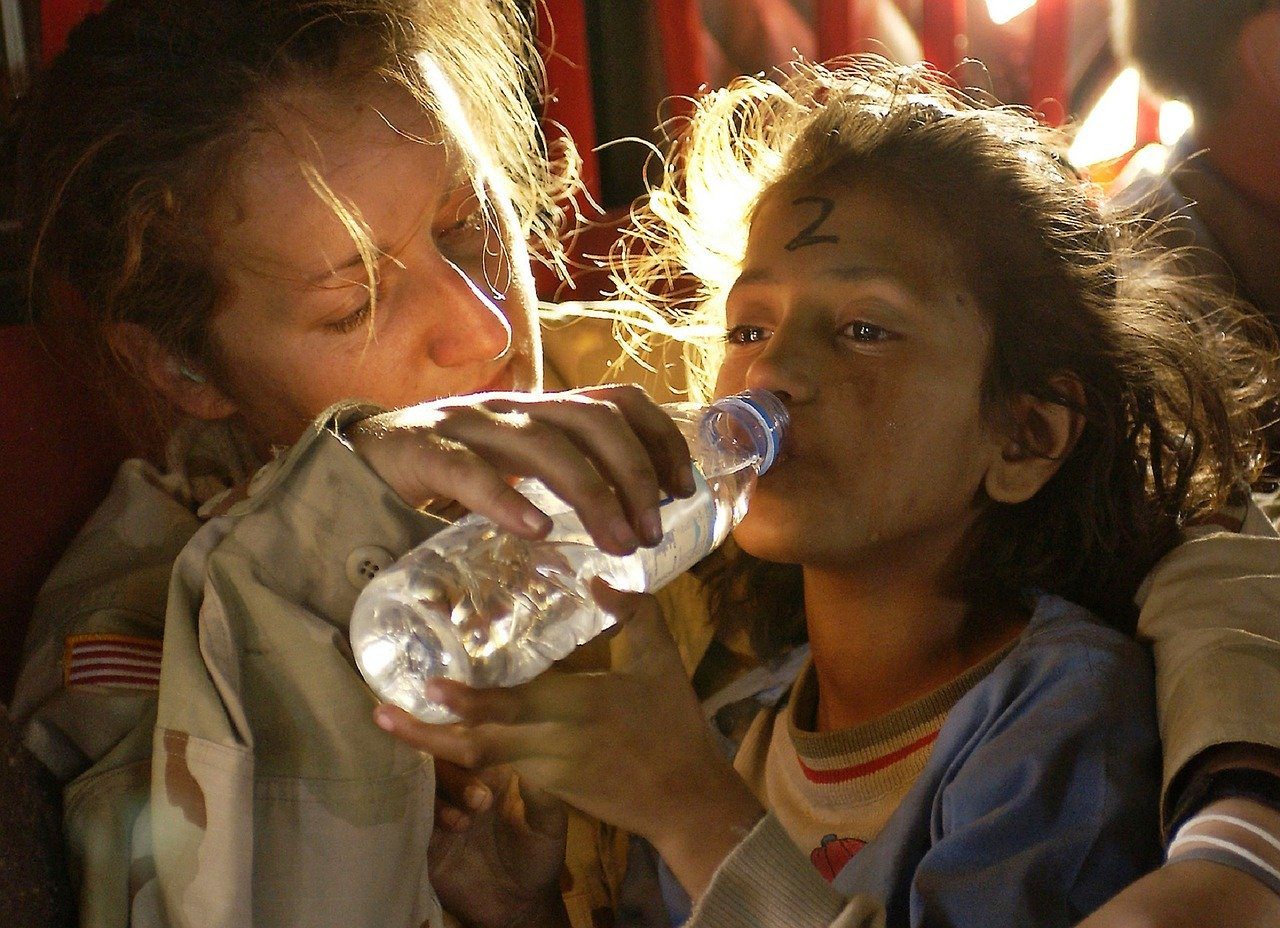 Our world today consists of 195 countries. The sheer volume of people on this planet and the scale of the problems they face can be overwhelming, especially when thinking of humanitarian aid. For this reason, the International Rescue Committee (IRC) began making a yearly emergency watchlist in 2019, highlighting which countries are facing humanitarian crises and require significant urgent aid.
The International Rescue Committee
The IRC has been around since the early 1900s and works globally to improve the lives of those impacted by global health issues, conflict, and natural disasters. They focus on empowering individuals to take back control of their lives. In their U.S. offices, the IRC provides aid to displaced individuals seeking asylum in the U.S.
Generating the List
The IRC analyzes a variety of factors to decide a nation’s human risk, natural risk, vulnerability, and ability to cope during a crisis. These factors are then used to decide which countries are most in danger of humanitarian crises and require the most aid.
10 Countries Facing Humanitarian Crises in 2020
Although the countries on this watchlist represent 6% of the world’s population, they comprise 55% of those identified to be in need by the 2020 Global Humanitarian Overview. The IRC’s watchlist is an extremely helpful resource that should be utilized for the assessment of which countries are facing humanitarian crises and require foreign aid.
– Danielle Forrey
Photo: Pixabay
The Fight Against Food Insecurity in South Sudan
Since the country’s independence in 2011, South Sudan has been in a state of instability as it recovered from a six-year-long conflict with Sudan. This instability has had quite an effect on the nation’s nutrition, with 51% of the country’s total population reporting food shortages in 2020. Some of the main causes of the continued food insecurity in South Sudan include flooding due to poor land management, destruction of agriculture and businesses due to conflict, elevated food prices and lack of access to livestock products that would enable citizens to cultivate a reliable food source. Additionally, the ever-present conflict in the area often prevents people from being mobile, meaning they are unable to search for food, find better agricultural land or access markets that may be nearby.
The World Food Programme (WFP)
Despite this situation, many humanitarian organizations have allocated resources towards fighting food insecurity in South Sudan, including the U.N.’s World Food Programme (WFP). The effort provides direct food aid to roughly 5.32 million South Sudanese people. Each year, the WFP transports 325,000 metric tons of food into 50 warehouses across the country, helping to fill the large gaps in domestic agricultural production.
The U.N.’s program has also introduced a new means of efficiently and evenly distributing aid called SCOPE, a database in which individual aid recipients register by fingerprint. The database records who receives food and how much, and even tracks an individual’s health and nutrition levels, noting when signs of malnutrition cease or appear. So far, the SCOPE system alone has registered 1.4 million people. Since 2018, the U.N. has also administered over $30 million USD in vouchers that one can redeem in exchange for food through the SCOPE system.
The Food and Agriculture Organization (FAO)
Similarly, the U.N.’s Food and Agriculture Organization (FAO) has been working with farmers to boost domestic crop production in hopes of reducing food insecurity in South Sudan. Due to constant displacement and poor land quality, creating a strong agricultural sector has proven to be challenging for the nation.
However, FAO’s program works to distribute seeds and hand tools. Moreover, it conducts land assessments across the nation to determine which plots might produce the highest yield. As a result, the cultivated land area increased by 15% from 2017 to 2018, and cereal production rose 10% from 2018 to 2019. In 2018, the program also began its seed distribution effort, administering 5,970 metric tons of seeds across the nation, benefiting 406,408 households.
Action Against Hunger
Nonprofit organization Action Against Hunger has also worked alongside the U.N.’s efforts to reduce food insecurity in South Sudan. The organization has worked with 7,215 farming families, with a focus on dyke and irrigation system construction to ensure farms are resistant to the region’s heavy flooding.
Additionally, volunteers and locals constructed and/or rehabilitated 5,000 water points, where people can easily access potable water and plumbing. In an effort to solve the issue of lack of mobility in the nation, Action Against Hunger also constructed 71 kilometers of roads, which allow the average South Sudanese person to access markets, clinics and other vital services.
Without intensive aid from humanitarian organizations, the state of food insecurity in South Sudan would be much worse than the recent statistics show. As the nation builds its foundations and recovers from its violent past, access to nutrition will undoubtedly become more widely available. However, with more than half the population unable to fill their stomachs each day, much work is still necessary.
– Jane Dangel
Photo: Flickr
Impact of COVID-19 on Food Security in Palestine
Food Insecurity Already a Problem
Currently, out of the 3 million Palestinians that reside in the West Bank and the 2 million in Gaza, about 1.7 million of them experienced food insecurity in 2019, prior to the effects of the pandemic. Additionally, many children across the territory were already malnourished and in desperate need of appropriate nutrition. About 63% of children under 5 in Palestine were consuming a minimally diverse diet, and about 7.4% of children under 5 appeared to be chronically malnourished. There is also a gender discrepancy as food insecurity is higher among women than men. While overall 32% of families in Palestine that are suffering from food poverty happen to be led by women, this is particularly a problem in the Gaza Strip where it’s 54% of families.
COVID-19 Measures Complicate Food Logistics
After the Palestinian prime minister declared a state of emergency in early March due to a rising number of confirmed COVID-19 cases, the territory quickly entered into a lockdown. The subsequent effects of the pandemic and lock-down were drastic. It was extremely detrimental to the livelihoods of many Palestinians and impacted socio-economic development, employment and put many of them at an increased risk of experiencing poverty. It has put vulnerable communities who were already experiencing food and economic insecurity in an exponentially difficult position.
The outbreak has also affected food logistics, marketing and the production of certain commodities such as dairy, fruits and vegetables. Additionally, the implementation of social distancing measures and overall restricted movement has had a dire impact on farming and processing. Therefore, a major reason for heightened food insecurity in Palestine is the reduced availability of food. While experts are unsure of the full impact of COVID-19 on food security, it can be estimated that it will continue to ravage food systems in Palestine and those vulnerable populations will suffer the most. According to the Food and Agriculture Organization (FAO), it can be expected that up to 50% of the population might face severe food insecurity and this effect may be intensified if Israel follows through on its annexation plans. “The situation will be exacerbated if Israel proceeds with the plans to annex parts of the West Bank, further limiting access to core resources, like land and water, and agricultural livelihood opportunities.”
An Organization Working to Help
The issue of food insecurity persisted in Palestine long before the pandemic, and many organizations have been doing the work to address the problem within the region. One such organization is the World Food Programme (WFP). It has been providing food assistance to vulnerable populations in Palestine since 1991. The WFP focuses on areas such as the Gaza Strip and the southern parts of the West Bank – places where poverty and food insecurity are particularly pressing issues. As a response to the COVID-19 crisis, WFP has extended its efforts to the entirety of the West Bank and has also managed to provide “climate-smart agricultural assets”, such as hydroponics and wicking beds, to impoverished households.
Food poverty has been an all-consuming issue in occupied Palestine long before the COVID-19 outbreak. However, the pandemic has had disastrous effects on the socio-economic conditions of Palestinians – many of whom were already in vulnerable positions. While there are many troubling implications for how both COVID-19 and food security will continue to affect the livelihoods of socioeconomic development of Palestinians, organizations such as the World Food Programme continue to aid food insecure communities in getting the help they need.
– Shreeya Sharma
Photo: Flickr
Improving Access to Clean Water in Haiti
Haiti has struggled with a copious number of natural disasters in the past. These natural disasters tend to exacerbate the effects of poverty, including the lack of proper sanitation. Among rural citizens in Haiti, only 20% of the population has the resources to sanitize properly. A lack of sanitary water plays a significant role in the quality of life in Haiti. Luckily, organizations are working to provide aid for clean water in Haiti and increase access to sanitary water for all citizens.
Pure Water for the World
Pure Water for the World started more than 15 years ago. Since then, this organization has made a significant impact on the access to clean water in Haiti among other countries. The program primarily assists Honduras and Haiti; it has positively impacted the lives of over 750,000 people.
Pure Water for the World dedicates itself to several solutions through its WASH (water, sanitation and hygiene) program. Its goal is to work alongside the public to devise a solution that is the best fit for their communities. Pure Water for the World uses four main strategies. These include water technologies, sanitation technologies, education and training, and sustainability measures.
Water technologies may include installing a pipe that can bring water to a school, collecting rainwater to use or creating filters for communal use. One of the program’s goals is to add handwashing stations, which would help to lower the risk of disease spread. Additionally, the program attempts to educate everyone on proper sanitation and get classes in schoolrooms to discuss hygiene. The WASH program also checks up with regions that it has previously helped to make sure that their chosen method is a long-term solution rather than a temporary fix.
Pure Water for the World has been a successful program so far. In northern Haiti, filters were put into people’s homes to help with water purity. When a group of families was visited for a filter check, the results were fantastic. All of the filters were working well. That leaves a likely high success rate in the 100 homes where the filters are working to maintain access to clean water in Haiti.
The Road to Hope
In addition, not only is Pure Water for the World pursuing changes in Haiti but so is The Road to Hope. The Road to Hope acknowledges that not all of the numerous projects and plans to help Haiti are in line with individual communities’ goals. The organization seeks to work alongside Haitians to ensure successful strategies.
The Road to Hope’s goals is primarily to educate and to end poverty in Haiti. These accomplishments would help improve overall access to sanitary water. An overall increase in wealth would result in the availability of more expensive materials to provide purified water throughout Haiti.
Overall, water-related illnesses have caused children to miss school 443 million times. This demonstrates the broader social implications of lacking access to clean water. The Road to Hope provides the people of Haiti with community centers to give them a place where they can get proper sanitation and safe water.
Global Environment Facility
Furthermore, on June 3, 2020, the Global Environment Facility approved a five-year, $4.5 million water project in Haiti. The project hopes to be able to make clean water available to 90,000 Haitians. If the project is successful, it will make quite an impact on the quality of life for many Haitians.
In conclusion, Pure Water for the World, The Road to Hope, and the Global Environment Facility are providing promising solutions to unsafe water. The lack of sanitation and pure water is a threat to Haiti, but these organizations have proved to be successful in providing clean water in Haiti.
– Hailee Shores
Photo: Flickr
How the Ride-Hailing Industry Helps Close Gender Gaps
Women and the Ride-Hailing Industry
Among other findings, the IFC discovered that it is relatively easy for women to enter the ride-hailing industry compared to other sectors, and that working in the ride-hailing industry allows women to start new businesses and maintain those they currently have. Additionally, women who use ride-hailing services say that services like Uber help them accomplish household tasks such as grocery shopping, visiting relatives and dealing with healthcare needs. Women surveyed felt that using ride-share services increased their sense of independence and mobility.
Women in the Workforce
However positive these indications may seem, ride-share services must overcome certain barriers if they are to fully incorporate women into their workforce. For instance, to attract more women to both drive and use their services, ride-hailing providers must work to increase personal security. Women often cite security threats as one of their main concerns regarding the ride-hailing industry.
Additionally, gaps in digital and financial inclusion disproportionately affect women globally. This means it is more difficult for women to acquire resources needed to access the industry. These could include a smartphone or a car. Nonetheless, it was found that 40% of women would prefer a women driver when traveling alone or at night. The IFC reports that recruiting more women to become drivers in the ride-hailing industry could create a cycle that attracts more women riders. Thus, it would be in the interest of the ride-hailing industry to work to attract more women drivers. This is true not only to promote gender parity in the economy, but also to boost their own sales.
The Gender Pay Gap
A Washington Post article on Uber’s gender pay gap outlines similar barriers to women joining the ride-hailing industry. The article finds that Uber’s lopsided pay results from men’s more aggressive driving and greater experience in the industry. In addition, they also have a higher willingness to drive in unsafe, more lucrative locations. Uber drivers are paid based on time and distance. Therefore, they earn more making frequent, shorter trips, rather than fewer, longer ones. Assuming that aggressive and speedy drivers tend to be men, male drivers are positioned earn more than women. Changing payment structures in the ride-hailing industry might be necessary to reduce the discrepancy in gender pay for drivers.
Reducing the gender gap leads to national economic growth. That means it is in the interest of both private sectors and entire countries to incorporate women into their workforce. The World Bank promotes economic empowerment through the elimination of gender gaps in paid employment. Through diverse initiatives, they help ensure that economic growth is shared among men and women. The ride-hailing industry is just one example of how women’s employment benefits the entire economic circuit — from buyers and sellers to a country’s overall GDP.
– Giulia Silver
Photo: o.aolcdn.com
5 Facts About Homelessness in Ghana
5 Facts About Homelessness in Ghana
Many of Ghana’s homeless require help from the government and housing projects to get back on their feet. Efficient rental control laws and housing for low-income individuals are just some of the many policies that can help lower or diminish rates of homelessness in Ghana.
– Ayesha Asad
Photo: Flickr
3 Apps Helping Vertical Farmers in Africa
When investigating this problem of the future, it is interesting to note that nearly three-quarters of farm production happens on a small scale. There is roughly a small-scale farmer that produces a bulk of this food, and many of them are in need of assistance. The agrarian way of life is common, but not very prosperous across Africa. There is already an abundance of demand, but many African farmers are struggling to produce. Digital innovations are spreading and now helping farmers become more efficient. Here are three apps helping farmers in Africa boost their potential.
WeFarm
WeFarm is a networking app, comparable to LinkedIn or Facebook, but designed specifically for African farmers. A majority of their customer base is in Kenya and Uganda with over a million members in the two countries.
WeFarm helps to disseminate information among farmers. It gives a platform for farmers to connect and crowdsource solutions form their peers. By creating an ecosystem for these farmers to communicate and share best practices, farms will grow to be more efficient.
Many people living in more remote regions of Africa do not have adequate internet access. WeFarm can be used to communicate without internet access. The app facilitates communication across SMS which is much more prevalent than internet access in rural areas for some African countries, so more farmers can get plugged into the conversation.
CowTribe
CowTribe is an award-winning app and a boon for livestock farmers in Africa, particularly in Botswana where cattle account for 85% of agriculture.
This app helps owners take care of their animals’ health very effectively. The app monitors health record, reminds about due vaccinations, connect farmers with vaccinations, and can connect farmers with veterinary assistance. With CowTribe, every $1 spent on vaccination leads to $29 of revenue per year.
As of now, the app keeps track of 240,000 cows belonging to 29,000 different farmers. There are millions of farmers who can benefit from this app, and the membership rate is anticipated to grow 40% year over year.
Modisar
Modisar is another prize-winning app that has brought a new level of sophistication to its farmers in Botswana. The app requires a computer or laptop but can run without an internet connection, which is again very useful for remote, rural regions. Modisar is a platform that helps a farmer understand and better manage their farm. It maintains farm records, keeps track of inventory and livestock, and sends reminders for tasks that need completion. One of the greatest features Modisar offers is an expense and profit tracker. This allows farmers to see their financial history and can educate them on how to increase profits in the future.
Modisar also maintains a library of articles relating to best farming practices, so that farmers have other resources to troubleshoot and further educate themselves. The database also has a photo gallery of different diseases, that a farmer may consult when an unknown infection springs up in the crop. Modisar won the Orange Social Venture Prize in 2014 and has continued helping farmers since.
There is a menagerie of apps helping farmers in Africa with new ones releasing every year. There are seemingly many identical apps in the growing library of farm assistants, but many operate in different regions and have their own unique following. Agriculture, one of the oldest human endeavors, coupled with digital technology growing many small farmers in African countries.
– Brett Muni
Photo: Pxhere