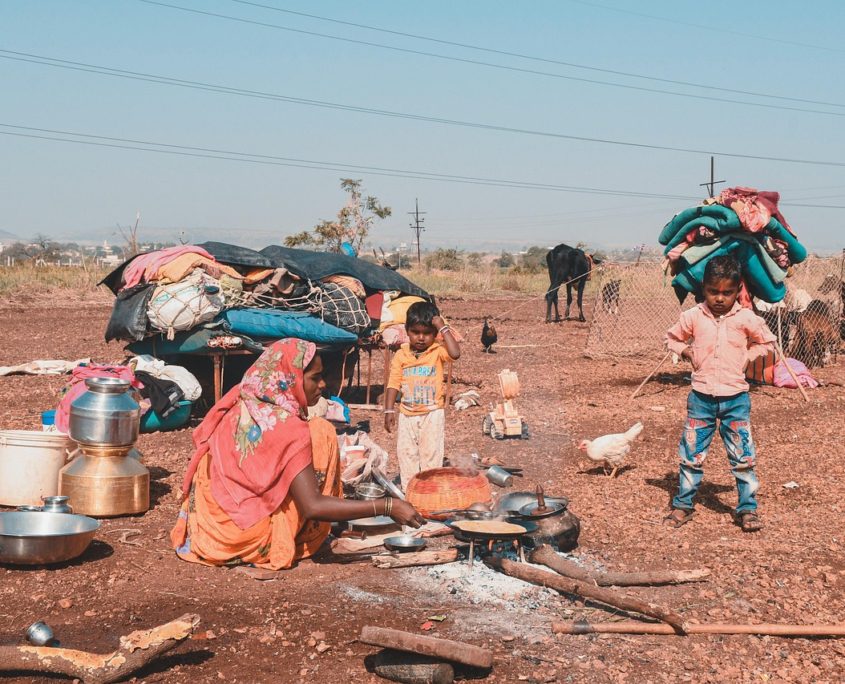
 In rural India, accessing health care often means a difficult journey. Only 10% of rural residents have access to health care within a 10-kilometer radius, while 90% must travel to different locations for specialized treatment. This distance translates to lost wages, transportation costs and delayed treatment that can turn minor ailments into life-threatening emergencies.
The health care gap in rural India is severe. Rural areas have a doctor-to-patient ratio of 1:11,082, nearly 11 times worse than the World Health Organization’s (WHO) 1:1,000 recommendation. Meanwhile, 71% of India’s population lives in rural areas, but only one-third of physicians practice there.
As of 2025, a technological revolution is bringing medical expertise directly to India’s villages. AI health chatbots developed by Indian startups are transforming smartphones into medical lifelines, offering instant guidance to millions.
Empowering Community Health Workers
ASHABot leads this transformation. Developed by Khushi Baby in partnership with Microsoft Research India, this WhatsApp-based AI chatbot empowers India’s ASHA workers—community health volunteers serving as the backbone of rural health care. The goal is to reach all 1 million ASHAs across the country, who collectively serve 800 million to 900 million people in rural India.
Launched in early 2024, the platform uses GPT-4 technology to provide multilingual support in Hindi, English and Hinglish. When an ASHA worker encounters a question about childhood immunization, breastfeeding or pregnancy complications, she can ask ASHABot through voice notes and receive evidence-based answers within seconds. The system draws from around 40 curated documents, including India’s public health manuals and UNICEF guidelines. The voice note capability also allows ASHAs to play responses aloud for patients who cannot read.
Since early 2024, more than 24,000 messages have been sent through ASHABot, and 869 ASHAs have been onboarded. Currently operating only in the Udaipur district, Rajasthan, the tool represents a pilot that Khushi Baby plans to scale nationwide.
ASHABot builds on Khushi Baby’s decade of work. The organization’s broader Community Health Integrated Platform, used by more than 75,000 community health workers across 48,000 villages, has tracked the health of more than 50 million people. In randomized controlled trials involving 3,200 mothers, the digital health intervention showed a 12% improvement in complete infant immunization.
Making Health Care Affordable
In Odisha and Chhattisgarh, CureBay has established more than 150 e-clinics across 32 districts. The organization focuses on areas where approximately 65,000 people within a 10-kilometer radius lack access to health care.
CureBay’s innovation lies in its affordability. For ₹599 annually—less than ₹2 per day—members receive free doctor consultations and 15% discounts on medicines. For individuals covered under government schemes or insurance, CureBay provides financial support with a daily allowance of ₹1,000 for each day of hospitalization, up to a maximum of 30 days. This membership model helps eliminate catastrophic health expenses that push millions of Indians into poverty each year.
The platform combines AI-powered diagnostic tools with human expertise. AI analyzes symptoms and medical images, providing preliminary assessments during teleconsultations with doctors. CE- and FDA-approved devices conduct diagnostic tests at the e-clinics.
Since 2021, CureBay has served 550,000 unique patients. The organization employs more than 1,000 Swasthya Mitras, community health workers, creating local jobs while expanding access. Around 90,000 people actively subscribe to preventive health programs, with a renewal rate exceeding 60%, showing sustained engagement.
In May 2025, CureBay raised $21 million in Series B funding led by Bertelsmann India Investments, Elevar Equity and British International Investment. Total funding reached about $37 million, with a post-money valuation of around $75 million.
Addressing Mental Health
Mental health remains deeply stigmatized in rural India, yet stress, anxiety and depression affect millions. Wysa, a Bengaluru-based startup, created an AI chatbot that provides mental health support through evidence-based cognitive behavioral therapy techniques.
Wysa launched its Hindi version in April 2024, making mental health resources accessible to Hindi-speaking rural populations. The app is available on smartphones and WhatsApp. The Hindi pilot showed strong engagement, with 80% of users returning for multiple sessions.
Clinical studies demonstrate Wysa’s effectiveness. Users experience an average 31% reduction in moderate anxiety symptoms and a 40% reduction in moderate depression symptoms, according to a study by U.K. health insurer Vitality involving 60,000 members. The platform has facilitated more than 550 million conversations across 65 countries, reaching 7 million users worldwide.
Wysa’s basic version is free, making mental health support accessible to those who cannot afford traditional therapy.
The Digital Foundation
This transformation builds on India’s expanding digital infrastructure. The Ayushman Bharat Digital Mission generated 442 million digital health accounts and linked 293 million health records. Out of 597,000 villages, 572,000 now have mobile or network connectivity, enabling digital health services.
With more than 425 million rural smartphone users and 504 million rural internet users projected by 2025, the foundation exists to scale these solutions nationwide. Rural internet users are growing at a rate of 26%, projected to exceed urban users for the first time.
The Future of AI Health Chatbots
AI health chatbots are not replacing doctors. Instead, they extend medical expertise to villages that never had access. They turn the 100-kilometer barrier into zero distance and transform smartphones into tools for health equity. For rural India, the future of health care has arrived, one conversation at a time.
– Jawad Noori
Jawad is based in London, UK and focuses on Technology and Politics for The Borgen Project.
Photo: Pixabay

Solar Energy in the Amazon: Lighting up Villages With Electricity
More Light for the Amazon
In 2020, the Brazilian government launched the “More Light for the Amazon” project, later integrating it with the national Light for All initiative. The program aims to deliver renewable electricity to 228,000 homes by 2026, improving lives, creating opportunities for communities long overlooked and protecting the fragile Amazon environment.
These public policies have been essential for scaling up efforts, especially since NGOs alone often lack the resources to reach every village.
Impacts of Solar Energy in the Amazon
The Indigenous territory of Xingu offers a powerful example of how solar energy in the Amazon is transforming daily life. Today, many households have access to renewable electricity. Although it took more than a decade from the launch of the original initiative, families in Xingu can now switch on the lights and even watch TV, thanks to this clean and renewable energy solution.
Another example of how solar energy in the Amazon is transforming lives can be found in Vila Limeira, a village located within a protected area of the rainforest. The nearest city is 112 kilometers away and the community is reachable only by boat. Before solar power, diesel generators were the residents’ sole source of electricity, an expensive and unsustainable option.
Today, thanks in part to a donation from the Charles Stewart Mott Foundation to the World Wildlife Fund, Vila Limeira operates its own solar grid. Families can now enjoy basic amenities like refrigerators and washing machines, dramatically improving daily life.
Solar energy in the Amazon is transforming daily life and helping remote communities thrive. Renewable power now runs irrigation systems, keeps produce and meat fresh through refrigeration and makes simple tasks, like washing clothes at home, possible. Beyond convenience, solar power has also saved lives.
During the COVID-19 pandemic, communities with access to solar energy could refrigerate vital medications and vaccines while also staying informed with reliable updates on resources and the spread of the virus. This access proved critical in such isolated areas, where reaching a hospital or medical facility is often difficult and time-consuming.
Final Remarks
As Brazil continues to expand public policies that promote solar energy in the Amazon, the results are already proving transformative. Remote villages, once isolated from the national grid, are now writing their own success stories, with renewable power bringing light, refrigeration, communication and opportunity into daily life.
Solar energy has minimal environmental impact, which allows communities to preserve their land and traditions while also strengthening local economies. Most importantly, it provides the foundation for future generations to thrive, with improved access to education, health care and the tools needed to build a more sustainable and equitable future.
– Fernanda Nilson
Photo: Pixabay
Uganda’s PARKS Project: Poverty Alleviation and Conservation
Kibale National Park
Kibale NP is situated in the west of Uganda. This region struggles with inequality, with a Gini coefficient of 0.33, a figure that rises to 0.39 for children, demonstrating the gulf between urban and rural populations. The national park contains 13 different primate species, including one of the largest chimpanzee populations in the world, more than 120 mammal species and 370 varieties of birds. Given the park’s immense biodiversity, local residents are dependent on its resources, often leading to confrontation between human activity and endangered wildlife.
Combining Poverty Alleviation and Conservation
Combining poverty alleviation and conservation is a challenging task, as economic development often depends on the exploitation of natural resources. Acknowledging this, Village Enterprise announced the PARKS initiative in 2021, an acronym for the Poverty Alleviation and Removal of Kibale Snares project.
The project, funded since 2024 by the Arcus Foundation and in collaboration with the Ngogo Chimpanzee Project, has two distinct but connected goals: to reduce the incidence of extreme poverty within the national park and to ensure the protection of Kibale NP’s endangered chimpanzee population.
The key to this initiative was accepting that poverty alleviation and conservation are intertwined. In areas like Kibale NP, people living in extreme poverty are forced to rely on the natural world for economic stability, often engaging in harmful practices such as the illegal harvesting of bushmeat and timber. Programs aimed at reducing these activities, or punishing those engaged in them, have often had the unintended effect of pushing the local population further into poverty.
To tackle this issue, the PARKS program focuses on providing entrepreneurial training centered on local, sustainable micro-enterprises. Village Enterprise provides startup funding as well as mentorship to ensure local residents are freed from the pressure to engage in poaching and illegal logging. PARKS also encourages the formation of Business Savings Groups, allowing new business owners to pool their savings and provide a financial safety net for future entrepreneurs. Alongside this, PARKS offers additional training to selected entrepreneurs, creating “Conservation Champions” who encourage and advise others on sustainable business practices.
Results So Far
Through the PARKS initiative, Village Enterprise has provided training to more than 5,500 entrepreneurs, more than 65% of whom are women. This has led to the creation of 1,838 sustainable micro-businesses, positively impacting the lives of more than 20,000 people within the national park. These businesses include retail shops, small-scale agricultural projects, tailoring, cobbling, beekeeping, agroforestry and innovative solutions such as energy-efficient stoves for everyday cooking.
These businesses have reduced dependence on poaching and have helped families afford school fees and improve nutrition. On the conservation side, 90 Conservation Champions have been trained, providing further instruction to members of their local communities. Since the project’s implementation, Kibale NP has observed a significant reduction in illegal human activity within the park. As of April 2025, anti-poaching patrols funded directly by the PARKS project have led to the removal of 445 illegal snares, in addition to the more than 800 snares removed under the project as a whole.
Opportunities for Further Implementation
The benefits of the PARKS project extend beyond the boundaries of Kibale NP. It is an exemplary model of how to combine poverty alleviation and conservation, not only within Uganda, where human-animal conflict is common in several national parks, but also globally.
By encouraging a healthy entrepreneurial ecosystem alongside environmental protection, the project contributes directly to several United Nations Sustainable Development Goals (SDGs): goal 1 (No Poverty), goal 2 (Zero Hunger), goal 12 (Responsible Consumption and Production) and goal 15 (Life on Land). Indirectly, the scheme also addresses goal 5 (Gender Equality) through its focus on empowering women.
– Henry Weiser
Photo: Flickr
Poverty Reduction in the Republic of Congo
About Poverty in the Republic of Congo
According to the World Food Programme (WFP), 46.5% of the Republic of Congo is living below international poverty lines, equating to $2 a day. In fact, poverty rates in the region have spiked to 52%. The nation’s high poverty rates have continued to threaten civilian health, education and overall wellbeing.
The Republic of Congo faces various constraints when it comes to addressing its global poverty status. Corruption and social inequalities have been ongoing barriers. Due to weak national governance, policies confronting poverty have not been effective and initiatives pertaining to social development programs have not undergone successful execution. Many civilians lack access to quality education, health services, quality food markets and overall job opportunities.
Poverty in the Republic of Congo is multidimensional. Populations in rural Congo are 3% more likely to experience multidimensional poverty, which is slightly higher than those in urban settings. On top of this, when comparing male-headed households with women-headed households, women-headed households are at risk of experiencing 2.5% more multidimensional poverty.
Access to education has also played a significant role in the poverty status of Congolese households. It is reported that households with no secondary school education are more susceptible to multidimensional poverty by approximately 24%, with household size also being a contributing factor.
Additionally, the country’s strong dependence on its oil production can pose an issue depending on international price fluctuations. The country’s high debt has also contributed to how much funds can be distributed to social development programs.
The Congo’s National Development Plan 2022-2026
To help combat poverty in the Republic of Congo, several initiatives have emerged. The Congo’s National Development Plan 2022-2026 (PND) has focused on redirecting the country’s reliance on oil and diversifying its revenue. The plan emphasized national poverty reduction, infrastructure and economic development. To support the implementation of the PND, in June 2025, the World Bank approved the final operation in its Fiscal Management and Inclusive Growth series.
The Telema Program
Telema, meaning “stand up” in Lingala, one of the nation’s local languages, is a national program with initiatives to support poverty reduction in the regions of Brazzaville, Point-Noir and Pool. The program mobilizes micro-entrepreneurs and those vulnerable to poverty to start micro-projects. The government provides participants with grants and skills training. The project launched in 2019 and has proved major recent developments. In 2025, the program received an additional 1,968,000,000 CFA from France to expand to other regions including Oyo, Niari and Lekoumou.
Looking Ahead
Although the Republic of Congo has displayed efforts in stabilizing its economy and expanding social development programs, long-term poverty reduction in the Republic of Congo is dependent on the administration providing realistic opportunities for civilians. Initiatives such as Telema and support from the World Bank give optimism for positive change focusing on inclusion and job opportunities. If effectively implemented, the Republic of Congo could transform its resource wealth into a foundation for a prosperous future.
– Gloria Bwenge
Photo: Pixabay
Addressing Elderly Poverty in Guinea-Bissau
Challenges That the Elderly Population Face
Elderly poverty occurs when people of the older generation, typically 65 years and older, experience financial insecurity and limited access to basic resources. This issue creates serious concern in Guinea-Bissau, where economic instability and a weak social support system increase the vulnerability of the aging population.
The pension system in Guinea-Bissau plays a major role in causing elderly poverty in Guinea-Bissau. Guinea-Bissau operates two pension schemes: a public one for government employees and a private scheme that the National Social Security Institute (INSS) oversees. However, both systems face serious challenges. Most citizens work in the informal sector and therefore do not receive formal pension benefits. Irregular government funding and financial strain weaken the public scheme, while the private system suffers from administrative inefficiency and weak oversight.
These issues leave many elderly citizens without social protection and steady income, making Guinea Bissau’s case severe compared to other West African countries. Pensions cover only about 2.9% of the workforce in Guinea-Bissau, leaving 97% of working adults without a financial safety net after retirement. Most elderly citizens rely on support from family members or community networks to survive. Those without family assistance often face extreme poverty and food insecurity, and they often lack of access to health care.
Efforts Towards a Brighter Future
Despite these difficulties and challenges, several organizations support the elderly and work to reduce poverty in Guinea-Bissau. Organizations such as Caritas Guinea-Bissau provide health care, food security and community support for vulnerable groups. Since its establishment in 1982, Caritas Guinea-Bissau has built 41 parishes and missions. It leads programs in health, food security, training and emergency response, particularly in rural communities, to benefit people of the older generation.
Community and faith-based initiatives also address elderly poverty and social support in Guinea-Bissau. Ajuda Amiga’s program in Guinea-Bissau manages direct relief programs that distribute food, clothing and medicine to communities in need each year, focusing on elderly citizens who lack pensions or family support.
The Church of the Nazarene in Guinea-Bissau contributes through its mobile clinic initiative, relaunched in 2023. Teams of local and international medical volunteers operate mobile health units that travel to remote areas, offering primary care, vaccinations and health education. Together, these organizations bring humanitarian relief and long-term development by ensuring that elderly citizens receive both care and representation.
Looking Ahead
According to the World Bank, developing Guinea-Bissau’s human capital remains critical to breaking the cycle of poverty and achieving long-term sustainable growth. The country must improve access to health care and rural development while creating a national pension system that protects citizens of the older generation. Promoting public awareness about the value of elder care will help citizens recognize support for older generations as both a social and economic responsibility within the country.
– Emmanuel Fagbemide
Photo: Flickr
Everything To Know About Poverty in Taiwan
Definitions of Poverty
Wider definitions of poverty are more appropriate for developed economies. The most common approach is relative poverty, which the OECD defines as those with an income below 50% of the median income, and by this classification, not only are Japan and Korea at 15% but even Scandinavian countries are above 5%. The EU also focuses on those at risk of poverty or social exclusion and includes other measures, such as the affordability of certain basic items, which represent an adequate quality of life. Such wider definitions are important because they focus government attention on policy measures to address relative poverty and mitigate risks of social breakdown.
Most importantly, these comparative figures suggest that the Taiwan figures disguise the actual situation in Taiwan. Applied to Taiwan, a poverty rate of between 10% and 15% would suggest that there are between 2 and 4 million people in relative poverty. This lines up with a 2023 NGO survey in Taiwan, which found that 9% of respondents claimed to live in poverty.
The Causes of Poverty
Unsurprisingly, Taiwan suffers from many of the same conditions that afflict other developed societies. These include a high cost of living – especially high housing costs in Taipei – stagnant median wage levels and increasing income inequality. Recent analyses of wages and living costs have criticized Taiwan’s minimum wage of $900 a month as one of the lowest in advanced economies.
While the cost of living is around 20-25% more expensive in Western European countries, Taiwan’s minimum wage is around 150% higher. In other advanced economies, the minimum wage has been increased to mirror a “living wage” defined as the minimum for an adequate lifestyle. However, in Taiwan, the minimum wage is less than 50% of the “living wage.” Taiwan also has one of the highest income inequality ratios of advanced countries. Finally, Taiwan’s low minimum wage has a correlation with poor performance on a range of social indicators, including high child mortality, road and pollution deaths, homicide and suicide rates, prison population rates and mental health rates.
An NGO Responds
One of the leading domestic NGOs addressing poverty in Taiwan is called Do You a Flavor. Founded in 2014 and focusing on urban poverty, Do You a Flavor works with a range of initiatives with a focus on homelessness. These include collaboration with businesses to establish transitional housing, food distribution, medical aid, skills development and job matching. The NGO also does advocacy work, working with other NGOs and government agencies to achieve legislative change to address urban poverty.
Public Policy Responses
As mentioned, Taiwan does have a range of social welfare policies in place. However, many of these policies are actually quite restrictive. A key issue is that the household rather than the individual is the basis for poverty definitions and welfare eligibility. Another is that anyone 16-65 years old in the household is assessed as employed at the minimum wage, even if unemployed. These are just two of many restrictions that derive from viewing the household as the core economic unit rather than the individual.
Improving access to welfare is only one part of what many view as much-needed policy reforms. These include increasing the minimum wage and improving workers’ rights. Increasing the availability of social housing in Taipei, as well as other measures to dampen property costs, are also seen as essential to ensuring affordability.
– Trinity Prasadam
Photo: Pixabay
Child Marriage in Eritrea
Eritrea revised its Marriage Law in 1991 to make 18 the minimum age for marriage, however, a 2025 Human Rights Watch report reported that child marriage remains prevalent despite this law. This is due to a lack of enforcement, as well as customary laws and legal exceptions. For example, 16-year-old girls can marry if they are pregnant or have already given birth.
Causes of High Rates of Child Marriage
The Girls Not Brides organization states that gender inequality is the driving factor behind child marriage in Eritrea, in addition to poverty, and a lack of opportunities for education or financial independence for girls. These factors are worse in rural areas where the rate of child marriage is significantly higher, 55.2% compared to 20.4% in urban areas. There is social and financial pressure on girls to abandon their studies to perform domestic or agricultural labor and enter marriage to relieve their families of financial burden.
Addressing the Problem
At the 2019 Nairobi Summit Eritrea committed to end all forms of violence against women and girls, including child marriage by 2030, committing to provide “access for all adolescents and youth, especially girls, to comprehensive and age-responsive information, education and adolescent-friendly comprehensive, quality and timely services to be able to make free and informed decisions and choices about their sexuality and reproductive lives.”
International aid can also help to end child marriage by reducing risk factors like poverty and lack of access to health care and education through targeted programs and partnerships. Organizations such as UNICEF and UNFPA work in Eritrea to protect those at risk of child marriage. The UNFPA collaborates with the Ministry of Health to strengthen the national health system and expand access to health care, particularly for underserved rural populations. UNFPA also work with the National Union of Eritrean Women to support legislation against underage marriage and FGM.
The Current Status of the Issue
Due to a lack of recent data from the government on child marriage rates, it is difficult to know how close Eritrea is to achieving the goal of eradicating child marriage by 2030. It is important that regulatory bodies get accurate and recent data from the government to address the issue and assess the progress that has occurred. International support is essential to improve access to education and provide resources to impoverished rural communities to alleviate financial pressures that push girls out of education and into marriage. Increased opportunities combined with stricter enforcement of the minimum legal age for marriage will help girls in Eritrea to live childhoods free from forced marriage.
– Nieve Dowling
Photo: Flickr
Higher Education in Libya
The Mistake
In 2011, the United States led NATO’s charge to oust Muammar Gaddafi, Libya’s ruler, or Brotherly Leader and Guide of the Revolution as he called himself. Five years later, the former President of the United States Barack Obama referred to the planning of this regime change – and the resulting devastation – as the ‘worst mistake’ of his presidency.
Since the overthrow and assassination of Gaddafi, hard times have hit Libya, even worse than under Gaddafi’s rule. According to the United Nations Office for the Coordination of Human Affairs, “an estimated 823,000 people, including 248,000 children, require humanitarian assistance.”
The dual issues of poverty and higher education in Libya are tightly intertwined. As UNICEF reported, “more than one-third of Libya’s children live in multi-dimensional poverty” and “about 1 in 10 households rely on child labor to survive.” With severe levels of poverty like these, almost one out of every five families in Libya have at least one child out of school.
Libya Today
Currently, Libya includes two parts, with the interim Government of National Unity (GNU) controlling the north west, and the Government of National Stability holding the north east.
The GNU receives support from the U.N. and multiple local militias. Libya’s House of Representatives installed the GNS and the Libyan National Army backs the government. The GNU holds about one-third of the north, including Tripoli, the country’s capital, while the GNS controls the remaining two-thirds. The rest of the country is largely unpopulated.
Libya’s post-revolution political instability, with its complex and changing list of governing bodies, political parties and militias has included groups who profit off of the country’s vast migrant population through slave markets. In 2021, an estimated 47,000 people in Libya were enslaved.
Higher Education in Libya
While higher education in Libya may be severely underreported, there is no question that there are issues. The 2011 research paper, “Higher education in Libya, system under stress,” outlines many of the areas in which universities are lacking, including:
The GNU’s Plan
Aiming to tackle Libya’s high youth unemployment rate, the Ministry of Higher Education and Scientific Research, a department of the GNU, has recently come up with a 10-year blueprint to reform the country’s higher education sector through increased international involvement.
Announced on October 2nd, the plan aims to build up Libya’s universities through investment and assistance. As Maghrebi.org explains, “a key component of the strategy includes promoting international partnerships with major academic institutions, encouraging knowledge exchange and sharing of expertise.”
The GNU also plans to invest more in scientific research, utilize grants from regional organizations and establish more Ph.D. programs to further diversify the country’s job market.
This education road map is meant to work in tandem with the Ministry of Economy and Trade’s new Entrepreneurs Skills and Solutions Project which “is focused on equipping students and graduates with practical skills in the modern green and blue economy, in addition to aligning their education with current and future labour market demands to create a more coherent link between study and employment.”
The Skills and Solutions Project was announced on September 29, a few days prior to the higher education strategy. In a speech, Economy Minister Mohamed Al-Hwej emphasized “the role of universities and academics in implementing the project…and developing educational curricula.”
Will it Work?
But can the GNU’s strategy actually uplift Libya’s youth? Only time will tell, but as Mustafa M. Elfakhri, Director of Graduate Studies at Libyan International Medical University, explains, multiple sweeping reforms are necessary to promote quality and sustainability within the country’s higher education sphere. These include:
While the GNU’s 10-year initiative does seem to be a step in the right direction, with a clear focus on enhanced scientific research, curriculum and competencies matching and resources investments, others categories seem underdiscussed. The strategy seems vague as well, leaving room for potential mistakes, hindrances and corruption.
Naturally, with Libya’s ownership of the largest oil reserves in Africa and severe instability, foreign interference and exploitation have infested the country. Vague proclamations and plans can only take the country so far.
Conclusion
With time, strong governance and quality management systems can hopefully develop, and the GNU can write legislation that will further support the development of higher education in Libya.
However, Libya’s road to redevelopment will take more than one strategy. Unification, stability, improved infrastructure and strong national industries will all be necessary to ensure long-term success for any of the country’s internal needs.
– Yazan Mohammad
Photo: Flickr
How COVID-19 Technology in Pakistan Accelerated Progress
Initially, the COVID-19 outbreak led to severe economic deterioration for Pakistan. For example, an overall decline in economic parameters such as GDP growth, unemployment rate, inflation, per capita income, debt, tax collection, poverty and trade (imports/exports). These disruptions were major challenges to its economic activities. The result was that during the fiscal year 2020, for only the second time in Pakistan’s history after 1951–1952, the country recorded a negative GDP growth rate of −0.4%.
Initial Challenges Caused by the COVID-19 Pandemic
The primary challenges caused by COVID-19 in Pakistan were rising unemployment and poverty. The pandemic caused nearly three million people to lose their jobs, leading to a sharp increase in the unemployment rate, which reached 9.56% in the 2020 fiscal year. Global trade disruptions also hit the country hard.
In 2020, exports fell by 6.36% to $22 billion, while imports declined by 8.56% to $45 billion. Meanwhile, pressure on debt servicing intensified as total debt rose from $95.2 billion in 2018 to $112.8 billion in 2020. This pushed Pakistan further into a debt trap, forcing it to borrow new loans to repay old ones.
Innovation in COVID-19 Technology in Pakistan
Despite the initial setbacks, Pakistan showed resilience by adopting global best practices that fueled digital transformation. The COVID-19 pandemic became a turning point for digital progress in Pakistan, especially in the work and education sectors. The introduction of hybrid work models and remote employment systems reshaped professional environments, including public and private institutions.
Organizations increasingly use digital tools, online platforms and cloud-based communication systems to maintain productivity and ensure operational continuity. According to a report, the pandemic significantly boosted digital payments in Pakistan as citizens reduced their use of physical cash to minimize health risks.
The introduction of COVID-19 technology in Pakistan improved efficiency. It helped conserve vital resources such as time, paper and energy by reducing physical commuting and manual workflows. It also accelerated the adoption of online education, pushing schools and universities to embrace digital learning platforms to maintain academic progress.
According to the World Bank, Pakistan responded swiftly by launching the federal TeleSchool program for students nationwide and the Taleem Ghar initiative for learners in Punjab. These e-learning programs in Pakistan ensured continued access to education during lockdowns, demonstrating how technology bridged learning gaps and supported the country’s broader digital transformation.
Economic Adaptation Through COVID-19 Technology in Pakistan
During the COVID-19 pandemic, Pakistan saw a shift toward digital transformation, as technology became the only possible adaptation for individuals and institutions. The pandemic caused a shift toward remote work, freelancing and digital entrepreneurship, helping sustain livelihoods in widespread economic uncertainty.
According to The Dayspring, “Pakistan’s freelancing economy surged by 22% amid COVID-19.” Payoneer also reported the country’s overall freelancing revenue growth from 47% to 69% during the pandemic. Government initiatives such as Punjab’s e-Rozgaar program also played a significant role.
This program empowered youth to earn through online platforms, providing training and access to freelance marketplaces. As INP-WealthPK highlighted, Pakistan witnessed a record 47% growth in freelancing earnings in 2021, with women making up 52% of total graduates and contributing around half of the total earnings. This marked a significant step toward digital inclusion and women’s economic empowerment in Pakistan’s gig economy.
Similarly, the Ministry of IT’s DigiSkills program, a national-level training initiative, has trained more than 1.28 million individuals in freelancing, enabling them to generate sustainable incomes from home. Federal Minister Syed Amin Ul Haque emphasized the goal of expanding female participation in the program from 23% to 33%, reflecting the government’s vision for inclusive digital growth.
Furthermore, the private sector quickly adapted to the new normal of remote work and virtual collaboration. Many companies eliminated mandatory office attendance, providing employees with the necessary resources such as computers, internet connectivity and secure data access to work efficiently from home.
Technology in Public Services and Broader Social Impact
Sehat Kahani emerged as one of Pakistan’s leading examples of digital health care innovation during the COVID-19 pandemic in Pakistan. The platform provided telemedicine services through its mobile app, including free online consultations and e-prescriptions. It helped thousands of patients in remote and low-income areas.
According to Gavi, the Vaccine Alliance, Sehat Kahani’s expansion during the pandemic demonstrated how digital health services in Pakistan can bridge access gaps and empower women doctors to serve communities from home. In the education sector, digital transformations in Pakistan helped sustain learning during lockdowns. The government launched several e-learning programs, ensuring continued education through televised and online lessons.
The World Bank reported that these programs successfully reached millions of students. A report by the United Nations Development Programme (UNDP) further highlighted the broader social impact of digitalization. It revealed that districts showing stronger digital transformation also ranked higher in human development outcomes.
All these studies highlight how Pakistan’s growing investment in digital public services, from telehealth to education, has strengthened national resilience and paved the way for inclusive growth.
Conclusion
All these digital transformations from remote work and freelancing to telemedicine and online education helped Pakistan rebuild its economy and move toward sustainable growth. By 2023, Pakistan’s GDP growth rate recovered to around 3.04%, reflecting how the nation’s digital adaptation turned adversity into opportunity. This evolution shows that when a crisis is met with innovation, collaboration and the right technological tools, it can become a catalyst for development rather than decline.
– Sidra Tahir
Photo: Unsplash
AI health chatbots: Reaching Rural Patients in India
The health care gap in rural India is severe. Rural areas have a doctor-to-patient ratio of 1:11,082, nearly 11 times worse than the World Health Organization’s (WHO) 1:1,000 recommendation. Meanwhile, 71% of India’s population lives in rural areas, but only one-third of physicians practice there.
As of 2025, a technological revolution is bringing medical expertise directly to India’s villages. AI health chatbots developed by Indian startups are transforming smartphones into medical lifelines, offering instant guidance to millions.
Empowering Community Health Workers
ASHABot leads this transformation. Developed by Khushi Baby in partnership with Microsoft Research India, this WhatsApp-based AI chatbot empowers India’s ASHA workers—community health volunteers serving as the backbone of rural health care. The goal is to reach all 1 million ASHAs across the country, who collectively serve 800 million to 900 million people in rural India.
Launched in early 2024, the platform uses GPT-4 technology to provide multilingual support in Hindi, English and Hinglish. When an ASHA worker encounters a question about childhood immunization, breastfeeding or pregnancy complications, she can ask ASHABot through voice notes and receive evidence-based answers within seconds. The system draws from around 40 curated documents, including India’s public health manuals and UNICEF guidelines. The voice note capability also allows ASHAs to play responses aloud for patients who cannot read.
Since early 2024, more than 24,000 messages have been sent through ASHABot, and 869 ASHAs have been onboarded. Currently operating only in the Udaipur district, Rajasthan, the tool represents a pilot that Khushi Baby plans to scale nationwide.
ASHABot builds on Khushi Baby’s decade of work. The organization’s broader Community Health Integrated Platform, used by more than 75,000 community health workers across 48,000 villages, has tracked the health of more than 50 million people. In randomized controlled trials involving 3,200 mothers, the digital health intervention showed a 12% improvement in complete infant immunization.
Making Health Care Affordable
In Odisha and Chhattisgarh, CureBay has established more than 150 e-clinics across 32 districts. The organization focuses on areas where approximately 65,000 people within a 10-kilometer radius lack access to health care.
CureBay’s innovation lies in its affordability. For ₹599 annually—less than ₹2 per day—members receive free doctor consultations and 15% discounts on medicines. For individuals covered under government schemes or insurance, CureBay provides financial support with a daily allowance of ₹1,000 for each day of hospitalization, up to a maximum of 30 days. This membership model helps eliminate catastrophic health expenses that push millions of Indians into poverty each year.
The platform combines AI-powered diagnostic tools with human expertise. AI analyzes symptoms and medical images, providing preliminary assessments during teleconsultations with doctors. CE- and FDA-approved devices conduct diagnostic tests at the e-clinics.
Since 2021, CureBay has served 550,000 unique patients. The organization employs more than 1,000 Swasthya Mitras, community health workers, creating local jobs while expanding access. Around 90,000 people actively subscribe to preventive health programs, with a renewal rate exceeding 60%, showing sustained engagement.
In May 2025, CureBay raised $21 million in Series B funding led by Bertelsmann India Investments, Elevar Equity and British International Investment. Total funding reached about $37 million, with a post-money valuation of around $75 million.
Addressing Mental Health
Mental health remains deeply stigmatized in rural India, yet stress, anxiety and depression affect millions. Wysa, a Bengaluru-based startup, created an AI chatbot that provides mental health support through evidence-based cognitive behavioral therapy techniques.
Wysa launched its Hindi version in April 2024, making mental health resources accessible to Hindi-speaking rural populations. The app is available on smartphones and WhatsApp. The Hindi pilot showed strong engagement, with 80% of users returning for multiple sessions.
Clinical studies demonstrate Wysa’s effectiveness. Users experience an average 31% reduction in moderate anxiety symptoms and a 40% reduction in moderate depression symptoms, according to a study by U.K. health insurer Vitality involving 60,000 members. The platform has facilitated more than 550 million conversations across 65 countries, reaching 7 million users worldwide.
Wysa’s basic version is free, making mental health support accessible to those who cannot afford traditional therapy.
The Digital Foundation
This transformation builds on India’s expanding digital infrastructure. The Ayushman Bharat Digital Mission generated 442 million digital health accounts and linked 293 million health records. Out of 597,000 villages, 572,000 now have mobile or network connectivity, enabling digital health services.
With more than 425 million rural smartphone users and 504 million rural internet users projected by 2025, the foundation exists to scale these solutions nationwide. Rural internet users are growing at a rate of 26%, projected to exceed urban users for the first time.
The Future of AI Health Chatbots
AI health chatbots are not replacing doctors. Instead, they extend medical expertise to villages that never had access. They turn the 100-kilometer barrier into zero distance and transform smartphones into tools for health equity. For rural India, the future of health care has arrived, one conversation at a time.
– Jawad Noori
Photo: Pixabay
How Christmas Shopping is Relieving Poverty
This correlation provides opportunities for charitable organizations to partner with supermarkets and popular outlets of Christmas spending. Here are a few examples of how Christmas shopping is relieving poverty:
One for One Schemes
These schemes, whereby an organization also does charitable work for every Christmas shopping item purchased, are highly effective at relieving poverty. This incentive encourages people to buy from these companies, especially during gift-giving seasons. The IKEA Foundation has run a particularly successful initiative called Soft Toys for Education throughout the Christmas period since 2003. It partners with UNICEF and Save the Children, two of the largest global organizations supporting children in poverty.
In this scheme, for every soft toy or children’s book purchased from the participating IKEA stores, the company donates $1.34 to education programs run by the partnered organizations. This is an excellent example of how Christmas shopping relieves poverty. This collaboration makes use of the spike in sales IKEA sees over Christmas.
It provides an additional incentive to buy typical Christmas presents like books and toys. Since starting this program, the IKEA Foundation has donated more than $50 million, which has helped support more than 11 million children.
Second-Hand Shopping
Due to factors such as rising cost-of-living, sustainability and environmental care, second-hand shopping is on the rise. Charity shops, such as OXFAM’s, see increased sales around Christmas, rising more than 40% the week before Christmas in 2022. These organizations rely on money spent in their shops to finance overseas programs and humanitarian work. Their shops sell ideal gifts or household items for Christmas, such as clothes, books, toys, decorations and furniture, for a fraction of the price they’d be sold for as new.
This makes second-hand shops an ideal and accessible option for Christmas shopping. The money raised from these will be spent on providing lifesaving emergency aid, supporting long-term projects to improve the quality of life and campaigning to address inequality. This means there is a significant moral incentive to buy second-hand materials.
Lush’s Charitable Efforts
Lush, a company well known for its charitable efforts and advocacy for human rights and environmental care, is one of the most ethical businesses demonstrating how Christmas shopping relieves poverty. Its sales rose significantly during this period, reaching more $40 million in December 2022.
One of the many charitable schemes Lush runs is called Charity Pot, the name of a moisturizing product that raises money for charity with every sale. All proceeds from Charity Pot products go to the Charity Pot Fund, which is then distributed as grants to nonprofit organizations. The Charity Pot has been sold in 42 countries, raising more than $65 million, which has been allocated to a wide range of causes.
These include more than 150 peace-building and anti-war initiatives, more than 800 campaigns supporting migrants and refugees and more than 250 projects supporting Indigenous peoples. These grants prioritize causes that aim to create sustainable and long-term systemic change.
The participating organizations are spread across the globe and are predominantly run by volunteers, making these grants incredibly impactful for their causes.
Checkout Donations
One of the easiest ways millions of people can help combat poverty during Christmas is by using the charity donation option at tills. Many shops reinforce this option or allocate the proceeds to specific charities over the holidays. It’s a convenient choice for most consumers, as the donation amount is usually just a few cents to round the total to the nearest dollar, often preventing unwanted change.
This method has proven to be an incredibly effective way of raising money for charity. For example, customers of The Body Shop have raised more than $460,000 for the United Nations High Commissioner for Refugees (UNHCR) through donations at both online and in-store checkouts. These donations have supported the organization’s mission to save lives and build better futures for millions forced to flee their homes.
Final Remarks
There are many ways in which partnerships between charities and retailers are helping people in need, most of which involve schemes for donations. These rise around Christmas time due to the massive number of people participating in shopping and the emotional elements of Christmas that make people likely to feel generous. There is a large market for charity at this time of year, one that helps people immensely globally.
– Abigail Gadsden
Photo: Unsplash