AI health chatbots: Reaching Rural Patients in India
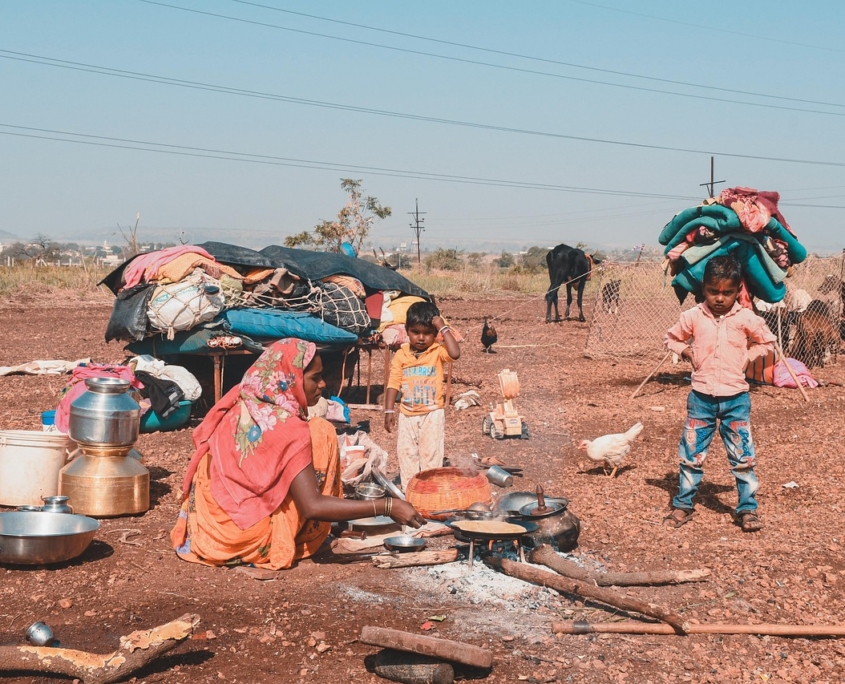 In rural India, accessing health care often means a difficult journey. Only 10% of rural residents have access to health care within a 10-kilometer radius, while 90% must travel to different locations for specialized treatment. This distance translates to lost wages, transportation costs and delayed treatment that can turn minor ailments into life-threatening emergencies.
The health care gap in rural India is severe. Rural areas have a doctor-to-patient ratio of 1:11,082, nearly 11 times worse than the World Health Organization’s (WHO) 1:1,000 recommendation. Meanwhile, 71% of India’s population lives in rural areas, but only one-third of physicians practice there.
As of 2025, a technological revolution is bringing medical expertise directly to India’s villages. AI health chatbots developed by Indian startups are transforming smartphones into medical lifelines, offering instant guidance to millions.
Empowering Community Health Workers
ASHABot leads this transformation. Developed by Khushi Baby in partnership with Microsoft Research India, this WhatsApp-based AI chatbot empowers India’s ASHA workers—community health volunteers serving as the backbone of rural health care. The goal is to reach all 1 million ASHAs across the country, who collectively serve 800 million to 900 million people in rural India.
Launched in early 2024, the platform uses GPT-4 technology to provide multilingual support in Hindi, English and Hinglish. When an ASHA worker encounters a question about childhood immunization, breastfeeding or pregnancy complications, she can ask ASHABot through voice notes and receive evidence-based answers within seconds. The system draws from around 40 curated documents, including India’s public health manuals and UNICEF guidelines. The voice note capability also allows ASHAs to play responses aloud for patients who cannot read.
Since early 2024, more than 24,000 messages have been sent through ASHABot, and 869 ASHAs have been onboarded. Currently operating only in the Udaipur district, Rajasthan, the tool represents a pilot that Khushi Baby plans to scale nationwide.
ASHABot builds on Khushi Baby’s decade of work. The organization’s broader Community Health Integrated Platform, used by more than 75,000 community health workers across 48,000 villages, has tracked the health of more than 50 million people. In randomized controlled trials involving 3,200 mothers, the digital health intervention showed a 12% improvement in complete infant immunization.
Making Health Care Affordable
In Odisha and Chhattisgarh, CureBay has established more than 150 e-clinics across 32 districts. The organization focuses on areas where approximately 65,000 people within a 10-kilometer radius lack access to health care.
CureBay’s innovation lies in its affordability. For ₹599 annually—less than ₹2 per day—members receive free doctor consultations and 15% discounts on medicines. For individuals covered under government schemes or insurance, CureBay provides financial support with a daily allowance of ₹1,000 for each day of hospitalization, up to a maximum of 30 days. This membership model helps eliminate catastrophic health expenses that push millions of Indians into poverty each year.
The platform combines AI-powered diagnostic tools with human expertise. AI analyzes symptoms and medical images, providing preliminary assessments during teleconsultations with doctors. CE- and FDA-approved devices conduct diagnostic tests at the e-clinics.
Since 2021, CureBay has served 550,000 unique patients. The organization employs more than 1,000 Swasthya Mitras, community health workers, creating local jobs while expanding access. Around 90,000 people actively subscribe to preventive health programs, with a renewal rate exceeding 60%, showing sustained engagement.
In May 2025, CureBay raised $21 million in Series B funding led by Bertelsmann India Investments, Elevar Equity and British International Investment. Total funding reached about $37 million, with a post-money valuation of around $75 million.
Addressing Mental Health
Mental health remains deeply stigmatized in rural India, yet stress, anxiety and depression affect millions. Wysa, a Bengaluru-based startup, created an AI chatbot that provides mental health support through evidence-based cognitive behavioral therapy techniques.
Wysa launched its Hindi version in April 2024, making mental health resources accessible to Hindi-speaking rural populations. The app is available on smartphones and WhatsApp. The Hindi pilot showed strong engagement, with 80% of users returning for multiple sessions.
Clinical studies demonstrate Wysa’s effectiveness. Users experience an average 31% reduction in moderate anxiety symptoms and a 40% reduction in moderate depression symptoms, according to a study by U.K. health insurer Vitality involving 60,000 members. The platform has facilitated more than 550 million conversations across 65 countries, reaching 7 million users worldwide.
Wysa’s basic version is free, making mental health support accessible to those who cannot afford traditional therapy.
The Digital Foundation
This transformation builds on India’s expanding digital infrastructure. The Ayushman Bharat Digital Mission generated 442 million digital health accounts and linked 293 million health records. Out of 597,000 villages, 572,000 now have mobile or network connectivity, enabling digital health services.
With more than 425 million rural smartphone users and 504 million rural internet users projected by 2025, the foundation exists to scale these solutions nationwide. Rural internet users are growing at a rate of 26%, projected to exceed urban users for the first time.
The Future of AI Health Chatbots
AI health chatbots are not replacing doctors. Instead, they extend medical expertise to villages that never had access. They turn the 100-kilometer barrier into zero distance and transform smartphones into tools for health equity. For rural India, the future of health care has arrived, one conversation at a time.
– Jawad Noori
Jawad is based in London, UK and focuses on Technology and Politics for The Borgen Project.
Photo: Pixabay
