• Link to X
  • Link to Facebook
  • Link to Instagram
  • Link to TikTok
  • Link to Youtube
  • About
    • About Us
      • President
      • Board of Directors
      • Board of Advisors
      • Financials
      • Our Methodology
      • Success Tracker
      • Contact
  • Act Now
    • 30 Ways to Help
      • Email Congress
      • Call Congress
      • Volunteer
      • Courses & Certificates
      • Be a Donor
    • Internships
      • In-Office Internships
      • Remote Internships
    • Legislation
      • Politics 101
  • The Blog
  • The Podcast
  • Magazine
  • Donate
  • Click to open the search input field Click to open the search input field Search
  • Menu Menu

Tag Archive for: USAID

Information and news about mobile technology

Posts

Global Poverty

6 Facts About Democracy in West Africa

Democracy in West Africa
Since it enacted democratic reforms more than two decades ago, West Africa has made substantial progress in democracy and human development. However, recent armed conflicts, corruption scandals and constitutional rights suppressions have caused recent setbacks in democracy in West Africa. One can see this in the form of undemocratic constitution modifications used to retain power, coups in several West African nations, social media restrictions and insurgencies. Although the region is much more stable than before its democratization, those in power must correct recent violence and corruption in West African nations to ensure that democracy in West Africa is viable long term.

6 Facts About Democracy in West Africa

  1. Coups. Burkina Faso has faced three coups in two years, with the latest one coming in January 2022. Mali and Guinea also experienced similar coups, which were led by mid-ranking military officials. On top of these government coups, many West African nations such as Nigeria have dealt with terrorist attacks from Boko Haram.
  2. Elections. Mali’s military junta went back on its previous promise with the Economic Community of West African States (ECOWAS) to hold elections in 2022, instead opting to push the date back to 2026. As a result of the junta undemocratically holding on to power by delaying elections, ECOWAS placed harsh economic sanctions on Mali. Also, Togo’s 2020 election was marked by calls of fraud by the opposition party that lost to its incumbent leader Faure Gnassingbé, who took control in 2005 after his father and former coup leader Gnassingbé Eyadéma died.
  3. Freedom House’s 2019 Democracy Index. Five of the 12 nations with the largest score declines in Freedom House’s 2019 democracy index are West African countries. After Freedom house reclassified Senegal and Benin as “partly free,” the only West African nations that Freedom House designated as “free” are Ghana and Cabo Verde.
  4. Effects of Extremism on Poverty. Many nations in West Africa are still developing economically while simultaneously dealing with issues of terrorism and anti-democratic sentiment. According to the World Bank, almost 60% of rural Togolese live below the poverty line. The growth of violent extremism in West Africa is a byproduct of economic hardship and limited access to education, which leads to an increase in crime.
  5. The Role of the International Community. External election monitoring and assistance can help not only bring back faith in West African electoral systems but also provide a smooth transition of power. A new sense of legitimacy in these elections will make coups, and political violence in general, less common. When government leaders such as Mali’s junta opt to push elections back as a way to stay in power, strict economic sanctioning from the EU and ECOWAS are vital to incentivize democracy and dissuade leaders of other nations from following in Mali’s footsteps.
  6. Initiatives Underway. Tariffs and other economic sanctions can dissuade nations from getting rid of democratic norms. In 2017, Mali, Burkina Faso, Niger, Chad and Mauritania created a task force called G5 Sahel Joint Force to address extremism in West Africa. However, the long-term success of West African democracy also relies on grassroots support of organizations that aim to combat violent extremism and educate citizens on civic values. USAID created the REWARD II project, building on the first phase of the REWARD project that ended in 2020, to address security vulnerabilities by locating West African regions at risk of political violence and teaching peaceful approaches to conflict management within the community.

Looking Ahead

Although democracy in West Africa has been on an upward trajectory since the early 2000s, the recent spike in coups, political extremism and terrorism have caused setbacks to the democratic progress that West African nations previously oversaw. Through economic sanctioning of undemocratic actors on the global scale and grassroots peacemaking strategies, nations outside of West Africa have also demonstrated an interest in the region’s development.

– Salvatore Brancato
Photo: Wikipedia Commons
September 10, 2022
https://borgenproject.org/wp-content/uploads/borgen-project-logo.svg 0 0 Kim Thelwell https://borgenproject.org/wp-content/uploads/borgen-project-logo.svg Kim Thelwell2022-09-10 01:30:152022-09-07 09:15:476 Facts About Democracy in West Africa
Global Poverty

The State of Renewable Energy in South Africa

Renewable Energy in South Africa
The transition to renewable energy in South Africa has been an uphill battle considering the nation’s historically heavy reliance on coal. However, ongoing efforts by the nation to accelerate the transition toward renewable energy sources offer cause for optimism.

South Africa’s Dependence on Coal

South Africa’s energy sector is highly dependent on non-renewable energy sources, namely coal. In 2021, coal-fired power stations accounted for more than 84% of South Africa’s energy with clean energy sources constituting just 13.7%.

The environmental consequences of the nation’s overreliance on coal are notable: in 2019, South Africa stood as the 12th highest emitter of carbon dioxide in the world. Moreover, the economic consequences of a coal-dominated energy sector are devastating for many South Africans as the nation’s economy continues to recover from the pandemic.

Ongoing Challenges with Energy Grid Failures

In South Africa, the need to address energy poverty is pressing as about 3.4 million households in the nation lacked electricity in 2015, according to the South African government. A recent strike in June 2022 by workers at Eskom, South Africa’s state-owned energy company, has led to prolonged electricity blackouts, amplifying already existing problems with the outdated, deteriorating coal-fired power stations and mismanagement. For many South Africans, these blackouts can mean up to eight hours per day without electricity.

Since 2008, Eskom has relied on load-shedding, or rotating blackouts, to mitigate the impact of the nation’s insufficient energy supply on consumers. The economic consequences of the more frequent blackouts in 2022 are severe, exacerbating inequality in a nation where more than half of the population lived in poverty in 2014, according to the latest World Bank data.

Amid the energy blackouts, poor families living in informal settlements and townships face disproportionate impacts and demand for electricity is only increasing as South Africa rapidly urbanizes. These recent energy grid failures and their negative repercussions on poverty point to the need to diversify South Africa’s energy sector.

Notably, South Africa has made substantial progress in expanding electricity access in the past — between 1994 and 2012, household electrification increased from 36% to an unprecedented 87%. Renewable energy sources have the potential to continue to fill the nation’s current void, alleviating the energy poverty that millions still experience. In 2014, South Africa’s Department of Energy set a target to provide electricity to 3 million households through the grid and an additional 300,000 households using non-grid solar energy, projected to resolve 90% of backlogs. While South Africa has not yet achieved this goal, the government has begun to zero in on renewable energy as instrumental to its approach.

South Africa’s Governmental Response

On July 25, 2022, South African President Cyril Ramaphosa announced a series of interventions his government will take to address the energy crisis. Measures proposed include doubling the acquisition of renewable energy this year to more than 5,000 megawatts and providing incentives for households and businesses with rooftop solar panels to sell excess solar power to Eskom to reduce the need for load-shedding. These efforts to increase private sector energy generation are a necessary first step to facilitating this transition toward renewable energy in South Africa.

While these measures are an important start, South Africa will need to spend an estimated $250 billion over the next 30 years to finance shutting down coal-powered plants and transitioning to wind and solar power. Public resources lack the funds to provide sufficient backing for this effort. At the U.N. Climate Change Conference (COP26) in Glasgow, Scotland in November 2021, the U.S. along with European nations pledged only $8.5 billion to help South Africa transition away from coal. Thus, a significant contribution from the private sector will be critical.

According to Energy Minister Gwede Mantashe in December 2021, the South African government allocated $2.8 billion in contracts for 25 renewable energy projects to the private sector. These projects include wind farms and photovoltaic plants and should increase South Africa’s electricity capacity generation by nearly 5%.

Additionally, several companies are turning to solar energy, including South African Breweries (SAB), one of the nation’s largest companies. SAB aims to withdraw from Eskom’s grid, with the goal of sourcing 100% of its electricity from renewable energy by 2025. So far, these initiatives have shown promise: in 2021, SAB’s decision to transition to solar power resulted in more than 9,000 tons of carbon dioxide emissions reductions.

New Investments in Renewable Energy in South Africa

As of August 2022, USAID and Prosper Africa are overseeing a delegation of U.S. investors with more than $1 trillion in assets visiting South Africa to meet with fund managers, looking to invest in the nation’s transition to renewable energy.

This visit also coincides with the U.S. government’s attempts to deepen diplomatic ties with South Africa. On August 8, 2022, U.S. Secretary of State Antony Blinken met with South African Minister of International Relations Naledi Pandor to discuss the ongoing partnership between the two nations in trade and investment. Going forward, an active and continued diplomatic relationship between the two nations will be essential to achieve progress.

Looking Toward a Brighter Future

The possibility of large new investments in renewable energy in South Africa indicates a potential future of increased trade between the U.S. and South Africa. The transition away from coal-dominated energy will have transformative effects on the nation’s economic development, reducing poverty and deep-rooted inequality by creating a stronger, more reliable power grid and simultaneously reducing greenhouse gas emissions. Furthermore, the renewable energy industry represents an opportunity for tremendous job creation and increased economic opportunities.

– Oliver De Jonghe
Photo: Flickr

September 7, 2022
https://borgenproject.org/wp-content/uploads/borgen-project-logo.svg 0 0 Jennifer Philipp https://borgenproject.org/wp-content/uploads/borgen-project-logo.svg Jennifer Philipp2022-09-07 07:30:002024-05-30 22:30:03The State of Renewable Energy in South Africa
Children, Developing Countries, Development, Global Poverty, Health

Agriculture in Malawi Uses Solar Power to Water Crops

Agriculture in MalawiIn high-rise corporate buildings and individual cubicles, a barrier unfolds in the lives of many people who work in air-conditioned offices toward the difficulties of a career in agriculture. Small changes in the weather or environmental conditions impact entire communities. The emergence of the collaboration between new, innovative technological solutions and the farms of Malawi shed light on the future of farming.
Agriculture in Malawi

Malawi is a landlocked country in the southeast Africa. About 80 percent of Malawi holds connections to the agricultural sector as a means of their livelihood, representing the importance of efficient and innovative farming policies. Political leaders implemented the “National Nutrition Policy and Strategic Plan” to complement the pre-existing “Comprehensive Africa Agriculture Development Program”. Together, the policies coordinate government spending and growth in the agricultural sector. Malawi also works with other organizations and governments for additional agricultural support. For example, the United States Agency for International Development (USAID) invests in dairy and legume cultivation, provides training to assist in financial and economic improvements and works with local communities to develop lasting solutions.

Concern Worldwide in Malawi

Another organization that provides agricultural assistance is Concern Worldwide. Created in 1968 by a couple named John and Kay O’Loughlin-Kennedy, this group is based in Ireland. It initially started as a response to the independence movement in Biafra from Nigeria that resulted in widespread famine. The organization eventually expanded to countries in need around the world, providing aid and sending volunteers.

In 2021, Concern Worldwide provided emergency assistance to 17.8 million people and health services to 11.4 million people. In 24 countries, Concern Worldwide emphasizes the livelihoods and education of impoverished communities and fights for adequate health and gender equality.

Harnessing the Power of the Sun

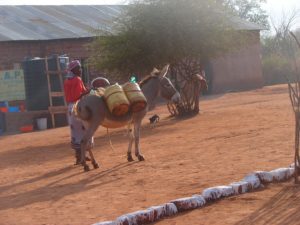
One of Concern Worldwide’s latest initiatives is the implementation of a program to improve agriculture in Malawi. Because a large portion of the country relies on the success of agriculture to survive, it is vital that the productivity and efficiency of new technological innovation transfer to the communities to establish a sustainable livelihood. Concern helps install solar-powered irrigation systems with funding partnerships with organizations such as the European Union and Irish Aid.

The new irrigation system allows farmers to avoid problems associated with droughts and other environmental inconsistencies and plant multiple times per year. The collaboration in these local communities ensures that the program will be long-lasting and sustainable. Groups in specific areas assemble into co-operatives, jointly operate the system and make decisions about entering the agricultural market to ensure a profit. The profits provide repayment for the irrigation system, allowing the organization to move on to the next co-operative group. Thus, the system that Concern Worldwide supports encourages productive farming techniques and resourceful business strategies to ensure long-term success for agriculture in Malawi.

Success Builds From Previous Projects

The development of solar-powered irrigation systems builds on prior projects in the region from similar humanitarian groups. Concern Worldwide previously worked with the Promoting Sustainable Partnerships for Empowered Resilience (PROSPER) program to provide treadle pumps in partnership with UK Aid.

It functioned as a means to increase food accessibility and availability. After budget cuts, the organizations that were supporting the project were unable to continue. Thus, there is hope that the new solar-powered system yields more success among renewed efforts in the field of agriculture in Malawi. The solar-powered irrigation system also builds on a prior UNICEF project for a solar-powered water pump in Malawi. UNICEF installed this pump and also trained citizens to operate and fix the pump when needed while creating a way to fund the pump through a community garden. The program assisted in a wide variety of poverty-reducing actions in the areas of sanitation, agriculture, trust in local institutions and time for children to attend school.

A Look Ahead

As more projects such as the prior project that UNICEF implemented as well as the more recent project by Concern Worldwide make a difference in Malawi’s local agricultural communities, individuals remain closer to maintaining healthier and stable lifestyles.

–Kaylee Messick
Photo: Flickr

September 5, 2022
https://borgenproject.org/wp-content/uploads/borgen-project-logo.svg 0 0 Jennifer Philipp https://borgenproject.org/wp-content/uploads/borgen-project-logo.svg Jennifer Philipp2022-09-05 07:30:282022-09-03 16:15:41Agriculture in Malawi Uses Solar Power to Water Crops
Global Poverty

Humanitarian Aid to Somalia Amid Worst Drought

Humanitarian aid to SomaliaThe U.S. Agency for International Development (USAID) announced on July 24, 2022, that the U.S. would provide $476 million in humanitarian aid to Somalia after an unprecedented drought drastically increased the risk of famine. More than 7 million people could face famine due to this drought. Hence, amid this looming famine, this aid seeks to provide “urgent food supplies” and offer necessary nutrition support to children facing acute malnourishment.
The Current State of Somalia

Somalia is currently in a state of climate emergency after experiencing “a fourth failed rainy season,” which plunged the nation into drought. This has caused conditions of mass famine, disease and displacement. After a recent trip to Somalia, Jan Egeland, Norwegian Refugee Council’s secretary general, describes the situation on the ground. Farmers had “lost all their livestock and crops,” children face severe malnourishment and parents beg for food and water to meet their daily needs.

Drought is not a new phenomenon in Somalia and has detrimentally impacted the social and economic stability of the country in the past decade. Since the beginning of 2021, the drought has forcefully displaced more than 800,000 people. With the most recent drought fostering a significant hunger crisis, the number of people experiencing crisis levels of hunger could increase “from less than five million to more than seven million in the coming months.” While drought in Somalia primarily fuels mass displacement and famine, it also generates “violent conflicts over water and grazing land, rising costs of basic goods and the destruction of crops and livestock herds.”

The intertwining of factors affecting food security in Somalia evidently worsens the situation. These factors include the COVID-19 pandemic, locust plagues and “continued recovery from previous droughts.” The Russian war in Ukraine also contributes to the state of food insecurity in Somalia as roughly “90% of Somalia’s wheat imports came from Russia and Ukraine.” The invasion has led to the blockage of grain supplies and a surge in food prices.

The US Response

To respond to this critical situation, the U.S. announced that it would provide $476 million worth of humanitarian aid to Somalia. Taking this most recent humanitarian funding into consideration, this would mean that the U.S. has provided close to $707 million in humanitarian assistance for people in Somalia in 2022 alone. This recent humanitarian aid sum is expected to allow USAID to accomplish several objectives to help millions across Somalia. These include providing:

  • Emergency food and nutrition aid. Cash-based transfers will allow Somalis to buy essential food from local markets to reignite the economy while addressing hunger. In areas without local markets, USAID will provide vulnerable families with sorghum, vegetable oil and yellow split peas. To address malnutrition among children, USAID will implement “community-level screening” to quickly identify severe acute malnutrition cases. USAID will then supply specialized nutritional supplements to these children.
  • Emergency health care services along with clean and safe drinking water sources. Part of this response includes supplying “latrines and handwashing stations, rehabilitated water and sanitation systems and hygiene kits.” In addition, mobile health teams will provide health services to isolated people in rural areas, among other efforts.
  • Support and protection services in response to gender-based violence. With women and children being disproportionately vulnerable to gender-based violence, USAID will provide comprehensive aid, including psychosocial support, medical resources and health care services.

The Implications

While financial aid is extremely helpful in dealing with the impact of drought, there remain significant funding shortfalls. As opposed to the $1.3 billion donated by international donors in 2017, so far, in 2022, the figure only stands at $500 million. USAID has expressed a pressing need for more international donors to help address the impacts of several climate-related catastrophes and food insecurity in Somalia.

The U.S. provision of $476 million in humanitarian aid to Somalia gives the country’s citizens hope for a better tomorrow. It remains critical for Somalia’s global partners to contribute to the widespread efforts to alleviate the impacts of the looming famine fueled by the recent drought.

– Claudia Efemini
Photo: Flickr

September 1, 2022
https://borgenproject.org/wp-content/uploads/borgen-project-logo.svg 0 0 Jennifer Philipp https://borgenproject.org/wp-content/uploads/borgen-project-logo.svg Jennifer Philipp2022-09-01 01:30:162022-09-03 16:08:33Humanitarian Aid to Somalia Amid Worst Drought
Global Poverty, Health

A Backpack Fights Illegal Logging in Peru 

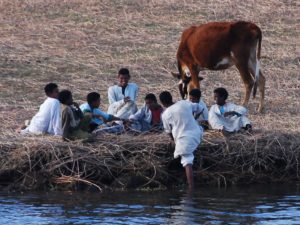
Illegal Logging in PeruMany nomadic communities live in Peru’s Amazon rainforest and more than half of the world’s uncontacted tribes reside in the same lively forest near the Peru-Brazil border. However, illegal logging in Peru poses a devastating threat to tribes’ survival. Not only do contractors expose members of these tribes to fatal illnesses, they purposely undermine the real value of trees to create illegal scams. The education of indigenous communities has become the most effective deterrence against illegal logging, and innovative tools such as the Peruvian “Forest Backpack” is actively teaching local leaders how to detect and avoid scams.
Illegal Logging and its Effect on Amazonian Communities

In the Amazon rainforest, the main cause of forest and village degradation is illegal logging. The prevalence of illegal logging poses harsh consequences on Amazonian communities, as it can destroy many homes in the process.

In 2012, the World Bank reported that close to 80% of Peru’s logging exports were the result of illegal logging practices, in which timbermen forge documents to appear professional.

As illegal logging in Peru continues, it endangered the homes and livelihoods of Peruvian indigenous peoples. Since many communities sell their wood for prices that are not fair, the community loses out on opportunities for growth and improvement of living conditions.

With an already high poverty rate of 70% among indigenous Peruvian communities, illegal loggers take away from their potential prosperity. Countless villages are forced to flee to towns in fear of illegal loggers, putting them at risk for an illness they have never been exposed to before as well as erasing the traces of their previous tribal life, according to Reuters.

Government Recognition

Peruvian communities who fall victim to illegal logging face many difficulties with the government’s recognition. Since many of these communities do not appear on maps, lack official acknowledgment and instead must rely on the federations that represent them. Without the government’s affirmation, localities do not have legal protection.

Violence often follows deforestation, putting communities in direct danger and bringing disastrous ramifications. Edwin Chota was the leader of the Alto Tamaya-Saweto in the Ucayali region of the Amazon. Illegal loggers killed him after a long campaign with his community to gain the titles to their own land, The Guardian reports. Villagers embarked on a six-day river journey to report the atrocity, highlighting the struggle locals go through to gain access to law enforcement.

The Forest Backpack

In 2015, OSINFOR, the Peruvian agency that oversees the precious resources of the Amazon, began developing innovative solutions to prevent the further exploitation of indigenous communities. OSINFOR has received help from both USAID and the U.S. Forest Service in the training of community members, all using one simple, unassuming tool: a backpack.

Within the Forest Backpack are tool kits and laminated images that can be used to instruct others as well as measure the value of a given tree. Since 2019, OSINFOR has distributed these backpacks to indigenous communities where illegal logging hit the hardest.

Indigenous communities are particularly vulnerable to timber traders’ deception for multiple reasons, such as language barriers and lack of educational tools. OSINFOR focuses on speaking to communities in their own language and teaching leaders how to use the backpack’s indispensable tools, according to Medium.

To complement the fair selling of trees, these Peruvians are also harvesting seeds to plant the next generation of trees to become more sustainable. The growing accessibility of forest assessment tools and OSINFOR’s and USAID’s cooperation with underserved indigenous communities will eliminate illegal logging in Peru as well as improve quality of life.

In the words of Isideo Ruiz Apu, the leader of the Huitoto community of Pacuarquillo, “The forest is our market, our hospital, our bank; through the forest, we sustain our households and get what we need,” Medium reports.

– Caroline Zientek
Photo: Flickr

August 19, 2022
https://borgenproject.org/wp-content/uploads/borgen-project-logo.svg 0 0 Jennifer Philipp https://borgenproject.org/wp-content/uploads/borgen-project-logo.svg Jennifer Philipp2022-08-19 07:30:472024-06-11 23:17:21A Backpack Fights Illegal Logging in Peru 
Economy, Global Poverty

Inflation in Egypt 

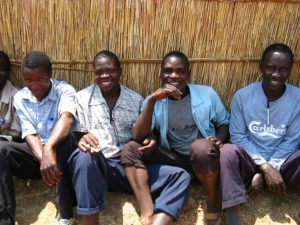
Inflation in EgyptIn 2022, inflation has been sweeping across the world like wildfire, and it has impacted the world’s impoverished the most severely. Here is some information about inflation in Egypt.
Inflation on the Rise

Inflation in Egypt rose to 13% in June 2022 from 11% in April 2022, after only seeing an inflation rate of 4.8% at the end of 2021. The Ukrainian war caused an increase in costs of goods which also caused the interest rates in the country to rise. These interest rates were already some of the highest in the world before the increase. These increases in the costs of imported and exported goods have made it much more challenging for the working class of the country to make a living.

There has been an increase in the prices of simple goods like bread, rice and sugar, making it hard for families to sustain themselves, and even things like nuts have moved into the category of luxury for most families. Inflation has affected individual families and Egypt’s economy as a whole as Egypt’s purchasing index contracted for the 18th consecutive month in May which is what caused the country to raise the interest rates for the first time since 2017. This has put a strain on small business owners who sell goods to survive because they no longer can afford to buy the product that they sell.

Humanitarian Impact

The U.S. has donated $30 billion in economic aid to Egypt since 1978 in order to provide stability to the region. USAID’s current plan to help the economy is to reduce the rising cost of food in Egypt. U.S. aid to Egypt reduced by 85% from 1998-2020 from $833 million to $125 million in 2020, however, the Biden Administration has requested $1.43 billion in aid for Egypt in 2022 amid the pandemic and the Ukrainian war.

The world cannot control what goes on in terms of the Russian and Ukrainian war, so the Goal of USAID is to impact the country in as many ways as possible from within. As of April 2022, the Biden Administrations’ funds are to go toward creating more and better jobs and enhancing the role of government officials to help the institutions of Egypt meet the economic needs of their people. Inflation in Egypt has been the cause of many people losing their jobs and so plans created to foster the economy are very relevant and should prove useful. Hundreds of thousands of jobs have emerged since 1978 in Egypt due to U.S. involvement, and that growth could be beneficial to combating inflation in Egypt.

Looking Ahead

The inflation crisis in Egypt is far from over, but the world is taking the proper steps in order to attempt to turn the tides. It may take months or years for one to be able to see the impact of the funds that Egypt received, however, the people of Egypt know that their struggle is not going unnoticed and that can be the spark someone needs to keep pushing for a little bit longer.

– Alex Peterson
Photo: Flickr

August 19, 2022
https://borgenproject.org/wp-content/uploads/borgen-project-logo.svg 0 0 Jennifer Philipp https://borgenproject.org/wp-content/uploads/borgen-project-logo.svg Jennifer Philipp2022-08-19 07:30:392024-05-30 22:29:55Inflation in Egypt 
Development, Global Poverty, Health

Harvest Africa Improving Agriculture and Food Security

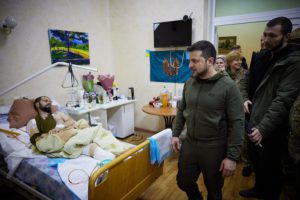
Harvest AfricaIn 2017, NASA, in partnership with the University of Maryland, established its official agriculture and food security program known as Harvest. Using resources like Earth observation (EO) data, artificial intelligence and the knowledge of experts worldwide, Harvest works to enable informed agricultural decision-making in the U.S. and around the world, all while doing so in a “cost-effective and transparent” manner.  As part of this broader Harvest framework, however, there is also Harvest Africa— the more targeted initiative working to advance agriculture and food security in Africa specifically.
Harvest Africa’s Objectives

The program also works to advocate for the wider use and implementation of these advanced agricultural tools by both “public and private organizations” in an effort to “benefit food security, agriculture and human and environmental resiliency,” per Harvest’s mission statement. There are several key aspects to know about this program and its work on the African continent.

With an emphasis on Eastern and Southern Africa— two regions in which the World Bank projects an estimated 66.4 million people will experience food-related crises in July 2022. Harvest Africa intends to find innovative, partnership-driven solutions to address Africa’s most difficult food and agricultural issues.

Using data gathered from advanced satellite and machine technology, the program works to identify the root causes of problems like crop failure or production shortfall in Africa, all in an effort to get out in front of those problems early.

 Several crucial objectives of Harvest Africa, according to its website, include:

  • Using “world-class technical expertise,” artificial intelligence and “EO-based data and tools” in order to advance agricultural land use, sustainability and productivity.
  • Promoting the implementation and use of satellite-based data and technology for crucial agricultural monitoring and assessment.
  • Working with agencies and organizations on both the national and local levels in developing and implementing these advanced agricultural tools.
  • Making this agricultural data as widely available to the public as possible in order to “promote the operational uptake and sustainability of these new methods.”

The Impact So Far

Harvest Africa is currently carrying out numerous projects; many of which are seeing extremely promising results. In Kenya, for example, an estimated 3.5 million people in the country’s Arid and Semi-Arid Lands (ASAL) region are currently facing acute food insecurity. Harvest is running a program that is playing a massive role in helping government officials and local farmers diagnose and find solutions to widespread crop failure.

By using satellite data to track elements such as rainfall, soil moisture and land use, NASA teams funded by Harvest and the U.S. Agency for International Development (USAID) are helping to make more accurate and detailed assessments to track where crops are growing, according to NASA Applied Sciences.

As described on NASA’s website detailing the program, “Agriculture officials in Kenya now have help pinpointing exactly where farms are thriving or struggling. They’re using views from above provided by NASA satellites to help direct support where it is needed most,” NASA Applied Sciences reports. 

Another Harvest project making great strides is the Crop Monitor. In close collaboration with several other global organizations, this project is working to implement the wider use of EO satellite data and agricultural monitoring systems in various African countries, according to EOS.

Having been “adapted and adopted for full operational use by national ministries in Kenya, Tanzania and Uganda,” and “currently in development for use in Mali and Rwanda,” the Crop Monitor project is an exciting possibility for other African countries.

In countries like Mali, where over 29% of the population is battling malnourishment and Rwanda, where one-fifth of the population is food insecure, the development of such a project is certainly good news, as it has the potential to bring much-needed relief in the face of harsh struggle.

A Fighting Chance

As threats to African crop production prove more and more numerous— such as increased drought, frequent flooding and growing pest infestation — the need for innovative solutions and increased cooperation is higher than ever.

 However, with the work of Harvest Africa, African countries and their farmers have a real chance of getting ahead of such disasters; a chance which leads to the potential for greater crop success and, as a result, increased food security.

 With the help of these early warning systems, Earth observation data, artificial intelligence and some of the world’s brightest minds, Africa is becoming better equipped than ever before to thrive in the face of crisis.

– Riley Wooldridge

Photo: Flickr
August 19, 2022
https://borgenproject.org/wp-content/uploads/borgen-project-logo.svg 0 0 Jennifer Philipp https://borgenproject.org/wp-content/uploads/borgen-project-logo.svg Jennifer Philipp2022-08-19 01:30:262024-05-30 22:29:56Harvest Africa Improving Agriculture and Food Security
Education, Global Poverty, Health

The Health Crisis in Ukraine

Health Crisis in UkraineMonths of war leaves a health crisis in Ukraine and its healthcare system strained to provide proper healthcare to the citizens. As many healthcare facilities are destroyed and many more are overwhelmed with the number of patients, healthcare workers work long hours treating patients with short-term to long-term illnesses like HIV, tuberculosis and polio.
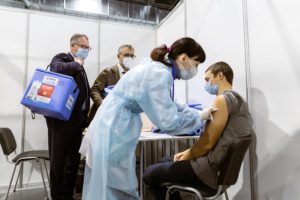
World Health Organization Director-General Dr. Tedros Adhanom Ghebreyesus stated that “this war has gone on for 100 days too many,” as the war in Ukraine is “shattering lives and communities and imperiling the short- and long-term health of Ukraine’s people”.

HIV

The HIV virus affects the immune system and leads to AIDS if untreated. Even before the war started, Ukraine suffered an epidemic of HIV, with an estimated 250,000 people diagnosed and many more not realizing they have the virus. HIV is more common among people who struggle with drug addiction and sex workers, in other words, people living on the marginalized side of society.

USAID provides support and services to treat people with HIV. However, with the ongoing war and the health crisis in Ukraine, it is hard for patients to get tested for HIV or receive the proper treatment.

Tuberculosis

Tuberculosis is a bacterial disease in the lungs with about 33% of cases connected with drug use. Meanwhile, only 76% of patients receive successful treatment for the disease, with the remaining 24% not completing or receiving their treatment too late. Additionally, some TB victims are asymptomatic, causing the disease to spread rapidly.

Because of the war and the COVID-19 pandemic, the rate of detecting TB dropped. TB is one of the leading causes of death of HIV patients, and because of the health crisis in Ukraine, TB can spread easily and cause more deaths.

Polio

Similar to HIV, Ukraine experienced an outbreak of polio before the Russian invasion. Polio is a virus that affects the spinal cord that can lead to paralysis or even death. Children under the age of five are especially vulnerable to the virus.

Vaccination is possible, but the Russian invasion interrupted a campaign to vaccinate children against the virus. Even so, vaccination rates for polio are under 50% in Ukraine. Areas similar to Kharkiv, Ukraine’s second-largest city, have struggled to combat polio due to a lack of vaccination.

World Health Organization Increases Its Presence

Before the war started, Ukraine was on a path of progress with health care. In 2014, the Ministry of Health implemented the National Strategy on Health to help improve the quality of health. However, the ongoing war halted progress as hospitals and health care services were destroyed.

Because of the health crisis in Ukraine, WHO increased its presence in Ukraine and in countries with refugees. Since the start of the war, Ukraine confirmed over 260 attacks on their healthcare system as of June 2.

“WHO is doing everything we can to support Ukraine’s Ministry of Health and deliver essential medical supplies and equipment,” Ghebreyesus said. “But the one medicine that Ukraine needs most is the one that WHO can’t deliver – peace. We call on the Russian Federation to end the war.”

To meet the needs of the health crisis in Ukraine, WHO appealed to the U.S. for $147.5 million. WHO wants to use $80 million to provide support to the people still in Ukraine and an additional $67.5 million to support countries with refugees.

A Look Ahead

Even though Ukraine is experiencing a health crisis as a result of the Russian invasion, international organizations similar to the WHO provide medical support while also advocating for monetary support to the U.S. government.

– Chris Karenbauer
Photo: Flickr

August 14, 2022
https://borgenproject.org/wp-content/uploads/borgen-project-logo.svg 0 0 Jennifer Philipp https://borgenproject.org/wp-content/uploads/borgen-project-logo.svg Jennifer Philipp2022-08-14 01:30:442022-08-12 04:20:22The Health Crisis in Ukraine
Global Health, Global Poverty, Health

US Aid to Help Pay Ukraine’s Health Care Workers

Help Pay Ukraine’s Health Care WorkersOn July 12, 2022, the U.S. and World Bank announced the provision of $1.7 billion in aid to help pay Ukraine’s health care workers and supply “other essential services.”
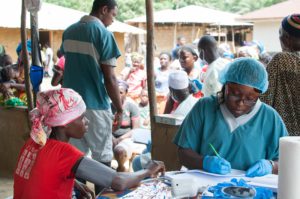
Ukraine’s Health Care Workers

Despite the ongoing Russian offensive, many Ukrainian health care workers have opted to remain in the country, performing their duties under extreme strain and hardship. These individuals are key to Ukraine’s continued resistance, providing essential medical services for soldiers and civilians alike. Ukraine’s minister of health, Viktor Liashko, expressed that “the overwhelming burden of war” has made it more difficult to pay health care workers, emphasizing the urgency of continued financial support.

Importance of Humanitarian Assistance

The latest aid package brings the total U.S. budgetary assistance to Ukraine, via USAID, to $4 billion as of July 2022. Ukraine has used this aid to maintain essential social services, such as ensuring schools and medical facilities receive gas and electricity, providing basic humanitarian supplies and supporting civil servants. USAID Director Samantha Power expects that Ukraine’s dependence on foreign aid will continue as the Russian offensive continues targeting Ukraine’s public services.

The importance of supporting Ukraine’s hospitals cannot be overstated. Russia’s offensive strategically targets health care institutions alongside other public works. Ukraine noted 269 attacks on Ukraine’s public health institutions as of June 2, 2022. Russia’s strategy has decimated vital supply lines and infrastructure. The recent U.S. aid to help pay Ukraine’s health care workers is a step in the right direction, however, continued international support for Ukraine’s humanitarian services remains essential.

Additional International Support for Ukraine

The U.S. has sent the most aid to Ukraine since the start of the war, however, many other countries have also stepped up to support Ukraine’s humanitarian and military needs in this time of crisis. As of July 4, 2022, the U.K. had committed about $3.5 billion and the European Union had pledged nearly $1.5 billion to the cause. The IMF and World Bank have also sent multiple aid packages worth several billion U.S. dollars since the conflict began. The private sector is also a valuable source of aid for Ukraine, with major corporations such as IKEA, Adidas and Google pledging millions of dollars worth of assistance.

Fund-tracking platforms such as Devex estimate that there are a total of about $100 billion in aid commitments to Ukraine as of July 2022. Unfortunately, only about $8.5 billion will be allocated toward humanitarian aid, with the remaining funds being tied up in military packages or loans that cannot be allocated toward emergency services.

The $1.7 billion in U.S.-World Bank aid to help pay Ukraine’s health care workers and sustain essential services will bolster Ukraine’s health system and public institutions. As Russia’s offensive grows more protracted, the continuance of such humanitarian assistance is crucial.

– Mollie Lund
Photo: Flickr

August 10, 2022
https://borgenproject.org/wp-content/uploads/borgen-project-logo.svg 0 0 Kim Thelwell https://borgenproject.org/wp-content/uploads/borgen-project-logo.svg Kim Thelwell2022-08-10 01:30:522022-08-09 01:35:42US Aid to Help Pay Ukraine’s Health Care Workers
Development, Global Poverty, Health

Rebuilding Health Care in Liberia

Health Care in LiberiaLiberia has had a long relationship with poverty, with 50.9% of the population living below the national poverty line in 2016. This figure was predicted to increase in 2021 by The World Bank. Due to the heavy burden of poverty, many children deal with malnutrition. The civil war in Liberia during the 1990s, as well as the Ebola outbreak in 2014, have had significant impacts on overall life, including health care in Liberia.

Malnutrition

Widespread poverty in Liberia has had far-reaching impacts on citizens’ lives. Apart from an inadequate health care infrastructure in Liberia, poverty also directly impacts the health of citizens in the form of malnutrition. The effects of malnutrition are far-reaching, especially for children. An estimated 32% of children younger than the age of 5 suffer stunting due to malnutrition.

Malnutrition also increases the risk of death and infections. Additionally, malnutrition can negatively affect a child’s brain function. The struggle stems from more than just a lack of food, but a lack of funds to afford foods with the proper nutrients. As of 2017, 69% of children under the age of 5 in Liberia are anemic.

Malnutrition has an adverse effect on economic efficiency, human capital and national development, according to USAID. Furthermore, the lack of resources such as clean water and proper sanitation increases the risk of stunting.

Partners in Rebuilding Health Care

The interconnectedness of the world means quick patterns of disease spread, which can lead to global health crises, as with the COVID-19 pandemic. However, impoverished countries, such as Liberia, have fragile health systems that are not well-equipped to properly manage such disease outbreaks.

Partners in Health (PIH) came to the country’s aid back in 2014 when the Ebola outbreak posed a massive threat to West Africans. Partners in Health continued to aid health care in Liberia, by strengthening the pre-existing health care facilities and infrastructure.

The organization’s aid has contributed to positive health impacts in Liberia. For instance, people dying from tuberculosis decreased from 15% to 0% after PIH support began in 2014. Also, mental health patients in Partners in Health supported facilities went up 30%. The organization has also helped train communities on health-promoting practices and provided training to health care professionals as well.

The world is more interconnected than ever, which means that countries are more able to help one another and collaborate to combat global poverty.

– Kelsey Jensen
Photo: Flickr

August 3, 2022
https://borgenproject.org/wp-content/uploads/borgen-project-logo.svg 0 0 Kim Thelwell https://borgenproject.org/wp-content/uploads/borgen-project-logo.svg Kim Thelwell2022-08-03 03:45:162024-06-06 01:11:42Rebuilding Health Care in Liberia
Page 23 of 92«‹2122232425›»

Get Smarter

  • Global Poverty 101
  • Global Poverty… The Good News
  • Global Poverty & U.S. Jobs
  • Global Poverty and National Security
  • Innovative Solutions to Poverty
  • Global Poverty & Aid FAQ’s
Search Search

Take Action

  • Call Congress
  • Email Congress
  • Donate
  • 30 Ways to Help
  • Volunteer Ops
  • Internships
  • Courses & Certificates
  • The Podcast
Borgen Project

“The Borgen Project is an incredible nonprofit organization that is addressing poverty and hunger and working towards ending them.”

-The Huffington Post

Inside The Borgen Project

  • Contact
  • About
  • Financials
  • President
  • Board of Directors
  • Board of Advisors

International Links

  • UK Email Parliament
  • UK Donate
  • Canada Email Parliament

Get Smarter

  • Global Poverty 101
  • Global Poverty… The Good News
  • Global Poverty & U.S. Jobs
  • Global Poverty and National Security
  • Innovative Solutions to Poverty
  • Global Poverty & Aid FAQ’s

Ways to Help

  • Call Congress
  • Email Congress
  • Donate
  • 30 Ways to Help
  • Volunteer Ops
  • Internships
  • Courses & Certificates
  • The Podcast
Scroll to top Scroll to top Scroll to top