• Link to X
  • Link to Facebook
  • Link to Instagram
  • Link to TikTok
  • Link to Youtube
  • About
    • About Us
      • President
      • Board of Directors
      • Board of Advisors
      • Financials
      • Our Methodology
      • Success Tracker
      • Contact
  • Act Now
    • 30 Ways to Help
      • Email Congress
      • Call Congress
      • Volunteer
      • Courses & Certificates
      • Be a Donor
    • Internships
      • In-Office Internships
      • Remote Internships
    • Legislation
      • Politics 101
  • The Blog
  • The Podcast
  • Magazine
  • Donate
  • Click to open the search input field Click to open the search input field Search
  • Menu Menu

Tag Archive for: Technology

Posts

Disability, disability and poverty, Global Poverty

Technologies Help To Fight Disability and Poverty in The Gambia

Disability and Poverty in The GambiaToday, thanks to recent technological advancements and the work of various humanitarian initiatives, 3D printing promises to improve the lives of millions of amputees across the world. This comes as cause for optimism, especially in developing countries such as The Gambia, where amputations are relatively common. The work of Gambian organizations such as Make3D, specialists in printed prosthetics, means that amputation does not have to signal a life of social ostracization and lesser opportunity.

Disability and poverty in The Gambia are perpetual issues. One of the smallest countries in Africa, The Gambia has one of the most vulnerable economies on the continent. Rain-fed agriculture employs around 70% of the population, meaning the livelihood of many lives and dies with the country’s climate. Poverty levels are high. In fact, according to the Gambia Poverty & Gender Assessment 2022, 53.4% of Gambians lived below the national poverty line in 2020. Amputees catch the brunt of this trend due to the labor-intensive nature of farming, which offers few opportunities to those with physical disabilities. 

Reasons for High Numbers of Amputations in The Gambia

Experts cite the country’s complex and divergent cultural makeup as one of the reasons for the high incidence of disability and poverty in The Gambia. Colonial and Gambian native histories converge in many ways. According to scientist Ryan Anderson, this coexistence of divergent cultural traditions “is exemplified in The Gambia’s health care system.” Many Gambians prefer to visit traditional healers when seeking treatment for an injury. In fact, many rural communities rely exclusively on the practice of these traditional healers, such is the lean presence of large hospitals in remote regions. These traditional practitioners, while popular, often do not have access to modern facilities or advised levels of sanitation. This results in infections and ultimately the need for amputations in patients.

Dr. Ammar Al Jafari, chief medical director of Edward Francis Small Teaching Hospital, a modern university facility in Banjul, stated that around 70% to 80% of amputation cases at his hospital stem from initial preference for traditional fracture treatments. These patients often seek his hospital’s treatment once infection has set in to an inadequately treated fracture. Speaking to Africa Press in 2024, Dr. Al Jafari said, “If the patient falls today or has an accident today and has a fracture in the bone, if they come on that very day, in one week we can do the operation, but after three months, we cannot do the operation and they will blame the hospital.” Poverty and disability in The Gambia is often perpetuated by the complex national interplay between tradition, regional circumstances and a lack of accessible, modern health care.

Amputations also occur in large numbers in The Gambia thanks to medical conditions such as Type 2 diabetes. According to STAND, an NGO specializing in providing support for Africa’s amputee community, as many as 40% of all amputations in sub-Saharan Africa result from the condition. Thus, disability and poverty in The Gambia stems in many cases, from the prevalence of known and treatable illnesses.

Challenges for People With Disabilities

Fatou Nije, president of LEGS (Ladies Empowered for Growth and Success), says, “Here in Gambia, if you are disabled, you face many challenges.” Indeed, many amputees find themselves cut adrift from typical societal institutions such as school and work due to a lack of accessibility and support on offer.

While it exists, assistive technology is not yet widely available, meaning many Gambian amputees are unable to live, work and most importantly, earn with as much independence as their able-bodied compatriots. Families can face destitution if a parent undergoes amputation and is subsequently unable to resume work. The Gambian Amputee Association is the only organization of its kind in the country. It supports around 100 amputees with rehabilitation and social facilities, although there are doubtless many more amputees in need of care and medical attention.

Fighting Against Disability and Poverty

Thankfully, amidst these issues there are certain groups dedicated to the fight against disability and poverty in The Gambia. Most of these efforts focus on improving treatment and opportunities for Gambian amputees. For example, the work of STAND and Make3D is rooted in the supply of prosthetic limbs to Gambian patients in need.

STAND specializes in the provision of refurbished and surplus prosthetics from Europe. These prosthetic limbs, which otherwise would go to waste, the organization rescues and supplies to the people who need them most. Since 2016, the organization has supplied almost 1,000 rescued prosthetics to The Gambia alone, as part of nearly 6,000 total supplied to African countries across the period.

Make3D, on the other hand, deals in the low-cost construction of new, 3D-printed prosthetics, using sustainable materials and small-scale manufacturing processes that allow their products to service the hearts of small communities nationwide. In 2021, the company held a design competition in conjunction with Nottingham Trent University in which the university invited artists to submit designs for new prosthetics utilizing sustainable and local materials. The winner’s design went to production for a small run of prosthetics designed for a select group of grateful, young Gambian beneficiaries.

Looking Ahead

While disability and poverty are prominent in The Gambia, initiatives like these are leading the way in providing a source of hope for the next generation of Gambian amputees. There may very well be a day when the loss of a limb in The Gambia does not condemn a patient to a life of destitution.

– Louis Sartori

Louis is based in London, UK and focuses on Technology and Solutions for The Borgen Project.

Photo: Wikimedia Commons

January 29, 2026
https://borgenproject.org/wp-content/uploads/borgen-project-logo.svg 0 0 Jennifer Philipp https://borgenproject.org/wp-content/uploads/borgen-project-logo.svg Jennifer Philipp2026-01-29 07:30:432026-01-28 01:34:13Technologies Help To Fight Disability and Poverty in The Gambia
Education, Global Poverty, Technology

The Emerging Role and Evolution of AI in the Caribbean

evolution of AI in the CaribbeanThe Caribbean consists of 16 independent countries and 18 associated territories, resulting in many unique problems that AI can solve. In an interview with The Borgen Project, University of Central Florida (UCF) Professor Rohan Jowallah, who works as a consultant for AI and AI policies in the Caribbean, provided necessary insight into AI in the Caribbean and what the future potentially looks like with AI.

Professor Rohan Jowallah’s Insight

In The Borgen Project’s interview with Professor Rohan Jowallah, The Borgen Project asked him about his most recent presentation on AI in the Caribbean and how the region has used AI. The organization also questioned him on how his role as a consultant has been beneficial to the Caribbean as a whole and the impact of the policies the region has enacted.

AI has benefited a wide range of sectors, including hospitality, transportation, hospitals and agriculture. There have even been instances of people using ChatGPT to promote real estate. According to Jowallah, the Caribbean is using AI “to simulate how guests should be served” in restaurants. Meanwhile, Trinidad is using AI in education. AI has become more prominent in the education field as it can support learning by being available to students at any time of the day.

When asked about his presentation on AI in the Caribbean and how he felt about the impact of that presentation, Jowallah stated that there is a lot to keep in mind, such as “the transformation of teaching and learning, how it’s going to shape how people learn, and how it’s going to shape how content is delivered.” He also stated that the way teachers teach will not be the same in the future as new advancements occur, also noting that “critical AI literacy” is going to be a necessity in order to navigate spaces with AI.

Upon being questioned about his role as an AI consultant, Jowallah said that the main thing to consider through the use of AI is how to safeguard the future. Finally, the last question that The Borgen Project asked was about where he thinks policies are regarding ethical concerns for AI, with his main thought being that it was simply too early to tell.

Addressing Problems With AI

The United Nations Development Programme (UNDP) in Trinidad & Tobago, Aruba, Curaçao and Sint Maarten aligned itself with CARICOM to address problems with AI. It implemented AI in public administration to resolve problems like limited institutional capacity, scarce resources and heightened vulnerability. The hope is that with AI, and also knowing the opportunities and risks to worry about, there will be a greater understanding of how AI can accelerate sustainable development and resilience in the Caribbean, with many experts in their respective fields all coming together to better understand what AI can do for the region.

The United Nations Educational, Scientific and Cultural Organization (UNESCO) also has pillars already set regarding the speed at which the emerging role and evolution of AI in the Caribbean is happening. Examples of a few of these pillars include culture and creativity, safeguarding intellectual property rights and promoting AI-driven creative industries. Another pillar is education and upskilling, which aims to integrate AI education/training across sectors to best utilize AI’s potential, thus leading to economic growth. With these policies, the emerging role and evolution of AI is finding a more definite role in the Caribbean.

In the case of the emerging role and evolution of AI in the Caribbean, the Caribbean Examinations Council (CXC) has recently opened up the door to permitting the usage of AI in exams in 2026. This is for the Caribbean Advanced Proficiency Examination, Caribbean Secondary Education Certificate and Caribbean Certificate of Secondary Level Competence with clearly defined rules and regulations in place to ensure smooth sailing.

Looking Ahead

The Caribbean is right there as far as AI discussions go, as there is a foundation in place to ensure that in any capacity AI is being used in, it can be used safely and in any imaginable sector. Experts like UCF Professor Rohan Jowallah are at the forefront of the emerging role and evolution of AI in the Caribbean, looking to continue to push boundaries and innovate. With AI being readily available to assist in education or provide training for jobs, AI in the Caribbean could transform lives.

– Amari Jennings

Amari Jennings is based in Orlando, FL, USA and focuses on Technology and Solutions for The Borgen Project.

Photo: Unsplash
January 25, 2026
https://borgenproject.org/wp-content/uploads/borgen-project-logo.svg 0 0 Jennifer Philipp https://borgenproject.org/wp-content/uploads/borgen-project-logo.svg Jennifer Philipp2026-01-25 03:00:282026-01-25 05:13:39The Emerging Role and Evolution of AI in the Caribbean
Clean Water Access, Global Poverty

Pay-As-You-Go Digital Water Services in Kenya

Pay-as-you-go digital water services in KenyaKenya continues to face serious water insecurity in both rural and urban regions. Many households still depend on distant or unsafe water points because traditional billing systems require large monthly payments that low-income families cannot always make. Pay-as-you-go digital water services in Kenya offer a different model. Families buy small amounts of water through mobile payments and smart meters deliver accurate and dependable service. This structure increases affordability, improves service reliability and strengthens utilities in ways that help them expand clean water access to underserved communities.

Mobile Money Makes Clean Water Affordable

Pay-as-you-go digital water services in Kenya let households buy water in small increments through mobile money platforms like M-Pesa. This matters because many Kenyans earn irregular daily wages and cannot manage large monthly bills. When families pay only for what they need, they avoid debt and gain steady access to safe water, which supports health and financial stability.

Waterborne diseases spread quickly in communities that rely on unsafe sources. Pay-as-you-go digital water services in Kenya distribute treated water that meets safety standards, which reduces illness and lowers medical expenses. When families stay healthy, they attend school, work more regularly and invest their income in food and education rather than treatment costs.

Smart Meters and Water Kiosks

Smart meters record water use in real time and deliver prepaid service that prevents leaks and illegal taps. These problems create major losses for utilities and weaken their ability to maintain infrastructure. When utilities reduce losses, they provide more reliable service and reach more households with clean water, which raises community health and overall quality of life.

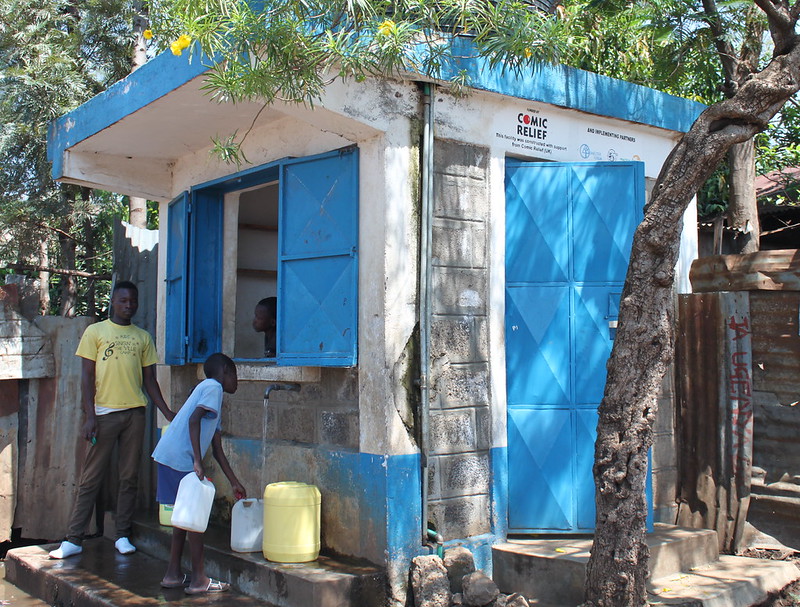
Families in many Kenyan settlements spend long hours each day collecting water. Digital water kiosks in neighborhoods reduce this travel time and offer 24-hour access through mobile payments. More available time allows children to attend school consistently and gives adults more hours for work, which strengthens household income and supports long-term development.

Digital Water Systems Create Jobs and Strengthen Utilities

Digital water systems create new roles for technicians, field agents and mobile service operators. These jobs build technical skills and support local employment. Stronger utilities also operate more reliably and expand service to new regions. When utilities stabilize financially, they improve infrastructure that helps entire communities gain safe water access.

Pay-as-you-go digital water services in Kenya improve clean water access by combining mobile payments with smart delivery systems. These services reduce financial barriers, improve public health and create jobs that support economic growth. As the model expands, it offers a practical path toward universal water access and long-term poverty reduction.

– Shahzeb Khan

Shahzeb is based in San Ramon, CA, USA and focuses on Good News and Technology for The Borgen Project.

Photo: Flickr

January 18, 2026
https://borgenproject.org/wp-content/uploads/borgen-project-logo.svg 0 0 Naida Jahic https://borgenproject.org/wp-content/uploads/borgen-project-logo.svg Naida Jahic2026-01-18 07:30:272026-01-16 10:52:16Pay-As-You-Go Digital Water Services in Kenya
Global Poverty, Hunger, Technology

Solar-Powered Fridges are Fighting Hunger in India

Fighting Hunger in IndiaFood loss and waste drive hunger and poverty across the world. Each year, people lose or waste 1.3 billion tons of food, reducing incomes and leaving families without reliable nutrition. India illustrates this crisis clearly. In 2019, India lost or wasted 56 million tons of food worth about $10 billion, largely because producers lacked cold storage.

Perishable foods such as milk, fruits, vegetables, meat and fish spoil quickly without temperature control. Developing countries lose 23% of perishable foods before they reach markets. These losses reduce farmer incomes and restrict access to nutritious food, especially in rural areas.

Amid these challenges, solar-powered fridges are fighting hunger in India. By providing reliable, off-grid cooling, they help farmers preserve perishable crops, maintain income streams and reduce food waste. These fridges also support health and nutrition by safely storing vaccines, medicines and dairy products while lowering dependence on polluting diesel generators and unreliable electricity grids.

What Is a Solar-Powered Fridge?

Cold storage plays a central role in reducing food loss, but traditional refrigeration creates serious risks. Conventional systems rely on fossil-fuel electricity and refrigerants such as hydrofluorocarbons (HFCs), which trap heat far more effectively than carbon dioxide.

Exporting these systems to low-income regions would lock communities into carbon-intensive infrastructure. Solar-powered refrigeration offers a different path. These systems run on renewable energy and avoid dependence on unreliable grids or diesel generators. In India, where power cuts remain common, especially in rural and semi-urban areas, solar refrigerators provide consistent cooling for food, medicine and vaccines. As a result, solar-powered fridges are fighting hunger in India directly.

Real-Life Impact

In northeastern India, farmer Lalmuankimi Bawitlung experienced the impact firsthand. Rising heat forced her to discard about one-third of her 350-kilogram annual orange harvest after fruit ripened too quickly to sell. In January, the state installed a 10-ton solar-powered cold storage unit in the nearby village of Khawzawl.

The Mizoram Science Technology & Innovation Council worked with Inficold to build the facility, which now serves about 235 farmers. The system uses solar-powered ice battery technology that stores thermal energy and keeps produce cool for months. Lalmuankimi stored oranges until the off-season and sold them for five times the usual price, turning losses into income.

India already has more than 8,200 cold storage facilities, but most rely on the electricity grid. High energy costs and frequent outages force farmers to use diesel generators or abandon cold storage altogether. Solar-powered units address both problems. They reduce operating costs and continue working during power cuts, which often follow floods, landslides or heat waves.

Solar-Powered Fridges Supporting Health

Solar refrigeration also supports health and nutrition. Refrigerators allow households to store food longer and reduce trips to markets. During the COVID-19 pandemic, off-grid refrigerators helped families limit exposure while protecting food supplies. In an Indian pilot, 70% of solar refrigerator customers reported monthly profit increases of about $57 by selling cold beverages and dairy products from home-based businesses.

Health systems also depend on refrigeration. Clinics require cold storage for vaccines, blood, insulin and other temperature-sensitive medicines. Millions of children missed routine immunizations before the pandemic, largely because health facilities lacked reliable cooling. Delivering COVID-19 vaccines to 60%–70% of the world’s population requires a massive expansion of cold chain infrastructure, especially in poorly electrified areas. Solar-powered refrigerators provide a practical solution.

Looking Ahead

Solar-powered fridges are already transforming rural communities by keeping food fresh, protecting incomes and strengthening health systems. Across India, these systems reduce food loss, expand access to nutritious products and create opportunities for women and small-scale farmers. By cutting reliance on polluting energy sources, they also contribute to a cleaner, more sustainable future. Solar-powered fridges are fighting hunger in India by offering a practical, scalable solution that improves lives village by village.

– Mollie Skogen

Mollie is based in London, UK and focuses on Technology and Celebs for The Borgen Project.

Photo: Unsplash

January 16, 2026
https://borgenproject.org/wp-content/uploads/borgen-project-logo.svg 0 0 Precious Sheidu https://borgenproject.org/wp-content/uploads/borgen-project-logo.svg Precious Sheidu2026-01-16 07:30:242026-01-20 02:50:14Solar-Powered Fridges are Fighting Hunger in India
Artificial Intelligence (AI), Global Poverty

How AI is Fighting Global Poverty

AI Is Fighting Global PovertyWhen someone mentions AI tools such as ChatGPT, for many, it is seen as a tool for high school or college student asking AI to complete their homework. The stereotype that AI is only suitable for doing homework, making presentations, or writing papers is far from its true potential. In reality, AI is actively doing a variety of ongoing projects and solutions, fighting global poverty across the humanitarian sector.

A Hunger Free World?

AI algorithms are powering AI-driven tools that reduce hunger and improve nutrition. The algorithms take the data, analyze it, and use the results to provide farmers with accurate crop management information. For example, AI agriculture applications can monitor soil and weather conditions. The data tells the farms how much water to use for irrigation (to conserve water) and how much pesticide to use. The more farmers utilize these AI resources, the more crop production feeds more mouths. A world without hunger is a demanding task; therefore, it requires AI assistance as the world grows. Of course, AI cannot create a zero-hunger world by itself, but it can make an enormous difference.

Natural Disasters

During Hurricane Fiona in 2022, the storm hit the Caribbean as a Category 4 storm. The results were devastating to the community. The damage was so widespread and abundant that emergency humanitarian aid was not able to get there fast enough to document the damage manually. That’s where AI was able ot step in. Digital Engine for Emergency Photo-analysis (DEEP) performed a proper damage assessment in just a few hours, compared to a manual assessment that would take a few days, according to the World Food Program (WFP). DEEP was able to locate communities that were severely impacted and rapidly sent crisis relief services.

After the heartbreaking earthquake that broke infrastructure in Turkiye-Syria in 2023, SKAI was able to respond rapidly for disaster relief. SKAI is a free AI tool that proactively assesses disasters at 33% of the cost and more than 10 times as fast as manual assessments.

Similarly, in crisis settings, AI-enabled chatbots are enabling people to access instant information, register their needs, and receive services in their own language. These tools are speeding up aid delivery, reducing communication barriers, and helping frontline workers reach the most vulnerable faster.

Education

AI is notorious for its ability to assist in homework. However, its ability speaks volumes to potential students who lack a computer or internet connection in impoverished places. AI can transform from tutor to teacher and utilize its intelligent chatbot to teach intellectual material to anyone. AI is accommodating to a multitude of learning methods, whether you are a visual learner, listener, hands-on, etc. AI is giving the power of education to anyone who desires it.

Utilizing AI’s teaching capabilities provides evidence of long-lasting financial benefits for users, which is highly beneficial for poverty alleviation. According to The ChatGPT Revolution, ChatGPT is redefining economic development and reducing poverty with its easily accessible search engine.

AI Opportunities

Unfortunately, the use of ChatGPT and other AI tools for the purpose of fighting global poverty is just the beginning. Therefore, the expansion of its assistance is at a minimum. However, the research and feedback delivered suggest that ChatGPT support has been promising in combating global poverty. Its results have reached many private companies, including ChatGPT, which are now investing in AI tools to help alleviate poverty worldwide.

For example, Meta is increasing funding for AI programs that will mark impoverished areas as target zones, planning to strengthen infrastructure, education, and community grants. Another example is the WFP’s investment in AI operations, which it recently announced in its March 2025 Artificial Intelligence Strategy

– Mireya Aguilar

Mireya is based in Layton, UT, USA and focuses on Technology and Solutions for The Borgen Project.

Photo: Flickr

January 11, 2026
https://borgenproject.org/wp-content/uploads/borgen-project-logo.svg 0 0 Naida Jahic https://borgenproject.org/wp-content/uploads/borgen-project-logo.svg Naida Jahic2026-01-11 01:30:452026-01-10 22:59:11How AI is Fighting Global Poverty
Global Poverty, Natural Disaster, Technology

Schools Advance Tsunami Readiness in the Asia-Pacific

Tsunami Readiness in the Asia-PacificCountries in the Asia-Pacific are among the most vulnerable to tsunami hazards. The region accounts for a significant portion of the Ring of Fire, a string of coastal countries along the Pacific Ocean where nearly 80% of all tsunamis occur. Asian-Pacific nations also have a significant number of coastal communities, including some of the world’s largest megacities. This high level of coastal residence puts millions at risk, evident in the fact that the region accounts for 99% of global tsunami deaths. To reduce fatalities and enhance tsunami readiness in the Asia-Pacific, many affected countries are taking unified action. Central to this effort is increasing the resilience of school communities to these threats.

The Regional Tsunami Project

Responding to a widespread need, the United Nations Development Programme (UNDP) and the Government of Japan created a joint initiative to help countries across the Asia-Pacific enhance their tsunami preparation. The Regional Tsunami Project works with governments, schools and communities to develop locally adapted plans of action to address tsunami risk. More than 800 schools across 24 Asia-Pacific countries are involved, integrating tsunami education and evacuation drills into their curricula.

Evacuation drills give community members the knowledge and tools they need to take quick action in the face of danger. It is especially important for schools to participate in regular drills, as children remain highly vulnerable to disasters. The project’s guidebook, Regional Guide for Schools to Prepare for Tsunamis, provides actionable steps for administrators and educators to enhance planning and implement safety curricula. Widely adopted practices include educating students on how to identify tsunami hazards, using the phrase “Feel. See. Hear. Run.” as a guiding technique. During evacuation drills, students learn where their nearest safe zones are and practice moving from classrooms to these areas.

The Use of Digital Tools

Technology is changing the way communities advance tsunami readiness in the Asia-Pacific. In fact, within school administration and disaster planning, digital tools have become essential. One tool developed by the Regional Tsunami Project is STEP-A (Strengthening Tsunami and Earthquake Preparedness Assessment), an online platform used in Indonesian schools.

STEP-A helps schools determine their tsunami preparedness through self-assessment, engaging students, educators and administrators. Once preparedness levels are identified, the application provides recommended steps for improvement. School readiness information across Indonesia is then integrated into InaRISK, the national disaster-monitoring tool, which provides real-time information on community hazards.

Schools are also adopting other innovative digital tools. In Samoa, students use virtual reality headsets that simulate what their surroundings may look like during a tsunami. This technology helps younger students, many of whom have never experienced a natural disaster, visualize evacuation routes and understand flood scenarios.  Research shows that immersive exercises improve knowledge retention and help students feel more confident in their ability to respond quickly during an emergency.

A Safer Future for the Asia-Pacific

The Regional Tsunami Project has laid a strong foundation for natural disaster resilience and tsunami readiness in the Asia-Pacific, especially in schools where preparation is essential to keeping younger generations safe. Digital tools will continue to play an important role, strengthening cooperation and enhancing preparedness among communities. Tsunamis will remain a serious threat in the region; however, by building the capacity to respond effectively, the Asia-Pacific can move toward a safer and more resilient future.

– Quinlan Bohannon

Quinlan is based in Portland, OR, USA and focuses on Technology and Solutions for The Borgen Project.

Photo: Flickr

December 11, 2025
https://borgenproject.org/wp-content/uploads/borgen-project-logo.svg 0 0 Precious Sheidu https://borgenproject.org/wp-content/uploads/borgen-project-logo.svg Precious Sheidu2025-12-11 07:30:082025-12-11 01:12:37Schools Advance Tsunami Readiness in the Asia-Pacific
Global Poverty, Innovations, Technology

The IRC’s Use of AI in Crisis Zones

AI in Crisis ZonesArtificial intelligence (AI) is creating new solutions for communities living through instability and displacement. From Bangladesh’s ongoing political turmoil to Nigeria’s Boko Haram–related violence and Afghanistan’s post-2021 upheaval, millions continue to face barriers to basic services. The International Rescue Committee (IRC) is applying AI in crisis zones to broaden access to education, trusted information and social support. This article explores how three IRC-supported innovations, aprendIA, Signpost and ALMA (AI for Life Mapping and Assistance), show the impact of AI in crisis zones on people rebuilding their lives.

How Crisis Disrupts Education

Education offers critical skills that support children’s safety, development and long-term well-being. For those living through conflict or disaster, the loss of stable schooling can limit future opportunities. Education Cannot Wait reports that by the end of 2024, an estimated 234 million school-aged children in crisis settings required urgent assistance to access quality learning. This figure represents an increase of about 35 million in three years. Of this total, 85 million children, around 37%, were not attending school at all. Ten countries with the largest crisis-affected student populations, including Nigeria, Afghanistan and Bangladesh, account for more than 60% of these children.

How Crisis Drives Displacement

Crisis often forces people to leave their homes, whether through internal displacement or by crossing borders as refugees, asylum seekers or migrants. Displacement brings loss of housing and community as well as reduced access to essential services such as food assistance, health care and social support. Language barriers and legal restrictions can further limit services for those who have fled.

According to the United Nations (U.N.) Refugee Agency, around 123.2 million people were forcibly displaced by the end of 2024 due to persecution, conflict, violence and human rights violations. This represents one in every 67 people across the globe. Furthermore, the global figure rose by 7 million in one year. The conflict in Sudan created the largest displacement crisis, with 14.3 million people displaced. Syria and Afghanistan followed with 13.5 million and 10.3 million displaced people, respectively.

IRC Solutions in Action

The IRC began in 1933 as the International Relief Association, formed at the request of Albert Einstein to support people fleeing persecution. Today, the IRC assists communities affected by humanitarian crises. In recent years, the organization has expanded its efforts by integrating artificial intelligence tools such as aprendIA, Signpost and the newly launched ALMA. These innovations aim to strengthen access to information. Additionally, they improve service delivery and support people in crisis zones with faster and more reliable assistance.

  • AprendIA. AprendIA is an AI-supported chatbot platform that delivers learning content through mobile messaging apps, allowing children to access education at any time and on any device. The IRC aims for the tool to reach more than 1 million learners by the end of 2026. The IRC has adapted aprendIA to support learning facilitators in Adamawa, Borno and Yobe in northeast Nigeria. In Bangladesh, where students face severe disruption from natural disasters, aprendIA provides lesson plans, activities, community tools and quizzes to help schools continue learning during climate-related emergencies.
  • Signpost. Signpost, launched in 2015, is a digital information platform that provides people affected by a crisis with reliable, localized guidance. The project uses service mapping, community-led content and two-way communication that allows users to ask questions and receive answers in less than 24 hours. Signpost now reaches communities in 20 countries and operates in 25 language. The long-term goal is to support half of the world’s displaced population. According to the IRC, Signpost played a vital role for Maryam, who fled Afghanistan with her family and arrived in Italy in 2021. Through Italy’s Signpost platform, she accessed timely information that helped her family navigate essential services.
  • ALMA. On Nov. 10, 2025, the IRC introduced ALMA. The multilingual virtual assistant is designed to support refugees, Special Immigrant Visa holders and other newcomers in the United States. ALMA operates through WhatsApp and provides round-the-clock guidance on social services, employment, financial literacy, local resources and information about rights and responsibilities in the U.S. Furthermore, the tool currently offers support in Dari/Farsi, English, Spanish and Swahili.

Toward Safer Futures

The IRC’s use of AI in crisis zones shows how technology can strengthen humanitarian responses. Indeed, tools like aprendIA, Signpost and ALMA help crisis-affected communities access education, information and essential services more quickly and reliably. With continued collaboration and refinement, AI in crisis zones can play an even greater role in supporting people working toward safer and more stable futures.

– Sammi Li

Sammi is based in London, UK and focuses on Technology and Solutions for The Borgen Project.

Photo: Unsplash

December 11, 2025
https://borgenproject.org/wp-content/uploads/borgen-project-logo.svg 0 0 Precious Sheidu https://borgenproject.org/wp-content/uploads/borgen-project-logo.svg Precious Sheidu2025-12-11 01:30:272025-12-11 01:06:39The IRC’s Use of AI in Crisis Zones
Global Poverty, Housing Security, Technology

Turning Trash into Treasure: The 3D-Printed Houses in Mexico

3D-Printed Houses in MexicoMexico faces a severe housing crisis, with approximately 9 million homes requiring construction or major improvements to provide adequate shelter for its population. In Tabasco, an innovative project, through 3D-printed houses, is offering hope to families in Mexico who previously lived in makeshift shacks vulnerable to flooding and extreme weather.

Affordable 3D-Printed Houses in Mexico

ICON, partnering with the nonprofit New Story and Mexican social enterprise ÉCHALE, built 50 3D-printed homes in Nacajuca, Tabasco. These homes cost approximately $10,000 each for 500 square feet of living space. Traditional construction in Mexico costs between $50 and $100 per square foot for economic to medium-range homes, which would mean $25,000 to $50,000 for a 500-square-foot home.

This represents savings of 50% to 80% compared to traditional Mexican construction methods. Families pay just 400 Mexican pesos monthly—approximately $20—on zero-interest mortgages over seven years. This totals only $1,680 over the entire mortgage period. For the 50 families selected, who earn average monthly incomes of just $76.50, these payments represent about 26% of household income yet provide permanent, high-quality housing far superior to their previous conditions.

Pedro García Hernández, a 48-year-old carpenter earning 2,500 pesos monthly ($125), previously lived in a home with dirt floors where dust from his work coated everything. His daughter Yareli, studying to become a nurse, will inherit the home without financial burden.

Understanding Mexico’s Housing Emergency

Mexico faces a severe housing crisis with a qualitative housing deficit of more than 14 million homes. More than half of the population lives below the poverty line, limiting the ability of families to meet housing needs. Around one dwelling out of four has poor construction material for roofs, walls or floors, is overcrowded or lacks basic facilities. Approximately 17.8% of the population is considered vulnerable due to a lack of access to basic housing services, including water, drainage and electricity.

Regional disparities reveal stark inequalities. In 2022, Guerrero had the highest share of residents considered vulnerable due to inadequate housing, with more than 26% living in poor conditions or without enough space. In 2024, 48.6% of Chiapas residents lacked access to at least one basic service in their homes, compared with 47.4% in Guerrero and 46.7% in Oaxaca. Northern industrial centers like Nuevo León had the lowest rate at 3.2%.

The National Housing Commission (CONAVI) projects the deficit will reach 7.2 million to 10.5 million homes by 2050, requiring 700,000 new homes annually to meet demand. Current formal production delivers only 300,000 homes yearly, creating a widening gap. In response, President Claudia Sheinbaum announced a National Housing Program in October 2024 targeting 1 million new homes through 2030, backed by 600 billion pesos ($32.4 billion) in federal spending.

Revolutionary Construction Speed and Strength

The Vulcan II printer completes wall printing in 24 hours of active print time, with local workers adding roofs, windows, doors, plumbing and electrical systems. Total construction takes one to two weeks versus six to 12 months for traditional methods. The first two homes were unveiled in December 2019, and by November 2021, 65 families had moved in.

Each home measures approximately 500 square feet and features two bedrooms, a kitchen and a bathroom, plus indoor plumbing—something many residents did not previously have. Each 3D-printed home has curved walls and lattices to improve airflow and a reinforced foundation to help withstand earthquakes. Nacajuca was hit with a magnitude 7.4 earthquake after the houses were built, and the homes remained standing without damage.

The homes were designed to withstand seismic activity and prevent flooding. Each home can withstand hurricanes and is approved for seismic activity—essential for Tabasco, where low-income residents often live in shacks that flood during the rainy season. The materials are more rugged than standard construction in the area and better able to withstand disasters. The concrete construction provides insulation that keeps homes cooler indoors, helping lower utility costs.

Community Investment and Future Growth

The local Tabasco government donated land for the project and committed to providing the required infrastructure, including electricity and roads. The project also includes plans for roads, a school, a soccer field, a market and a library. The homes were granted to families living in extreme poverty and unsafe shelter. Property titles were signed to women in households to help protect family stability. The partnership selected families by surveying more than 500 households with local officials, prioritizing Indigenous populations historically left out of government programs.

Looking Ahead

The 3D-printed houses in Tabasco, Mexico, demonstrate that cutting-edge technology can serve those most in need. The partnership with ICON and the use of 3D-printing technology allows New Story to reach more families faster while improving quality and design flexibility. The hope is that this catalytic research and development project will influence the sector as a whole, offering a scalable solution to provide families with safe, affordable and dignified housing.

– Jawad Noori

Jawad is based in London, UK and focuses on Technology and Politics for The Borgen Project.

Photo: Unsplash

December 7, 2025
https://borgenproject.org/wp-content/uploads/borgen-project-logo.svg 0 0 Precious Sheidu https://borgenproject.org/wp-content/uploads/borgen-project-logo.svg Precious Sheidu2025-12-07 01:30:042025-12-07 00:52:13Turning Trash into Treasure: The 3D-Printed Houses in Mexico
Economy, Global Poverty, Politics

How Democracy in Ghana is the Recipe for Economic Growth

Democracy in GhanaGhana is demonstrating that stable democratic institutions provide the foundation for sustained economic expansion. The West African nation achieved 7.2% GDP growth in the third quarter of 2024, the highest quarterly expansion in five years, while maintaining its status as one of Africa’s most enduring democracies with over 30 years of uninterrupted democratic governance since 1992.

Democratic Stability Attracts Investment

Ghana’s consistent democratic transitions have created an environment where businesses can plan long-term investments with confidence. The country maintained its 6.30 point democracy score in 2023, ranking sixth regionally and 65th worldwide on the Economist Intelligence Unit’s Democracy Index, significantly outperforming the regional average. This political stability enabled Ghana to attract $331 million in tech sector investment in 2023, with the industry now valued at $2.6 billion.

Freedom House continues to rate Ghana as “Free” with one of the highest scores in sub-Saharan Africa. This strong governance framework has proven crucial for economic recovery, as Ghana successfully completed a $13 billion Eurobond exchange in 2024 and secured an IMF-supported program that helped stabilize the economy after a 2022 crisis.

Agriculture Sector Powers Job Creation

Transparent governance enabled the effective implementation of agricultural programs that are transforming rural economies. The Planting for Food and Jobs Phase Two program, launched in August 2023, represents a comprehensive approach to agricultural modernization across 11 commodity value chains including grains, starchy staples and vegetables.

The agriculture sector expanded by 5.0% in the first half of 2024, employing roughly 75% of the rural population and accounting for 21% of GDP. The Ministry of Food and Agriculture’s 2024 budget exceeded 3.3 billion Ghana cedis, with the government contributing 82% of total budgetary allocation. Between 2017 and 2022, fertilizer application rates increased from eight kilograms per hectare to 25 kilograms per hectare, while certified seed distribution rose from 2,000 metric tons to 36,000 metric tons.

The Ghana Economic Transformation Project has generated 2,438 direct jobs, more than double its 1,000 job target, with 1,071 jobs created for women. Firms supported by this World Bank initiative reported an average 18% increase in gross sales, while women-owned businesses achieved a 12.68% increase.

Technology Sector Drives Innovation

Democratic freedoms and independent judiciary systems have fostered a thriving technology ecosystem. Ghana ranks 15th out of 47 African countries for ICT use in the 2024 ICT Development Index. The digital economy is currently valued at approximately $1 billion and could reach $5 billion by 2030.

The Information and Communication subsector grew 17.9% in the first quarter of 2024, demonstrating the rapid expansion of digital services. Furthermore, Ghana’s tech ecosystem raised an estimated $66 million by the third quarter of 2024, with Fido securing a $30 million Series B funding round. The recently concluded eTransform project established operational infrastructure for the Cyber Security Authority, contributing to Ghana ranking second in Africa in the 2024 Global Cybersecurity Index.

Energy Sector Embraces Renewable Transition

Good governance structures enabled the government to address energy sector challenges while advancing renewable energy goals. In 2024, the Rural Electrification Program connected 276 rural communities to the National Grid, increasing the access rate from 88.95% to 89.03%. Ghana targets reaching 90% electrification by the end of 2025.

The government’s Renewable Energy Master Plan sets a target of 1,363.63 MW of grid connected renewable energy by 2030. Renewable energy capacity stood at close to 1,700 megawatts in 2022, following an increasing trend since 2012. The Energy Transition and Investment Plan announced in September 2023 estimates that Ghana will need more than $550 billion in capital investment to achieve net zero by 2060, with the majority of spending directed to the transport and power sectors.

Democracy and Economic Growth in Ghana

The situation in Ghana illustrates how democracy and democratic institutions create conditions for sustainable economic development. Despite facing a severe macroeconomic crisis in 2022, with debt reaching 92.6% of GDP, Ghana’s democratic framework enabled peaceful implementation of necessary reforms. Indeed, by 2024, growth rebounded to 5.7%, and second quarter 2025 real GDP increased 6.3% year on year, led by services and agriculture sectors.

The December 2024 elections demonstrated democratic resilience, with former President John Dramani Mahama winning 56.4% of the vote in a peaceful transition. This political stability continues to position Ghana as a model for how democracy serves as a recipe for economic growth across West Africa.

– Jawad Noori

Jawad is based in London, UK and focuses on Technology and Politics for The Borgen Project.

Photo: Flickr

December 4, 2025
https://borgenproject.org/wp-content/uploads/borgen-project-logo.svg 0 0 Naida Jahic https://borgenproject.org/wp-content/uploads/borgen-project-logo.svg Naida Jahic2025-12-04 03:00:572025-12-04 01:34:48How Democracy in Ghana is the Recipe for Economic Growth
Global Poverty, Technology

Digital Development in Mongolia

Digital Development in MongoliaMost of Mongolia’s population resides in the country’s capital, Ulaanbaatar, which serves as a large urban area; the Asian country can be categorized into two different areas: urban and rural. In fact, one of the things Mongolia is most known for is its population of grazing livestock, due to the fact that about three-fourths of the country is made up of pastureland. As of 2025, the country has over 3.5 million citizens, spanning over three topographical zones.

Background

As late as 2018, 90% of the population in Mongolia had access to the internet, along with widespread 3G and 4G. In fact, in the last 10 years, the use of technology, particularly among younger citizens, has only increased. This statistic includes Mongolia’s more nomadic communities, who are a part of more rural, isolated areas, where civilians may not get the same speedy internet connection as soon as the more urban communities have.

While it is evident that Mongolia is not as technologically advanced as other countries are in this day and age, such as China or the U.S., the country is working to change that, especially when it comes to its more remote communities.

e-Mongolia

Teamed up with the e-Mongolia Initiative, a platform in Mongolia that works to deliver public services to every single area of the East-Asian country, the Government’s Digital Nation Strategy is working to increase the overall digital literacy in Mongolia. As the e-Mongolia Initiative works to serve the most remote and nomadic areas of the country, the Mongolian government plans to help increase digital literacy within those specific communities.

In addition to the government’s plans with the country-wide internet services, the Resident Coordinator’s Office (RCO), with UNDP and UNICEF are all partnering with the government for this project. With this collaboration, the UNDP, RCO, and UNICEF are hoping to help the specific areas of DarkhanUul, Khentii, Dornod, and Ulaanbattar in expanding their digital literacy.

Digital Literacy

While the United Nations Sustainable Development Group (UNSDG) never states that Mongolia needs more digital literacy, it points out the positives that come with a more technologically advanced society.

The Head of the Government E-Services Department in the Darkhan-Uul Province, Soyolmma Namkhajav, stated, “We are happy to collaborate on this project to deliver faster and more accessible online public services to citizens.”

These partnerships work to improve digital literacy within the country, in order to improve the public online services that are already available throughout the country, particularly in nomadic areas. In addition to improving already available services, the government hopes to improve education with technology.

The UNSDG held information training session for 60 teachers across thirty schools in Mongolia for a year in 2024. Citing one of the teachers who participated in the session, in addition to helping schools integrate technology into their students’ learning, education leaders are learning how to teach their students how to be safe when browsing the internet.  In addition to serving schools, the government is hoping to make training and other valuable resources more accessible online for public servants and local communities.

The Future

Recently, the RCO has been mobilizing resources with the United Nations to help support the digital future in Mongolia, including the Ministry of Digital Development, Innovation, and Communications of Mongolia, which is persistent in making sure that this program that focuses on national priorities and government ownership. Relevant governmental ministries are hoping to train at least 3,000 citizens, 1,500 women in particular, apart of three different regions, including Uaanbattar, to learn these important digital skills.

– Megan Akers

Megan is based inFredericktown, OH, USA and focuses on Technology and Solutions for The Borgen Project.

Photo: Flickr

December 2, 2025
https://borgenproject.org/wp-content/uploads/borgen-project-logo.svg 0 0 Naida Jahic https://borgenproject.org/wp-content/uploads/borgen-project-logo.svg Naida Jahic2025-12-02 01:30:482025-12-02 00:28:12Digital Development in Mongolia
Page 3 of 29‹12345›»

Get Smarter

  • Global Poverty 101
  • Global Poverty… The Good News
  • Global Poverty & U.S. Jobs
  • Global Poverty and National Security
  • Innovative Solutions to Poverty
  • Global Poverty & Aid FAQ’s
Search Search

Take Action

  • Call Congress
  • Email Congress
  • Donate
  • 30 Ways to Help
  • Volunteer Ops
  • Internships
  • Courses & Certificates
  • The Podcast
Borgen Project

“The Borgen Project is an incredible nonprofit organization that is addressing poverty and hunger and working towards ending them.”

-The Huffington Post

Inside The Borgen Project

  • Contact
  • About
  • Financials
  • President
  • Board of Directors
  • Board of Advisors

International Links

  • UK Email Parliament
  • UK Donate
  • Canada Email Parliament

Get Smarter

  • Global Poverty 101
  • Global Poverty… The Good News
  • Global Poverty & U.S. Jobs
  • Global Poverty and National Security
  • Innovative Solutions to Poverty
  • Global Poverty & Aid FAQ’s

Ways to Help

  • Call Congress
  • Email Congress
  • Donate
  • 30 Ways to Help
  • Volunteer Ops
  • Internships
  • Courses & Certificates
  • The Podcast
Scroll to top Scroll to top Scroll to top