• Link to X
  • Link to Facebook
  • Link to Instagram
  • Link to TikTok
  • Link to Youtube
  • About
    • About Us
      • President
      • Board of Directors
      • Board of Advisors
      • Financials
      • Our Methodology
      • Success Tracker
      • Contact
  • Act Now
    • 30 Ways to Help
      • Email Congress
      • Call Congress
      • Volunteer
      • Courses & Certificates
      • Be a Donor
    • Internships
      • In-Office Internships
      • Remote Internships
    • Legislation
      • Politics 101
  • The Blog
  • The Podcast
  • Magazine
  • Donate
  • Click to open the search input field Click to open the search input field Search
  • Menu Menu

Tag Archive for: Poverty in Haiti

Posts

Global Poverty, Migration

What is the Current State of Poverty in Haiti?

What is the Current State of Poverty in Haiti?

Haiti is the poorest country in the Western Hemisphere and one of the most poverty-stricken countries in the developing world. Despite this, the Trump Administration is abruptly ending the Temporary Protected Status for Haitians. The humanitarian program allowed about 59,000 Haitians to live and work in the U.S. since the 2010 earthquake which killed 150,000 people.

Haitians will be expected to leave the U.S. by July 2019 or face deportation. This is devastating news for Haitians who earn money in the U.S. to send to their families and for those receiving an education.

Poverty in Haiti

According to the World Bank, life expectancy for Haitians is only 57 years. Less than half of the population is literate and only about one child in five of secondary-school age actually attends secondary school.

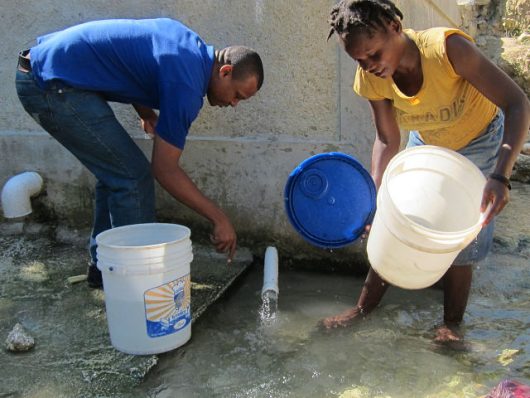
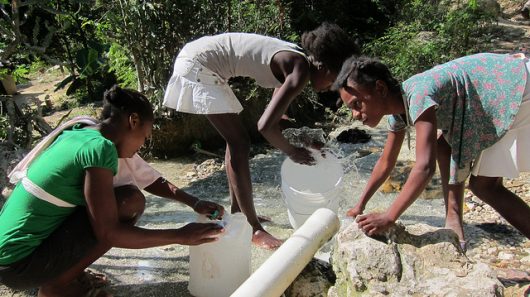
Health conditions are poor and about one-fourth of the population has access to safe water. The population continues to grow at a high rate, estimated at almost 200,000 people per year, with the overwhelming majority living in extreme poverty.

Key factors of poverty in Haiti include political instability, inadequate growth in private investment, underinvestment in human capital, and poverty traps including environmental degradation, crime, systematic human rights violations, and outward migration.

Steps to be taken

  1. Strengthen essential public sector institutions, improve coordination and consultation within government, and re-establish and consolidate political stability.
  2. Strengthen macroeconomic stability and reduce distortions in order to encourage private sector investment and increase productivity.
  3. Improve the quality of government spending, invest in the provision of basic human needs, and raise the level of human capital.
  4. Ration the assistance provided by external donors.

There is clearly a lot of work to be done, but instead of abandoning Haitians when they need help the most, the U.S. needs to directly help with overturning their situation of dire poverty.

– Julia Lee

Photo: Flickr

March 19, 2018
https://borgenproject.org/wp-content/uploads/borgen-project-logo.svg 0 0 Borgen Project https://borgenproject.org/wp-content/uploads/borgen-project-logo.svg Borgen Project2018-03-19 09:29:572024-12-13 17:58:34What is the Current State of Poverty in Haiti?
Global Poverty

Six Facts About Poverty in Haiti

Poverty in HaitiHaiti is a country that struggles with severe poverty, being thrown inevitable challenges such as damage from hurricanes and earthquakes, causing the mass destruction of buildings and supplies that are difficult to come by in the first place. Haitians are in a constant fight to survive, but the good news is that efforts can be made to make a difference. Discussed below are the leading facts about poverty in Haiti and their implications.


Top 6 Facts on Poverty in Haiti


  1. Due to natural disasters, Haiti has faced major financial losses. Since the latest disaster caused by Hurricane Matthew, predicted losses add up to over $1.9 billion. This amounts to 22 percent of Haiti’s gross domestic product. Haiti’s current economic growth rate is only one percent. With post-Matthew reconstruction, Haiti’s fiscal debt continues to grow.
  2. The World Bank has come up with a program called the Haiti Reconstruction Fund (HRF). The HRF has cleaned up 900,000 cubic meters of debris and supplied Haiti with a total of $411.4 million. Furthermore, the group has managed to support the repair and rebuilding of almost 2,600 houses and delivered food to 252 schools which provided 93,000 students with meals.
  3. Although two-fifths of Haitians depend on agricultural production to provide income, around 30 percent of Haiti still struggles to obtain food. International aid has helped provide many of these people with food and continues to work on supplying sustainable farming techniques.
  4. Ninety percent of farmers must depend on the weather for their crops to be sufficiently watered. In drier seasons or droughts, these farmers are likely to lose their crops, which are both a source of sustenance and income. This, again, puts an emphasis on the importance of environmental care in Haiti.
  5. The richest 10 percent of Haitians receive 70 percent of the country’s total income. This illustrates class inequality and the vast gap in income that many third-world countries struggle with. In Haiti, especially, it is important to advocate on behalf of the country’s poor.
  6. Haiti is still considered to be one of the poorest countries in the world, with 59 percent of Haitians living below the national poverty line. Haiti depends heavily on foreign aid and other forms of economic assistance.

These facts about poverty in Haiti may raise curiosity around the following question: how can people help fight poverty in Haiti? For those who are looking to help, there are several effective charities helping to bring relief to Haitians, including Konbit Mizik, Madre, The Lambi Fund of Haiti and many others.

– Noel Mcdavid

Photo: Flickr

August 27, 2017
https://borgenproject.org/wp-content/uploads/borgen-project-logo.svg 0 0 Borgen Project https://borgenproject.org/wp-content/uploads/borgen-project-logo.svg Borgen Project2017-08-27 01:30:432024-05-25 00:00:04Six Facts About Poverty in Haiti
Global Poverty

Top 5 Facts About Poverty in Haiti

poverty in haiti poor
In 2010, Haiti was struck by what has been called the strongest earthquake since 1770. The 7.0 mW quake with aftershocks ranging from 4.2 to 5.9 affected at least three million people and increased poverty in Haiti. But in the last three years, the world at large has turned away from the struggle of the Haitian people to focus on newer problems. The fact remains, though, that aid is still needed. Below are leading facts you should know about poverty in Haiti.


Top 5 Facts About Poverty in Haiti


  1. Even before the earthquake hit, 1.9 million people were in need of food assistance. Around 60 percent of the population lives on less than $1.00 a day. As a result, malnutrition and anemia run rampant. Haiti is the third hungriest country in the world.
  2. Only 50 percent of the people have access to an improved water source, such as a hand pump or a well. This means that most of the population depends on lakes, streams and rivers for their water, regardless of the cleanliness. Even if some people can get to better water than others, a total of 80 percent do not have adequate sanitation available. So even if they run less risk of becoming ill from bad water, they are unable to clean themselves and are susceptible to disease and infection.
  3. Only fifty percent of children living in Haiti are able to go to school. Furthermore, only 30 percent of those progress to the fifth grade. As a result, half of Haitians are illiterate. Without a proper education, the people are unable to break free of the cycle of poverty.
  4. Haiti is the poorest country in the Americas, with 59 percent of the population living below the national poverty line. The World Bank estimates that the earthquake caused about $7.8 billion in damage.
  5. There is a large population of orphaned children in Haiti, many of whom are living on the streets. There were an estimated 380,000 prior to the earthquake and untold thousands added to that number after it. There are also about 250,000 restaveks, or children working as servants and often treated as slaves.

It is easy to put the continued suffering of Haiti out of one’s mind when other world disasters have since risen to the forefront, but that does not mean that Haiti stopped warranting the world’s attention. The earthquake may have happened almost four years ago, but the people there are still greatly in need of assistance and guidance.

– Chelsea Evans

Sources: Fox News, P81 Haiti Relief, Fox Business

Photo: Flickr

September 9, 2016
https://borgenproject.org/wp-content/uploads/borgen-project-logo.svg 0 0 Borgen Project https://borgenproject.org/wp-content/uploads/borgen-project-logo.svg Borgen Project2016-09-09 17:37:102020-06-06 07:26:55Top 5 Facts About Poverty in Haiti
Global Poverty

Fonkoze Bank Assists Haiti’s Poor

Fonkoze_Bank
Using a unique stair-stepping model, Fonkoze Bank helps put money into the hands of some of Haiti’s poorest people. Stationed in Port-au-Prince, Haiti and Washington D.C., Fonkoze has operated for 11 years, working with citizens in Haiti to improve their financial standing and rise out of poverty.

Fonkoze Bank was founded by Father Joseph Philippe, a Haitian priest who made it his goal to help rural Haiti become economically stable.

While Fonkoze Bank helps people of different backgrounds, its primary focus is Haitian women, who are considered to be Haiti’s “poto mitan,” or Haiti’s “backbone”. Women are the head of the household in 44 percent of all Haitian homes and are the largest contributors of small commerce.

Fonkoze Bank is divided into 45 branches which encompass all of Haiti. Since inception, the Bank has provided financial, health and education assistance to more than 60,000 people through its four-step model.

Step One: Chemen Lavi Miyo
Chemen Lavi Miyo stands for “pathway to a better life” and is the first step in Fonkoze’s stair-stepping model. During this step, Fonkoze Bank provides women with the tools and resources needed to escape poverty and transition to a life of self-sufficiency.

Step Two: Ti Kredi
Ti Kredi, which is Haitian for “little credit” is where the microfinance portion of Fonkoze’s services comes into play. The six-month program assists women, especially those coming from vulnerable backgrounds, to develop business skills through education and training to help ensure success as micro-entrepreneurs.

On average, 92 percent of Ti Kredi participants graduate from the program. Successful graduates are able to cut their hunger rates by one-third and close to 100 percent of graduates are able to send their children.

Step Three: Solidarity
The Solidarity Program permits groups of five women, called solidarity groups to take out loans to help maintain their businesses during tough economic times.

Teams of five or six solidarity groups will meet a few times a month at “solidarity centers”. The women not only develop plans to repay their loans but also support each other’s businesses in the process. This helps promotes solidarity among micro-entrepreneurs in different geographic locations.

Step Four: Business Development
The final step of Fonkoze’s stair-stepping model is business development. During this step, women are able to take out loans surpassing the amounts they received in the second and third steps. They are also able to participate in a 12-month program giving their businesses the potential to take off and even thrive.

As of 2013, Fonkoze Bank had distributed more than $30 million in loans and continues to positively impact the lives of women who have been unable to access traditional funding from urban banks in Haiti.

– Julia Hettiger

Sources: Fonkoze, Charity Navigator, Grameen Foundation
Picture: Google Images

January 11, 2016
https://borgenproject.org/wp-content/uploads/borgen-project-logo.svg 0 0 Borgen Project https://borgenproject.org/wp-content/uploads/borgen-project-logo.svg Borgen Project2016-01-11 01:30:262024-05-27 09:28:40Fonkoze Bank Assists Haiti’s Poor
Developing Countries, Development, Food & Hunger, Global Poverty, Health

Cooking Up a Solution to Poverty and Malnutrition in Haiti

malnutrition_in_haiti
A chef connects solutions to poverty and malnutrition in Haiti with cooking.

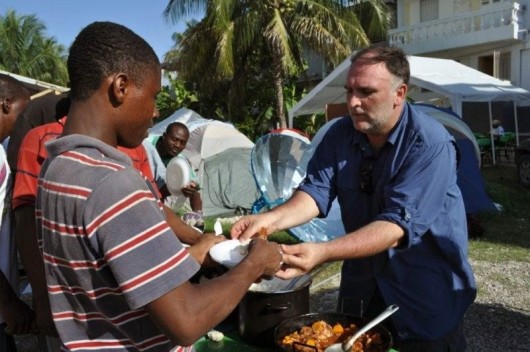
Chef José Andrés has discovered a new approach to solving poverty in Haiti, and it starts in the kitchen.

In Huffington Post’s recent feature on Andrés, Lifestyle Blog Editor Zoë Lintzeris details Andrés’ love affair with Haiti, describing his innovative ideas to improve the country’s cooking conditions and, subsequently, save it from poverty.

Andrés’ solution focuses on improving cooking apparatus to decrease safety hazards in the cooking process with his “clean cook stoves.”

Cooking safety hazards in the region include the use of “dirty” firewood and coal, two fuel sources that are unsustainable and not very profitable.

These dangerous methods have gone hand in hand with deforestation and pollution in the region. Erosion of soil, extreme and frequent flooding, degradation of water resources and habitat destruction are some forces linked to socioeconomic turmoil.

“Haiti has the highest rates of deforestation of any country in the world — a mere 2 percent of Haiti’s original forests remain,” says TriplePundit.

In turn, deforestation is responsible for a large portion of Haiti’s increasing poverty rate. Haiti’s real GDP growth has slowed down in the past two years, going from 4.2 percent in 2013 to a forecasted 1.7 percent in 2015, according to the World Bank.

GOOD Magazine suggests that “efficient stoves can help in the meantime, according to Jean Kim Chaix, the founder of the Charcoal Project, which aims to become a clearinghouse on charcoal alternatives and a consultant for green entrepreneurs.”

The Charcoal Project has undertaken a project to provide an energy efficiency program for schools, to teach them to produce fuel for cooking and lighting.

The project utilizes wood and stoves that reduce smoke and save fuel, which is just what Andrés is shooting for with his clean cookstoves.

The Global Alliance for Clean Cookstoves, hosted by the UN foundation, is Andrés’ initiative to save lives and protect the environment by creating a global market for “clean and efficient household cooking solutions.”

The Alliance has set out a 10-year goal to foster the adoption of clean cookstoves and fuels in 100 million households by 2020.

Andrés also discussed Haitian cuisine in his PBS special, “Undiscovered Haiti with José Andrés.” In the video, he describes the deep ties between the food and the country’s history and culture.

Andrés’ relationship with Haiti has led him to uncover a revolutionary solution to a problem that has a long history. Perhaps economic prosperity really can start in the kitchen.

– Ashley Tressel

Sources: Huffington Post, Good.is, TriplePundit, World Bank, Charcoal Project, Clean Cook Stoves
Photo: SCINet

November 13, 2015
https://borgenproject.org/wp-content/uploads/borgen-project-logo.svg 0 0 Borgen Project https://borgenproject.org/wp-content/uploads/borgen-project-logo.svg Borgen Project2015-11-13 01:30:192024-06-04 04:33:52Cooking Up a Solution to Poverty and Malnutrition in Haiti
Global Poverty

The Tent Cities of Haiti

haitiThe rapid growth of Haitian migrants returning to their native country from neighboring nations has led to the incredibly excessive increase in “ten cities” throughout the small nation. Humanitarian relief groups have turned their attention to this growing problem and the impoverished people of Haiti.

These tent cities are made up primarily of extremely poor individuals, many of whom were deported from countries in which they sought refuge. Many individuals returned from the Dominican Republic — the neighboring nation that Haiti has had tensions with for years, especially with regards to immigration. To make matters worse, the handful of tent cities that have emerged, seemingly overnight, are located along regions of the country that have been suffering drastic droughts. In just about a month’s time, from the end of June to the end of July, the number of tent homes and cities increased in the Southern region of the country three times over. This means limited water and crops, further limiting the resources many of the Haitian individuals are already missing.

As mentioned previously, many Haitians living in the tent cities have returned from migrating to the Dominican Republic. This is because of the strict immigration and deportation policies being enforced by the country. These laws make legal status mandatory for any immigrants entering the country, and make the process rather difficult. Thus, poor Haitians without the means to gain citizenship are sent back to poverty within the tent cities of Haiti.

This rise in refugees and poverty-stricken makeshift cities has drawn in the attention of many humanitarian relief organizations. Despite the unfortunate living conditions, many groups are now working hard to help people living in the cities. Haitian immigrants have made efforts to follow through with the required process for citizenship in the Dominican Republic, but many are unable to. Moreover, with all the concern for the dangerous conditions of the thousands being sent back to the tent cities of Haiti, the Dominican Republic refuses to hold any talks or discussions on the matter.

In order for the problems to be resolved, there needs to be more discussion between the governments of both Haiti and the Dominican Republic.

– Alexandrea Jacinto

Sources: CNN, Tele Sur
Photo: Tele Sur

August 1, 2015
https://borgenproject.org/wp-content/uploads/borgen-project-logo.svg 0 0 Borgen Project https://borgenproject.org/wp-content/uploads/borgen-project-logo.svg Borgen Project2015-08-01 01:43:322020-07-03 12:16:26The Tent Cities of Haiti
Food & Hunger, Global Poverty

Poverty in Film: Kombit

From rooftop beekeeping in Brooklyn to underground tomato growing in Tokyo, the urban farming movement has become a global phenomenon. One recently produced short film, Kombit, looks at how urban farming has benefited one of Haiti’s poorest communes—Cité Soleil.

The film was produced in response to a Sundance Film Institute’s challenge to filmmakers. The institute had partnered with the Bill & Melinda Gates Foundation and was looking for short films that showed people overcoming poverty.

Directors Jeff Reichert and Farihah Zaman traveled to Port-au-Prince and unearthed a story about one community’s successful project in the post-earthquake context.

Of Cité Soleil, one of the film’s interviewees says the common perception is that the area is “hell,” but this perception ignores how people struggling to live there manage to get by. For example, in this “hell” people have developed a community garden, called Jaden Tap Tap, that has “considerably changed the view that nothing can work in Cité Soleil,” according to the aforementioned interviewee.

Initially, some denizens of Cité Soleil had started a soccer club to foster amity in the community, but many young people said they were too hungry to play soccer. Tactics were changed then, and Jaden Tap Tap was started.

First, some community members appropriated a spot that criminals had been using to covertly execute people, clearing the area to make it suitable for gardening. That was in 2006; now, Jaden Tap Tap is the largest urban garden in Haiti.

The garden has become a recourse for those in need. People can notify the garden manager, Blan, of their needs and stop by to harvest greens, carrots, olives or other produce. One interviewee said, “Thanks to the plants in the garden, like the olive tree, we fight malnutrition.”

“Look at my baby,” he continued. “He’s healthy.”

Jaden Tap Tap has inspired many Haitian families to begin growing their own food—thereby improving their food security and reducing malnutrition in a country where malnutrition is the leading cause of death for children five and younger. Even the smallest gardens, which are grown in car tires, help alleviate some of the burden of poverty.

– Ryan Yanke

Sources: Youtube, The Celebrity Cafe, Time, Partners in Health
Photo: Flickr

September 9, 2014
https://borgenproject.org/wp-content/uploads/borgen-project-logo.svg 0 0 Borgen Project https://borgenproject.org/wp-content/uploads/borgen-project-logo.svg Borgen Project2014-09-09 08:00:402024-12-13 17:53:56Poverty in Film: Kombit
Page 6 of 6«‹456

Get Smarter

  • Global Poverty 101
  • Global Poverty… The Good News
  • Global Poverty & U.S. Jobs
  • Global Poverty and National Security
  • Innovative Solutions to Poverty
  • Global Poverty & Aid FAQ’s
Search Search

Take Action

  • Call Congress
  • Email Congress
  • Donate
  • 30 Ways to Help
  • Volunteer Ops
  • Internships
  • Courses & Certificates
  • The Podcast
Borgen Project

“The Borgen Project is an incredible nonprofit organization that is addressing poverty and hunger and working towards ending them.”

-The Huffington Post

Inside The Borgen Project

  • Contact
  • About
  • Financials
  • President
  • Board of Directors
  • Board of Advisors

International Links

  • UK Email Parliament
  • UK Donate
  • Canada Email Parliament

Get Smarter

  • Global Poverty 101
  • Global Poverty… The Good News
  • Global Poverty & U.S. Jobs
  • Global Poverty and National Security
  • Innovative Solutions to Poverty
  • Global Poverty & Aid FAQ’s

Ways to Help

  • Call Congress
  • Email Congress
  • Donate
  • 30 Ways to Help
  • Volunteer Ops
  • Internships
  • Courses & Certificates
  • The Podcast
Scroll to top Scroll to top Scroll to top