Posts

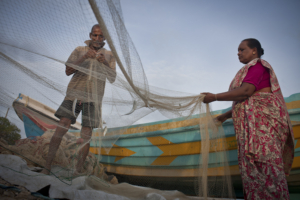
Women in Fisheries in Sri LankaThe Indian Ocean tsunami tore through Sri Lanka’s coast in 2004, destroying not only boats and nets but also the very social safety nets that kept the economy afloat. During the loss, women in fisheries in Sri Lanka stepped up. They organized a framework to provide mutual aid circles that transformed into cooperatives that process dried fish, market shellfish and advocate for the waters that feed their families.

Only two decades later, many of these groups are now stable, central businesses that have become anchors in the community. These women didn’t just survive; they changed who held power in coastal life. According to Sri Lanka’s Secretary of the Ministry of Disaster Management, S.S. Miyanawala, “Therefore, it is necessary to change the way we ‘invest.’ We need to focus not only on addressing the consequences of disasters but on reducing the underlying causes of vulnerabilities and enhancing the preparedness and resilience of people and communities.”

Mutual Aid To Market Power

In the early days of Sri Lanka, women traditionally leveraged skills such as salting, sun-drying and selling items to support household incomes. A comparative study from Ambalangoda shows households with women in fisheries in Sri Lanka differed significantly from those who chose not to, showing increased income and access to credit.

By formalizing into cooperatives, these networks evolved into small enterprises and some partnered with NGOs to reach better markets. After the war and tsunami, initiatives in Jaffna educated widows, showing them how to produce higher-quality dried fish for fair-trade outlets, turning a coping strategy into dignified work with a generous return. Today, dried fish remains a crucial, affordable protein for low-income households, stabilizing local demand while co-ops experiment with better processing and quality control.

Measurable Advances in Gender Equity

Women in fisheries in Sri Lanka have become symbols of economic resilience and their leadership has brought new skills, leverage and measurable gains in gender equity. WorldFish’s synthesis on women’s empowerment in small-scale fisheries outlines four pathways: embedding gender in every innovation stage, strengthening agency and leadership, improving resource access and transforming norms through collective action. These are the levers Sri Lankan co-ops pull, from leadership training to negotiating landing-site space and prices.

Sri Lanka’s dried-fish sector adds a vital dimension: well-being. Women’s control over processing and trade shapes income, social dignity, mobility and decision-making. Outcomes ripple into children’s education and household resilience. In a system still marked by informality and gendered barriers, collective organizing is the difference between uncertainty and progress. These cooperatives aren’t only about sales and personal growth.

They’re also about cultivating and repairing reefs, lagoons and mangroves. In Puttalam District and beyond, women’s groups tied micro-enterprises to ecosystem repair, focused on replanting mangroves, monitoring nurseries and campaigning for local protections. That work reduces storm surge, improves water quality and shelters juvenile fish, all classic “nature as infrastructure” benefits that make both catches and communities more resilient to the next shock.

Why It Matters Now

With supply chains evolving and climate extremes intensifying, Sri Lanka offers a living lab for community-first recovery. U.N. and national analyses of post-tsunami reconstruction emphasize community decision-making and moving recovery efforts locally. Women’s cooperatives became durable nodes in that local governance fabric because they knit income, care work and conservation.

International guidance has caught up with what these fishers practiced out of necessity. The FAO’s handbook on gender-equitable small-scale fisheries governance urges countries to center women in rules, markets and services. This approach is reflected in Sri Lankan co-ops that negotiate access to space, credit and training while advocating for better post-harvest infrastructure and quality standards.

What Success Looks Like

On the ground, success is pragmatic, not flashy. In Sri-Lanka, this success looks like predictable cash from a cooperative drying shed, a microloan that upgrades a smoker or a daughter who stays in school because fees are paid on time. Success also looks like a mangrove belt that blunts the next cyclone or a woman who chairs the meeting where the landing schedule is set. In places where formal jobs are scarce, these wins matter.

And the women who succeed scale their rewards out to the community. When collectives share methods such as pricing, grading, hygiene, bookkeeping and performance spreads horizontally. Partnerships with groups like the Small Fishers Federation (Sudeesa), international NGOs and university programs bring training and research to community doorsteps. At the same time, co-ops carry data and lived expertise back up the chain to policy tables. That two-way flow is how “pilot projects” become norms.

The Unfinished Work

Though there has been much progress, such as improved access to cold storage, challenges remain, including exposure to price shocks, credit terms that penalize informality and co-op bylaws that can still marginalize women at the harvest end of the chain. However, the evidence base is clear and growing: when women organize across the fish value chain, households diversify their income, nutrition improves and communities invest in the ecosystems that sustain them.

This policy isn’t charity; it funds what already works, including women’s collective enterprise tied to coastal stewardship. The lesson from Sri Lanka’s shores is simple: resilience is built locally by the people with the most at stake. When those people are women in fisheries who run the books, manage the drying racks, negotiate prices and plant mangroves, the result is more than just recovery. It’s a fairer, more durable coastal economy.

– Nicole Fernandez

Nicole is based in Reno, NV, USA and focuses on Business and Technology for The Borgen Project.

Photo: Wikimedia Commons
Local Leadership

In recent years, global humanitarian aid has undergone significant shifts. Nationalist policies in major donor countries, including the U.S. and parts of Europe, have redirected focus toward domestic concerns, reducing foreign aid contributions. With less outside help, many countries turn to homegrown solutions to tackle poverty, health crises and displacement. Communities often understand local needs better than distant agencies, making their leadership necessary and effective.

Without adequate resources, dwindling international support has left many populations facing hunger, disease and conflict. Yet this challenge has also led to a new focus: local leadership in humanitarian aid. Across Africa, Asia and Latin America, governments, community organizations and Indigenous leaders are assuming greater roles in planning and delivery.

The Changing Landscape of International Aid

Historically, humanitarian aid relied on cooperation among donor nations and nongovernmental organizations (NGOs). Today, eligibility has become increasingly politicized, often tied to the foreign policy goals of donor nations. This shift creates uncertainty for countries struggling with poverty and displacement, underscoring the need for community-driven solutions that address priorities global agencies may overlook.

Local initiatives bring clear advantages. They leverage cultural knowledge, build trust and respond faster than large institutions. Grassroots groups, women’s collectives and youth organizations lead health, education and economic resilience projects. That way, solutions fit the communities they’re meant for and can still hold up when circumstances change.

Africa

In Nigeria, the Federal Ministry of Humanitarian Affairs and the U.N. now prioritize locally led responses, channeling resources directly to community organizations. This has improved access to aid and strengthened resilience.

In Kenya, handing more responsibility to counties has improved refugee support and crisis response. While the plan has seen successes, it has also faced opposition from some communities, showing that local leadership must balance innovation with inclusive consultation.

Asia

In Bangladesh, women’s collectives and microfinance programs have strengthened rural economies. These projects increase women’s participation in household decisions and provide financial stability. With training added in, microfinance has made a real difference in family resilience. The Consultative Group to Assist the Poorest’s (CGAP) recent analysis underscores that financial inclusion promotes empowerment only when paired with training and support to change outcomes.

Latin America

In Peru, Indigenous farmers lead projects that blend traditional farming with agroecology. Women farmers play a central role, ensuring food security initiatives draw on cultural knowledge and adapt quickly to local needs. These approaches combat hunger and address climate instability, demonstrating how traditional knowledge and innovation can work in tandem.

Advantages and Challenges

Locally led humanitarian responses are marked by agility, accountability and cultural relevance. These efforts earn public trust and often achieve lasting impact. However, local organizations still face barriers, including limited funding, a lack of technical expertise and difficulty gaining international recognition. Overcoming these hurdles takes partnerships that invest in training and flexible funding.

International donors can strengthen humanitarian outcomes by partnering directly with local organizations, supporting training and expanding flexible funding models. Empowering local communities not only improves effectiveness but also fosters global solidarity. As donor nations reassess development priorities, investing in locally led solutions is essential for sustainable progress.

Conclusion

Nationalist policies have reshaped the aid landscape, but local leadership in humanitarian aid across Africa, Asia and Latin America is leading innovation from the ground up. Supporting local leadership, through partnerships, funding and training, could offer the most sustainable path forward.

When local voices lead, aid becomes more resilient and rooted in real communities. Donors and governments that commit to this shift could improve immediate responses and build stronger foundations for future development.

– Jacob Stubbs

Jacob is based in Indianapolis, IN, USA and focuses on Good News for The Borgen Project.

Photo: Wikimedia Commons
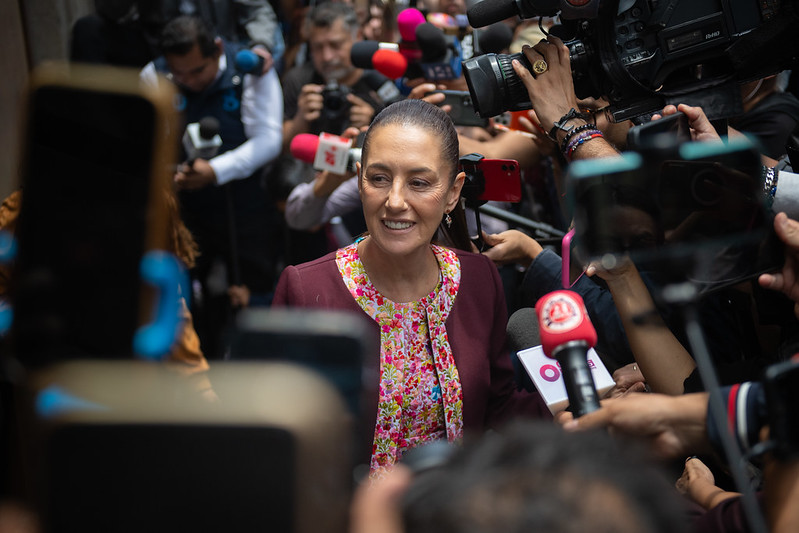
Women in Mexican LeadershipMany countries have broken the glass ceiling with the election and faith of female leaders. Some of these known women include former Chancellor of Germany, Angela Merkel, Bolivian President, Lidia Gueiler Tejada, and American Vice President Kamala Harris. There are many women in leadership roles, trailblazing the path for more women, not only in privileged countries such as the USA, but in revolutionary ones like its neighbor, Mexico.

Mexico has witnessed many shifts in leadership in the 21st century that have caused many struggles for its residents. From drug lords to domestic abuse to bleak working conditions to a poor economy. The citizens of Mexico have known injustice and poverty.

First Female President

One woman has given herself the responsibility to seek that change for her people. New Mexican leader, President Sheinbaum. She can be attributed to a majority of the recent progress of women and girls in the country of Mexico.

Mexico’s governmental structure has not exactly catered to women, having placed them in weaker areas between the two quotas (horizontal and vertical), which translates to the ranking of the politician. In the vertical system, if the ​​alcalde (mayor) is a man, then a síndico (trustee) must be a woman to balance the powers. In the horizontal system, the added requirement is to have candidate genders be balanced alongside both parties of the state, which adds another layer to a more feminist government. Even as the stronger option for equality, the horizontal system still requires tweaking and improvement.

How Are Gender Biases Changing?

With 60% of the vote, President Sheinbaum became the leader to lead a new era for Mexico, to level the playing field for women. Even with a long way to go, she has taken this opportunity to ensure the safety of women and girls, to provide equal opportunities for women and to increase public security.

Her legislative efforts have empowered women to seek out more for themselves in all areas of their lives: professionally and in society, producing more women in Mexican leadership roles. President Claudia Sheinbaum’s recent legislative vision includes a Constitutional Amendment for Substantive Equality, constitutional reforms, the Ministry of Women and the most recent launch of the Pension Program for Older Women.

What Female Leadership Brings

U.N. Women data states, “In Mexico, 88.9% of legal frameworks that promote, enforce and monitor gender equality under the SDG indicator [Sustainable Development Goals], with a focus on violence against women, are in place” which is a good sign of progress, yet women still face sexual abuse and domestic violence at a high rate and carry the load of doing unpaid domestic work. With changing expectations, women can take charge of their assets, career and choice of marriage.

Having a background in climate science, President Sheinbaum holds a unique view on politics and has taken action on environmental affairs as the former President’s [López Obrador] environmental minister. Impacts she has made include driving electric transit, the use of renewable energy and the production of electric cars.

Feminist Policies in Motion

Leading up to Sheinbaum’s presidency, Mexico had a balanced gender representation with 50.2% of women making up the congress. Mexico is also one of the countries whose public and foreign policy centers around women’s rights. Sheinbaum’s new policies are with feminist-led having immediate effect on the increase of femicide (in 2024, nearly 800 reports, according to WOLA) and homicide persecutions (nearly 3,000 reports, according to WOLA), destroying rape culture (more than 21,000 reports, according to WOLA), dismantling harmful gender stereotypes like assuming men make better leaders by ways of the Constitutional Amendment for Substantive Equality and the Ministry of Women addressing how Mexico could act for equality to the Elimination of Discrimination against Women (CEDAW) Committee.

Mexico’s leadership initiative of the National Care System has improved child support with the establishment of more daycares, providing a better chance for women to work alongside their male counterparts, decreasing the pay gap and increasing the value of women’s work, according to WOLA.

Luckily, the government has decriminalized abortion, yet the level of accessibility still remains an issue. With this concern in mind and many others, President Sheinbaum is challenged by producing budgets that will lend to more humanitarian resources. Further challenges are changing current policies to reflect a more feminist outlook including Mexico’s military and the percentage of women wrongfully incarcerated.

A Personal Reflection

On a first-hand account, Laura Lorena Robles Ruiz, beauty entrepreneur and State Commissioner of COESPRISSON reflects back on her experiences and visions for Mexico. In these roles, she has managed to open spaces for women, accompanying them, teaching them, and empowering them through her experience and training. Despite personal and economic challenges, she continues to contribute to society.

“Although Mexico still has a long way to go, it has taken firm steps towards equality. I am proud to see more and more women in Mexican leadership positions, bravely undertaking new ventures, earning their place with dignity, and demonstrating that their participation is not just a quota, but a strategic value derived from their capabilities. I am proud to have been an active part of this change, contributing from my public, business, and educational trenches,” she shared with The Borgen Project.

“Today, I continue to advocate for a Mexico where women live with freedom, security, and real opportunities—a Mexico where we can grow, shine, and enjoy life without asking for permission. I see my two daughters living this way, and I know that when a woman transforms herself, she also transforms her family, her community, and her country. President Sheinbaum has reshaped Mexican leadership to be more inclusive and humanitarian,” Laura Lorena Robles Ruiz added.

Women in Mexican Leadership: The Future

In daily life, Mexican women still face poor public policies that support single moms, domestic abuse cases, and rooted cultural biases. Programs like Mujeres con Bienestar have chosen the responsibility to reshape Mexican society. Pensions for older women give more control and recognition to women’s economics. Reform and constitutional changes have mended the gender wage gap (Article 123), recognizing the equality of women and men. Women in Mexican leadership are represented in the current cabinet far greater than it was before.

President Sheinbaum’s future presidency ensures a more positive attitude towards Mexico’s maturation as a country. Indeed, along with the first female president, Mexico has witnessed more female political participation, almost 40% representation in STEM, more entrepreneurship, greater representation of gender violence (#NiUnaMenos) and new cultural standards in media. In her leadership, the elevation of women will continue to be at the forefront of policy and Mexican culture.

– Melody Aminian

Melody is based in Irvine, CA, USA and focuses on Good News for The Borgen Project.

Photo: Flickr

Video Games in AfricaThe global video game industry is valued at $140 billion and Africa is primed to take a piece of the action. Between 2014 and 2018, the number of African gamers rose from 23 million to a staggering 500 million, opening up a lucrative opportunity for the African gaming industry to become a major player. Video games in Africa have the potential to transform poverty in the continent.
Video Gaming Industry in Africa

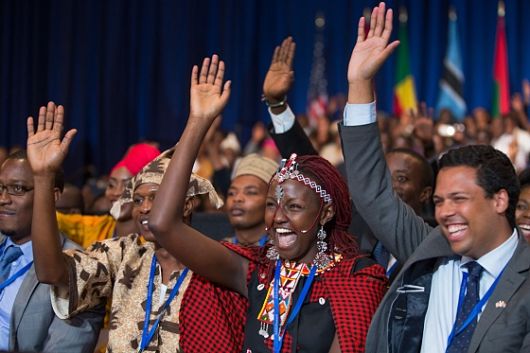
Every year, the African gaming industry grows by more than 8%, with new gaming companies opening frequently. The Festival of Electronics and Video Games of Abidjan (FEJA), is a video gaming event in Africa with the main aim of creating jobs in the industry. The event’s organizers see the three-day event as an opportunity to exemplify the immense potential the industry has in Africa.

Although there are already innovative African gaming companies such as Work’d and Paradise Game, video games in Africa are often overlooked. However, Paradise Game founder and CEO, Sidick Bakayoko, predicts that by 2025, West Africa alone will have room to create over one million jobs in the gaming sector and the continent as a whole could create five million jobs.

Urgent Evoke Video Game

A game designer named Jane McGonigal has developed a game specifically promoted to African gamers called “Urgent Evoke”. The game exists both online and in the real world. To progress in the game, players must complete real-life activism such as reaching out to government leaders, researching environmental solutions, contributing time to alleviate poverty and other acts of contribution. Players must document these actions and submit them to advance in the game.

McGonigal’s goal with “Urgent Evoke” is to empower Africans to become active problem-solvers and tackle poverty and other issues in their communities. In addition to promoting and requiring activism, the game awards prizes to winners, including mentorships, scholarships, internships and startup money to foster entrepreneurship.

Video Games and Perception

Game developers like McGonigal and Bakayoko aim to use video games in Africa to change the way Africans view themselves and their continent as well as change how the world views Africa. The continent is often seen as a dangerous place filled with hunger and war. By creating games set in Africa led by positive African characters, developers can change perceptions and help Africans see themselves through a more confident, leadership lens.

These games have the power to reduce prejudice toward poverty and help people understand impoverished nations and join the fight to help them. Many hold the false belief that poverty is something self-inflicted or personally controllable. Cultivation theory states that the media that people absorb affects the way they perceive the world.

Video games in Africa have the influence to create a more accepting and representative industry. Games such as “Urgent Evoke” change perceptions, allowing African gamers to be their own heroes both online and in the real world.

Potential for Poverty Reduction in Africa

The growing industry of video games in Africa has created a plethora of jobs but there is a lack of skilled labor. Unfortunately, many Africans have not realized the immense potential that video games in Africa have for the continent.

Most parents do not see video games as a lucrative skill-building task. For the video game industry in Africa to truly flourish, the younger generation must have access to coding and tech education.

This is not yet at the forefront of mainstream education, but the continent, especially South Africa, is abundant with resources to educate Africans in the gaming industry. Even without money for a proper university, coding boot camps or proximity to a city, Africans can take online coding courses to get their foot into the tech industry and contribute to Africa’s immense gaming growth.

– Veronica Booth
Photo: Unsplash

youth_employment
A world in which every youth has access to employment may sound a little far-fetched, but this is just what global organization Solutions for Youth Employment (S4YE) strives to achieve.

Acknowledging International Youth Day, which comes around every August 12, the S4YE coalition is initiating a five-year strategy which will focus on the specific challenges that youth face in receiving employment across the world.

S4YE is a global coalition made up of civil society actors, government officials, foundations, private sector entities, international organizations and young people endeavoring to help the 600 million youth who are unemployed and simultaneously not receiving education or any kind of additional training across the globe.

“In 2014 nearly 500 million young people around the world are unemployed, inactive, underemployed, or engaged in insecure employment,” states the S4YE.

Tackling such an issue will not be easy, but strides are being taken to make a difference. Over the course of a 15-year initiative, the organization’s first ambitious strategy is to support 150 million youth worldwide by 2030.

Although unemployment is an issue affecting an astronomical amount of people, S4YE is specifically focusing on areas where it is a national priority including the Middle East, North Africa, sub-Saharan Africa, Latin America, the Caribbean and Asia.

According to an article by the World Bank, the addition of a billion more people entering the workforce in the coming decade means that at least five million more jobs will need to be created each month to meet the demands. If this cannot be done, youth will find themselves in a place of inopportunity, which will only lead to social and political instability.

The magnitude of the problem is grave; if nothing changes for the unemployed youth—with 1 million more youth in Africa and India turning 15 each year—the poorest 40 percent of the world’s population will fall into poverty.

S4YE identifies some of the challenges of accomplishing total youth employment, which include developing a skilled workforce, creating well-functioning markets and ensuring a stable middle-class consumer base. Essentially, traditional models of engagement may be abandoned to guarantee that millions will have the opportunity to escape poverty.

Despite the inherent obstacles, it is S4YE’s vision to see a world where all youth have access to job opportunities that empower them, so they are able to share their prosperity with the world.

Potential solutions for these challenges have also been identified and include leveraging public and private investments for job creation, research and evaluation to design an education based training, and finally, leadership is needed to identify what strategies are and aren’t working, implementing them into the design of future policies and investments.

As our world population continues to climb, it is up to organizations like S4YE to generate creative solutions to keep pace with a rapidly expanding presence and ensure that every human has an opportunity for a life well lived.

Nikki Schaffer

Sources: S4YE, World Bank
Photo: Twitter

young_african_leaders_initiative
The Young African Leaders Initiative (YALI) is the combined efforts of the U.S. government, Non-Governmental Organizations, universities and companies to support African youth and future leaders in hopes of creating a better future for Africa as a whole. It was established by President Obama in 2010.

Not only does YALI aim to create and shape African leaders, but it also wants to create a network between them. What is striking about this measure is that it lays down a framework for these future leaders who are full of potential, but then leaves the more substantial and meaningful portion of the work to the young leaders themselves, leaving it up to them to shape their world.

YALI goes about this goal in several ways. For example, it offers online courses for individuals who want to learn more about areas such as entrepreneurship, leadership and public management. Completion of a YALI course not only means that a person has learned about honing valuable life skills, but also that they receive a certificate to prove it.

YALI is also working to construct Regional Leadership Centers throughout Africa with the intent of increasing accessibility and relevance of training programs to leaders and future leaders across Africa. Two have opened so far this year, in Accra and Nairobi, and two more are planned for Dakar and Pretoria by the end of 2015.

The YALI Network face2face is a Facebook group that helps young African leaders share events encouraging leadership and fellowship, or even create new skills. Members are encouraged not only to attend events but to create their own on topics that interest them or that would be beneficial to their particular community. It’s a tool to help create and maintain connections.

Another huge event put on by the group is the Mandela Washington Fellowship for Young African Leaders, which brought 500 African leaders ages 25 to 35 to the United States in 2014 and 2015. Fellows take academic courses in business, civic engagement and public administration and receive leadership training. Some also participate in internships. What they take home is access to new opportunities, seed funding and useful skill sets to help build their own communities.

Participants in the fellowship are selected from almost 50,000 applicants. Next year, there are plans to double the number of participants to 1,000, as well as to develop an exchange program where 80 Americans are sent to Africa to work with alumni of the fellowship program.

Each applicant has his or her own story and set of experiences that make them valuable contributors to the fellowship. For example, Grace Alache Jerry, Miss Wheelchair Nigeria, is a spokesperson for people with disabilities, founder of her own nonprofit organization and organizer of a series of benefit concerts.

Eldine Chilembo is an advocate for women’s empowerment in the maritime industry in Angola. Noluthando Duma helps orphans in her South African Province of KwaZulu Natal and hopes to develop a home to provide resources to such children.

Kenyan Kezy Mukiri said of her experience in the fellowship, “What I’m taking back with me is humanity. We need to connect; the world is becoming a global village.”

The bringing together of such inspired, dedicated minds is an undoubtedly noble cause. President Obama summed up the goal of the movement nicely at his speech at this year’s Washington Summit.

“Our hope is. . . when you have all gone on to be ministers in government or leaders in business or pioneers of social change, that you will still be connecting with each other, that you will still be learning from each other.”

Emily Dieckman

Sources: Insidevoa, Miami Herald, NPR, State, Voanews, Young African Leaders
Photo: The White House Blog

seychelles
Two separate grant agreements between Seychelles and the European Union were signed on December 10. The two agreements will provide as much as $6.4 million in order to help foster sustainable development and fight the effects of climate change in the archipelago nation.

The two agreements come on the heels of warnings from both the UN and the World Bank Group about the potential of climate change to exacerbate poverty in coastal communities. Seychelles’ economy—dependent chiefly upon tourism and tuna hauls—is particularly vulnerable to effects of climate change.

Recently, Seychelles has become something of a regional leader in the fight for sustainable development. Seychelles has already reached the majority of the UN Millennium Development Goals, and is now advocating the adoption of “blue economy” principles, which emphasize the protection of maritime resources and the economic potential of the Indian Ocean’s fishing, shipping, energy and tourism sectors.

Seychelles Foreign Affairs Minister John-Paul Adam believes that the development of the blue economy could allow the Indian Ocean to become a hub of sustainable ocean management and resiliency in the face of a changing climate. Adam, speaking at the 38th annual ministerial meeting of the G77 plus China, said, “The blue economy provides a blank canvas to many developing countries to charter a completely new sustainable development pathway that is to their best interest.”

In a press statement at the same meeting, Adam called for cooperation amongst southern hemisphere nations in science and technology in order to bolster blue economy sectors. Seychelles is also doing its part in building regional cooperation, strengthening bilateral ties with Fiji in the fisheries sector.

Seychelles’ efforts to sustain development and mitigate the compounding effect of climate change on poverty exemplify the kind of regional leadership that will be necessary in meeting the UN Sustainable Development Goals. Similarly, the EU grants will need to be replicated by wealthy nations in order to provide developing nations with the financial resources necessary to not only continue developing, but to do so in a sustainable and climate-conscious way.

– Parker Carroll

Sources: Chatham House, Seychelles News Agency 1, Seychelles News Agency 2, Ventures Africa
Photo: Seychelles News Agency

Global_Leaders
For individuals who are passionate about improving worldwide living conditions and gaining the skills necessary to further oneself in the field of global health, internships are fraught with worthwhile and unique opportunities to gain knowledge and hands-on experience. With the plethora of diverse internships, the Global Health Corps (GHC) initiative, established in 2009, has stood out as an enriching opportunity for passionate young individuals. The Global Health Corp was engendered by the belief that adequate health is not only a privilege, but also a right for every human across the globe.

GHC aligns interns with top-notch organizations so both parties are able to collaborate-mutually benefiting each other in order to improve global health. According to the GHC, many opportunities to improve global health are not available for individuals who have not already established themselves in the medical field. Thus, another goal of the Corp is to provide opportunities for young people, especially individuals from diverse roots, to achieve their potential and make an impact on worldwide healthcare.

The program offers summer internships at the GHC headquarters in New York City. Furthermore, fellows can also be placed in locales such as Burundi, Rwanda, Uganda and Zambia. The internship provides unique opportunities such as aiding the enhancement of the GHC program, raising money through fundraising, and improving communications support.

According to the Corp, there are a series of six steps taken throughout the internship project. First, fellows are chosen, then they are paired with a host organization and partnered with a participating organization. Additionally, fellows are able to develop their unique skill-sets, establish an educated community and continue to promote global health initiatives long after the internship expires.

The Corp also provides opportunities for interns to work for global change through three key goals. Interns will be able to help increase the impact of prominent organizations by working with such organizations. Additionally, the GHC provides excellent training for aspiring future leaders by engaging interns in a wide-range of developmental activities. Furthermore, interns are able to engage in constructing an international community for change that will continue to flourish even after the yearly internships have been brought to a successful end.

– Phoebe Pradhan

Sources: Global Health Corps, Huffington Post
Photo: Wize Hive

Amigos_de_las_Americas

What does a word leader look like? Presidents, executives, members of Congress, and those with major publicity are probably the first people that come to mind.

Yet there are some leaders that don’t get this same attention. These leaders are in the background, changing communities one step at a time and building life long bonds to international cultures that can’t be diminished.

These leaders are the young students of the Amigos de Las Americas organization. Founded in 1965, Amigos stresses the importance of leaders and advocates out in the communities today. Developing leadership and cultural skills, Amigos sends high school and college students out into international communities, where developed skills are used to implement change in health and education practices.

The community service projects that Amigos have been involved in have a profound impact on the people of Latin America. In just 48 years of operation, Amigos has administered nearly 8 million immunizations, given 63,904 medical screenings and planted nearly 300,000 trees in numerous communities of Latin America. They have constructed health facilities, homes and community centers, as well as nearly 38,000 restrooms.

The influence this organization has on Latin America can’t be overstated, and students have had an overwhelming response. Over two dozen chapters have opened up in America, including a large chapter in Austin. Eighteen states in America host these chapters and are involved in the Amigos organization.

Amigos have already begun planning ahead to the summer projects of 2014. Some of the places where students will participate include Peru, Paraguay, Nicaragua, and Ecuador. The organization accepts donations on their website to help fund these trips and other projects. For more information on how to apply for one of these trips, visit www.amigoslink.org.

There are no limits to becoming a leader. Make a difference now.

– William Norris

Sources: Amigos de las Americas, Austin Amigos
Photo: Amigos de las Americas

Nelson Mandela's Childhood

Nelson Mandela’s life has been exemplary in many ways. Through his patience, his perseverance, his strength and his courage, he managed to lead South Africa through troubled social and economic times to become one of the world’s largest emerging economies and bring an end to apartheid to establish a new “Rainbow Nation” in honor of its racial diversity.

Nelson Mandela’s childhood is no less remarkable than his career. From a family that was traditionally powerful – his father was in line to be chief until a dispute robbed him of the title – Mandela came from humble beginnings. After his father was dispossessed of his status, his family was forced to move to a small village, where he was raised in a hut and lived a very simple life, eating what they could grow and playing with the other village boys. His first name was Rohlilahla, meaning “troublemaker” (an apt name for the man who would later become the leader of the African National Congress). He adopted Nelson when he began formal schooling and was given an English name.

After his father died, he was sent to live with Jongintaba Dalindyebo, a regent of the Thembu people, who began raising Mandela to assume a position of leadership when he grew older.

Mandela’s interest in African history is said to have started during his lessons next to the palace, where he studied English, Xhosa, geography, and history. He became interested in the effect of the arrival of the Europeans on the nation and the people. Later, in a coming-of-age ritual in the village, Chief Meligqili, a speaker, uttered words that would greatly influence Mandela.

“He went on to lament that the promise of the young men would be squandered as they struggled to make a living and perform mindless chores for white men. Mandela would later say that while the chief’s words didn’t make total sense to him at the time, they would eventually formulate his resolve for an independent South Africa.”

From the village, Mandela would go to boarding school and later university, which would feed the fire of his emerging interest in the rights of South Africans.

Mandela disproves the common conception that one needs to come from an established background in order to be successful; what made the difference in Mandela’s case was the education afforded to him by Dalindyebo, and later through boarding school and university. Mandela’s understanding of his own country’s history and his exposure to multiple facets of life gave him insight into the lives of many of the different citizens of the country.

Much of Mandela’s strength stemmed from a humble background and the early lessons of hardship and the value of each opportunity.

– Farahnaz Mohammed

Sources: Biography.com, History.com
Photo: The Guardian