• Link to X
  • Link to Facebook
  • Link to Instagram
  • Link to TikTok
  • Link to Youtube
  • About
    • About Us
      • President
      • Board of Directors
      • Board of Advisors
      • Financials
      • Our Methodology
      • Success Tracker
      • Contact
  • Act Now
    • 30 Ways to Help
      • Email Congress
      • Call Congress
      • Volunteer
      • Courses & Certificates
      • Be a Donor
    • Internships
      • In-Office Internships
      • Remote Internships
    • Legislation
      • Politics 101
  • The Blog
  • The Podcast
  • Magazine
  • Donate
  • Click to open the search input field Click to open the search input field Search
  • Menu Menu

Tag Archive for: Education

Posts

Education, Global Poverty, Hunger, Sustainable Development Goals

5 Things to Expect from the Post-2015 Development Agenda

agendapost2015
The Millennium Development Goals (MDGs) are set to expire at the end of 2015, and a new proposal of 17 Sustainable Development Goals (SDGs) will be discussed in September. MDGs have helped alleviate poverty and hunger, reduce fatality rates for children under 5, improve maternal health and help prevent HIV/AIDS from spreading.

For the last 15 years, the MDGs have been the most important global humanitarian effort to help improve living conditions in developing countries. The SDGs have an even more ambitious agenda and will involve all member states instead of just developing countries.

Here are 5 things you can expect from the Post-2015 Development Agenda

  1. Goal 1 is to end all forms of poverty–and achieving this goal is realistic. The MDGs halved the number of people living on less than $1.25 per day. From 1990 to 2008, the extreme poverty rate fell from 47 percent to 24 percent. To eradicate extreme poverty by 2030, it would cost about $66 billion a year.
  2. Goal 2 focuses on ending hunger and improving nutrition. About 800 million people still live in hunger, and many children are underweight. Despite population growth, the number of hungry people has declined by 200 million since 1990, and it will cost $30 billion per year in order to end world hunger. By 2025, it would cost $300 billion, which is less than 1 percent of the world’s combined GDP.
  3. Goal 4 builds off of the MDG to achieve universal primary education and calls for member states to ensure children have free quality primary and secondary education that results in effective learning outcomes. This means ensuring that gender disparities are eliminated. By 2009, 43 million children were enrolled in primary education worldwide, but there are still about 60 million children not enrolled, mostly in Sub-Saharan Africa. This will involve tackling child labor, building more classrooms and training more teachers.
  4. Goal 9 promotes sustainable industrialization and the building of resilient infrastructure, including an increase in access to the Internet. About 66 percent of people globally do not have access to the Internet. The SDGs call for infrastructure developments in order to improve economic sustainability. Innovation will revolve around increased scientific research, enhanced technology and clean technologies and investments for the Internet and technology in developing countries.
  5. Goal 13 calls to take action on the impacts of climate change and may be one of the most challenging goals to reach. Climate change impacts poverty, economic growth and sustainability, but countries cannot work alone to reduce the impact of climate change. Individual cities will have to change climate policies because they generate 70 percent of carbon emissions. Partnerships between local governments, civil society and the private sector will help make this goal achievable.

If the commitment to the MDGs is a sign of things to come, then there will be many success stories involving the new SDGs.

– Donald Gering

Sources: End Poverty 2015, Global Education, Green Biz, The Guardian, Huffington Post, Internet.org, LA Times, UN
Photo: concorditalia
October 3, 2015
https://borgenproject.org/wp-content/uploads/borgen-project-logo.svg 0 0 Borgen Project https://borgenproject.org/wp-content/uploads/borgen-project-logo.svg Borgen Project2015-10-03 02:17:252024-05-27 09:26:195 Things to Expect from the Post-2015 Development Agenda
Development, Education, Global Poverty

World Vision’s Literacy Boost Program

Literacy Boost Program
Since 2000, many victories have been made in the educational area, from increasing primary school enrollment by 8 percent in developing regions to the global literacy rate rising to more than 80 percent. But there is still a lot that can be accomplished in terms of improving literacy.

Through World Vision’s Literacy Boost program, educators, parents and community members are incorporated into children’s reading and writing education. The program is split into three categories: reading assessment, teacher training and community action.

The reading assessment is meant to establish a baseline of learning for students, giving teachers a better grasp of where their students are and giving them the ability to tailor curriculum to be the most effective.

In the classroom, Literacy Boost provides teacher training that ensures all teachers are fully literate and have a firm understanding of good teaching practices, and it stresses the value of teachers making learning fun for students. Studies have shown that children learn more effectively when they’re invested in course material and enjoying what they’re learning.

The Literacy Boost program also stresses the importance of continuing learning outside of the classroom. To do this, the program gives parents the tools necessary for helping their children read and write at home. Parents are also encouraged to use whatever is available to make reading a daily focus.

In Burundi, where only 64 percent of the population is literate, Literacy Boost volunteers have created necklaces with a piece of cardboard attached to the end with vowels written on it. The necklace is meant to help children whose parents are illiterate to practice their reading skills in the community with their literate neighbors.

This is where the community gets in on the action. From volunteering to create storybooks that are from the region of the children reading them to facilitating after-school activities, such as book clubs, the third pillar of community action ties everything together. In India, these book clubs have produced increased literacy levels among its members.

Since its start back in 2014, World Vision India has reported that the program has helped nearly 600 children in the program’s city of Lalitpur, with nearly 500 of them participating regularly in the book clubs.

Part of the success of the Indian book clubs is due to their 21 Book Banks, allowing children to borrow books to take home, teaching children to view reading as a fun pastime rather than a difficult school activity.

Linda Hiebert, senior director of Education and Life Skills at World Vision, emphasized the importance of reaching children early on in their education, establishing a solid foundation of literacy.

To do this, Literacy Boost has created a pre-primary school reading camp to give children a jump-start on their studies before they even step foot in a classroom. At the camp, children learn letters and vowels, preparing them to study a variety of subjects.

Thus far, the overall results have been promising. After a single year of the program, Bangladesh has achieved an improvement rate of reading comprehension of 40 percent, with other countries experiencing doubling and tripling of reading comprehension.

Through World Vision and Save the Children’s Partnership for Literacy campaign, the organizations are hoping to impact 1.5 million children in 15 sub-Saharan and South Asian countries by 2016, improving the lives of children today and future generations.

– Claire Colby

Sources: Canada News Wire, Our World in Data, World Vision 1, World Vision 2

Photo: Flickr

October 1, 2015
https://borgenproject.org/wp-content/uploads/borgen-project-logo.svg 0 0 Borgen Project https://borgenproject.org/wp-content/uploads/borgen-project-logo.svg Borgen Project2015-10-01 10:09:272024-12-13 18:05:10World Vision’s Literacy Boost Program
Development, Education, Global Poverty

Tackling Income Inequality in Asia-Pacific Region

School
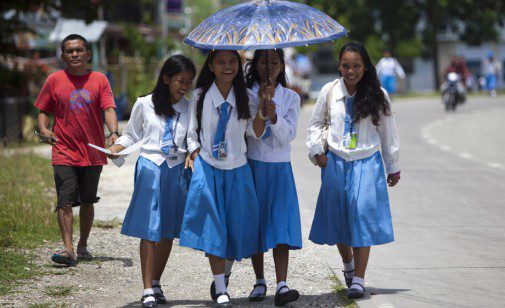
Policies that support quality education and provide social protection are investments that can help stem rising income inequality in the Asia Pacific, according to Axel Van Trotsenburg, the World Bank Vice President for East Asia and the Pacific who spoke recently at a meeting of the Asia Pacific Economic Cooperation (APEC) finance ministers in Cebu, Phillippines during a session called “Global Economic and Financial Outlook, Growing Inequality and Regional Connectivity.”

For poverty-stricken households, labor is often the sole asset they depend on. However, Van Trotsenburg said that if labor were to be made more productive through quality education and the addition of skills training, inclusive growth could begin to happen.

Van Trotsenburg suggested focusing education policies on quality teaching and better learning outcomes. The goal would be to reach youth in their primary and secondary school years.

Education initiatives alone could produce significant improvements for the livelihoods of the poor and reduce income inequality. But additional social protection measures can greatly support and enhance these efforts, significantly improving people’s lives, he said.

For example, conditional cash transfer (CCT) programs can raise school attendance, preventive health care and nutrition among the poor and vulnerable. CCT programs have been successful in places like the Philippines, Mexico, Peru and Chile.

In 2010, The Economist magazine praised CCT programs for their effectiveness. “The programs have spread because they work. They cut poverty. They improve income distribution. And they do so cheaply.”

Despite growth in middle-income East Asian households, poverty and class divide are still very present throughout the region. Van Trotsenburg describes the complexities of the situation:

“In middle-income East Asia, rapid, inclusive growth enabled hundreds of millions to lift themselves out of poverty. Yet, there are still challenges. The bottom 40 percent of the region’s population – almost 800 million people – still live on less than $3 a day in terms of purchasing power parity. These people might fall right back into poverty if the global economy takes a turn for the worse, or if they face health, food-price and other shocks.”

He urged APEC members to continue or accelerate economic reforms to sustain growth that will increase the living standard of those at the bottom of the income distribution.

In particular, he advocated for physical infrastructure investments. “In this region, 142 million households still have no access to electricity while 600 million people lack access to adequate sanitation,” he said. “It will be very important for greater investment to be accompanied by increases in efficiency of such expenditure. And this points in turn to the importance of strengthening institutions, including through public financial management reforms.”

– Nikki Schaffer

Sources: World Bank, Economist
Photo: jonahkessel

October 1, 2015
https://borgenproject.org/wp-content/uploads/borgen-project-logo.svg 0 0 Borgen Project https://borgenproject.org/wp-content/uploads/borgen-project-logo.svg Borgen Project2015-10-01 02:34:192020-06-29 11:43:49Tackling Income Inequality in Asia-Pacific Region
Education, Global Poverty

The “Big Push”: MIT-Yale Partnership Could Fight Poverty

MIT-Yale_Partnership
In the United States, Massachusetts Institute of Technology (MIT) and Yale University partnered by conducting an experiment using the concept of the “big push” theory in relation to extreme poverty.

With positive results, the ivy league universities can improve the experiment, helping more people around the world suffering from extreme poverty.

Originally, the big push theory was an economic term coined by Paul Rosenstein-Rodan in 1943.

In relation to the economy, Rosenstein-Rodan proposed, “That even the simplest activity requires a network of other activities and that individual firms cannot organize such a large network, so the state or some other giant agency must step in.”

The MIT-Yale partnership used the basic concept of the big push to conduct their experiment.

Between 2007-2014, 10,000 households in Peru, Pakistan, India, Honduras, Ghana and Ethiopia were given the graduation program, a resourceful package that included a stipend for food and money, income in the form of bees or chickens, health care, advice for saving money and regular visits to reinforce the skills and accountability.

The goal was to give these families the initial “push” and a sense of stability so they could carry on positive habits even after the experiment concluded.

“The results show that three years after the intervention, hunger is down, consumption is up, and income is up,” says Abhijit Banerjee, the Ford Professor of International Economics at MIT, and a co-author of the paper detailing the findings.

With positive results, governments around the world are considering giving the program a try.

In regards to the original big push theory, MIT and Yale University can further improve their experiment with more partnerships including other U.S. universities.

With more partnerships, the experiment can gain more funds and a larger pool of volunteers.

For many college students, especially ones majoring or interested in the nonprofit sector, being part of this type of experiment would give them real-world experience and a once in a lifetime opportunity. In this way, students can play a part in helping end extreme poverty by 2030.

With the original MIT-Yale partnership, there was hope for people who believe extreme poverty is not savable. Now, a larger network can be created to make further impacts, turning the “big push” into a “big leap” toward the end of extreme poverty.

– Alexandra Korman

Sources: MIT News, The Boston Globe, The Economist
Photo: Flickr

October 1, 2015
https://borgenproject.org/wp-content/uploads/borgen-project-logo.svg 0 0 Borgen Project https://borgenproject.org/wp-content/uploads/borgen-project-logo.svg Borgen Project2015-10-01 01:06:112020-06-29 12:05:58The “Big Push”: MIT-Yale Partnership Could Fight Poverty
Education, Global Poverty

Innovative Ways Universities are Fighting Poverty

fighting poverty
Many university presidents and college students alike have taken it upon themselves to help fight for those less fortunate than them. From creating chapters of organizations like ONE and conducting research for the benefit of medicine, universities have played a major role in shifting the scale of poverty over the years.

The Economist once said Africa was the “hopeless continent,” but after years of innovation, the same magazine has deemed it “Africa Rising.” One way colleges and universities play a significant role in this is by partnering with global nonprofits.

Universities originally began creating partnerships to support low-income students and help them carve a secure pathway to college, but in doing so, they also managed to foster relationships with these nonprofits that have blossomed into much bigger roles.

Much of the research conducted by students and professors has also contributed to aiding those living in poverty. Many universities, such as Stanford, UC Davis and Columbia University have designated research departments for research on global poverty.

Columbia University has The Earth Institute, which focuses on a magnitude of projects ranging from agricultural sustainability and global poverty mapping to economic growth in underserved communities.

Their Millennium Villages Project, led by The Earth Institute, United Nations Development Programme and the Millennium Promise, a charity dedicated to fighting poverty, focuses their efforts on reducing global poverty by helping rural African villages become more economically and agriculturally sustainable.

The Center for Poverty Research at the University of California at Davis dedicates their time to training scholars to combat poverty. Their research net encompasses topics like health, education and the intergenerational transmission of poverty, which studies how poverty can be transferred from parent to child.

The Center is one of three poverty research facilities focused on using this research net to decrease poverty. The other two centers are comprised of the University of Kentucky and the University of Wisconsin.

In February of 2014, Stanford launched a new research facility focused on ending global poverty called the Stanford Institute for Innovation in Developing Economies (SEED).

SEED’s initiatives focus on using entrepreneurship, economics and business innovation to help create new markets and job opportunities in underdeveloped communities to help them rise out of poverty.

The program grants researchers at Stanford sums of money to conduct interdisciplinary research focused on poverty. SEED is housed in Stanford’s graduate school of business and has so far dedicated over ten million dollars to its research.

Lastly, universities contribute to fighting poverty through action-based organizations that use their efforts to create awareness, raise money and advocate for the alleviation of poverty.

For example, universities around the world continue to use their resources to end poverty, and with their efforts can help Africa go from “Africa Rising” to an economically and agriculturally stable continent.

– Julia Hettiger

Sources: University of California, Davis, Columbia University, Stanford University

Photo: Flickr


September 30, 2015
https://borgenproject.org/wp-content/uploads/borgen-project-logo.svg 0 0 Borgen Project https://borgenproject.org/wp-content/uploads/borgen-project-logo.svg Borgen Project2015-09-30 13:32:092024-05-27 09:28:05Innovative Ways Universities are Fighting Poverty
Development, Education, Global Poverty

Kenyan Student Wins Student of the Year

Kenyan Student Wins ‘Outstanding BTEC International Student of the Year 2015’ in London
In 2014 George Benson Lyimo was just a student trying to earn his Business Technology and Education Council (BTEC) degree in business. Now in 2015 he is BTEC’s ‘Outstanding International Student of the Year.’

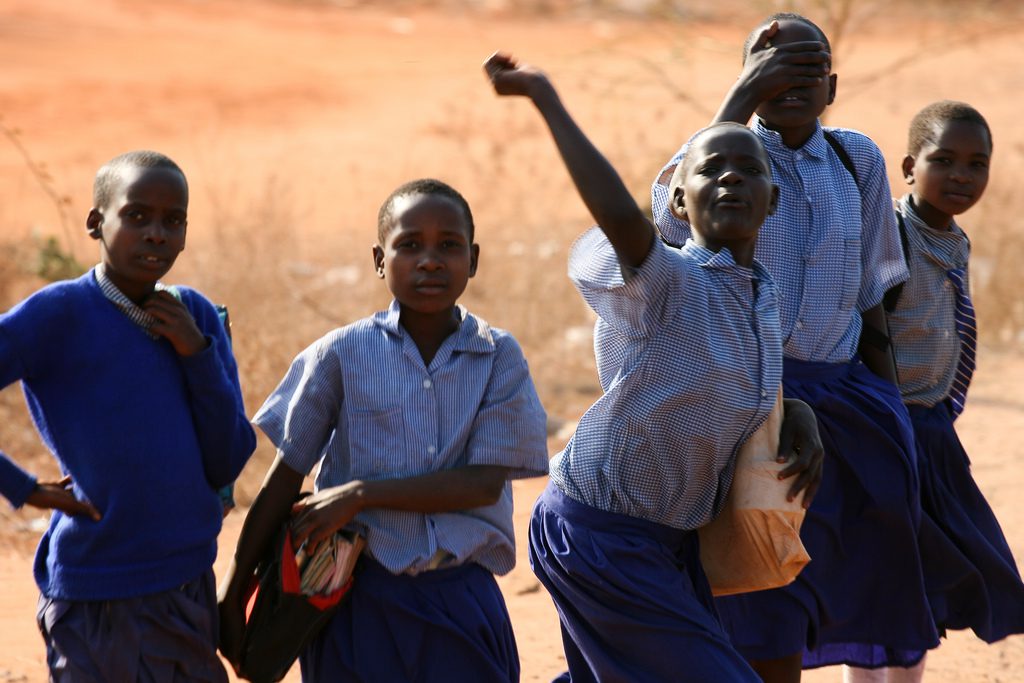
In 2012 Lyimo left his home in Tanzania to go to Braeside High School in Nairobi, Kenya. Braeside—a school which uses the British system of education—provides a safe place for eager students all over Africa to pursue their goals. Whereas many African youth are deterred by violence and warfare from going to school—Braeside provides a bus system to safely transport students to and from campus.

At Braeside Lyimo flew under the radar. One teacher recalls him being—“quite a shy character.” Nevertheless his potential shone in and out of the classroom.

Despite his humility Lyimo has accomplished much to be proud of. Self-taught in the language of computers—Lyimo launched his own website called Texeer which is now a worldwide social networking platform. He also volunteers in Braeside’s IT department even though he has no formal training and was able to provide internet for the student body when the school’s connectivity failed.

In July 2015 Lyimo was formally recognized for his accomplishments at the fifth annual BTEC Awards. The ceremony took place in London in front of an audience that included teachers, employers and even Members of Parliament.

The BTEC Awards acknowledge students, teachers and apprentices for outstanding performance in their particular vocational field. Recipients are nominated by their teachers and colleagues. This year BTEC received more than 800 nominations.

The judges picked Lyimo because of his passion and devotion to education and helping others. “Winning this award means a lot to me.” He says. “Firstly it kind of builds up my confidence and my belief system that I can build something great that other people can use in their daily life. I want to give back to the world. I want to make the world a better place.”

In addition to all of his technological hobbies Lyimo organizes annual charity events which raise funds to send Kenyan children to school. This is especially significant in Kenya where enrollment rates are extremely low.

Enrollment for boys and girls in secondary school in Kenya is 51 and 48 percent respectively—but attendance drops down to 39 and 41 percent. Compare this to the U.S. where enrollment among boys and girls in secondary school is 88 and 90 percent respectively. It is also important to take into account when comparing these numbers that unlike the U.S.—education is universally free in Kenya.

This is why young students like Lyimo are truly making the world a better place. Not only does he help other children achieve their dreams by providing access to education but perhaps more importantly by being a role model for those who need motivation in the face of adversity.

Lyimo graduated Braeside with triple star distinction—the highest accolade in the BTEC degree program. Like past recipients of BTEC ‘Outstanding Student’ Awards Lyimo will continue on his career path pursuing an advanced degree in Business and Computing at Huddersfield University in England.

– Celestina Radogno

Sources: Braeside School, BTEC 1, BTEC 2, Standard Digital News, UNICEF 1, UNICEF 2
Photo: Flickr

September 27, 2015
https://borgenproject.org/wp-content/uploads/borgen-project-logo.svg 0 0 Borgen Project https://borgenproject.org/wp-content/uploads/borgen-project-logo.svg Borgen Project2015-09-27 09:34:302024-05-27 09:27:41Kenyan Student Wins Student of the Year
Education, Global Poverty, Refugees and Displaced Persons

Re:Build System Focuses on Refugee Education

 Build Rebuilds Refugee Education from the Ground Up
One of the main priorities for families living in refugee camps in the Middle East is the education of their children. Architects, nonprofit organizations, and a scaffolding company have teamed up to create the Re:Build construction system, a project that creates low-cost durable buildings built of readily available resources such as sand and soil. The buildings, which are planned to house schools, are easily set up and can be transported to other locations.

Children consist of a large proportion of refugees from Syria, and many of them have been out of school for several years. Building schools and providing them with education provides them with vast opportunities and empowers them to create their futures for themselves.

In order to better refugee education, these mobile, easily constructed schools can be expanded by adding extra modules, built by the refugees themselves, use sustainable materials that are locally and widely available, are weatherproof even in areas with seismic activity, and are designed with their communities in mind.

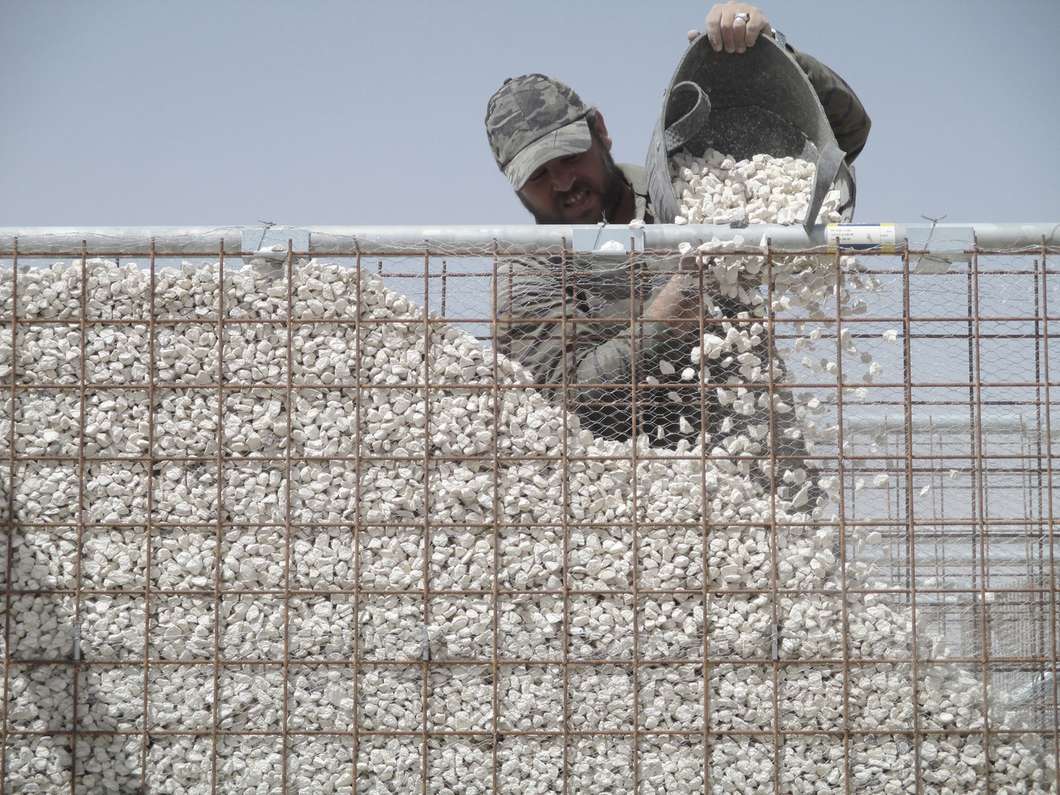
How do these systems work? They use wall frames filled with natural materials such as sand, gravel, or stones. The roof frame is topped with soil to provide insulation and a fertile place for micro-crops to grow. The structures have structures to reroute rainwater, come with solar panels, and have plywood flooring.

The Re:Build construction system was designed and implemented by architects Cameron Sinclair and Pouya Khaezli, nonprofits Save the Children and Relief International, and scaffold company Pilosio Building Peace. Together, they have constructed two schools in Jordan: one at Za’atari camp and another at Queen Rania Park in Amman. The Za’atari camp is the Middle East’s largest refugee camp which has now been existence for three years.

They are not only cost-effective but also mobile–they do not require construction crews to set up. According to Sinclair, many parents of the school’s new students helped construct the building. The cost of each school is still quite high – $30,000 each – but with crowdsourcing campaigns and local nonprofit donations, these schools are beginning to effect great changes for the children who use them.

In times of conflict, when many people feel as though they have no control over their situations and destinies, education can serve as an anchor for the heart.

“We victimize refugees by treating them as second-class citizens instead of understanding that they are some of the most resilient and hardworking people on the planet, said Sinclair. “By engaging the refugees as paid laborers ensures that they once again feel in charge of their own destiny and leave with the skills to reassemble the school back in their home country.”

– Jenny Wheeler

Sources: Huffington Post, “Building the Peace” Award
Photo: Flickr

September 24, 2015
https://borgenproject.org/wp-content/uploads/borgen-project-logo.svg 0 0 Borgen Project https://borgenproject.org/wp-content/uploads/borgen-project-logo.svg Borgen Project2015-09-24 01:30:172020-06-29 18:16:12Re:Build System Focuses on Refugee Education
Education, Global Poverty

Education in Rwanda: Highest Enrollment Rates in Africa

Rwanda EducationRwanda’s elementary school enrollment rate is the highest in Africa. It stands as an example for other countries in the continent as the female enrollment rate of 98 percent has surpassed that of the male enrollment rate of 95 percent in primary school.

The Rwandan elementary educational system has brought the primary completion rate to 72.7 percent in 2012. The completion rate was at 53 percent only four years prior.

There has been an increase in the national budget for education in Rwanda for the 2017-18 year. The budget was 17 percent in 2012 and is projected to rise to 22 percent. This funding will help provide Rwandan students with the opportunity to further their studies.

Rwanda was awarded the Commonwealth Education Good Practice Award in 2012 for its education program. The program is called the Nine Year Basic Education Fast Track Strategies and was designed to provide access to nine years of education for Rwandans. The community-based curriculum emphasizes quality education and community-incorporation.

Classrooms and restrooms have been built in accordance to the program. The program was initiated in 2009 and the success of the program is evident in the increase in enrollment, retention, and completion rates of primary school.

Although Rwanda’s primary school enrollment rates are high, the numbers show that a much smaller percentage of primary school children are continuing on to secondary education. The net enrollment rate for secondary school is 33 percent from 2013. This number does show a slow but steady increase of 3 percent from 2010 when the enrollment rate was at 30 percent.

Rwanda’s prioritization of the education of the youth is shown through the increase in enrollment rates throughout the country. Hopefully, other African countries will be quick to follow Rwanda’s lead.

– Iona Brannon

Sources: Commonwealth, Global Partnership, UNICEF, US Embassy, World Bank
Photo: Living in KiGali

September 22, 2015
https://borgenproject.org/wp-content/uploads/borgen-project-logo.svg 0 0 Borgen Project https://borgenproject.org/wp-content/uploads/borgen-project-logo.svg Borgen Project2015-09-22 01:30:472024-05-27 09:28:00Education in Rwanda: Highest Enrollment Rates in Africa
Activism, Education, Global Poverty

Malala Yousafzai: Fighting for Global Education

Malala Yousafzai

In 2012, 15-year-old Malala Yousafzai was shot three times by the Taliban because she was fighting for her right to attend school. Three years later, the youngest Nobel Peace Prize winner is creating a social movement through her activism regarding global education.

Now 18 years old, Yousafzai has called on the United States and other leading powers to devote more of their foreign policy to educational opportunities for needy children around the world.

“World leaders…are only focusing on six years of education, or nine years,” she said at a panel event co-hosted by Foreign Policy, Vital Voices, and the Malala Fund at the Carnegie Endowment in Washington. “This is not how we are going to achieve success in our future. It is necessary we provide 12 years of quality education to every child.”

Around the world, 57 million children of primary school age do not attend school, with half of these children living in sub-Saharan Africa. Out of these children, 54 percent who do not attend primary school are girls.

Yousafzai argues that leading world powers spend too much on their military forces and should promote, “Books, not bullets. Books, not bombs.”

According to the U.S. Department of Defense archives, $663 billion of the U.S. budget goes towards the military while a mere 0.1 percent is used for foreign aid, including global education.

As Yousafzai continues her global activism and promotion of the Malala Fund, the Nobel Peace Prize winner is finishing her high school education in England because she is afraid the Taliban will kill her if she tries returning to Pakistan.

While finishing school is her top priority, the activist also has a documentary being released on October 2. The documentary “He Named Me Malala” will follow Yousafzai’s life as she completes schoolwork, visits schoolgirls in Nigeria, and viewers will even have the opportunity to see the aftermath of the gunshot injuries as she undergoes surgery and physical therapy.

“I made a choice not to tell the global political story,” said film director Davis Guggenheim during the Q&A after the Telluride Film Festival screening. “As a father of two daughters, I wanted to tell the story of… why did this amazing girl happen?”

As the documentary’s release date to the public approaches, there are high hopes that the film will start a conversation and make a lasting impact on the current state of global education.

– Alexandra Korman

Sources: BMZ, Fast Coexist, Foreign Policy, Los Angeles Times

Photo: Flickr


September 21, 2015
https://borgenproject.org/wp-content/uploads/borgen-project-logo.svg 0 0 Borgen Project https://borgenproject.org/wp-content/uploads/borgen-project-logo.svg Borgen Project2015-09-21 01:39:152024-12-13 18:05:05Malala Yousafzai: Fighting for Global Education
Children, Education, Global Poverty

500,000 Refugee Children Return to School

refugee_children
When we reminisce about our childhood afternoons spent in school, they usually include fond memories immersed in boundless creativity and new learning experiences.

Although we likely did not realize it at the time, these crucial hours of education contributed to our empowerment to become smart and driven citizens within our communities.

Imagine what missing just a year of schooling would mean for a child.

This year, 500,000 Palestinian refugee children will start school on time due to last-minute donations which secured funding for the upcoming school year.

“There had been warnings that the school year in 685 UN-run schools would be delayed for months because the agency was short of $101 million to fund the 2015-16 academic year. Protests against the potential move were held by Palestinian refugees in the Gaza Strip and by staff at the agency’s headquarters in Amman,” states an article by A World at School.

The Commissioner-General Pierre Krahenbuhl of the United Nations Work and Relief Agency (UNRWA) an agency for Palestinian refugees, announced that $80 million had come in allowing students to return to school within the countries of Palestine, Jordan, Lebanon and Syria.

According to A World at School, for students, this means schools will reopen in Palestine on August 24, in Jordan on September 1, in Lebanon on September 7 and in Syria on September 13.

The UNRWA recognizes the importance of education and was disheartened by the potential risk of schools not opening due to a funding shortfall. With the danger of millions of children being robbed of their education in a time of great conflict caused by war zones and migration, the ability of so many children to stay in school is a tremendous achievement.

Currently, the UNRWA describes themselves as a human development and humanitarian service, which “encompass primary and vocational education, primary health care, relief and social services, infrastructure and camp improvement, microfinance and emergency response, including in situations of armed conflict.”

Today, the UNRWA has contributed to 479, 519 student’s educations, awarded 344,493 loans to those in financial need and supported 301,015 refugees through the Social Safety Net.

It is only through the support and patronage of others that schools have the hope of thriving and remaining open for students.

– Nikki Schaffer

Sources: UNRWA, A World at School
Photo: Pixabay

September 18, 2015
https://borgenproject.org/wp-content/uploads/borgen-project-logo.svg 0 0 Borgen Project https://borgenproject.org/wp-content/uploads/borgen-project-logo.svg Borgen Project2015-09-18 08:14:332024-12-13 18:05:05500,000 Refugee Children Return to School
Page 43 of 67«‹4142434445›»

Get Smarter

  • Global Poverty 101
  • Global Poverty… The Good News
  • Global Poverty & U.S. Jobs
  • Global Poverty and National Security
  • Innovative Solutions to Poverty
  • Global Poverty & Aid FAQ’s
Search Search

Take Action

  • Call Congress
  • Email Congress
  • Donate
  • 30 Ways to Help
  • Volunteer Ops
  • Internships
  • Courses & Certificates
  • The Podcast
Borgen Project

“The Borgen Project is an incredible nonprofit organization that is addressing poverty and hunger and working towards ending them.”

-The Huffington Post

Inside The Borgen Project

  • Contact
  • About
  • Financials
  • President
  • Board of Directors
  • Board of Advisors

International Links

  • UK Email Parliament
  • UK Donate
  • Canada Email Parliament

Get Smarter

  • Global Poverty 101
  • Global Poverty… The Good News
  • Global Poverty & U.S. Jobs
  • Global Poverty and National Security
  • Innovative Solutions to Poverty
  • Global Poverty & Aid FAQ’s

Ways to Help

  • Call Congress
  • Email Congress
  • Donate
  • 30 Ways to Help
  • Volunteer Ops
  • Internships
  • Courses & Certificates
  • The Podcast
Scroll to top Scroll to top Scroll to top