• Link to X
  • Link to Facebook
  • Link to Instagram
  • Link to TikTok
  • Link to Youtube
  • About
    • About Us
      • President
      • Board of Directors
      • Board of Advisors
      • Financials
      • Our Methodology
      • Success Tracker
      • Contact
  • Act Now
    • 30 Ways to Help
      • Email Congress
      • Call Congress
      • Volunteer
      • Courses & Certificates
      • Be a Donor
    • Internships
      • In-Office Internships
      • Remote Internships
    • Legislation
      • Politics 101
  • The Blog
  • The Podcast
  • Magazine
  • Donate
  • Click to open the search input field Click to open the search input field Search
  • Menu Menu

Archive for category: Women and Female Empowerment

information and Stories about woman and female empowerment.

Women, Women's Empowerment

How Female Entrepreneurs in Latin America Are Improving Lives

Female Entrepreneurs in Latin AmericaThe entrepreneurial spirit is catching in South America. According to the World Bank, 63 percent of Latin Americans believe they have what it takes to start a successful business. Meanwhile, local governments are offering support to local entrepreneurs. In Chile, the environment is so strong for startups that it has been dubbed “Chilecon Valley.”

Despite this, there is still widespread poverty in the region. An estimated 25 percent of the population lives below the poverty line of $4 a day. The situation is even worse for women, as only 53 percent participate in the labor force. Fortunately, three women are aiming to change that by helping their local communities and being role models for prospective female entrepreneurs in Latin America.

Leila Velez

Leila Velez is a Brazilian entrepreneur who is aiming to bring the efficiency of waste management in the fast food industry to beauty salons. She started her business, Beleza Natural, at 19 years old with the hope of bringing the accessibility of places like McDonald’s to the beauty industry. Now, her company has locations all over Brazil and employs 3,000 people, many of whom Velez says are single mothers in their early 20s.

While Velez may have modeled aspects of her salons after fast food, she did not want them to become another low paying job people take on temporarily. She wanted to provide career opportunities that give her employees sustainability in life. She says working at her salon is the first job of 90 percent of her employees and she wants her company to offer the opportunity to build a career rather than be a temporary stop.

Jimena Flórez

When Jimena Flórez began her initiative to educate rural farmers about sustainability, she had no idea it would lead to an international snack food company. Chaak Healthy Snacks, originally called Crispy Fruits, works closely with local Colombian farmers to provide healthy snack foods like low sugar brownies to 90,000 kids per month.

Flórez’s company started out trying to help out local Colombian farmers by helping them use organic techniques she learned from relatives in Germany. When she visited her family’s German brewery after college, she knew she could bring the information back to help Columbians. This led to a dry fruit company that later rebranded to healthy snack foods to appeal to an international audience.

In 2015, former President Barack Obama invited Florez to attend a Global Entrepreneurship Event where he thanked her for “helping to lift up his community.” As one of six young entrepreneurs invited, Florez is primed to expand and continue to provide healthy snacks all over the world as one of the many rising female entrepreneurs in Latin America.

Marian Villa Roldán

Being a female entrepreneur is difficult anywhere, but in Latin America, where a certain level of masculinity called “machismo” is integral to the culture, it is more difficult. The Economic Commission for Latin America and the Caribbean found that 40 percent of Latin American women have been on the receiving end of violence in their lives. This negative attitude toward femininity goes all the way to the top, where only 17 percent of executive positions are held by women.

Marian Villa Roldan and her company Eversocial are out to change that. Eversocial, an online marketing and design company, has supported numerous initiatives that empower Latin American women, including PionerasDev, which helps teach young women how to code. Eversocial has also supported Geek Girls LatAm, a similar organization that helps Latin American women get into STEM fields.

Success for Female Entrepreneurs in Latin America

Latin American women pursuing careers in entrepreneurship are succeeding in a tough environment, but they do not let that stop them from giving back to their communities. Whether it be through providing employment, offering a helpful product, or supporting noble causes, these women fight poverty and serve as role models for the next generation of female entrepreneurs in Latin America.

– Jonathon Ayers
Photo: Flickr

August 13, 2018
https://borgenproject.org/wp-content/uploads/borgen-project-logo.svg 0 0 Borgen Project https://borgenproject.org/wp-content/uploads/borgen-project-logo.svg Borgen Project2018-08-13 13:30:392024-05-29 22:52:42How Female Entrepreneurs in Latin America Are Improving Lives
Gender Equality, Global Poverty, Women, Women and Female Empowerment, Women's Rights

10 Important Examples of Gender Inequality Happening Today

Examples of Gender Inequality

The fight for gender equality is an ongoing struggle for men and women throughout the world. Many aspects of gender inequality are events that men will never face, but that constantly shape women’s mental health and opportunities. Listed here are the top 10 examples of gender inequality found in the daily lives of women across the globe.

10 Examples of Gender Inequality

  1. Infant Life Expectancy: In India and China, the two most populous nations in the world, there is significant data that shows a survival disadvantage for girls under five years of age. In China, girls have a seven percent higher infant mortality rate than boys, and in India, a study conducted in the first decade of the 2000s found that the risk of death between the ages of one and five was 75 percent higher for girls than for boys.
  2. Access to Prenatal Care and Maternal Mortality: As of 2017, there are 1.6 billion women of reproductive age in the developing world. Of the 127 million women who gave birth in 2017, just 63 percent received a minimum of four antenatal care visits and only 72 percent gave birth in a health facility. Among women who experienced medical complications during pregnancy or delivery, only one in three received the care they or their newborns needed.

    In 2017, an estimated 308,000 women in developing nations died from pregnancy-related causes and 2.7 million babies died in their first month of life. Many of these deaths could have been prevented with full access to healthcare.
  3. Education: Less than 40 percent of countries offer girls and boys equal access to education and only 39 percent of countries have equal proportions of the sexes enrolled in secondary education. By achieving universal primary and secondary education attainability in the adult population, it could be possible to lift more than 420 million people out of poverty. This would have its greatest effect on women and girls who are the most likely to never have stepped foot inside a school.

    Even once girls are attending school, discrimination follows. One in four girls states that they never feel comfortable using school latrines. Girls are at greater risk of sexual violence, harassment and exploitation in school. School-related gender-based violence is another major obstacle to universal schooling and the right to education for girls.
  4. Illiteracy: There are approximately 774 million illiterate adults in the world and two-thirds of them are women. There are approximately 123 million illiterate youths and 61 percent of them are girls. Women’s share in the illiterate population has not budged in 20 years. These facts not only affect women but their children as well. A child born to a mother with the ability to read is 50 percent more likely to survive past age five.
  5. Economic Independence: Increases in female labor force participation result in faster economic growth, but women continue to participate in labor markets on an unequal basis with men. In 2013, the male employment-to-population ratio was 72.2 percent compared to 47.1 percent for women, and women continue to earn only 60-75 percent of men’s wages globally. It is estimated that women’s income could increase globally up to 76 percent if the employment participation gap between men and women was closed, which could have a global value of $17 trillion.

    Women also carry a disproportionate amount of responsibility for unpaid care work. Women devote one to three hours more a day to housework than men, two to 10 times the amount of time a day to care (for children, elderly and the sick) and one to four hours less a day to income-based activities. The time given to these unpaid tasks directly and negatively impacts women’s participation in the workforce and their ability to foster economic independence.
  6. Violence Against Women, Sexual Assault and Rape: The mental health effects of sexual assault and rape can have jarring results on women’s stability and livelihoods. Women who have experienced sexual or physical abuse at the hands of their partners are twice as likely to have an abortion, almost twice as likely to have depression and, in some regions, 1.5 times more likely to acquire HIV compared with women who have not experienced partner violence.

    The prevalence of sexual assault and violence against women is deep and systemic, making it one of the most important examples of gender inequality. Worldwide, around 120 million girls, a number which represents slightly more than one in 10, have experienced forced intercourse or another forced sexual act in their lifetime.
  7. Female Genital Mutilation: At least 200 million women and girls alive today have undergone female genital mutilation. In most of these cases, the majority of girls were cut before age five. In these instances, proper anesthesia is rarely used or is ineffective, causing severe pain. Excessive bleeding is also possible, resulting from the accidental cutting of the clitoral artery or other blood vessels during the procedure. Chronic genital infections, reproductive tract infections and urinary tract infections are common.Female genital mutilation is also associated with an increased risk of Caesarean section, postpartum hemorrhage and extended maternal hospital stay. All of these subsequent complications along with the shock and use of physical force during the procedure are some of the many reasons why survivors describe the experience as an extremely traumatic event.
  8. Child Marriage: Globally, almost 750 million women and girls alive today married before their eighteenth birthday. Those who suffer from child marriage often experience early pregnancy which is a key factor in the premature end of education. As mothers and wives, girls become socially isolated and are at an increased risk for domestic violence. Child marriage is one the most devastating examples of gender inequality, as it limits women’s opportunities and their ability to reach their full individual potential.
  9. Human Trafficking: Adult women and girls account for 71 percent of all human trafficking victims detected globally. Girls alone represent nearly three out of every four children trafficked. Women and girls are clearly the disproportionate victims of human trafficking with 75 percent trafficked for the purpose of sexual exploitation.
  10. Representation in Government: As of June 2016, only 22.8 percent of all national parliamentarians were women. There is growing evidence that women in positions of leadership and political decision-making improve the systems in which they work.

These are 10 of the countless ways in which women are oppressed, abused and neglected. These top ten examples of gender inequality cannot begin to do justice to the discrimination and obstacles that women around the world face each day. Women’s rights are human rights and affect every person in every community.

– Carolina Sherwood Bigelow

Photo: Flickr

July 11, 2018
https://borgenproject.org/wp-content/uploads/borgen-project-logo.svg 0 0 Borgen Project https://borgenproject.org/wp-content/uploads/borgen-project-logo.svg Borgen Project2018-07-11 01:30:432024-05-29 22:43:0410 Important Examples of Gender Inequality Happening Today
Children, Global Poverty, Women, Women & Children

Sindhutai Sapkal, the Mother of Orphans Who Made History

Mother of Orphans
Some life stories have the strength to change our outlook towards the world. They reveal the power of empathetic gestures and prove that even one person can bring about a huge transformation in the society irrespective of their position in life.

While we often hear about the works done by the government, world organizations and celebrities towards uplifting the poor, we rarely hear about the lesser-known superheroes who lack a paparazzi trail. One such human being is Sindhutai Sapkal, who devoted her entire life towards the welfare of the poor orphans in India.

Sindhutai Sapkal

Affectionately known as mai which means ‘mother’ in Marathi, Sapkal is a born fighter with strong levels of determination and willpower. She did not attend school and does not know much about feminism or politics, but her thinking and understanding of social issues has always been well beyond the realms of any modern educated person’s understanding. She personifies what “selfless love” stands for and has come to be known as the ‘Mother of Orphans.’

Early Life

Sapkal’s story might be unbelievable to many. She was born on November 14, 1948 in Pimpri Meghe village in the Wardha district of Maharashtra, India. She wanted to pursue an education and although her father was very supportive of it, the village tradition and patriarchy shattered her dreams. She was married off at the age of 12 to a 30-year-old man with whom she had an abusive relationship; by the time she was 20, she was already a mother to three children.

Over the years, she struggled to battle the abject poverty in her life. She was fearless and voiced her opinions against the corrupt practices of a local strongman who sold dried cow dungs, which are used as fuel in India, without providing profit to the villagers. This action created a huge uproar in the village and the district collector had to intervene and put an end to the illegal practice.

Out of strong contempt for the woman, the strongman urged her husband to leave her. Since patriarchy is deep-rooted in the society, Sapkal’s husband did exactly that. Little did she know then that this ending was actually the beginning of her calling to become the ‘Mother of Orphans.’

Journey towards becoming the Mother of Orphans

Sapkal started her journey as a social activist in her early twenties when she was abandoned by her husband and thrown out into the streets. She was nine months pregnant when the world rejected her and left her to die. But, without the help of a single person, this indomitable woman survived despite all odds and gave birth to a baby girl in a cow shelter and cut the umbilical cord using a sharp stone.

She then walked several kilometres to her mother’s house but was unwelcomed there. Setting aside the thoughts of suicide, this woman started begging on the streets of Maharashtra to feed herself and her newly born child.

While struggling to survive on the streets, Sapkal was pained to see the plight of poor orphan children who lived their life begging sans any touch of care or warmth. Having lost her own childhood to patriarchy, this young mother took it upon herself to embrace these young people and provide them with whatever little she could.

Sapkal then started begging in earnest for these kids by singing in the local trains of Mumbai as she was determined to bring about a change in their lives. She slowly realized that taking care of them gave her a purpose and satisfaction in life, and thus decided to become the ‘Mother of Orphans’ by being a mother to every child in need of love and care.

Recognition

After years of effort and struggle, Sapkal’s work slowly caught public attention and people started recognizing her efforts. In the year 2016, the D.Y. Patil College of Technology and Research, Mumbai conferred upon her the degree of Doctorate in Literature. So far, she has been honoured with more than 750 awards for her relentless and selfless social work. On March 8, 2018, International Women’s Day, she was awarded the Nari Shakti Award 2017 by the President of India.

Sapkal spends all the money from the awards towards uplifting those in need. She not only helps poverty-stricken children, but also offers her care to abandoned women. She now has a huge family of 36 daughter-in-laws, 207 son-in-laws and over 1000 grand kids. Many of her children went on to become lawyers and doctors and others run their own orphanages to help the poor and assist her in her noble goals.

Impact Through Film: Mee Sindhutai Sapkal

Sapkal’s life became an inspiration to many, and to celebrate this ‘Mother of Orphans,’ a Marathi filmmaker decided to make a film on her life. The film, Mee Sindhutai Sapkal, was released in the year 2010, won several national awards and was selected for world premiere at the 54th London Film Festival.

This warrior woman who started her life’s journey with nothing at all has proved that one does not have to be rich or in a higher political position to bring about a change in society. She has made possible the impossible, created history and won her personal battle against poverty. Sapkal’s actions made her a hero in regard to her own life, and also for the thousands of lives she changed with pure love and affection.

– Shruthi Nair
Photo: Flickr

July 10, 2018
https://borgenproject.org/wp-content/uploads/borgen-project-logo.svg 0 0 Borgen Project https://borgenproject.org/wp-content/uploads/borgen-project-logo.svg Borgen Project2018-07-10 01:30:532024-05-29 22:43:02Sindhutai Sapkal, the Mother of Orphans Who Made History
Global Poverty, Women

Feminization of Poverty: Female-Headed Households in Mexico

Mexico
As Mexico’s poverty rate has remained over 40 percent since 2008, the number of single mothers and female-headed households in Mexico has increased. According to the National Institute of Statistics, Geography, and Informatics (INEGI), from 1970 to 2005, the percentage of female-headed households increased from 13.7 percent to 23.1 percent.

This raises major social concerns as studies show that female-headed households are more likely to be in poverty. This substantial increase also contributes to the “feminization of poverty.” The “feminization of poverty” is the phenomenon in which the rate of women in poverty is significantly higher when compared to men. Female heads of households encounter various challenges with income level, choices of employment, domestic responsibilities and labor discrimination, especially among women with a lack of education. Such disadvantages have made poverty within female-headed households a major policy issue.

Gender Pay Gap in Mexico

Women in the workforce often earn fewer wages than men due to an inequality of employment opportunities within the labor market. Mexico currently has a gender pay gap score of 3.55 out of seven. Hilda Gudino, 64, was a single mother in Jalisco, Mexico when she was earning 10 pesos (50 cents) a day working at a clothing store. Gudino told The Borgen Project, “In small towns, there is not much work and most jobs don’t pay very much.”

In Mexico, government assistance is not much of an option since welfare provisions are underdeveloped.
Previously known as PROGRESSA, Oportunidades is a conditional cash transfer program formed by the Mexican government to help alleviate poverty. But because of the program’s scarce resources, Mexico’s poor hardly receive the minimum protection. Though Oportunidades is not aimed towards single mothers, they still comprise a great number of its recipients.

Female-Headed Households

Female-headed households in Mexico are typically a result of male migration to the United States or other urban areas for work. However, these women differ from single mothers because they are not divorced, separated or never married. Wives of migrants are also likely receiving international money transfers from their husbands.

Female heads of household that find employment often work informal, part-time jobs at clothing stores, grocery stores or as housekeepers. Gudino said she knows a woman who goes to people’s houses to do pedicures for a living. The woman always takes her daughter to work with her because she cannot afford childcare. Gudino said that some women will create their own jobs by selling fresh juice or food on the streets. She said: “Some will go door to door selling strawberries and orange juice. Some create their own small business or sell on the streets. Some also help clean houses and work there every day in the morning. I started my own beauty salon and was the only one who did nails.”

According to an ethnographic study in Guadalajara, female-headed households in Mexico have at least one additional family member living in the home. These family members will help with housework, also allowing single mothers to work.

Single Mothers

Single teenage mothers are less likely to finish school, causing more disadvantages in the labor market, poverty, and limited resources. Additionally, for some women, a lack of education comes as a result of sociocultural norms. Gudino said: “The girls did not have to go to school because they were going to get married and husbands do not let them work. Parents told their daughters that they had to stay with the children. But more women are working now than they did back then.” Discrimination in the labor force along with having little to no education make it difficult for women to find work. In 2013, 26 percent of women reported labor discrimination in Mexico.

Single mothers are also under pressure to balance both domestic responsibilities and wage work. This can typically affect the types of jobs a mother is able to apply for. In Mexico, it is very common for single mothers to rely on family or kinship networks as a safety net. These networks will share chores and provide childcare so mothers are able to work.

Programs for Change

Oxfam Mexico has created programs to educate women and provide them with employment strategies. Oxfam Mexico works to improve living conditions for the impoverished, enhances local organizations and ensures citizens’ rights are being met. Some of these programs are:

  • Women as Agents of Change: Focuses on local development, employment and income generating strategies. This program aims to give women social and economic power while helping them acquire leadership and entrepreneurial skills.
  • Indigenous peoples fighting discrimination: The building of local organizations to protect their territories while advocating the important role that females play in these communities.

In recent years, many legislative improvements have been made in Mexico to promote gender equality, including efforts made by Mexico’s Supreme Court.

Although poverty remains as the overarching issue, measures are being taken to provide women in Mexico with the necessary skills and resources to improve their financial situations. Such programs by Oxfam Mexico and the promotion of gender equality are a step in the right direction and give hope for an equal labor market and pay wage.

– Diane Adame
Photo: Flickr

July 1, 2018
https://borgenproject.org/wp-content/uploads/borgen-project-logo.svg 0 0 Borgen Project https://borgenproject.org/wp-content/uploads/borgen-project-logo.svg Borgen Project2018-07-01 07:50:072024-05-29 22:42:59Feminization of Poverty: Female-Headed Households in Mexico
Education, Global Poverty, Health, Women, Women's Empowerment

How Reusable Sanitary Pads Help Girls Stay in School

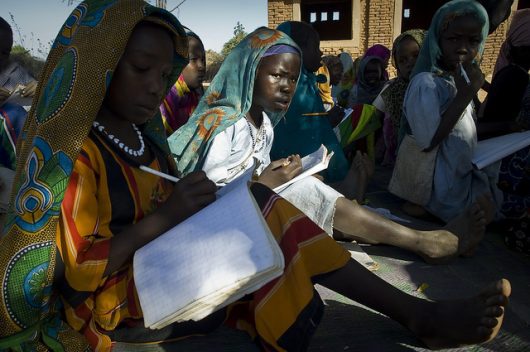
reusable sanitary padsIt is estimated that one in 10 girls in African countries miss school monthly due to a lack of supplies and education related to menstruation. The negative connotations of “becoming a woman” and the mystery surrounding these changes can not only create girls’ unhealthy perceptions of themselves and their bodies but can affect more concrete aspects of their lives, including their education.
Effects of Lack of Education on Menstruation

Many girls will skip school to avoid the potential embarrassment and shame associated with having one’s period show. Due to its monthly recurrence, many young women are unable to catch up on the material they have missed and will eventually drop out of school altogether.

In Uganda, 70 percent of girls leave school between the ages of 13 and 18. Low enrollment for both genders is common due to a variety of circumstances in many African countries.

However, with menstruation typically beginning around 13 years old and girls’ limited access to sexual health education and supplies, dropout rates increase for young women at a rate 10 percent higher than boys of the same age. Access to reproductive health education and cost effective menstruation supplies such as reusable sanitary pads can be powerful tools in keeping young women in school.

Benefits of Reusable Sanitary Pads

Disposable menstruation supplies are often too expensive for families to afford, forcing many young women to use unsanitary alternatives such as old clothes or to go without sanitary pads altogether. Reusable sanitary pads are a cheap, effective and empowering tool for young African women.

NGOs such as Girls2Women and Mums for Mums have assisted in teaching girls how to sew their own reusable sanitary pads for less than $1 from basic patterns and locally sourced materials that attach easily to undergarments with velcro. The Peace Corp has also been an important player in educating and empowering young women through Girls Leading Our World, or GLOW, camps.

Started in Romania in 1995, GLOW camps have since opened in over 60 countries around the world. Each camp is focused on empowering young women and combating local issues such as malaria and HIV/AIDS prevention, reproductive health, stress tolerance and healthy living through education and training.

Positive Effects of GLOW Camps

In African countries with GLOW camps, learning to make reusable sanitary pads often features in the education of the young women. In countries such as Tanzania and Uganda, the creation of reusable sanitary pads begun by GLOW camp educations has been picked up by local charities and community organizations, helping normalize menstruation for girls and boys in the community alike and ultimately keep more young women in school.  

By making the reusable sanitary pads themselves, girls are able to move forward in their lives with more knowledge and confidence in themselves and their bodies, and menstruation becomes less of an unknown force to be feared. The inclusion of parents, teachers and boys is also valuable to the program’s effectiveness and longevity as well as the confidence and empowerment of the young women.

In Uganda, the charity Mountains of Hope offers educational programs on reproductive health and teen pregnancy and training in making reusable sanitary pads. These include men and boys so as to better educate and support young women of the community.

With this vital education and training in making reusable sanitary pads, as well as other aspects of reproductive health, girls in many African countries are better able to pursue their education without compromising their wellbeing. Organizations such as the Peace Corp, Girls2Women and Mountains of Hope have created opportunities for communities to feel empowered and create change with their young women, giving them the chance to achieve the education all children deserve.

– Anna Lally
Photo: Flickr

July 1, 2018
https://borgenproject.org/wp-content/uploads/borgen-project-logo.svg 0 0 Borgen Project https://borgenproject.org/wp-content/uploads/borgen-project-logo.svg Borgen Project2018-07-01 01:30:102024-06-05 02:36:43How Reusable Sanitary Pads Help Girls Stay in School
Education, Global Poverty, Women and Female Empowerment, Women's Empowerment

Girls’ Education in Chad Progresses After Outlaw of Child Marriage

Girls' Education in Chad
In 1960, Chad achieved independence from France. For close to half a century, Chad was embroiled in regional conflict and internal upheaval. As the conflict has begun to subside, the Chadian government is pursuing increased governance and development. Girls’ education in Chad is a salient point in development for the government.

As the Chadian government works to improve educational conditions for girls and the population at large, Chad continues to receive a large influx of refugees from Nigeria, Libya and the Central African Republic. For many of these refugees, the chances of returning to their countries seem unlikely. Therefore, the issue of providing education to girls becomes an even greater task. 

Statistics on Girls’ Education in Chad Show Inequality Compared to Boys

According to the United Nations Girls’ Education Initiative (UNGEI), the female literacy rate between the ages of 15 and 24 is roughly 41 percent. In contrast, the literacy rate for males in the same range sits at 53 percent. Furthermore, 49 percent of females have never attended primary school, compared to 42 percent of males. Furthermore, the Global Education Monitoring Report notes that the average number of years of education for females is 3.16 years.

Although the Chadian government has made primary and secondary education compulsory, girls are disproportionately less educated. One major contributor to this was the now-defunct legal marriage age. According to Chadian law, girls were allowed to marry at the age of 15, and 72.3 percent of girls married before the age of 18. At face value, this may not appear to be a major reason why girls have less access to school. However, it becomes evident when studying secondary school statistics. The transition from primary to secondary education for girls is 82 percent, which remains relatively close to male transition rates. But only 9 percent of these females manage to complete their secondary education, presumably because many girls married and left school.

Government Projects and New Marriage Age Minimum Help Girls

Chad has received large amounts of support from UNICEF through various education initiatives. One initiative, the Revitalizing Basic Education in Chad project, aims to provide quality education to impoverished children and adolescents in Chad. The project’s major goals are to provide quality education for 34,760 children who are currently out of school. Supporting the Chadian government’s efforts, this initiative plans to raise primary school completion rates to 80 percent by 2020. This project has the potential to greatly improve girls’ education in Chad. 

In 2015, Chad’s president launched a campaign to end child marriage and raise the legal marriage age to 18. This initiative was entered as a bill in Chad’s parliament and was successfully passed in 2016. Strict penalties were introduced; an individual who marries a female under the age of 18 can face up to 10 years in prison and a substantial fine. This legislative success will play a major role in girls’ education in Chad. 

Girls’ education in Chad still presents major challenges to the government and NGOs. However, great strides have been made to improve girls’ education in the country. With the support of UNGEI and continued educational reforms passed by the Chadian government, as well as raising the legal age of marriage, the future of girls’ education in Chad is improving. For these successes to continue, it is imperative that Chad continues to receive aid and guidance in developing a robust educational system. The ultimate goal is equal opportunity for all. 

– Colby McCoy
Photo: Flickr

June 2, 2018
https://borgenproject.org/wp-content/uploads/borgen-project-logo.svg 0 0 Borgen Project https://borgenproject.org/wp-content/uploads/borgen-project-logo.svg Borgen Project2018-06-02 01:30:032024-05-29 22:42:37Girls’ Education in Chad Progresses After Outlaw of Child Marriage
Nonprofit Organizations and NGOs, Water, Water Quality, Women and Female Empowerment

The Water Project: How Poor Water Quality Impacts Kenyan Girls

The Water Project
The average American family uses roughly 552 gallons of water each day, while the average African family uses about five gallons of water per day. Girls in the sub-Saharan country of Kenya are robbed of their right to receive an education due to water scarcity.

Education Delayed Due to Water Scarcity

The literacy rate of females over the age of 15 in Kenya was 74 percent in 2016. The Education Policy and Data Center reported that 88 percent of children between the ages of six and 13 attend primary school; however, the report notes that many of the children attending primary school are outside of the official age range, meaning they are not attending school often enough to stay on schedule with the curriculum.

Instead of attending school, many girls spend their time carrying a 40-pound water can full of dirty water from sources miles away from their homes. This exhausting task leaves many girls unable to receive a formal education. Even if a girl is not burdened by the responsibility of journeying for hours to fetch water for her family, if schools cannot provide water, they are unable to run their programs.

How Does The Water Project Make a Difference?

The Borgen Project spoke with Lisa Sullivan, the director of marketing and communications at The Water Project, who provided insight into just how monumental of a difference it makes when clean water is readily accessible to girls.

The Water Project is a nonprofit organization located in Concord, New Hampshire that provides reliable water projects to communities in sub-Saharan Africa. In western Kenya, The Water Project sponsors a community-led organization that is represented by a powerful, strong Kenyan woman named Catherine Chepkemoi. This woman works for empowerment in Kenya, specifically for younger girls, by teaching them about hygiene and water sanitation.

Sullivan stated, “These women are essentially cultivating future women leaders. When they are not gathering water, they are able to stay in class and compete with the boys.”

The organization spends time in western Kenya, addressing water quality by installing rain tanks at schools and protecting springs. Eastern Kenya is constantly in a drought; the region once had four rainy seasons a year, but is now down to one. With such limited rainfall, the organization provides water for people to use for bathing and sanitation.

Improvements in Water and Education Have Wide-Ranging Effects

The Water Project website reports that “for every 10 percent increase in women’s literacy, a country’s whole economy can grow by up to 0.3 percent.” Women can increase economic growth because they tend to invest in their own communities. Women will invest in their children’s education because they aspire to send them to schools and college.

Sullivan points out that “once you bring in water, now not only are they eating healthy, they are not spending their money on medical bills, which allows them to save their money and place it back into their communities.”

If a community in Kenya invests in an irrigation pump, it will allow them to sell more goods, generate more income and expand the opportunity for families to send their children to college–all because of access to clean water.

The Water Project is supporting an agent of change for Kenyan women and girls. It continues to reinforce female empowerment and furnish clean water. Kenyan girls now have a better chance to gain an education and participate in the development of their country.

– Angelina Gillispie

Photo: Flickr

May 19, 2018
https://borgenproject.org/wp-content/uploads/borgen-project-logo.svg 0 0 Borgen Project https://borgenproject.org/wp-content/uploads/borgen-project-logo.svg Borgen Project2018-05-19 01:30:242019-11-28 14:50:28The Water Project: How Poor Water Quality Impacts Kenyan Girls
Education, Global Poverty, Women and Female Empowerment, Women's Empowerment

Recent Advances in Girls’ Education in South Africa Increase Access

Girls' Education in South AfricaIn 1994, South Africa’s first democratic elections were held, electing Nelson Mandela the country’s first democratically chosen president. This election, along with many constitutional changes, brought about monumental transformations for South Africa, namely women’s education. For decades, girls’ education in South Africa has faced obstacles such as teenage pregnancy, rape, disease and illiteracy. Today, more than a few organizations are advocating for girls’ education in South Africa, focusing on education equality, literacy and empowerment.

Historically, young South African women have struggled to hurdle barriers restricting them from getting a decent education. Poverty is the greatest demobilizer for girls 17 and younger, as the more than 13 million children who live in poverty do not have consistent access to education. And if girls do get access to school, they are victims of rape at the hands of educators and male classmates, as most South African schools lack separate bathrooms and proper staff to protect the children. Twenty-three percent of South Africa’s 37 million people are rural black female South Africans who have had no education.

South Africa is a patriarchal society where young girls are often considered lower class, classified as child bearers and keepers of the home. For this reason, young girls are forced to drop out of school to care for ill family members, raise younger siblings and also become young mothers themselves. Girls are also discouraged from taking certain subjects that would elevate them academically. But things are changing.

Important Developments in Girls’ Education in South Africa

The Girls’ Education Movement (GEM) of South Africa, with the help of UNICEF, has been a crusader for young South African girls. Together they have made grassroots efforts to do the following for girls’ education in South Africa:

  • Create equal access to education for girls
  • Enhance the quality of education in schools in rural areas
  • Build safer schools and reduce violence against girls
  • Provide curriculum and school materials that are gender responsive

The GEM initiative is motivating schools in South Africa to respond the needs and rights of girls.

The United Nations Girls’ Education Initiative (UNGIE) is also making an impact on girls’ education in South Africa through the Techno Girl program, which encourages young girls to pursue careers in science, technology, engineering and mathematics. This public-private collaboration with UNICEF and the Department for Women, Children and Persons with Disabilities has helped more than 4,250 girls and is on track to empower more.

The United Nations Educational, Scientific and Cultural Organization (UNESCO) plans to continue its quest to end illiteracy among girls in South Africa. UNESCO uses indicators to help donors, partners and governments target resources to schools with disparities against girls. They target schools that need access to separate bathrooms for girls and boys to increase safety for young girls. An increase in female teachers is also encouraged for mentorship and advocacy.

Girls no longer have to live below average. Democracy is advocacy for education equality. Young girls should be afforded equal opportunities and safe conditions as they aim for academia. Girls’ education in South Africa is making great strides. Resourceful programs are targeting poverty, abuse and social factors that deny South African girls a proper route to education.

– Naomi C. Kellogg

Photo: Google

May 11, 2018
https://borgenproject.org/wp-content/uploads/borgen-project-logo.svg 0 0 Borgen Project https://borgenproject.org/wp-content/uploads/borgen-project-logo.svg Borgen Project2018-05-11 01:30:102024-05-29 22:42:18Recent Advances in Girls’ Education in South Africa Increase Access
Education, Global Poverty, Women and Female Empowerment, Women's Empowerment, Women's Rights

Girls’ Education in Kenya

Girls' Education in Kenya
In 2003, Kenya first introduced what is known as free primary education. Since then, primary school enrolment rates have increased as much as 84 percent in some regions; a great improvement for the country as a whole. However, the reality is that barriers remain in Kenya that reinforce male privilege. A lack of girls’ education in Kenya is one of these barriers.

Low School Enrollment for Girls

In regions that experience high poverty rates and low levels of gender equality, as little as 19 percent of the girls in the region are enrolled in local primary schools. In others, as few as one in 15 girls are enrolled in primary school. There is an obvious gender gap when it comes to girls’ education in Kenya.

Although primary education may now be free in Kenya, families are still responsible for providing the children with the necessary equipment to attend these primary schools. Often, families must prioritize the education costs of their children and make the difficult decision to send the child thought to have the best possibility of future success and keep the other, or others, home.

In rural Kenya, one in two girls is married by age 19. The legal marriage age is 16. The percentage of girls getting married below the age of 18 is 30.5 percent.

One father describes his decision not to enroll his daughter in primary school: he says he was “trying to be practical by keeping [her] home” he “never thought of education as a right” and instead focused on her future marriage. This belief and thought process is not uncommon in Kenya. Most often, the result is sending the boy to school and keeping the girl home.

A Need to Challenge the Traditions

The good news is, this thought process and belief can be changed. It is evident that laws and policy do not impact enrollment rates for girls in Kenya, so what is left? What is needed is an engagement and challenge of the traditions and culture in Kenya, specifically rural Kenya.

Traditions have a large influence on education barriers for young girls. Poverty, ignorance and male preference factor in to disadvantage young girls and their educational track.

While it is rare enough for girls to attend primary school, transitioning to secondary school or universities is almost unheard of. In Trans Mara West, 2.4 percent of the female population attends university. Even more shocking, just 1 percent of girls are enrolled in university in Narok North.

Girls’ education has been proven to be one of the most beneficial strategies to enhance development and economic growth. Educated mothers tend to have healthier children and that these children are also more likely to attend school, breaking the cycle of illiteracy and poverty.

Foreign aid and governmental efforts must now be allocated towards changing beliefs and traditions surrounding girls’ education in Kenya in an effort to increase primary school and university enrollment rates.

– Haley Hine
Photo: Flickr

May 10, 2018
https://borgenproject.org/wp-content/uploads/borgen-project-logo.svg 0 0 Borgen Project https://borgenproject.org/wp-content/uploads/borgen-project-logo.svg Borgen Project2018-05-10 07:30:262024-06-05 02:36:43Girls’ Education in Kenya
Education, Global Poverty, Women and Female Empowerment, Women's Empowerment, Women's Rights

Girls’ Education in India Still Requires Significant Improvement

girls' education in India
Education is a necessary component for the growth of a nation and educating girls still continues to be a problem in most developing countries. India has made quite considerable progress with an overall increase in literacy rates from 64.8 percent in 2001 to 74.04 percent in 2011, but girls’ education in India still requires improvement in a number of ways.

The Current Situation in India

The literacy rate of women, according to 2011 census, is 64.46 percent while the male literacy rate is 82.14 percent. The top states that have the largest number of literate women in India are Kerala (92 percent), Mizoram (89.4 percent), Lakshadweep (88.2 percent), Tripura (83.1 percent) and Goa (82 percent). At the same time, Andhra Pradesh, Karnataka, Kerala, Tamil Nadu and West Bengal have the largest number of women entrepreneurs in the nation.

The states that include the lowest female literacy numbers are Rajasthan (52.66 percent), followed by Bihar (53.33 percent), Jharkhand (56.21 percent) and Jammu and Kashmir (58.01 percent). Though there has been a substantial increase in the number of literate women in the past few years, the number still falls low for the entire nation.

How This Situation Arose

One of the main reasons for the lack of girls’ education in India is the male-dominated society. Even though the country is making progress, the belief that women belong in the home is still widely held.

Gender inequality is a very serious issue in the Asian nation, which is why 10 million female babies have been aborted over the past 20 years. A son’s education is given more importance because it is thought that daughters will eventually get married and live with their husband, so many believe that a girl’s education is not of much help directly to her family.

Addressing Girls’ Education in India

The government has taken numerous strategies to improve girls’ education in India:

  1. Beti bachao, beti padhao (Save daughters, educate daughters) was conceived in 2015, which addresses the issue of the declining Child Sex Ratio (number of females per thousand males aged zero to six) across the country. It is a joint initiative by the Ministry of Women and Child Development, the Ministry of Health and Family Welfare and the Ministry of Human Resources. This strategy works to stop female foeticide, increase the number of girls attending schools, decrease school dropouts, implement rules regarding the right to education and increase the construction of toilets for girls.
  2. Progress has been made in the northwestern part of India, especially in Rajasthan. New literacy efforts have been made to boost the number of girls attending school and a summer coding camp aims to introduce computers to girls.Michael Daube, an American artist and founder of a New York-based nonprofit, is raising money for an all girls’ school. Furthermore, Manhattan Architect Diana Kellogg is building an exhibition hall where female artists can display and sell their products, thus increasing employment.
  3. Jharkhand has taken a big initiative toward female education upliftment. The Jharkhand School of Education has decided on distributing free textbooks, uniforms and notebooks to all girl students from grades nine through 12.
  4. Gurgaon, located in the Indian state of Haryana, aims to provide free education to girls in grades nine through 12.
  5. The Uttar Pradesh government plans to provide a monetary incentive of 30,000 rupees to female students who have an outstanding performance in intermediate or equivalent state examinations.
  6. UNICEF is also working with the Indian government to provide quality education for all girls. As a result, Bihar has now made girls’ education a priority. A new program has been initiated in Bihar which includes education for daughters and thousands of girls are now attending school.

The situation in India may seem daunting but it is steadily progressing with time. With hope, in the coming years, girls’ education in India will achieve new heights.

 – Shweta Roy
Photo: Flickr

May 9, 2018
https://borgenproject.org/wp-content/uploads/borgen-project-logo.svg 0 0 Borgen Project https://borgenproject.org/wp-content/uploads/borgen-project-logo.svg Borgen Project2018-05-09 19:01:292024-06-06 00:07:58Girls’ Education in India Still Requires Significant Improvement
Page 39 of 82«‹3738394041›»

Get Smarter

  • Global Poverty 101
  • Global Poverty… The Good News
  • Global Poverty & U.S. Jobs
  • Global Poverty and National Security
  • Innovative Solutions to Poverty
  • Global Poverty & Aid FAQ’s
Search Search

Take Action

  • Call Congress
  • Email Congress
  • Donate
  • 30 Ways to Help
  • Volunteer Ops
  • Internships
  • Courses & Certificates
  • The Podcast
Borgen Project

“The Borgen Project is an incredible nonprofit organization that is addressing poverty and hunger and working towards ending them.”

-The Huffington Post

Inside The Borgen Project

  • Contact
  • About
  • Financials
  • President
  • Board of Directors
  • Board of Advisors

International Links

  • UK Email Parliament
  • UK Donate
  • Canada Email Parliament

Get Smarter

  • Global Poverty 101
  • Global Poverty… The Good News
  • Global Poverty & U.S. Jobs
  • Global Poverty and National Security
  • Innovative Solutions to Poverty
  • Global Poverty & Aid FAQ’s

Ways to Help

  • Call Congress
  • Email Congress
  • Donate
  • 30 Ways to Help
  • Volunteer Ops
  • Internships
  • Courses & Certificates
  • The Podcast
Scroll to top Scroll to top Scroll to top